Ulysses Press (Creator)Biblio.com

3.067 Ergebnisse
2024Best.-Nr. 2-1646044975Ulysses Pr 2024. Hardcover. New. 192 pages. 9.26x7.51x0.47 inches. Ulysses Pr hardcover
Best.-Nr. SONG2894645953Used: Good unknown
Best.-Nr. A9781164462088New. unknown
Best.-Nr. A9781163992494Paperback / softback. New. paperback
Best.-Nr. B9781164462088New. unknown
Best.-Nr. B9781163992494Paperback / softback. New. paperback
Best.-Nr. 1557930287.Ghardcover. Good. Access codes and supplements are not guaranteed with used items. May be an ex-library book. hardcover
Best.-Nr. B9781163296103New. unknown
Best.-Nr. DADAX1931313857New unknown
Best.-Nr. DADAX0393020320New unknown
Best.-Nr. SONG1931313857Used: Good unknown
Best.-Nr. DADAX0313392552New unknown
Best.-Nr. DADAX0313281769New unknown
Best.-Nr. DADAX143669079XNew unknown
Best.-Nr. DADAX1849087334New unknown
Best.-Nr. DADAX0548642567New unknown
Best.-Nr. DADAX0786429771New unknown
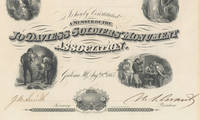
1865Best.-Nr. 3462628/08/1865. Ulysses S. Grant was living in Galena Illinois when the Civil War broke out. The Civil War won on August 18 1865 Galena celebrated Grant’s heroic return. Following a jubilant procession with much flag waving and speeches a group of Galena citizens presented the General with a handsome furnished house on Bouthillier Street. Today the house is managed by the Illinois Historic Preservation Agency as the U.S. Grant Home State Historic Site. The Soldiers Monument Association was a group of local organizations founded after the American Civil War to fund and erect monuments to fallen soldiers and veterans. In 1865 many such groups formed and one of these was the Jo Daviess Soldiers Monument Association in Galena Illinois established to honor that county's soldiers who served in the Civil War. The Association is known for its handsome membership certificates which pictured vignettes of Lincoln Liberty flags and soldiers and were signed by Grant who was the honorary president. In time a monument to the soldiers of Jo Daviess County was constructed in Grant Park Galena. A membership certificate to the Soldiers Monument Association with compelling vignettes including Lincoln constituting individuals as members of the Jo Daviess Soldiers Monument Association Galena dated August 28 1865 and signed by Grant as President of the Association. Gen. J.C. Smith has also signed as Secretary. This is the first Soldiers Monument Association certificate we have ever carried and it is particularly compelling with its association of Grant and Lincoln. <img class=""alignnone wp-image-25018 size-post-window"" src=""https://cdn.raabcollection.com/wp-content/uploads/20231204144051/Folder-site-11-1600x1327.jpg"" alt="""" width=""1600"" height=""1327"" /> unknown
1879Best.-Nr. 3244413/05/1879. We are aware of no other autographs of Grant from this trip having reached the market Richard Nixon was not the first President to visit China. On February 20 1979 the New York Times reported: ""When President Nixon arrives in China today on an unprecedented state visit he will not be the first American President to have set foot on that nation's shores. Nearly one hundred years ago while the Manchu dynasty still held sway over the crumbling Chinese Empire Gen. Ulysses S. Grant entered the gates of Peking and was borne in an imperial palanquin into the heart of the Forbidden City. Just one month after the expiration of his Presidential term General Grant embarked on a worldwide tour which took him to Europe Asia Minor India and Indochina on his way to the two great realms of the Far East. In all he spent six weeks In China visiting the cities of Canton Swatow Amoy Shanghai Tientsin and Chefoo with a full week in Peking from June 3 to 10 1879. During his stay he was entertained in the royal manner and granted interviews with Prince Kung the ruling regent of the Manchu Court —the real Emperor was only 5 years old at the time—and Li Hung_chang the Western_oriented strongman of North China."" The Chinese had hopes largely unrealized that Grant would help them handle diplomatic and military crises with Japan and Vietnam where the French had influence. He went with a delegation of his own which included his wife and son officers of the US Navy and one of the earliest US ministers to China Chester Holcombe. Document signed Swatow Shantou China May 13 1879 a place card for the dinner held in Grant's honor that evening belonging to a Mrs. Scott. Signed by Ulysses S. Grant his son Frederick Dent Grant his wife Julia Grant Charge d'Affaires Chester Holcombe two representatives from his naval escort. <img class=""alignnone wp-image-25018 size-post-window"" src=""https://cdn.raabcollection.com/wp-content/uploads/20231204144051/Folder-site-11-1600x1327.jpg"" alt="""" width=""1600"" height=""1327"" /> unknown
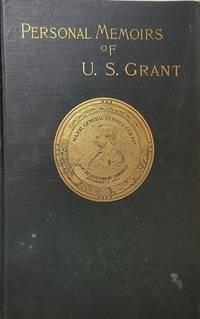
1879Best.-Nr. 024745Philadelphia: The National Publishing Co. First Edition. Original green decorated cloth. Slight edge wear area of lighter green near the top of the back cover slight spotting on the back cover Very Good. . Very Good. Hardcover. 1st Edition. 1879. The National Publishing Co hardcover
Best.-Nr. 5677ULYSSES S. GRANT 1822-1885. Grant was the Eighteenth President and the head of the Union Army during the Civil War. A two volume first edition of Personal Memoirs of U.S. Grant. They are bound in green cloth and gilt stamped. The boards have minor wear and the corners are bumped. There are fold outs of Grant facsimile letters. The internal pages have slight foxing but are in fine condition. hardcover
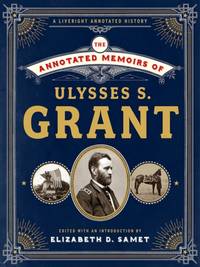
Best.-Nr. ria9781631492440_inpHardback. New. New Book; Fast Shipping from UK; Not signed; Not First Edition; With kaleidoscopic insights Elizabeth D. Samet has produced the most ambitious edition of Ulysses S. Grant's Memoirs yet. hardcover
1864Best.-Nr. 2764930/12/1864. Welles had written at the President's suggestion: ""The largest naval force ever assembled is ready"" Fort Fisher guarded the port of Wilmington NC the last port open to blockade runners supplying Robert E. Lee’s Confederate forces in Virginia <img class=""alignnone wp-image-28384 size-post-window"" src=""https://cdn.raabcollection.com/wp-content/uploads/20231204120136/Grant_168-2-1-e1694097936583-1600x492.jpg"" alt="""" width=""1600"" height=""492"" /> As 1864 dawned Wilmington North Carolina protected by Fort Fisher was one of the Confederacy’s last remaining major ports on the Atlantic open to blockade runners and was the chief supply line for General Robert E. Lee’s Army of Northern Virginia. Navy Secretary Gideon Welles reintroduced the idea of a joint operation against Wilmington to the Secretary of the War Edwin Stanton but Stanton saw it as premature. After the Navy’s occupation of Mobile Bay in August all eyes turned to Wilmington. In October 1864 Wilmington finally became the next objective for a joint amphibious operation. Admiral David Porter was chosen to command the naval squadron and General Benjamin Butler the army contingent. On December 24 the 63 ships of Porter’s fleet prepared to bombard the fort. Thirty-seven ships formed in three lines of battle end-to-end facing the enemy. Just after midday Porter commenced the Navy’s first bombardment of the fort and continued firing until it became too dark to aim the guns effectively. While the Confederate troops hid and huddled beneath the mounds of the fort this bombardment actually did little damage with the exception of the wooden quarters of the garrison which were set ablaze. Butler’s force returned too late on that first night to attempt a landing. The next morning December 25 the fleet resumed its barrage while a naval contingent sought to secure a landing area for the Union infantry north of the fort. A group of sailors was sent to take soundings south of the fort but Porter withdrew the sounding party after it became clear that the army group was making no progress north of the fort. The timely arrival of Confederate reinforcements caused Butler to question the strength of his position. He felt his forces could not take the fort without a siege for which they were unprepared. Butler immediately began to re-embark his soldiers. On December 27 he called off the expedition and directed the transports to return to Hampton Roads. The U.S. Navy had suffered 83 casualties and the U.S. Army 12. Thus the first attempt by the Union forces to close the port of Wilmington ended in failure. While Butler returned to Hampton Roads Porter remained off the coast of North Carolina dedicated to preparing another attempt to capture Fort Fisher. Following the fall of Savannah on December 21 1864 General William T. Sherman prepared to march through the Carolinas. Knowing Sherman could soon be in North Carolina and ready to try to capture the fort again on December 25 Porter wrote to Sherman clearly expressing his frustration with Butler’s decision to abandon the joint operation. Porter was also in communication with Welles. With these communications in hand Welles spoke to President Lincoln who was all for trying again to take the fort. On December 29 Welles wrote to General U.S. Grant in overall command of the army that the President hoped that another joint operation might be forthcoming. Welles’s telegram to Grant stated: “December 29 1864 at 9:30 pm. The substance of dispatches and reports from Rear-Admiral Porter off Wilmington is briefly this: The ships can approach nearer to the enemy’s works than was anticipated. Their fire can keep the enemy away from their guns. A landing can easily be effected upon the beach north of Fort Fisher not only of troops but all their supplies and artillery. This force can have its flanks protected by gun-boats. The navy can assist in the siege of Fort Fisher precisely as it covered the operations which resulted in the capture of Fort Wagner. The winter season is the most favorable for operations against Fort Fisher. The largest naval force ever assembled is ready to lend its co-operation. Rear-Admiral Porter will remain off Fort Fisher continuing a moderate fire to prevent new works from being erected and the ironclad have proved that they can maintain themselves in spite of bad weather. Under all these circumstances I invite to such a military co-operations as will insure the fall of Fort Fisher the importance of which has already received your careful consideration. This telegram is made at the suggestion of the President and in hopes that you will be able at this time to give the troops which heretofore were required elsewhere. If it cannot be done the fleet will have to disperse whence it cannot again be brought to this coast.” <img class=""alignnone wp-image-28385 size-post-window"" src=""https://cdn.raabcollection.com/wp-content/uploads/20231204120124/Grant_177-1-1-e1694097999755-1600x684.jpg"" alt="""" width=""1600"" height=""684"" /> Grant responded to Welles immediately. Autograph letter signed headquarters at City Point Va. December 30 1864 to Welles. “Your dispatch of 9:30 p.m. 29th received. I will advise fully with the Sec. of War about what you propose. Please call on him for information. U.S. Grant Lieut. Gen.” Thus Grant promised to inform Stanton “fully” about the plan and requested that Welles consult with Stanton to finalize it. Grant had told Stanton that he did not intend to correspond with the Navy Department except through Stanton and this letter further indicates that. Porter had a good working relationship with Grant and a solid record of success in joint operations. Due to this Welles was able to argue successfully with Lincoln for Porter’s retention as commander. In early January Porter coordinated directly with Sherman and Grant about plans for a renewal of operations against Fort Fisher. As Sherman marched north the port of Wilmington was now more important to the U.S. Army than it had been during the first battle for Fort Fisher. Butler rightly took the blame for the first expedition’s failure. For his replacement Grant chose General Alfred Terry one of Butler’s staff officers. Grant assigned him the same troops that had participated in the first attempt augmented with an additional brigade for a total of 8000 soldiers. On January 4 1865 the second expedition to capture Fort Fisher embarked from Bermuda Landing in Virginia. On January 12 they headed for Fort Fisher. Arriving that night Porter and Terry prepared to commence their attack the next day. At dawn on January 13 8000 Federal soldiers landed above the fort as the Navy began its bombardment. Sailors were landed on the 15th and drew fire. This diversion allowed the army to breach the walls of the fort. By 10 p.m. the fort was in possession of the Federal forces. The Confederates started a retreat and when Federal infantry caught up with them General Terry accepted the formal surrender of the fort. The first battle of Fort Fisher was the most concentrated naval bombardment of the war. The fleet fired 20271 projectiles into the fort during the first battle. Another 19682 were fired during the second battle. In total the U.S. Navy expended 39953 projectiles at the fort. After Fort Fisher’s capture Porter proceeded to put vessels over the bar and into the Cape Fear River. He declared the port of Wilmington to be “hermetically sealed against blockade runners”. Five weeks after the fall of Fort Fisher the Federal army occupied the city of Wilmington. This occupation ended the trickle of supplies coming along the Wilmington and Weldon Railroad to the Army of Northern Virginia. The fall of Wilmington contributed directly to this army’s surrender at Appomattox Courthouse in April 1865. <img class=""alignnone wp-image-25018 size-post-window"" src=""https://cdn.raabcollection.com/wp-content/uploads/20231204144051/Folder-site-11-1600x1327.jpg"" alt="""" width=""1600"" height=""1327"" /> unknown
Best.-Nr. 1391342070.Gpaperback. Good. Access codes and supplements are not guaranteed with used items. May be an ex-library book. paperback
Best.-Nr. 1396652973.Ghardcover. Good. Access codes and supplements are not guaranteed with used items. May be an ex-library book. hardcover