3.004 Ergebnisse
1971Dust-soiling to top of textblock else Fine. ; Reissue of works originally published Bari: Laterza, 1932-35. Vol. 1: Zenone. Vol. 2: Aristone, Apollofane, Erillo, Dionigi d'Eraclea, Perseo, Cleante, Sfero. [129 pp + 197 pp]; Filosofi Antichi Et Medievali: Collana Di Testi E Di Traduzioni. Gli Stoici Antichi ; Vol. I & II [In One Volume].
1968DJ is price-clipped. DJ is chipped at top corners. A couple of small closed tears along bottom edge of DJ. Dustjacket has shelfwear and rubbing. Book has very minor shelfwear. ; Volume 2 ONLY: Commentary and Indexes. ; Volume 2 Only; 1008 pages
1988Light wear to corners. Spine is lightly sunned. ; A critical edition of the anonymous late Latin poem on Alcestis, as preserved in a Barcelona papyrus (IV2 A. D. ). ; Supplements to Mnemosyne, Bibliotheca Classica Batava Supplementum, 103; 117 pages
2001Light shelfwear to book and DJ. ; JSOT Supplement Series; 337 pages; Thirteen essays on the Iron Age in Israel and Jordan, covering settlement patterns, iconography, cult, palaeography and the archaeology of certain key sites. Thirteen essays on the Iron Age in Israel and Jordan, covering settlement patterns, iconography, cult, palaeography and the archaeology of certain key sites. This volume offers an exceptionally informed update in a fast-moving area of discovery and interpretation. The first section deals with spatial archaeology and settlement patterns, all the papers based on the fieldwork by A. Zertal in Samaria, A. Ofer in Judah, G. Lehmann in the Akko Plain, and S. Gibson in various areas in the hill country of Israel. The second section covers religion and iconography. The two single Iron Age temples known today in Israel, at Dan and Arad, are discussed by A. Biran and Z. Herzog. R. Kletter and K. Prag discuss clay figurines and other cult objects; T. Ornan identifies Ishtar on a number of seals and on a silver pendant; and N. Franklin examines the iconography and meaning of the wall relief in Room V at Sargon's palace in Khorsabad. The last section includes three studies related to specific sites. M. Steiner considers urban development in Jerusalem during Iron Age II; A. Mazar presents data from Iron Age II Beth Shean, and P. Bienkowski and L. Sedman discuss finds from Buseirah, the capital of Edom.
2008pp. 238, cm 21x23, brossura, illustrazioni in nero. Nuovo.
1894Paris, Ernest Leroux 1894. Grand In-8 relié demi percaline bleue à coins. Troisième fascicule seul : IV + 183 pages, de XVII. Premier code de Gortyne à XX. Jugements d'Epidaure. Bon état.
1894Best.-Nr. 114605Ernest Leroux Paris, Ernest Leroux 1894. Grand In-8 relié demi percaline bleue à coins. Troisième fascicule seul : IV + 183 pages, de XVII. Premier code de Gortyne à XX. Jugements d'Epidaure. Bon état.
1963Paris, Imprimerie Nationale, 1963, 8vo grande (27,5 x 22) solida legatura in mezza pelle con titoli al piatto anteriore (ormai sbiaditi), risguardi marmorizzati, pp. 326 con due carte geografiche in fine. Edizione calligrafica con. Alcune chiose a matita facilmente cancellabili. Molto buono.
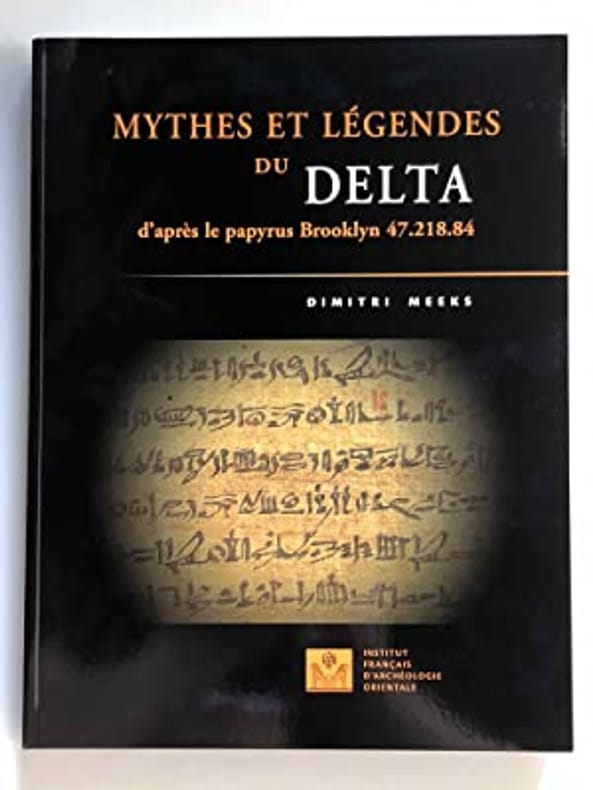
Best.-Nr. 590232New York, The Brookklyn Museum, 1970. In-4, rel. éd. pleine toile orange, titre doré, 29 pp., front. en coul., 3 fig. en n/b. h.-t. dont 1 à double pp., 5 pl. de reprod. de fragments (dont 1 dépliante), avec retranscription et commentaire en regard.
1975Foxing to spine and edges of wraps. Faint foxing to textblock. ; 222 pages
1953Spine is browned. Cellotape to base of spine. Small chip to front foreedge. Very light foxing. ; 1 large folding map at end. ; Académie Royale De Belgique. Mémoires Tome XLVII, Fasc. 4.; 204 pages
1899minor shelfwear. Very tiny ink stain to spine. Light Pencilling to 3-4 pages. Very Faint knocking to rear board. Endpapers tanned. Former owner's name on ffep. ; 160 pages
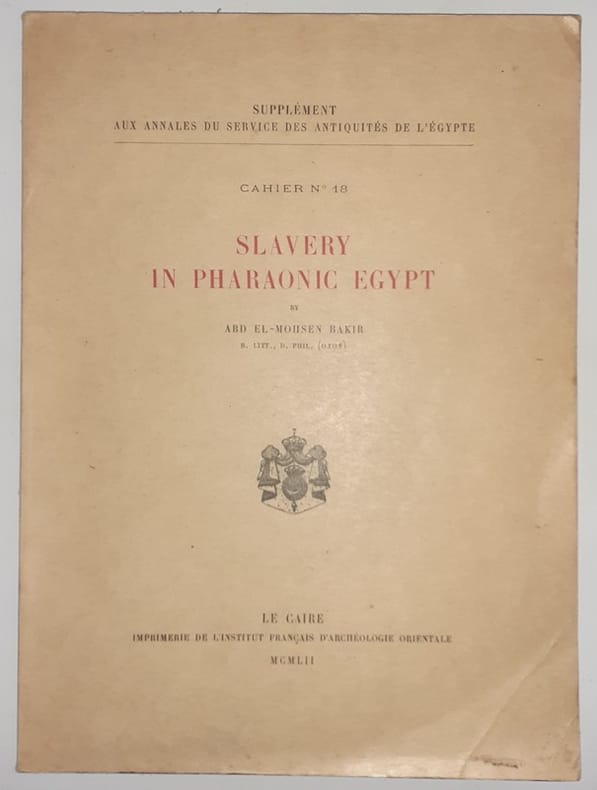
Best.-Nr. 605869Le Caire, IFAO, 1952. In-4 broché, couv. impr., XIX-128 pp., 20 pl. (2 reprod. photogr. en n/b., 18 de texte autographe hiéroglyphique, dont plusieurs dépl.), texte en anglais et nb. extraits hiéroglyphiques in-t., index des sujets, bibliographie. Envoi autographe de l'auteur " à Mr Wild avec mes meilleurs souhaits,16.6.1954".
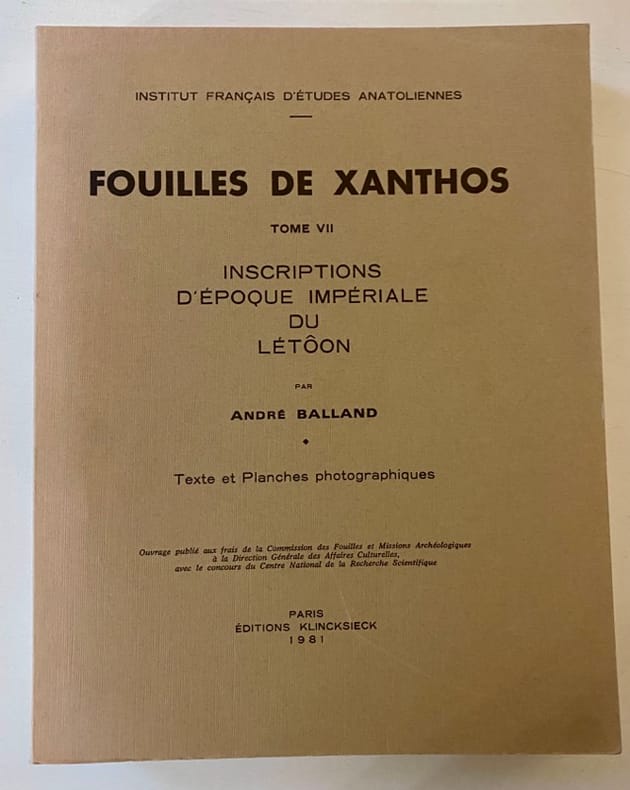
Best.-Nr. 601700Paris, Librairie C. Klincksieck, 1981. In-4 broché, XXI-312 pp., XXXIV pl. en noir in fine, index.
1916In 4? (cm 30), Brossura originale, pagg.50 Stralcio da pag 37 a pag. 86 con 47 ill. b.n. n.t., relative agli oggetti (molti vasi attici figurati) e alle iscrizioni etrusche rinvenuti, alla pianta dell'area di scavo e delle tomba 2 e 3, fioriture e strappetti marginali alla copertina, lievi mende aldorso e all'angolo del piatto posteriore, ma ben conservato. Nell'articolo sono descritti puntualmente l'area di scavo e le tombe; quindi sono elencati dettagliatamente gli oggetti rinvenuti (vasi attici a figure rosse, candelabri, specchi e figurine di bronzo, scudo di rame, ecc.) ; conclude l'articolo firmato dal Giglioli (Roma, 1886-1957), la nota del Nogara (Bellano, 1868 - Roma 1954) "Alcuni appunti intorno alle iscrizioni di Vignanello".
Best.-Nr. 590224Le Caire, IFAO, 2006. In-folio, couv. ill. en coul., 498 pp., très nb. reprod. de fragments in t., 17 pl. en coul., index.
1849in folio, pp. 73, leg. mod. cart. edit. Con 2 tavv. litogr., di cui 1 a colori, raff. i testi dei diplomi. Saggio paleografico sui diplomi imperiali di età romana. Estratto. Intonso con barbe. [6-5]
1842in-8, pp. 126, bross. edit. Bella raccolta di iscrizioni suddivise per tipologia. L’A. (Padova 1812-1874) uomo di vasta cultura, si interessò particolarmente di iscrizioni antiche. A pag. 105 sono riportati i testi di iscrizioni monumentali di Padova; a pag. 115 quelle per il futuro Museo di Padova. Invio autogr. dell’A.
1990Minor edgewear to wraps. Creasing to spine. Scholars' bookplate to inner cover (Slater & Dunbabin). ; Odense University Classical Studies , Vol 14; 569 pages
1990Edgewear to corners of wraps. A bit of colour loss to wraps. Creasing to 1 corner of wraps. ; Odense University Classical Studies , Vol 14; 569 pages
1964Pages uncut. Very light browning to wraps. ; The inscription came to light during digging work in April 1957, a few miles west of present-day Kandahar. The bilingual inscription is the most westerly proof of Buddhism yet found, and the most easterly of Greek inscriptions, and the first complete Aramaic inscription discovered in the area reaching to the Indus. ; Serie Orientale Roma XXIX; 62 pages
1993Gift inscription from author in ink to titlepage. Minor creasing to a couple of corners of wraps. Scholars' bookplate to inner cover (Slater & Dunbabin). ; Studi Pubblicati Dall'istituto Italiano Per La Storia Antica LIV; 205 pages; Signed by Author
1877Front board detached. Spine cover missing. Boards are brown and marbled. Endpapers browned. Foxing passim. Fair to good. Text is complete. ; Xv, 272 pp; 272 pages
2011Light shelfwear. Very Light bump to top of spine. ; XXVIII planches at end. ; Collection Latomus Volume 330; 397 pages; Première partie : recueil de poèmes commentés – Deuxième partie : études et commentaires – M. J. Pena, Deux carmina de Caesarea (Cherchel) et la Péninsule ibérique (nos 170 et 162) – É. Wolff, Deux épitaphes de Luxorius (Anth. Lat. 345 et 354 R = 340 et 349 ShB) Nos 49 et 50 – J. Meyers, L’influence de la poésie classique dans les Carmina epigraphica funéraires d’Afrique du Nord – J. -M. Lassère, Éléments de biographie dans les Carmina Latina Epigraphica – A. Fraïsse, Typologie des renseignements fournis sur le défunt dans les carmina – L. Échalier, Ce que les morts disent aux vivants – J. -N. Michaud, Un instant dans l’éternité, l’éternité dans un instant.
2002Small bump to foreedge of front cover. Faint bump to base of spine. ; Mnemosyne , Vol Suppl. 233; 378 pages; What was funny about ancient jokes, and why? Why did the Roman state legislate to curb the behaviour of its obscenely rich and powerful elite, if it never really expected such laws to be obeyed? Why did it oppress the poor, and lavish public child support on them? These are important questions, but ancient Greeks and Romans could never have thought of them. They never questioned the right of the rich to be rich. They could not improve their understanding of Homeric gift-giving with the experience of ritualized friendship among the Trobriand islanders. Such questions and such answers can only come from those who live after the ancient past. This volume honours the well-known Dutch epigraphist and ancient historian H. W. Pleket. Ten substantial essays reflect his wide range, from early Greece to the Roman Empire, and his taste for comparative economic and social history.