LUZZATTO Giuseppe Ignazio.MareMagnum

Romae, Apollinaris, 1951, in-8, brossura editoriale, pp. 382. Mancanze al dorso e alla copertina posteriore, ma internamente in buono stato: ancora intonso. Fa parte di “Studia et Documenta Historiae et Iuris”.
195723 cm, brossura editoriale; pp. (386), rari segni a penna; dedica autografa di Luzzatto al frontespizio
1898in-8, pp. 11, broch. edit. Estratto del Bullettino Senese di Storia Patria, Anno V. fasc. I (1898). Studio delle tombe di studiosi tedeschi risalenti al XV, XVI e XVII sec. in Siena. Perfetto esemplare. . .
1886In 8 (cm 14 x 21), pp. 23 + (1). Brossura editoriale.
1960Ex-library copy with usual stamps, call numbers and pocket. Small tear to base of spine. Some creasing to wraps. Light tanning to pages. ; Xxi, 278pp, 1 plan, 11pls. ; Fontes Ad Topographiam Veteris Urbis Romae Pertinentes Vol. Octavi. Pars Prior. Liber XIX - Regio X; 278 pages
In 8°, broch. edit., pp 52, ill. fot. n.t.
1963xxxviii + 201pp. + 47 plates out-of-text, 35cm., cloth, bit used, text and plates G, X71262
1963réf. X71262Ootacamund, Government epigraphist for India 1963 xxxviii + 201pp. + 47 plates out-of-text, 35cm., cloth, bit used, text and plates G, X71262
1972Scholar's bookplate to inner covers (G. P. Goold). Very light bumping to a couple of corners. Faint dust-soiling to top of textblocks. DJs are price-clipped. Very light edgewear and rubbing to djs. ; 676 pages
1922Backstrip is missing. Wrappers are close to being disbound. The stitching keeping the textblock is holding. Pages uncut. Chipping to wraps at extremities. ; 20 large plates. ; 4to 11" - 13" tall
1922Backstrip has been crudely repaired with tape in places with tape stains and is torn. Dampstaining to upper edges of pages and wraps. ; 20 large plates. ; 4to 11" - 13" tall; 67 pages
1988Very Good English Paperback. Pbo. 4to. (28 x 20 cm). In French. 17 p. L'Inscription Kirghize de Sûji (Essai d'une nouvelle lecture).
réf. gm2324Fascicule In-8 (16,1 x 24,7 cm), fascicule, 4 pages, couverture muette, sans date, pas de mention d'éditeur ; bords des plats usés et brunis, par ailleurs bon état. Livraison a domicile (La Poste) ou en Mondial Relay sur simple demande.
1911In 8 (cm 16,5 x 24), pp. 60 con 2 tavole finali con riproduzioni di medaglie. Dedica autografa a pagina 1. Brossura editoriale. Estratto editoriale dalla Rassegna numismatica, maggio-novembre 1911.
1913In 8 (cm 17,5 x 26), pp. 7 + (1 bianca). Pagine intonse. Brossura editoriale. Estratto editoriale dal "Dizionario epigrafico di Antichita' romane", vol. II, dedicato alla dicitura "Dis Pater" o "Ditis Pater", riscontrata nelle dediche epigrafiche, ed ascrivibile al culto di questa divinita' connessa con Saturno.
1986A couple of Corners are lightly bumped. Very light pen notes to ffep and 1 page (word crossed out) with pencil notes and underlining to a couple of pages. Dustsoiling to top of textblock. Dustjacket has minor shelfwear. DJ spine is a little browned. ; 512 pages; How does the funeral oration relate to democracy in ancient Greece? How did the death of an individual citizen-soldier become the occasion to praise the city of Athens? In The Invention of Athens, Nicole Loraux traces the different rhetoric, politics, and ideology of funeral orations--epitaphioi--from Thucydides, Gorgias, Lysias, and Demosthenes to Plato. Arguing that the ceremony of public burial began circa 508-460 BCE, Loraux demonstrates that the institution of the funeral oration developed under Athenian democracy. A secular, not a religious phenomenon, a literary genre with fixed rhetoric effects, the funeral oration was inextricably linked to the epainos--praise of the city--rather than to a ritualized lament for the dead as is commonly assumed. Above all, the funeral oration celebrated the city of Athens and the Athenian citizen. Loraux interprets the speeches from literary, anthropological, and political perspectives. She explains how these acts of secular speech invented an image of Athens often at odds with the presumed ideals of democracy. To die in battle for the city was presented as an act of civic choice--the "fine" death that defined the citizen-soldier's noble, aristocratic ethos. At the same time, the funeral oration cultivated an image of democracy at a time when there was, for example, no formal theory of a respect for law and liberty, the supremacy of the collective and public over the individual and the private, or freedom of speech.
1986Very minor shelfwear to book. Dustjacket has minor shelfwear. DJ spine is a little browned and faded. ; 512 pages; How does the funeral oration relate to democracy in ancient Greece? How did the death of an individual citizen-soldier become the occasion to praise the city of Athens? In The Invention of Athens, Nicole Loraux traces the different rhetoric, politics, and ideology of funeral orations--epitaphioi--from Thucydides, Gorgias, Lysias, and Demosthenes to Plato. Arguing that the ceremony of public burial began circa 508-460 BCE, Loraux demonstrates that the institution of the funeral oration developed under Athenian democracy. A secular, not a religious phenomenon, a literary genre with fixed rhetoric effects, the funeral oration was inextricably linked to the epainos--praise of the city--rather than to a ritualized lament for the dead as is commonly assumed. Above all, the funeral oration celebrated the city of Athens and the Athenian citizen. Loraux interprets the speeches from literary, anthropological, and political perspectives. She explains how these acts of secular speech invented an image of Athens often at odds with the presumed ideals of democracy. To die in battle for the city was presented as an act of civic choice--the "fine" death that defined the citizen-soldier's noble, aristocratic ethos. At the same time, the funeral oration cultivated an image of democracy at a time when there was, for example, no formal theory of a respect for law and liberty, the supremacy of the collective and public over the individual and the private, or freedom of speech.
19922 small Creases along spine. Signed by author to Christian Habicht on ffep. ; Historia - Einzelschriften; 83 pages; A new and expanded text, with translation, of the best-known Spartan inscription (Meiggs & Lewis no. 67), together with detailed epigraphical, textual, historical and economic commentaries. The new text is based on a fresh examination of the stone, the diaries of early travellers (who saw the stone when it was better preserved than it is today), and a newly discovered fragment, which adds Aiginetan and Chian exiles, and individual Achaians and Spartans, to the list of Sparta's war supporters. This new text enables the date of the inscription, previously controversial, to be fixed in the early years of the Peloponnesian War, thereby shedding light on Spartan war-finance and Greek attitudes towards Athens in the 420s and providing a badly-needed fixed point for Laconian Epigraphy. The monograph also clarifies the meaning of the Greek words opheugoo, ophugaso.; Signed by Author
1999réf. 606390Flammarion 1999 In-8 , cartonnage illustr. de l'éditeur, 179 pp, très nombreuses figures en noir dans le texte.
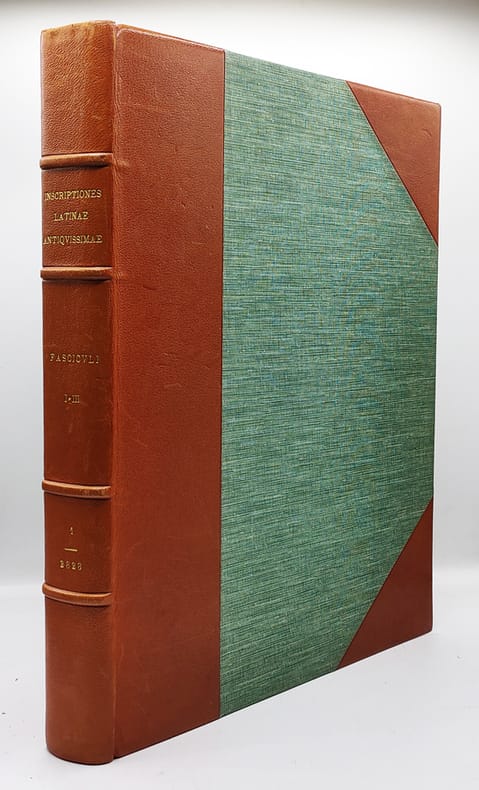
réf. 585874Berlin, De Gruyter, 1974-1976. In-folio, demi-chagrin auburn à coins, tranches mouchetées, couvertures conservées, [367]-852 pp., ill. en noir in-t. (Corpus inscriptionum latinarum). Notes de lectures jointes sur des feuillets volants.
1972Small scuffed area to front board. Very light shelfwear. ; Xii, 60pp, 6pls. No. 2878-2891 ; Graeco-Roman Memoirs No. 55; Vol. 39; 60 pages
1978Very Light shelfwear. Else fine; Beiträge Zur Klassischen Philologie Heft 101; 99 pages
1871In ottimo stato
réf. 55802Amsterdam, Adolf M. Hakkert, 1974.