107 results
1580ref. 5531Venice: Alessandro Gardano 1580. THIRTEENTH EDITION first printed in 1548. All editions are rare. Hardcover. Fine. Bound in 18th c. paste-paper over boards with a slim red morocco spine light wear to boards and spine upper joint starting corners bumped. A very nice copy preserving earlier endpapers with a 17th c. ownership inscription and a calligraphic flourish. The volume is overall very fresh with just a very light stain to the inner margin of the first few leaves light soiling to the title with two early ownership inscriptions and last leaf some scattered marginal soiling and a few small stains on two leaves. Illustrated throughout with 101 pages of woodcut alphabets and writing examples. An influential writing manual by the Franciscan friar and writing master Vespasiano Amphiareo who practiced and taught calligraphy in Florence before moving to Venice around 1518. In the introduction to the first edition of his book 1548 he tells us that he had already been practicing his craft for thirty years. The book showcases Amphiareo's "bastarda del frate" script which combined elements of the mercantile and chancery hands to produce a more fluid form that would serve the needs of both the chancery scribe and the merchant as well as non-professional letter writers. As the author writes in his dedication to Prince Francesco Donato the Doge of Venice "Having through my own art and industry newly devised a form and a character of handwriting called bastarda which like a mystical body of nature partakes of many styles of writing it seems to me that it may be equally suited to the chancery scribe because it is somewhat elongated and graceful and useful to the merchant because it is cursive and swift; and therefore to every other sort of person." The book first appeared in 1548 and went through no fewer than 18 editions-with the addition of two new scripts after 1572-up to the year 1620. In addition to the writing examples which occupy 101 pages Amphiareo includes instructions for making black blue red and gold inks; as well as instructions for making and holding a pen. Amphiareo's was the first writing book in oblong format designed to better reflect the dimensions of writing paper rather than the vertical format used by printers. In his letter to the reader Amphiareo explains how he developed his script: "For many years I had it in mind to find a form of letters so easy and quick that both chancery clerks and merchants could write it readily and that would fully serve them for letters and for keeping books. This inclination of mine was greatly spurred on by men of outstanding intellect in Florence at the time when I was pursuing my usual occupation in that most illustrious city. "There a certain mercantile letter with heavy strokes was in use not very unlike the Venetian mercantile. Since it was difficult and slow both to write and to learn I set myself to study and sharpen my wits so much that I adapted certain bodies and certain strokes of the one and the other letter. In the judgment of men of understanding my idea turned out gracefully. This letter which I named the Bastarda del Frate was so welcome and so praised that in the said city of Florence fathers would not have their sons learn any other letter. This proved a success both for them and for me since they learned to write with the highest excellence and I drew no small profit from it. Because my intention is to share with all the world the skill that God has given me and I cannot be bodily in more than one place I have had this present little book engraved at incredible expense to myself." In addition to the bastarda chancery and mercantile hands Amphiareo includes "a number of gothic hands: bollatica francesca rognosa etc. all in appropriate texts; a number of alphabets: ornate roman capitals signed in interlaced ciphers of the sort expounded by Palatino followed by a set of decorated roman capitals made up of twisted boughs or logs; a handsome set of gothic entrelac initials two to the page decorated with putti heads and the like; a decorated gothic set also two to the page; a set of simplified geometrically constructed minuscules round gothic based on Fanti's; and roman inscriptional outline capitals against horizontally ruled squares. "Amphiareo's choice of format was also a significant change. The books of his predecessors from 1514 until his own had all been vertical octavos apart from Tagliente's one perhaps abortive experiment in this format in 1525. Their layouts were modeled on book practice. Amphiareo's format showed off to best advantage his layouts inspired not by book pages but by epistolary practice. The letter of his day was generally written on a wide short sheet of paper or vellum folded after writing to produce an envelope - somewhat on the order of today's airletter form turned sideways. Amphiareo's pages suggest this shape quite successfully."Morison "On Some Italian Scripts of the XV and XVI Centuries" in "Selected essays on the history of letter-forms in manuscript and print" Vol. 2 Ch.8 p. 89 ff. Alessandro Gardano hardcover books
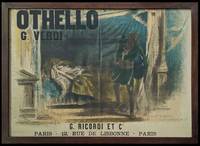
1894ref. verdiothelloVERDI'S OTELLO COMES TO PARIS Lithograph poster 88 x 65 cm outer dimensions of frame color lithograph framed and glazed plexi. Centerfold very minor toning excellent. Very rare color lithograph poster produced in conjunction with the Paris premier of Giuseppe Verdi's opera Otello. Verdi 1813-1901 had retired from opera after Aida in 1871 but his publisher Giulo Ricordi 1840-1912 and the librettist Arrigo Boito 1842-1918 at last convinced him to return with Otello which premiered on 5 February 1887 at the Teatro alla Scala in Milan and proved to be a global success. The Paris production was a French-language version by Camille du Locle 1832-1903 and Boito which opened at the Paris Opéra on 12 October 1894 under the direction of Alexandre Lapissida 1839-1907; Verdi was in attendance. The poster designed by Vespasiano Bignami 1841-1929 depicts the climactic scene in Act 4 Act 5 of Shakespeare's play in which Otello rises having just strangled Desdemona in her bed. In Paris the part of Otello was sung by Albert Saléza 1867-1916 and that of Desdemona by Rose Caron 1867-1930. Bignami's composition is not entirely of his own invention but an interpretation preserving the original staging of this scene. At the foot of the poster is the address 12 Rue de Lisbonne of the Paris branch of the Ricordi publishing firm where interested parties could acquire the score of the production. Printed at the time as ephemeral advertising the poster is today very rare. We could locate no examples in institutional collections. R. Stabilimento Ricordi-Milano books
1970ref. 15749Penguin Books classics 1970 432 pages poche. 1970. broche souple. 432 pages. Le récit détaillé par Flavius Josèphe ancien chef rebelle devenu négociateur romain de la révolte juive contre Rome entre 66 et 73 de notre ère. L'ouvrage couvre le siège de Jérusalem la destruction du Temple et la résistance finale à Massada offrant un témoignage unique sur cette période tragique
1992ref. 928Les Belles Lettres 1992 258 pages collection Budé. Paris. 13 5 × 20 cm. 1992. Cartonnage orange de l'éditeur titre et vignette imprimés en noir sur le premier plat. 258 pages. TACITE. Histoires. Livres IV et V. Paris Les Belles Lettres 1992. Collection des Universités de France (Budé). Volume de 13 5 × 20 cm 258 pages relevées collation complète non établie. Cartonnage orange de l'éditeur premier plat orné d'une vignette représentant la louve romaine titre et mentions éditoriales imprimés en noir. État : Occasion – Très bon état. Exemplaire en très bon état de conservation. Tacite (vers 55 – vers 120) historien et sénateur romain compte parmi les principaux historiographes de l'Empire. Les livres IV et V des Histoires retracent les événements des années 69 et 70 après J.-C. notamment les troubles consécutifs à la chute de Vitellius l'affermissement du pouvoir de Vespasien et les révoltes en Gaule. Le cinquième livre conservé de manière fragmentaire comprend également une importante digression historique et ethnographique sur les Juifs et la Judée dans le contexte de la guerre menée par Rome. Envoi gratuit par Colissimo ou Mondial Relay. Emballage professionnel
ref. LCS-1864051Recueil en partie original de la plus insigne rareté. Venetia, 1575. In-8 oblong de (110) pages - complet - marges blanches extérieures de 7 ff. restaurées sans atteinte aux lettres. Plein maroquin brun estampé de filets à froid, dos à nerfs, tranches dorées. Reliure de Lobstein-Laurenchet. 145 x 204 mm.
1572ref. 42366In Venetia, , 1572. In-12 oblong (15 x 20,6 cm) de (4) ff. de texte (43) ff., modèles de calligraphie, titre avec vignette gravée sur bois, veau brun, dos orné à nerfs (reliure du XVIIe siècle). Manque 8 feuillets (signatures D 6 à E 5).
2017ref. 500010188LEDUC HUMOUR 2017 191 pages 11x15x2cm. 2017. Poche. 191 pages.
ref. 279Lyon Chez Jean-Baptiste de Ville 1685 1 vol. in-12 ( 15,5 x 9,5 cm ) ( 8 ) ff. ( dont titre ) , 510 pp. . 11/12 portraits en taille douce en incipit de chaque biographie . Manque le f. 331-332 . Avec : Au lecteur , Jugement de Monsieur de La Mothe Le Vayer , conseiller d ' Estat , sur Suétone , Table contenant l ' explication des noms anciens (...) , Permission . Bandeaux , lettrines , culs-de-lampe . Pleine basane de l ' époque . Dos à 5 nerfs , titre et caissons dorés . Ex-libris en partie rayé , en partie gratté sur la p. de titre . Reliure usagée quoique encore solide : coiffes absentes , coins émoussés , deux éraflures sur le plat sup. . Des cahiers un peu décalés . Manque une garde au début . P. de titre salie et abîmée avec petit manque . MANQUE LE F. 331- 332 ( fin de la vie de Claude , début de la vie de Néron ) remplacé par une photocopie . Qqs mots de la p. 87 un peu effacés . P. 327 ch. 372 ; p. 477 ch. 677 .
1530ref. 45363Parisiis, Ex officina Simonis Colinaei, 1530. 8vo. Bound in a very fine later full calf (around 1700), profusely gilt spine, titlelabel in leather with gilt lettering, broad gilt borders on covers, edges of covers gilt, edges of leaves gilt. A very small nick to top of spine. (8) lvs. + (1-)256,(3) lvs. + 1 blank. A small and very faint dampstain to upper inner margins of the first 8 lvs. Otherwise very clean throughout. A beautifull printed and wide-margined copy (17x11,5 cm).
ref. 62084[Rome, AD 79-80]. 18 mm. diameter. Dolphin entwined around anchor on one side, and Draped bust of Tutus, turning right on the other side. An excellent, near mint specimen. 3,05 g. Obverse: IMP TITVS CAES VESPASIAN AVG P M, laureate head rightReverse: TR P IX IMP XV COS VIII P P, dolphin coiled around an anchor.RIC 26a, RSC 309.
ref. 9782367043081Leduc.S humour
ref. 12093RABELLEAU M. Ecuyer. Histoire des Hébreux rapprochée des Contemporains. De la création du monde au dernier sac de Jérusalem, sous Vespasien, dédiée à Monseigneur le Duc de Bordeaux. Deuxième édition, revue, corrigée et augmentée. Deux tomes en un volume in 12 pleine toile violine de l’éditeur, titre et fers dorés eau dos, plaque dorées avec encadrement de filets à froid, sur les plats. Tome 1 : faux-titre, titre, XVI, 466 pages. Tome2 : faux-titre, titre, VIII, 468 pages, A La librairie de Parent- Desbarres 1825. Couverture modeste, insolée, intérieur en assez bon état.
1975ref. 313502New York, Arno Press, 1975. 192 Seiten. Index. Originalleinen.
1922ref. 21787Berlin : Propyläen-Verl., c 1922. 502 S. 8°. 2., neu durchges. Aufl. OHLwd. mit Rückengoldpräg. u. Ganzbuntschnitt. (Klassiker des Altertums ; Reihe 1 ; 12)
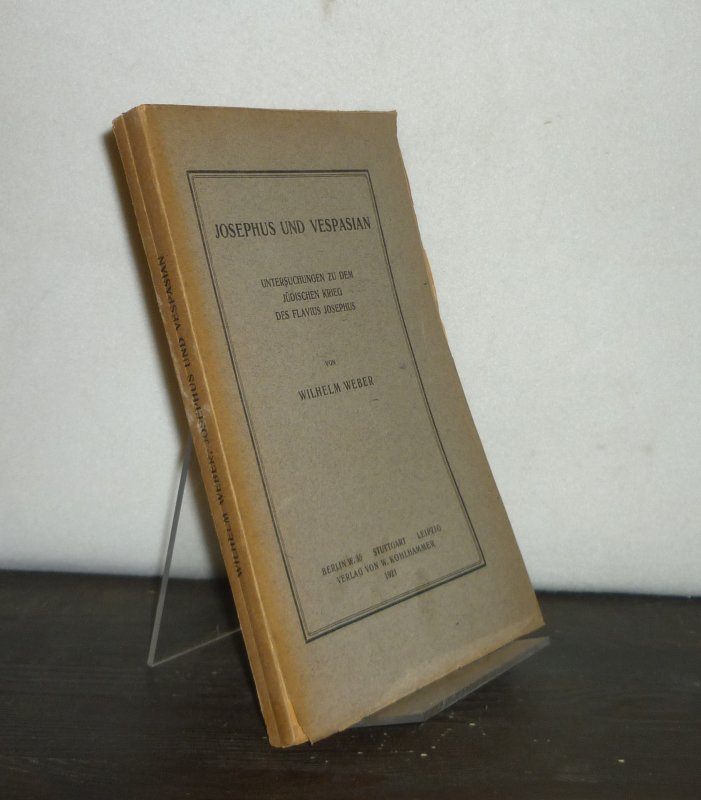
1921ref. 3132648Berlin, Stuttgart & Leipzig: Kohlhammer 1921. VIII, 287 Seiten. Gr. 8° (22,5-25 cm). Orig.-Broschur. [Softcover / Paperback].
1921ref. 3131407Berlin, Stuttgart & Leipzig: Kohlhammer 1921. VIII, 287 Seiten. Gr. 8° (22,5-25 cm). Bibliotheks-Halbleinenband. [Hardcover / fest gebunden].
1993ref. 63361Marburg : Jonas-Verl. 1993. 128 S. : 106 Abb.. ; 24 cm Pp., gebundene Ausgabe, Hardcover/Pappeinband, Exemplar in gutem Erhaltungszustand
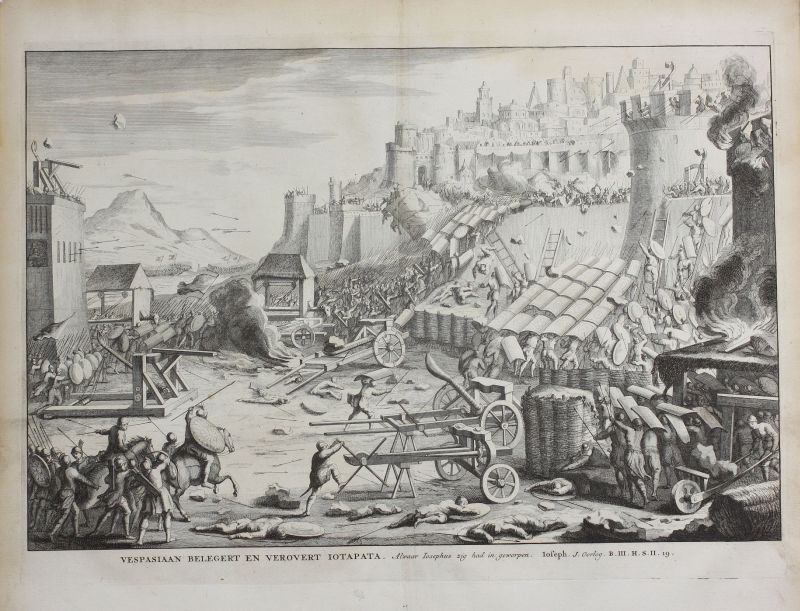
1731ref. 901489AGAmsterdam:, Westersteins en Smith, 1731. Kupferstich 28,5 x 43 cm, Blattgröße 39,5 x 47 cm.
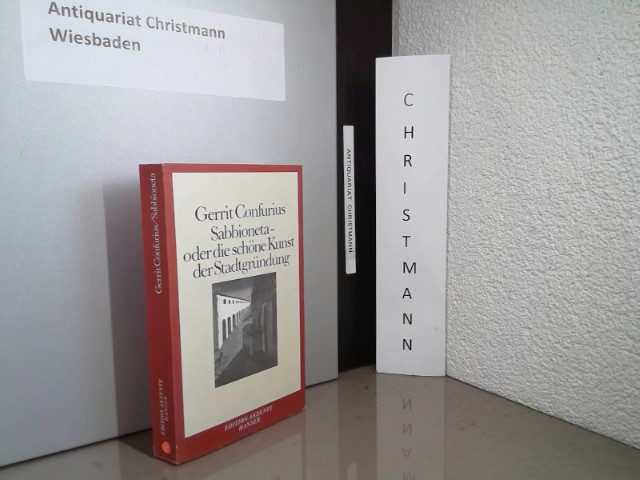
1984ref. 57716München ; Wien : Hanser 1984. 245 S. : Mit Karten und Tafeln ; 21 cm kart., Softcover/Paperback +++ innen seitliche Bleistiftanstreichungen ++++ sonst Exemplar in gutem Erhaltungszustand
1993ref. 37998Marburg: Jonas-Verl. 1993. 128 S. Mit zahlr. Abb., Grundrissen u. Faksim. Pp. 24x18 cm.
ref. 4039AGo.J. altmontierter Kupferstich, anonym (niederländisch?), Bll. 13,8 x 19,3; Unterlage 17,7 x 24,2 Auf Wunsch Digitalaufnahme in jpg-Format erhältlich- photo in jpg-format available. Je nach Versandart können die Portokosten bis zu 2 ? weniger als angegeben betragen.+
1883ref. 32172Leipzig, Verlag von Wilhelm Engelmann, 1883. gr. 8°, 864 S.; Bibl.Ex., Bezahlung per PayPal möglich, we accept PayPal, Stempel u. Nr. a. Vorsatz od. u. Titel, Nr. a. Rücken bzw. Einband, Regalsp. a. Fußschn., Einb. beschabt und bestoßen und angeschmutzt, altersbed. Bräunungen, stärkere Gebr.sp., Halbleder
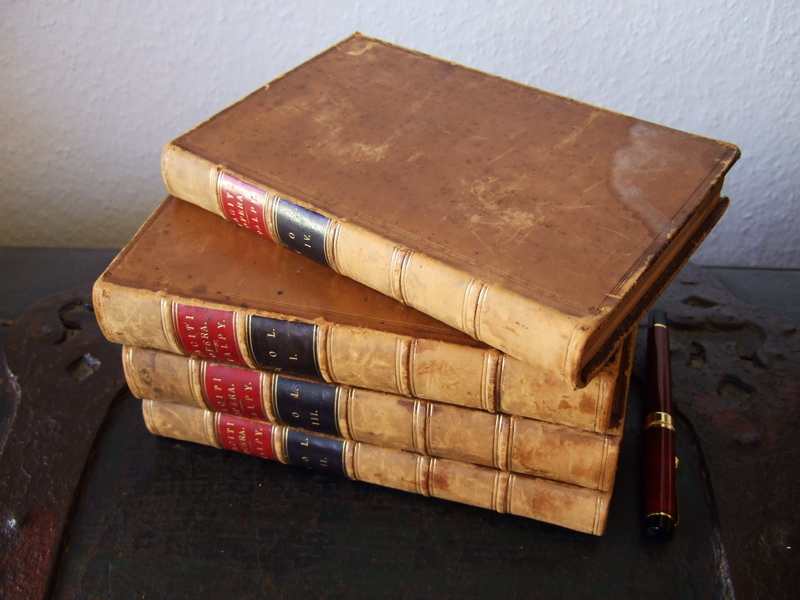
1823ref. GES943Londini, Veneunt Apud G. & W. B. Whittaker (Edito Nova et Auctior), 1823. 596/464/600/288 Seiten, Index: 183 Seiten, lat., 8° (22 cm H.), OLdr. (in lateinischer Sprache) - alle 4 Bände sind in braunem Kalbsleder gebunden, Buchrücken: 5 Bünde, mit jeweils 2 Rückenschildern. - Band 1: Buchdeckel und Rücken leichte Abschabungen, Ecken und Kanten abgerieben, ersten und letzten Seiten leichte Stock- und Altersflecken, einige dezente Bleistiftanstreichungen. Band 2: wie Bd. 1, ohne Anstreichungen, mehr Seiten stockfleckiger. - Band 3: Einband an den Kanten abgeschabter, Rückendeckel mit zwei kleinen Löchern im Leder, ersten und letzten Seiten leicht alters- und stockfleckig, ab Seite 565 durchgehend bis Ende am Fußschnitt ein kleinerer brauner Fleck. - Band 4: wie Bd. 3, auf dem vorderen Buchdeckel durchgehend bis zur letzten Seite ist auf der unteren Ecke ist ein größerer duchgehender Fleck von variierender Größe. - Alle 4 Bände sind altersbedingt in sehr guter Erhaltung. fest gebunden/ hardcover
1981Mm 175x240 Opera in 2 volumi, brossura di pp. 602 complessive, leggere fioriture ai tagli e segni di umidità interessano le ultime pagine del 2° volume, 6 illustrazioni in bianco e nero nel primo volume. Opera in ottime condizioni. SPEDIZIONE IN 24 ORE DALLA CONFERMA DELL'ORDINE.
1955Mm 220x285 Volume rilegato in piena tela rossa con impressioni oro al piatto e al dorso, sovraccoperta editoriale con strappetti al margine superiore, xi-581 pagine con figure in nero e a colori nel testo. Buona copia nel suo complesso con legature ben salde.