91 résultats
In-8° (cm. 23,5)), pp. da p. 393 a p. 478 + 2 pagine di INDICE + 7 pp. di BIBLIOGRAFIA. Brossura editoriale. In copertina DEDICA AUTOGRAFA FIRMATA dell'Autore, docente a Oxford.
1975réf. 313502New York, Arno Press, 1975. 192 Seiten. Index. Originalleinen.
1997The love story of the Emperor Vespasian, who bought peace to Rome after years of strife, and his mistress, the freed slave woman Antonis Caenis, this book recreates Ancient Rome's most turbulent period - the reigns of Tiberius Caligula, Claudius and Nero, and of Vespasian's rise to power.296p. Papqr slightly age toned.else as new. Book
1970réf. 15749Penguin Books classics 1970 432 pages poche. 1970. broche souple. 432 pages. Le récit détaillé par Flavius Josèphe ancien chef rebelle devenu négociateur romain de la révolte juive contre Rome entre 66 et 73 de notre ère. L'ouvrage couvre le siège de Jérusalem la destruction du Temple et la résistance finale à Massada offrant un témoignage unique sur cette période tragique
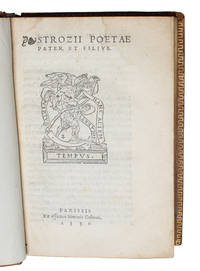
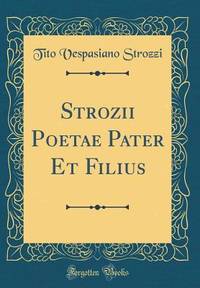
1530réf. 38144Parisiis: Ex officina Simonis Colinaei 1530. 8vo 17.3 cm 6.75". 8 256 4 ff. First and only Colines edition from Italian Renaissance father and son poets containing a dedication by Aldus Manutius to Lucrezia Borgia an extensive table of contents poems by Ercole Strozzi 14731508 followed by those of his father Tito Vespasiano Strozzi 14241505 and "Oratio tumultario habita à Coelio Calcagnino in funere Herculis Strozae." The content covers a variety of themes from the religious to the erotic and formats including numerous elegies and epitaphs. The text is neatly printed in single columns of italic text with a few uncompleted guide letters and initial letters in roman; the Colines "Tempus II" printer's device of Time with his scythe appears on the title-page with the motto "Hanc aciem sola retundit virtus" on a ribbon over a cartouche containing the word "tempus." The text was originally published by Aldus in 1513; Colines enhances the introduction with a 33-line epitaph to the poet. Binding: 19th-century rather deeply diced calf; spine gilt-lettered gilt-ruled with solid and dotted lines and gilt-stamped with a central floral device in five compartments. Covers framed with a gilt rope and floral roll board edges with a dash and dot roll in gilt turn-ins gilt with a Greek key roll; Stormont marbled endpapers all edges gilt ribbon place marker. Evidence of readership: A reader has helpfully added inked marginal reference numbers approximately every eight lines for ease of navigation and entered one small correction in an early hand. Provenance: From the library of American collector Albert A. Howard small booklabel "AHA" at rear. Schreiber Colines 68; Renouard Simon de Colines pp. 1667; Moreau Éditions parisiennes du XVI siècle III 2292; Adams S1957. Bound as above gently rubbed with some loss of leather at corners; joints outside refurbished and front one beginning to crack but covers solidly attached. A few pencilled notes on endpapers; faint touches of hand-coloring on title-page and perhaps one leaf of text. L ight age-toning with a handful of spots three small marginal paper flaws including one to title-page; two other small holes and one repair. Provenance and readership markings as above perhaps a third of the marginal numbers partially trimmed. A pleasurable book to hold or => use. Ex officina Simonis Colinaei hardcover books
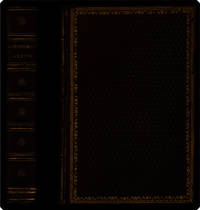
1530réf. 45363Parisiis Ex officina Simonis Colinaei 1530. 8vo. Bound in a very fine later full calf around 1700 profusely gilt spine titlelabel in leather with gilt lettering broad gilt borders on covers edges of covers gilt edges of leaves gilt. A very small nick to top of spine. 8 lvs. 1-2563 lvs. 1 blank. A small and very faint dampstain to upper inner margins of the first 8 lvs. Otherwise very clean throughout. A beautifull printed and wide-margined copy 17x115 cm. Scarce second edition of the "opera" of the poetical works of both father and son. Their collected opere were first published by Aldus Manutius in 1513 together with works of his son under the title Strozii poëtae pater et filius. The offered edition is copied from this Aldus-edition. They were both members of the famous Strozzi-family exiled from Florence.Adams S 1957. - Graesse VI: 512. hardcover
réf. 1391854543.Ghardcover. Good. Access codes and supplements are not guaranteed with used items. May be an ex-library book. hardcover
1530réf. 45363Parisiis, Ex officina Simonis Colinaei, 1530. 8vo. Bound in a very fine later full calf (around 1700), profusely gilt spine, titlelabel in leather with gilt lettering, broad gilt borders on covers, edges of covers gilt, edges of leaves gilt. A very small nick to top of spine. (8) lvs. + (1-)256,(3) lvs. + 1 blank. A small and very faint dampstain to upper inner margins of the first 8 lvs. Otherwise very clean throughout. A beautifull printed and wide-margined copy (17x11,5 cm).
1968réf. 476726Fano Italy : Typis Paulinis 1968. First Edition. Softcover. Very good paperback copy; wrapper edges slightly worn and sun-toned. Remains well-preserved overall; internally tight bright clean and especially sharp-cornered. This copy from a limited edition of 160. Physical description; 32 pages ; 25 cm. Notes; Preface in English; poems in Latin. Subjects; Strozzi Tito Vespasiano 1425-1505 – Criticism and interpretation. Latin poetry Medieval and modern – 15th century. Humanism – Italy. Fano [Italy] : Typis Paulinis paperback
1985In-4 (cm. 30.10), tela editoriale, sovracoperta editoriale illustrata, custodia in cartoncino, pp. 231, (9), con centinaia di illustrazioni in bianco e nero e a colori nel testo. In ottimo stato (nice copy).
1994In-4 (cm. 28.70), cartonato editoriale, sovracoperta editoriale illustrata, pp. 151, (5), con illustrazioni soprattutto a colori nel testo. Romanzo storico di Giancarlo Malacarne. Testo italiano ed inglese. Text in English. Minime tracce di polvere alla sovracoperta; peraltro, volume in ottimo stato (nice copy).
1993réf. 37998Marburg: Jonas-Verl. 1993. 128 S. Mit zahlr. Abb., Grundrissen u. Faksim. Pp. 24x18 cm.
1993réf. 63361Marburg : Jonas-Verl. 1993. 128 S. : 106 Abb.. ; 24 cm Pp., gebundene Ausgabe, Hardcover/Pappeinband, Exemplar in gutem Erhaltungszustand
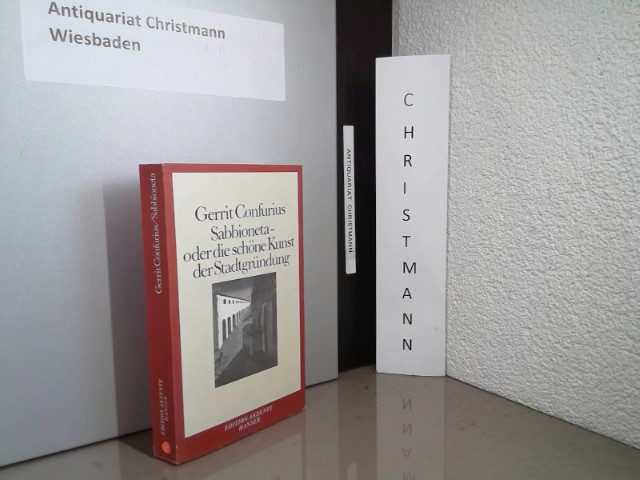
1984réf. 57716München ; Wien : Hanser 1984. 245 S. : Mit Karten und Tafeln ; 21 cm kart., Softcover/Paperback +++ innen seitliche Bleistiftanstreichungen ++++ sonst Exemplar in gutem Erhaltungszustand
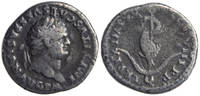
réf. 62084Rome AD 79-80. 18 mm. diameter. Dolphin entwined around anchor on one side and Draped bust of Tutus turning right on the other side. An excellent near mint specimen. 305 g. Obverse: IMP TITVS CAES VESPASIAN AVG P M laureate head rightReverse: TR P IX IMP XV COS VIII P P dolphin coiled around an anchor.RIC 26a RSC 309. Good specimen of the beautiful and rare coin that inspired Aldus Manutius' famous printer's device the dolphin-and-anchor the most famous logo in the history of book printing and the trademark of the Renaissance. The Aldus coin is the only book- or printing-related ancient coin in existence.Aldus Manutius the most famous printer of all times had been given a copy of the Titus coin with the dolphin-and-anchor logo on the verso as a gift by Pietro Bembo. He was extremely taken by the magnificent logo that in Roman times by Titus Vespasian had been used to illustrate the proverb "Festina lente" "make haste slowly" and was so inspired by it that he began using it as his printer's device at the very beginning of the 16th century. Before it appears as his printer's device for the first time he used it as an illustration in one of his most magnificent books Colonna's "Hypnerotomachia Poliphili" 1499.In his "Adagiorum Collectanea" the collection of classical proverbs that he kept revising throughout his life Erasmus Roterodamus had composed a lengthy essay on the "festina lente" proverb which intrigued him immensely. Erasmus traced the motto back to the emperor Titus Vespasian who had minted a coin with the emblem i.e. the present coin and had the rare opportunity to inspect that very coin - namely that which belonged to his printer Aldus Manutius who had been given it by the great Italian scholar Pietro Bembo. The second edition of Erasmus' "Adagiorum Collectanea" was published by Aldus in Venice in 1508 and Erasmus subsequently praises his printer to the skies in the course of explaining "festina lente". Erasmus explains the motto as such: "the circle as having neither beginning nor end represents eternity. The anchor which holds back and ties down the ship and binds it fast indicates slowness. The dolphin as the fastest and in its motions most agile of living creatures expresses speed. If then you skillfully connect these three they will make up some such principle as "Ever hasten slowly" and adds that by claiming it as his own recognizable and marketable emblem Aldus gave "fresh celebrity to the same device that was once approved by Vespasian". Not only is it "most familiar it is highly popular among all those everywhere in the world to whom sound learning is either familiar or dear." Erasmus seems to also suggest that the device had perhaps become too popular: "the city of Venice with its many claims to distinction has none the less become distinguished through the Aldine press so much so that any books shipped from Venice to foreign countries immediately find a readier market merely because they bear that city's imprint."And he might have been right. In fact the Aldine press was so successful and renowned and Aldus' printer's device as taken from the Titus Vespatian coin so incorporated a symbol of elegant correct printing and higher learning that it was imitated by printers all over Europe. By using the dolphin-and-anchor device other printers although much inferior would benefit from the authority and prestige of the Aldine press. In spite of Erasmus' attempts to make the public aware of this by praising the efforts of Aldus and opposing them to "those common printers who reckon one pitiful gold coin in the way of profit worth more than the whole realm of letters" publishers kept using the Aldus device for centuries. Aldus Manutius Grolier Club: no 129RIC 26a RSC 309. unknown
1971Mm 150x215 Volume rilegato in tela con sovraccoperta originale, 205 pagine. Opera in ottime condizioni. Spedizione in 24 ore dalla conferma dell'ordine.
réf. 62084[Rome, AD 79-80]. 18 mm. diameter. Dolphin entwined around anchor on one side, and Draped bust of Tutus, turning right on the other side. An excellent, near mint specimen. 3,05 g. Obverse: IMP TITVS CAES VESPASIAN AVG P M, laureate head rightReverse: TR P IX IMP XV COS VIII P P, dolphin coiled around an anchor.RIC 26a, RSC 309.
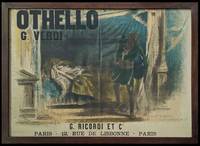
1894réf. verdiothelloVERDI'S OTELLO COMES TO PARIS Lithograph poster 88 x 65 cm outer dimensions of frame color lithograph framed and glazed plexi. Centerfold very minor toning excellent. Very rare color lithograph poster produced in conjunction with the Paris premier of Giuseppe Verdi's opera Otello. Verdi 1813-1901 had retired from opera after Aida in 1871 but his publisher Giulo Ricordi 1840-1912 and the librettist Arrigo Boito 1842-1918 at last convinced him to return with Otello which premiered on 5 February 1887 at the Teatro alla Scala in Milan and proved to be a global success. The Paris production was a French-language version by Camille du Locle 1832-1903 and Boito which opened at the Paris Opéra on 12 October 1894 under the direction of Alexandre Lapissida 1839-1907; Verdi was in attendance. The poster designed by Vespasiano Bignami 1841-1929 depicts the climactic scene in Act 4 Act 5 of Shakespeare's play in which Otello rises having just strangled Desdemona in her bed. In Paris the part of Otello was sung by Albert Saléza 1867-1916 and that of Desdemona by Rose Caron 1867-1930. Bignami's composition is not entirely of his own invention but an interpretation preserving the original staging of this scene. At the foot of the poster is the address 12 Rue de Lisbonne of the Paris branch of the Ricordi publishing firm where interested parties could acquire the score of the production. Printed at the time as ephemeral advertising the poster is today very rare. We could locate no examples in institutional collections. R. Stabilimento Ricordi-Milano
réf. 0366509845.Ghardcover. Good. Access codes and supplements are not guaranteed with used items. May be an ex-library book. hardcover
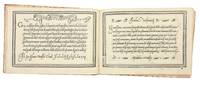
1580réf. 5531Venice: Alessandro Gardano 1580. THIRTEENTH EDITION first printed in 1548. All editions are rare. Hardcover. Fine. Bound in 18th c. paste-paper over boards with a slim red morocco spine light wear to boards and spine upper joint starting corners bumped. A very nice copy preserving earlier endpapers with a 17th c. ownership inscription and a calligraphic flourish. The volume is overall very fresh with just a very light stain to the inner margin of the first few leaves light soiling to the title with two early ownership inscriptions and last leaf some scattered marginal soiling and a few small stains on two leaves. Illustrated throughout with 101 pages of woodcut alphabets and writing examples. An influential writing manual by the Franciscan friar and writing master Vespasiano Amphiareo who practiced and taught calligraphy in Florence before moving to Venice around 1518. In the introduction to the first edition of his book 1548 he tells us that he had already been practicing his craft for thirty years. The book showcases Amphiareo's "bastarda del frate" script which combined elements of the mercantile and chancery hands to produce a more fluid form that would serve the needs of both the chancery scribe and the merchant as well as non-professional letter writers. As the author writes in his dedication to Prince Francesco Donato the Doge of Venice "Having through my own art and industry newly devised a form and a character of handwriting called bastarda which like a mystical body of nature partakes of many styles of writing it seems to me that it may be equally suited to the chancery scribe because it is somewhat elongated and graceful and useful to the merchant because it is cursive and swift; and therefore to every other sort of person." The book first appeared in 1548 and went through no fewer than 18 editions-with the addition of two new scripts after 1572-up to the year 1620. In addition to the writing examples which occupy 101 pages Amphiareo includes instructions for making black blue red and gold inks; as well as instructions for making and holding a pen. Amphiareo's was the first writing book in oblong format designed to better reflect the dimensions of writing paper rather than the vertical format used by printers. In his letter to the reader Amphiareo explains how he developed his script: "For many years I had it in mind to find a form of letters so easy and quick that both chancery clerks and merchants could write it readily and that would fully serve them for letters and for keeping books. This inclination of mine was greatly spurred on by men of outstanding intellect in Florence at the time when I was pursuing my usual occupation in that most illustrious city. "There a certain mercantile letter with heavy strokes was in use not very unlike the Venetian mercantile. Since it was difficult and slow both to write and to learn I set myself to study and sharpen my wits so much that I adapted certain bodies and certain strokes of the one and the other letter. In the judgment of men of understanding my idea turned out gracefully. This letter which I named the Bastarda del Frate was so welcome and so praised that in the said city of Florence fathers would not have their sons learn any other letter. This proved a success both for them and for me since they learned to write with the highest excellence and I drew no small profit from it. Because my intention is to share with all the world the skill that God has given me and I cannot be bodily in more than one place I have had this present little book engraved at incredible expense to myself." In addition to the bastarda chancery and mercantile hands Amphiareo includes "a number of gothic hands: bollatica francesca rognosa etc. all in appropriate texts; a number of alphabets: ornate roman capitals signed in interlaced ciphers of the sort expounded by Palatino followed by a set of decorated roman capitals made up of twisted boughs or logs; a handsome set of gothic entrelac initials two to the page decorated with putti heads and the like; a decorated gothic set also two to the page; a set of simplified geometrically constructed minuscules round gothic based on Fanti's; and roman inscriptional outline capitals against horizontally ruled squares. "Amphiareo's choice of format was also a significant change. The books of his predecessors from 1514 until his own had all been vertical octavos apart from Tagliente's one perhaps abortive experiment in this format in 1525. Their layouts were modeled on book practice. Amphiareo's format showed off to best advantage his layouts inspired not by book pages but by epistolary practice. The letter of his day was generally written on a wide short sheet of paper or vellum folded after writing to produce an envelope - somewhat on the order of today's airletter form turned sideways. Amphiareo's pages suggest this shape quite successfully."Morison "On Some Italian Scripts of the XV and XVI Centuries" in "Selected essays on the history of letter-forms in manuscript and print" Vol. 2 Ch.8 p. 89 ff. Alessandro Gardano hardcover
1572réf. 42366In Venetia, , 1572. In-12 oblong (15 x 20,6 cm) de (4) ff. de texte (43) ff., modèles de calligraphie, titre avec vignette gravée sur bois, veau brun, dos orné à nerfs (reliure du XVIIe siècle). Manque 8 feuillets (signatures D 6 à E 5).
réf. LCS-1864051Recueil en partie original de la plus insigne rareté. Venetia, 1575. In-8 oblong de (110) pages - complet - marges blanches extérieures de 7 ff. restaurées sans atteinte aux lettres. Plein maroquin brun estampé de filets à froid, dos à nerfs, tranches dorées. Reliure de Lobstein-Laurenchet. 145 x 204 mm.
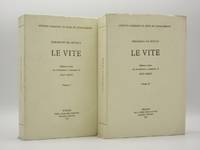
1970réf. 1231I163Firenze Florence: Nella Sede Dell'Istituto Palazzo Strozzi 1970-1976. 1st Edition . Paperback. Printed pages: lxvi 601; 731. Good Plus. 6 x 8.5 inches 15 x 22 cm. Complete two volume set. Card wraps. Light soiling and slight foxing to covers. Crease to front cover of volume I. Slight wear to edges of covers. Light foxing to page edges. Clean text throughout. Italian languange. Overall condition is Good Plus. Please Note: This is a heavy item and international postage will be more than the standard rate. Actual Royal Mail postage costs are: Europe £23.00; USA £33.00; Oceania £40.00; Rest of World £37.00. A postage supplement will be requested after the order has been placed. Size: 6 x 8.5 inches 15 x 22 cm. Nella Sede Dell'Istituto Palazzo Strozzi paperback
1976cm. 15 x 21,5, 732 pp. Istituto nazionale di studi sul Rinascimento 1040 gr. 732 p.
1970cm. 15 x 21,5, lxvi-604 pp. Istituto nazionale di studi sul Rinascimento 935 gr. lxvi-604 p.