682 résultats
réf. 3353934 pages in4 - bon état malgré quelques rousseurs -
1987réf. LFA-126739809N° 35 (Juin 1987) 66 pages, format 205 x 285 mm, illustré, broché couverture couleurs, bon état
réf. 19892Villegly, CNEC, Centre René Nelli, 1997, - 17x24 - broché, 213 pages ; illustrations. n° 26/:27
réf. 19893Villegly, CNEC, Centre René Nelli, 1991, - 17x24 - broché, 138 pages ; illustrations. n°16
réf. 19894Villegly, CNEC, Centre René Nelli, 2000, - 17x24 - broché, 135. pages ; illustrations. n° 32
réf. 19895Villegly, CNEC, Centre René Nelli, 1994, - 17x24 - broché, 171 pages ; illustrations. n°22
réf. 19896Villegly, CNEC, Centre René Nelli, 1992, - 17x24 - broché, 101 pages ; illustrations. n°19
réf. 19897Villegly, CNEC, Centre René Nelli, 1993 - 17x24 - broché,168 pages ; illustrations. n°21
réf. 19898Villegly, CNEC, Centre René Nelli, 1994, - 17x24 - broché, 149 pages ; illustrations. n°23
réf. 19899Villegly, CNEC, Centre René Nelli, 1991, - 17x24 - broché,126 pages ; illustrations. n° 17
réf. 19900Villegly, CNEC, Centre René Nelli, 1999, - 17x24 - broché, 155 pages ; illustrations. n° 29
réf. 19901Villegly, CNEC, Centre René Nelli, 1998, - 17x24 - broché,127 pages ; illustrations. n° 28
réf. 19902Villegly, CNEC, Centre René Nelli, 1990, - 17x24 - broché, 147 pages ; illustrations. n°15
réf. 19903Villegly, CNEC, Centre René Nelli, 1999, - 17x24 - broché,122 pages ; illustrations. n°31
réf. 19904Villegly, CNEC, Centre René Nelli, 1993, - 17x24 - broché, 135 pages ; illustrations. n° 20
réf. 19905Villegly, CNEC, Centre René Nelli, 2000, - 17x24 - broché, 163 pages ; illustrations. n°33
réf. 91722A Cologne, chez Pierre Marteau, 1793, 1 volume in-12 de 170x100 mm environ, (1) f., 1 page de titre, 505 pages (1) f., plein veau granité fauve, dos à nerfs portant titres dorés sur pièce de titre en maroquin bordeaux, orné de caissons à motifs dorés, coupes dorées, tranches mouchetées. Quelques rousseurs et pages brunies, petites infimes galeries de ver sur les bordures des pages de garde, coins émoussés, manques de cuir sur les coiffes, sinon bon état.
1976réf. LFA-126740932Revue d'histoire populaire : 32 pages, format 210 x 295 mm, illustrée, brochée, bon état
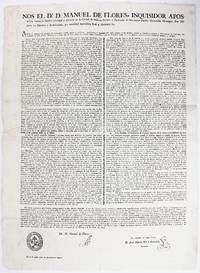
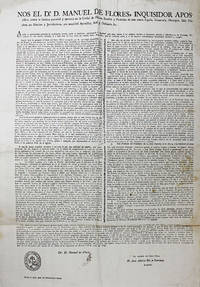
1815réf. 5342Mexico: 8 de Julio 1815. Very good. Double-sheet broadside measuring 23.75 x 17 inches. Old fold lines some slight rumpling. Minor soiling and wear. A fascinating and rare broadside in which the Inquisition attempts to prohibit pro-independence publications including the 1814 Constitution of Apatzingán during the midst of the Mexican Revolution. Dated July 8 1815 this proclamation of the Inquisition first reiterates a blanket prohibition on what it labels seditious and anti-Catholic publications that is to say anything in favor of the revolution and independence. It warns that any statements in favor of liberty and democracy constitute heresy in the eyes of the Inquisition and that such calls in fact seek to subvert the natural order rather than re-establish it: "Producciones de una nueva raza de Filósofos hombres de espíritu corrompido que baxo del especioso titulo de defensores de la libertad maquinan realmente contra ella destruyendo de este suerte el orden político y social y gerarquia de la Religion cristiana exhortando con este language de seduccion á ascudir el yugo de subordinacion y sujecion á las lexítimas Potestades tan recomendada por Jesucristo y pretendiendo por aqui fundar si les fuera posible sobre las ruinas de la Religion y Monarquias aquella soñada libertad que malamente suponen concedida á todos los hombres por la naturaleza: razon porque prohibe los muchos libros que menciona y los demás que sean de la misma clase para precaver con oportuno remedio el daño que puedan occasionar." The proclamation then continues in seven numbered sections to outlaw specific works published by the revolutionary government its forces and its supporters. Most significantly the broadside outlaws the Decreto Constitucional para la Libertad de la América Mexicana more commonly known as the Constitution of Apatzingán. This document promulgated by the Congress of Anáhuac on October 22 1814 printed 242 articles for the establishment of republican government in Mexico although it was never brought into force. The propositions put forth by the Constitution are so egregious according to the Inquisition that it is impossible in one edict to denounce them all individually: "Excederia los límites de un edicto la especificacion particular de todos y de cada uno de los crasísimos errores que contiene este infernal papel; pero bastará advertir á los Fieles que en él baxo el respetable nombre de Religion Católica Apostólica Romana que sirve de escudo á sus tramas como antes servia el de Fernando VII contra quien tan iniquamente se han declarado rebeldes se introducen las mas groseras heregias y los mayores delerios." Nevertheless the authors go on to highlight the most transgressive articles condemn the inferred inspiration of the document from authors like Hobbes and Rousseau and emphasize the rejection of Church doctrine implicit in calls for revolution and democracy: "Mas como los Autores de Constitucion se han propuesto revelarse tambien contra la Doctrina expresa de la Iglesia dogmatizan ser licito á los Ciudadanos levantarse contra el Principe prevarle del Reyno mudar el Gobierno monárquico en republicano á pretexto de tirania como si fuera lo mismo fundarlo de nuevo que revelarse contra el ya fundado. Decir que es licito y justo el tal levantamiento contra el lexitimo Principe aunque sea baxo de pretexto de tirania es una proposicion condenada repetidamente por la Iglesia y heregia declarada." In the remaining six sections the Inquisition continues to condemn a litany of decrees sermons almanacs manuscripts and other texts that emanate from revolutionary sources or espouse democratic ideas. In all the document serves as an outstanding representation of the royalist Catholic and conservative forces that were attempting to hold power in Mexico during this period and a fascinating example of attempted censorship of revolutionary ideals. Rare we locate only two copies -- one at Berkeley and Medina's copy at the National Library of Chile. 8 de Julio unknown books
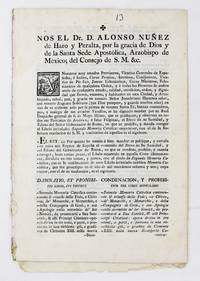
1789réf. 6490Mexico City 1789. Still very good. 9pp. Disbound. Folio. Lacking plain front wrappers. Light wear at lower edge. Scattered faint foxing and light tanning. A fascinating trilingual decree to the Spanish colonial territories of America and the Philippines featuring Latin Italian and Spanish in dual columns. The document focuses solely on the prohibition of one book which was considered particularly heinous to the Catholic Church and the Spanish Crown entitled Segunda Memoria Catolica written in 1784 by the Jesuit missionary Carlo Borgo and published by Andres Febres. The work unsurprisingly caused controversy because within the author harshly criticizes the persecution of the Jesuits accuses the crown and the church of plotting against the order and proposes that those involved be sentenced to death for treason. He further theorizes that the expulsion of the Jesuits of America together with the independence of the United States would cause the loss of the Spanish dominions in America which turned out to be prophetic or highly coincidental depending on your point of view. The present document itself contains several parts. First is the preamble by the Archbishop of Mexico in Spanish that states the authority from which the decree is issued and its subject. Second is proclamation of the Spanish king Carlos IV ordering that the work be proscribed and all copies confiscated. What follows in two columns is the brief but complete and official condemnation by the church in Latin and Italian. Then the document continuing in two columns prints the longer prohibition by Pope Pius VI "Ad Perpetuam Rei Memoriam" and an edict in Latin and Spanish from the Reverenda Camara Apostolica giving its administrative approval. The final part contains the approval of the text as it was received in New Spain by the Archbishop of Mexico and his signature. In all a very interesting look at the administration and process of the Index for Prohibited Books in a very unusual trilingual format. We locate two likely copies at Yale and the BNE. unknown books
1789réf. 6490Mexico City 1789. Still very good. 9pp. Disbound. Folio. Lacking plain front wrappers. Light wear at lower edge. Scattered faint foxing and light tanning. A fascinating trilingual decree to the Spanish colonial territories of America and the Philippines featuring Latin Italian and Spanish in dual columns. The document focuses solely on the prohibition of one book which was considered particularly heinous to the Catholic Church and the Spanish Crown entitled Segunda Memoria Catolica written in 1784 by the Jesuit missionary Carlo Borgo and published by Andres Febres. The work unsurprisingly caused controversy because within the author harshly criticizes the persecution of the Jesuits accuses the crown and the church of plotting against the order and proposes that those involved be sentenced to death for treason. He further theorizes that the expulsion of the Jesuits of America together with the independence of the United States would cause the loss of the Spanish dominions in America which turned out to be prophetic or highly coincidental depending on your point of view. The present document itself contains several parts. First is the preamble by the Archbishop of Mexico in Spanish that states the authority from which the decree is issued and its subject. Second is proclamation of the Spanish king Carlos IV ordering that the work be proscribed and all copies confiscated. What follows in two columns is the brief but complete and official condemnation by the church in Latin and Italian. Then the document continuing in two columns prints the longer prohibition by Pope Pius VI "Ad Perpetuam Rei Memoriam" and an edict in Latin and Spanish from the Reverenda Camara Apostolica giving its administrative approval. The final part contains the approval of the text as it was received in New Spain by the Archbishop of Mexico and his signature. In all a very interesting look at the administration and process of the Index for Prohibited Books in a very unusual trilingual format. We locate two likely copies at Yale and the BNE. unknown
1815réf. 5342Mexico: 8 de Julio 1815. Very good. Double-sheet broadside measuring 23.75 x 17 inches. Old fold lines some slight rumpling. Minor soiling and wear. A fascinating and rare broadside in which the Inquisition attempts to prohibit pro-independence publications including the 1814 Constitution of Apatzingán during the midst of the Mexican Revolution. Dated July 8 1815 this proclamation of the Inquisition first reiterates a blanket prohibition on what it labels seditious and anti-Catholic publications that is to say anything in favor of the revolution and independence. It warns that any statements in favor of liberty and democracy constitute heresy in the eyes of the Inquisition and that such calls in fact seek to subvert the natural order rather than re-establish it: "Producciones de una nueva raza de Filósofos hombres de espíritu corrompido que baxo del especioso titulo de defensores de la libertad maquinan realmente contra ella destruyendo de este suerte el orden político y social y gerarquia de la Religion cristiana exhortando con este language de seduccion á ascudir el yugo de subordinacion y sujecion á las lexítimas Potestades tan recomendada por Jesucristo y pretendiendo por aqui fundar si les fuera posible sobre las ruinas de la Religion y Monarquias aquella soñada libertad que malamente suponen concedida á todos los hombres por la naturaleza: razon porque prohibe los muchos libros que menciona y los demás que sean de la misma clase para precaver con oportuno remedio el daño que puedan occasionar." The proclamation then continues in seven numbered sections to outlaw specific works published by the revolutionary government its forces and its supporters. Most significantly the broadside outlaws the Decreto Constitucional para la Libertad de la América Mexicana more commonly known as the Constitution of Apatzingán. This document promulgated by the Congress of Anáhuac on October 22 1814 printed 242 articles for the establishment of republican government in Mexico although it was never brought into force. The propositions put forth by the Constitution are so egregious according to the Inquisition that it is impossible in one edict to denounce them all individually: "Excederia los límites de un edicto la especificacion particular de todos y de cada uno de los crasísimos errores que contiene este infernal papel; pero bastará advertir á los Fieles que en él baxo el respetable nombre de Religion Católica Apostólica Romana que sirve de escudo á sus tramas como antes servia el de Fernando VII contra quien tan iniquamente se han declarado rebeldes se introducen las mas groseras heregias y los mayores delerios." Nevertheless the authors go on to highlight the most transgressive articles condemn the inferred inspiration of the document from authors like Hobbes and Rousseau and emphasize the rejection of Church doctrine implicit in calls for revolution and democracy: "Mas como los Autores de Constitucion se han propuesto revelarse tambien contra la Doctrina expresa de la Iglesia dogmatizan ser licito á los Ciudadanos levantarse contra el Principe prevarle del Reyno mudar el Gobierno monárquico en republicano á pretexto de tirania como si fuera lo mismo fundarlo de nuevo que revelarse contra el ya fundado. Decir que es licito y justo el tal levantamiento contra el lexitimo Principe aunque sea baxo de pretexto de tirania es una proposicion condenada repetidamente por la Iglesia y heregia declarada." In the remaining six sections the Inquisition continues to condemn a litany of decrees sermons almanacs manuscripts and other texts that emanate from revolutionary sources or espouse democratic ideas. In all the document serves as an outstanding representation of the royalist Catholic and conservative forces that were attempting to hold power in Mexico during this period and a fascinating example of attempted censorship of revolutionary ideals. Rare we locate only two copies -- one at Berkeley and Medina's copy at the National Library of Chile. 8 de Julio unknown
1815réf. LL 577Nos el Dr. D. Manuel de Flores inquisidor apostoÌlico contra la hereÌtica pravedad y apostasiÌa en la ciudad de MeÌxico estados y provincias de esta Nueva España Guatemala Nicaragua Islas Filipinas sus distritos y jurisdicciones .: A todas y qualesquiera personas de qualquier estado . y habitantes en las ciudades villas y lugares de este nuestro distrito . salud en nuestro Señor Jesucristo . y aÌ los nuestros mandamientos firmemente obedecer y cumplir. Begins Sabed: Que la paternal solicitud del Santo Oficio encargada por la autoridad apostoÌlica leyes del reyno y una inmemorial costumbre . de extirpar en estos reynos no solo las heregias manifiestas sino quanto pueda ofender la pureza de la religion . ha clamado en todos tiempos contra los perversos perturbadores del buen orden religioso y social … Mexico: 8 de Julio 1815. Double-sheet broadside measuring 23.75 x 17 inches.Title from caption and beginning of text. Dated and signed at end: Dada en la Inquisicion de MeÌxico aÌ 8 de julio de 1815. Dr. D. Manuel de Flores with his rubric in manuscript. Por mandado del Santo Oficio D. JoseÌ Maria Ris y Garnica secretario with his rubric in manuscript. Title from caption and beginning of text.Dated and signed at end: Dada en la Inquisicion de MeÌxico aÌ 8 de julio de 1815 . Dr. D. Manuel de Flores with his rubric in manuscript. Por mandado del Santo Oficio D. JoseÌ Maria Ris y Garnica secretario with his rubric in manuscript. At foot of sheet: Nadie le quite pena de excomunion mayor.Text in double columns.Printed on 2 sheets joined together to form a single broadside. Seal of the Inquisition with caption "Domine Iudica Causam tuam. Exurge" printed at bottom left corner. A fascinating and rare broadside in which the Inquisition attempts to prohibit pro-indepedence publications including the 1814 Consitution of Apatzingán during the midst of the Mexican Revolution. Dated July 8 1815 this proclamation of the Inquisition first reiterates a blanket prohibition on what it labels seditious and anti-Catholic publications that is to say anything in favor of the revolution and independence. It warns that any statements in favor of liberty and democracy constitute heresy in the eyes of the Inquisition and that such calls in fact seek to subvert the natural order rather than re-establish it: "Producciones de una nueva raza de Filósofos hombres de espíritu corrompido que baxo del especioso título de defensores de la libertad maquinan realmente contra ella destruyendo de este suerte el orden político y social y gerarquia de la Religion cristiana exhortando con este language de seduccion á ascudir el yugo de subordinacion y sujecion á las lexítimas Potestades tan recomendada por Jesucristo y pretendiendo por aqui fundar si les fuera posible sobre las ruinas de la Religion y Monarquias aquella soñada libertad que malamente suponen concedida á todos los hombres por la naturaleza: razon porque prohibe los muchos libros que menciona y los demás que sean de la misma clase para precaver con oportuno remedio el daño que puedan occasionar." The proclamation then continues in seven numbered sections to outlaw specific works published by the revolutionary government its forces and its supporters. Most significantly the broadside outlaws the Decreto Constitucional para la Libertad de la América Mexicana more commonly known as the Constitution of Apatzingán. This document promulgated by the Congress of Anáhuac on October 22 1814 printed 242 articles for the establshment of republican government in Mexico although it was never brought into force. The propositions put forth by the Constitution are so egregious according to the Inquisition that it is impossible in one edict to denounce them all individually: "Excederia los límites de un edicto la especificacion particular de todos y de cada uno de los crasísimos errores que contiene este infernal papel; pero bastará advertir á los Fieles que en él baxo el respetable nombre de eligion Católica Apostólica Romana que sirve de escudo á sus tramas como antes servia el de Fernando VII contra quien tan iniquamente se han declarado rebeldes se introducen las mas groseras heregias y los mayores delerios." Nevertheless the authors go on to highlight the most transgressive articles condemn the inferred inspiration of the document from authors like Hobbes and Rousseau and emphasize the rejection of Church doctrine implicit in calls for revolution and democracy: "Mas como los Autores de Constitucion se han propuesto revelarse tambien contra la Doctrina expresa de la Iglesia dogmatizan ser licito á los Ciudadanos levantarse contra el Principe prevarle del Reyno mudar el Gobierno monárquico en republicano á pretexto de tirania como si fuera lo mismo fundarlo de nuevo que revelarse contra el ya fundado. Decir que es licito y justo el tal levantamiento contra el lexitimo Principe aunque sea baxo de pretexto de tirania es una proposicion condenada repetidamente por la Iglesia y heregia declarada." In the remaining six sections the Inquisition continues to condemn a litany of decrees sermons almanacs manuscripts and other text that emanate from revolutionary sources or espouse democratic ideas. In all the document serves as an outstanding representation of the royalist Catholic and conservative forces that were attempting to hold power in Mexico during this period and a fascinating example of attempted censorship of revolutionary ideals. ¶ Medina Mexico 11059 confusing the date for "8 de Febrero" instad of "8 de Julio. LL 577
réf. 51815P., Peytieux, Corneille, 1824, in 12 relié demi basane vert-foncé, dos lisse orné, XLVII-311 pages ; des rousseurs et petits défauts mineurs.
1759réf. 112615A Cologne, Chez Pierre Marteau, 1759, 2 vol. in-12, ii-488 et viii-411 pp, 9 forts intéressantes figures (2 frontispices et 7 planches gravées repliées) représentant différentes scènes de l’inquisition, des supplices, des costumes, etc., culs-de-lampe, reliures plein veau marbré, dos à 5 nerfs guillochés et caissons ornés, titres dorés, coupes filetées, tranches rouges (rel. de l'époque), bon état, ex-libris Camille Pauffin. Edition originale (Caillet 5161)