Multiple ContributorsMareMagnum

697 résultats
195268 pages. Features: Great colour-photo ad for International Trucks inside front cover; Rab Butler's Bid for Power - in London Letter; Biggest Man on the Biggest Campus - Dr. Sidney Smith is President of the University of Toronto - article with photos; We Live in the World's Most Famous House - William Levitt of Levitt and Sons has built thousands of houses since the war in Levittown, NY and Levittown, PA - he is the Henry Ford of housing - article with photos; Billy Sunday of the Birds - a Maclean's flashback to Jack Miner and his legacy of caring for wild birds - article with photos in colour and black and white; The Farmer Who Makes Movies - Osmond Borradaile, the veteran Canadian cameraman has returned to his Chilliwack farm and has no intention of ever returning to the Hollywood rat race he once knew - article with photos; The Champ Still Baby Sits - Marline Stewart (Streit) of Fonthill, Ontario hasn't let all her trophies dazzle her - young gifted golfer article with photos; For 3 Nights Only - story by Joseph Schull illustrated by Marray Smith; Hero of the Hunted Men - Yaroslav Stetzko leads an army of underground fighters in a crusade to crush Russian imperialism - the Anti-Bolshevik Bloc of Nations (ABN) - photos and article; Our Passport was a Dishrag - Johnny Cochrane and and Lenny Burton, two Canadian girls, describe their wonderful low-budget world travels - article with photos; Never Bet With Your Wife - humour by Robert Thomas Allen, illustrated by Duncan MacPherson; Cartoons by Peter Whalley - The Income Inquisition; Nice colour photos ad for Massey-Harris says "Power Farming Makes Canada a Land of Plenty"; Great centerfold ad for the 1952 Ford; Household Finance (HFC) full-page ad; Nice half-page ad for movie Macao, starring Robert Mitchum and Jane Russell; Full-page colour REO truck ad; 1952 Mercury car ad; Nice colour ad for Champion spark plugs inside back cover features young baseball player at bat; Sweet two-page colour ad for 1952 General Motors cars; Altas Tire ad features Byron, Michigan. Unmarked with moderate wear. A quality copy. Book
réf. 3353934 pages in4 - bon état malgré quelques rousseurs -
réf. 19959BROCHE - 11X 19- éditions LIBRAIRIE ANCIENNE HONORE CHAMPION PARIS - 2 VOLUMES 197/167 - PP - 1927 LES CLASSIQUES DE L'HISTOIRE DE FRANCEAU MOYEN AGE
réf. 223066Collection Les Classiques de l'Histoire de France au Moyen AgeParis, Champion, 1926-1927 2 vol. in-12, LXVII-197 pp. et 170 pp., index, broché. Dos abîmé au tome I.
Lima, 1777, 29 x 20,5 cm., cartoné moderno, portada + 142 págs. + 4 hojas de tablas plegadas. (El nombre del autor aparece al fin de esta rara obra no recogida por Palau y de la que no hemos visto ningún ejemplar en el Catálogo Colectivo de Bibliotecas Públicas Españolas, en la web Iberian Boooks, ni en los fondos de la Biblioteca Nacional. Amusquívar Fue uno de los inquisidores más jóvenes que tuvo el Tribunal de Lima, inclusive tuvo que esperar cumplir los 30 años en setiembre de 1744 para ejercerlo. Llegó a mostrar tal desinterés por las funciones del cargo que, estando como único inquisidor en el Tribunal de Lima, pretextando motivos de salud salió fuera de la ciudad y le encargó su puesto al fiscal Bartolomé López Grillo, figura que no tenía precedentes. El Arzobispo de Lima presentó una queja en su contra por la difusión que había realizado de unas profecías que anunciaban la destrucción de Lima. Falleció en Abril de abril de 1763 con fama de hombre justo y caritativo).
B., Muchnik Editores, 1983, 21'5 x 12'5 cm., 286 págs. - 1 h.
1623In-4°, XXXIX, frontespizio con grande marca della Stamperia Camerale xilografica (Aquila coronata con ali spiegate che tiene drappo tra gli artigli), grande iniziale xilografica, legatura in cartonato. Singolare figura di ecclesiastico, il De Dominis incontrò l'avversione del Papato per le sue idee riformistiche e per essersi schierato al fianco di Paolo Sarpi nella contesa tra Venezia e Paolo V. A seguito dell'incolmabile distanza con il Papato di Roma, De Dominis fece un passo epocale, convertendosi all'anglicanesimo e trasferendosi alla corte di Giacomo I, che lo accolse con grande entusiasmo. Ben presto però venne in urto anche con la corte inglese e solo grazie all'elezione del pontefice Gregorio XV (Alessandro Ludovisi, suo amico) poté ritornare a Roma, ma dovette fare mostra di pentimento e ritrattazione di quanto aveva prima scritto contro il Papato, cosa che gli costò il feroce disprezzo della corte anglicana. La morte di Gregorio XV determinò la sospensione della protezione e della pensione assegnatagli dal papa: la conseguente ira del De Dominis lo espose alla feroce repressione dell'Inquisizione, che lo condannò per eresia recidiva. Condannato alla Fortezza (Castel S. Angelo), vi morì per cause naturali. L'Inquisizione tuttavia proseguì il processo arrivando alla condanna post mortem: le spoglie del De Dominis furono riesumate e arse assieme ai suoi libri e l'autore condannato a una perpetua damnatio memoriae. L'opera della ritrattazione, il Reditus, verrà proibita anche a Venezia a causa dell'affermazione della supremazia del potere papale sui poteri temporali.A. Russo, Marc'Antonio De Dominis, Arcivescovo di Spalato e apostata (1560-1624), Napoli, Istituto della Stampa 1965.Delio Cantimori, Eretici italiani del Cinquecento, Torino, Einaudi 1992In-4°, XXXIX, title page with large wood engraved print of the Stamperia Camerale (crowned eagle with outstretched wings holding cloth in its claws), large wood engraved initial, cardboard binding. A singular ecclesiastical figure, De Dominis encountered the aversion of the Papacy for his reformist ideas and for having sided with Paolo Sarpi in the dispute between Venice and Paul V. Following the unbridgeable distance with the Papacy of Rome, De Dominis made a major change, converting to Anglicanism and moving to the court of James I, who welcomed him with great enthusiasm. Soon, however, he came into conflict with the English court and thanks to the election of Pope Gregory XV (Alessandro Ludovisi, his friend) he was able to return to Rome, but he had to show repentance and retraction of what he had previously written against the Papacy. The retraction cost him the fierce contempt of the Anglican court. The death of Gregory XV led to the suspension of the protection and pension assigned to him by the pope: the consequent wrath of De Dominis exposed him to the ferocious repression of the Inquisition, which condemned him for heresy recidivism. Sentenced to the Fortress (Castel S. Angelo), he died there of natural causes. However, the Inquisition continued the process arriving at the post-mortem sentence: the remains of De Dominis were burned together with his books and the author sentenced to a perpetual damnatio memoriae. The work of retraction, the Reditus, was also prohibited in Venice due to the affirmation of the supremacy of papal power over temporal powers.A. Russo, Marc'Antonio De Dominis, Archbishop of Spalato and apostate (1560-1624), Naples, Institute of the Press 1965.Delio Cantimori, Italian heretics of the sixteenth century, Turin, Einaudi 1992
1925réf. 45739Berlin, Carl Flemming und C. T. Wiskott AG um, 1925.
réf. 14675o.J. französ. Dominikaner, Inquisitor. Um 1580 Vizeinquisitor in Avignon, beschäftigt mit Hexenprozessen, um 1610 Prior des Dominikanerordens in Saint Maxim b. Aix-en-Provence. 1618 gestorben. Halbfigur im Oval, umgeben von Rollwerk. Kupferstich bei M. van Lochom. 147 x 105 mm.
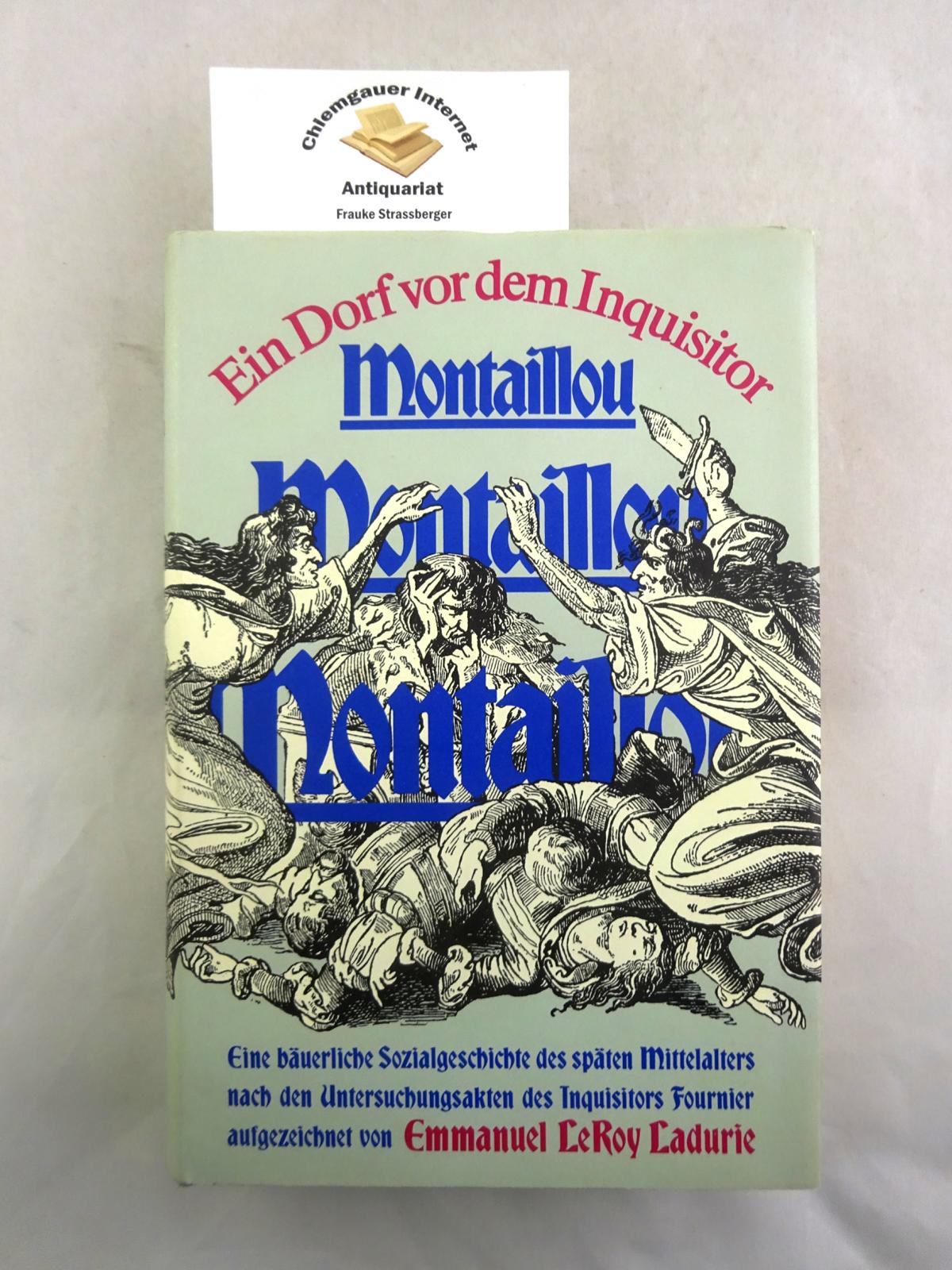
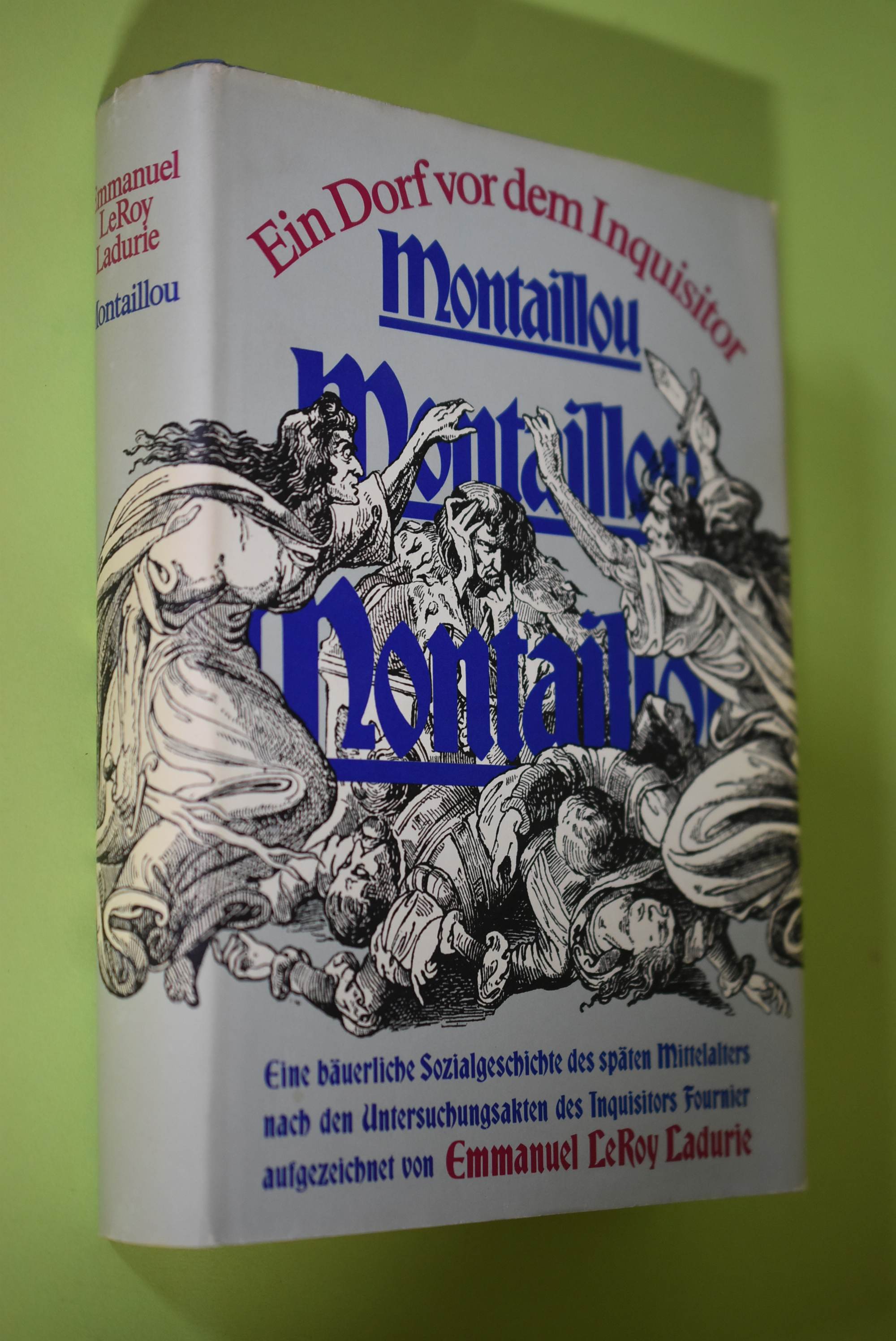
réf. 22204Paris, Gallimard 1975, 225x140mm, 642pages, reliure d'éditeur sous jaquette. Rousseurs sur la couverture toile.
réf. 14670P., Gallimard, NRF (Bibliothèque des Histoires), 1975, fort in 8° relié pleine toile de l'éditeur, jaquette, 642 pages
1970réf. 1263181970 L'Etrave, Revue de la Nouvelle Pléiade - 1970 - In-8 broché - 84 pages - Envoi de l'auteur en page de faux-titre
1982réf. 313276Frankfurt am Main, Büchergilde Gutenberg, Lizenzausgabe : Propyläen-Verlag, 1982. 413 Seiten ; 23 cm Originalleinen mit Originalumschlag
1982réf. 81871Frankfurt am Main : Büchergilde Gutenberg 1982. 413 S. : Kt. ; 23 cm Leinen 0
Pamplona, Editorial Gómez, 1963. 4to.; 242 pp., y 6 láminas fuera de texto. Cubiertas originales.
réf. 3937, Paris, Boizard, 1845 Relie de l' epoque, demi - maroquin ( dos et a coins) et demi chagrin (plats), plats orne avec des fleuronne a froid et fil. dore, dos orne de cadres fleuronnes dore et itre dore, 17x27cm, 588pp, illustre n/b.
1845réf. 61227P. Boizard 1845 In-4 17 x 27 cm. Reliure de l’époque demi-chagrin noir, dos lisse orné de cadres dorés et à froid, auteur et titre dorés, XV + 588 pp. , 200 gravures. Coins usés, coupes frottées, charnières fendillées, rousseurs soutenues.
réf. ORD-3460Enrichis de plusieurs figures. Cologne. Denys Slebus. 1716. 2 tomes en 2 volumes in-12 (98 x 172mm) pleine basane brune, dos à 5 nerfs orné, gardes peignées, 281, (5) pages et 409, (10) pages, 2 frontispices et 7 gravures dépliantes hors texte. Reliures très abîmées mais entières, sans les pièces de titre, papier souvent bruni, planches en bon état. Rare, surtout complet des saisissantes gravures.
réf. 3081Paris, Renouard, 1827, 2 demi percaline, légère mouillure au dos du second volume. 2 volumes in-8 de (6)-VII-336 pp., orné du portrait de l'auteur en frontispice, des fac-similés des signatures des inquisiteurs, etc., etc. et (4)-396 pp., orné de divers fac-similé. Le portrait d'Yermolow en frontispice et la carte de Géorgie sont manquantes, exemplaire à pleine marge ;
1993réf. 33092Cerf 1993 in-8°
1998réf. lu2059Editions Rivages Rivages / Fantasy Dos carré collé 1998 In-8 (15,5 x 23,5 cm), dos carré collé, couverture à rabats illustrée en couleurs, 210 pages ; coins légèrement cornés, très bon état général. Livraison a domicile (La Poste) ou en Mondial Relay sur simple demande.
réf. 11765o.J. auch Nidhardus, Neidhard, Neidarth. Jesuit. Prof. der Philosophie an der Universität Graz, geistlicher Ratgeber der Erzherzogin Maria Anna von Österreich (spätere Gemahlin des Königs Philipp IV. von Spanien), 1666 Generalinquisitor von Spanien, Mitglied des Staatsrates, 1672 Kardinal. 1607 Schloß Falkenstein - 1681 Rom. Brustbild im Oval, oben rechts sein eigenes Wappen, links oben päpstliches Wappen, unten Legende. Kupferstich von F. Andriot. 195 x 147 mm.
réf. 11216o.J. auch Nidhardus, Neidhard, Neidarth. Jesuit. Prof. der Philosophie an der Universität Graz, geistlicher Ratgeber der Erzherzogin Maria Anna von Österreich (spätere Gemahlin des Königs Philipp IV. von Spanien), 1666 Generalinquisitor von Spanien, Mitglied des Staatsrates, 1672 Kardinal. 1607 Schloß Falkenstein - 1681 Rom. Brustbild im Oval. Kupferstich von Metzger. 233 x 159 mm.
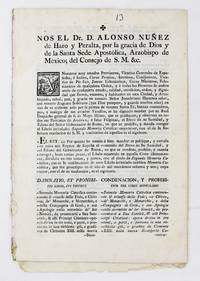
1789réf. 6490Mexico City 1789. Still very good. 9pp. Disbound. Folio. Lacking plain front wrappers. Light wear at lower edge. Scattered faint foxing and light tanning. A fascinating trilingual decree to the Spanish colonial territories of America and the Philippines featuring Latin Italian and Spanish in dual columns. The document focuses solely on the prohibition of one book which was considered particularly heinous to the Catholic Church and the Spanish Crown entitled Segunda Memoria Catolica written in 1784 by the Jesuit missionary Carlo Borgo and published by Andres Febres. The work unsurprisingly caused controversy because within the author harshly criticizes the persecution of the Jesuits accuses the crown and the church of plotting against the order and proposes that those involved be sentenced to death for treason. He further theorizes that the expulsion of the Jesuits of America together with the independence of the United States would cause the loss of the Spanish dominions in America which turned out to be prophetic or highly coincidental depending on your point of view. The present document itself contains several parts. First is the preamble by the Archbishop of Mexico in Spanish that states the authority from which the decree is issued and its subject. Second is proclamation of the Spanish king Carlos IV ordering that the work be proscribed and all copies confiscated. What follows in two columns is the brief but complete and official condemnation by the church in Latin and Italian. Then the document continuing in two columns prints the longer prohibition by Pope Pius VI "Ad Perpetuam Rei Memoriam" and an edict in Latin and Spanish from the Reverenda Camara Apostolica giving its administrative approval. The final part contains the approval of the text as it was received in New Spain by the Archbishop of Mexico and his signature. In all a very interesting look at the administration and process of the Index for Prohibited Books in a very unusual trilingual format. We locate two likely copies at Yale and the BNE. unknown
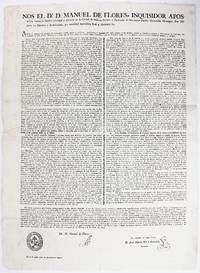
1815réf. 5342Mexico: 8 de Julio 1815. Very good. Double-sheet broadside measuring 23.75 x 17 inches. Old fold lines some slight rumpling. Minor soiling and wear. A fascinating and rare broadside in which the Inquisition attempts to prohibit pro-independence publications including the 1814 Constitution of Apatzingán during the midst of the Mexican Revolution. Dated July 8 1815 this proclamation of the Inquisition first reiterates a blanket prohibition on what it labels seditious and anti-Catholic publications that is to say anything in favor of the revolution and independence. It warns that any statements in favor of liberty and democracy constitute heresy in the eyes of the Inquisition and that such calls in fact seek to subvert the natural order rather than re-establish it: "Producciones de una nueva raza de Filósofos hombres de espíritu corrompido que baxo del especioso titulo de defensores de la libertad maquinan realmente contra ella destruyendo de este suerte el orden político y social y gerarquia de la Religion cristiana exhortando con este language de seduccion á ascudir el yugo de subordinacion y sujecion á las lexítimas Potestades tan recomendada por Jesucristo y pretendiendo por aqui fundar si les fuera posible sobre las ruinas de la Religion y Monarquias aquella soñada libertad que malamente suponen concedida á todos los hombres por la naturaleza: razon porque prohibe los muchos libros que menciona y los demás que sean de la misma clase para precaver con oportuno remedio el daño que puedan occasionar." The proclamation then continues in seven numbered sections to outlaw specific works published by the revolutionary government its forces and its supporters. Most significantly the broadside outlaws the Decreto Constitucional para la Libertad de la América Mexicana more commonly known as the Constitution of Apatzingán. This document promulgated by the Congress of Anáhuac on October 22 1814 printed 242 articles for the establishment of republican government in Mexico although it was never brought into force. The propositions put forth by the Constitution are so egregious according to the Inquisition that it is impossible in one edict to denounce them all individually: "Excederia los límites de un edicto la especificacion particular de todos y de cada uno de los crasísimos errores que contiene este infernal papel; pero bastará advertir á los Fieles que en él baxo el respetable nombre de Religion Católica Apostólica Romana que sirve de escudo á sus tramas como antes servia el de Fernando VII contra quien tan iniquamente se han declarado rebeldes se introducen las mas groseras heregias y los mayores delerios." Nevertheless the authors go on to highlight the most transgressive articles condemn the inferred inspiration of the document from authors like Hobbes and Rousseau and emphasize the rejection of Church doctrine implicit in calls for revolution and democracy: "Mas como los Autores de Constitucion se han propuesto revelarse tambien contra la Doctrina expresa de la Iglesia dogmatizan ser licito á los Ciudadanos levantarse contra el Principe prevarle del Reyno mudar el Gobierno monárquico en republicano á pretexto de tirania como si fuera lo mismo fundarlo de nuevo que revelarse contra el ya fundado. Decir que es licito y justo el tal levantamiento contra el lexitimo Principe aunque sea baxo de pretexto de tirania es una proposicion condenada repetidamente por la Iglesia y heregia declarada." In the remaining six sections the Inquisition continues to condemn a litany of decrees sermons almanacs manuscripts and other texts that emanate from revolutionary sources or espouse democratic ideas. In all the document serves as an outstanding representation of the royalist Catholic and conservative forces that were attempting to hold power in Mexico during this period and a fascinating example of attempted censorship of revolutionary ideals. Rare we locate only two copies -- one at Berkeley and Medina's copy at the National Library of Chile. 8 de Julio unknown