982 résultats
1779réf. 5654Paris, Imprimerie Royale, 1779 - 1781 ; deux tomes in-4 ; plein veau havane marbré, dos à nerfs ornés et dorés, tranches rouges (reliure de l'époque) ; XVI, 707, (1), XIII (table), (3) pp. ; XVI, 844, XVI (table), (4) pp. et en tout 27 planches et cartes gravées hors-texte, dépliantes.
1742réf. (LCPCRELI-0001)(Un rarissime manuscrit de la Maison de La Bouche du Dauphin Louis-Ferdinand de France (1729-1765), fils de Louis XV) MENUS ET ORDRES DE DEPENSES DU DAUPHIN (Louis-Ferdinand de France). (Manuscrit) 1742, s.l. (Versailles) 1 vol. in-fol. (442x298 mm) (dimensions pages 431x280 mm) (1) f.b. (découpé dans la moitié inférieure), (4) ff. b. (déchirés), ff. 5-6 b., f. 7 (déchiré), ff. 8-11, f. 12 (déchiré), ff. 13-14, f. 15 (déchiré), ff. 16-21, ff. 22-32 (déchirés), ff. 34-40, f. 41 (déchiré), ff. 42-44, f. 45 (déchiré), ff. 46-52, f. 53 (déchiré), ff. 54-56, f. 57 (déchiré), f. 58, f. 59 (déchiré), ff. 60-67 b., f. 68 (déchiré), f. 69 b., (1) f. (déchiré), (2) ff. b. Partie écrite dans les ff. 8-9, 10 (r/v), 11, 13-16 (r/v), 17-20, 21, 33-36 (r/v), 37-38, 39 (r/v), 40, 42, 43-44 (r/v), 46, 47 (r/v), 48-49, 50 (r/v), 51, 52 (r/v), 54-56 (r/v). Reliure armoriée de l'époque en veau marbré. Roulette dorée encadrant les plats avec armes du Dauphin au centre et aux angles. Dos à six nerfs décoré de fleurs de lys et de dauphins dorés alternés dans les compartiments. Pièce de titre en maroquin rouge. Roulette intérieure dorée. Tranches marbrées. Gardes de papier à couleurs mélangées. Très rare et précieux manuscrit calligraphié qui relate les Ordres et les Dépenses de la Maison de La Bouche du Dauphin Louis-Ferdinand de France (1729-1765). Mouillure avec atteinte au papier qui est rongé en début du volume, sans atteinte au texte. Manquent plusieurs feuillets coupés ou déchirés, peut être pour utiliser le papier blanc, ou pendant les troubles de la révolution. Les armoiries des plats ont été masquées puis découvertes, et elles sont un peu ternies. Mors du second plat fendu, manques importantes dans la partie inférieure et supérieure du dos, coins usés. Provenance: Exemplaire aux armes dorées du Dauphin Louis-Ferdinand de France (1729-1765), fils aîné de Louis XV et de Marie-Leszczinska et père de trois Rois de France (Louis XVI, Louis XVIII et Charles X). Né le 4 septembre 1729, après trois soeurs, sa naissance très désirée et attendue, fut un événement majeur pour la Cour de Versailles, une explosion de joie, une fête jusqu'au délire pour toute la France et pour l'Europe entière (il fut appelé "l'Enfant de l'Europe"). La monarchie avait finalement un Dauphin. La mort malheureuse en bas âge de son frère cadet, le Duc d'Anjou (1730-1733), et la naissance seulement de filles (encore cinq, après les trois premières) au sein du couple royal, détermina la grande importance et attention sur le Dauphin Louis-Ferdinand, seul espérance, sinon assurance, de la continuité de la branche des Bourbons au trône de France. Avant ses sept ans, en mars 1736, "il passât aux hommes", laissant l'appartement de ses soeurs, pour prendre possession d'un appartement à lui seul. Tout juste derrière le Roi, dans la hiérarchie royale, le Dauphin, non seulement a une garde militaire, qui présente les armes à son passage, un ou deux huissiers et des gardes du corps, mais il a droit aussi - à la fin de son éducation - à "une Maison calquée sur celle du Roi, avec des grands-officiers et un trésorier (l'Argentier) pour rendre les comptes à la Chambre des Comptes", avec "un roulement par quartier, semaine, trimestre ou semestre". Le Dauphin, en outre, "en tant qu'aîné des princes, avait droit à deux valets et deux garçons de la Chambre". Le vin que dans les Dépenses on trouve "platoniquement alloué aux enfants" de France, en réalité était destiné, tout comme le pain, aux garçons de la Chambre et au personnel de service. Très rare document sur la Cour de Versailles et sur les coûts d'entretiens du Dauphin. Peut être compilé sur ordre de M. Jacques Robillart, sieur de Courneuve, "un borgne qui avait été longtemps l'écuyer de M.me de Ventadour" et qu'elle fit nommer Argentier des Enfants de France, à partir de 1733. Cela au milieu de la période (de 1738-1750) dans laquelle ses soeurs cadettes, à l'exception de M.me Adelaide, étaient élevées loin de la Cour, dans l'abbaye de Fontevrault, pour des raison d'économie. Dans ce précieux document, ou tout est réglé, on peut extraire - pour le premier semestre de 1742 - nombre d'informations intéressantes et curieuses. Comme les ordres de cire et le nombre de bougies pour l'éclairage de l'appartement du Dauphin (de l'accès de la Cour du Château de Versailles jusqu'à sa chambre, à travers les différents couloirs et pièces), ou pour la présentation des viandes à son Buffet, ou encore pour les soirées de bals données par le Dauphin; les ordres pour le vin pour le Service du prince, pour les officiers et pour le clergé; celui pour les gardes du corps (dont on peut connaître le nombre et la Compagnie d'appartenance) et pour les valets (dont on peut connaître les noms); les ordres de charbon pour la cuisine du prince; les extraordinaires pour les porteurs de la Bouche; les ordres pour le blanchissage du linge, avec les extraordinaires lors des bals chez Mesdames, soeur du Dauphin; etc. On peut connaître aussi les déplacements du dauphin (qui suivait le Roi et la Reine) à Fontainebleau et à Frémont (aujourd'hui Fromont), avec toutes les dépenses qui en suivent pour les gardes du corps et pour son Service, avec la location d'avance des outils pour la cuisine du prince et avec les dispositions pour la nourriture du personnel qui se déplace (le valet de Chambre et sa famille, par exemple, "... mangent de la desserte de la table du prince à mesure qu'elle sera desservie"). Très probablement ce manuscrit a été dispersé lors des saccages et des ventes révolutionnaires. Les Archives Nationales, en effet, ne possèdent aucun document de ce genre pour la période entre 1739 (Sous-série O1 doc. n° 3743a) et 1751 (Sous-série O1 doc. n° 3743b). Un manuscrit similaire, de 120 pp., des Menus et Ordres de Dépenses des Mesdames de France, du 01-07-1757 au 31-12-1757, en reliure presque identique, est récemment passé sur le marché (Librairie A. Sourget cat. G.P., Paris, 2017 n. 27, 75.000,00 euros). (LCPCRELI-0001)
1921réf. 016183Paris imprimeur-libraire Gauthier-Villars 1921 In-4 Agrafé Dédicacé par l'auteur
1745réf. 003350Frères Bruyset, 1745. 12 volumes in-12 (169 x 104 mm), maroquin vert olive, dos lisse, armes frappées à froid au centre des plats, filet à froid en encadrement avec fleurs de lys aux angles, filet de coupes, dentelle intérieure, contre-plats et gardes de tabis rose, tranches dorées (dos passé, quelques défauts d'usage, quelques traces, coins émoussés, quelques rousseurs). Exemplaire aux armes de Louis de France, Dauphin (Versailles 1729-Fontainebleau 1765), troisième enfant et aîné des fils de Louis XV et Marie Leczinska. Chevalier de la Toison d'Or en 1739 et chevalier des ordres du Roi en 1742, il épousa en premières noces, le 23 février 1745, Marie-Thérèse-Antoinette, Infante d'Espagne, dont il eut une fille, morte à deux ans, et en secondes noces, le 9 février 1747, Marie-Josèphe de Saxe qui lui donna huit enfants. Ex-libris de La Rochefoucauld Duc de Bisaccia. // 12 twelvemo volumes (169 x 104 mm), green-olive morocco, smooth spine, central arms stamped in blind on covers, blind-fillet border with fleurs-de-lys on corners, fillet on turns-in, inner dentelle, gilt edges (spine faded, some defects of use and stains, corners used, some spots). Precious copy bearing the arms of Louis de France, Dauphin (Versailles 1729 - Fontainebleau 1765), third child and elder son of Louis XV and Marie Leczinska. " Chevalier de la Toison d'Or " in 1739 and " Chevalier des Ordres du Roi " in 1742, he first married on february 23rd 1745 Marie-Thérèse-Antoinette, Infante d'Espagne, with whom he had a daughter, dead at two-years-old, and secondly, on february 9th 1747, Marie-Josèphe de Saxe with whom he had eight children, including five sons, three of them being Louis XVI, Louis XVIII and Charles X. Bookplate La Rochefoucauld Duc de Bisaccia.
1984réf. SBBIH-PY6YDKHGCBMDSigma Technical 1984. paperback. Good. Our good condition books are generally good for reading but not for gifting or collecting. They could have imperfections such as creasing fanning inscriptions margin notes yellowing staining on edge or cover or pages bumps scuffs etc etc sometimes multiple of these. It's a wide category that encompasses anything that isn't almost-new down to anything that is slightly better than poor. We would NOT recommend gifting Good books - these should be considered reading copies. Our books are dispatched from a Yorkshire former cotton mill. We list via barcode/ISBN so please note that the images are stock images and may not be the exact copy you receive furthermore the details about edition and year might not be accurate as many publishers reuse the same ISBN for multiple editions and as we simply scan a barcode or enter an ISBN we do not check the validity of the edition data when listing. If you're looking for an exact edition please don't order at least not without checking with us first although we don't always have time to check. We aim to dispatch prompty the service used will depend on order value and book size. We can ship to most countries see our shipping policies. Payment is via Abe only. Sigma Technical paperback
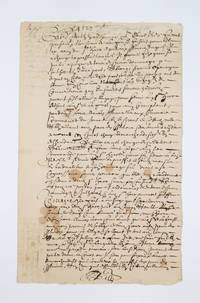
1693réf. 368916Villemarie Montreal 1693. In French. 2pp. recto and verso of a single small folio sheet. Signed by La Forest Tonty Eustache Faureau as witness and Antoine Adhémar de Saint-Martin royal notary. With an English translation. Usual folds some minor spotting small repairs at separations along fold. Very good. Housed in a calf case lettered in gilt. Provenance: Lawrence M. Lande. In French. 2pp. recto and verso of a single small folio sheet. Signed by La Forest Tonty Eustache Faureau as witness and Antoine Adhémar de Saint-Martin royal notary. With an English translation. The Illinois Country essentially the Upper Mississippi watershed was first explored in 1673 from Green Bay to the Arkansas River by the Canadian expedition of Louis Jolliet and Jacques Marquette who claimed the region for France. A decade later with De La Salle having successfully descended the Mississippi River the region became of great importance as a potential hub for the French North American fur trade. Henry de Tonty 1650-1704 and François Dauphin de La Forest c.1649-1714 came to Canada in the 1670s in the company of La Salle and had accompanied him on his first expedition down the Mississippi and afterwards Tonty re-ascended the Illinois and helped to establish Fort St. Louis i.e. Starved Rock in present day Illinois. In charge of the fort Tonty and La Forest explored the region founding outposts advancing relations with local tribes. When Tonty left in search of La Salle who had gone missing on his second expedition "La Forest took over command at Fort Saint-Louis and managed everything himself making the fur-trading contracts and purchasing goods. To comply with the governor's orders he had in addition to raise parties of Illinois to harry the English fur-traders and the Iroquois" Dictionary of Canadian Biography. In 1689 Tonty and La Forest secured the exclusive privileges of trading in the Illinois Country receiving the concession of Fort St. Louis from King Louis. By the summer of 1693 the date of this contract the two traders had just returned from the Ottawa country with fur-laden canoes and were settling accounts and preparing for their next expedition. In this agreement made on 11 September 1693 La Forest represented his colleague Sieur Haco in hiring George Parent as a voyageur for a three-year term. Parent was to go to the Illinois Country to assist Haco who was already there. He was to paddle a canoe to the Illinois Country laden with merchandise and upon his return he was to paddle a canoe loaded with furs. He was to be fed and clothed at the expense of Haco and be paid 300 livres per year in good marketable beaver at the Price of the Bureau. By specifying payment in "Castor au Prix du Bureau" Parent was guaranteed that his salary was tied to the current price of beaver set by the Bureau du Castor at Quebec. Parent was allowed to take sixty livres worth of merchandise to trade on his own behalf. The contract was signed by La Forest Tonty as witness Eustache Faureau as witness and Antoine Adhémar de Saint-Martin royal notary. The agreement was composed and written by Antoine Adhémar de Saint-Martin 1639- 1714 a prolific Montreal notary used by most of the outfitters and fur traders. The Tonty and La Forest concession in Illinois Country was short-lived. In 1696 the king closed all the posts in the west except for Saint-Louis but on condition that no fur-trading be carried on there. Tonty left for Mobile and La Forest remained in Illinois Country eventually receiving from the governor of Louisiana the command of Detroit. Nothing is known of either the voyageurs Sieur Haco or George Parent. The present document is from the famed collection of Lawrence M. Lande 1906-1998 detailed as item 291 in his fifth bibliography of his collection The Creditability of Land and the Development of Paper Money Montreal: 1987. Lande began collecting manuscript material relating John Law the Compagnie des Indes and the fur trade - North America's first economy - as early as the 1960s principally working with dealers Izzy Ehrlich and Alfred Van Peteghem purchasing material from the collections of Thomas Phillips Philip Sang and historian Archibald Lery MacDonald the assemblage of which Van Peteghem termed an "unparalleled feat." All of the printed material and many of the documents were donated by Lande in his lifetime; however a grouping of the manuscript items including the present document were sold by his heirs after his death. Lande The Creditability of Land and the Development of Paper Money 291 including a full translation into English unknown
1693réf. 368916Villemarie Montreal 1693. In French. 2pp. recto and verso of a single small folio sheet. Signed by La Forest Tonty Eustache Faureau as witness and Antoine Adhémar de Saint-Martin royal notary. With an English translation. Usual folds some minor spotting small repairs at separations along fold. Very good. Housed in a calf case lettered in gilt. Provenance: Lawrence M. Lande. In French. 2pp. recto and verso of a single small folio sheet. Signed by La Forest Tonty Eustache Faureau as witness and Antoine Adhémar de Saint-Martin royal notary. With an English translation. The Illinois Country essentially the Upper Mississippi watershed was first explored in 1673 from Green Bay to the Arkansas River by the Canadian expedition of Louis Jolliet and Jacques Marquette who claimed the region for France. A decade later with De La Salle having successfully descended the Mississippi River the region became of great importance as a potential hub for the French North American fur trade. Henry de Tonty 1650-1704 and François Dauphin de La Forest c.1649-1714 came to Canada in the 1670s in the company of La Salle and had accompanied him on his first expedition down the Mississippi and afterwards Tonty re-ascended the Illinois and helped to establish Fort St. Louis i.e. Starved Rock in present day Illinois. In charge of the fort Tonty and La Forest explored the region founding outposts advancing relations with local tribes. When Tonty left in search of La Salle who had gone missing on his second expedition "La Forest took over command at Fort Saint-Louis and managed everything himself making the fur-trading contracts and purchasing goods. To comply with the governor's orders he had in addition to raise parties of Illinois to harry the English fur-traders and the Iroquois" Dictionary of Canadian Biography. In 1689 Tonty and La Forest secured the exclusive privileges of trading in the Illinois Country receiving the concession of Fort St. Louis from King Louis. By the summer of 1693 the date of this contract the two traders had just returned from the Ottawa country with fur-laden canoes and were settling accounts and preparing for their next expedition. In this agreement made on 11 September 1693 La Forest represented his colleague Sieur Haco in hiring George Parent as a voyageur for a three-year term. Parent was to go to the Illinois Country to assist Haco who was already there. He was to paddle a canoe to the Illinois Country laden with merchandise and upon his return he was to paddle a canoe loaded with furs. He was to be fed and clothed at the expense of Haco and be paid 300 livres per year in good marketable beaver at the Price of the Bureau. By specifying payment in "Castor au Prix du Bureau" Parent was guaranteed that his salary was tied to the current price of beaver set by the Bureau du Castor at Quebec. Parent was allowed to take sixty livres worth of merchandise to trade on his own behalf. The contract was signed by La Forest Tonty as witness Eustache Faureau as witness and Antoine Adhémar de Saint-Martin royal notary. The agreement was composed and written by Antoine Adhémar de Saint-Martin 1639- 1714 a prolific Montreal notary used by most of the outfitters and fur traders. The Tonty and La Forest concession in Illinois Country was short-lived. In 1696 the king closed all the posts in the west except for Saint-Louis but on condition that no fur-trading be carried on there. Tonty left for Mobile and La Forest remained in Illinois Country eventually receiving from the governor of Louisiana the command of Detroit. Nothing is known of either the voyageurs Sieur Haco or George Parent. The present document is from the famed collection of Lawrence M. Lande 1906-1998 detailed as item 291 in his fifth bibliography of his collection The Creditability of Land and the Development of Paper Money Montreal: 1987. Lande began collecting manuscript material relating John Law the Compagnie des Indes and the fur trade - North America's first economy - as early as the 1960s principally working with dealers Izzy Ehrlich and Alfred Van Peteghem purchasing material from the collections of Thomas Phillips Philip Sang and historian Archibald Lery MacDonald the assemblage of which Van Peteghem termed an "unparalleled feat." All of the printed material and many of the documents were donated by Lande in his lifetime; however a grouping of the manuscript items including the present document were sold by his heirs after his death. Lande The Creditability of Land and the Development of Paper Money 291 including a full translation into English unknown books