217 résultats
réf. DADAX0773509127New unknown
réf. DADAX1885223714New unknown
réf. DADAX0717140113New unknown
réf. DADAX1570980349New unknown
réf. DADAX0374277931New unknown
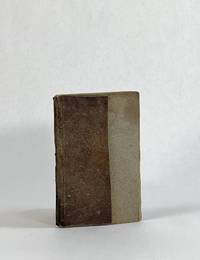
1848réf. 97631848. Full Leather. Good binding. 5-1/4" x 3-3/8." 108 pp. Full brown leather over flexible boards. Vertical red rules for accounting printed on each page. 1-3/8" strip of leather neatly removed from the fore-edge of the front cover; occasional ink spotting and minor stains throughout; toned leaves with a few creases; faded pencil calculations to pastedowns. Interesting mid-19th century farm ledger apparently from eastern Scotland possibly Inverurie or Aberdeen recorded during the great famines in Ireland and the Scottish Highlands. The currency symbols at the top of the expense and income columns appear to be in pounds shilling and pence and various place and personal names which appear repeatedly in the text – i.e. Commercial Co. of Port Elfinston sic Aberdeen Wm. Duncan et al – lead to our deducing this locale. Although the ledger is anonymous the names of Robert Frasier Brach and James Dugard appear possibly as business clients as do the names of the recorder's many temporary workers. These workers usually hired around the planting and harvesting season are both male and female and include Mary Ellice Jas Marr George Dugard Wm. Duncan Alex Burr and many others. Extensively detailed and highly readable this ledger document the many expenses and income sources of a working farm showing precise amounts for equipment scythes and carts feature prominently horses bolls of meal barrels of lime whisky and various other sundries. The farm's produce relied heavily on grains especially corn and barley just as the Corn Laws were being heatedly debated in Parliament and its overall diversity demonstrates the crop diversity that allowed eastern Scotland and the Lowlands to evade the ravages of the potato blight; plots and crops for planting the "slack land" are also demarcated. Charts showing daily employee wages are also of special note. Overall a unique useful and well-maintained agricultural document concurrent with and standing in stark contrast to the devastation occurring in the western portion of the country and Ireland at that time. unknown
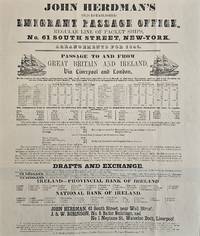
1845réf. List2995New York City 1845. Two printed pages measuring 9 ¾ x 11 ½ inches one signed. Folded and slightly wrinkled near fine. A circular advertising passage between Great Britain and Ireland and numerous locations in the United States from Boston to New Orleans by a regular packet ship service managed by John Herdman and Company. The company also offered remittances whereby an individual in the US could send money to a friend or relative back across the Atlantic generally to pay for their passage to the States. The second sheet a signed letter offers a commission for finding customers: five percent of the passage fare and one percent of the remittance money. In 1845 the Great Famine in Ireland was just beginning and Ireland would lose a large proportion of its population not just to starvation but also to emigration. Earning commission on remittances could have been quite lucrative: the National Museum of Ireland estimates that the amount sent back to Ireland in remittances between 1845 and 1854—the height of the famine—reached $19 million. unknown books
1845réf. List2995New York City 1845. Two printed pages measuring 9 ¾ x 11 ½ inches one signed. Folded and slightly wrinkled near fine. A circular advertising passage between Great Britain and Ireland and numerous locations in the United States from Boston to New Orleans by a regular packet ship service managed by John Herdman and Company. The company also offered remittances whereby an individual in the US could send money to a friend or relative back across the Atlantic generally to pay for their passage to the States. The second sheet a signed letter offers a commission for finding customers: five percent of the passage fare and one percent of the remittance money. In 1845 the Great Famine in Ireland was just beginning and Ireland would lose a large proportion of its population not just to starvation but also to emigration. Earning commission on remittances could have been quite lucrative: the National Museum of Ireland estimates that the amount sent back to Ireland in remittances between 1845 and 1854—the height of the famine—reached $19 million. unknown
réf. DADAX0333682467New unknown
réf. DADAX0333665953New unknown
réf. DADAX0312176627New unknown
réf. DADAX0199251916New unknown
réf. DADAX0367344440New unknown
réf. DADAX027597670XNew unknown
réf. DADAX0415777968New unknown
réf. DADAX0198860188New unknown
réf. DADAX0520253027New unknown
réf. SONG0521890942Used: Good unknown
réf. DADAX0367191288New unknown
réf. SONG0814771483Used: Good unknown
réf. SONG1859184790Used: Good unknown
réf. DADAX0691070156New unknown
réf. DADAX0415598222New unknown
réf. SONG0415598222Used: Good unknown
réf. SONG1895415608Used: Good unknown