2 761 résultats
1978réf. 222496New York: Crescent 1978. Hardcover. Very Good/Very Good. Very good in very good dust jacket. A couple of mailing stamps inside rear cover. Address label inside front cover. Sticker inside front cover. Small pen mark on top corner on front endpaper. Pages are clean with colorful illustrations. Clean and solid black cover. Small nick on top corner on front dust jacket. Dustwrapper very lightly shelf rubbed. Solid book. Crescent hardcover books
1862réf. 25044London: John Murray 1862. Full leather. Very Good . The handsome 1862 John Murray edition complete in 8 octavo volumes all lavishly bound in a sumptuous full dark-green leather. With gilt-bordering along the panels finely gilt-tooled compartments and bright gilt-titling along the spines. Very minor wear to several of the outer hinges and spine ends light scuffing to a number of the panels. Armorial contemorary-to-the-period bookplate "Frederick John Walker" at each front pastedown. Lovely marbled edges and endsheets large fold-out map as well "A Map of the Eastern Part of the Roman Empire" at the rear of Vol. I. From the "Preface by the Editor" William Smith L.L.D.: "This edition of the 'History of the Decline and Fall of the Roman Empire' is distinguished by a correct text the verification of the references to ancient writers and corrective and supplementary notes. John Murray unknown books
1833réf. 622141New York: J. & J. Harper 1833. Hardcover. Very Good. Stated "Fifth American from the last London edition." Four volumes. 12 xviii 472; vii 446; viii 493 1 ad; viii 461pp. Volume one with an engraved frontispiece Volumes One Two and Four each with a fold-out map. Speckled calf boards the spine has raised bands bordered in gilt creating five compartments a red leather label with "Gibbon's Rome" in gilt occupies the second compartment from the top and in the fourth from the top is a black leather label with the volume number in gilt gilt along the fore edge corners of the boards and speckled page edges. Boards and spines show some wear particularly Volumes One and Two which have abrasions on the boards the fold-out map in Volume One is torn owner name penciled on the front free endpaper of Volume One foxing to the preliminaries and terminals of each volume with some scattered foxing throughout but the text remains largely clean overall very good with the hinges sound. Edward Gibbon's classic work presented here as a handsomely bound set. J. & J. Harper hardcover books
1986réf. 603108London: Folio Society 1986. Hardcover. Fine. Third printing of this edition. Volume 1 only. Edited with an introduction by Betty Radice. Tall octavo. 320pp. Illustrated. A couple of leaves with corner creases else fine in maroon cloth gilt and near fine slipcase with a tiny bit of foxing and soil. Folio Society hardcover books
2000réf. 405132Boston: Little Brown and Company 2000. Hardcover. Fine/Fine. First edition. Remainder mark else fine in fine dustwrapper. Little, Brown and Company hardcover books
1977réf. 173056New York: Schocken Books 1977. Softcover. Good. Uncorr proof. Good in wrappers. Has flared cover smudged text edge end page has chip at bottom reissued uncorrected proof. Schocken Books unknown books
1985réf. 123426Surrey England: Colour Library Books 1985. Hardcover. Very Good/Very Good. First edition. Beatiful Cities Series Very good or better in a Very good plus dust jacket. Bump on hard back spine rubs on edges and corners of dust jacket full color photographs. Colour Library Books hardcover books
2000réf. 399422Boston: Back Bay Books / Little Brown and Company 2000. Softcover. Fine. First edition. Pictorial wrappers. Fine. Back Bay Books / Little, Brown and Company unknown books
1963réf. 81403New York: W.W. Norton 1963. Hardcover. Fine/Fine. First edition. Faint offsetting to the endpapers and pastedown else fine in a fine price-clipped dust jacket with little edgewear and minor chipping to the flap folds. W.W. Norton hardcover books
2010réf. 2353010New York: Everyman's Library 2010. Reissue. Hard Cover. Fine/Fine. 9x6x12. Brand new from publisher. Still in original plastic wrap. 2010 Hard Cover. Complete in six hardcover volumes. Introduction by Hugh Trevor-Roper. Easily the most famous historical chronicle in English Gibbon's account of Roman decline remains a remarkably fresh and vital contribution to the subject more than two centuries after its first publication. A landmark in its time for classical and historiographical scholarship its fame today however rests more on the scope and force of Gibbon's argument and the brilliance of his style which is still an utter delight to read. But above all the book is a superb monument to the Enlightenment ideal of rational enquiry which Gibbon made the object of his life's work. "The History of the Decline and Fall of the Roman Empire was written by English historian Edward Gibbon and published in six volumes. Volume I was published in 1776 and went through six printings. Volumes II and III were published in 1781; volumes IV V VI in 1788 - 89. The original volumes were published in quarto sections a common publishing practice of the time. It stands as a major literary achievement of the 18th century because it was adopted as a model for the methodologies of modern historians. This led to Gibbon being called the first modern historian of Ancient Rome. Everyman's Library hardcover books
1878réf. 41498London: Macmillan and Co 1878. First edition 2 volumes pp. xvi 335; viii 404 3; portrait frontispieces one facsimile plate; contemporary brown cloth a bit soiled gilt-lettered spine yellow glazed endpapers; 2 1/2-inch loss to spine head of Vol. II general edge wear; occasional spotting and dampstaining to title pages and frontispieces else textblocks fine. Biography of the ardent Scottish advocate for and student of phrenology and the founder of the Phrenological Society 1823. Macmillan and Co unknown books
1796réf. 24870London: A. Strahan & T. Cadell 1796. First edition 2 vols. 4to pp. xxiv 703; viii 726 2; silhouette frontis portrait of Gibbon; full contemporary tree calf rebacked old spine with red and black morocco labels laid down; bottom panel of spine on vol. 1 scraped; good and sound. U1 in Vol. I is a cancel as usual. A supplementary third volume published in 1815 is not present. Rothschild 949; Norton 131. A. Strahan & T. Cadell unknown books
1796réf. 23989London: A. Strahan & T. Cadell 1796. First edition 2 vols. 4to pp. xxiv 703; viii 726 2; silhouette frontis portrait of Gibbon; full contemporary tree calf neatly rebacked red and black morocco labels on spines; very good and sound. U1 in Vol. I is a cancel as usual. A supplementary third volume published in 1815 is not present. Rothschild 949; Norton 131. A. Strahan & T. Cadell unknown books
1984réf. 12944New York: Crescent Books 1984. First Edition. Hardcover. Very good/very good. First Edition. Hardcover. First English Language edition first printing. 11 3/4" X 9 1/4". Unpaginated. Rubbing toning and creasing to covers corners and edges of unclipped dust jacket. Bound in yellow cloth over boards. Rubbing toning and bumps to covers corners and edges of binding. Dust-spotting to edges of text block. Pages are free of marks and notation. Binding is firm and sound. ABOUT THIS BOOK: Whilst a great deal of sensuous photography of women involves nudity it does not follow that all photography of the nude is necessarily sensuous or that all sensuous photography must feature nudes. Clothing pose and setting even the idea behind the picture can impart a feeling of sensuality. Although it would be quite possible to produce a book on sensuous photography which features subjects excluding the human form this particular volume of photographs seeks to celebrate the sensuousness of woman. The photographs are presented to be admired for their own sake and hopefully also to provide inspiration to those interested in this particular branch of photography.Publisher. Crescent Books hardcover books
1796réf. 010164London: Printed for A. Strahan and T. Cadell Jun. and W. Davies Successors to Mr. Cadell in the Strand 1796. Book. Very Good. Half Mottled Calf. First Edition. 4to - over 9¾" - 12" tall. Two volumes a third volume was published separately in 1815 by John Murray not included. xxv 1 errata 703 viii 726 1 errata ads verso pages. Bound in contemporsry half mottled calf over marbled boards marbled end papers the armorial bookplates of Moncure Biddle front paste downs. Very Good Vol. I missing volume label Vol. II missing title label bookplate in Vol. II partially removed wear at joints and spine ends. With one sheet handwritten partial translation from French to English of Gibbon's letter to Mons. Deverdun dated 20 May 1783 laid in at p. 570 Vol. I where the letter is printed in French. No attribution to the letter although given the provenance of the Moncure Biddle bookplate likely in the hand of John Lord Sheffield. Investment banker Moncure Biddle was.a famous bibliophile and connoisseur of editions of the classics. The translation is in handwritten ink on paper similar to the paper used In the book and has many corrections. A quite intriguing addition indeed. Printed for A. Strahan, and T. Cadell Jun. and W. Davies, (Successors to Mr. Cadell,) in the Strand, Hardcover books
1854réf. TB31555Washington DC: Robert Armstrong 1854. Reprint. Both volumes of this two volume set are in very good condition in their original purple cloth covered boards with faded gilt text on the spines and blind embossing on the front boards to include "House Document". Both are octavos of 8 3/4 by 5 3/4 inches with some fading to the cloth over the spines minor pencil notations on the front end sheet of Part 2 and pages 7 through 10 bound-in after page 14 and both volumes are moderately foxed throughout. Part 1 contains 417 pages of text and is illustrated with a frontispiece and 15 plates. Part 2 written by Lardner Gibbon contains 339 pages of text and is illustrated with a frontispiece and 35 plates. Robert Armstrong hardcover books
1819réf. 27235London: Published for W. Allason; B. Withrow and Co.; C. Chapple et al. 1819. Very Good. London: Published for W. Allason; B. Withrow and Co.; C. Chapple et al. 1819. A New Edition. Twelve octavo volumes. Frontis portrait; fold-out maps of Eastern and Western Empires. Bound in full contemporary scarlet morocco; four raised bands to spine; gilt ruling and lettering; all edges gilt; red endpapers. Light wear to edges and joints with bumping to corners; patchy black discoloration to a few volumes; general scuffing; toning to spines. Bindings sound. First gathering of vol. I loose but remains attached; staining along top edge of volume I though text unaffected; interiors else largely unmarked and legible throughout. A Very Good and quite handsome set of the Allason edition of Gibbon's opus published between 1816 and 1823. Norton 67. Published for W. Allason; B. Withrow and Co.; C. Chapple et al. unknown books
1856réf. 2354153Boston: Phillips Sampson and Company 1856. Reissue. Hard Cover. Good/No Jacket. 0x0x0. Boards lightly rubbed and soiled with some loss from corners edges and endpapers lightly foxed and smudged ink name address and date on front flyleaf of each volume pages a bit toned. Bindings tight and square. 1856 Hard Cover. An excellent edition of Edward Gibbon's magnum opus. Six hardcover volumes. 7 3/4" x 5 1/4". Original brown cloth hardcover bindings with gold spine lettering & design embossed design on front & back covers. Gibbon's complete work with notes by Rev. Milman plus a general index. "The History of The Decline and Fall of the Roman Empire a major literary achievement of the 18th century published in six volumes was written by the celebrated English historian Edward Gibbon. Volume I was published in 1776 and went through six printings a remarkable feat for its time. Volumes II and III were published in 1781; volumes IV V VI in 1788-89. The original volumes were published as quartos a common publishing practice of the time. The books cover the period of the Roman Empire after Marcus Aurelius from just before 180 to 1453 and beyond concluding in 1590. They take as their material the behaviour and decisions that led to the decay and eventual fall of the Roman Empire in the East and West offering an explanation for why the Roman Empire fell. Gibbon is sometimes called the first 'modern historian of ancient Rome.' By virtue of its mostly objective approach and highly accurate use of reference material Gibbon's work was adopted as a model for the methodologies of 19th and 20th century historians. His pessimism and detached use of irony was common to the historical genre of his era. Although he published other books Gibbon devoted much of his life 1772-1789 to this one work. His autobiography Memoirs of My Life and Writings is devoted largely to his reflections on how the book virtually became his life. He compared the publication of each succeeding volume to a newborn child. The book is famous not only because it is extraordinarily well written but also because Gibbon offers an explanation for why the Roman Empire fell. This is one of the great historical questions and because of the relative lack of written records from the time one of the most difficult to undertake. Gibbon was not the first to theorise about this. In fact most of his ideas are directly taken from Roman moralists of the 4th and 5th centuries who wrote about it at the time; nor would he be the last; see for example Henri Pirenne's Thesis of the early 20th century. According to Gibbon the Roman Empire succumbed to barbarian invasions because of a loss of civic virtue among its citizens. They had become lazy and soft outsourcing their duties to defend their Empire to barbarian mercenaries who then became so numerous and ingrained that they were able to take over the Empire. Romans he believed had become effeminate unwilling to live a tougher 'manly' military lifestyle. In addition Gibbon pointed to Christianity. Christianity he says created a belief that a better life existed after death. This fostered indifference to the present among Roman citizens thus sapping their desire to sacrifice for the Empire. He also believed its comparative pacifism tended to sap the traditional Roman martial spirit. Finally like other Enlightenment thinkers Gibbon held in contempt the Middle Ages as a priest-ridden superstitious dark age. It was not until his own age of reason and rational thought it was believed that human history could resume its progress. Gibbon provides the reader with a glimpse of his thought process with extensive notes along the body of the text a precursor to the modern use of footnotes. Gibbon's footnotes are famous for their idiosyncrasies. They provide an entertaining moral commentary on both ancient Rome and 18th-century Great Britain. This technique enabled Gibbon to compare ancient Rome to modern times. Gibbon's work advocates a rationalist and progressive view of history. Gibbon's citations provide in-depth detail regarding his use of sources for his work on ancient Rome documents dating back to ancient Rome. The detail within his asides and his care in noting the importance of each document is a precursor to modern-day h Phillips, Sampson, and Company hardcover books
1862réf. 2353262New York: Harper & Brothers 1862. Abridged. Hard Cover. Good/No Jacket. 8x5x2. Corners rubbed and slightly exposed ink name and address on front flyleaf. Binding tight and square text clean and unmarked. 1862 Hard Cover. xxvii 1 677 3 pp. An abridgment by William Smith intended for use by students. Includes 100 woodcut illustrations. "The History of the Decline and Fall of the Roman Empire was written by English historian Edward Gibbon and published in six volumes. Volume I was published in 1776 and went through six printings. Volumes II and III were published in 1781; volumes IV V VI in 1788 - 89. The original volumes were published in quarto sections a common publishing practice of the time. It stands as a major literary achievement of the 18th century because it was adopted as a model for the methodologies of modern historians. This led to Gibbon being called the first modern historian of Ancient Rome. Harper & Brothers hardcover books
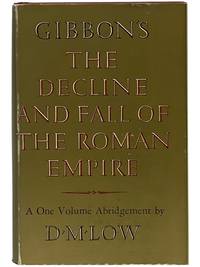
1960réf. 2351331New York: Harcourt Brace and Company 1960. Book Club BCE/BOMC. Hard Cover. Very Good/Very Good. 8x5x2. Book club edition. Jacket lightly rubbed front jacket flap corner clipped. Binding tight and square pages clean bright and unmarked. 1960 Hard Cover. 924 pp. Map illustrated endpapers. The classic abridgment by D.M. Low. "The History of the Decline and Fall of the Roman Empire was written by English historian Edward Gibbon and published in six volumes. Volume I was published in 1776 and went through six printings. Volumes II and III were published in 1781; volumes IV V VI in 1788 - 89. The original volumes were published in quarto sections a common publishing practice of the time. It stands as a major literary achievement of the 18th century because it was adopted as a model for the methodologies of modern historians. This led to Gibbon being called the first modern historian of Ancient Rome. Harcourt, Brace and Company hardcover books
1960réf. 2311036New York: Harcourt Brace and Company 1960. Book Club BCE/BOMC. Hard Cover. Good/Fair. 8x5x2. Book club edition. Very good hardcover in fair jacket. Jacket rubbed and creased with some tears and loss from corners. 1960 Hard Cover. 924 pp. Map illustrated endpapers. The classic abridgment by D.M. Low. "The History of the Decline and Fall of the Roman Empire was written by English historian Edward Gibbon and published in six volumes. Volume I was published in 1776 and went through six printings. Volumes II and III were published in 1781; volumes IV V VI in 1788 - 89. The original volumes were published in quarto sections a common publishing practice of the time. It stands as a major literary achievement of the 18th century because it was adopted as a model for the methodologies of modern historians. This led to Gibbon being called the first modern historian of Ancient Rome. Harcourt, Brace and Company hardcover books
1985réf. 33200New York: Crescent Publishing. Very Good in Very Good dust jacket. 1985. First Edition; First Printing. Hardcover. 0517257890 . A lovely first edition/first printing in Very Good condition in alike dust-jacket. Light water staining to bottom of boards and wrapper; Sixty-four pages of color photography of the New York of the early 1980s reflecting the unique character of the Big Apple ; Color Photographs; 8vo; 64 pages; FSA . Crescent Publishing hardcover books
1782réf. 54807London: Printed for W. or A. Strahan and T. Cadell 1782. First edition in part. Hardcover. Very good. Six volumes large quarto 28.3 by 22 cm published between 1782 and 1788. Engraved frontispiece portrait 3 engraved maps 2 large folding; 1 full-page; general index and errata; printed marginalia. Full contemporary diced calf expertly rebacked to style; light rubbing/wear at extremities; covers ruled in gilt; spine with raised bands ruled and lettered in gilt; marbled edges and endleaves; gilt turn-ins. Text lightly toned throughout with occasional smudges and light foxing largely confined to top margin; tear at leaf Aa2 vol. 1 extending into text expertly repaired; very occasional light pencil underlinings and annotations at margins else a very good amply-margined set with fine maps. Mixed set comprising three volumes of "A New Edition" vols. 1-3 and three volumes of the first edition vols. 4-6. First conceived by Edward Gibbon 1737-1794 amidst the ruins of Rome on 15 October 1764 the first edition of the work was issued serially the first volume appearing in 1776 the final three in 1788. "This masterpiece of historical penetration and literary style has remained one of the ageless historical works. a comprehensive picture of the whole Mediterranean world from the death of Marcus Aurelius A.D. 180 to the fall of Constantinople in 1453. To this task Gibbon brought a width of vision and a critical mastery of the available sources which have not been equalled to this day; and the result was clothed in an inimitable prose. It was his good fortune as Lytton Strachey observed that 'the material with which he had to cope was still just not too voluminous to be digested by a single extremely competent mind. In the following century even a Gibbon would have collapsed under the accumulated mass of knowledge at his disposal'" PMM. The Decline and Fall was a notable publishing success; the print run of the first volume was expanded by William Strahan from 500 to 1000 copies and sold out in less than two weeks. Among the more progressive-minded savants in the literary and academic world it was well received: "From the chorus of praise the admiration of Adam Ferguson Joseph Warton and Horace Walpole must have been deeply gratifying. It was however David Hume's letter of congratulation which according to Gibbon 'overpaid the labour of ten years.'" ODNB. But Hume's praise was laced with warning. He believed that despite Gibbon's "very prudent temperament" in discussing the origins and early history of Christianity in the 15th and 16th chapters of the first volume "it was impossible to treat the subject so as not to give grounds of suspicion against you and you may expect that a clamour will arise" quoted in ODNB. These chapters did indeed arouse heated condemnation from Christians of all denominations and Gibbon made extensive revisions to them in the three subsequent editions of the first volume and in the New Edition which appears in the present set. The engraved frontispiece after Sir Joshua Reynold's acclaimed portrait originally appeared in the first edition of the second volume. All three maps are dated 1781. References: Carter and Muir Printing and the Mind of Man 222; ESTC T78359 vol. 1 - N36543 vols. 2-3 - T78365 vols. 4-6; J. Norton A Bibliography of the Works of Edward Gibbon pp. 26 27 29; D. Womersley "Edward Gibbon" in: ODNB. Vol. 1 1782 - A New Edition: vii title and preface 13: advertisement and contents 704 pp; engraved frontispiece portrait. With original preface Bentinck-Street Feb 1 1776; postscript March 1 1781; new preface March 1 1782. Vol. 2 1787 - A New Edition: 10: title and contents 640 pp; full-page map " A Map of the Parts of Europe and Asia Adjacent to Constantinople" full-page; "A Map of the Eastern Part of the Roman Empire" large folding Vol. 3 1787 - A New Edition: 10: title and contents 640 pp; "A Map of the Western Part of the Roman Empire large folding. Vol. 4 1788: 2: title viii preface 8: contents 620 pp. Vol. 5 1788: 10: title and contents 684 pp. Vol. 6 1788: 12: title and contents 646 52: general index and errata pp. Printed for W. (or A.) Strahan and T. Cadell hardcover books
1926réf. 41181New York: Architectural Book Publishing Co 1926. Ex-Library. Hardcover. g to vg. Quarto. xiii 68pp. Brown cloth boards with gilt stamped debossed illustration on front cover and gilt lettering on spine. The book is a photographic survey of the architecture of antebellum Charleston South Carolina. The publication includes an introduction and notes by Maxwell Kimball and Arthur C. Holden followed by 67 pages of plates featuring high quality b/w photographic reproductions of historic architecture and buildings from around the city. Binding with a chip to the tail of spine head of spine and front cover illustration lightly rubbed. Some light scratches to back cover. Interior with minor age toning along the edges of some pages. Library stamp at top of interior back cover. Binding in overall good interior in very good condition. Architectural Book Publishing Co hardcover books
1776réf. 68352London: Printed for W. Strahan; and T. Cadell 1776. London: Printed for A. Strahan; and T. Cadell 1776-1788. First edition. Six volumes quarto 10 3/4 x 8 1/2 inches; 270 x 220 mm. Engraved portrait of Gibbon by Hall after Reynolds not usually found bound in volume II. With three engraved folding maps bound in volume II one of them normally found in volume III. With all the half titles and the errata leaves in Volumes I II III and VI Volume VI errata covers volumes IV V and VI. With twelve pages of Contents for Volume I at the beginning of Volume II. Volume I has more than half of the errata uncorrected which would make it an intermediate state. According to Sterling " Vol. I only was published in 1776. It was originally planned to print 500 copies of this first edition but after 26 sheets were completed it was decided to increase the number to 1000. The type of the earlier sheets had by that time been distributed so when they were set up again the opportunity was taken to correct the numerous errata and to print the text of the cancel leaves which for some unknown reason had been substituted for the original leaves. Vols. II and III were were published together in 1781." In Volume III p. 177 is correctly numbered and "Honorious" is left uncorrected on p. 179 line 18. G1 and Ll1 cancels in volume 2 signed G and Ll H3 and L2 cancels in volume 4 the latter signed L2. The engraved portrait of Gibbon was issued separately in 1780. Contemporary tree calf all volumes attractively and uniformly rebacked. Gilt spines with gilt tool in compartments morocco spine labels lettered in gilt and small morocco lozenge with volume numbers. All edges yellow. Extremities slightly rubbed. Some light intermittent foxing but generally very clean. Small bookplate on front pastedown of each volume. With a repaired closed tear to the last leaf of volume II. Overall a very good set. A "masterpiece of historical penetration and literary style" Gibbon's Decline and Fall brought to the subject a width of vision and a critical mastery of the available sources which have not been equaled to this day. "This masterpiece of historical penetration and literary style has remained one of the ageless historical works which like the writings of Macaulay and Mommsen maintain their hold upon the layman and continue to stimulate the scholar although they have been superseded in many if not most details by subsequent advance of research and changes in the climate of opinion. Whereas other eighteenth-century writers in this field such as Voltaire are still quoted with respect the Decline and Fall is the only historical narrative prior to Macaulay which continues to be reprinted and actually read" Printing and the Mind of Man. Although superseded in many respects by two centuries of continuous research this great work is still read both for pleasure and for profit and has achieved an eminence denied most historical compilations of its kind. Grolier 100 English 58. Norton 20 23 and 29. Printing and the Mind of Man 222. Rothschild 942-944. Sterling 382. HBS 68352. $26500. Printed for W. Strahan; and T. Cadell unknown books