Hino NoriyukiBiblio.com
Hino ShounBiblio.com
THREE MOUNTAINS AND SEVEN RIVERS
réf. MBI-9788120824683MOTILAL BANARSIDASS PVT. LTD.OWN. Hardcover. New. MOTILAL BANARSIDASS PVT. LTD.(OWN) hardcover

BookVistas · Inde60,00 $US≈ 53,50 €
867 résultats
1977réf. 2091502135401245Kyogai junbi-sha 1977. Soft Cover. Fine. Number of books: 1 Kyogai junbi-sha paperback
1937réf. 2082402113501726Teikoku Kyoikukai 7th World Education Conference Japan Secretariat 1937. Soft Cover. Fine. Volume: 1 Teikoku Kyoikukai 7th World Education Conference Japan Secretariat paperback
1827réf. 2092902140400334Not Available 1827. Soft Cover. Fine. The book is in fine condition. Not Available paperback
1968réf. 2083002115600988Nagata shobo 1968. Soft Cover. Fine. Number of pages: 255p Size: 20cm Number of books: 1 Nagata shobo paperback
réf. MBI-9788120824683MOTILAL BANARSIDASS PVT. LTD.OWN. Hardcover. New. MOTILAL BANARSIDASS PVT. LTD.(OWN) hardcover
réf. MBI-9788120824683MOTILAL BANARSIDASS PVT. LTD.OWN. Hardcover. New. MOTILAL BANARSIDASS PVT. LTD.(OWN) hardcover
réf. MLBD-9788120824683MLBD. Hardcover. New. MLBD hardcover
réf. MLBD-9788120824683MLBD. Hardcover. New. MLBD hardcover
réf. 8120824687.Ghardcover. Good. Access codes and supplements are not guaranteed with used items. May be an ex-library book. hardcover
1987réf. 2091502133536458Sojusha 1987. Soft Cover. Fine. Number of books: 1 Sojusha paperback
1960réf. 2080502106501230Jitsugyo no Nihonsha 1960. Soft Cover. Fine. Volume: 1 Jitsugyo no Nihonsha paperback
1958réf. 2081502111702545Yayoishobo 1958. Soft Cover. Fine. Number of pages: 269p Size: 20cm Yayoishobo paperback
1981réf. 2111902152909296Shisaku-sha 1981. Soft Cover. Fine. Size: B6 size Shisaku-sha paperback
1981réf. 2091502133538211Shisaku-sha 1981. Soft Cover. Fine. Number of books: 1 Shisaku-sha paperback
réf. 2090502128703384Kogeido N.A. Soft Cover. Fine. Size: New book Number of copies: 1 Kogeido paperback
1996réf. 2090202118107836Kobunsha 1996. Soft Cover. Fine. The book is in fine condition. Kobunsha paperback
réf. 2092902140313702Not Available N.A. Soft Cover. Fine. Number of books: 1 Not Available paperback
1978réf. 2080502106506026Japan Ceramic Society 1978. Soft Cover. Fine. Volume: 1 Japan Ceramic Society paperback
réf. 2080202105000028Aozono so N.A. Soft Cover. Fine. Number of pages: 26p Size: 15cm Aozono so paperback
1980réf. 2110502151108590San'ichishobo 1980. Soft Cover. Fine. Number of books: 1 San'ichishobo paperback
1968réf. 2080502107003091University of Tokyo Press 1968. Soft Cover. Fine. Number of pages: 344p Plate size: 22cm University of Tokyo Press paperback
1968réf. 2091202133208571University of Tokyo Press 1968. Soft Cover. Fine. Volume: 1 University of Tokyo Press paperback
1968réf. 2092902137502714University of Tokyo Press 1968. Soft Cover. Fine. Size: A5 Number of books: 1 University of Tokyo Press paperback
2016New English Paperback. Pbo. 4to. (27 x 20 cm). In Turkish. 84 p., musical scores. Türk din musikisi. Traditional Turkish religious / mystic music.
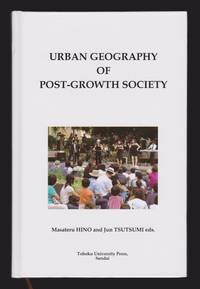
2015réf. 6987Sendai Japan: Tohoku University Press 2015. 1st Edition . Hardcover. Near Fine. Hardcover 258 pages NOT ex-library. Minor handling wear frayed end of the ribbon page marker. Book is clean and bright throughout with unmarked text free of inscriptions and stamps firmly bound. Issued without a dust jacket. -- Contents: 1 Perspectives on the Post-Growth City / Michael Pacione; 2 Geographical Shrinking of the Tokyo Metropolitan Area: Its Demographic and Residential Background / Takashi Abe; 3 Urban Shrinkage of the Keihanshin Metropolitan Area in Japan: Changes in Population Distribution and Commuting Flows / Tatsuya Yamagami; 4 Occupational Structure in the Tokyo Metropolitan Area 1985-2005: An Extended Shift-share Analysis of Changing Geographic Patterns / Ryo Koizumi; 5 Time Budgets of Working Mothers Living in Central Tokyo: An Analysis on the Impacts of the Internet / Naoto Yabe; 6 Aged Society in a Suburban New Town: What Should We Do / Takashi Kagawa; 7 Urban Policy Challenges Facing an Aging Society: Case of the Tokyo Metropolitan Area / Tetsuya Ito; 8 Aging Suburbs and Increasing Vacant Houses in Japan / Tomoko Kubo; 9 Gentrification in a Post-Growth Society: The Case of Fukushima Ward Osaka / Yoshihiro Fujitsuka; 10 Spatial Characteristics of Land Evaluation in the Tokyo Metropolitan Area after the Great East Japan Earthquake / Hirohisa Yamada; 11 Image of the Post-Growth City: Recent Transformation of Japanese Regional Central Cities / Masateru Hino; 12 Characteristics of Office Location in Sapporo City Japan / Jun Tsutsumi; 13 Spatial Government Systems of Newly Merged Municipalities and Population Changes within Municipalities Impacted by those Government Systems: Under a National Pro-merger Policy of Municipalities in Post-Growth Societies / Jun Nishihara; 14 Knowledge Spillover Effects on Agglomerations of Environment-related Industries: A Case in Japan / Jun Yamashita; 15 Conclusion; Index -- This book is a collection of articles monitoring urbanization processes in Japanese cities since the 1990s. Two major aspects are notable with respect to the study of urbanization globally. First this book examines the depopulation population decline phase of cities whereas most previous discussions of urbanization eg the Klaassen model for urbanization in developed countries have explicitly or implicitly focused on population increase. Because the number of births has fallen below the number of deaths since 2005 a natural decrease of population is common throughout Japan. In this depopulation phase even though the overall urban population will remain relatively stable Japanese cities will undergo radical changes as compared to when an increasing population was the dominant trend. Because Japanese cities have only relatively recently begun experiencing these types of structural changes the studies presented herein are new and will provide a different paradigm of urban studies. Second this book focuses on the 'shrinking city' phenomenon which has become a key issue in recent urban studies. Since the 1980s in developed countries shrinking cities have dominated in some areas. In many eastern European countries remarkable shrinkage has occurred as a result of social structural changes causing serious problems and increasing the attention being paid to the relationship between globalization and shrinking cities. In the field of urban planning the problem of shrinking cities has become an urgent issue under the threat of depopulation. This has resulted in the need for modification of previous planning because most plans were based on a growing population. In this context the concept of the compact city has been proposed and especially in the field of urban planning widely accepted. The shrinking city trend is also found in Japan and it is not temporary or unique to one area. Japan's struggle to maintain sustainable development under a depopulation trend is an important challenge. In this sense monitoring the urbanization processes in Japanese cities will be very informative. Tohoku University Press hardcover