Eisenhower, JohnBiblio.com

747 risultati
2002rif. Q-0743223853Free Press 2002-06-04. Paperback. New. In shrink wrap. Looks like an interesting title! Free Press paperback
2001rif. 3294New York: The Free Press 2001. First Edition First Printing. Cloth & Boards. Near Fine/Very Good . A very handsome First Edition First Printing title by John Eisenhower. Book is in near fine condition save for a 1" black line in marker at bottom page ends. Otherwise book is tightly bound with crisp pages throughout and bright illustrations. Appears in unread condition. Dust jacket protected in archival cover. Dust jacket in very good condition with minor flaws. Light creasing along extremities. A 1" closed tear at upper right on front wrapper minor. Interior flaps intact and bright. An overall handsome edition by the same author of "Intervention!" "The Bitter Woods" and "Strictly Personal The Free Press unknown
1982rif. RO60075052Doubleday & Company. 1982. In-8. Relié. Bon état, Couv. convenable, Dos satisfaisant, Intérieur frais. 500 pages. Illustré de nombreuses photos et cartes en noir et blanc hors texte. Jaquette légèrement abîmée.. Avec Jaquette. . . Classification Dewey : 420-Langue anglaise. Anglo-saxon
1968rif. R200141025Trévise. 1968. In-8. Broché. Etat d'usage, Couv. partiel. décollorée, Dos plié, Papier jauni. 603 pages, couverture contrepliée, nombreuses planches de photos en noir et blanc - coins frottés.. . . . Classification Dewey : 320-Science politique
1969rif. RO40066792Tallandier.. 1969. In-8. Relié. Etat d'usage, Couv. convenable, Dos satisfaisant, Intérieur bon état. 395 pages, jaquette illustrée couleur.. . . . Classification Dewey : 843.081-Le roman historique
1969rif. RO20015424Cercle du Nouveau livre. 1969. In-8. Relié toilé. Bon état, Couv. convenable, Dos satisfaisant, Intérieur frais. 395p, illustré de photos noir et blanc hors texte, relié toilé gris, couverture illustrée d'un portrait de l'auteur, rhodoïd.Rousseurs syur la tranche. . . . Classification Dewey : 94.41-Editions numérotées (gros tirage)
1969rif. R100071899Le cercle du nouveau livre d'histoire. 1969. In-8. Relié. Bon état, Couv. convenable, Dos satisfaisant, Papier jauni. 395 pages + 45 pages de suite iconographique - signet conservé - rodhoïd conservé.. . . . Classification Dewey : 848-Ecrits divers, citations, journaux intimes, souvenirs, mémoires
1969rif. 000686Le Cercle Du Nouveau Livre D'histoire 1969 Grand In-8 Exemplaire N° 1564 . Les illustrations se composent de photographies en noir et blanc sur 46p. de papier couché en fin d'ouvrage et hors texte . - 400 p. , 800 gr.
1969rif. 183521Tallandier Paris, Tallandier, 1969. In-8 reliure pleine toile grise de l'éditeur de 397 + 45 pages. Sous rhodoïde. Tirage numéroté. 40 pages d'illustrations en noir et blanc en fin d'ouvrage. Bon état.
1967rif. ROD0015225Le cercle du nouveau Livre d'Histoire. 1967. In-8. Relié toilé. Parfait état, Couv. remarquable, Dos impeccable, Intérieur frais. 395 pages. Portrait de l'auteur sur la couverture, photos n&b in fine. Jacquette coupée en coiffe de pied. Exemplaire numéroé 5 074.. . . . Classification Dewey : 973-Etats-Unis
1949rif. RO30341929Robert Lafont. 1949. In-8. Broché. Etat d'usage, 2ème plat abîmé, Dos plié, Papier jauni. 593 pages. Jaquette en mauvais état. Nombreuses illustrations en couleur et en noir et blanc, hors texte. Nombreux manques dans le texte et sur le 2eme plat et contreplat. 2eme contreplat tâché. Rousseurs.. Avec Jaquette. . . Classification Dewey : 810-Littérature américaine
1949rif. R300319397Robert Laffont. 1949. In-8. Broché. Etat d'usage, Couv. légèrement passée, Dos plié, Papier jauni. 593 pages - quelques photos et cartes en noir et blanc hors texte. Mors fendus en coiffe de pied.. . . . Classification Dewey : 810-Littérature américaine
rif. RO20241865William Heinemann. Non daté. In-8. Relié. Bon état, Tâchée, Dos satisfaisant, Intérieur frais. 582 pages. Nombreuses photos et cartes en noir et blanc hors texte. Cartes en bichromie sur les gardes et contre-plats. Ouvrage en anglais. . . . Classification Dewey : 420-Langue anglaise. Anglo-saxon
rif. 9781536110753NOVA SCIENCE PUBLISHERS INC
1953rif. RO40149229Rapports France - Etats-Unis. 1953. In-12. Broché. Etat d'usage, Couv. convenable, Agraffes rouillées, Intérieur frais. Plaquette de 15 pages.. . . . Classification Dewey : 973-Etats-Unis
rif. 31596Plaquette-supplement de "Rapports France-Etats-Unis"n.74. Format 11x17 cm, broche, 15 pages.Tres bon etat.
1947rif. 528941947 Limoges / Paris / Nancy, Charles Lavauzelle & Cie éditeurs, 1947 26 x 17, 285 pp Bon état. Pages jamais coupées.
1947rif. 201311Charles-lavauzelle & cie 1947 285 pages in8. 1947. Broché. 285 pages.
1963rif. R160178669LAFFONT ROBERT. 1963. In-8. Broché. Bon état, Couv. convenable, Dos satisfaisant, Intérieur frais. 687 Pages + Un dépliant publicitaire de l'éditeur. . . . Classification Dewey : 810-Littérature américaine
1959rif. 174141959. George M. Johnson White House press photograph 1959 documents President Dwight D. Eisenhower receiving African American attorney and legal educator George M. Johnson and his wife Evelyn during Johnson's selection for the United States Commission on Civil Rights. Johnson a professor of law and former dean of Howard University School of Law was nominated to the Commission in 1959 with a Senate Judiciary subcommittee holding a hearing on his nomination on April 21. Congress had created the Commission under the Civil Rights Act of 1957 the first federal civil rights legislation enacted since Reconstruction giving the federal government a new body for investigating voting rights discrimination and studying the legal status of civil rights protections. The June 1959 image places Johnson inside the White House during this early federal effort to investigate racial discrimination through a permanent national commission. Original Associated Press silver gelatin press photograph dated June 9 1959 9 x 7 inches. President Eisenhower shakes hands with Evelyn Johnson as George M. Johnson stands beside them in the White House; the three face the camera during the greeting. An AP caption appears along the right margin with an inscription on the verso. Johnson's appointment placed an African American legal scholar with experience at Howard University within the six member federal commission created two years earlier; the Commission's work during this period included investigations and reports concerning voting education housing and other areas of racial discrimination. The photograph dates from the period between Johnson's April 1959 nomination hearing and his subsequent Senate confirmation preserving the ceremonial White House dimension of a federal civil rights appointment during Eisenhower's second administration. Rather than a general presidential publicity image it identifies Johnson at the executive center of the government as the Civil Rights Commission was beginning its investigations into federally protected rights. A 2 x 1 inch area of white correction material appears adjacent to George Johnson's face; AP caption at right margin and verso inscription remain present. Overall very good condition. unknown books
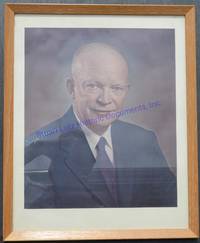
rif. 6834DWIGHT EISENHOWER 1890-1969. Dwight Eisenhower was the Thirty-Fourth President.PS. 15 x 18. N.d. N.p. A colored photograph signed Dwight Eisenhower in white ink along his right shoulder. The photo is a bust portrait of Eisenhower. The photograph is in mint condition and is professionally framed. unknown books
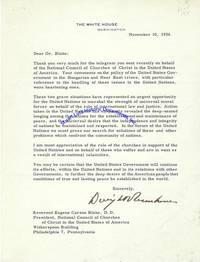
rif. 5932DWIGHT D. EISENHOWER 1890-1969. The Thirty-Fourth President Eisenhower was an Allied commander in World War II and ordered the Normandy invasion. He was elected President in 1952 for two terms.TLS. 1 pg. 8 x 10. November 30 1956. The White House Washington. A typed letter signed by Dwight D Eisenhower to Reverend Eugene Carson Blake D.D.: Thank you very much for the telegram you sent recently on behalf of the National Council of Churches of Christ in the United States of America. Your comments on the policy of the United States Government in the Hungarian and Near East crises with particular reference to the handling of these issues in the United Nations were heartening ones. These two grave situations have represented an urgent opportunity for the United Nations to marshal the strength of universal moral forces on behalf of the rule of international law and justice. Action taken in the United Nations has eloquently revealed the deep-seated longing among the nations for an establishment and maintenance of peace and the universal desire that the independence and integrity of nations be maintained and respected. In the forum of the United Nations we must press our search for solutions of these and other problems which confront the community of nations. I am most appreciative of the role of the churches in support of the United Nations and on behalf of those who suffer and are in want as a result of international calamities. You may be certain that the United States Government will continue its efforts within the United Nations and in its relations with other Governments to further the deep desire of the American people that conditions of true and lasting peace be established in the world. President Eisenhower sent this letter to Eugene Blake the leader of the National Council of Churches of Christ in the United States of America. Blake was a prominent Presbyterian leader who served as President from 1954-1957 and later was a participant in the March on Washington. The NCC is an interdenominational partnership of Christian faith groups in the United States that often spoke forcefully about promoting peace in U.S. foreign policy. The two crises that Eisenhower refers to both in 1956 were the Hungarian Revolution which saw the Soviet Union violently invade and suppress Hungarys new reformist government and the Suez Canal Crisis which saw Great Britain France and Israel launch a joint operation to retake the Suez Canal after Egypts Nasser nationalized it. The actions by Eisenhower and the United Nations in resolving both crises were supported by many like Blake but also criticized by many in the U.S. and around the world. This was especially true as Eisenhower and the United Nations sat back while the Soviet Union killed over 6000 Hungarian soldiers and civilians and displaced over 200000 which was seen as hypocritical given American action in Korea and Vietnam. Regardless this letter is an important reminder about the influence the NCC had as a Christian advocacy body and Eisenhowers role as the leader of the internationalist and institutionalist wing of the Republican Party in the decade after World War II. unknown books
1959rif. 174141959. George M. Johnson White House press photograph 1959 documents President Dwight D. Eisenhower receiving African American attorney and legal educator George M. Johnson and his wife Evelyn during Johnson's selection for the United States Commission on Civil Rights. Johnson a professor of law and former dean of Howard University School of Law was nominated to the Commission in 1959 with a Senate Judiciary subcommittee holding a hearing on his nomination on April 21. Congress had created the Commission under the Civil Rights Act of 1957 the first federal civil rights legislation enacted since Reconstruction giving the federal government a new body for investigating voting rights discrimination and studying the legal status of civil rights protections. The June 1959 image places Johnson inside the White House during this early federal effort to investigate racial discrimination through a permanent national commission. Original Associated Press silver gelatin press photograph dated June 9 1959 9 x 7 inches. President Eisenhower shakes hands with Evelyn Johnson as George M. Johnson stands beside them in the White House; the three face the camera during the greeting. An AP caption appears along the right margin with an inscription on the verso. Johnson's appointment placed an African American legal scholar with experience at Howard University within the six member federal commission created two years earlier; the Commission's work during this period included investigations and reports concerning voting education housing and other areas of racial discrimination. The photograph dates from the period between Johnson's April 1959 nomination hearing and his subsequent Senate confirmation preserving the ceremonial White House dimension of a federal civil rights appointment during Eisenhower's second administration. Rather than a general presidential publicity image it identifies Johnson at the executive center of the government as the Civil Rights Commission was beginning its investigations into federally protected rights. A 2 x 1 inch area of white correction material appears adjacent to George Johnson's face; AP caption at right margin and verso inscription remain present. Overall very good condition. unknown
rif. feb95359Used. For more details please contact me unknown
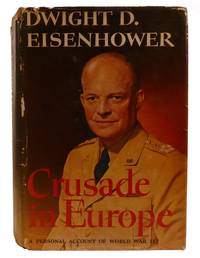
1948rif. 603132New York: Doubleday 1948. First Edition; early printing. Hardcover. Very Good in a Good dust jacket. Foxing along text block edges. Rubbing and chipping along dust jacekt edges. Staining at spine heel.; 8vo 8" - 9" tall; 559 pages. Doubleday hardcover