118 resultados
2002Greeks and Barbarians examines ancient Greek conceptions of the "other." The attitudes of Greeks to foreigners and there religions, and cultures, and politics reveals as much about the Greeks as it does the world they inhabited. Despite occasional interest in particular aspects of foreign customs, the Greeks were largely hostile and dismissive viewing foreigners as at best inferior, but more often as candidates for conquest and enslavement. ; 9.1 X 6.1 X 0.7 inches; 288 pages
1923Minor foxing to prelims. Pages are tanned. ; Das Erbe Der Alten; 165 pages
1967ref. 5080Gallimard In-4 Jaquette en état satisfaisant Couverture rigide toile Paris 1967
1959Wear and creases to cover and spines. Interior pages clean and unmarked. The glue in these perfect bound books are over 50 years old and is likely fragile.
ref. 201612255S.l., Soleil, 1997 ; in-4, 134 pp., cartonnage de l'éditeur . REED des tomes 1/2/3.
1965ref. 112662Albin Michel, 1965, pt in-4°, 263 pp, 55 planches en couleurs (reproductions contrecollées), 56 dessins au trait, 26 photos en noir sur 8 planches hors texte, 3 cartes, biblio, index, reliure toile verte éditeur, étui cartonné illustré, bon état (Coll. “L'Art dans le monde”. Fondements historiques, sociologiques et religieux)
ref. 5083Maisonneuve, 1939. In - 8 broché, 294 pages. , bon etat
1940ref. 1837Puf Paris, Puf 1940. In 8 broché, 450 pages; 1 carte dépliante
1940Paris, Puf 1940. In 8 broché, 450 pages; 1 carte dépliante
ref. QWA-6499Librairie A. Frank, 1873, in-8 rel. pleine toile, XIV-238 p., couvertures conservées, envoi de l'auteur, rares rousseurs, cachets de bibliothèque, très bon état.
ref. 1937deuxieme édition, revue et augmentée.Paris, Librairie Félix Alcan, 1930, in-8, 442 pp., 2 cartes dépl., bibliographie, index, broché. (Collection Peuples et Civilisations, V).
ref. 10901VIème siècle avant JC premier siècle après JC. In 8 cartonné souple, couverture illustrée en couleurs, faux-titre, titre, 791 pages, figures dans le texte,, librairie Arthème Fayard 1997. Très bon état
1910pp. vii, 370 + Photogravure Frontis and full page portraits. Uncut. Pictorial endpapers. Large 8vo. Original full blue cloth binding, gold lettered with some fading. Hardbound. Very good. EUROPE BOX 1
ref. 45508ème édition.In 12 demi-chagrin lie de vin à nerfs,titre et caissons dorés,plats toile chagrinée,filets à froid en encadrement.Lycée Impérial de Bar Le Duc sur le premier plat.Faux-titre,titre,XVII,587 pages,8 cartes dépliantes, certaines en couleurs,illustrations dans le texte.Hachette & Cie 1866.
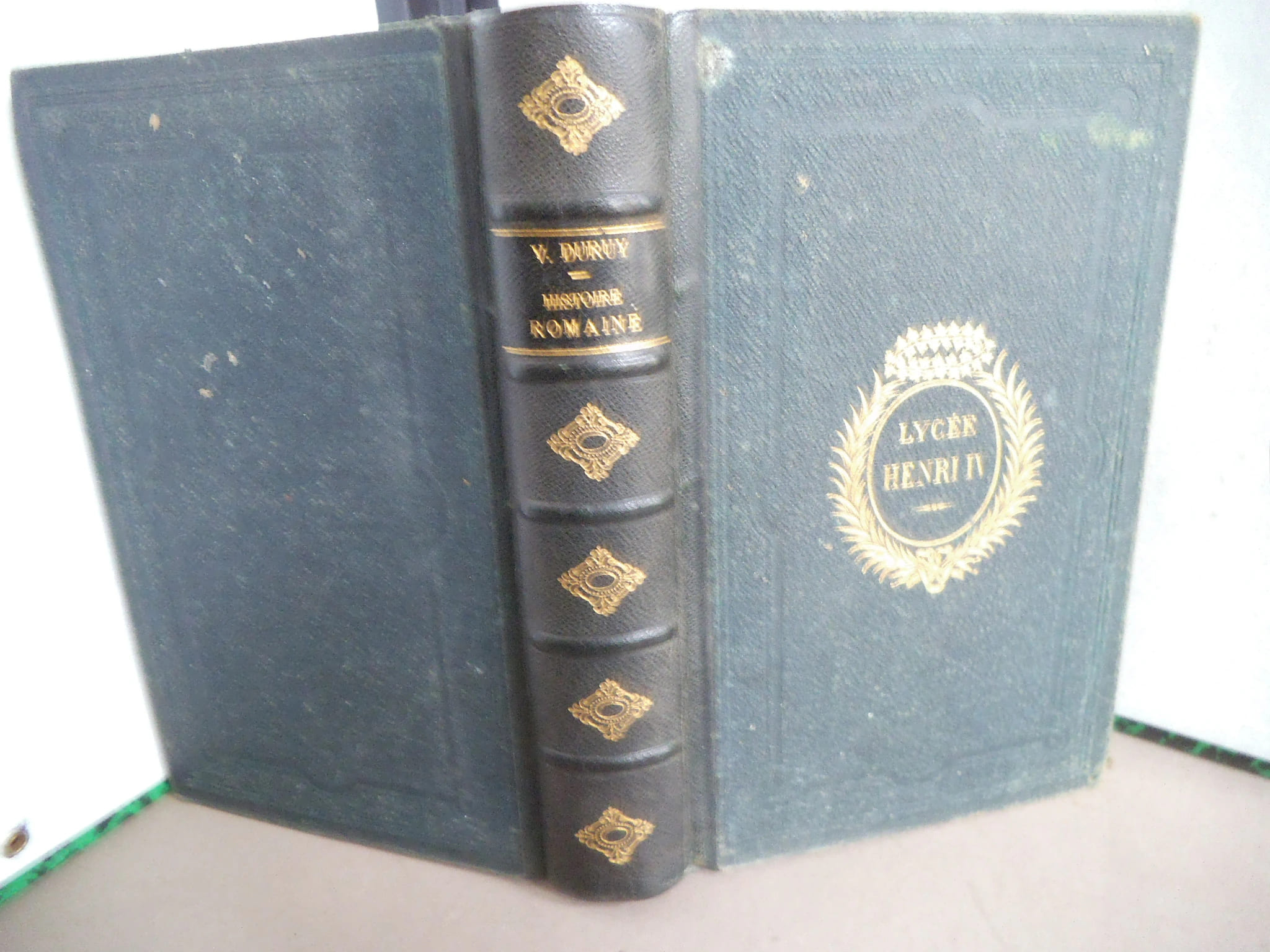
ref. 14955Edition revue et corrigée.In 12 demi-chagrin vert à nerfs, titre et fers dorés.Plats percaline chagrinée verte.Armes du Lycée Henri IV sur le premier plat.Faux-titre,titre,XXVI,1 page de table,cartes et gravures,581 pages.8 cartes en couleurs,dépliantes,placées en fin de volume,10 gravures dans le texte.Paris Librairie Hachette & Cie
ref. 6685in 12 demi-chagrin marron à nerfs,titre,roulette sur nerfs, filets dorés.Caissons à froid.Filets à froid encadrant lesplats.Titre XXI 672 pages,4 pages de catalogue, figures dans le texte ,5 cartes dépliantes.La dernière carte Italie en 1852 est incomplètes Hachette & Cie 1853 édition originale,rousseurs habituelles,plus concentrées en début et fin de volume.
ref. 100148693Garnier Freres Libraires-Editeurs in12. Sans date. Cartonné. Ouvrage historique d'Augustin Thierry publié en 1840 rassemblant six « Nouvelles lettres sur l'histoire de France » parues précédemment. Le livre se compose de deux parties distinctes : une dissertation historique (« Considérations sur l'histoire de France ») et une narration sur l'époque mérovingienne écrite dans un style vivant et presque romancé qui mêle érudition et imagination
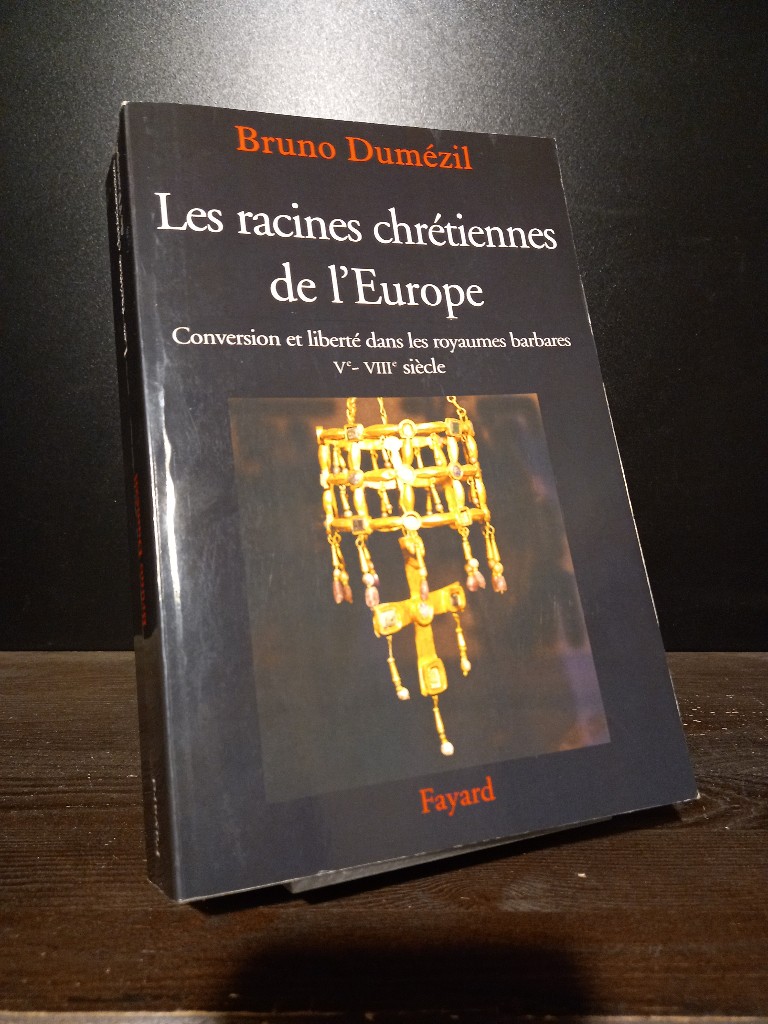
2005ref. 2134861Paris. Librairie Arthème Fayard 2005. 804, (2) Seiten. Gr. 8° (22,5-25 cm). Orig.-Broschur. [Softcover / Paperback].
1911ref. ABE-1525594727396444 PAGES-19 CM X 24 CM-ICONOGRAPHIE-(CA)
1985ref. ABE-18844762327116 PAGES-EN COUVERTURE CLAUDE LEVI-STRAUSS PAR MORETTI-DOSSIER LEVI-STRAUSS, 51 PAGES-GUITRY, C'EST EXQUIS, PAR ANDRE BERNARD-SACHA GUITRY OU L'IMAGE BLOQUEE, PAR MICHEL TOURNIER, 3P, PHOTO-MISE EN TENEBRES, CRITIQUE PAR VINCENT LANDEL POUR "LES NOCES BARBARES" DE YANN QUEFFELEC, PHOTO-FAULKNER DEBUTANT, 2P PAR ANDRE LE VOT, PHOTO-JEAN GIONO: PAYSAGES IMAGINAIRES, PROPOS RECUEILLIS PAR JEAN CARRIERE, 6P, 3 PHOTOS-LE REGARD D'UNE PHOTOGRAPHE, 1P PAR ALAIN GARRIC, GISELE FREUND, PHOTO-(17CA)
ref. 5189N° 2 de octobre 1981 - in-8 broché - Paraît une fois l'an - 542 pages
1994ref. LFA00ec4Un ouvrage de 226 pages, format 240 x 155 mm, broché couverture couleurs, publié en 1994, Editions France Empire, Collection "Les Grands Conquérants"
ref. 6435Paris, Fayard, 1958 12 x 18, 649 pp., broché, bon état
1999Tiny stain to rear board and obverse of DJ else book and DJ are fine/fine. ; 1 x 9.25 x 6.25 Inches; 277 pages; How did the Romans build and maintain one of the most powerful and stable empires in the history of the world? This illuminating book draws on the literature, especially the historiography, composed by the members of the elite who conducted Roman foreign affairs. From this evidence, Susan P. Mattern reevaluates the roots, motivations, and goals of Roman imperial foreign policy especially as that policy related to warfare. In a major reinterpretation of the sources, Rome and the Enemy shows that concepts of national honor, fierce competition for status, and revenge drove Roman foreign policy, and though different from the highly rationalizing strategies often attributed to the Romans, dictated patterns of response that remained consistent over centuries. Mattern reconstructs the world view of the Roman decision-makers, the emperors, and the elite from which they drew their advisers. She discusses Roman conceptions of geography, strategy, economics, and the influence of traditional Roman values on the conduct of military campaigns. She shows that these leaders were more strongly influenced by a traditional, stereotyped perception of the enemy and a drive to avenge insults to their national honor than by concepts of defensible borders. In fact, the desire to enforce an image of Roman power was a major policy goal behind many of their most brutal and aggressive campaigns. Rome and the Enemy provides a fascinating look into the Roman mind in addition to a compelling re-examination of Roman conceptions of warfare and national honor. The resulting picture creates a new understanding of Rome's long mastery of the Mediterranean world.
1999Former owner's name on ffep. Dustjacket has very minor shelfwear. ; 1 x 9.25 x 6.25 Inches; 277 pages; How did the Romans build and maintain one of the most powerful and stable empires in the history of the world? This illuminating book draws on the literature, especially the historiography, composed by the members of the elite who conducted Roman foreign affairs. From this evidence, Susan P. Mattern reevaluates the roots, motivations, and goals of Roman imperial foreign policy especially as that policy related to warfare. In a major reinterpretation of the sources, Rome and the Enemy shows that concepts of national honor, fierce competition for status, and revenge drove Roman foreign policy, and though different from the highly rationalizing strategies often attributed to the Romans, dictated patterns of response that remained consistent over centuries. Mattern reconstructs the world view of the Roman decision-makers, the emperors, and the elite from which they drew their advisers. She discusses Roman conceptions of geography, strategy, economics, and the influence of traditional Roman values on the conduct of military campaigns. She shows that these leaders were more strongly influenced by a traditional, stereotyped perception of the enemy and a drive to avenge insults to their national honor than by concepts of defensible borders. In fact, the desire to enforce an image of Roman power was a major policy goal behind many of their most brutal and aggressive campaigns. Rome and the Enemy provides a fascinating look into the Roman mind in addition to a compelling re-examination of Roman conceptions of warfare and national honor. The resulting picture creates a new understanding of Rome's long mastery of the Mediterranean world.