ANTI SEMITISMABAA

1.278 Ergebnisse
1921Best.-Nr. BB010ANTI-SEMITISM The Jews' Who's Who. Israelite Finance. Its sinister influence compiled by Henry Hamilton Beamish. London: The Judaic Publishing Co. Popular edition first published the previous year 1921. 8vo 255pp; publisher's pink boards titled on front spine and rear covers flat spine ends worn. A heinous compilation regarding Jewish influence on global politics and economy blaming Jews for the Boer War but chiefly presenting as if it were factual that Jews are gaining control over the British economy the Home Government and the entire UK Empire. The book contains a chronological description of "The Jew Conquest of England" and a list of Jewish economists listing the amounts of money they earn. Other chapters are titled "Our Jew-dominated Press" "Honored Jews and Titled Aliens" "Jew Conquerors of France" &c. OCLC records 20 locations worldwide but copies are unusually rare in commerce. Henry Hamilton Beamish 1893-1948 was an Irish-born leading British anti-Semite. He founded The Britons as a propaganda organization and became involved in local politics on an anti-immigrant platform. He was among the earliest developers of the Madagascar Plan for Jewish deportation to Palestine and rather dubiously claimed to have influenced Adolf Hitler. For a time he served as Vice-President of the Imperial Fascist League. He settled in Southern Rhodesia but was eventually interned for his pro-Nazi sentiments. The Judaic Publishing Co. hardcover books
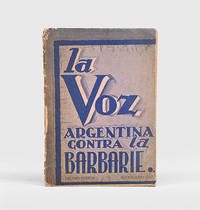
1942Best.-Nr. 194122Buenos Aires: Ediciones Alerta 1942. The Argentine voice against barbarism First edition collecting statements by prominent Argentines from politics academia the labour movement and religious circles condemning anti-Semitism the Nazi persecution of Jews and the ongoing Holocaust. The introduction reports that one million Jews had already been murdered. It warns that anti-Semitism in Argentina "is not numerically strong but it is well positioned and very high up. the Argentine people anti-racist by tradition and by upbringing know that here too it is necessary to defeat the Nazis at the same time that they are being defeated throughout the world. This pamphlet is yet another contribution" translated. The pamphlet's warning about Nazi influence within Argentina was well-founded. Argentina remained neutral until March 1945 and its large German community included organized Nazi sympathisers. After taking office in 1946 Juan Perón's government facilitated the "ratlines" bringing Nazi fugitives from Europe to Argentina. Octavo. Original wrappers. Toned wrappers partly detached with tape repair on verso: a good copy of a fragile publication. unknown
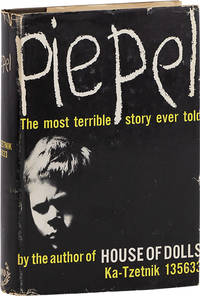
1961Best.-Nr. 63055London: Anthony Blond 1961. First Edition. 8vo. 20cm x 14cm. Publisher's dark brown cloth boards. Dustjacket. Titled in gilt to spine a little rubbed and scuffed to extremities with some bumping to spine ends in a strong example of the priceclipped pictorial dustjacket with some fraying to the spine ends cracking and rubbing of the laminate here and there and some inoffensive soiling to the white rear panel. A strong presentable copy. 285pp. Internally clean. A deeply harrowing tale post-Eichmann trial about the horrors visited upon concentration camp inmates by the Nazis from the informed perspective of a survivor. Anthony Blond unknown
1936Best.-Nr. 304567Dresden: Verlag von M.D. Groh 1936. First edition. Illus. viii 326 2pp. Large 4to. Original cloth some staining to back cover and some residue of internal staining at end. First edition. Illus. viii 326 2pp. Large 4to. Verlag von M.D. Groh hardcover
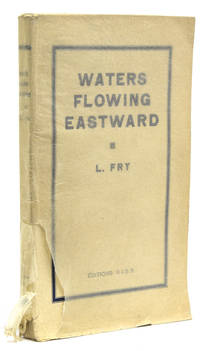
1931Best.-Nr. 264494Paris: Éditions R.I.S.S. 8 Avenue Portalis 1931. First edition with errata pasted to front pastedwown. Illustrated with b/w photos and facsimiles. 226 1 pp. 1 vols. 8vo. Brown printed wrappers. Tear to tail of spine front hinge coming unglued. In glassine wrapper. With contemporary add for The Rebirth of Conservatism by Dorothy Crisp laid in. First edition with errata pasted to front pastedwown. Illustrated with b/w photos and facsimiles. 226 1 pp. 1 vols. 8vo. The first edition of this notorious work of anti-Semitism. Based largely on the Protocols of the Elders of Zion Waters Flowing Eastward warns of a comming Jewish new world order. Éditions R.I.S.S. 8, Avenue Portalis unknown
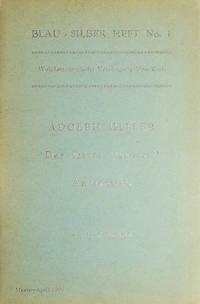
1939Best.-Nr. 32824New York: Weltdemokratische Vereinigong 1939. 1 vols. 8vo. Green wrappers some wear. 1 vols. 8vo. Weltdemokratische Vereinigong unknown
1936Best.-Nr. 62710New York: The Macmillan Company 1936. 8vo. viii 2 217 1 pp. Scarlet-coloured publisher’s cloth gilt lettering front cover & spine w/ d.j. minor chipping head of spine very minor dustsoiling coupe slight nicks still NF/VG copy. First American edition stated of Wells’ work which restates and distills his utopian ideals of a World State governed by an elite committed to scientific development that would serve to forestall the inherent dangers of fascism communism and Nazism with Jewish peoples singled out as a particular case of obstructive nationalism with a refusal to be largely assimilated by the socio-economic cultures in which they lived. The Macmillan Company, hardcover
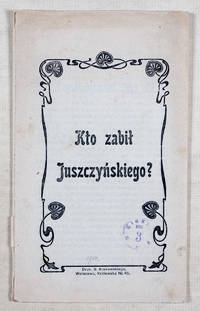
1914Best.-Nr. 43558Warsaw: S. Krakowskiego 1914. First edition. Softcover. vg. Octavo. 8pp incl. covers. Original covers with Art Nouveau illustration framing black lettering protected by modern mylar. Extremely scarce Polish anti-Semitic pamphlet related to the 1911 murder of the 13-year-old Ukrainian boy Andrei Yushchinsky and the subsequent trial and political scandal that resulted known as the Beilis trail or the Beilis affair. The case is considered a infamous example of the Blood libel and evidence of rampant anti-Semitism in Russia during the period. The identity of the author is not known but is credited under the likely psuedonym "Alm Fuw" on the last page. The pre-trial investigation of the case accusing Menahem Mendel Beilis Beilis Affair of the ritual murder was conducted by the foremost investigator of the Kiev Police Department Nikolay Krasovsky. Beilis a Jewish brick-factory worker was accused of the murder based on the testimony of a lamplighter who claimed he had witnessed Beilis kidnapping of Yushchinsky. Under horrific conditions Beilis spent more than two years in prison awaiting his trial which took place from September 25th through October 28 1913. The Russian right-wing press and politicians started a campaign throughout Russia against Jewish communities with accusations of the ritual murder. Despite the investigation by the local police which clearly linked the murder to a criminal gang killing Yushchinsky because he most likely had overheard conversations revealing information relating to crimes the gang committed the investigators in charge were dismissed. Evidence and many other aspects of the trial were manipulated by government officials at the highest level. Archival documents prove that the jury was rigged and monitored and witnesses were bribed or threatened. The trial sparked international criticism both from Jewish and non-Jewish intellectuals among them Maxim Gorky Vladimir Korolenko Alexander Blok and Alexander Kurpin. Yushchinsky was abducted on a Saturday morning while Beilis was at work. Ironically the alibi was the result of Beilis' unusual habit of working on the Jewish Sabbath and eventually the lamplighter confessed that he had been confused by the secret police. The prosecution's case was further undermined when it became clear that the body of the boy showed 14 wounds rather than 13 which was deemed to be in accordance with the "Jewish Ritual" a fact the prosecution had spent a great deal of effort to establish. However after several hours of deliberation the jury acquitted Beilis. After his acquittal Beilis left Kiev for Palestine and later settled in the United States. There he published his memoir under the title "The Story of My Sufferings" in Yiddish 1925 and a year later in English. Beilis story became the basis for Bernard Malamud's novel "The Fixer" which won the Pulitzer Prize and the National Book Award. Text in Polish. Very light wear along edges of pamphlet. Contemporary price stamp on cover and year penciled to bottom. Pamphlet in overall very good condition. One one Polish institutional holding worldwide based on OCLC records. S. Krakowskiego unknown
1939Best.-Nr. 43670Budapest: Pesti Lloyd-nyomada 1939. First edition. Softcover. vg. Folio. 26pp. published unbound. Original cream stapled wraps with title printed in black to back cover protected by modern mylar. To the Honorable Upper and Lower House of the Parliament. Respectful petition of the representatives of the Hungarian Jewish community concerning "Bill No. 72. regarding the restriction of Jews in public and economic life". Official petition of the Hungarian Jews regarding the bill of the Second Anti-Jewish Law No. IV:1939. The Second Anti-Jewish Law was one of a series of anti-Jewish measures passed by the Hungarian Parliament between 1938 and 1941 and the first Hungarian law providing a "racial" definition of the Jewish status according to the Nuremberg Race Law of 1935. Besides of other severe deprivations it sets a ceiling of six percent reduced from twenty of Jews being allowed to work in various financial and commercial professions as well as industrial enterrises employing more than ten persons. It also excluded the Jews from state administrations and jurisdiction prohibited Jews from teaching high school reenacted the Numerus Clausus at universities and partly rescinded their right to vote. Bill No. 702 the Second Anti-Jewish Law was drafted by István Antal state secretary of the Ministry of Justice and Pál Teleki Minister of Religion and Education and was presented for debate before Parliament on December 23 1938. The petition aimed to sway Parliament to disapprove the law claiming it being unconstitutional and delinquent in view of legal equality human rights and the Divine Law and furthermore relinquishing social justice and threatening national unity the emancipation granted by the laws of 1849 and 1867 in short it was deemed to be against the national interest of Hungary. The petition was unsuccessful the bill was approved by Parliament and was signed into law on May 5 1939 effecting the Hungarian Jewry severely with more than 90 thousand Jews losing their jobs and thus lowering the living conditions of approximately 220000 people significantly. Braham R.: The Second Anti-Jewish Law in: The Politics of Genocide: Holocaust in Hungary New York Columbia University Press 1981 pp. 147-156. Scarce important historical document with institutional holdings recorded only in Hungary. Text in Hungarian with slight rubbing to covers. Else in very good condition. Pesti Lloyd-nyomada unknown
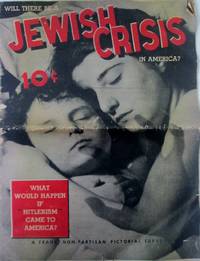
1938Best.-Nr. 022704No Place: Candid Features Publisher 1938. Wraps. Fair. Small tabloid newspaper format. 24 pp. Black and white photos and illustrations. A work against anti-Semitism in the United States juxtaposing events in Germany and asking "What if Hitlerism Came to America" The work debunks commonly held stereotypes of Jewish people highlights their persecution through the centuries and mentions notable Jewish people including Einstein and Sarah Bernhardt. Currently held in 5 libraries worldwide. FAIR condition. Horizontal fold crease present with chipping and tattering along the crease on the cover. Heavy creasing and wrinkling to the corners. Moderate toning and minor soiling. Minor chipping and tearing along the edges. Paper rather brittle. Candid Features, Publisher unknown
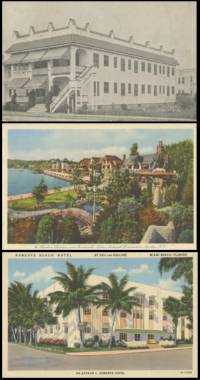
1970Best.-Nr. List3712United States 1970. 33 items: 28 postcards and five pamphlets. Generally excellent. A collection of postcards and pamphlets for hotels resorts and some planned neighborhoods around the US-mainly in New York New Jersey and Florida-with most advertising that they did not accept Jewish visitors. Many of the resorts' restrictions are stated implicitly advertising "restricted" "exclusive" or "carefully selected" clientele or mentioning their proximity to "Catholic and Other Christian Churches". Other postcards are explicit: the Marine Terrace Hotel in Miami advertises "Strictly Gentile Clientele" Mountain Lakes in Bethel New York is described as "a restricted Gentile Vacation Colony" and Awosting in New Jersey assures patrons that "The most careful Christian restriction insures the congenial atmosphere characteristic of the community." Pamphlets for Thendara Lodge and Locust Cottage both in New York state that they are "Gentiles Only"; and the collection includes a souvenir pamphlet for Mooseheart Illinois a planned community operated by the Loyal Order of Moose "an international fraternity restricted to members of the Caucasian or White race". The extent of discrimination against Jewish people inspired the publication of the Jewish Vacation Guide 1917 which documented hotels restaurants and services that were friendly to Jewish clients as the later Negro Motorist Green Book did for African Americans. The items in the collection come from twenty locations eighteen of which did not accept Jewish clients. The two postcards advertising resorts that explicitly catered to Jewish clientele come from Twin Pines in the Lake George region which advertises "Jewish American Cuisine" and Yarkony's Kosher Hotel at the Adler in Sharon Springs. These two hotels were part of the "Borscht Belt" an area of upstate New York that attracted Jewish vacationers mainly from the city. The area flourished between the 1920s and 1960s with hundreds of resorts offering Kosher food Shabbat and holiday services and entertainment. Of interest to historians of anti-Semitic discrimination in the US and of travel and recreation in the midcentury.
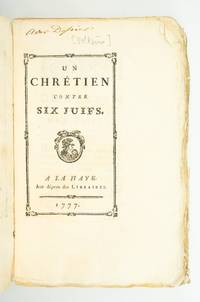
1777Best.-Nr. ST20535-04La Haye The Hague but Geneva: Aux dépens des Libraries 1777. FIRST EDITION. 215 x 140 mm. 8 1/2 x 5 1/2". 1 p.l. 303 3 pp. Publisher's marbled paper wrappers flat spine edges untrimmed. A Large Paper Copy. Benesco 1860. Andrew R. Morehouse "The Voltaire Collection in the Rare Book Room" The Yale Library Gazette 17 no. 4 1943 p. 75. Paper wrappers a bit faded as expected slightly defective at corners and a little curled otherwise and perhaps even so A VERY FINE COPY--the text within immense margins entirely clean fresh and bright. This is a remarkable survival in its original wrappers of a work related to one of the most resonating controversies of Voltaire's life and writings--the question of his anti-Semitism. A giant of the Enlightenment and one of the greatest of French writers and philosophers Voltaire real name François-Marie Arouet 1694-1778 writes here in response to "Lettres de quelques Juifs portugais allemands et polonais à M. de Voltaire" a 1776 critique by Antoine Guénée objecting to the anti-Semitism especially as expressed within a commercial context in our author's "Dictionnaire Philosophique." Deeply philosophical and leavened with satire the 120 chapters of the seminal "Dictionnaire" were widely read much condemned and not infrequently burned as they challenged religious authority advocated for toleration and dealt with many social and political issues from an uncomfortable Enlightenment perspective. And there can be no doubt that Voltaire's "Dictionnaire" does in fact contain critical remarks about the Jews; at the same time the author's criticism is extended with equal warmth to organized religion in other forms. In the present response to Guénée Voltaire is nothing if not scathing which in the end works against him. As Voltaire scholar Andrew R. Morehouse wryly puts it the text here expands upon Voltaire's previous points in such a way as to "justify the accusation that he is cruelly anti-Semitic." This work is not exactly rare but it is very unusual to find it in original wrappers as here particularly in such fine condition. Aux dépens des Libraries unknown
1965Best.-Nr. 003265Isle of Man: Britons - Times Longman 1965. Good original wraps with the Britons Publishing Company label pasted over original publisher VERY SCARCE Attacks Jews as being in control of Bolshevism etc. First Edition. Original Wraps. Good. Britons - Times Longman paperback
Best.-Nr. 500051London: Anglo-hebrew Mass Market Paperback. Very Good. Anglo-hebrew Paperback
1981Best.-Nr. 23414CBFrankfurt am Main, Qumran (= Portrait 7), 1981. 8°, 61 S., illustr. original Kartonage (Paperback) mit transparentem Schutzumschlag, Erstausgabe schönes, sauberes Exemplar
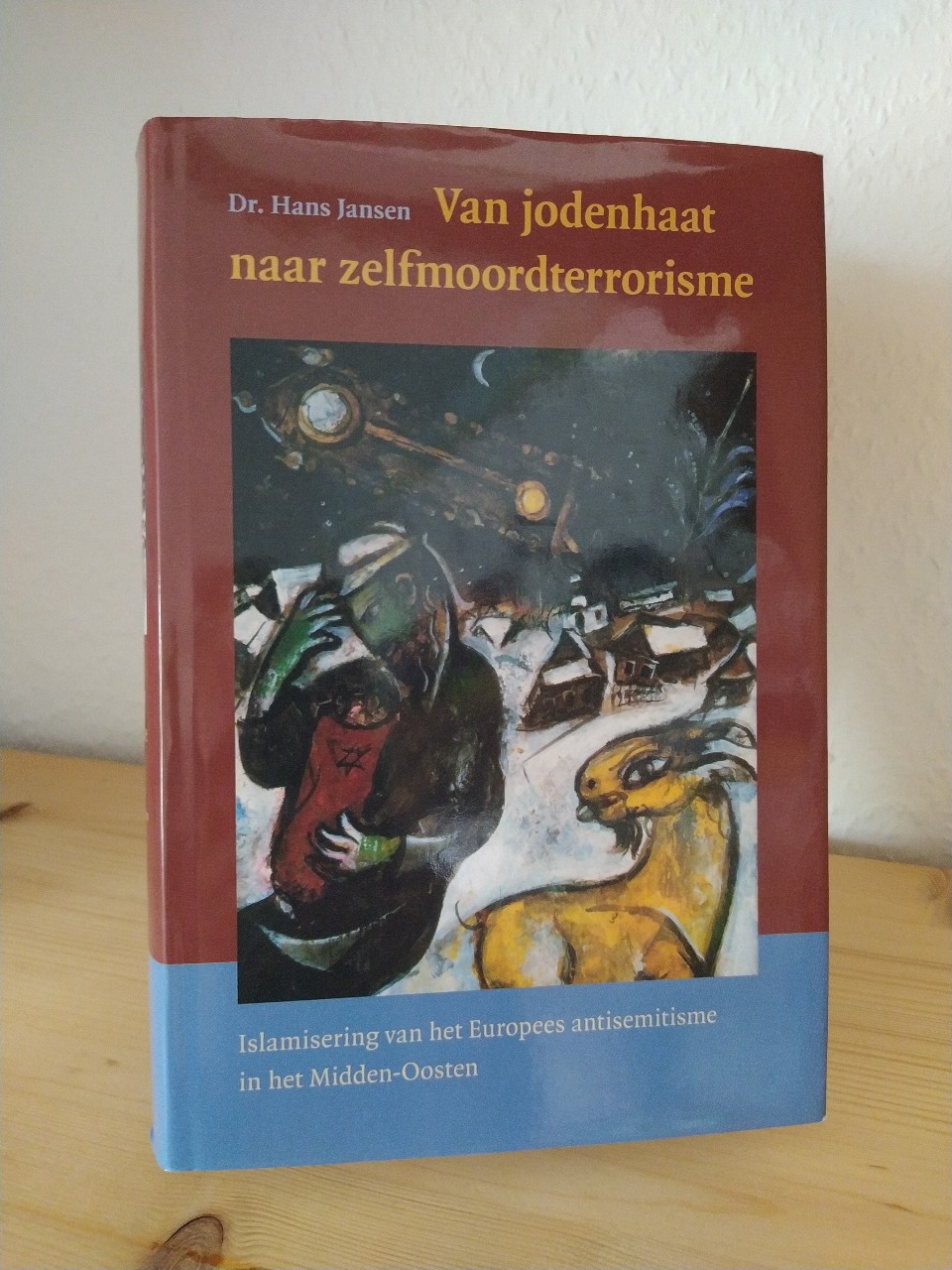
2006Best.-Nr. 153961Heerenveen: Groen 2006. 1047 Seiten. Mit farbigen graphischen Darstellungen im Anhang. Gr. 8° (22,5-25 cm). Orig.-Pappband mit Orig.-Schutzumschlag. [Hardcover / fest gebunden].
Best.-Nr. 146722Ubstadt-Weiher Verlag Regionalkultur 2017. 325 Seiten. Farbiger OKart.-Einband. 23x16 cm
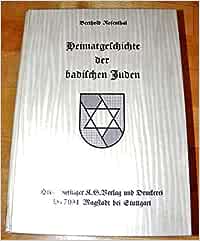
1981Best.-Nr. 18888Magstadt bei Stuttgart. Horst Bissinger KG. 1. Reprintauflage 1981. VIII, 532 Seiten u. eine gefaltete Karte im Anhang. Illustrierter OKart.-Einband.(Geringe Gebrauchsspuren). 22x15 cm
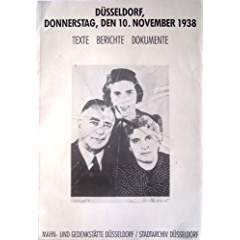
1989Best.-Nr. 104323Düsseldorf. 1989. 266 Seiten. Mit zahlreichen faks. Abbildungen u. Dokumenten. Ill. Originalbroschur. ((Einband etwas fleckig. Untere rechte Ecke etwas gestaucht). 30x21 cm
2014Best.-Nr. 6387EBBerlin/Boston, De Gruyter Oldenbourg, 2014. Groß-8°. 23,5 cm. VI, 294 Seiten. Original-Pappband. (= Europäisch-Jüdische Studien, Beiträge, Band 13).
1966Best.-Nr. 106893Düsseldorf. 1966. 117 Seiten. Mit zahlr. Abbildungen u. faks. Dokumenten. Ill. Originalbroschur. (Geringe Gebrauchsspuren). 24x17 cm
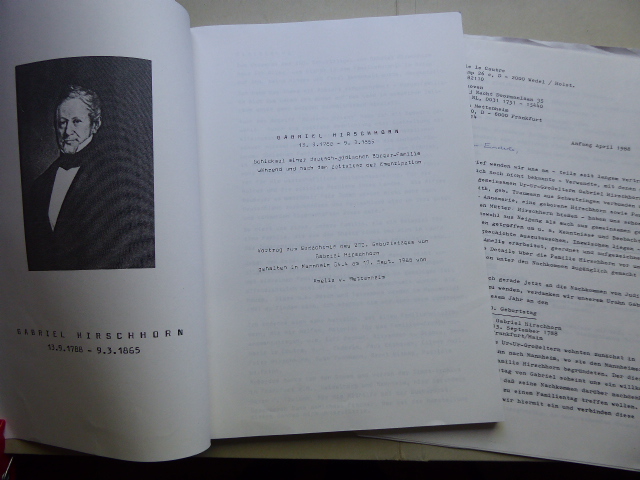
1988Best.-Nr. 52200Mannheim. Privatdruck. (1988). Als Fotokopie vervielfältigt. 57 nummerierte u. 17 nicht nummertierte Blätter sowie mehreren Beilagen (mit teils handschriftlichen Anmerkungen). Mit zahlreichen Abbildungen. Ill. Originalbroschur mit leinwandverstärktem Rücken. 29x21 cm
2003Best.-Nr. 107072Hamburg. 2003. 162, (44) Blätter als Fotokopie vervielfältigt. Mit zahlr. Abbildungen. Folienumschlag. 29x21 cm
2002Best.-Nr. 107091Berlin. 2002. Zwei Bände. 545 Bläter. Mit Folienumschlägen. 30x21 cm
1962Best.-Nr. 26471Chicago. The University of Chicago Press. 1962. XV, 254 pages. Illustrated cloth binding and a dustjacket in very good condition. 22x14 cm