552 résultats
2002réf. LFA-126718110Un ouvrage de 298 pages, format 135 x 210 mm, illustré, broché couverture couleurs, publié en 2002, Les Belles Lettres, collection "Guides Belles Lettres des Civilisations", bon état
1927réf. 1056981927 Chez Jules Carbonel (imprimeur-éditeur), à Alger, Ancienne Maison Bastide-Jourdan - 1927 - In-8, broché - 193 p.
réf. 55457in-8 broché - 1992 - 448p - Ed. Buchet-Chastel
1900réf. 8597Paris Carré 1900 in12, pleine toile éditeur 1245 pp tableau dépliant et illustrations,
réf. 99615Fayard, 1982, 294 p., broché, exemplaire du service de presse, bon état.
réf. 11487Imprimerie Eleuthère Brassard Rue Tupinerie, 4, Montbrison Plaquette grand In-8 couverture orangée en papier fort, titrage en noir et monogramme au losange ajouré, 17 pages, bel état pour cette monographie rare sur le Forez.
réf. 14378Albin Michel, juillet 1978 - In-8, br, couverture unie de cette coll, portrait en médaillon au dos, ensemble en bon état, tranche de titre insolée.
réf. 11303Lyon Imprimerie Pierre Mougin-Russand : Waltener et Cie, Successeurs, 3 rue Stella , 1901 - In-8, cousu, couverture en papier fort rempliée ornée d'une gravure par DREVET, titrage en noir, motif au dos, gravure frontispice (J.Drevet) , lettrines et culs-de-lampe, agréable typographie sur un papier sans aucun défaut, exemplaire N° 5 sur JAPON, l'un des 15 exemplaire de ce tirage (250 ex au total).Petites marques d'usage, les coins étant bien piquants et la tranche intègre.
réf. 797112Payot Paris 1987 In-8 ( 230 X 140 mm ) de 220 pages, broché sous couverture illustrée. Très bel exemplaire.
2020ill. La peste ha tragicamente accompagnato per secoli la storia dell'umanità lasciando segni profondi nel tessuto demografico, nell'immaginario collettivo e nella scienza medica nonché nelle arti figurative e nella devozione popolare. E non ha mancato di "contaminare" anche la letteratura antica e moderna: da Omero a Lucrezio, da Boccaccio a Manzoni, da Defoe a Camus. Gli Atti del convegno di studio "Noja 1816: l'ultima peste", organizzato nella cittadina barese di Noicàttaro in occasione del bicentenario del contagio, permettono di ricostruire aspetti noti e meno noti di un evento fatto di veri e propri "muri della peste", nonché di provvedimenti sanitari inadeguati, se non dannosi. Viene così restituita l'immagine di una comunità cittadina costretta a subire le prescrizioni di una scienza medica non ancora capace di individuare le reali cause del contagio e i provvedimenti di autorità politico-amministrative impreparate di fronte alla drammatica eccezionalità dell'evento. Grazie ai contributi di studiosi di diversa formazione e a un approccio evidentemente interdisciplinare, queste pagine offrono un quadro convincente dell'ultima, grande peste bubbonica del continente europeo.
1963Mm 175x250 Ministero degli Affari Esteri, Comitato per la Documentazione dell'opera Dell'Italia in Africa. Brossura editoriale di XIII-196 pagine. Lievi fioriture alle copertine, per il resto buona copia. SPEDIZIONE IN 24 ORE DALLA CONFERMA DELL'ORDINE.
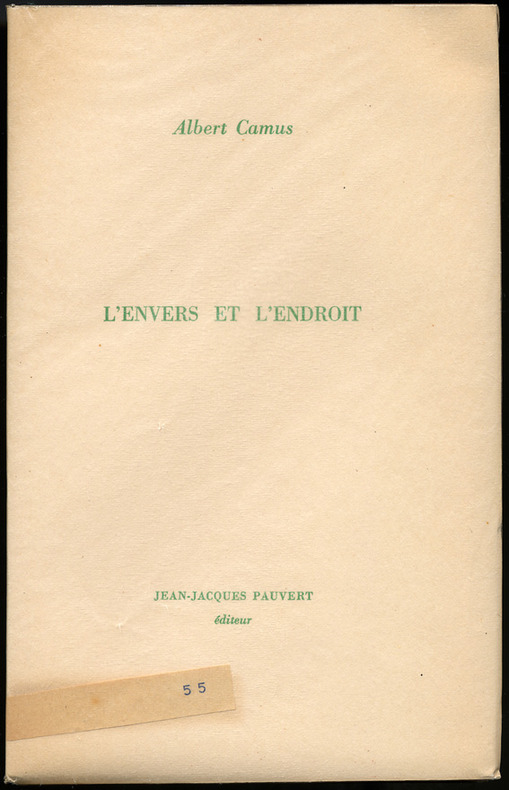
1956réf. 980Jean-Jacques Pauvert Éditeur, Paris 1956. 1 volume in-8 (225 X 142 mm) broché, 107 pp+fnch. sous couverture rempliée ivoire imprimée en vert, rhodoïd de l'éditeur. Seconde édition illustrée d'UNE POINTE-SÈCHE ORIGINALE DE HANS BELLMER, portrait de Camus. La préface de 23 pages a été spécialement écrite par l'auteur pour cette édition. Tirage : 100 exemplaires sur vélin de Rives ivoire numérotés en chiffres romains. Celui-ci, le n° LV, est entièrement non coupé et conservé à l'état de neuf.
1885réf. 5002996231885 1885.
2002réf. LFA-126746754N° 63 - Décembre 2002-Janvier 2003) : revue de 66 pages, format 215 x 285 mm, illustrée, brochée couverture couleurs, bon état
réf. 127972aafGetruckt zu Basel bey Jacob Bertsche, Im Jahr Christi 1667, in-4to (21x18 cm), 23 S. + 1 leer, unbeschnitten, (Titelbl. mit Holzschnitt ‘Basler Wappen’, Aus Sammnelband ausgebunden, ohne Umschlag.
2008In the middle of the sixth century, the world's smallest organism collided with the world's mightiest empire. Weaving together evolutionary microbiology, economics, military strategy, ecology, and ancient and modern medicine, author Rosen tells of history's first pandemic--a plague seven centuries before the Black Death that killed tens of millions, devastated the empires of Persia and Rome, left victims from Ireland to Iraq, and opened the way for the armies of Islam. Emperor Justinian had reunified Rome's fractured empire by defeating the Goths and Vandals who had separated Italy, Spain, and North Africa from imperial rule. In his capital at Constantinople he built the world's most beautiful building, married its most powerful empress, and wrote its most enduring legal code, seemingly restoring Rome's fortunes. Then, in the summer of 542, he encountered a flea. The ensuing outbreak of bubonic plague killed five thousand people a day in Constantinople and nearly killed Justinian himself, bringing about one of the great hinge moments in history 367p.maps notes index. Book
réf. 201906420Paris, Plon, 1997 ; in-8, 417 pp., br.
1923réf. AUB-5423Paris, éd. G. Crès et Cie 1923. Bon exemplaire broché, couverture ornée d'éd., in-8, 280 pages.
réf. 4990Préface d'Henri Mollaret, traduction et notes de François Ledoux. Paris. Gallimard collection folio. 1982. In-8 (18x11). 378 pages. Broché, couverture illustrée.
1923réf. 23365Paris Denoël 1923 In-12 280 pp
réf. 20817Paris, Aubier / Editions Montaigne, 1943 1 volume In-8° (12 x 18,9cm) Broché. 204p., 2 feuillets.
1940réf. 2897Paris Gallimard 1940 Deux tomes en un volume in-8 demi basane noisette, dos à nerfs sobre, titre doré, 316 et 269 pages. Charnières faibles, néanmoins bon exemplaire.
1794réf. 23553(Marseille) (Auguste Mossy) (An II 1794) In-4 (21 x 26,5 cm) demi basane havane moderne 63 pp. (Manque la page de titre et le dernier feuillet, premier feuillet taché en marge, petit manque de papier au feuillet 61/ 62 avec une petite restauration en marge).
1739In 2° (34,4x22 cm); due tomi in un volume: XXXVI, 260 pp. e una carta geografica più volte ripiegata, XII, 265, (27), (3) pp. e 10 c. di tav. fuori testo più una carta geografica più volte ripiegata. Completo. Legatura coeva in piena pergamena molle. Qualche lieve foxing al margine esterno di poche pagine, ininfluenti e nel complesso esemplare in buone condizioni di conservazione. Xilografia ai frontespizi. Primo frontespizio stampato in rosso e nero. Testane e finalini xilografici. dsc_0378_clipped_rev_1Prima edizione dell’opera “varia” del grande medico romano Giovanni Maria Lancisi (Roma, 26 ottobre 1654 – Roma, 20 gennaio 1720). Anatomista, fisiologo, botanico, fu anche un valente studioso di letteratura e conoscitore di antiquariato. In campo anatomico descrisse per le strie longitudinali mediali del corpo calloso, i così detti “nervi di Lancisi”, al “segno di Lancisi”, ed un particolare tipo di pulsazione nel polso giugulare, presente in casi di attacco cardiaco. A lui si deve l’intuizione della trasmissione della malaria attraverso il morso delle zanzare ed il consiglio di bonificare le paludi dell’Agro Pontino. Intuì che la malaria era un vera e propria forma di “pestem”, un’infezione che veniva trasmessa attraverso il contagio, scontrandosi così con i fautori dell’antico umoralismo. Arrivò ad ipotizzare che gli insetti depositassero organismi nei cibi che poi venivano assunti dagli uomini o che gli insetti iniettassero direttamente nelle ferite la loro saliva che secondo Lancisi, conteeva un “venifico liquido”.Tra le opere di medicina di Lancisi si ricordano il De subitaneis mortibus (1707), la Dissertatio de recta medicorum studiorum ratione instituenda (1715), e il postumo De motu cordis et aneurysmatibus (1728), con il quale contribuì allo sviluppo della fisiopatologia cardiocircolatoria. Fra le opere qui contenute: Dissertatio historica de Bovilla Peste; De recta studio rum Medicorum; De subitaneis morti bus; Dissertatio de nativis; De Noxiis Paludum Effluviis Libri (nella quale si preoccupò di problemi legati alla salute pubblica); Humani Corporis Anatomica Synopsis; De humorum secretionibus in genere; An acidum ex sanguine extrahi; De triplici interstinorum Polypo; De Physiognomia; De ortu, vegetaztioneac textura fungo rum; De Plinianae Viallae Ruderibus; De motu cordis & aneurysmatibus. "Lancisi, great Italian clinician, was the first to describe cardiac syphilis; he was also notable as an epidemiologist, with a clear insight into the theory of contagion. He was physician to Pope Clement XI, who turned over to him the forgotten copper plates executed by Eustachius in 1552. Lancisi published these with his own notes in 1714. [...] Lancisi's posthumous De aneurysmatibus published in 1728 appears only in later collected editions" (Garrison Morton). Opera non comune da reperirsi completa, nella sua legatura coeva ed in buone condizioni di conservazione.
réf. 451666Librairie Lacoustene Marseille 1976 In-8 carré ( 215 X 150 mm ) de 152 pages, broché sous couverture illustrée. EDITION ORIGINALE. Très bel exemplaire enrichi d'un envoi autographe signé de l'auteur.Un Grand Médecin d'autrefois. Jean-Baptiste BERTRAND 1670-1752 et La Peste de Marseille en 1720.