253 resultados
1896ref. 0001486Very Good. 1896. On offer is an amazing archive of 32 items of original personal and intimate correspondence and ephemera dated 1896 through 1920 to the family Hindenburg including writings by Hindenburg himself. Postcards letters personal messages photos sent by Paul von Hindenburg and assorted aristocrats of the time to Hindenburg his wife and children. Paul Ludwig Hans Anton von Beneckendorff und von Hindenburg known universally as Paul von Hindenburg the man almost singularly responsible for WWII who as President of Germany placed Hitler in the position of ascension to Germany's head of state. This extraordinary archive whose manuscript items have for the most part postal marks and stamps are in many ways a testament to Hindenburg's monarchist leanings and an homage to the Kaiser and the rest of the royal German family making for a great deal of irony given the method of Hindenburg's fall from power and his aid to Hitler. BIO NOTES: Hindenburg enjoyed a long career in the Prussian Army retiring in 1911. He was recalled at the outbreak of World War I and first came to national attention at the age of 66 as the victor at Tannenberg in 1914. As Germany's Chief of the General Staff from 1916 he and his deputy Erich Ludendorff rose in the German public's esteem until Hindenburg came to eclipse the Kaiser himself. Hindenburg retired again in 1919 but returned to public life one more time in 1925 to be elected as the second President of Germany. Though 84 years old and in poor health Hindenburg was persuaded to run for re-election in 1932 as he was considered the only candidate who could defeat Adolf Hitler. Hindenburg was re-elected in a runoff but nonetheless played an important role in the Nazi Party's rise to power dissolving parliament twice in 1932 and eventually appointing Hitler as Chancellor in January 1933. In February he issued the Reichstag Fire Decree which suspended various civil liberties and in March he signed the Enabling Act in which parliament gave Hitler's administration legislative powers. Hindenburg died the following year after which Hitler declared the office of President vacant and as "Führer und Reichskanzler" made himself head of state. The famed zeppelin Hindenburg that was destroyed by fire in 1937 was named in his honor. Overall VG.; 48mo - over 3" - 4" tall; KEYWORDS: HINDENBURG BERLIN WITTENSTEIN ZEHLENDORF KAISER WILHELM II GERMANY FUHRER HITLER NAZI THIRD REICH MOLTKE GERMANIC WEIMAR REPUBLIC ZEPPELIN ENABLING ACT REICHSTAG FIRE DECREE PAUL LUDWIG HANS ANTON VON BENECKENDORFF UND VON HINDENBURG PRUSSIA WORLD WAR II WWII WORLD WAR 2 HOLOCAUST HANDWRITTEN MANUSCRIPT DOCUMENT LETTER AUTOGRAPH DIARY JOURNAL LOG KEEPSAKE WRITER HAND WRITTEN DOCUMENTS SIGNED LETTERS MANUSCRIPTS PHOTO ALBUM PHOTOGRAPHIC ALBUM HISTORICAL HOLOGRAPH WRITERS DIARIES JOURNALS LOGS AUTOGRAPHS PERSONAL MEMOIR MEMORIAL PERSONAL HISTORY HANDSCHRIFT HANDGESCHRIEBEN MANUSKRIPT SÜTTERLIN VON HAND GESCHRIEBEN HANDSCHRIFTLICH UNIKAT EINZELSTÜCK DOKUMENT SCHRIFTSTÜCK KURRENT KURRENTSCHRIFT DEUTSCHE SCHREIBSCHRIFT OSTPREUßEN KALININGRAD ADEL AMERICANA HANDWRITTEN MANUSCRIPT AUTOGRAPHED AUTHORS DOCUMENT LETTER AUTOGRAPH KEEPSAKE WRITER HAND WRITTEN DOCUMENTS SIGNED LETTERS MANUSCRIPTS HISTORICAL HOLOGRAPH WRITERS AUTOGRAPHS PERSONAL MEMOIR MEMORIAL PERSONAL HISTORY ARCHIVE DIARY DIARIES JOURNAL LOG PRIMARY SOURCE FIRST HAND ACCOUNT SOCIAL HISTORY PERSONAL STORIES LIVING HISTORY ANTIQUITÉ CONTRAT VÉLIN DOCUMENT MANUSCRIT PAPIER ANTIKE BRIEF PERGAMENT DOKUMENT MANUSKRIPT PAPIER OGGETTO D'ANTIQUARIATO ATTO VELINA DOCUMENTO MANOSCRITTO CARTA ANTIGÜEDAD HECHO VITELA DOCUMENTO MANUSCRITO PAPEL HANDSKRIFT AUTOGRAFER EGENHÄNDIGT HANDSKRIVET HANDSKRIVEN MANUSKRIPT BREV SIGNERAD SIGNERAT SIGNATUR NAMNTECKNING AUTOGRAF HANDSKRIFTER Dolchstoßlegende Kamarilla Machtergreifung . unknown
1776ref. 16034Leipzig: S L Crusius 1776. First Edition. Contemporary three-quarter leather; spine gilt stamped. Very good with some modest internal spotting; feint old ownership stamp on the verso of the title page; front joint somewhat chafed. 8vo 8 1 - 120 pp. 3 folding plates and 5 large folding factorial tables. Hindenburg was a professor of philosophy and then physics at Leipzig. He is however best known for his mathematical work. In the book he lays out the design and theory behind a mechanical device independent of the work done by Felkel named the Erasthosthenes Sieve. Prior to Hindenburg it was the name given to a means of calculating all the prime numbers to a selected limit. It was Hindenburg who mechanized this method of accomplishing the calculations. In the book he establishes rules to both optimize and organize the device for calculating the primes. There are three folding plates of the device. The book also contains results in linear Diophantine analysis decimal periods combinations and gave combinatorial significance to the digits of numbers written in decimal notation. He later went on to publish work in combinatorials and could rightfully claim to be the founder of this approach in Germany. DSB VI 403 - 404; OCLC locates no copies in America; Tomash I #386 - a defective copy only listed as part of the collection. S L Crusius hardcover books
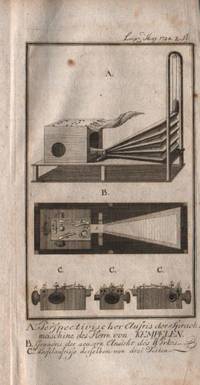
1784ref. 359Leipzig: In der Johann Gottfried Muellerschen Buchhandlung Müller 1784. First edition. Printer’s device on title page. In contemporary cardboard. Title vignette on spine. Bookplate of Poul Hage 1906–1984; Danish chess player and “doublette” vignette of Lothar Schmid 1928–2013; German chess grandmaster on inner pastedown. Collection stamp on title page verso and recto. Occasional foxing throughout. Overall in good condition. With 5 illustrations of knight’s tour and one engraved illustration of the speaking machine. With 5 illustrations of knight’s tour and one engraved illustration of the speaking machine. First edition. Printer’s device on title page. In contemporary cardboard. Title vignette on spine. 11 12–56 p. and 1 mounted plate on p. 51. One of the earliest book on von Kempelen’s chess automaton and his speaking machine with the first picture of the machine ever printed by Carl Friedrich Hindenburg 1741–1808 the German mathematician. Wolfgang von Kempelen 1734–1803 the Hungarian inventor best known for constructing the “Turk” a chess automaton and the speaking machine. This book is an early account of both contrivances and it contains the first picture made of the “Sprachmaschine”. Von Kempelen constructed the chess playing machine in 1770 and it was first exhibited at the Schönbrunn Palace in Austria. It was able to play chess game and the knight’s tour from any starting point on the board. In fact it was a mechanical illusion that allowed a human chess master hiding inside to operate the machine. For eighty years it was exhibited by its various owners all over Europe and North-America until its destruction in a fire in 1854. During this time many statesman and famous chess masters were defeated by the Turk such as Napoleon Bonaparte and Benjamin Franklin. It is also recorded that Philidor who was considered the best chess player of his time won a match against the “machine” in Paris in 1793. It remained unknown who directed it when it was in von Kempelen’s possession but it is known that after his death it was purchased by Johann Nepomuk Mälzel and the operators were Johann Allgaier Boncourt Aaron Alexandre William Lewis Jacques Mouret and William Schlumberger. In this book Hindenburg mentions about the Turk that it was even able to converse with the spectators using a letter board in English French and German and it could answer to questions about his age marital status and secret working. The book contains the table of the Turk’s solution of the knight’s tour after the older masters de Montmort Moivre de Mairan and as well a recent one by Leonard Euler. Von Kempelen’s speaking machine was a manually operated speech synthesizer that was built over the period 1769–1791 and operated from 1783 onward. The construction of the latest model is discussed by von Kempelen in “ Mechanismus der menschlichen Sprache nebst der Beschreibung seiner sprechenden Maschine” 1791. Hindenburg writes that the machine’s speech is “loud and intelligible even if less human than the vox humana register on an organ more oboe-like and somewhat plaintive”. He even gives details on the sound of the German word “Schachspieler”. In his book von Kempelen rather mentions French words and utterances because of the difficulties with the final plosives and with fricatives in general. According to him after practice the operator could produce utterances like “Je vous aime de tout mon coeur” or something more formal "Josephus Secundus Romanorum Imperator Semper Augustus”. Extremely scarce and early work about von Kempelen’s chess automaton and his speaking machine. Bibl.: Broecke Marcel P.R. van den: Wolfgang von Kempelen’s Speaking Machine as a Performer. In.: Sound structures. Studies for Antonie Cohen. Publication in Language Sciences 13. Dodrecht Foris. 1983. pp. 9–19. . In der Johann Gottfried Muellerschen Buchhandlung (Müller) unknown