393 résultats
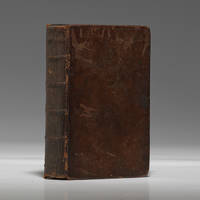
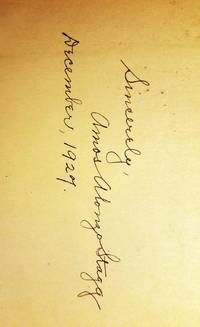
1927réf. 019614New York: Longmans Green & Co. 1927. First Edition. Hardcover. Owner inscription on the half-title page. Near Fine lacking the scarce dustwrapper. Cloth. Illustrated with photographs. SIGNED on the front endpaper "Sincerely/Amos Alonzo Stagg/December 1927." A scarce early inscription before his writing became shaky by one of the most important figures in American sports. Stagg the first to be elected to the Football Hall of Fame as both player and coach was active in the sport until the age of 98. He is credited with originating more plays and formations than any other man and among other developments is responsible for the forward pass the huddle and numbered uniforms. Stagg also invented the indoor batting cage and pioneered the headlong slide in baseball. In addition Stagg participated in the first public basketball game on 11 March 1892 scoring his team's only basket and the first intercollegiate basketball game on 18 January 1896. He is said to be responsible for the concept of five-man basketball. Of the Grand Old Man of the Game Knute Rockne once said "All football comes from Stagg." Longmans, Green & Co. hardcover books
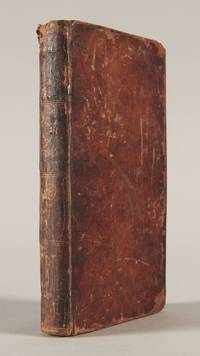
1793réf. 346018Philadelphia: Parry Hall 1793. First edition of Wilkins' book; Wesley's Primitive Physic. was first published in 1747 this being the twenty third edition revised and corrected. Two works bound in one volume. 97 3; 10311 pp. 8vo. Contemporary calf. Calf worn rubbed and covers bowed. Toned scattered foxing; good. First edition of Wilkins' book; Wesley's Primitive Physic. was first published in 1747 this being the twenty third edition revised and corrected. Two works bound in one volume. 97 3; 10311 pp. 8vo. First edition of Wilkins' work bound here with the "twenty third edition revised and corrected" of Wesley's work as is usually the case. Both offer treatments for a wide variety of illnesses from gout toothache measles and palsy to abortion how to prevent them cancer diabetes and extreme fat. Cold baths or bleeding are often prescribed but some of the remedies are quite complex and founded upon science. Both works were directed for use by members of the Methodist faith and Wesley's Primitive Physic. was first published in 1747. Scarce. Austin 2046; Evans 26482; ESTC W23219. Parry Hall unknown books
1953réf. 432413San Francisco: no publisher 1953. Softcover. Very Good. Legal brief. 14 Mimeographed folio leaves printed rectos only stapled at the top and folded in thirds. A little age-toning and small chips in a couple of margins final leaf detached but present sound and very good. Long brief by Charles R. Garry. Wesley Robert Wells was an African-American man convicted of minor crimes of theft and imprisoned but because of an altercation with a guard who was unhurt was given the death penalty. The attorney Charles R. Garry worked tirelessly to have the sentence commuted and after 40 years Wells was released from prison little more than a year before he died of a heart attack. Garry who eventually was central to the defense schemes of various Black Panthers referred to Wells as "The First Black Panther." This was obviously issued as part of some sort of public relations effort by Garry. Rare. OCLC locates a single copy. no publisher] unknown books
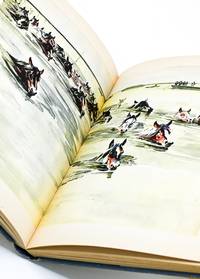
1947réf. 47667Chicago: Rand McNally & Company 1947. First edition. About fine in near fine jacket. First printing of one of the most beloved horse stories ever told winner of a 1948 Newbery Honor - an exceptionally beautiful copy. Based on the true story of the charismatic island-dwelling ponies of Virginia and the people who care for them MISTY OF CHINCOTEAGUE brought attention to the curious lives of the feral horses. The story was adapted into a film in 1961 and the real Misty even attended the premier. This is a particularly nice copy of one of America's favorite horse stories rare to find in such a nice dust jacket. 9.5'' x 6.75''. Original blue cloth binding with yellow pictorial stamping. Original unclipped $2.50 color pictorial dust jacket. Color pictorial endpapers of a pony running across a sun-dappled wetland. Illustrated in black and white with color pictorial title page. 174 pages. Jacket with light edgewear one short closed tear to front panel; a bit of toning to spine. Binding with only mild shelfwear. Interior clean and bright. Rand McNally & Company unknown books
1890réf. 587790Atlanta Georgia: Franklin Publishing House 1890. Hardcover. Good. First edition. Introduction by Prof. W.S. Scarborough. Small octavo. 305pp. Engraved frontispiece portrait of the author with his autograph in facsimile. Red cloth gilt. Small archival tape repair on the verso of frontispiece boards and corners scuffed and rubbed some scattered foxing a good copy of an uncommon title. Franklin Publishing House hardcover books
1911réf. 169931911. Photo album compiled by a female student at Wellesley College between 1911 and 1919 documents women's higher education collegiate ritual and professional transition into teaching during the Progressive Era. The album traces the compiler's path from secondary schooling through her collegiate years and into her early career as an educator offering sustained visual evidence of female academic community at a time when women's access to advanced scientific and liberal education was expanding but remained institutionally distinct. Founded in 1870 Wellesley College had by the early twentieth century established itself as a leading center for women's study particularly in the sciences employing more female scientists than any other American institution of higher education. The photographs record campus architecture traditions intellectual life and female peer networks situating the album within the broader history of women's collegiate culture and professionalization in the years immediately preceding and during the First World War. Album contains 143 original silver gelatin print photographs dating from 1911 to 1919 mounted on approximately 100 pages within original black cloth boards measuring 9 x 12 inches; photographs range in size from approximately 2 x 3 inches to 4 x 9.5 inches. Numerous images depict Wellesley College campus scenes including Lake Waban and the chapel student residences labeled "Wellesley 1911-1912" and groups of students identified as "Students." Candid captions document daily academic life: six women bundled in hats and coats captioned "Off for math exam" students reading outdoors communal meals and informal portraits labeled with nicknames such as "Chub" "Selina" "Honey" and "Marion." Five photographs record the May Day 1912 "Senior Hoop Rolling" tradition. Additional academic images include interiors labeled "Drawing Room" "Mr. Wilson's Room" "Assembly Room" "Physics Lab" and "Library" at "M.H.S." as well as a group of sixteen boys wearing "M" shirts with three coaches and a trophy banner reading "OCIAA Relay Race 1912." Other collegiate references include "Harmony Hall" with caption "Inmates of H.H. 1913" and two large group photographs of women in white dresses before a banner reading "ETA Clionian" one dated 1914 associated with the teachers' college at New Paltz. Geographic excursions are documented through images labeled Frontenac Point Minnewaska Mohonk Yankee Lake in upstate New York and Digby Nova Scotia. Later photographs depict the compiler's transition into teaching with groups of children labeled "Primary" and "Intermediates" a staged school production featuring children in Pilgrim costumes and a building identified as "Quassaick Hall." Spanning the years 1911 to 1919 the album bridges the final prewar era of Progressive reform and the wartime transformation of American educational institutions. The visual record emphasizes female intellectual labor in mathematics and science campus ritual sororal association and the socially sanctioned pathway from collegiate training to professional teaching. Wellesley's prominence in scientific instruction for women situates the album within broader developments in women's access to laboratory education and academic employment. The inclusion of regional travel and teacher-training imagery further contextualizes the educational mobility of middle-class women in the northeastern United States. One page detached but present; minor handling wear to boards; photographs generally clear with strong contrast; overall very good condition. A cohesive and expansive visual archive documenting women's higher education peer culture and professional formation in the early twentieth century. unknown books
1875réf. 18600Washington: Government Printing Office 1875. First Edition. Quarter Leather. Near fine. The first edition of Exploration Of The Colorado River Of The West And Its Tributaries published in 1875. Quarto xi 1 291pp 5. Contemporary three-quarter olive morocco raised bands title stamped in gilt over a red morocco label. Maroon cloth boards. Complete with 80 wood engraved views on 72 individual plates. Includes the two fold-out maps at the rear. New endpapers. Bumped fore-edge with a closed tear from p. 240-248 no impact to text. Clean text throughout solid text block. Sabin 64753 Howes P528 Graff 3336 A near fine example. John Wesley Powell 1834-1902 was an American explorer Civil War veteran scientist and public intellectual best known for leading the first successful expeditions through the Colorado River and the Grand Canyon in 1869 and 1871-72. Having lost his right arm at the Battle of Shiloh Powell became a symbol of postwar scientific exploration combining firsthand fieldwork with rigorous analysis of the American West. As second director of the U.S. Geological Survey and longtime head of the Bureau of American Ethnology he argued that western settlement should be planned around watersheds and water availability rather than arbitrary political boundaries. Government Printing Office unknown books
1879réf. 422485Washington D.C. 1879. Very Good. Autograph Letter Signed by John Wesley Powell Director of the Bureau of Ethnology in Washington D.C. together with an accompanying photograph which he sent in 1880 to John S. Billings a surgeon and a statistician on medicine in the U.S. Army. The one page letter is written on "Smithsonian Institution Bureau of Ethnology" letterhead dated: "Ap. 27" 1880 and is addressed at the bottom to "Dr. John S. Billings Surgeon U.S.A. Army Medical Museum." Some water staining to the edges and related blurring to the manuscript text still legible and three-inch tear repaired with tape on the verso good only. The Albumen Print measures 9 ½ x 12 inches laid down on a cardboard mount 11 x 16". Contemporary manuscript caption in ink on the bottom margin of the mount: "3824 Photo. Tailed man" and on the back in French which identifies the photograph as a being from the Society of Anthropology in Berlin. Dated "Oct. 18" with "1879" inserted in pencil. Light soiling and toning to the mount with a tear to the top margin of the mount very good. The photograph of a tailed man which Powell takes "pleasure in sending" to Billings is an enlargement of the photo taken in 1879 by Surgeon-General Bernhard Ornstein chief physician of the Greek army. The original photo sent to the Berlin Anthropological Society sparked a decade-long debate about whether such protuberances were "atavistic tails" or "pathological protuberances." Powell was a celebrated naturalist and explorer who despite losing an arm in the Civil War led the first known passage through the Grand Canyon in 1869. When Congress created the Bureau of Ethnology in 1879 Powell was named its first director a post he held until his death. John Shaw Billings is best known as the modernizer of the Surgeon General's Library the nation's first comprehensive library for medicine. He also started Index Medicus a monthly guide to contemporary medicine that ran until his retirement at the Medical Museum and Library. A nice association. unknown books
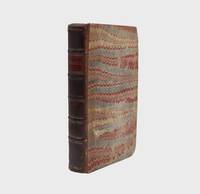
1775réf. 378453London 1775. 7 works in one. 12mo. Contemporary calf-backed marbled paper covered boards joints starting. A few trimmed close minor foxing. Provenance: Nathaniel Barnardiston early signature. 7 works in one. 12mo. 1 Priestley Joseph. A Free Address to Protestant Dissenters as such. By a Dissenter. London J. Johnson 1771. 1431pp. Second edition. ESTC N3291. 2 Priestley Joseph. An Appeal to the Serious and Candid Professors of Christianity. London J. Johnson 1771. 24pp. Fourth edition. ESTC T22298 3 Priestley Joseph. A Familiar Illustration of Certain Passages of Scripture relating to the power of man to do the will of God original sin election and reprobation the divinity of Christ and atonement for sin by the death of Christ. London : printed for J. Johnson 1772. 2iv651pp. ESTC T35298. 4 Priestley Joseph. The Triumph of Truth; Being an Account of the Ttrial of Mr. E. Elwall for heresy and blasphemy . To which are added extracts from William Penn's Sandy foundation shaken. London : printed for J. Johnson 1778. 24pp. Second edition. ESTC N473620. 5 Priestley Joseph. Considerations for the Use of Young Men and the Parents of Young Men. London: printed for J. Johnson 1778. 24pp. ESTC T161278. 6 Priestley Joseph. An Address to Protestant Dissenters of all Denominations on the approaching election of Members of Parliament with respect to the state of public liberty in general and of American affairs in particular. London: printed for J. Johnson 1774. 16pp. Adams American Controversy 74-62; Sabin 65500; ESTC T20402. 7 Wesley John. A Calm Address to our American Colonies. London: R Hawes 1775. 23 1pp. Adams American Controversy 75-155d; Howes W263 "Essentially a condensation of Samuel Johnson's Taxation no Tyranny"; Sabin 102648; ESTC T19839. unknown books
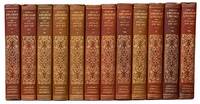
1894réf. 2311448Harrogate Tennessee: Lincoln Memorial University 1894. Limited Edition. Half-Leather. Near Fine/No Jacket. 0x0x0. Limited edition #399 of an unspecified limitation this set 'especially prepared for Harry J. Williams.' Signed by John Wesley Hill opposite limitation page. Copyright page states 1894 but this is clearly reproduced from the plates of the original - this set is circa 1905. Volume 1 has very minor discoloration to edges of cloth on rear board minor wear to corners spine a bit faded. Complete in twelve hardcover volumes. Red half-leather gilt titles and decorations top edges gilt decorative endpapers. A complete collection of Abraham Lincoln's works including speeches letters biographical writings etc. with an introduction by John Wesley Hill and special articles by various other contributors. The editors were Lincoln's private secretary and assistant secretary and also served in various other governmental roles Hay going on to become Secretary of State under McKinley and Roosevelt. Nicolay and Hay are perhaps best known for their ten-volume biographical history of Lincoln's administration originally published serially in The Century Magazine beginning in 1886 -- it remains one of the more exhaustive and personal accounts of the life of the 16th President of the United States and is notable for the inclusion of facsimiles of original drafts of important documents most importantly the Emancipation Proclamation. This set includes facsimiles of original correspondence and documents reproductions of contemporary photographs and engravings etc. Lincoln Memorial University hardcover books
1947réf. 56194Chicago: Rand McNally & Company 1947. First edition. Very good in restored dust jacket. Scarce doubly signed first printing of one of the most beloved horse stories ever told winner of a 1948 Newbery Honor. Based on the true story of the charismatic island-dwelling ponies of Virginia and the people who care for them MISTY OF CHINCOTEAGUE brought attention to the curious lives of the feral horses. The story was adapted into a film in 1961 and the real Misty even attended the premier. 9.5'' x 6.75''. Original blue cloth binding with yellow pictorial stamping. Original unclipped $2.50 color pictorial dust jacket. Color pictorial endpapers of a pony running across a sun-dappled wetland. Illustrated in black and white with color pictorial title page. 174 pages. Signed by Henry and Dennis in blue ink to verso of front free endpaper. Jacket with restoration to head of spine and folds; neat archival tape reinforcement to verso along folds spine and some margins. Book with minor edgewear and soil shallow chip at spine head light marginal toning to textblock extremities. Firm. Rand McNally & Company unknown books
1875réf. 71484Washington D.C.: Government Printing Office 1875. First edition. Hardcover. Very Good . 291pp. Quarto 29.5 cm Dark green cloth over boards. With map has a couple of minor fold splits and profile in an envelope at the rear. Both in near pristine condition. Light scratching and scuffing to the monograph's boards. Multiple small faint spots on backstrip. Darkening to p. 180 and the plate opposite. Text block cracked at p. 185 but book remains very sturdy. Complete. In better than very good condition. Powell's 1869 exploration was the first documented expedition to successfully navigate the perilous rapids of the Colorado River through the uncharted Grand Canyon. The expedition set off in 1869 with ten men and four boats under the direction of one-armed American explorer and Civil War veteran John Wesley Powell 1834-1902. After three months and nearly 1000 miles only five of the original party emerged from the depths of the canyon. Their historic journey mapped the last wild untamed river of the American West and named the last unknown regions of American geography. The Henry Mountains and the Dirty Devil River were until the Powell expedition the last nameless mountain range and river in the continental U.S. Carl Wheat writes in "Mapping the Transmississippi West 1850-1861" "As a narrative of adventure this book of 1875 is one of the most justly celebrated documents in the literature of exploration." In recognition of Powell's contributions to American exploration geology and ethnology he was appointed the first director of the U.S. Bureau of Ethnology of the Smithsonian Institution. He also served as director of the U.S. Geological Survey from 1881 to 1894. Powell Plateau a butte in Grand Canyon National Park is named after him as is Lake Powell. Howes P525. Farquhar 42a. Wheat 1261. Graff 3336. Sabin 64753. Government Printing Office hardcover books
1945réf. 140947526New York: The Viking Press 1945. First Illustrated Edition. Very Good. First illustrated edition. Association copy signed by John Steinbeck on the half-title page and inscribed "with many thanks" to Peter Kriendler owner of the 21 Club in New York. Bookplate of Jeanette and Peter Kriendler to front pastedown. 131 1 pp. Bound in publisher's gray-brown cloth boards stamped in slate blue gilt lettering to spine color pictorial onlay to front board. All edges stained blue color pictorial endpapers ivory laid paper. Very Good with light rubbing and toning to covers split to upper front hinge light toning and soft ripple throughout. In the original slipcase plain gray paper with color pictorial onlay lightly soiled and toned and split at upper edge. Goldstone-Payne A9.c unlisted third variant printed by Kipe Offset Process Company and bound by H. Wolff Book Manufacturing Company. The 21 Club opened in Manhattan in 1930 as a speakeasy. Patrick Kriendler the brother of one of the two founders became a partner in 1938 after working at the club for most of the previous decade. Steinbeck had a favorite table there and enjoyed Kriendler's legendary customer service. One recent record of the club states that it 'featured sliding doors chutes collapsing shelves and hidden storage areas designed to hide alcohol from law-enforcement officials. Over the years the 21 Club began to attract an elite clientele from the worlds of business entertainment the arts sports and politics. The restaurant was known for its strict code of discipline no staff member was allowed to call a customer by his first name as well as its extravagant expensive menu grouse was served for lunch the day after the shooting season opened in Scotland. The Viking Press unknown books
1927réf. 140942599New York: Longmans Green and Co 1927. First Edition. Near Fine/Very Good. First edition first printing. Signed by Amos Alonzo Stagg on the front free endpaper. Bound in publisher's original maroon ribbed cloth lettered in gilt. Near Fine with light mottling and wear to cloth small puncture to rear board small abrasion to front paste down and pages toned. In a Very Good unclipped dust jacket perhaps supplied as trimmed slightly shorter than the book with chipping and wear. Stagg was the first to be inducted into the Football Hall of Fame as both a player and a coach. Longmans, Green and Co unknown books
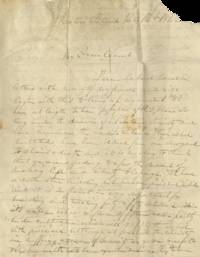
1842réf. List3738Ship Saluda Bound for Monrovia 1842. Two autograph letters signed approximately seven manuscript pages total. 1839 letter measuring 8 x 12 ¾ inches foxed with small tears at folds very good; 1842 letter measuring 8 x 10 inches tears at folds with larger tear to top right some text missing very good minus. Overall very good. A pair of letters documenting the work of Dr. Wesley Johnson 1813-1844 physician educator and colonial official associated with Bassa Cove during Liberia's formative decades. Written three years apart the letters preserve Johnson's involvement in medicine colonial administration anti-slave trade efforts agricultural reform and the establishment of one of Liberia's earliest advanced educational institutions. Born in Hillsdale New York Johnson studied medicine at Jefferson Medical College in Philadelphia under Dr. Jacob Green receiving his degree in 1837 before departing almost immediately for West Africa.1 He entered service at Bassa Cove a settlement approximately seventy miles south of Monrovia supported jointly by the New York and Pennsylvania Colonization Societies. Established as part of the larger Liberian colonization project Bassa Cove existed under difficult conditions: high mortality limited resources dependence upon outside support and periodic violence associated both with local conflict and the wider Atlantic slave trade. Johnson's responsibilities expanded rapidly after his arrival. He worked closely with Governor Thomas Buchanan and within a year had served in command of local militia forces and assumed administrative authority at Bassa Cove. Following conflict involving Theodore Canot a trader in enslaved people and violence affecting nearby settlements Johnson was reportedly injured; he shifted increasingly toward educational work becoming central to the establishment of the Ladies Liberia High School at Factory Island an ambitious project intended to educate future leadership within the colony. The earlier letter written aboard the ship Saluda on October 2 1839 finds Johnson struggling with declining health; a "bilious attack" that "was succeeded by an enlargement of the spleen" and he travelled along the coast towards Sierra Leone and Cape Mount "for my health." Even while discussing illness however Johnson remained focused on institutional work and future responsibilities: "When I return to Bassa I shall take charge of a high school about to be established there and carried on by the Ladies of Philad'a." That brief reference points toward one of the more ambitious educational efforts connected to early Liberia. Organized in Philadelphia in 1832 the Ladies' Liberia School Association sought to support educational development in Liberia through funding schools teachers and educational infrastructure.2 By the late 1830s the organization had developed a broad network of support and had undertaken plans for a secondary school at Factory Island near Bassa Cove. Johnson would become central to its implementation. He writes: "As long as I have serviceable health it is doubtless my duty to remain here for why should new persons come here continually at the risk of their lives & unacquainted with the colony or country. It seems hardly credible that I have been here more than two years already. "10th. I have been today drawing a plan of the buildings for the high school on Factory Island but this evening the vessel rolls and I cannot make straight marks & will go on with my letter. My health is better & better. I drink wine occasionally & we have five courses at dinner. I stopped at Monrovia several days as we came along and found high life at the Govt. house. When we get back to Bassa a school will give my employment & as my agency for the Col. Soc. will be exchanged for that of the Ladies Soc. of Phil. for African Education. Of this change I am glad. It will relieve me of care trouble and vexation and business which I have no means of accomplishing to my mind. "The Colony was never more prospered. Gov. Buchanan drives hard at the Slavers and they cannot stand it. You will see by the . something of what has been going on here. O that I was worth a million. I would make a great jam in Liberia. As it is I take it extempore make the best moves that I can for the time." Three years later writing from Factory Island on July 14 1842 Johnson reports that the educational institution envisioned in the earlier letter had become reality. He writes: "We have at length taken possession of this place so long under the dominion of his Satanic Majesty and have commenced the Ladies Liberia High School. Multitudes have been doomed from our door-yard to chains & death and it is consoling to think that we are affording to a few the means of making life and liberty blessings. We have a noble stone building not however finished inside and it is sufficient in every department for boarding and teaching forty or fifty scholars within its walls. Also a farm of fifteen acres partly under cultivation which will supply the school with provisions. Although at present the colonists are suffering a season of scarcity we go on comfortably. My health has been excellent since my return paper loss indeed it received an important improvement immediately after my arrival. My objects are to get the School thoroughly established an improved system of agriculture in operation and some other person properly introduced to my place & then to return to America. I should not add the last item so readily at present not knowing what circumstances may indicate of my duty but I made a general promise to my friends to return in two years. We are introducing the improved and labor saving plans and means of farming which are from five to ten times as efficient as those in common use here and as novel to the colonists as theirs would be in the good state of New York. We are in want of funds for these purposes all having been exhausted which were appropriated to them by the Ladies and I am obliged to furnish means from my own funds. We have a kind of manual labour system - the pupils work from 6 to 8 & from 4 to 6 & study from 9 to 12 2 to 4 & 7 to 8. My mode of teaching is much improved on what it was in Cin. by invention reflection & teaching others to teach and no other employment is so agreeable to me. I am father mother preceptor & religious teacher to my scholars & universal agent & factotum to the School and would to Heaven that I were better prepared for the work and could show an influential example of the power of living holiness." The physical cost of such work proved severe. Tropical illness permanently damaged Johnson's health. By the time of the present letters he was already recording prolonged illness and enlargement of the spleen. He ultimately returned to Hillsdale in 1844 and died shortly afterward at only thirty-one years old. Contemporary memorials praised both his educational work and personal sacrifice describing Liberia as having lost "a devoted friend and martyr." Taken together the letters preserve the work of an unusually capable participant operating at multiple levels of early Liberian development-physician educator administrator agricultural reformer and institution builder-while documenting educational work colonial administration medicine anti-slave trade activity and daily life through firsthand observation during Liberia's formative decades. An important Liberia grouping. 1 Otteson Ron. Ron Otteson "Dr. Wesley Johnson of Hillsdale: A Gentleman of Talent and Liberal Education" Roeliff Jansen Historical Society accessed May 22 2026 https://www.roeliffjansenhs.org/about-6. 2 Karen Fisher Younger "Philadelphia's Ladies' Liberia School Association and the Rise and Decline of Northern Female Colonization Support" Pennsylvania Magazine of History and Biography 134 no. 3 2010: 235-260. books
1908réf. 856521908. DOW Arthur Wesley & Everett Stanley HUBBARD. BY SALT MARSHES: PICTURES AND POEMS OF OLD IPSWICH. Ipswich: Privately printed 1908. No. 103 of approximately 200. 32 pp. 8vo. Quarter brown cloth unmarked with color illustrated front cover only paper covered boards. Covers worn but still attractive; interior near fine small pencil numerals to front pastedown. Eight lovely color woodblock illustrations with other monochrome and two color designs/headpieces. "BY SALT MARSHES is Arthur Wesley Dow's tribute to the old North Shore town of Ipswich where he was born and spent most of his life and to his boyhood friend Everett Stanley Hubbard. It is a collaboration somewhat in the spirit of Meteyard Carman and Hovey in their Vagabondia books though Hubbard was undoubtedly a lesser poet and Dow a greater artist. BY SALT MARSHES is his masterpiece and it is evident from the numerous sketches and proofs in the Ipswich Historical Society and the Society for Preservation of New England Antiquities - some dating back as far as 1895 - that it was a labor of love. Infinite care and craftsmanship were expended on every detail. The illustrations are color woodblock prints such as Dow described in an article in MODERN ART 1896 entitled "Painting with Wooden Blocks." This was a technique Dow had discovered in the course of his study of Japanese art and he was a master of it using as many as four or five different blocks accurately registered thinly inked to show the grain of the wood and printed in subtle gradations of tone to achieve a luminosity that effectively evokes the quality of the light on the marshes. Although the text is printed from small gothic type the lettering on the cover and title page was also cut by hand in woodblocks after the manner of Meteyard and Dawson-Watson's lettering for the COURIER INNOCENT 1897." Finlay - Artists of the Book in Boston 1890-1910. unknown books
1774réf. 1283611774. First Edition. BENEZET Anthony WESLEY John. Thoughts upon Slavery. IN: A Collection of Religious Tracts. London Printed: Re-Printed in Philadelphia: Joseph Cruckshank 1774. Small octavo early full brown sheep. Housed in a custom chemise and clamshell box. $12000.First American edition preceded only by the same year's much shorter English edition of Wesley's influential and controversial early attack on slavery and the slave trade the first to contain abolitionist Anthony Benezet's expansive notes and afterword not in the English edition bound with a separate title page with four other works in publisher Joseph Crukshank's A Collection of Religous Tracts.Wesley a ""founder of MethodismÉwas noted not only for outstanding powers of leadership but also for practical holiness social concern and immense courage"" Oxford Dictionary of World Religions 1037. He formulated a doctrine of perfection that led to the ""creation of the largest new family of churches to be thrown up by the revival in Britain and in the rest of the English-speaking world"" ODNB. While he was a colleague of leading abolitionists William Wilberforce and Anthony Benezet in Thoughts upon Slavery ""the ethical core of the argument is Wesley's own"" Field John Wesley as a Public Theologian 4. He first witnessed the horrors of slavery as a missionary in Georgia and South Carolina. ""By the time he published his Thoughts upon Slavery he clearly opposed the cruelties and violations of the slave tradeÉ It is striking that in this attack on slavery Wesley explicitly does not use the Bible as the basis for his position. Instead he argues that slavery cannot be reconciled with justice and mercy and derives his understanding of justice from natural lawÉ Jennings reports that Wesley went even further in moving from protest to transformation"" Sample Future of John Wesley's Theology 58-9. Wesley's work also stands out in that he was a political conservative who rejected democracy and ""strongly criticized mass actionÉ here however he legitimated slave resistance and rebellion as an expression of natural liberty in contradiction of biblical injunctions to slaves"" Field 6.This pivotal edition was issued at the urging of Benezet after reading the same year's much shorter English edition. He was especially moved by Wesley's ""exhortation to the ship captains merchants and planters involved in slaving urging them to 'give liberty to whom liberty is due that is to every child of man to every partaker of human nature.'"" Benezet quickly ""arranged with Philadelphia printer Joseph Cruikshank to reprint Wesley's pamphlet but not before he added five expansive footnotes and a lengthy afterwordÉ the general tenor of these additions was to clarify and amplify points Wesley had made"" Crosby ed. Complete Antislavery Writings of Anthony Benezet 197. In England ""the public response to Wesley's Thoughts upon SlaveryÉ would soon be so great that 229000 people signed petitions against the slave trade to be presented to Parliament"" Jackson Let This Voice Be Heard 126. Yet ""Wesley's attack on the profitable slave trade was riskyÉ his opinions were an affront to those who considered the Africans their inferiors. For the latter group Wesley had further unsettling words: 'The inhabitants of AfricaÉ are not inferior to the inhabitants of Europe; to some of them they are greatly superior'"" Yrigoyen John Wesley. ""Wesley's contribution to the struggle against slavery did not end with the publication of Thoughts upon SlaveryÉ Symbolically the last letter he wrote before his death was to Wilberforce supporting him in his struggle to have the slave trade abolished"" Field 6. Preceded by the same year's 53-page English edition published without Benezet's lengthy notes and afterword. Thoughts Upon Slavery was both published separately and included as ""the second title in: Benezet Anthony. The Potent Enemies of America Laid Open Philadelphia: Joseph Crukshank 1774 Evans 13146 and as part of some copies of: A Collection of Religious Tracts as here Philadelphia: Joseph Crukshank 1773-1778 Evans 13145"" ESTC W28091. The other titles in this collection each with a separate title page pagination and Crukshank's imprint are: The Plain Path to Christian Perfection by Johannes Tauler translated by Anthony Benezet; The Dreadful Visitation in a Short Account of the Progress of the Effects of the Plague 1774 an abridged version of Defoe's Journal of the Plague Year; Benezet's The Mighty Destroyer DisplayedÉ the mistaken Use as well as Abuse of Distilled Spiritous Liquors 1774 and Stephen Crisp's Sermons or Declarations 1773. Sabin 4671 102699. Evans 13145 13762. Hildeburn 3134. Early owner signature. Small early ink notation to the title page: ""Collected by Anthony Benezet.""Minor marginal dampstaining to last leaves of final title Sermons or Declarations; expected age-wear to early sheep binding. Very scarce. unknown books
1914réf. ST20137Hammersmith: Doves Press 1914. ONE OF 200 COPIES ON PAPER and 12 on vellum. 236 x 165 mm. 9 1/4 x 6 1/2". 203 pp. LOVELY DOVES BINDERY-STYLE DARK BLUE CRUSHED MOROCCO VERY INTRICATELY GILT AND INLAID BY WESLEY D. BAKER verso of front free endpaper stamped in ink: "Baker Bindery for James Cummins Bookseller"; rear turn-in stamp-signed in gilt: "20WDB08" covers with wide frame of inlaid pink morocco Tudor roses a total of 88 inlays on the covers the blossoms linked with sinuous gilt stems with delicate leaves all on a background stippled with tiny stars raised bands spine compartments similarly adorned with inlaid rose at center a trio of leaves at each corner and a background of stars gilt lettering gilt-framed turn-ins with cornerpieces featuring an inlaid rose gilt branches and stars white watered silk pastedowns and endleaves all edges gilt. Printed in red and black. Tidcombe DP-36; Tomkinson p. 58. A PRISTINE COPY. This is a refined book full of lovely love poetry offered as an object so gorgeous that its Doves Press imprint has to take an uncharacteristic second place in importance; this is especially true because the binding which clearly derives from Doves Bindery models is a convincing perpetuation of that firm's superb achievements. Ever the perfectionist Cobden-Sanderson personally selected and arranged the poems in the present anthology only after much considered effort. He noted in his journal on 31 July 1913: "I have put 'Bright Star' first for I wish the feeling of the last sonnet to accompany the reader throughout; and at the end revert to Keats' first sonnet and so leave the poet as it were on the peak in Darien." Our binding was done by Wesley Baker in 2008 using tools created by Roy Petit responsible for the roses and Stewart Fields who cut the leaf tools. Baker became interested in bookbinding while in college and attended workshops in the Northeast U.S. but is largely self-taught. From Alabama he has adapted the traditional techniques used in England to the climate of the Deep South where high temperatures and humidity require a different method of gold tooling than would be used in London. The present binding represents the latest attempt we know of to carry on in any thoroughgoing and convincing way the great tradition created by Cobden-Sanderson at the Doves Bindery at the center of the Arts & Crafts Movement. Doves Press unknown books