1971522 pages. A collection selected to assist in the training of teachers in the use of behavior modification procedures. - from Editor's Preface. Clean and unmarked. Tight and square. Light wear. Nice copy. Book
réf. 054847513X.Gpaperback. Good. Access codes and supplements are not guaranteed with used items. May be an ex-library book. paperback
réf. 110338306X.Ghardcover. Good. Access codes and supplements are not guaranteed with used items. May be an ex-library book. hardcover
réf. 1163771392.Gpaperback. Good. Access codes and supplements are not guaranteed with used items. May be an ex-library book. paperback
réf. 1424195179.Gpaperback. Good. Access codes and supplements are not guaranteed with used items. May be an ex-library book. paperback
2004réf. Q-159420005XPenguin Press HC The 2004-02-02. Hardcover. New. New. In shrink wrap. Looks like an interesting title! Penguin Press HC, The hardcover
réf. 0966275020-11-1LAVALDREAMS. Very Good. It's a well-cared-for item that has seen limited use. The item may show minor signs of wear. All the text is legible with all pages included. It may have slight markings and/or highlighting. LAVALDREAMS unknown
réf. 6103430146Author Solutions Inc. . Hardback. New. pp. 132 Author Solutions, Inc. hardcover
1970réf. 1206741PN. New. 1970. Reprint Edition. Soft Cover. Date is copyright date; this is a later reprint edition . PN paperback
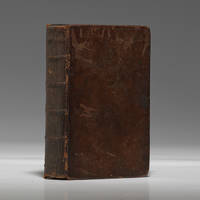
1774réf. 1283611774. First Edition. BENEZET Anthony WESLEY John. Thoughts upon Slavery. IN: A Collection of Religious Tracts. London Printed: Re-Printed in Philadelphia: Joseph Cruckshank 1774. Small octavo early full brown sheep. Housed in a custom chemise and clamshell box. $12000.First American edition preceded only by the same year's much shorter English edition of Wesley's influential and controversial early attack on slavery and the slave trade the first to contain abolitionist Anthony Benezet's expansive notes and afterword not in the English edition bound with a separate title page with four other works in publisher Joseph Crukshank's A Collection of Religous Tracts.Wesley a ""founder of MethodismÉwas noted not only for outstanding powers of leadership but also for practical holiness social concern and immense courage"" Oxford Dictionary of World Religions 1037. He formulated a doctrine of perfection that led to the ""creation of the largest new family of churches to be thrown up by the revival in Britain and in the rest of the English-speaking world"" ODNB. While he was a colleague of leading abolitionists William Wilberforce and Anthony Benezet in Thoughts upon Slavery ""the ethical core of the argument is Wesley's own"" Field John Wesley as a Public Theologian 4. He first witnessed the horrors of slavery as a missionary in Georgia and South Carolina. ""By the time he published his Thoughts upon Slavery he clearly opposed the cruelties and violations of the slave tradeÉ It is striking that in this attack on slavery Wesley explicitly does not use the Bible as the basis for his position. Instead he argues that slavery cannot be reconciled with justice and mercy and derives his understanding of justice from natural lawÉ Jennings reports that Wesley went even further in moving from protest to transformation"" Sample Future of John Wesley's Theology 58-9. Wesley's work also stands out in that he was a political conservative who rejected democracy and ""strongly criticized mass actionÉ here however he legitimated slave resistance and rebellion as an expression of natural liberty in contradiction of biblical injunctions to slaves"" Field 6.This pivotal edition was issued at the urging of Benezet after reading the same year's much shorter English edition. He was especially moved by Wesley's ""exhortation to the ship captains merchants and planters involved in slaving urging them to 'give liberty to whom liberty is due that is to every child of man to every partaker of human nature.'"" Benezet quickly ""arranged with Philadelphia printer Joseph Cruikshank to reprint Wesley's pamphlet but not before he added five expansive footnotes and a lengthy afterwordÉ the general tenor of these additions was to clarify and amplify points Wesley had made"" Crosby ed. Complete Antislavery Writings of Anthony Benezet 197. In England ""the public response to Wesley's Thoughts upon SlaveryÉ would soon be so great that 229000 people signed petitions against the slave trade to be presented to Parliament"" Jackson Let This Voice Be Heard 126. Yet ""Wesley's attack on the profitable slave trade was riskyÉ his opinions were an affront to those who considered the Africans their inferiors. For the latter group Wesley had further unsettling words: 'The inhabitants of AfricaÉ are not inferior to the inhabitants of Europe; to some of them they are greatly superior'"" Yrigoyen John Wesley. ""Wesley's contribution to the struggle against slavery did not end with the publication of Thoughts upon SlaveryÉ Symbolically the last letter he wrote before his death was to Wilberforce supporting him in his struggle to have the slave trade abolished"" Field 6. Preceded by the same year's 53-page English edition published without Benezet's lengthy notes and afterword. Thoughts Upon Slavery was both published separately and included as ""the second title in: Benezet Anthony. The Potent Enemies of America Laid Open Philadelphia: Joseph Crukshank 1774 Evans 13146 and as part of some copies of: A Collection of Religious Tracts as here Philadelphia: Joseph Crukshank 1773-1778 Evans 13145"" ESTC W28091. The other titles in this collection each with a separate title page pagination and Crukshank's imprint are: The Plain Path to Christian Perfection by Johannes Tauler translated by Anthony Benezet; The Dreadful Visitation in a Short Account of the Progress of the Effects of the Plague 1774 an abridged version of Defoe's Journal of the Plague Year; Benezet's The Mighty Destroyer DisplayedÉ the mistaken Use as well as Abuse of Distilled Spiritous Liquors 1774 and Stephen Crisp's Sermons or Declarations 1773. Sabin 4671 102699. Evans 13145 13762. Hildeburn 3134. Early owner signature. Small early ink notation to the title page: ""Collected by Anthony Benezet.""Minor marginal dampstaining to last leaves of final title Sermons or Declarations; expected age-wear to early sheep binding. Very scarce. unknown
1774réf. 1283611774. First Edition. BENEZET Anthony WESLEY John. Thoughts upon Slavery. IN: A Collection of Religious Tracts. London Printed: Re-Printed in Philadelphia: Joseph Cruckshank 1774. Small octavo early full brown sheep. Housed in a custom chemise and clamshell box. $12000.First American edition preceded only by the same year's much shorter English edition of Wesley's influential and controversial early attack on slavery and the slave trade the first to contain abolitionist Anthony Benezet's expansive notes and afterword not in the English edition bound with a separate title page with four other works in publisher Joseph Crukshank's A Collection of Religous Tracts.Wesley a ""founder of MethodismÉwas noted not only for outstanding powers of leadership but also for practical holiness social concern and immense courage"" Oxford Dictionary of World Religions 1037. He formulated a doctrine of perfection that led to the ""creation of the largest new family of churches to be thrown up by the revival in Britain and in the rest of the English-speaking world"" ODNB. While he was a colleague of leading abolitionists William Wilberforce and Anthony Benezet in Thoughts upon Slavery ""the ethical core of the argument is Wesley's own"" Field John Wesley as a Public Theologian 4. He first witnessed the horrors of slavery as a missionary in Georgia and South Carolina. ""By the time he published his Thoughts upon Slavery he clearly opposed the cruelties and violations of the slave tradeÉ It is striking that in this attack on slavery Wesley explicitly does not use the Bible as the basis for his position. Instead he argues that slavery cannot be reconciled with justice and mercy and derives his understanding of justice from natural lawÉ Jennings reports that Wesley went even further in moving from protest to transformation"" Sample Future of John Wesley's Theology 58-9. Wesley's work also stands out in that he was a political conservative who rejected democracy and ""strongly criticized mass actionÉ here however he legitimated slave resistance and rebellion as an expression of natural liberty in contradiction of biblical injunctions to slaves"" Field 6.This pivotal edition was issued at the urging of Benezet after reading the same year's much shorter English edition. He was especially moved by Wesley's ""exhortation to the ship captains merchants and planters involved in slaving urging them to 'give liberty to whom liberty is due that is to every child of man to every partaker of human nature.'"" Benezet quickly ""arranged with Philadelphia printer Joseph Cruikshank to reprint Wesley's pamphlet but not before he added five expansive footnotes and a lengthy afterwordÉ the general tenor of these additions was to clarify and amplify points Wesley had made"" Crosby ed. Complete Antislavery Writings of Anthony Benezet 197. In England ""the public response to Wesley's Thoughts upon SlaveryÉ would soon be so great that 229000 people signed petitions against the slave trade to be presented to Parliament"" Jackson Let This Voice Be Heard 126. Yet ""Wesley's attack on the profitable slave trade was riskyÉ his opinions were an affront to those who considered the Africans their inferiors. For the latter group Wesley had further unsettling words: 'The inhabitants of AfricaÉ are not inferior to the inhabitants of Europe; to some of them they are greatly superior'"" Yrigoyen John Wesley. ""Wesley's contribution to the struggle against slavery did not end with the publication of Thoughts upon SlaveryÉ Symbolically the last letter he wrote before his death was to Wilberforce supporting him in his struggle to have the slave trade abolished"" Field 6. Preceded by the same year's 53-page English edition published without Benezet's lengthy notes and afterword. Thoughts Upon Slavery was both published separately and included as ""the second title in: Benezet Anthony. The Potent Enemies of America Laid Open Philadelphia: Joseph Crukshank 1774 Evans 13146 and as part of some copies of: A Collection of Religious Tracts as here Philadelphia: Joseph Crukshank 1773-1778 Evans 13145"" ESTC W28091. The other titles in this collection each with a separate title page pagination and Crukshank's imprint are: The Plain Path to Christian Perfection by Johannes Tauler translated by Anthony Benezet; The Dreadful Visitation in a Short Account of the Progress of the Effects of the Plague 1774 an abridged version of Defoe's Journal of the Plague Year; Benezet's The Mighty Destroyer DisplayedÉ the mistaken Use as well as Abuse of Distilled Spiritous Liquors 1774 and Stephen Crisp's Sermons or Declarations 1773. Sabin 4671 102699. Evans 13145 13762. Hildeburn 3134. Early owner signature. Small early ink notation to the title page: ""Collected by Anthony Benezet.""Minor marginal dampstaining to last leaves of final title Sermons or Declarations; expected age-wear to early sheep binding. Very scarce. unknown books
2021réf. x-3030696278Springer 2021. Hardcover. New. 221 pages. 9.25x6.10x0.63 inches. Springer hardcover
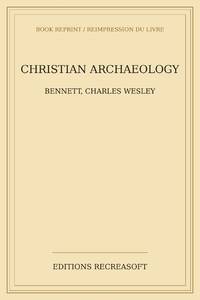
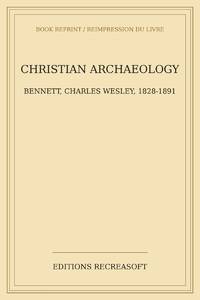
2026réf. LRB506693Paris: Editions Recreasoft 2026 Language: English. Approximately 618 pages. English : Print-on-demand reprint. Original edition : 1888. Christian archaeology is a historical and scholarly study of the material remains monuments symbols and artistic expressions of early Christianity. Charles Wesley Bennett examines the development of Christian worship burial customs sacred spaces iconography and the evidence preserved in ancient objects and structures. The work is of interest to readers of ecclesiastical history biblical studies and the archaeology of the early Church. Book images are non-contractual. Editions Recreasoft. Softcover. New. Editions Recreasoft paperback
2026réf. LRB48004437Paris: Editions Recreasoft 2026 Language: English. Approximately 608 pages. English: Print-on-demand reprint. Original edition : c1898. Text in English. This work by Charles Wesley Bennett provides a comprehensive study of Christian archaeology exploring the material remains and historical context of early Christian communities. It offers valuable insights into the development of Christian art architecture and cultural practices from antiquity to the medieval period. The book is an essential resource for scholars and enthusiasts of religious history and archaeology. Book images are non-contractual. Editions Recreasoft. Softcover. New. Editions Recreasoft paperback
2010réf. DADAX1164604082Kessinger Publishing 2010-09-10. paperback. New. 7.50x1.21x9.25. Buy with confidence. Excellent Customer Service & Return policy. Kessinger Publishing paperback
réf. 1022484443.Gpaperback. Good. Access codes and supplements are not guaranteed with used items. May be an ex-library book. paperback
réf. 1020357304.Ghardcover. Good. Access codes and supplements are not guaranteed with used items. May be an ex-library book. hardcover
réf. 1144921988.Gpaperback. Good. Access codes and supplements are not guaranteed with used items. May be an ex-library book. paperback
réf. 1164604082.Gpaperback. Good. Access codes and supplements are not guaranteed with used items. May be an ex-library book. paperback
réf. 1360797882.Ghardcover. Good. Access codes and supplements are not guaranteed with used items. May be an ex-library book. hardcover
réf. 1436805201.Gpaperback. Good. Access codes and supplements are not guaranteed with used items. May be an ex-library book. paperback
réf. 1020323965.Ghardcover. Good. Access codes and supplements are not guaranteed with used items. May be an ex-library book. hardcover
réf. 1527630579.Gpaperback. Good. Access codes and supplements are not guaranteed with used items. May be an ex-library book. paperback
réf. 9781626189720NOVA SCIENCE PUBLISHERS INC
réf. 1850759499.Ghardcover. Good. Access codes and supplements are not guaranteed with used items. May be an ex-library book. hardcover