7 393 résultats
1971réf. 58758London:: Collins 1971. Uncorrected advanced proofs in wrappers; plus a proofs of Part One in galley form. . Original wrappers with paper labels. . Some dog-earing and edgewear; many pages are loose in the full set of proofs and pp. 52-2 183-4 293-6 and 443-4 lacking. . Both sets of wrappers are annotated and corrected and are accompanied by a typed "Author's Note on Manuscript of The Great Duke signed some correspondence in photocopy and extensive ms. notes on abbreviated title so sources etc. Collins, unknown
réf. 62042P., Albin Michel, 1940, in 8° broché, 367 pages ; illustrations hors-texte ; cachets ; rousseurs et mouillures marginales ; couverture illustrée (défraichie).
1824réf. 383998London: T. Green. Fair. 1824. Ex-library. Hardcover. Ex-library copy with label on front cover bookplate on inside of front cover. Covers are detached but present spine is missing. Covers have general wear and some soil. Front blank and half-title page are loosely attached. Contents have scattered traces of foxing. ; With 15 pages of notes. ; 83 15 pages . T. Green hardcover
réf. 68-8249Berkeley CA: Tanner ca. 1980. RSVP Card. 9 x 6 cm. Letterpress. Very Good. From the collection of Wesley Tanner. Berkeley, CA: [Tanner, ca. 1980.] unknown
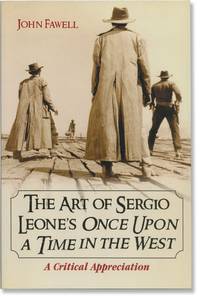
2005réf. 166194McFarland 2005. First Edition. First Edition a trade softcover original. As New. Fine condition. McFarland unknown books
réf. 70721brDewsbury: Willan Pr. Brochure. Good. No Binding. No date but c. 1820. Memorial banner printed in black ink on silk linen-backed measuring approximately 40x25 cm. Dedication and acrostic poem in honour of John Wesley inside an elaborate classical framework of architectural columns and floral design. General toning & soiling with some loss to edges with the print itself practically unaffected. A rare survival. Willan, Pr. unknown
1875réf. 18600Washington: Government Printing Office 1875. First Edition. Quarter Leather. Near fine. The first edition of Exploration Of The Colorado River Of The West And Its Tributaries published in 1875. Quarto xi 1 291pp 5. Contemporary three-quarter olive morocco raised bands title stamped in gilt over a red morocco label. Maroon cloth boards. Complete with 80 wood engraved views on 72 individual plates. Includes the two fold-out maps at the rear. New endpapers. Bumped fore-edge with a closed tear from p. 240-248 no impact to text. Clean text throughout solid text block. Sabin 64753 Howes P528 Graff 3336 A near fine example. John Wesley Powell 1834-1902 was an American explorer Civil War veteran scientist and public intellectual best known for leading the first successful expeditions through the Colorado River and the Grand Canyon in 1869 and 1871-72. Having lost his right arm at the Battle of Shiloh Powell became a symbol of postwar scientific exploration combining firsthand fieldwork with rigorous analysis of the American West. As second director of the U.S. Geological Survey and longtime head of the Bureau of American Ethnology he argued that western settlement should be planned around watersheds and water availability rather than arbitrary political boundaries. Government Printing Office unknown books
1949réf. 45468Salt Lake City Utah: Utah State Historical Society 1949. First edition thus. Hardcover. 270; 540 1 pp. Octavo 23 cm Pebbled burgundy cloth over boards with gilt lettering on the spines and front covers. Very good condition. The front pastedowns have a previous owner's bookplate. From the introduction- "More than three-quarters of a century has passed since Major John Wesley Powell's parties began their exploration of the Colorado River country yet the records of the Powell exploration have a freshness an immediately contemporary interest that few records in the annals of American exploration still possess. Roads even superhighways have been built into the most parched of the West's deserts and over or through its most formidable mountain barriers but one who would know the Colorado country must still penetrate it as Powell and his men did in 1869 and 1871-72 by taking to boats or resorting to pack trains. Utah State Historical Society hardcover books
réf. 65352Photograph. Good. Albumen stereoview on a yellow mount 11 cm x 17.5 cm Printed paper label on rear. No backstamp. Photographer not identified. Dampstaining to lower half. Image just beginning to peel away at bottom left corner. unknown books
1875réf. 18600Washington: Government Printing Office 1875. First Edition. Quarter Leather. Near fine. The first edition of Exploration Of The Colorado River Of The West And Its Tributaries published in 1875. Quarto xi 1 291pp 5. Contemporary three-quarter olive morocco raised bands title stamped in gilt over a red morocco label. Maroon cloth boards. Complete with 80 wood engraved views on 72 individual plates. Includes the two fold-out maps at the rear. New endpapers. Bumped fore-edge with a closed tear from p. 240-248 no impact to text. Clean text throughout solid text block. Sabin 64753 Howes P528 Graff 3336 A near fine example. John Wesley Powell 1834-1902 was an American explorer Civil War veteran scientist and public intellectual best known for leading the first successful expeditions through the Colorado River and the Grand Canyon in 1869 and 1871-72. Having lost his right arm at the Battle of Shiloh Powell became a symbol of postwar scientific exploration combining firsthand fieldwork with rigorous analysis of the American West. As second director of the U.S. Geological Survey and longtime head of the Bureau of American Ethnology he argued that western settlement should be planned around watersheds and water availability rather than arbitrary political boundaries. Government Printing Office unknown
réf. 65352Photograph. Good. Albumen stereoview on a yellow mount 11 cm x 17.5 cm Printed paper label on rear. No backstamp. Photographer not identified. Dampstaining to lower half. Image just beginning to peel away at bottom left corner. unknown
1855réf. 1677Washington: A.O.P. Nicholson Printer 1855. First edition. Hardcover. Good. John Wesley Powell's copy of Volume II of these 1853-54 reports with his stamp faintly in purple ink on the title page. A good only copy with dampstaining throughout but collectible in light of its owner who famously would go on to survey and provide his own report on the Grand Canyon. These 1853-54 reports were issued somewhat haphazardly in 12 volumes apparently as they were received rather than by region. Volume II contains the following: 1 "Report by Lieutenant E.G. Beckwith Third Artillery upon the Route near the Thirty-Eighth and Thirty-Ninth Parallels Explored by Captain J.W. Gunnison Corps of Topographical Engineers" Gunnison was killed on the journey; 2 "Report of Lieutenant E.G. Beckwith . . . upon the Route near the Forty-First Parallel"; 3 Report of a Reconnaissance from Puget Sound via South Pass to the Mississippi River by F.W. Lander Civil Engineer"; 4 "Report of Brevet Captain John Pope Corps Topographical Engineers upon the Portion of the Route near the Thirty-Second Parallel Lying between the Red River the Colorado and the Rio Grande"; 5 "Report of Lieutenant John G. Park Corps Topographical Engineers upon the Portion of the Route near the Thirty-Second Parallel Lying between the Rio Grande and Pimas Village on the Gila"; and 6 "Extract from Report of a Military Reconnaissance Made by Lieutenant Colonel W.H. Emory U.S. Army of the Portion of the Route near the Thirty-Second Parallel Lying between the Mouths of the San Pedro and Gila Rivers." Among several of the later reports are botanical sections by Asa Gray and John Torrey. These are replete with nice line-drawing botanical plates. In the first Beckwith report J.M. Stanley provides a series of beautiful vista illustrations in color of the Gunnison route. Near the rear are a fold out map and a fold out geological section depicting the stretch between the Colorado River "Red River and the Rio Grande. A contemporary binding of red cloth and quarter/corner leather with five raised bands and gilt lettering on spine. Red marbled endpapers. Again good only with dampstaining to all corners of the pages top and bottom see photos. The pages have some light waviness to them but turn fine and are readable the text itself mostly free of staining. Mottling on front board wrinkle on rear. Rubbing to board edges and nicks to spine corners as one might expect for a heavy book of this age. Despite its condition still a special copy--Powell's. The inclusion of the Colorado River in the fourth report in the volume would have ultimately been of special interest to him and one imagines the example of these reports would have influenced his own. A.O.P. Nicholson, Printer hardcover
1949réf. 45468Salt Lake City Utah: Utah State Historical Society 1949. First edition thus. Hardcover. 270; 540 1 pp. Octavo 23 cm Pebbled burgundy cloth over boards with gilt lettering on the spines and front covers. Very good condition. The front pastedowns have a previous owner's bookplate. From the introduction- "More than three-quarters of a century has passed since Major John Wesley Powell's parties began their exploration of the Colorado River country yet the records of the Powell exploration have a freshness an immediately contemporary interest that few records in the annals of American exploration still possess. Roads even superhighways have been built into the most parched of the West's deserts and over or through its most formidable mountain barriers but one who would know the Colorado country must still penetrate it as Powell and his men did in 1869 and 1871-72 by taking to boats or resorting to pack trains. Utah State Historical Society hardcover
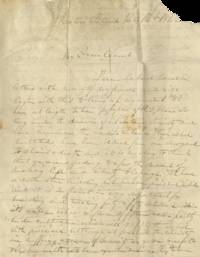
1842réf. List3738Ship Saluda Bound for Monrovia 1842. Two autograph letters signed approximately seven manuscript pages total. 1839 letter measuring 8 x 12 ¾ inches foxed with small tears at folds very good; 1842 letter measuring 8 x 10 inches tears at folds with larger tear to top right some text missing very good minus. Overall very good. A pair of letters documenting the work of Dr. Wesley Johnson 1813-1844 physician educator and colonial official associated with Bassa Cove during Liberia's formative decades. Written three years apart the letters preserve Johnson's involvement in medicine colonial administration anti-slave trade efforts agricultural reform and the establishment of one of Liberia's earliest advanced educational institutions. Born in Hillsdale New York Johnson studied medicine at Jefferson Medical College in Philadelphia under Dr. Jacob Green receiving his degree in 1837 before departing almost immediately for West Africa.1 He entered service at Bassa Cove a settlement approximately seventy miles south of Monrovia supported jointly by the New York and Pennsylvania Colonization Societies. Established as part of the larger Liberian colonization project Bassa Cove existed under difficult conditions: high mortality limited resources dependence upon outside support and periodic violence associated both with local conflict and the wider Atlantic slave trade. Johnson's responsibilities expanded rapidly after his arrival. He worked closely with Governor Thomas Buchanan and within a year had served in command of local militia forces and assumed administrative authority at Bassa Cove. Following conflict involving Theodore Canot a trader in enslaved people and violence affecting nearby settlements Johnson was reportedly injured; he shifted increasingly toward educational work becoming central to the establishment of the Ladies Liberia High School at Factory Island an ambitious project intended to educate future leadership within the colony. The earlier letter written aboard the ship Saluda on October 2 1839 finds Johnson struggling with declining health; a "bilious attack" that "was succeeded by an enlargement of the spleen" and he travelled along the coast towards Sierra Leone and Cape Mount "for my health." Even while discussing illness however Johnson remained focused on institutional work and future responsibilities: "When I return to Bassa I shall take charge of a high school about to be established there and carried on by the Ladies of Philad'a." That brief reference points toward one of the more ambitious educational efforts connected to early Liberia. Organized in Philadelphia in 1832 the Ladies' Liberia School Association sought to support educational development in Liberia through funding schools teachers and educational infrastructure.2 By the late 1830s the organization had developed a broad network of support and had undertaken plans for a secondary school at Factory Island near Bassa Cove. Johnson would become central to its implementation. He writes: "As long as I have serviceable health it is doubtless my duty to remain here for why should new persons come here continually at the risk of their lives & unacquainted with the colony or country. It seems hardly credible that I have been here more than two years already. "10th. I have been today drawing a plan of the buildings for the high school on Factory Island but this evening the vessel rolls and I cannot make straight marks & will go on with my letter. My health is better & better. I drink wine occasionally & we have five courses at dinner. I stopped at Monrovia several days as we came along and found high life at the Govt. house. When we get back to Bassa a school will give my employment & as my agency for the Col. Soc. will be exchanged for that of the Ladies Soc. of Phil. for African Education. Of this change I am glad. It will relieve me of care trouble and vexation and business which I have no means of accomplishing to my mind. "The Colony was never more prospered. Gov. Buchanan drives hard at the Slavers and they cannot stand it. You will see by the . something of what has been going on here. O that I was worth a million. I would make a great jam in Liberia. As it is I take it extempore make the best moves that I can for the time." Three years later writing from Factory Island on July 14 1842 Johnson reports that the educational institution envisioned in the earlier letter had become reality. He writes: "We have at length taken possession of this place so long under the dominion of his Satanic Majesty and have commenced the Ladies Liberia High School. Multitudes have been doomed from our door-yard to chains & death and it is consoling to think that we are affording to a few the means of making life and liberty blessings. We have a noble stone building not however finished inside and it is sufficient in every department for boarding and teaching forty or fifty scholars within its walls. Also a farm of fifteen acres partly under cultivation which will supply the school with provisions. Although at present the colonists are suffering a season of scarcity we go on comfortably. My health has been excellent since my return paper loss indeed it received an important improvement immediately after my arrival. My objects are to get the School thoroughly established an improved system of agriculture in operation and some other person properly introduced to my place & then to return to America. I should not add the last item so readily at present not knowing what circumstances may indicate of my duty but I made a general promise to my friends to return in two years. We are introducing the improved and labor saving plans and means of farming which are from five to ten times as efficient as those in common use here and as novel to the colonists as theirs would be in the good state of New York. We are in want of funds for these purposes all having been exhausted which were appropriated to them by the Ladies and I am obliged to furnish means from my own funds. We have a kind of manual labour system - the pupils work from 6 to 8 & from 4 to 6 & study from 9 to 12 2 to 4 & 7 to 8. My mode of teaching is much improved on what it was in Cin. by invention reflection & teaching others to teach and no other employment is so agreeable to me. I am father mother preceptor & religious teacher to my scholars & universal agent & factotum to the School and would to Heaven that I were better prepared for the work and could show an influential example of the power of living holiness." The physical cost of such work proved severe. Tropical illness permanently damaged Johnson's health. By the time of the present letters he was already recording prolonged illness and enlargement of the spleen. He ultimately returned to Hillsdale in 1844 and died shortly afterward at only thirty-one years old. Contemporary memorials praised both his educational work and personal sacrifice describing Liberia as having lost "a devoted friend and martyr." Taken together the letters preserve the work of an unusually capable participant operating at multiple levels of early Liberian development-physician educator administrator agricultural reformer and institution builder-while documenting educational work colonial administration medicine anti-slave trade activity and daily life through firsthand observation during Liberia's formative decades. An important Liberia grouping. 1 Otteson Ron. Ron Otteson "Dr. Wesley Johnson of Hillsdale: A Gentleman of Talent and Liberal Education" Roeliff Jansen Historical Society accessed May 22 2026 https://www.roeliffjansenhs.org/about-6. 2 Karen Fisher Younger "Philadelphia's Ladies' Liberia School Association and the Rise and Decline of Northern Female Colonization Support" Pennsylvania Magazine of History and Biography 134 no. 3 2010: 235-260. books
1842réf. List3738Ship Saluda Bound for Monrovia 1842. Two autograph letters signed approximately seven manuscript pages total. 1839 letter measuring 8 x 12 ¾ inches foxed with small tears at folds very good; 1842 letter measuring 8 x 10 inches tears at folds with larger tear to top right some text missing very good minus. Overall very good. A pair of letters documenting the work of Dr. Wesley Johnson 1813-1844 physician educator and colonial official associated with Bassa Cove during Liberia's formative decades. Written three years apart the letters preserve Johnson's involvement in medicine colonial administration anti-slave trade efforts agricultural reform and the establishment of one of Liberia's earliest advanced educational institutions. Born in Hillsdale New York Johnson studied medicine at Jefferson Medical College in Philadelphia under Dr. Jacob Green receiving his degree in 1837 before departing almost immediately for West Africa.1 He entered service at Bassa Cove a settlement approximately seventy miles south of Monrovia supported jointly by the New York and Pennsylvania Colonization Societies. Established as part of the larger Liberian colonization project Bassa Cove existed under difficult conditions: high mortality limited resources dependence upon outside support and periodic violence associated both with local conflict and the wider Atlantic slave trade. Johnson's responsibilities expanded rapidly after his arrival. He worked closely with Governor Thomas Buchanan and within a year had served in command of local militia forces and assumed administrative authority at Bassa Cove. Following conflict involving Theodore Canot a trader in enslaved people and violence affecting nearby settlements Johnson was reportedly injured; he shifted increasingly toward educational work becoming central to the establishment of the Ladies Liberia High School at Factory Island an ambitious project intended to educate future leadership within the colony. The earlier letter written aboard the ship Saluda on October 2 1839 finds Johnson struggling with declining health; a "bilious attack" that "was succeeded by an enlargement of the spleen" and he travelled along the coast towards Sierra Leone and Cape Mount "for my health." Even while discussing illness however Johnson remained focused on institutional work and future responsibilities: "When I return to Bassa I shall take charge of a high school about to be established there and carried on by the Ladies of Philad'a." That brief reference points toward one of the more ambitious educational efforts connected to early Liberia. Organized in Philadelphia in 1832 the Ladies' Liberia School Association sought to support educational development in Liberia through funding schools teachers and educational infrastructure.2 By the late 1830s the organization had developed a broad network of support and had undertaken plans for a secondary school at Factory Island near Bassa Cove. Johnson would become central to its implementation. He writes: "As long as I have serviceable health it is doubtless my duty to remain here for why should new persons come here continually at the risk of their lives & unacquainted with the colony or country. It seems hardly credible that I have been here more than two years already. "10th. I have been today drawing a plan of the buildings for the high school on Factory Island but this evening the vessel rolls and I cannot make straight marks & will go on with my letter. My health is better & better. I drink wine occasionally & we have five courses at dinner. I stopped at Monrovia several days as we came along and found high life at the Govt. house. When we get back to Bassa a school will give my employment & as my agency for the Col. Soc. will be exchanged for that of the Ladies Soc. of Phil. for African Education. Of this change I am glad. It will relieve me of care trouble and vexation and business which I have no means of accomplishing to my mind. "The Colony was never more prospered. Gov. Buchanan drives hard at the Slavers and they cannot stand it. You will see by the . something of what has been going on here. O that I was worth a million. I would make a great jam in Liberia. As it is I take it extempore make the best moves that I can for the time." Three years later writing from Factory Island on July 14 1842 Johnson reports that the educational institution envisioned in the earlier letter had become reality. He writes: "We have at length taken possession of this place so long under the dominion of his Satanic Majesty and have commenced the Ladies Liberia High School. Multitudes have been doomed from our door-yard to chains & death and it is consoling to think that we are affording to a few the means of making life and liberty blessings. We have a noble stone building not however finished inside and it is sufficient in every department for boarding and teaching forty or fifty scholars within its walls. Also a farm of fifteen acres partly under cultivation which will supply the school with provisions. Although at present the colonists are suffering a season of scarcity we go on comfortably. My health has been excellent since my return paper loss indeed it received an important improvement immediately after my arrival. My objects are to get the School thoroughly established an improved system of agriculture in operation and some other person properly introduced to my place & then to return to America. I should not add the last item so readily at present not knowing what circumstances may indicate of my duty but I made a general promise to my friends to return in two years. We are introducing the improved and labor saving plans and means of farming which are from five to ten times as efficient as those in common use here and as novel to the colonists as theirs would be in the good state of New York. We are in want of funds for these purposes all having been exhausted which were appropriated to them by the Ladies and I am obliged to furnish means from my own funds. We have a kind of manual labour system - the pupils work from 6 to 8 & from 4 to 6 & study from 9 to 12 2 to 4 & 7 to 8. My mode of teaching is much improved on what it was in Cin. by invention reflection & teaching others to teach and no other employment is so agreeable to me. I am father mother preceptor & religious teacher to my scholars & universal agent & factotum to the School and would to Heaven that I were better prepared for the work and could show an influential example of the power of living holiness." The physical cost of such work proved severe. Tropical illness permanently damaged Johnson's health. By the time of the present letters he was already recording prolonged illness and enlargement of the spleen. He ultimately returned to Hillsdale in 1844 and died shortly afterward at only thirty-one years old. Contemporary memorials praised both his educational work and personal sacrifice describing Liberia as having lost "a devoted friend and martyr." Taken together the letters preserve the work of an unusually capable participant operating at multiple levels of early Liberian development-physician educator administrator agricultural reformer and institution builder-while documenting educational work colonial administration medicine anti-slave trade activity and daily life through firsthand observation during Liberia's formative decades. An important Liberia grouping. 1 Otteson Ron. Ron Otteson "Dr. Wesley Johnson of Hillsdale: A Gentleman of Talent and Liberal Education" Roeliff Jansen Historical Society accessed May 22 2026 https://www.roeliffjansenhs.org/about-6. 2 Karen Fisher Younger "Philadelphia's Ladies' Liberia School Association and the Rise and Decline of Northern Female Colonization Support" Pennsylvania Magazine of History and Biography 134 no. 3 2010: 235-260.
réf. 201116387Paris, Flammarion - roman, 2006 ; in-8, 470 pp., br. Très bon état - traduit de l'anglais par Philippe Giraudon avec jaquette.
réf. 201008026Paris, Flammarion - roman, 2008 ; in-8, 430 pp., broché, couverture illustr. Très bon état - traduit de l'anglais par Philippe Giraudon.
réf. 201201223, Flammarion, 1997 ; in-8, 331 pp., broché.
réf. 67272Washington DC: J. F. Jarvis. Photograph. Good. Albumen stereoview on a yellow mount 11.5 cm x 17.5 cm J. F. Jarvis label on rear. Photographer not identified. Dampstaining to top half of image. American photographer and publisher John Fillis Jarvis 1849-1930 was active in Washington D.C. Jarvis experimented with stereography and produced a set of stereoscopic images of the White House. J. F. Jarvis unknown books
réf. 67272Washington DC: J. F. Jarvis. Photograph. Good. Albumen stereoview on a yellow mount 11.5 cm x 17.5 cm J. F. Jarvis label on rear. Photographer not identified. Dampstaining to top half of image. American photographer and publisher John Fillis Jarvis 1849-1930 was active in Washington D.C. Jarvis experimented with stereography and produced a set of stereoscopic images of the White House. J. F. Jarvis unknown
1887réf. 22491Boston: The Prince Society 1887. One of 250 copies printed. Hardcover. Very Good Plus. Originally issued as wrappers with front cover retained printed in red and black inks. Bound or rebound in tan canvas cloth light wear some rubbing to spine leather title label affixed to spine suggesting this was previously bound then rebound the spine title was retained. A very sturdy binding. Former institutional copy Mercantile Library of New York with rubber ink stamp to title page with inked number several page are stamped again but no other institutional markings or ephemera. Otherwise the book is clean and unmarked with minor age toned paper. xii 492 pages plus fold-out plate and folded map of Newfoundland fascimiles and chapter head & tail pieces. Experienced full-time used & antiquarian bookseller since 1994. Images may be added by request. Questions welcome. The Prince Society hardcover
1883réf. 27220New York:: G. P. Putnam's Sons 1883. First edition. original plum cloth. The plates are all foxed at the margins; some pencil underlining; very slight use to cloth. Large 8bo. Frontispiece portrait and six plates; folding plate of the seating plan. G. P. Putnam's Sons, hardcover
1994réf. 123726Los Angeles: Privately Printed 1994. 15p. 6x9 inches frontis-photo-portarit limited edition of 200 copies in stapled white wraps. For a memorial to the woman it is interesting that her full name is never mentioned except as the mrs. of Richard M.! Owner of Gould's Antique Shop in Brentwood. Privately Printed unknown books
1890réf. 64215Fairhaven WA: Webster & Pierce the Peoples Landscape and Portrait Photographers of the Pacific Coast ca. 1890. One oblong 4to. original albumen photograph sized 9.25 x 7.5 in. mounted on 11 x 9.5 beige studio board date in ink below image on recto photographer’s imprint on verso 2 different ink manuscript notes offsetting from removed black paper backing very minor tidemark at fore-edges still a VG sharp image with excellent contrast. An exceedingly scarce original albumen photographic birdseye photo of Fairhaven WA just a year after statehood. During the 1870s up through the mid-1880s Fairhaven actively competed with Seattle Bellingham and Sehome as the potential terminal of the Great Northern Railroad even after it was decided Seattle would take precedence. Fairhaven exploded within just a couple years from the competitive real estate railroad building boom in the Pacific Northwest prior to the 1893 bust which caused tremendous economic dislocation and real estate empires to dissolve. This image captures the fast developing hillsides soon after they were stripped of timber and scraggly treeline topping the ridge in the background. The smoke blowing across downtown appears to have drifted from the far right of the photograph obscuring the Fairhave Hotel designed by Longstaff & Black and completed by 1890 for Nelson Bennett and C.X. Larrabee. In 1903 the cities of Whatcom Sehome & Whatcom Fairhaven and Bellingham which shared a street grid and electric streetcar system merged through a general election to become the present day city. Webster & Pierce established their photographic partnership about 1889 and by 1892 had dissolved with very few records detailing their subsequent careers except for Wesley Pierce becoming owner and operator of Waldrip Oyster Co. in Seattle by 1899. No similar examples in institutional holdings. Webster & Pierce, the Peoples Landscape and Portrait Photographers of the Pacific Coast, unknown
réf. 59-4129Berkeley CA: Wesley Tanner 1975. Broadside. Black and brown ink on cream paper. A brown Triskelion symbol appears at top center. An image of a whale appears below the poem. This broadside was done in several versions: "A Gift Poem in Celebration of the New Year from Robert & Jeanne Baldock" "A gift in celebration of the New Year from Karen Eric & Jessica Cross" and "A gift in celebration of the New Year from Nina Stephen Sarah & Alicia Robbins." It appears to be the work of Berkeley printer Wesley Tanner. Fine. Berkeley, CA: Wesley Tanner, [1975]. unknown