Salmon, Wesley C,Biblio.com

7 409 résultats
réf. 1648768-nnew. unknown
réf. DADAX0872205606Brand: Hackett Pub Co Inc 0000-00-00. paperback. New. 5.50x0.75x8.50. Buy with confidence. Excellent Customer Service & Return policy. Brand: Hackett Pub Co Inc paperback
réf. DADAX0872205614Hackett Publishing Company Inc 0000-00-00. library. New. 6.00x1.00x8.75. Buy with confidence. Excellent Customer Service & Return policy. Hackett Publishing Company, Inc unknown
réf. A9780872205611Hardback. New. hardcover
1993réf. 266621PN. New. 1993. Soft Cover. Date is original print. This is a reprint edition . PN paperback
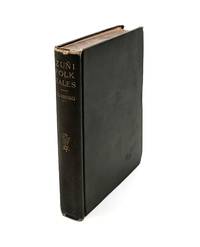
1901réf. 70156New York: G.P. Putnam's Sons 1901. First edition. Hardcover. Fair. 474pp. Octavo 23.5 cm Original green cloth; gilt title to spine. Frontis portrait of the author plus eleven other illustrations. Front free endpaper frontispiece and title page completely detached but present. Hinges going. "Scattergood" armorial bookplate on front pastedown. All plates present. A collection of thirty-three folk tales. Anthropologist Frank Hamilton Cushing 1857-1900 who had an interest in native cultures which began when he was a young boy was appointed to the Smithsonian Institution in 1876 as a staff member. In 1879 he was selected as the ethnologist to accompany the first Bureau of Ethnology expedition to the Southwest. His mission was to thoroughly study the Zuni in order to collect examples of their pottery textiles and religious objects and to gain an understanding of their culture. During this time he managed to befriend the Zuni governor adopted traditional Zuni clothing and picked up conversational Zuni. This lead to Cushing becoming allied with the Zuni in a way that the Smithsonian had not anticipated. In addition between 1882 and 1883 Cushing was successful in campaigning to return land to the Zunis that two army officers privately claimed as their own. However his relationship with the Zunis was not entirely good. He went against Zuni wishes by making sketches and written records and he failed to properly recite their prayers and chants despite his status as an initiate. But to Zuni Cushing's worst infringement was to replicate their Mudhead mask after his return to Washington and to be photographed wearing it - a taboo which some Zuni believed Cushing paid for with his early death at the age of 42. "In straining his relations with both cultures Cushing broke new ground in the field of anthropology by - in his own words - 'endeavoring always to place himself as much as possible in their position not only physically but intellectually and morally as well to gain insight into their inner life and institutions.' His writings on Zuni culture notably My Adventures in Zuni 1882-1883; repr. 1941 Zuni Folk Tales 1901. are prized for their invaluable accounts of Zuni myths stories and culture though some experts suspect Cushing intentionally introduced mistakes and recorded incomplete accounts out of respect and allegiance to the Zuni." - Quote and information from Michigan State University: https://d.lib.msu.edu/msul:39. G.P. Putnam's Sons hardcover
1901réf. 70156New York: G.P. Putnam's Sons 1901. First edition. Hardcover. Fair. 474pp. Octavo 23.5 cm Original green cloth; gilt title to spine. Frontis portrait of the author plus eleven other illustrations. Front free endpaper frontispiece and title page completely detached but present. Hinges going. "Scattergood" armorial bookplate on front pastedown. All plates present. A collection of thirty-three folk tales. Anthropologist Frank Hamilton Cushing 1857-1900 who had an interest in native cultures which began when he was a young boy was appointed to the Smithsonian Institution in 1876 as a staff member. In 1879 he was selected as the ethnologist to accompany the first Bureau of Ethnology expedition to the Southwest. His mission was to thoroughly study the Zuni in order to collect examples of their pottery textiles and religious objects and to gain an understanding of their culture. During this time he managed to befriend the Zuni governor adopted traditional Zuni clothing and picked up conversational Zuni. This lead to Cushing becoming allied with the Zuni in a way that the Smithsonian had not anticipated. In addition between 1882 and 1883 Cushing was successful in campaigning to return land to the Zunis that two army officers privately claimed as their own. However his relationship with the Zunis was not entirely good. He went against Zuni wishes by making sketches and written records and he failed to properly recite their prayers and chants despite his status as an initiate. But to Zuni Cushing's worst infringement was to replicate their Mudhead mask after his return to Washington and to be photographed wearing it - a taboo which some Zuni believed Cushing paid for with his early death at the age of 42. "In straining his relations with both cultures Cushing broke new ground in the field of anthropology by - in his own words - 'endeavoring always to place himself as much as possible in their position not only physically but intellectually and morally as well to gain insight into their inner life and institutions.' His writings on Zuni culture notably My Adventures in Zuni 1882-1883; repr. 1941 Zuni Folk Tales 1901. are prized for their invaluable accounts of Zuni myths stories and culture though some experts suspect Cushing intentionally introduced mistakes and recorded incomplete accounts out of respect and allegiance to the Zuni." - Quote and information from Michigan State University: https://d.lib.msu.edu/msul:39. G.P. Putnam's Sons hardcover books
réf. 1026137934.Gpaperback. Good. Access codes and supplements are not guaranteed with used items. May be an ex-library book. paperback
réf. 8484325318.Ghardcover. Good. Access codes and supplements are not guaranteed with used items. May be an ex-library book. hardcover