7 393 résultats
réf. SONG0678040273Brand: Augustus M Kelley Pubs 0000-00-00. hardcover. Used: Good. 6.25x2.25x9.25. Buy with confidence. Excellent Customer Service & Return policy. Brand: Augustus M Kelley Pubs hardcover
1969réf. G0678040273I3N01Augustus m Kelley Pubs 1969. Hardcover. Good. Missing dust jacket; Pages can have notes/highlighting. Spine may show signs of wear. ~ ThriftBooks: Read More Spend Less.Dust jacket quality is not guaranteed. Augustus m Kelley Pubs hardcover
1971réf. 113052New York: Augustus M. Kelley Publishers 1971. Hardcover. Good/Fair. Two volume set. Volume 1 first published 1967 reprinted 1971. Volume 2 published 1969. Both volumes are in good shape. Jackets are stained but text is legible. Jackets are chipped but protected by mylar covers. Bindings are secure. Very light stains on bottom corners of some pages not covering any text. Ink scribbles on title pages partially covering publisher's name. All other text is clean bright and unmarked. Augustus M. Kelley Publishers hardcover
1988réf. 74622Gallery. New. Paperback. FREE UPGRADE to Courier/Priority Shipping Upon Request - IN STOCK AND IMMEDIATELY AVAILABLE FOR SHIPMENT - Flawless copy brand new pristine never opened -- 86 pp. With 233 ills. 6 col. . 28 x 22 cm. -- with a bonus offer-- . 1988. Gallery paperback
réf. A9780837173481Hardback. New. hardcover
réf. B9780837173481Hardback. New. hardcover
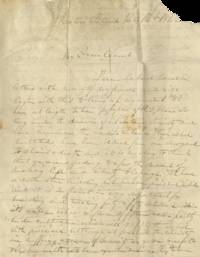
1842réf. List3738Ship Saluda Bound for Monrovia 1842. Two autograph letters signed approximately seven manuscript pages total. 1839 letter measuring 8 x 12 ¾ inches foxed with small tears at folds very good; 1842 letter measuring 8 x 10 inches tears at folds with larger tear to top right some text missing very good minus. Overall very good. A pair of letters documenting the work of Dr. Wesley Johnson 1813-1844 physician educator and colonial official associated with Bassa Cove during Liberia's formative decades. Written three years apart the letters preserve Johnson's involvement in medicine colonial administration anti-slave trade efforts agricultural reform and the establishment of one of Liberia's earliest advanced educational institutions. Born in Hillsdale New York Johnson studied medicine at Jefferson Medical College in Philadelphia under Dr. Jacob Green receiving his degree in 1837 before departing almost immediately for West Africa.1 He entered service at Bassa Cove a settlement approximately seventy miles south of Monrovia supported jointly by the New York and Pennsylvania Colonization Societies. Established as part of the larger Liberian colonization project Bassa Cove existed under difficult conditions: high mortality limited resources dependence upon outside support and periodic violence associated both with local conflict and the wider Atlantic slave trade. Johnson's responsibilities expanded rapidly after his arrival. He worked closely with Governor Thomas Buchanan and within a year had served in command of local militia forces and assumed administrative authority at Bassa Cove. Following conflict involving Theodore Canot a trader in enslaved people and violence affecting nearby settlements Johnson was reportedly injured; he shifted increasingly toward educational work becoming central to the establishment of the Ladies Liberia High School at Factory Island an ambitious project intended to educate future leadership within the colony. The earlier letter written aboard the ship Saluda on October 2 1839 finds Johnson struggling with declining health; a "bilious attack" that "was succeeded by an enlargement of the spleen" and he travelled along the coast towards Sierra Leone and Cape Mount "for my health." Even while discussing illness however Johnson remained focused on institutional work and future responsibilities: "When I return to Bassa I shall take charge of a high school about to be established there and carried on by the Ladies of Philad'a." That brief reference points toward one of the more ambitious educational efforts connected to early Liberia. Organized in Philadelphia in 1832 the Ladies' Liberia School Association sought to support educational development in Liberia through funding schools teachers and educational infrastructure.2 By the late 1830s the organization had developed a broad network of support and had undertaken plans for a secondary school at Factory Island near Bassa Cove. Johnson would become central to its implementation. He writes: "As long as I have serviceable health it is doubtless my duty to remain here for why should new persons come here continually at the risk of their lives & unacquainted with the colony or country. It seems hardly credible that I have been here more than two years already. "10th. I have been today drawing a plan of the buildings for the high school on Factory Island but this evening the vessel rolls and I cannot make straight marks & will go on with my letter. My health is better & better. I drink wine occasionally & we have five courses at dinner. I stopped at Monrovia several days as we came along and found high life at the Govt. house. When we get back to Bassa a school will give my employment & as my agency for the Col. Soc. will be exchanged for that of the Ladies Soc. of Phil. for African Education. Of this change I am glad. It will relieve me of care trouble and vexation and business which I have no means of accomplishing to my mind. "The Colony was never more prospered. Gov. Buchanan drives hard at the Slavers and they cannot stand it. You will see by the . something of what has been going on here. O that I was worth a million. I would make a great jam in Liberia. As it is I take it extempore make the best moves that I can for the time." Three years later writing from Factory Island on July 14 1842 Johnson reports that the educational institution envisioned in the earlier letter had become reality. He writes: "We have at length taken possession of this place so long under the dominion of his Satanic Majesty and have commenced the Ladies Liberia High School. Multitudes have been doomed from our door-yard to chains & death and it is consoling to think that we are affording to a few the means of making life and liberty blessings. We have a noble stone building not however finished inside and it is sufficient in every department for boarding and teaching forty or fifty scholars within its walls. Also a farm of fifteen acres partly under cultivation which will supply the school with provisions. Although at present the colonists are suffering a season of scarcity we go on comfortably. My health has been excellent since my return paper loss indeed it received an important improvement immediately after my arrival. My objects are to get the School thoroughly established an improved system of agriculture in operation and some other person properly introduced to my place & then to return to America. I should not add the last item so readily at present not knowing what circumstances may indicate of my duty but I made a general promise to my friends to return in two years. We are introducing the improved and labor saving plans and means of farming which are from five to ten times as efficient as those in common use here and as novel to the colonists as theirs would be in the good state of New York. We are in want of funds for these purposes all having been exhausted which were appropriated to them by the Ladies and I am obliged to furnish means from my own funds. We have a kind of manual labour system - the pupils work from 6 to 8 & from 4 to 6 & study from 9 to 12 2 to 4 & 7 to 8. My mode of teaching is much improved on what it was in Cin. by invention reflection & teaching others to teach and no other employment is so agreeable to me. I am father mother preceptor & religious teacher to my scholars & universal agent & factotum to the School and would to Heaven that I were better prepared for the work and could show an influential example of the power of living holiness." The physical cost of such work proved severe. Tropical illness permanently damaged Johnson's health. By the time of the present letters he was already recording prolonged illness and enlargement of the spleen. He ultimately returned to Hillsdale in 1844 and died shortly afterward at only thirty-one years old. Contemporary memorials praised both his educational work and personal sacrifice describing Liberia as having lost "a devoted friend and martyr." Taken together the letters preserve the work of an unusually capable participant operating at multiple levels of early Liberian development-physician educator administrator agricultural reformer and institution builder-while documenting educational work colonial administration medicine anti-slave trade activity and daily life through firsthand observation during Liberia's formative decades. An important Liberia grouping. 1 Otteson Ron. Ron Otteson "Dr. Wesley Johnson of Hillsdale: A Gentleman of Talent and Liberal Education" Roeliff Jansen Historical Society accessed May 22 2026 https://www.roeliffjansenhs.org/about-6. 2 Karen Fisher Younger "Philadelphia's Ladies' Liberia School Association and the Rise and Decline of Northern Female Colonization Support" Pennsylvania Magazine of History and Biography 134 no. 3 2010: 235-260. books
1842réf. List3738Ship Saluda Bound for Monrovia 1842. Two autograph letters signed approximately seven manuscript pages total. 1839 letter measuring 8 x 12 ¾ inches foxed with small tears at folds very good; 1842 letter measuring 8 x 10 inches tears at folds with larger tear to top right some text missing very good minus. Overall very good. A pair of letters documenting the work of Dr. Wesley Johnson 1813-1844 physician educator and colonial official associated with Bassa Cove during Liberia's formative decades. Written three years apart the letters preserve Johnson's involvement in medicine colonial administration anti-slave trade efforts agricultural reform and the establishment of one of Liberia's earliest advanced educational institutions. Born in Hillsdale New York Johnson studied medicine at Jefferson Medical College in Philadelphia under Dr. Jacob Green receiving his degree in 1837 before departing almost immediately for West Africa.1 He entered service at Bassa Cove a settlement approximately seventy miles south of Monrovia supported jointly by the New York and Pennsylvania Colonization Societies. Established as part of the larger Liberian colonization project Bassa Cove existed under difficult conditions: high mortality limited resources dependence upon outside support and periodic violence associated both with local conflict and the wider Atlantic slave trade. Johnson's responsibilities expanded rapidly after his arrival. He worked closely with Governor Thomas Buchanan and within a year had served in command of local militia forces and assumed administrative authority at Bassa Cove. Following conflict involving Theodore Canot a trader in enslaved people and violence affecting nearby settlements Johnson was reportedly injured; he shifted increasingly toward educational work becoming central to the establishment of the Ladies Liberia High School at Factory Island an ambitious project intended to educate future leadership within the colony. The earlier letter written aboard the ship Saluda on October 2 1839 finds Johnson struggling with declining health; a "bilious attack" that "was succeeded by an enlargement of the spleen" and he travelled along the coast towards Sierra Leone and Cape Mount "for my health." Even while discussing illness however Johnson remained focused on institutional work and future responsibilities: "When I return to Bassa I shall take charge of a high school about to be established there and carried on by the Ladies of Philad'a." That brief reference points toward one of the more ambitious educational efforts connected to early Liberia. Organized in Philadelphia in 1832 the Ladies' Liberia School Association sought to support educational development in Liberia through funding schools teachers and educational infrastructure.2 By the late 1830s the organization had developed a broad network of support and had undertaken plans for a secondary school at Factory Island near Bassa Cove. Johnson would become central to its implementation. He writes: "As long as I have serviceable health it is doubtless my duty to remain here for why should new persons come here continually at the risk of their lives & unacquainted with the colony or country. It seems hardly credible that I have been here more than two years already. "10th. I have been today drawing a plan of the buildings for the high school on Factory Island but this evening the vessel rolls and I cannot make straight marks & will go on with my letter. My health is better & better. I drink wine occasionally & we have five courses at dinner. I stopped at Monrovia several days as we came along and found high life at the Govt. house. When we get back to Bassa a school will give my employment & as my agency for the Col. Soc. will be exchanged for that of the Ladies Soc. of Phil. for African Education. Of this change I am glad. It will relieve me of care trouble and vexation and business which I have no means of accomplishing to my mind. "The Colony was never more prospered. Gov. Buchanan drives hard at the Slavers and they cannot stand it. You will see by the . something of what has been going on here. O that I was worth a million. I would make a great jam in Liberia. As it is I take it extempore make the best moves that I can for the time." Three years later writing from Factory Island on July 14 1842 Johnson reports that the educational institution envisioned in the earlier letter had become reality. He writes: "We have at length taken possession of this place so long under the dominion of his Satanic Majesty and have commenced the Ladies Liberia High School. Multitudes have been doomed from our door-yard to chains & death and it is consoling to think that we are affording to a few the means of making life and liberty blessings. We have a noble stone building not however finished inside and it is sufficient in every department for boarding and teaching forty or fifty scholars within its walls. Also a farm of fifteen acres partly under cultivation which will supply the school with provisions. Although at present the colonists are suffering a season of scarcity we go on comfortably. My health has been excellent since my return paper loss indeed it received an important improvement immediately after my arrival. My objects are to get the School thoroughly established an improved system of agriculture in operation and some other person properly introduced to my place & then to return to America. I should not add the last item so readily at present not knowing what circumstances may indicate of my duty but I made a general promise to my friends to return in two years. We are introducing the improved and labor saving plans and means of farming which are from five to ten times as efficient as those in common use here and as novel to the colonists as theirs would be in the good state of New York. We are in want of funds for these purposes all having been exhausted which were appropriated to them by the Ladies and I am obliged to furnish means from my own funds. We have a kind of manual labour system - the pupils work from 6 to 8 & from 4 to 6 & study from 9 to 12 2 to 4 & 7 to 8. My mode of teaching is much improved on what it was in Cin. by invention reflection & teaching others to teach and no other employment is so agreeable to me. I am father mother preceptor & religious teacher to my scholars & universal agent & factotum to the School and would to Heaven that I were better prepared for the work and could show an influential example of the power of living holiness." The physical cost of such work proved severe. Tropical illness permanently damaged Johnson's health. By the time of the present letters he was already recording prolonged illness and enlargement of the spleen. He ultimately returned to Hillsdale in 1844 and died shortly afterward at only thirty-one years old. Contemporary memorials praised both his educational work and personal sacrifice describing Liberia as having lost "a devoted friend and martyr." Taken together the letters preserve the work of an unusually capable participant operating at multiple levels of early Liberian development-physician educator administrator agricultural reformer and institution builder-while documenting educational work colonial administration medicine anti-slave trade activity and daily life through firsthand observation during Liberia's formative decades. An important Liberia grouping. 1 Otteson Ron. Ron Otteson "Dr. Wesley Johnson of Hillsdale: A Gentleman of Talent and Liberal Education" Roeliff Jansen Historical Society accessed May 22 2026 https://www.roeliffjansenhs.org/about-6. 2 Karen Fisher Younger "Philadelphia's Ladies' Liberia School Association and the Rise and Decline of Northern Female Colonization Support" Pennsylvania Magazine of History and Biography 134 no. 3 2010: 235-260.
2012réf. 1398582NASA. New. 2012. Soft Cover. Reprint Edition . NASA paperback
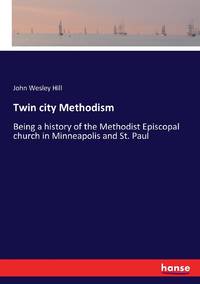
réf. ria9783337111618_inpPaperback. New. New Book; Fast Shipping from UK; Not signed; Not First Edition; Twin city Methodism - Being a history of the Methodist Episcopal church in Minneapolis and St. Paul is an unchanged high-quality reprint of the original edition of 1895. Hansebooks is editor of the literature on different topic areas s paperback
réf. 0265440815.Ghardcover. Good. Access codes and supplements are not guaranteed with used items. May be an ex-library book. hardcover
1992réf. G0960412263I2N00Fox Publications 1992. Hardcover. Like New. Pages are clean and are not marred by notes or folds of any kind. ~ ThriftBooks: Read More Spend Less.Dust jacket quality is not guaranteed. Fox Publications hardcover
1904réf. 30096Washington D. C.: Government Printing Office 1904. First Impression. Hardcover. In exceptionally good condition/No dust jacket. Demy folio 27.75cm/11inches full gilt-embossed olive-coloured cloth sans dust jacket pp. xliv 320 indexed. Illustrated with LXXXII b-w halftone and colour plates and 170 sketches incorporated within the text. Please feel free to inquire as to particulars and/or additional photographs. . Features: Two Summers' Workin Pueblo Ruins by Jesse Walter Fewkes and Mayan Calender Systems by Cyrus Thomas. .Fewkes surveyed the ruins of a number of cultures in the American Southwest and wrote many well received articles and books.citation needed He supervised the excavation of the Casa Grande ruins in southern Arizona a Hohokam site and the Mesa Verde ruins in southern Colorado an Ancient Pueblo site. He particularly focused on the variants and styles of prehistoric Southwest Indian pottery producing a number of volumes with carefully drawn illustrations. His work on the Mimbres and Sikyátki pottery styles eventually led to the reproduction of many of these traditional forms and images. The Hopi potter Nampeyo became his friend and reproduced the newly documented traditional designs in her own work. . In 1858Thomas founded the Illinois Natural History Society. In 1869 he was apponted the United States Geological and Geographical Survey of the Territories under Professor Ferdinand Vandeveer Hayden. Thomas was also the agricultural statistician and entomologist on the Hayden Geological Survey of 1871 whose work supported the creation of Yellowstone National Park in 1872. Government Printing Office hardcover
1904réf. 004346Washington D.C.: Government Printing Office 1904. 1st . Hardcover. Very Good/No Jacket. folio. Many b&w Illus/plates. olive green c; newly applied epprs; title page missing.study of Pueblo ruins and Mayan Indians Government Printing Office hardcover
réf. 6336268Taylor & Francis Group . Papeback. New. pp. 212 Taylor & Francis Group unknown
2005réf. A35720London: RoutledgeAn Imprint Of Taylor & Francis Books Ltd 2005. First Edition. Hardback. No Dustjacket. Hardback Hardcover. Very Good. First Edition. Hardback. No Dustjacket. 8vo. Illustrated laminated boards. Issued without dustjacket. Contributors include Alan Dupont Matthew M. Aid Nick Cullanther Ronald J. Deibert. ISBN: 0-415-34970-2 Pages: 208 About fine. Routledge,An Imprint Of Taylor & Francis Books Ltd, hardcover
réf. 5606792-nnew. unknown
réf. 5606792like new. unknown
2008réf. x-0415463807Routledge 2008. Paperback. New. 1st edition. 201 pages. 9.00x5.75x0.75 inches. Routledge paperback
2007réf. DADAX0415463807Routledge 2007-12-24. 1. paperback. New. 6.14x0.48x9.21. Buy with confidence. Excellent Customer Service & Return policy. Routledge paperback
réf. A9780415463805Paperback / softback. New. Twenty-First Century Intelligence collects the thinking of some of the foremost experts on the future of intelligence in our new century. The essays contained in this volume are set against the backdrop of the transforming events of the September 11 terrorist attacks. Intelligence plays a central and highly visible role in the global war on terror and in new doctrines of global pre-emption of threats. Yet the challenges for intelligence services are great as the twenty-first century unfolds. This collection will inform and stimulate new thinking about the current strengths and weaknesses of intelligence services and about the future paths that they may follow. Behind the controversies of the present over intelligence performance lie critical questions about how the past and future of an often mysterious but critical arm of the state are linked. This book was previously published as a special issue of the journal Intelligence and National Security. paperback
réf. B9780415463805Paperback / softback. New. paperback
1903réf. 1306020021GPO 1/1/1903. Hardcover. Very Good. Annual report of the Bureau of American Ethnology series. 4to. ccxxiv 237 p. 177 leaves of plates : ill. some col. 1 folded col. map ; 30 cm. Publisher's green cloth with gold Indian embossed on front cover. Clean unmarked pages. Very good binding and cover. Hardcover. Contents: Report of the Director / by J.W. Powell -- GPO hardcover
1891réf. RPOWTWE01KTGovernment Printing Office 1891. Very Good. Powell John Wesley. Twelfth Annual Report of the United States Geological Survey to the Secretary of the Interior 1890-'91. Part II - Irrigation. Washington D.C.: Government Printing Office 1891. 576pp. Indexed. Illustrated. 4to. Dark brown cloth with gilt lettering. Book condition: Very good with subtly rubbed edges. Rear endsheets gently foxed. Scarce in this condition. Government Printing Office hardcover books
1891réf. RPOWTWE01KTGovernment Printing Office 1891. Very Good. Powell John Wesley. Twelfth Annual Report of the United States Geological Survey to the Secretary of the Interior 1890-'91. Part II - Irrigation. Washington D.C.: Government Printing Office 1891. 576pp. Indexed. Illustrated. 4to. Dark brown cloth with gilt lettering. Book condition: Very good with subtly rubbed edges. Rear endsheets gently foxed. Scarce in this condition. Government Printing Office hardcover