Wesley ColeBiblio.com

10.466 resultados
ref. 23338140like new. unknown
2025ref. x-1107185661Cambridge University Press 2025. Hardcover. New. 466 pages. 7.00x1.00x10.00 inches. Cambridge University Press hardcover
ref. 1354832698.Ghardcover. Good. Access codes and supplements are not guaranteed with used items. May be an ex-library book. hardcover
2013ref. x-1498215386Cascade Books 2013. Hardcover. New. 266 pages. 6.00x0.75x9.00 inches. Cascade Books hardcover
ref. 1483648761.Ghardcover. Good. Access codes and supplements are not guaranteed with used items. May be an ex-library book. hardcover
1999ref. 112028Flammarion 1999 359 pages 23 8x14 6x2 8cm. 1999. Broché. 359 pages.
2004ref. Q-159012037xDRG 2004-03-01. Paperback. New. In shrink wrap. Looks like an interesting title! DRG paperback
ref. 1850430144.Ghardcover. Good. Access codes and supplements are not guaranteed with used items. May be an ex-library book. hardcover
1885ref. 475761885. Virch. Arch. path. Anat. 99. - Berlin Verlag von Georg Reimer 1885 8° 9 1 pp. orig. Broschur. Sehr seltener Sonderdruck einer frühen Arbeit "Aus dem chemischen Laboratorium des pathologischen Instituts zu Berlin". Thomas Wesley Mills 1847-1915 was Canada's first professional physiologist and authored books and research articles on comparative physiology animal behavior and the physiology of voice production. Mills was a close associate of William Osler who influenced the direction of his career and introduced him to an international network of biomedical researchers. Mills traveled to London where he worked with John Scott Burdon-Sanderson and Edward Albert Schafer Baltimore where he worked with H. Newell Martin at Johns Hopkins University Strasbourg with Felix Hoppe-Seyler and Friedrich Goltz and Berlin with Hugo Kronecker. unknown
ref. 5024093-6Used - Good. Pages intact with minimal writing/highlighting. The binding may be loose and creased. Dust jackets/supplements are not included. Stock photo provided. Product includes identifying sticker. Better World Books: Buy Books. Do Good. unknown
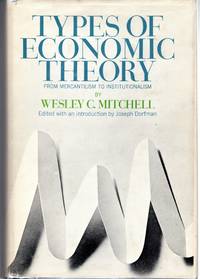
1967ref. 113693NY: Augustus M. Kelley 1967. 1st . Hardcover. Very Good/Very Good. 8vo. 1st printing; dj w/lite wear only in mylar; 608 clean unmarked pages; small foxing spot on flyleaf. non-domestic orders are priority shipments only. Augustus M. Kelley, hardcover
ref. 0678040273.Ghardcover. Good. Access codes and supplements are not guaranteed with used items. May be an ex-library book. hardcover
ref. 84124New York Augustus M. Kelley 1967/1969. Gr.8° XI 608 u. XII 875 S. OLwd. m. Gold-Präg. Min. berieben Kapitale etw. gebrauchsspurig Rücken etw. farbunterschiedlichjew. Stempel a. Innendeckel jew. Ausschnitt der OU auf hint. Innendeckel montiert innen sonst tadellos. EA dieses Reprints. = Reprints of Economic Classics. 010 New York, Augustus M. Kelley, 1967/1969 unknown
ref. SONG0678040273Brand: Augustus M Kelley Pubs 0000-00-00. hardcover. Used: Good. 6.25x2.25x9.25. Buy with confidence. Excellent Customer Service & Return policy. Brand: Augustus M Kelley Pubs hardcover
1969ref. G0678040273I3N01Augustus m Kelley Pubs 1969. Hardcover. Good. Missing dust jacket; Pages can have notes/highlighting. Spine may show signs of wear. ~ ThriftBooks: Read More Spend Less.Dust jacket quality is not guaranteed. Augustus m Kelley Pubs hardcover
1971ref. 113052New York: Augustus M. Kelley Publishers 1971. Hardcover. Good/Fair. Two volume set. Volume 1 first published 1967 reprinted 1971. Volume 2 published 1969. Both volumes are in good shape. Jackets are stained but text is legible. Jackets are chipped but protected by mylar covers. Bindings are secure. Very light stains on bottom corners of some pages not covering any text. Ink scribbles on title pages partially covering publisher's name. All other text is clean bright and unmarked. Augustus M. Kelley Publishers hardcover
1997ref. Q-0252066456University of Illinois Press 1997-07-01. Paperback. New. In shrink wrap. Looks like an interesting title! University of Illinois Press paperback
1988ref. 74622Gallery. New. Paperback. FREE UPGRADE to Courier/Priority Shipping Upon Request - IN STOCK AND IMMEDIATELY AVAILABLE FOR SHIPMENT - Flawless copy brand new pristine never opened -- 86 pp. With 233 ills. 6 col. . 28 x 22 cm. -- with a bonus offer-- . 1988. Gallery paperback
ref. A9780837173481Hardback. New. hardcover
ref. B9780837173481Hardback. New. hardcover
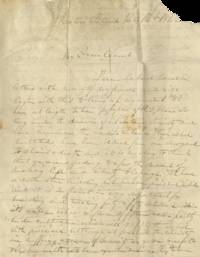
1842ref. List3738Ship Saluda Bound for Monrovia 1842. Two autograph letters signed approximately seven manuscript pages total. 1839 letter measuring 8 x 12 ¾ inches foxed with small tears at folds very good; 1842 letter measuring 8 x 10 inches tears at folds with larger tear to top right some text missing very good minus. Overall very good. A pair of letters documenting the work of Dr. Wesley Johnson 1813-1844 physician educator and colonial official associated with Bassa Cove during Liberia's formative decades. Written three years apart the letters preserve Johnson's involvement in medicine colonial administration anti-slave trade efforts agricultural reform and the establishment of one of Liberia's earliest advanced educational institutions. Born in Hillsdale New York Johnson studied medicine at Jefferson Medical College in Philadelphia under Dr. Jacob Green receiving his degree in 1837 before departing almost immediately for West Africa.1 He entered service at Bassa Cove a settlement approximately seventy miles south of Monrovia supported jointly by the New York and Pennsylvania Colonization Societies. Established as part of the larger Liberian colonization project Bassa Cove existed under difficult conditions: high mortality limited resources dependence upon outside support and periodic violence associated both with local conflict and the wider Atlantic slave trade. Johnson's responsibilities expanded rapidly after his arrival. He worked closely with Governor Thomas Buchanan and within a year had served in command of local militia forces and assumed administrative authority at Bassa Cove. Following conflict involving Theodore Canot a trader in enslaved people and violence affecting nearby settlements Johnson was reportedly injured; he shifted increasingly toward educational work becoming central to the establishment of the Ladies Liberia High School at Factory Island an ambitious project intended to educate future leadership within the colony. The earlier letter written aboard the ship Saluda on October 2 1839 finds Johnson struggling with declining health; a "bilious attack" that "was succeeded by an enlargement of the spleen" and he travelled along the coast towards Sierra Leone and Cape Mount "for my health." Even while discussing illness however Johnson remained focused on institutional work and future responsibilities: "When I return to Bassa I shall take charge of a high school about to be established there and carried on by the Ladies of Philad'a." That brief reference points toward one of the more ambitious educational efforts connected to early Liberia. Organized in Philadelphia in 1832 the Ladies' Liberia School Association sought to support educational development in Liberia through funding schools teachers and educational infrastructure.2 By the late 1830s the organization had developed a broad network of support and had undertaken plans for a secondary school at Factory Island near Bassa Cove. Johnson would become central to its implementation. He writes: "As long as I have serviceable health it is doubtless my duty to remain here for why should new persons come here continually at the risk of their lives & unacquainted with the colony or country. It seems hardly credible that I have been here more than two years already. "10th. I have been today drawing a plan of the buildings for the high school on Factory Island but this evening the vessel rolls and I cannot make straight marks & will go on with my letter. My health is better & better. I drink wine occasionally & we have five courses at dinner. I stopped at Monrovia several days as we came along and found high life at the Govt. house. When we get back to Bassa a school will give my employment & as my agency for the Col. Soc. will be exchanged for that of the Ladies Soc. of Phil. for African Education. Of this change I am glad. It will relieve me of care trouble and vexation and business which I have no means of accomplishing to my mind. "The Colony was never more prospered. Gov. Buchanan drives hard at the Slavers and they cannot stand it. You will see by the . something of what has been going on here. O that I was worth a million. I would make a great jam in Liberia. As it is I take it extempore make the best moves that I can for the time." Three years later writing from Factory Island on July 14 1842 Johnson reports that the educational institution envisioned in the earlier letter had become reality. He writes: "We have at length taken possession of this place so long under the dominion of his Satanic Majesty and have commenced the Ladies Liberia High School. Multitudes have been doomed from our door-yard to chains & death and it is consoling to think that we are affording to a few the means of making life and liberty blessings. We have a noble stone building not however finished inside and it is sufficient in every department for boarding and teaching forty or fifty scholars within its walls. Also a farm of fifteen acres partly under cultivation which will supply the school with provisions. Although at present the colonists are suffering a season of scarcity we go on comfortably. My health has been excellent since my return paper loss indeed it received an important improvement immediately after my arrival. My objects are to get the School thoroughly established an improved system of agriculture in operation and some other person properly introduced to my place & then to return to America. I should not add the last item so readily at present not knowing what circumstances may indicate of my duty but I made a general promise to my friends to return in two years. We are introducing the improved and labor saving plans and means of farming which are from five to ten times as efficient as those in common use here and as novel to the colonists as theirs would be in the good state of New York. We are in want of funds for these purposes all having been exhausted which were appropriated to them by the Ladies and I am obliged to furnish means from my own funds. We have a kind of manual labour system - the pupils work from 6 to 8 & from 4 to 6 & study from 9 to 12 2 to 4 & 7 to 8. My mode of teaching is much improved on what it was in Cin. by invention reflection & teaching others to teach and no other employment is so agreeable to me. I am father mother preceptor & religious teacher to my scholars & universal agent & factotum to the School and would to Heaven that I were better prepared for the work and could show an influential example of the power of living holiness." The physical cost of such work proved severe. Tropical illness permanently damaged Johnson's health. By the time of the present letters he was already recording prolonged illness and enlargement of the spleen. He ultimately returned to Hillsdale in 1844 and died shortly afterward at only thirty-one years old. Contemporary memorials praised both his educational work and personal sacrifice describing Liberia as having lost "a devoted friend and martyr." Taken together the letters preserve the work of an unusually capable participant operating at multiple levels of early Liberian development-physician educator administrator agricultural reformer and institution builder-while documenting educational work colonial administration medicine anti-slave trade activity and daily life through firsthand observation during Liberia's formative decades. An important Liberia grouping. 1 Otteson Ron. Ron Otteson "Dr. Wesley Johnson of Hillsdale: A Gentleman of Talent and Liberal Education" Roeliff Jansen Historical Society accessed May 22 2026 https://www.roeliffjansenhs.org/about-6. 2 Karen Fisher Younger "Philadelphia's Ladies' Liberia School Association and the Rise and Decline of Northern Female Colonization Support" Pennsylvania Magazine of History and Biography 134 no. 3 2010: 235-260. books
1842ref. List3738Ship Saluda Bound for Monrovia 1842. Two autograph letters signed approximately seven manuscript pages total. 1839 letter measuring 8 x 12 ¾ inches foxed with small tears at folds very good; 1842 letter measuring 8 x 10 inches tears at folds with larger tear to top right some text missing very good minus. Overall very good. A pair of letters documenting the work of Dr. Wesley Johnson 1813-1844 physician educator and colonial official associated with Bassa Cove during Liberia's formative decades. Written three years apart the letters preserve Johnson's involvement in medicine colonial administration anti-slave trade efforts agricultural reform and the establishment of one of Liberia's earliest advanced educational institutions. Born in Hillsdale New York Johnson studied medicine at Jefferson Medical College in Philadelphia under Dr. Jacob Green receiving his degree in 1837 before departing almost immediately for West Africa.1 He entered service at Bassa Cove a settlement approximately seventy miles south of Monrovia supported jointly by the New York and Pennsylvania Colonization Societies. Established as part of the larger Liberian colonization project Bassa Cove existed under difficult conditions: high mortality limited resources dependence upon outside support and periodic violence associated both with local conflict and the wider Atlantic slave trade. Johnson's responsibilities expanded rapidly after his arrival. He worked closely with Governor Thomas Buchanan and within a year had served in command of local militia forces and assumed administrative authority at Bassa Cove. Following conflict involving Theodore Canot a trader in enslaved people and violence affecting nearby settlements Johnson was reportedly injured; he shifted increasingly toward educational work becoming central to the establishment of the Ladies Liberia High School at Factory Island an ambitious project intended to educate future leadership within the colony. The earlier letter written aboard the ship Saluda on October 2 1839 finds Johnson struggling with declining health; a "bilious attack" that "was succeeded by an enlargement of the spleen" and he travelled along the coast towards Sierra Leone and Cape Mount "for my health." Even while discussing illness however Johnson remained focused on institutional work and future responsibilities: "When I return to Bassa I shall take charge of a high school about to be established there and carried on by the Ladies of Philad'a." That brief reference points toward one of the more ambitious educational efforts connected to early Liberia. Organized in Philadelphia in 1832 the Ladies' Liberia School Association sought to support educational development in Liberia through funding schools teachers and educational infrastructure.2 By the late 1830s the organization had developed a broad network of support and had undertaken plans for a secondary school at Factory Island near Bassa Cove. Johnson would become central to its implementation. He writes: "As long as I have serviceable health it is doubtless my duty to remain here for why should new persons come here continually at the risk of their lives & unacquainted with the colony or country. It seems hardly credible that I have been here more than two years already. "10th. I have been today drawing a plan of the buildings for the high school on Factory Island but this evening the vessel rolls and I cannot make straight marks & will go on with my letter. My health is better & better. I drink wine occasionally & we have five courses at dinner. I stopped at Monrovia several days as we came along and found high life at the Govt. house. When we get back to Bassa a school will give my employment & as my agency for the Col. Soc. will be exchanged for that of the Ladies Soc. of Phil. for African Education. Of this change I am glad. It will relieve me of care trouble and vexation and business which I have no means of accomplishing to my mind. "The Colony was never more prospered. Gov. Buchanan drives hard at the Slavers and they cannot stand it. You will see by the . something of what has been going on here. O that I was worth a million. I would make a great jam in Liberia. As it is I take it extempore make the best moves that I can for the time." Three years later writing from Factory Island on July 14 1842 Johnson reports that the educational institution envisioned in the earlier letter had become reality. He writes: "We have at length taken possession of this place so long under the dominion of his Satanic Majesty and have commenced the Ladies Liberia High School. Multitudes have been doomed from our door-yard to chains & death and it is consoling to think that we are affording to a few the means of making life and liberty blessings. We have a noble stone building not however finished inside and it is sufficient in every department for boarding and teaching forty or fifty scholars within its walls. Also a farm of fifteen acres partly under cultivation which will supply the school with provisions. Although at present the colonists are suffering a season of scarcity we go on comfortably. My health has been excellent since my return paper loss indeed it received an important improvement immediately after my arrival. My objects are to get the School thoroughly established an improved system of agriculture in operation and some other person properly introduced to my place & then to return to America. I should not add the last item so readily at present not knowing what circumstances may indicate of my duty but I made a general promise to my friends to return in two years. We are introducing the improved and labor saving plans and means of farming which are from five to ten times as efficient as those in common use here and as novel to the colonists as theirs would be in the good state of New York. We are in want of funds for these purposes all having been exhausted which were appropriated to them by the Ladies and I am obliged to furnish means from my own funds. We have a kind of manual labour system - the pupils work from 6 to 8 & from 4 to 6 & study from 9 to 12 2 to 4 & 7 to 8. My mode of teaching is much improved on what it was in Cin. by invention reflection & teaching others to teach and no other employment is so agreeable to me. I am father mother preceptor & religious teacher to my scholars & universal agent & factotum to the School and would to Heaven that I were better prepared for the work and could show an influential example of the power of living holiness." The physical cost of such work proved severe. Tropical illness permanently damaged Johnson's health. By the time of the present letters he was already recording prolonged illness and enlargement of the spleen. He ultimately returned to Hillsdale in 1844 and died shortly afterward at only thirty-one years old. Contemporary memorials praised both his educational work and personal sacrifice describing Liberia as having lost "a devoted friend and martyr." Taken together the letters preserve the work of an unusually capable participant operating at multiple levels of early Liberian development-physician educator administrator agricultural reformer and institution builder-while documenting educational work colonial administration medicine anti-slave trade activity and daily life through firsthand observation during Liberia's formative decades. An important Liberia grouping. 1 Otteson Ron. Ron Otteson "Dr. Wesley Johnson of Hillsdale: A Gentleman of Talent and Liberal Education" Roeliff Jansen Historical Society accessed May 22 2026 https://www.roeliffjansenhs.org/about-6. 2 Karen Fisher Younger "Philadelphia's Ladies' Liberia School Association and the Rise and Decline of Northern Female Colonization Support" Pennsylvania Magazine of History and Biography 134 no. 3 2010: 235-260.
2012ref. 1398582NASA. New. 2012. Soft Cover. Reprint Edition . NASA paperback
ref. 1372709290.Gpaperback. Good. Access codes and supplements are not guaranteed with used items. May be an ex-library book. paperback
ref. 3337111610.Gpaperback. Good. Access codes and supplements are not guaranteed with used items. May be an ex-library book. paperback