2 results
1897ref. 320309New York: Dodd Mead and Company 1897. Hardcover. Near Fine. First American edition. Decorated cloth. Small contemporary owner's name very near fine. Novel about prospecting by a New Zealand-born woman. Very scarce. Dodd, Mead and Company hardcover books
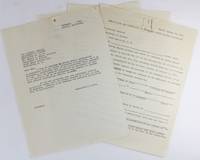
1944ref. 3153Newell Ca: November 1944. Very good. 13pp. mimeographed forms printed on rectos only. Minor wear small paper clip rust stains to top edges. A cover letter datelined "November blank 1944 Newell California" intended to accompany the attached blank version of the actual application intended for use by Tule Lake internees wishing to renounce their United States citizenship. The cover letter is pre-addressed to the Attorney General and Edward J. Ennis the director of the Justice Department's Alien Enemy Control Unit in Washington D.C. The form letter begins "I wish to renounce my United States nationality in accordance with the recent government promulgation so I am enclosing a typewritten copy of this application form executed by me." A blank copy of the application is included here numbering three pages. The application includes a renunciation statement intended to be signed by applicants followed by ten questions pertaining to the applicant's history of birth residence last point of entry into the U.S. close relations education military service Selective Service classification and a declaration that the applicant has given "true and correct" answers intended to be dated and signed at the end. Tule Lake became the holding center for Japanese American internees viewed as disloyal after the issuance of the infamous loyalty questionnaire in the summer of 1943. These "disloyal segregees" were sent to Tule Lake where they suffered ostracization from fellow internees poorer living conditions inferior food and harsher treatment from American military guards among other indignities. There were even disagreements among the segregated internees as some of them truly wished for repatriation to Japan and identified as Japanese while others viewed this group as disloyal and undeserving of assistance or relief. In other words not only were these internees seen as disloyal by their own government but also by some of their fellow internees. Their feeling of dislocation ran deep. Eventually many of these segregees sought to renounce their American citizenship and repatriate to Japan. The present forms were many internees' first step in this process. November unknown books