Philibert Louis DebucourtBiblio.com

116 résultats
réf. 16966Contentum Ltd. Loose sheet. New. High-quality art print based on an original work from the Artic. Created in the 18th century n.d. Professionally printed on premium fine-art paper Photo Rag 308 premium quality in size A2. The artwork is printed with a white border museum-style presentation. Contentum Ltd. unknown
réf. 16964Contentum Ltd. Loose sheet. New. High-quality art print based on an original work from the Artic. Created in the 18th century n.d. Professionally printed on premium fine-art paper Museum Etching museum quality in size A3. The artwork is printed with a white border museum-style presentation. Contentum Ltd. unknown
1787réf. 015884Paris 1787. Early Printing . Single Sheet. Very Good. 25 1/2" x 18. Color Engraving. Laid Paper. Printed In Color Not With Later Coloring. Complete With Full Margins As Issued With Title In English And French Below The Image Which Is Approximately 21" X 11". This State Of The Plates Has The Third Large Female Figure From The Left In A Grey Dress With A Pink Waist. Philibert-Louis Debucourt 1755 - 1832 Was A French Painter And Engraver. Debucourt Was Born In Paris In 1755 And Became A Pupil Of Vien. He Executed A Few Plates In Mezzotint Such As The Heureuse Famille The Benediction De La Mariée And The Cruche Cassée After His Own Designs. Most Of His Work Was However In Aquatint. He Became The Leading Maker Of Multi-Plate Colour Prints Combining Washes Of Aquatint With Line-Engraving.2 He Used A Number Of Different Techniques But Most Involved Three Colour Plates And A Fourth Key Plate Outlining The Design In Black. Debucourt's Father-In-Law Was The Sculptor Louis-Philippe Mouchy. In The Marriage Contract Mouchy Generously Offered To Provide A Three-Room Apartment At The Louvre Where Debucourt Lived For Twelve And A Half Years. The Address Of This Apartment Is Often Given On His Prints. Some Of His Work Was Satirical Such As La Promenade Publique An Aquatint Of 1792 Showing A Crowd In The Gardens The Palais-Royal. As Well As Work From His Own Designs He Made Aquatints After Carle Vernet Including The Horse Frightened By A Lion The Horse Frightened By Lightning And The Strayed Huntsman. Debucourt Was Assisted For Some Years By His Pupil And Nephew Jean-Pierre-Marie Jazet. unknown
1787réf. 015885Paris 1787. Early Printing . Single Sheet. Very Good. 25 1/2" x 18. Color Engraving. Laid Paper. Printed In Color Not Colored Later. Complete With Full Margins As Issued With Title In English And French Below The Image Which Is Approximately 21" X 11". This State Of The Plates Has The Third Large Female Figure From The Left In A Greenish-Blue Dress With A Blue Waist. Philibert-Louis Debucourt 1755 - 1832 Was A French Painter And Engraver. Debucourt Was Born In Paris In 1755 And Became A Pupil Of Vien. He Executed A Few Plates In Mezzotint Such As The Heureuse Famille The Benediction De La Mariée And The Cruche Cassée After His Own Designs. Most Of His Work Was However In Aquatint. He Became The Leading Maker Of Multi-Plate Colour Prints Combining Washes Of Aquatint With Line-Engraving.2 He Used A Number Of Different Techniques But Most Involved Three Colour Plates And A Fourth Key Plate Outlining The Design In Black. Debucourt's Father-In-Law Was The Sculptor Louis-Philippe Mouchy. In The Marriage Contract Mouchy Generously Offered To Provide A Three-Room Apartment At The Louvre Where Debucourt Lived For Twelve And A Half Years. The Address Of This Apartment Is Often Given On His Prints. Some Of His Work Was Satirical Such As La Promenade Publique An Aquatint Of 1792 Showing A Crowd In The Gardens The Palais-Royal. As Well As Work From His Own Designs He Made Aquatints After Carle Vernet Including The Horse Frightened By A Lion The Horse Frightened By Lightning And The Strayed Huntsman. Debucourt Was Assisted For Some Years By His Pupil And Nephew Jean-Pierre-Marie Jazet. unknown
réf. 2187942Contentum Ltd. Loose sheet. New. High-quality art print based on an original work from the Rijksmuseum. Created in the 19th century 1817. Professionally printed on premium fine-art paper Photo Rag Bright White premium quality in size A2. The artwork is printed with a white border museum-style presentation. Contentum Ltd. unknown
réf. 2187940Contentum Ltd. Loose sheet. New. High-quality art print based on an original work from the Rijksmuseum. Created in the 19th century 1817. Professionally printed on premium fine-art paper Museum Etching museum quality in size A3. The artwork is printed with a white border museum-style presentation. Contentum Ltd. unknown
réf. 2187941Contentum Ltd. Loose sheet. New. High-quality art print based on an original work from the Rijksmuseum. Created in the 19th century 1817. Professionally printed on premium fine-art paper Photo Matt Fibre in size A2. The artwork is printed with a white border museum-style presentation. Contentum Ltd. unknown
réf. 2187943Contentum Ltd. Loose sheet. New. High-quality art print based on an original work from the Rijksmuseum. Created in the 19th century 1817. Professionally printed on premium fine-art paper Museum Etching museum quality in size A2. The artwork is printed with a white border museum-style presentation. Contentum Ltd. unknown
1930réf. 37405Paris, Léon Ullman Laboratoires Paris, Léon Ullman Laboratoires Le Brun Vers 1930. In-4 carré broché non paginé, illustré. Tache à la couverture sinon Bon état
Paris, Léon Ullman Laboratoires Le Brun Vers 1930. In-4 carré broché non paginé, illustré. Tache à la couverture sinon Bon état
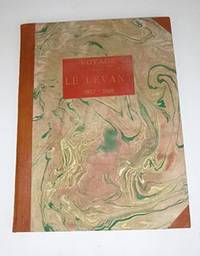
réf. 51-3962Paris: Imprimerie royale 1819. Large folio. 67 x 50 cm. New half Sakora goatskin with marbled boards preserving the original label by the artisan binder Sasha Mosalov. Plate volume only with 71 of 80 plates lacking plates 3 15 17 25 40 52 55 73. Lacking the title page. Some stains in the margins. Very good.Colas 1089; Brunet II 1337; not in OCLC.Written by Nicolas Nicolaides: Baron Louis Nicolas Philippe Auguste de Forbin later count de Forbin la Roque-d'Anthéron 1777 – ΠαÏίσι 1841 was a French painter author and antiquarian. He was also a pupil of painter Jacques-Louis David. During the Bourbon restauration Forbin served as general director of the Louvre Museum and other museums of France.Inspired by the travels of François-René de Chateaubriand Forbin sailed out from Toulon on 22 August 1817 to tour the eastern Mediterranean. Like Chateaubriand Forbin travelled on his own initiative without an order from the French government; however since the aim of his journey was to discover Greek and Roman antiquities and to draw landscapes of the places he would visit he was able to travel on the ships of the French fleet of the Levant Flotte du Levant.In his venture Forbin was accompanied by painters Pierre Prevost and Léon Matthieu Cochereau also a pupil of David and a nephew of Prévost as well as architect Jean-Nicolas Huyot. Abbé de Forbin-Janson later bishop of Nancy was also a member of the company for the first part of the journey while Huyot had to retire when he fractured his leg on Milos island. In addition twenty-four year old Cochereau died of dysentery off the coast of Cythera and was replaced by Linant de Bellefonds who at the time was a mate on "Cleopatra" the mission's ship. De Bellefonds resigned from his position on the ship and participated in the expedition as a painter and chartographer. When the expedition ended in December of 1817 de Bellefonds decided to stay on in Egypt and explored its territory as member of several missions. From 1831 to 1869 he served the kingdom of Egypt as chief engineer of several public works including the Suez Canal. The expedition sailed to Acre Galilee and thenceforth travelled by land. While in Palestine the travellers visited the Dead Sea and Jordan river reached Cairo and sailed the Nile down to Upper Egypt. The main places they visited includde Milos island Athens Constantinople Ephesus Acre Jerusalem Gaza Damietta Cairo Luxor Thebes Rosetta and Alexandria. When the expedition returned to France in April 1818 Forbin had spent approximately 28.000 francs on the purchase and transportation of antiquities some of which ended up in the Louvre collections at the time Royal Museum of France. Prevost drew panoramic views of Jerusalem and Athens but succumbed to pneumonia in 1823 without completing his panorama of Constantinople.The descriptions of Forbin show him to be a mature observer in possession of deep humanistic culture. His style sometimes resembles a clumsy imitation of Chateaubriand's "Journey to the Holy Land" 1806. However as Forbin was not a professional author but a painter his descriptions are way more exact than those of Chateaubriand.Forbin also travelled to Sicily in 1820 and published his travel account as he had done with his expedition of 1817. Paris: Imprimerie royale, 1819. hardcover
réf. 1865408Contentum Ltd. Loose sheet. New. High-quality art print based on an original work from the Rijksmuseum. Created in the 18th century 1789. Professionally printed on premium fine-art paper Museum Etching museum quality in size A3. The artwork is printed with a white border museum-style presentation. Contentum Ltd. unknown
réf. 1865409Contentum Ltd. Loose sheet. New. High-quality art print based on an original work from the Rijksmuseum. Created in the 18th century 1789. Professionally printed on premium fine-art paper Photo Matt Fibre in size A2. The artwork is printed with a white border museum-style presentation. Contentum Ltd. unknown
réf. 1865410Contentum Ltd. Loose sheet. New. High-quality art print based on an original work from the Rijksmuseum. Created in the 18th century 1789. Professionally printed on premium fine-art paper Photo Rag Bright White premium quality in size A2. The artwork is printed with a white border museum-style presentation. Contentum Ltd. unknown
réf. 1865411Contentum Ltd. Loose sheet. New. High-quality art print based on an original work from the Rijksmuseum. Created in the 18th century 1789. Professionally printed on premium fine-art paper Museum Etching museum quality in size A2. The artwork is printed with a white border museum-style presentation. Contentum Ltd. unknown
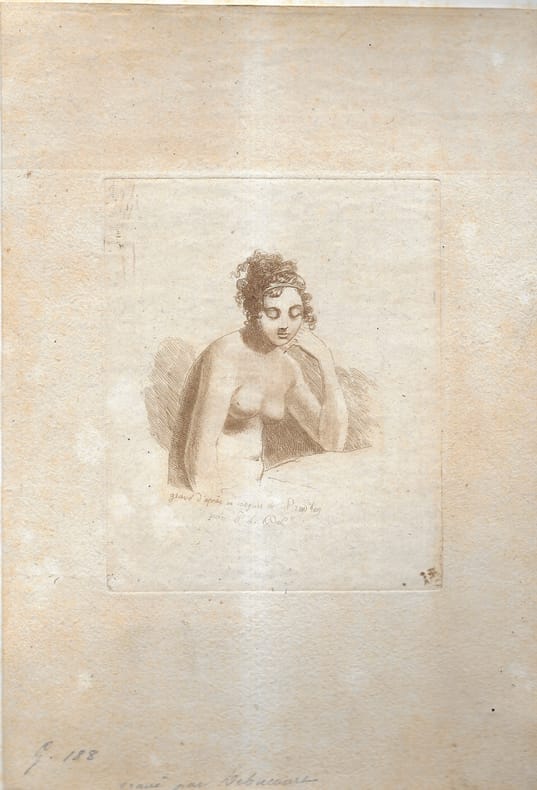
1800réf. 5652Gravé à l’eau-forte d’après un croquis de Prud’hon. Une jeune femme nue, baissant les yeux, coiffée en papillotes, est représentée à mi-corps, la joue appuyée sur sa main gauche. Signature en bas à la pointe. Eau-forte imprimée en bistre, décrite dans le catalogue de Prud’hon (n° 188, page 296) par E. et J. de Goncourt. Fenaille n° 132. Très belle épreuve, grande de marges ( 27,3 x 19,2). Rare. 14,4 x 11,8 Bon circa 1800