1 267 résultats
réf. c5464Imagerie Suédoise, sans date ( vers 1940).Image à système en couleurs, de papier fort, de 22 X 27 cm ( épaissseur une fois montée 6cm), sous pochette de papier cristal imprimée en bleu.
réf. 46405041Dessin copié (inversé en miroir) sur la planche de Georgin. Dans l'angle inférieur droit on peut lire "Imprimerie J. de Tooz Bruxelles". Cette planche semble n'avoir jamais paru. La mort de Crédit est un sujet dont on retrouve des représentations fort anciennes, sa représentation a peu évolué depuis la crise de 1720 jusqu'à la fin du XIXe siècle. Les mauvais payeurs sont un maître d'armes, un peintre et un musicien, figures de la bohème impécunieuse. Une oie portant un porte-monnaie symbolise la prospérité (probablement du fait du jeu de mots "mon oye / monnoie), dans le fond un rémouleur symbolise le travailleur modeste, indifférent aux tumultes du monde financier.
réf. 207265S.l., s.d. (vers 1830); 30 x 38 cm, en feuille, contrecollée sur chemise moderne de papier à passe-partout.
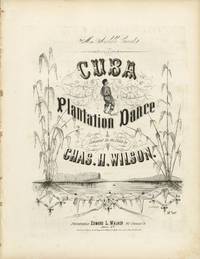
1855réf. List3682Philadelphia: Edward L. Walker 142 Chestnut St. above 6th 1855. Folio sheet music pictorial lithographed cover approximately 13.5 × 10.5 inches. Light edge wear and minor toning; very good with a strong impression of the cover illustration. An antebellum piano dance reflecting the plantation imagery that circulated widely in mid-nineteenth-century American popular music. “Cuba Plantation Dance” was composed by Chas. H. Wilson a little-documented composer whose name appears chiefly in connection with this work and issued in Philadelphia during the early 1850s by Edward L. Walker the predecessor firm to the major publishing house Lee & Walker. A copy is recorded in the Levy Collection at Johns Hopkins which dates the publication to 1855. The cover presents a stylized plantation landscape framed by tall stalks of sugar cane with a small central vignette of a dancing Black figure. The use of Cuban plantation imagery reflects contemporary American fascination with the Caribbean sugar economy and with plantation life beyond the United States. During the 1850s Cuba was one of the largest slave societies in the Atlantic world. By the midcentury the island’s sugar plantations relied on hundreds of thousands of enslaved Africans and the enslaved population of Cuba was estimated at roughly 400000 people in the 1840s–1850s working primarily in the rapidly expanding sugar industry. Although Spain formally agreed to end the Atlantic slave trade in 1820 illegal importations of enslaved Africans into Cuba continued for decades supplying labor for the island’s plantations well into the 1850s. American publishers frequently borrowed such imagery for plantation-themed dance music marketed to the parlor trade. Pieces labeled “plantation dances” or “Ethiopian dances” formed part of the broader culture of minstrel and plantation entertainment. The title page bears a dedication to “Miss Arabelle Conrad” typical of mid-century sheet music addressed to amateur pianists. Along with the aforementioned copy in the Levy collection we find copies at Michigan and Temple. Edward L. Walker, 142 Chestnut St., above 6th unknown
1855réf. List3682Philadelphia: Edward L. Walker 142 Chestnut St. above 6th 1855. Folio sheet music pictorial lithographed cover approximately 13.5 × 10.5 inches. Light edge wear and minor toning; very good with a strong impression of the cover illustration. An antebellum piano dance reflecting the plantation imagery that circulated widely in mid-nineteenth-century American popular music. “Cuba Plantation Dance” was composed by Chas. H. Wilson a little-documented composer whose name appears chiefly in connection with this work and issued in Philadelphia during the early 1850s by Edward L. Walker the predecessor firm to the major publishing house Lee & Walker. A copy is recorded in the Levy Collection at Johns Hopkins which dates the publication to 1855. The cover presents a stylized plantation landscape framed by tall stalks of sugar cane with a small central vignette of a dancing Black figure. The use of Cuban plantation imagery reflects contemporary American fascination with the Caribbean sugar economy and with plantation life beyond the United States. During the 1850s Cuba was one of the largest slave societies in the Atlantic world. By the midcentury the island’s sugar plantations relied on hundreds of thousands of enslaved Africans and the enslaved population of Cuba was estimated at roughly 400000 people in the 1840s–1850s working primarily in the rapidly expanding sugar industry. Although Spain formally agreed to end the Atlantic slave trade in 1820 illegal importations of enslaved Africans into Cuba continued for decades supplying labor for the island’s plantations well into the 1850s. American publishers frequently borrowed such imagery for plantation-themed dance music marketed to the parlor trade. Pieces labeled “plantation dances” or “Ethiopian dances” formed part of the broader culture of minstrel and plantation entertainment. The title page bears a dedication to “Miss Arabelle Conrad” typical of mid-century sheet music addressed to amateur pianists. Along with the aforementioned copy in the Levy collection we find copies at Michigan and Temple. Edward L. Walker, 142 Chestnut St., above 6th unknown books
réf. 22131Rouen et Honfleur, G. De Hautot, Dervois imprimeur, 1922. Une feuille (365 x 270 mm) gravure, représentant une cuisinière normande en costume traditionnel devant l'estuaire de la Seine. Bon état.
réf. 567559Alain Margaron éditeur, 2011. Petit in-8 br. couv. rempliée ill., 83 pp., plusieurs reproductions en coul. in et hors-texte, bibliographie, biographie.
1820réf. 46405021Amsterdam, J. Noman, vers 1820 ; 32 x 39 cm., Rarissime danse des morts en 16 vignettes, inconnue de Van Heurck, décrite par De Meyer Volks en Kinderprent II, p. 255 d'après l'exemplaire de la collection Waller. Les vignettes montrent la mort intervenant dans les différentes circonstances de la vie des hommes. Elles sont légendées de 2 lignes de texte. La planche est surmontée de la devise Die 't Sterven in zyn leven heeft geleerd, Die vind de bitterheid des Doods geweerd en guise de titre. Elle porte le numéro 297. J. Noman a exercé à Amsterdam de 1817 à 1830, date à laquelle il cède le fonds à son beau-fils Dirk van Haren-Noman.
Gioco dell'oca di forma circolare in 45 caselle. Xilografia colorita a maschera. Compresi i marg. bianchi il gioco misura mm.410x340. Impostazione verticale. Perfetto stato.
réf. 565191Strassburg, Heitz, 1933. In-8 broché, 310 pp., 62 pl. in fine. Bibliogr. (Studien zur deutschen Kunstgeschichte, 292).Edition originale.
réf. 518160Herrsching, Pawlak, s.d. [vers 1975]. Deux forts vol. in-8 cart. édit. sous jaquettes illustrées, 1536 pp. en continu offrant des reprod. en noir légendées, bibliographie.
1840réf. 46405015Bois-le-Duc, Lutkie & Cranenburg, (vers 1840) ; 34 x 28 cm., Bois rehaussé d'aquarelle bleue rouge et jaune dans un encadrement floral, 2 lignes de texte imprimé à la gloire du bœuf sous l'image. Cette estampe, numérotée 55 à l'angle supérieur gauche est la réimpression du bois de Wijnhoven Hendriksen de Rotterdam n° 18. De Meyer p. 223 pas dans Van Heurck. Trace de pliure, bord sali.
1935réf. 46405016Rotterdam, Wijnhoven Hendriksen, (vers 1830-35) ; 31x 38 cm., Le bœuf décoré est réhaussé de rouge, encadrement de fleurs et calices, 2 vers à la gloire de bœuf sous l'image. Planche numérotée 18.
1822réf. 46405001Epinal, Pellerin, (1822) ; 31 x 41 cm., épreuve sur vergé., Texte de la chanson sur 2 colonnes, illustration coloriée au pochoir. - Garnier, ATP, 1990, n°1048 - Perrout p. 42 - Dumont pl. III.
réf. 46404412Amsterdam, Erve de Weduwe Jacobus van Egmont : op de Reguliers Breê Straat, , (fin XVIIIe siècle) ; 35 X 29,5 cm., Superbe image tirée sur papier vergé. Grand bois gravé surmontant un poème de 24 vers sur Saint Nicolas et les cadeaux qu’il apporte aux enfants obéissants. 2 grands bandeaux avec des fleurs et des animaux ornent les marges extérieures.Les héritiers de la veuve J. van Egmont ont exercé entre 1760 et la fin du siècle. Van Heurck et Boekenoogen. Imagerie pop. des Pays-Bas p. 58. Image inconnue de van Heurck et Boekenoogen. Imagerie pop. flamande.
réf. 500140Antwerpen, N. V. Standaard - Boekhandel, 1956. In-4, rel. d'édition, jaquette ill., 63 pp., 62 pl. d'oeuvres reprod. en noir in fine, un des 500 ex. sur papier Original Violet Mill, index. Texte en néerlandais.
réf. 46405807Turnhout, Brepols, 35 x 40 cm., Estampe oblongue de dix bois coloriés en rouge, jaune et bleu. Van Heurck p. 156. Exemplaire du premier état à l’adresse de Brepols, tirage sur vergé, bel exemplaire.
1814réf. 46405007Épinal, Pellerin, vers 1814 ; 32 x 42 cm., Image coloriée au pochoir. Garnier ATP 1170 "Très proche d'une image gravée par Godard d'Alençon pour Hurez de Cambrai". - Perrout p. 51
1794réf. 46406025Gelder, Schaffrath, 1794 ; feuille de 34 x 40 cm., Dans un double encadrement de filets et décor, grande crucifixion et lettrine gravée. Texte en en flamand en caractères gothiques. Colorié en rouge bleu et brun. Approbation signée HVLC. Image inconnue de Van Heurck, Boerma. Kinderprenten p. 813 ne cite à cette date que cet exemplaire-ci (collection Norge). Qq. taches, un coin manquant anciennement doublé, sans atteinte au texte (légère atteinte à l’encadrement).
1758réf. 11269Augbourg Johann Georg Hertel 1758 -in-4- PLEIN VEAU un volume (album), reliure d'époque plein veau havane raciné (binding full calfskin) in-quarto, dos à nerfs (spine with raised bands), frotté (rubbed), décoré or (gilt decoration) filets or (gilt line) et filets à froid (blind-stamping line decoration) - entre-nerfs - compartiments à fleuron au fer plein (floweret with full blocking stamp) - titre frappé or (gilt title)- pièce de titre sur fond bordeaux + pièce de titre sur fond noir (label of title) avec filet or (label of title with gilt line), coiffe supérieure manquante (head of the spine lightly faded),manque de cuir sur 1/2 centimètre carré en haut du dos + légers manques de cuir aux mors, plats décorés or (gilt decoration), d'un double encadrement au motifs Rococos (coquille saint Jacques + fleurons + glands aux angles avec les lettres P L V P au centre de l'encadrement central), charnière fendue (cracked joints), coins écornés (corners dog-eared) - toutes tranches dorées (all edges gilt) - , marque-page en tissu (bookmark in tissue), orné de 96 gravures sur 100 illustrations (manquent les N° 20-62-63-92) d'Emblèmes baroques et roccocos (Baroque and Rococo Imagery) par EICHLER Gottfried , légère rousseur sur la gravure N° 100, divisé en 5 parties sans pagination, sans date (1758) Augbourg Johann Georg Hertel Editeur,
réf. EPI048MImagerie d'Epinal N° 3849. Pellerin & Cie.
réf. 531725Ivry, CREDAC, 1992. In-8 oblong broché, n.p., illustr. en noir.
réf. 523704P., 1988. Grand in-8 br., XIV-76 pp., 63 planches de reprod. en noir, 62 lettres et 118 dessins décrits.
réf. 500518P., Millon et Associés, 2008. In-4° cart., couv. ill., 120pp., 218 notices descriptives ill. en couleurs, index.
réf. 523711Gand, Impr. Erasmus, 1972. Grand in-8 broché, IL-196pp., catalogue de 125 notices, 10 ill. en coul. à pleine page dans le texte, filigranes, 128 pl. de reprod. en noir in-fine. Index.