Capek, Josef (Cover designs)Antiquariat.de
982 risultati
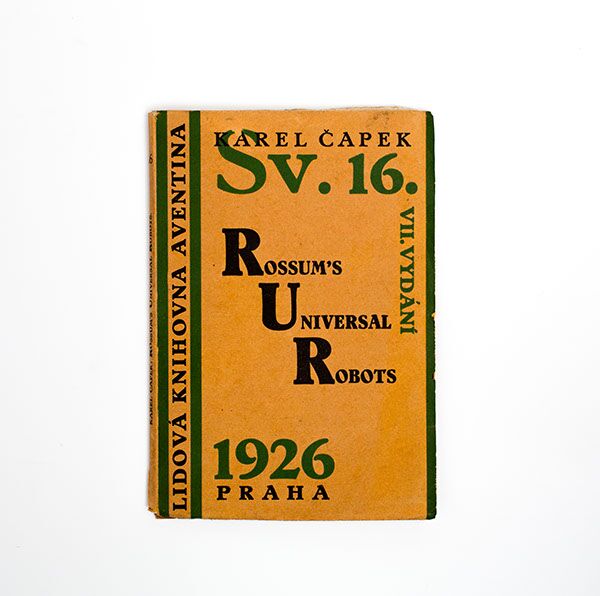
1923rif. 27294Praha, 1923-1928. Die Sammlung umfasst folgende Bände: 1. CAPEK, Josef: Zeme mnoha jmen. Hra o trech dejstvich a promene. II. vysani, Praha, Aventium, 1923. 8°. 78(1)p. Original wrappers. - 2. HORA, Josef: Probuzei. Prozy. Praha, Aventium, 1925. 8°. 111(2)p., Original wrappers. - 3. SCHWOB, Marcel: Lampa Psyche. Praha, Aventium, 1927. 8°. 147(2)p., Original wrappers. - 4. MAHEN, Jiri: Knizka a o ceském charakteru. Vyskov, F. Obzina, 1924. 8°. 136(4)p., with a frontispiece. Original wrappers. - 5. HEMON, Louis: Hra na slepou bábu. Román. Praha, Abentium, 1927. 8°, 131(2)p., Original wrappers. - 6. CARCO, Francis: Parta. Román. Praha, Cin, 1925. 8°, 178(3)p., Original wrappers. - 7. KLICKA, Benjamin: Muz který chtel ABCDE. Praha, Drusztevni prace, 1928. 8°, 66(3)p., Illustr. by Josef Capek. Orig. cloth boards, original wrappers inbound. - 8. GARNETT, David: Clovec v zoologicke zahrace. Praha, Cin, 1925. 8°. 102(1)p., Original wrappers. - 9. CAPEK, Karel: R.U.R. Rossum? s Universal Robots. Kolektivní drama o vstupni komedii a trech dejstvich. VII. vydani. Praha, Aventium, 1926. Sm.- 8°. 90(1)p., Original wrappers. Broschuren berieben und teilw. mit kleinen Randrissen, Besitzvermerke in 2 und 7; 4 und 8 etwas stockfleckig. Covers somewhat worn and torn along the margins, owner's names in 2 and 7, 4 and 8 some foxing.
1961rif. 105701Paris Chez L'auteur 9ter, Bd Du Montparnasse 1961 232x144cm Paris, chez l'auteur, 26 avril 1961, 68p., 1 feuillet d'errata, broché sous couvertures rempliées. Texte et quatre photomontages pleine page de Georges Hugnet reproduits en phototypie.
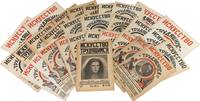
rif. 81750Moscow. Gos. Izd-vo. Thirty weekly numbers issued from 1924-1926. Issues from 1924-25 tall quarto 30.5cm x 23cm; issues for 1926 in slightly smaller format 26cm x 18cm; all in stapled pictorial wrappers with inset portraits of prominent actors musicians and artists within a graphical border printed in red and black; most issues 32pp. Illustrated from photographs. A few with mild edge-staining to wrappers; text lightly tanned or covers tenuously attached on some issues; the majority Very Good overall complete and Good or better. Text in Russian cyrillic. Includes: 1924: No. 2 Dec. 9-16; no.3 Dec. 16-21 1925: No. 6 Jan 6-11; no. 7; 91822-2732-4144-485556 Dec 22 1926: No.16 Apr 20 17-18 double issue-and final issue-Apr 27 Together thirty of the seventy-five numbers issued between December 1924 and April 1926 when publication ceased. Iskusstvo Trudiaschimsia was a weekly review of revolutionary art and performance produced under the auspices of the Science and Art Section of the State Academic Council under the directorship of the important revolutionary apparatchik theorist and avant-garde playwright Anatoly Lunacharsky whose important theoretical essay "Is it Not Time to Organize the Glaviskusstvo" appears in the magazine's third issue. Perhaps not surprisingly given the Lunacharsky connection content is heavily focused on the performing arts including theater music and cinema: Lunacharsky believed that of all forms of artistic expression theater had the greatest potential for the education and radicalization of the proletariat. The plastic arts are considered as well but far less frequently. A good idea of the overall focus of Iskusstvo trudiaschimsia can be gotten by scanning the contents of the third issue: in addition to the aforementioned Lunacharsky essay on the establishment of a state arts directorate Glaviskusstvo would eventually be established in 1928 there appears a theoretical essay "Against Aestheticism" by Anatoly Glebov; a discussion by director Ivan Platon of the staging of Turgenev's "Fortune's Fool" at the Maly Theater; a review of V. Nikiforov's play "Airplane" at the State Children's Theatre; an illustrated article on traditional music of the Crimea by the noted musicologist Arkady Konchevsky; and numerous short articles and reviews some signed with initials or pseudonyms others by such figures as A.M. Granovsky Aleksei Rodionov Viktor Krasyn David Shterenberg and others. There are in addition extensive listings for theatrical and orchestral performances film screenings and art exhibitions in Moscow and environs. A significant if short-lived arts journal from the Proletkult period offering valuable insight to the development of revolutionary theatre in the years immediately following the Revolution. Somewhat uncommon in the West with scattered issues appearing on the market infrequently; cohesive runs are rarely offered outside of Russia. OCLC notes only four American institutions with physical holdings all incomplete. unknown books
rif. 81750Moscow. Gos. Izd-vo. Thirty weekly numbers issued from 1924-1926. Issues from 1924-25 tall quarto 30.5cm x 23cm; issues for 1926 in slightly smaller format 26cm x 18cm; all in stapled pictorial wrappers with inset portraits of prominent actors musicians and artists within a graphical border printed in red and black; most issues 32pp. Illustrated from photographs. A few with mild edge-staining to wrappers; text lightly tanned or covers tenuously attached on some issues; the majority Very Good overall complete and Good or better. Text in Russian cyrillic. Includes: 1924: No. 2 Dec. 9-16; no.3 Dec. 16-21 1925: No. 6 Jan 6-11; no. 7; 91822-2732-4144-485556 Dec 22 1926: No.16 Apr 20 17-18 double issue-and final issue-Apr 27 Together thirty of the seventy-five numbers issued between December 1924 and April 1926 when publication ceased. Iskusstvo Trudiaschimsia was a weekly review of revolutionary art and performance produced under the auspices of the Science and Art Section of the State Academic Council under the directorship of the important revolutionary apparatchik theorist and avant-garde playwright Anatoly Lunacharsky whose important theoretical essay "Is it Not Time to Organize the Glaviskusstvo" appears in the magazine's third issue. Perhaps not surprisingly given the Lunacharsky connection content is heavily focused on the performing arts including theater music and cinema: Lunacharsky believed that of all forms of artistic expression theater had the greatest potential for the education and radicalization of the proletariat. The plastic arts are considered as well but far less frequently. A good idea of the overall focus of Iskusstvo trudiaschimsia can be gotten by scanning the contents of the third issue: in addition to the aforementioned Lunacharsky essay on the establishment of a state arts directorate Glaviskusstvo would eventually be established in 1928 there appears a theoretical essay "Against Aestheticism" by Anatoly Glebov; a discussion by director Ivan Platon of the staging of Turgenev's "Fortune's Fool" at the Maly Theater; a review of V. Nikiforov's play "Airplane" at the State Children's Theatre; an illustrated article on traditional music of the Crimea by the noted musicologist Arkady Konchevsky; and numerous short articles and reviews some signed with initials or pseudonyms others by such figures as A.M. Granovsky Aleksei Rodionov Viktor Krasyn David Shterenberg and others. There are in addition extensive listings for theatrical and orchestral performances film screenings and art exhibitions in Moscow and environs. A significant if short-lived arts journal from the Proletkult period offering valuable insight to the development of revolutionary theatre in the years immediately following the Revolution. Somewhat uncommon in the West with scattered issues appearing on the market infrequently; cohesive runs are rarely offered outside of Russia. OCLC notes only four American institutions with physical holdings all incomplete. unknown
1917rif. 18911917 Editions Mercure de France, Paris, 1917. In-8, demi-maroquin à coins, couverture conservée. xiv feuilles imprimées d'un seul côté: 4 gravures sur bois de Rouveyre, suivies de 6 poèmes de Guillaume Apollinaire, et 4 lithographies de Rouveyre.
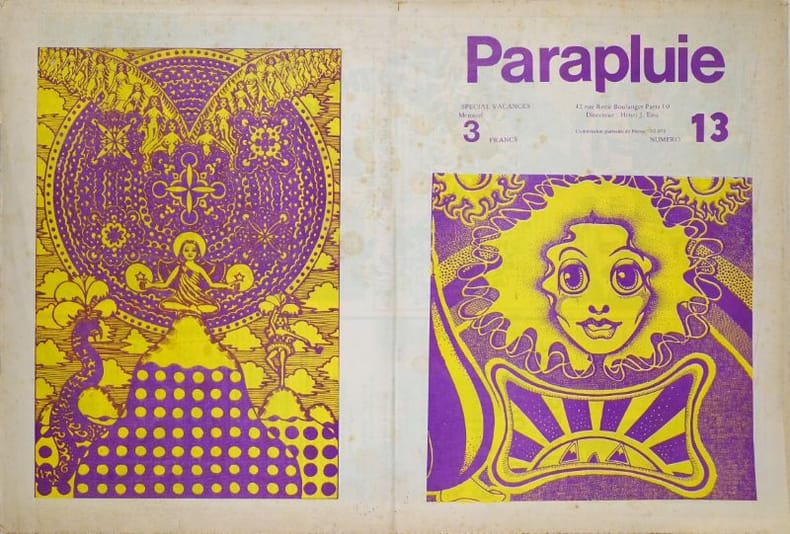
rif. 102099Nice, octobre 1971-septembre 1972, 9 numéros en 8 volumes 400x287mm, de 20 à 28 pages, chaque numéro incluant un «poster détachable central» en double format.Rédaction: François Pluchard, Dominique Pilliard, Georges Berthier, Jean Moulier, Michel Burckel.Collaboration de Guido le Noci, Michel Journiac, Ben, Henry Chapier, Alain Kirili, Vito Acconci, Gina Pane.Revue éditée par les fondateurs de l’Ecole de Nice et consacrée aux arts d’attitude: Art Sociologique, Art Corporel, Fluxus, Happening, Poésie Visuelle.Bon état, plis central un peu jauni. Marcel Alocco: L’Ecole de Nice, Nice, Demaistre 1995 p.17-18. Destribats 771.(102099)
1918rif. 1910Lausanne, Imprimeries Réunies, 1918. Un volume in-8 (24 x 16 cm), 78 pages, broché sous couverture bleutée imprimée sur le premier plat. ÉDITION ORIGINALE. 51 poèmes illustrés de 18 dessins-calligrammes mécaniques en hors-texte reproduits en noir. Tirage unique sur vélin bouffant ivoire non numéroté. Le recueil est "terminé à Gstaad, le 5 avril 1918". Note historique : Francis Picabia (1879-1953) rencontre en 1917 à Paris Germaine Everling qui allait devenir pendant plus de quinze ans sa compagne dévouée. Au cours d'un bref voyage qu'ils effectuent ensemble aux Martigues, il écrit les premiers poèmes de ce qui allait devenir "La fille née sans mère", titre d'un dessin exécuté à New York en 1913. Puis au mois de février 1918, il part pour Lausanne avec sa femme (Gabrielle Buffet) pour y consulter un neurologue de renom; il y est bientôt rejoint par sa maîtresse. Il publie alors l'ouvrage grâce auquel il rencontre Tristan Tzara et le groupe Dada de Zurich. "La fille née sans mère" est, au même titre que "La Mariée" de Marcel Duchamp une machine célibataire ; l'œuvre est parallèle au "grand verre" de Duchamp, "La Mariée", est accompagnée par ses notes, "à la manière" [dit Duchamp], "d'un catalogue de grand magasin où l'image et le texte ne font qu'un tout". Rappelons que l'activité proprement littéraire de Picabia à l'époque de 391, est toute entière placée sous le signe de la mécanique; obsédé par la machine, fille née sans mère du cerveau de l'homme, Picabia n'aura de cesse de lui faire produire, en 1918, l'œuvre ambivalente parfaite comprenant dix-huit dessins et cinquante et un poèmes "équivalents". Les dessins, présentant des mécanismes étranges aux titres troublants de "Machine de bons mots", "Machine à idées actuelles dans l'amour", etc., ne sont pas sans évoquer l'intrigante "Mariée mise à nu" de Marcel Duchamp. (Sanouillet 391 p. 32; Picabia Mnam p. 449 reproduit).
1934rif. 003348Paris, Gallimard, 1934, in-12, 316 pp. [4], Couverture imprimée en rouge et noir ; signature de la main de l'auteure sur le faux-titre et envoi autographe signé du traducteur à M. Martin-Chauffier. Edition originale de la traduction française, en service de presse
1968rif. 104503Tokyo 1968 1 Tokyo, Provoke-sha (à compte d'auteurs), février 1968, 180 x 243mm, 109 pp, broché, couverture grise avec titre (dos frotté, défauts mineurs).
1970rif. 1055071970 Milan, Gabriele Mazzotta Editore, 1970, disque vinyle 30 cm, 33trs, sous pochette incluant un livret de 12 pages dont 11photographies pleine page.
1789rif. 11350S.l., s.n., 1789 ; in-8 ; demi-chagrin rouge à petits coins, dos à nerfs, titre doré (reliure moderne) ; 206 pp. y compris le faux-titre et le titre (INED, 578 ; Barbier, I-531).
1958rif. 19131958 Editions "L'Esperienza Moderna", Rome, 1958. In-4, broché, couverture illustrée en couleurs (lithographie). 33 lithographies
rif. 105526Paris, Alphonse Bellier,1926, 24x16cm, 28 pages plus couverture et un feuillet volant, agrafé.14 reproductions d'œuvres de Francis Picabia ; préface de Rrose Sélavy, imprimée sur une feuille volante. Conception graphique de Marcel Duchamp.
1921rif. 81926St. Petersburg: Gosudarstvennoe izdatelʹstvo 1921. First Edition. First printing. Quarto 30cm. Printed tan card wrappers; 25pp text 16 inserted leaves of photographic plates halftones including portrait frontispiece. Some very mild toning to wrapper margins; text fore-corners gently pushed; still a remarkably fresh unworn copy in the original wrappers easily Near Fine and most unusual thus. The first critical study of painter architect and stage designer Vladimir Tatlin a key figure in the Russian post-revolutionary avant-garde and the first artist to explore visual ideas that would later become identified with the Constructivist movement though Tatlin would come to reject that label in reference to his own work. The book itself written by the influential art critic and theorist Nikolay Punin companion of poet Anna Akhmatova is considered a milestone of Soviet book design featuring sixteen very fine photographic plates including the iconic portrait of Tatlin now held at the Mayakovsky Museum in Moscow. Scarce in commerce and very rarely seen in such fine condition. MOMA The Soviet Avant-Garde Book 318 not pictured. Gosudarstvennoe izdatelʹstvo unknown books
1921rif. 81926St. Petersburg: Gosudarstvennoe izdatelʹstvo 1921. First Edition. First printing. Quarto 30cm. Printed tan card wrappers; 25pp text 16 inserted leaves of photographic plates halftones including portrait frontispiece. Some very mild toning to wrapper margins; text fore-corners gently pushed; still a remarkably fresh unworn copy in the original wrappers easily Near Fine and most unusual thus. The first critical study of painter architect and stage designer Vladimir Tatlin a key figure in the Russian post-revolutionary avant-garde and the first artist to explore visual ideas that would later become identified with the Constructivist movement though Tatlin would come to reject that label in reference to his own work. The book itself written by the influential art critic and theorist Nikolay Punin companion of poet Anna Akhmatova is considered a milestone of Soviet book design featuring sixteen very fine photographic plates including the iconic portrait of Tatlin now held at the Mayakovsky Museum in Moscow. Scarce in commerce and very rarely seen in such fine condition. MOMA The Soviet Avant-Garde Book 318 not pictured. Gosudarstvennoe izdatelʹstvo unknown
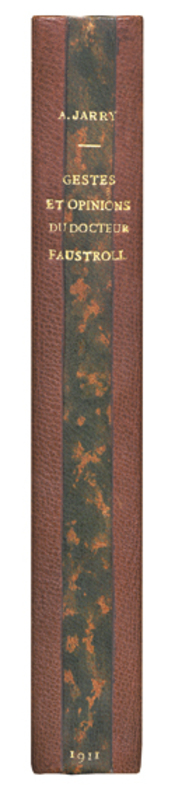
1911rif. 1824Paris, Bibliothèque Charpentier, Eugène Fasquelle, 1911 ; in-12 ; demi chagrin noisette à coins, à la bradel, bande verticale de chagrin marbré mosaïqué au dos, titre doré, tête dorée, tranches non rognées, couverture et dos conservés (reliure de l'époque) ; (2) ff. (faux-titre et titre), 323 pp.
rif. 21056Paris, Jacques Damase, 1977. In-folio étroit, 50 pp., en feuilles, couverture originale illustrée (petits frottements et déchirures, quelques rares rousseurs et taches, décharges).
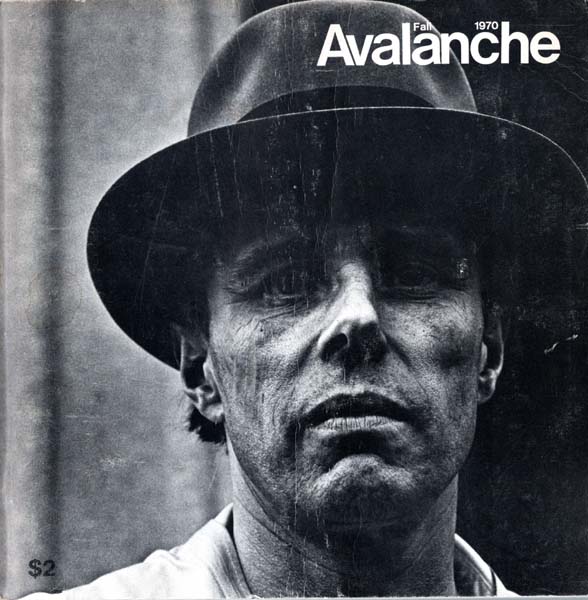
1970rif. 64488ABNew York., Kineticism Press., 1970-1976. 24 x 24 cm / 43,5 x 29,5 cm. OBroschur und OKarton., 64488A_1 13 Hefte / 13 Volumes. First printing. Insgesamt sehr gutes, frisches Exemplar.
1970rif. 1032731970-73 Paris novembre 1970-printemps 1973, collection complète.Fascicules 425x290mm environ, 24p., en feuilles, impression en partie en couleurs, couvertures illustrées. Quelques défauts et jaunissements.
rif. 105705Bulletin Periodique 1 à 7Paris, Almonde press-Bazooka Production, 1976-1978, collection complète en 6 volumes
1937rif. 904421937. Avant Garde Kindai Bijutsu ShichÅ KÅza L'Idee et L'Esprit de L'Art Moderne 近代美術æ€æ½®è¬›åº§Â Atelier-sha. Tokyo. Shôwa 12 13 1937 1938. Six volumes in printed publisher's slipcases. 22.5 x 16.3 cm. Cloth bound western-style. A fascinating series of volumes. The critics Sagara Tokuzô and Araki Sueo wrote REALISME and FAUVISME respectively. The artists Ihara Usaburo Fukuzawa Ichiro Kanbara Tai & Hasegawa Saburô wrote CUBISME; SURREALISME; FUTURISME EXPRESSIONISME DADAISME; and ABSTRACT ART. The product of a time when Japan justly felt itself to be firmly in the vanguard of world art. The spines are a bit darkened one has a small gouge and the slipcases a bit soiled but overall a very good copy of this very unusual and important set. Some folded promotional sheets laid in. Not merely painting and printmaking but also the plastic arts and a bit of architecture etc. are addressed in these wide-ranging and well-illustrated volumes. Complete as issued. unknown books
1937rif. 904421937. Avant Garde Kindai Bijutsu ShichÅ KÅza L'Idee et L'Esprit de L'Art Moderne 近代美術æ€æ½®è¬›åº§Â Atelier-sha. Tokyo. Shôwa 12 13 1937 1938. Six volumes in printed publisher's slipcases. 22.5 x 16.3 cm. Cloth bound western-style. A fascinating series of volumes. The critics Sagara Tokuzô and Araki Sueo wrote REALISME and FAUVISME respectively. The artists Ihara Usaburo Fukuzawa Ichiro Kanbara Tai & Hasegawa Saburô wrote CUBISME; SURREALISME; FUTURISME EXPRESSIONISME DADAISME; and ABSTRACT ART. The product of a time when Japan justly felt itself to be firmly in the vanguard of world art. The spines are a bit darkened one has a small gouge and the slipcases a bit soiled but overall a very good copy of this very unusual and important set. Some folded promotional sheets laid in. Not merely painting and printmaking but also the plastic arts and a bit of architecture etc. are addressed in these wide-ranging and well-illustrated volumes. Complete as issued. unknown
1931rif. 2222Prague 1931-1949. Czech Avant-Garde Photography Editor: Augustin Skarda et al. . CESKOSLOVENSKA FOTOGRAFIE. Complete in 12 volumes. Prague 1931-1949 first editions of the complete set in 12 volumes; 10.75 x 8.5 inches over 800 full page photo-engraved plates; short texts all volumes in Czech some with English German and French. Early years with covers of avant-garde typographic designs by Karel Teige .Photographers include: Josef Sudek Jaroslav Krupka Jindrich Styrsky Frantisek Drtikol Alois Zych Karel Plicka Jaroslav Seifert R. Sima K. Muller J. Tutsch and many others. All 12 volumes are uniformly bound in the original publisher's boards; the 1949 volume with the original dust jacket. Overall this set is in excellent condition. Publisher: Svaz Ceskoslovenskych Klubu Svaz Ceskoslovenskych Klubu hardcover books
1931rif. 2222Prague 1931-1949. Czech Avant-Garde Photography Editor: Augustin Skarda et al. . CESKOSLOVENSKA FOTOGRAFIE. Complete in 12 volumes. Prague 1931-1949 first editions of the complete set in 12 volumes; 10.75 x 8.5 inches over 800 full page photo-engraved plates; short texts all volumes in Czech some with English German and French. Early years with covers of avant-garde typographic designs by Karel Teige .Photographers include: Josef Sudek Jaroslav Krupka Jindrich Styrsky Frantisek Drtikol Alois Zych Karel Plicka Jaroslav Seifert R. Sima K. Muller J. Tutsch and many others. All 12 volumes are uniformly bound in the original publisher's boards; the 1949 volume with the original dust jacket. Overall this set is in excellent condition. Publisher: Svaz Ceskoslovenskych Klubu Svaz Ceskoslovenskych Klubu hardcover
1928- Le Grand Jeu, Paris Eté 1928 - Automne 1930, 19x24cm, 3 volumes brochés. - First edition for each issue of this Surrealist review, which only ran for three issues Contributions from René Daumal, Robert Desnos, Roger Gilbert-Lecomte, André Rolland de Réneville, Maurice Henry, Georges Ribemont-Dessaignes, Saint-Pol-Roux, Roger Vailland, André Masson, Mayo, Hans Arp, Arthur Rimbaud with unpublished pieces, and so on Covers and spine marginally sunned, one joint cracked at foot, traces of adhesive paper to first and final pages of volumes 1 and 2, small drawing of a fetish in biro to foot of lower cover of second volume, but otherwise a good set considering the fragility of copies of this work A rare complete set of all three numbers of this famous and very rare Surrealist review. [FRENCH VERSION FOLLOWS] Edition originale pour chacun des volumes de cette revue surréaliste qui ne connût que 3 numéros. Contributions de René Daumal, Robert Desnos, Roger Gilbert-Lecomte, André Rolland de Réneville, Maurice Henry, Georges Ribemont-Dessaignes, Saint-Pol-Roux, Roger Vailland, André Masson, Mayo, Hans Arp, Arthur Rimbaud avec des inédits... Dos et plats marginalement insolés, un mors fendu en pied, traces de papier adhésif sur les premières et dernières pages des volumes 1 et 2, un petit gri-gri au stylo bille en pied du deuxième plat du second volume, sinon agréable ensemble au regard de la fragilité des exemplaires. Rare ensemble complet en trois numéros de cette célèbre et très rare revue surréaliste.