8 305 résultats
1920réf. 164638Unknown: Mysterious Smith Company 1920. First Edition. First Edition. A short book about magic astrology dream interpretation and the art of illusion. Written by Albert P. Smith a French-American magician who performed under the stage name Mysterious Smith. Very Good plus in side-stapled wrappers. Mysterious Smith Company unknown books
réf. 159183N.p.: N.p. 1970. Substantial archive of material belonging to Austrian-American stage hypnotist and magician John Kolisch including two three-ring card binders with typescript and manuscript notes for Kolisch's live shows and 271 vintage photographs of Kolisch in performance. Archive appears to date from the 1950s through the 1970s the heyday of Kolisch's career. One binder holds notes and scripts for Kolisch's magic tricks powers of suggestion and general show patter and jokes while the other binder focuses primarily on feats of hypnosis. The binders hold a variety of material relating to Kolisch's performances a mix of more formal typed scripts for routines alongside manuscript draft notes and annotations noting potential "ad-libbed" interjections. Several pages capture Kolisch recording his ideas for changes to the pacing and setup of his shows as well as reminders about modernizing his patter and updating his celebrity references. Although the bulk of Kolisch's material is undated earlier acts appear to reference specific actors films or shows such as opera singers or the television show "Cavalcade of Stars" while later routines simply note the names of prominent contemporary actors and celebrities to insert at random. Kolisch who billed himself as "The Fastest Hypnotist in the World" apparently used a blend of serious hypnotism stage magic and standup comedy in his shows and accordingly an entire binder section labeled "Funny Lines" is devoted to ripostes and one-liners. These zingers cover every performance eventuality from hecklers "Have you ever been to the zoo I mean as a visitor" to a silent audience "Well they say a silent tribute is the sincerest of them all!". The archive's considerable collection of photographs captures the spirit and energy of Kolisch's live shows with audience members engaged in a number of humorous activities-stripping saluting yelling and singing dancing acting as human furniture kissing and hugging each other playing musical instruments such as maracas and the ukulele-or simply sleeping. Several photographs bear Kolisch's name and company address in Jackson Heights New York in the recto margins an address that also appears in Kolisch's company letterhead on many of his show notes. Included in the archive are 17 contact sheets capturing images from performances and portrait photographs of Kolisch. Also included are two gatherings of typescript and copied material related to Kolisch's lectures on "dynamic auto-conditioning" and "dynamic auto-suggestion" with many pages annotated by Kolisch in manuscript ink or pencil. Archive also features a 17-page bound treatise titled "Your Incredible Subconscious Mind" published in 1956 by the "Subconscious Research Institute" an organization possibly created by Kolisch himself. Photographs range in size with the majority measuring 10 x 8 inches. Near Fine to Very Good plus with occasional edgewear and creasing. Binders contact sheets lecture material and treatise Near Fine to Very Good plus with some light edgewear creasing and soil on binder exteriors. N.p. unknown books
1900réf. 145631900. Collection of two photographic lantern slides of Iran circa 1900 documenting village commerce vernacular architecture and camel transportation at the turn of the twentieth century. The images record daily activity within mud-brick settlements including villagers gathered in a public square and camels resting inside a walled enclosure. Particularly notable is the presence of a traditional wind tower or badgir an architectural feature associated with Yazd and other arid regions of central and southern Iran. The photographs preserve details of settlement design commercial activity and animal transportation during the late Qajar period when camel caravans continued to carry goods and travelers between Iranian towns and regional markets. Two photographic glass lantern slides circa 1900 each measuring approximately 3 1/4 x 4 inches. The first depicts an open square surrounded by mud-brick buildings with men women and children gathered in small groups near large sacks or bundles possibly containing merchandise or provisions. A prominent badgir rises above the surrounding structures identifying a traditional method of passive ventilation employed in Iran's hot dry climate. The second slide shows several saddled camels resting within a walled village courtyard or caravan enclosure. One camel lies prominently in the foreground while additional animals and villagers occupy the space beside the surrounding mud-brick buildings. The saddles and enclosed setting suggest a stopping place associated with caravan travel although the precise location is unidentified. The photographs date to a period when established caravan routes connected Iranian settlements and commercial centers with camels providing transportation across regions where wheeled vehicles faced difficult terrain and limited road infrastructure. The wind tower and mud-brick buildings also record architectural adaptations to local climatic conditions while the populated square preserves details of everyday activity in a provincial settlement. Both slides in very good condition. Two early photographic views preserving distinct aspects of Iranian village life regional transportation and traditional architecture during the Qajar era. unknown books
1847réf. 147941847. MAGIE DAVID. Our True Encouragement. A Sermon Preached at Buffalo New York September 8 1847 before the American Board of Commissioners for Foreign Missions. Boston: Press of T. R. Marvin 1847. 28 p. Removed from a bound volume. Magie was an Elizabethtown minister. unknown books
1837réf. 45381837. MAGIE DAVID. The Ministry Magnified. A Sermon Preached at the Installation of Rev. C. Hoover as Pastor of the Central Presbyterian Church Newark N.J. Newark 1837. 24 p. Disbound. unknown books
1846réf. 29381846. MAGIE DAVID. Manliness in Youth; a Discourse Delivered in the North Dutch Church New-York . New York 1846. 31 p. Wrappers. Magie was an Elizabethtown minister. unknown books
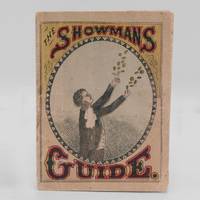
1875réf. 373439New York: Hurst & Co 1875. 30 2pp. With the terminal ad leaf. 8vo. Publisher's hand-colored pictorial wrappers. Foxing. 30 2pp. With the terminal ad leaf. 8vo. This early guide to magic tricks is ascribed to Professor Lorento and Francois R. Blitz. Only two examples recorded in OCLC. Hurst & Co unknown books
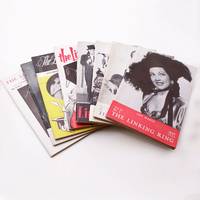
1962réf. 374500Kenton Ohio: The International Brotherhood of Magicians 1962. Illustrated throughout with black and white photos and pen and ink sketches. 60 vols. 8vo. Illustrated wrappers. Generally very good to fine. Illustrated throughout with black and white photos and pen and ink sketches. 60 vols. 8vo. 60 monthly volumes of The Linking Ring. Including: January February 1948 2 issues; September-December and March May June 1950 7 issues; the complete year for 1951 12 issues; the complete year for 1952 12 issues; January February 1953 2 issues; March-October and December 1954 9 issues; the complete year for 1955 12 issues; April 1959 1 issue; January May August 1962 3 issues. The International Brotherhood of Magicians I.B.M. monthly journal The Linking Ring has been in publication since 1922 and is available exclusively to members of the I.B.M. Our mid-20th century collection includes profiles of the most famed magicians of the day articles from the world of magic revealed magic tricks and pages of vintage advertisements. "It has documented the most significant events in our art over the past nine decades traced the rise to fame of the "greats" in magic and enabled magicians all over the world to exchange ideas." International Brotherhood of Magicians. The International Brotherhood of Magicians unknown books
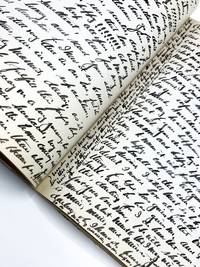
1917réf. 45784Ithaca NY: n.p. 1917. Very good plus. Original manuscript journal containing the wildly ardent lovelorn musings of "Magie" to "Margie" written while waiting for the finalization of Margie's divorce. To call "Magie's" love for "Margie" superlative would be an understatement: his writing in this journal is comprised of verbose expressions of fondness and adoration for her "the only blessed wonderful loyal fine sweet true adorable lovable precious beautiful altogether lovely incomparable perfect little woman in God's great universe whom I ever have ever can really love!!!!!!!!!" Magie's enthusiasm even bleeds into the margins of some leaves where he has written additional missives around the main text. Who is the lovesick "Magie" the author of this manuscript journal that positively oozes with pent-up emotion and who is the "Margie" for whom he so desperately pines Magie's remark that "our marriage . will be so far different from the marriages we knew that they will seem like a bad dream" as well as several references to the day when Margie will be "legally free" to "give and receive" love indicate that both parties had been married previously and that Margie was likely still in the divorce process or the remarriage waiting period when this journal was written. The US divorce rate in 1917 was just 1.2%; this borderline-taboo action often had dire social consequences for the parties involved particularly the women and a state- or self-imposed period of waiting before remarriage was not unusual. Magie apparently spent this separation in varying degrees of agony emptying his evidently very full heart into this journal almost every day from May 28th to July 22nd. The lovebirds remain somewhat elusive in official records despite several tantalizing pieces of information nestled within Magie's lovelorn ramblings: references to "this fearful year" which in addition to a mention of a state military census pins the date of this journal pretty convulsively to 1917 which was "three quarters of the way through" by July 19th his occupation as a lawyer and the address 302 N. Cayuga Street a location Magie calls "our office". That address is sometimes listed as the location of a local Ithaca restaurant The City Cafeteria but more frequently as the longtime residence of prominent citizen and noted Wordsworth collector - her collection was donated to Cornell Cynthia Woodward Morgan St. John. Her son Edward Morgan St. John Cornell 1911 Cornell Law 1913 did work as an attorney and in the records of his 1919 marriage to Ruth Cronk he lists at least one and possibly two previous marriages though we find only a 1910 marriage to Lena Marie Smith. Cronk however does not. Which suggests perhaps sadly that "Margie" if she existed at all did not get her happily ever after. Nevertheless a compelling document overall and a vivid vernacular portrait of limerence. 10.25'' x 7.5''. Original cloth-backed marbled boards with printed label to front board hand-lettered "I". 94 manuscript leaves written both recto and verso. Boards with light edgewear. Hinges a touch cracked. Tight and clean. n.p. unknown books
1893réf. 326724London: E.A. Beckett 111 & 113 Kingsland Road 1893. First Edition. Two folding plates of the Docwra Triple machine and numerous text illustrations. iv 195pp. 8vo. Original publisher's green cloth. First Edition. Two folding plates of the Docwra Triple machine and numerous text illustrations. iv 195pp. 8vo. E.A. Beckett, 111 & 113 Kingsland Road unknown books
1801réf. 306156London: Printed for G. Kearsley Fleet Street; Bell and Bradfute Edinburgh; and Brash and Reid Glasgow by W. Glendinning 1801. First English edition. xix i errata 397 3 publisher's ads pp. 8vo. Contemporary half leather over gray paper-covered boards. Covers worn joints cracked but sewing sound lacking spine label text block roughly trimmed occasional light soiling along lower blank margins. Remnant of contemporary bookplate. In a custom redpaper slipcase and matching chemise. First English edition. xix i errata 397 3 publisher's ads pp. 8vo. The first English edition of this quite unusual and very entertaining compendium of conundrums problems parlor tricks and "interesting facts" - it is actually much more fun than the title would seem to suggest. The first French edition was published in London in 1799 under the title Choix d' amusements physiques et mathématiques. The work includes tricks with cards magic squares magic lanterns feats of artificial memory and proto-spiritualist conjuring through "palingenesy" by which a performer can make the images of the dead appear in a glass jar plus other optical illusions. A large collection of mathematical and physical curiosities including chapters on arithmetic "To arrange 30 criminals in such a manner as to save 15 of them &c." "A lady lamenting that her age was triple that of her daughter" and amusing "secrets" "To make people in a room have a hideous appearance". Toole Stott 240 Printed for G. Kearsley, Fleet Street; Bell and Bradfute, Edinburgh; and Brash and Reid, Glasgow, by W. Glendinning unknown books
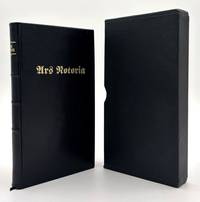
1997réf. 71259Seattle WA: Trident Books 1997. First Edition of this Limited Edition Reprint of the Turner Translation. Leather Bound. Near Fine. 115pp. Sextodecimo 19.5 cm Bound at the studios of Ars Obscura in full black leather with raised bands and decorative gilt stamped titles on the spine and front cover. Publisher's black spray to the top and fore-edge of the text block. Marbled-patterned endpapers. Black ribbon page-marker. With a few small subtle indentations to the leather. In a black cloth covered slipcase showing only the slightest wear and gentle bumping to the extremities. Number 138 in an edition limited to 500 numbered copies. Reprint of the London edition printed by J. Cottrel in 1657. A classic grimoire originally written in Latin which is thought to date back to the thirteenth century. It is a treatise on Solomonic Magic relating how King Solomon gained his notorious fame and earthly wisdom through sacred magic presented to him by the angel Pamphilius. The Ars Notoria differs from most angel grimoires as the majority of Solomonic grimoires revolve around the evocation of spirits or demons. Instead the Ars Notoria focuses on memory and the ability to understand and absorb whole subjects rapidly. It essentially promised to bestow rapid knowledge upon the recipient. A popular magician's manual considered to be an early European representation of angel magic. Trident Books unknown books
2006réf. REDMPOT00tpmGranite 2006. Very Good. Ed Magic. Potrero Select: Selected Climbs of El Portrero Chico. Madison Wisconsin: Granite 2006. 106pp. Indexed. Illustrated. 8vo. Paperback. Book condition: Very good with gently bumped edges. Faint soiling on the fore edge. Granite paperback books
2004réf. UMAGMAG00tmmAndrew McMeel 2004. Very Good. Magic Eye Inc. Magic Eye: 3D Hidden Treasures. Kansas City: Andrew McMeel 2004. 127pp. Illustrated. Oblong 4to. Hardcover. Book condition: Very good with gently bumped corners. Andrew McMeel hardcover books
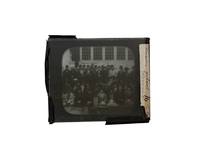
réf. 17100Vintage Optical Lantern images of school students in Iran circa late 19 cent glass size is about 4" x 3.25" . One image hand-labeled "Persian School" in ink and "Teheran" in pencil show around 40 students and their teachers in traditional Persian Qajar era outfit and hat. Many are seated on a carpet and some standing in behind them all are in front of their schoolhouse. In the front we see the typical water basin "hose" that would be found at the center of most courtyards of that period. The studentsrange in age from children to young men the older ones are probably the teachers. in very good condition. Original images of the Qajar period are scarce. unknown books
1992réf. 292907New York: Random House 1992. Hardcover. Fine/Near Fine. First edition. Illustrated. Fine in slightly wrinkled near fine dustwrapper. Signed by both Magic Johnson and William Novak. Random House hardcover books
réf. 6629Meadville PA: Keystone View Co. ca. 1905. Magic lantern slide 3.25" x 4" printed caption to right of image. Original printed description 3.25" x 3.125". CONDITION: Slide very good printed description fair lacking top margin affecting top of title letters still legible as "Pueblo of Taos Indians.". This slide number 211 in the iconic keystone "600 Set" two members of the Taos Pueblo pose by a stream one leaning against a rock wall. Scaffolding structures and several ovens appear behind them with the multi-storied adobe buildings rising in the background. The Keystone View Company was founded in 1892 by B.L. Singley and became a major stereoview distributor. In 1905 the firm established its educational department and added glass lantern slides to its repertoire producing educational sets in both media staffing photographers all around the world and ultimately buying the stock of every competing firm. The company still exists but the Meadville PA manufacturing site was closed in 1972 and its stock of negatives weighing over 30 tons was donated to UC Davis in 1978. Meadville, PA: Keystone View Co., ca. 1905 unknown books
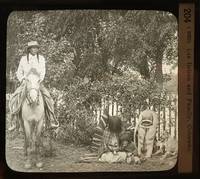
réf. 6630Meadville PA: Keystone View Co. ca. 1905. Magic lantern slide 3.25" x 4" printed caption to right of image. CONDITION: Very good. This slide number 204 in the iconic keystone "600 Set" shows a Ute family in Colorado father sitting on his horse with a rope hanging off the saddle mother and child on a blanket on the ground baby laced in a cradleboard propped against a fence and dog watching over all. The Keystone View Company was founded in 1892 by B.L. Singley and became a major stereoview distributor. In 1905 the firm established its educational department and added glass lantern slides to its repertoire producing educational sets in both media staffing photographers all around the world and ultimately buying the stock of every competing firm. The company still exists but the Meadville PA manufacturing site was closed in 1972 and its stock of negatives weighing over 30 tons was donated to UC Davis in 1978. Meadville, PA: Keystone View Co., ca. 1905 unknown books
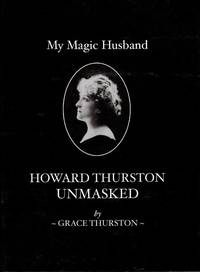
2006réf. 71668A Phil Temple Publication 2006. Second printing. Hardcover. Near Fine/Very Good. 190pp. Quarto 28.5 cm Blue gilt stamped cloth over boards. In the dust jacket with pronounced scuffing to the surface. With the additional historical recollections of Charles Holzmueller. From the dust jacket- "'My Magic Husband - Thurston the Great' was first published by Phil Temple in 1985. In its original manuscript form and published as a soft bound edition of 300 copies the limited edition "Sold Out' almost immediately. Now this retitled edition of the 'manuscript' is being offered to the magic fraternity in a newly edited photo enhanced typeset and hard bound edition. A Phil Temple Publication hardcover books
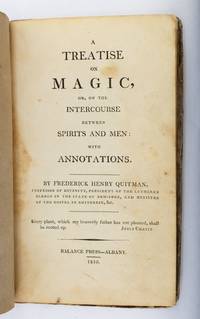
1810réf. ST17557Albany New York: Balance Press 1810. FIRST EDITION. 170 x 103 mm. 6 3/4 x 4". vi 76 pp. Errata slip tipped onto final page. Contemporary marbled boards backed with sheepskin smooth spine divided into panels by single gilt rules. Front free endpaper with bookplate of the Ricky Jay Collection. Front pastedown with neat early owner's signature pencilled initials "M. A." in a juvenile hand adjacent to a rudimentary pencil sketch of two people; rear pastedown with pencilled signature of Sally E. Original errata slip pasted onto bottom half of final page the slip defective at lower left corner. Sabin 67364; Shaw & Shoemaker 21169. Sheepskin a bit rubbed marbled paper boards somewhat chafed stained and quite worn at corners endpaper a bit spotted torn or at back missing other minor defects but the unsophisticated original insubstantial binding still solid. Title page and front flyleaves with light dampstain to gutter and tail margin a little foxing and faint browning other imperfections but the volume still generally clean and surprisingly fresh despite its cheap paper. Written by a Lutheran minister in upstate New York this entertaining treatise gives a brief history of the supernatural from ancient times to the present day and seeks to educate the audience about the dangers and follies of harboring magical beliefs noting that "witchcraft can never take root unless it be supported by credulity." According to the author's preface Frederick Henry Quitman 1760-1832 was motivated to write this work after a neighbor's home was besieged by supposed "supernatural" occurrences that included thrown stones and theft. Even though Quitman a staunch skeptic endeavored to attribute the activity to mischievous entities of the human variety the damage had been done: "Scarcely had the rumour about the forementioned witchcraft a little subsided when we heard the report of the appearance of apparitions in several quarters of the town. And it is really to be feared that during this dull winter all the corners of the town for want of other employment will be infested with demons." The Annotations at the end of the book contain many amusing definitions and descriptions of such things as talismans popular magic gothic novels and ventriloquists. Our copy was owned by the eminent magician actor writer scholar and sleight of hand artist Ricky Jay 1946-2018. In their catalogue Sotheby's notes that "Ricky Jay's accomplishments were as varied as are the formats and subjects of the material in his celebrated Collection . . . . He is one of the very select company of persons who assembled a collection of the very first rank in a field in which he was not only a world-renowned practitioner but also a scholar of considerable note." Our 1810 printing--the only early edition of this work--is rare on the market with RBH recording just four copies at auction in more than 60 years. Balance Press books
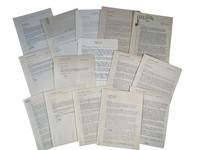
1959réf. 214711959. Gloye Eugene E. Archive of Autograph letters on Magic late 1950s to mid 1960s document the working methods technical experimentation and intellectual framework of a mid twentieth century American magician engaged in both performance and psychological analysis of illusion. Written primarily to fellow magician Don Tanner these letters provide direct evidence of how tricks were conceived refined and communicated within professional networks revealing the intersection of apparatus design sleight of hand and audience perception. Gloye's dual role as performer and psychologist situates the correspondence within broader developments in performance theory and applied psychology supporting research into the history of magic entertainment culture and the study of deception. Eugene Gloye authored 23 magic books including "For Magicians Only" "Fantastic Tricks with Plastic Cups" and "Theatrical Magic" Archive of sixteen letters spanning approximately the late 1950s through the mid 1960s containing detailed discussions of trick construction performance strategy and experimentation with materials and methods.Throughout the letters Gloye discusses numerous tricks he devised or refined often providing detailed explanations of their mechanics and performance nuances. His correspondence reveals a deep engagement with magical apparatus sleight of hand and psychological deception. One of the more detailed discussions in the letters revolves around Gloye's development of Fan-Ta-Cups which evolved from an earlier trick he had devised Fan-Ta-Bill. On September 5 1961 he describes how the trick was born: "I first got the idea for this cup trick about 14 years ago when I was experimenting with a bill trick which I eventually put on the market. The bill trick also uses a celluloid gimmick and was an adaptation of Liquid Appear. Since I thought of the cup trick at the time of my Fan-Ta-Bill I decided it was fitting to call it 'Fan-Ta-Cups.'" He further explains that while the idea had been percolating in his mind for years he hadn't developed a complete routine for it until recently. Inspired by the classic three-shell game he worked out a performance structure that he believed would make it more engaging. In a letter from July 11 1961 Gloye excitedly shares his thoughts on using hollow plastic golf balls for new magic tricks: "I am convinced that this new golf ball will open up many new trick possibilities. The fact that they come in several colors is also interesting." This suggests that Gloye was experimenting with different materials for manipulation tricks possibly related to vanishing or color-changing effects. Gloye also played with magical history concocting a hoax to see how the magic community would react. In the September 5 1961 letter he reveals his plan: "Last December I got an idea for a variation on the Tip-Over Box. It's just a slightly different way of building it. At first I was going to put it in my 'New Look' series but then as we were talking about it I commented that this trick should have been in Hoffmann. This led to the devilish idea of writing it up in Hoffmann style and publishing it in Genii as a lost page from the original book." He notes that Bill Larsen and another friend were in on the plan and they wanted to see if the trick would be accepted as a legitimate discovery. Another standout trick mentioned in the letters is Gloye's adaptation of Billy McComb's routine using a flap slate and a force deck. On January 31 1961 he explains: "My version which I tried for the first time several days ago with huge success uses one deck and a flap slate. The deck is made like a peek deck but with two cards only. All faces are the same and all concealed cards are the same. Cards which audience sees are trimmed and glued at one end to a second group of 26 duplicates." This approach ensured that the spectator would believe they had freely chosen a card when in fact the outcome was predetermined. Gloye describes modifications he made to a Head Chopper Illusion a prop widely used in stage magic in a February 23 1961 letter: "My version does not retain the Chinese theme. My blade is a simple black affair with a couple of brass stripes across it to make it look more solid. I spent a long time trying to figure out a good lock for the blades Abbott's want you to remove a couple of tacks which hold the blade and this is simply not workable. I ultimately did come up with a practical idea only to abandon it in my current routine." He explains that his routine involved swapping out the real blade for a fake setting up a comedic climax where "carrots fly in all directions" as the blade seemingly falls. This archive is a rare window into the intellectual and technical world of a magician who bridged academia and performance. Gloye's detailed notes on illusion mechanics reflections on the state of magic and collaboration with figures like Bill Larsen and Frances Marshall make this a significant collection for magic historians and collectors alike. Produced during a period of active exchange among professional magicians through correspondence and publications such as The Linking Ring these letters document how knowledge circulated within specialized communities and how innovation often emerged through incremental modification of established techniques. Gloye's attention to apparatus construction coded deception and audience management reflects broader mid century interest in performance psychology while his references to collaborators and publication strategies illustrate the role of print culture and informal networks in shaping the field. As a cohesive manuscript archive the letters preserve the technical language and creative process underlying stage magic offering a detailed record of mid twentieth century illusion practice. Light wear and handling consistent with age with legible manuscript throughout; overall condition very good. unknown books
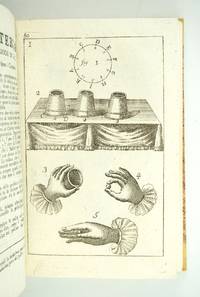
1795réf. ST20614Venice: Giuseppe Orlandelli 1795. Fourth Edition. 180 x 114 mm. 7 x 4 5/8". 154 pp 1 leaf. Pedestrian 19th century half vellum over pink marbled paper boards smooth spine with old ink lettering. WITH 16 ENGRAVED PLATES SHOWING MAGIC TRICKS and numerous diagrams in the text. Tomash & Williams A56; Riccardi I 15. Marbled paper a little chafed title washed first and last leaf a bit soiled and with repairs at inner and outer margins but no text affected half a dozen other leaves with minor repairs or mounted isolated small smudges or corner creases but still an acceptable copy of a book expected to be found in poor shape--the text clean the impression of the engravings crisp and the binding solid. This is a pleasing copy of a rather scarce collection of mathematical puzzles magic tricks and illusions abounding with illustrations and diagrams. Our author Bolognese architect and engineer Giuseppe Antonio Alberti 1712-68 had a varied career which is reflected in his literary output: his publications discuss civil engineering pyrotechnics mathematics and factories among other topics. Described by Tomash and Williams as "the type of book that mischievous uncles like to own" the present work begins with a study of amusing and unusual arithmetic equations and puzzles before discussing magic tricks and illusions including card tricks dice games and even complex stage illusions involving specialized equipment. These are illustrated with a series of delightful copper engravings with labelled mechanisms sometimes operated by lively little figures or disembodied hands with ruffled sleeves. "Giuochi" was first published in Bologna in 1747 and remained in print for a further 20 years after the present edition. Because this is the kind of book that would have been subjected to uncareful use early editions are difficult to find in the attractive condition seen here. Giuseppe Orlandelli unknown books
1992réf. 235737New York: Random House 1992. Hardcover. Fine/Fine. First edition. Fine in fine dust jacket. Random House hardcover books
1980réf. 141562New York: Ian Sutz 1980. Softcover. Very Good. First edition. Very good in wrappers a paperback. 32 pages. Staple binding. Sticker shadow on top corner on front cover. Introduction by Walter B. Gibson. Ian Sutz unknown books
1992réf. 135299New York: Random House 1992. Hardcover. Very Good/Very Good. Book club. Illustrated by Johnson Earvin 'Magic' and William Novak. Very good or better in a Very good plus dust jacket. Dustwrapper corners rubbed and faded. Random House hardcover books