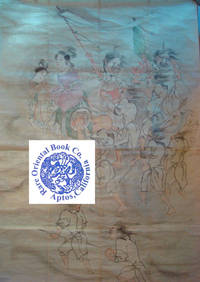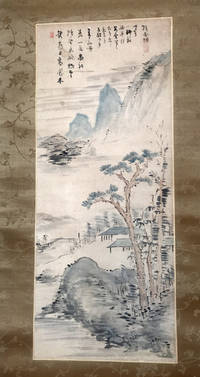
rif. 90223Rai KyÅhei 頼京平 aka ShunsÅ or Manshiro artist. Kakemono 掛ã‘物 - Hanging Scroll Landscape. N.p. n.d. Landscape painting of a mountain scene with pine trees. Hanging scroll kakemono 掛ã‘物 beautifully mounted on brocade with black wooden jiku handles. Image size 44.7x18.4cm with 49.5cm silk fabric at top 26.5cm at bottom and borders of approx 5-5.5cm on either side. Rai KyÅhei 頼京平 c.1756-1834 was an influential Confucian scholar and the uncle of the famous kanshi poet Rai SanyÅ. Sanyo was known for TÅjun KagetsuchÅ å旬花月帖 Journal of Flowers in 100 Days/ A Few Brief Moments Describing Moon and Flowers a collaborative work of poetry with floral and landscape paintings created after a three month walking tour through central Japan with his nephew and mother in the 1820s. The three poets and their entourage were influenced by the lyrical scenes of nature observed in Kyoto and Nara during their travels. This scroll is likely inspired by that period of travel and reflection in nature. Slight foxing on the image. Encased in a wooden scroll box 40.7 x 6.4cm with artist’s name brushed on label laid down on end of box. unknown
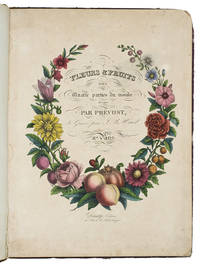
1837rif. ABC_47224Paris 1837. Folio ca. 35 x 26.5 cm. Dauty Contemporary half sheepskin maroon watered silk sides title in gold on the front board. With an engraved title-page and 11 of 23 engraved botanical prints: 4 showing 5 kinds of fruits each 3 showing 9 types of flowers each and 4 showing flower bouquets. All prints are stipple engravings and coloured by a contemporary hand some parts glazed with egg white. 12 ll. Extremely rare botanical print series showing both European and exotic fruits and flowers engraved by Jean-Baptiste Huet the younger 1772-1852 after designs of Benoît-Louis Prévost 1735-1804 or Jean-Louis Prévost 1760-1810. It also includes four plates showing bouquets from Europe America Asia and Africa. Only one complete copy is known at the Bibliothèque nationale de France we have traced no copy in sale or auction records and it is not mentioned in the usual botanical bibliographical works. The BnF copy is described in the Inventaire du fonds français après 1800 where the series consists of 23 prints issued all together under this title. The BnF and the IFF date the work ca. 1837-1839 but it is more likely that it is ca. 1837-1838 as Dauty died in 1838 and he printed at Rue de Bibliothèque no. 16 only in 1827 and 1835-1838. The BnF ascribes the designs for the prints to Benoît-Louis Prévost but Jean-Louis Prévost remains a possibility for he produced another famous print series of flowers and fruits in the same style of stipple engravings Collection des fleurs et fruits 1805.With a contemporary inscription "A M.elle Vincent" on the first free endleaf dedicating it to or belonging to the famous French 19th-century botanical painter Henriette Vincent 1786-1834 who was a student of Gerard van Spaendonck and Pierre-Joseph Redouté. Head and foot of the spine damaged and spine slightly worn boards a little rubbed edges slightly worn corners bumped. Some light browning and foxing throughout title-page a little more browned and with a light marginal water stain. Lacking 12 plates according to IFF. Otherwise in good condition. An extremely rare botanical print series vividly hand-coloured.l BnF FRBNF40503621; IFF Inventaire du fonds français après 1800 Huet p. 518; not in Nissen BBI; Pritzel; Stafleu & Cowan. hardcover
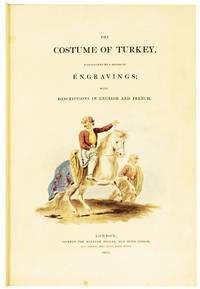
1802rif. 6160"ONE OF THE BASIC WORKS ON TURKISH COSTUME" ATABEY Folio 35 x 24.4 cm. Hand-colored vignette title-page in English followed by title-page in French; preface in English and French 8 pp; table of contents in English and French 2 pp.; and 60 hand-colored stipple engravings many on paper with watermarks dated 1796 after Octavian Dalvimart and engraved by John Dadley or William Poole the title-page vignette by R. Jones; each engraving always printed on the verso with facing description page English on recto and French on verso. Occasional light spotting and off-setting from plates to the facing description; plate 1 and tissue guard bound at the beginning preceding English title-page. Early 20th-century red straight morocco by Bayntun-Rivière their stamp in upper left-hand corner of front flyleaf blind- and gilt-stamped tooling on boards turn-ins and spine marbled endpapers; some rubbing but generally excellent. First edition with watermarks dated 1796 of "one of the basic works on Turkish costume which has provided the prototypes for numerous other illustrative material" Atabey. Dalvimart's vivid plates primarily depict the vibrant attire of the ruling classes and their servants but they also showcase traditional garments—especially those worn by women—from the extensive territories of the Ottoman Empire at the time encompassing regions such as Bosnia Albania Greece Syria and Egypt. Octavian Dalvimart remains a somewhat enigmatic figure. He appears to have been active as an artist and engraver in England and France in the early 19th century. According to the preface he traveled to Athens in 1797 and Turkey in 1798 where he created the original drawings for the plates consistently sketching from life. The characters are precisely drawn and handsomely depicted in vivid colors. The accompanying descriptive text is sometimes attributed to William Alexander drawing heavily from the published accounts of Turkey by James Dallaway 1797 Baron de Tott who resided in Constantinople for many years until 1790 and other sources. This first edition was followed by subsequent editions in 1818 and 1820. Little is known about the two engravers John Dadley 1767–after 1807 who worked in London and William Poole active 1803-1807. R. Jones active early 19th century exhibited at the Royal Academy from 1780 to 1812. Abbey Travel 370; Atabey 312; Blackmer 444 ca. 1820 impression Colas 782; H. Hiler Bibl. of Costume 1939; Lipperheide 1422; Vinet 2337; Bénézit III p. 317 Dadley III p. 335 Dalvimart and VI p. 95 Jones no entry for Poole. London, Printed for William Miller, Old Bond Street, by T. Bensley, Bolt Court, Fleet Street hardcover
rif. 02230281.exp4GHardcover. Good. Complete in seven volumes each bound in two parts plus matched atlas. Numbered 10 of 200 Van Gelder large-paper copies. Outer edges of front and back boards of each volume reinforced with textured and matched green tape. Boards show moderate surface and corner wear otherwise. Bindings intact. Significant discoloration to outer edges of front and back end pages cause unclear of each volume with only occasional smudging and discoloration within remainder of text. Ghosting from plates throughout; text appears clean and unmarked otheriwse. hardcover
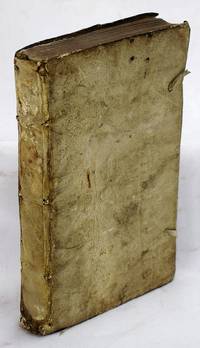
1526rif. 4610Florence: Per haeredes Philippi Iuntae 1526. SECOND GIUNTA EDITION 1st 1519. Hardcover. Fine. A tall unsophisticated copy in its original limp vellum binding vellum stained lacking ties short split to upper hinge. The text is in very good condition with intermittent foxing heavier in some gatherings. A compendium of ancient geographical texts including descriptions of the known world by Pomponius Mela Dionysius Periegetes and Gaius Julius Solinus. Shorter texts include a catalogue of the regions within the city of Rome "De regionibus urbis Romae" by "Publius Victor". The work is possibly a literary forgery of the 15th century presented as the work of a newly-discovered author. The name was coined by Pomponius Leto of the Roman Academy. The volume was edited by Antonio Francino 1480- after 1537 a scholar of great talent who taught in the households of important Florentines and who produced starting in 1517 numerous editions of Greek and Latin authors for the Giunta firm. Francino's opening letter in this volume is addressed to the twenty-year old Pietro Vettori who would himself become a philologist of great renown. Pomponius Mela's Description of the World: "A generation earlier than the work of the natural historian Pliny under the reign of Claudius or Caligula we find the first Latin author whom to the best of our knowledge we can call a pure geographer and whose work has come down to us complete. This is Pomponius Mela a Spaniard from Tingentera near Gibraltar whose Chronographia "Description of Places" in three books is preserved. The Chronographia describes the world taking the Mediterranean as its basic point of reference. It proceeds counterclockwise from the Strait of Gibraltar whither it returns at the end of the description."Conte "After a short prooemium in which he dwells upon the importance and difficulties of his undertaking he proceeds to define the cardinal points and to explain the division of the world into two hemispheres and five zones. The northern hemisphere is that portion of the Earth which is known and is separated by the impassable torrid zone from the southern hemisphere which is altogether unknown and is the abode of the Antichthones. The northern known hemisphere is completely surrounded by the ocean which communicates with the four great seas: one on the north the Caspian; two on the south the Persian and the Arabian; and one in the west The Mediterranean with its subdivisions. Next follows a description of the three continents: Asia Europe and Africa and an enumeration of its inhabitants. These preliminaries being discussed the author enters upon more minute details and makes a complete circuit of the known world. "Thus commencing at the straits of Hercules with Mauritania he passes on in regular order to Numidia Africa Proper the Cyrenaica Egypt Arabia Syria Phoenicia Cilicia Pamphylia Lycia Caria Ionia Aeolis Bithynia Paphlagonia the Asiatic nations on the Euxine and the Palus Maeotis European Scythia Thrace Macedonia Greece the Peloponinesus Epirus Illyricum Italy from the head of the Adriatic round by Magna Graecia to the Ligurian Gulf Gallia Narbonnensis and the eastern coast of Spain. Hispaniae ora citerior. The tour of the Mediterranean being now completed a chapter is devoted to its islands. Passing beyond the Straits we stretch along the western coast of Spain Hispaniae ora exterior the western coast of Gaul Galliae ora exterior the islands of the Northern Ocean Germany Sarmatia the shores of the Caspian the Eastern Ocean and India the Mare Rubrum and its two gulfs the Persian and Arabian Aethiopia and those portions of Aethiop a and Mauritania bordering upon the Atlantic which brings him round to the point from which he started. It will be seen from the above sketch that the existence of the northern countries of Europe and of the northern and eastern countries of Asia were unknown it being supposed that these regions formed part of the ocean which in like manner was supposed to occupy the whole of Central and Southern Africa."Smith Dictionary of Greek and Roman biography Solinus: "Gaius Julius Solinus who probably lived between the middle and the end of the third century was concerned with geography though not in the modern sense of the term. His work is entitled Collectanea Rerum Memorabilium but in the Middle Ages when it was widely read it was also known as Polyhistor to emphasize the great number of curiosities that were collected there. The work is a careful compilation from many literary sources chiefly Pliny the Elder but also Pomponius Mela and Suetonius along with various other geographical treatises that are no longer extant. Solinus noted down all the unusual things he came across when reading these works about peoples and their customs animals and plants. "The work opens with a full treatment of Rome and Roman history from the kings to the principate of Augustus. The area examined is then extended to Italy and then to Greece and the Black Sea Germany Gaul Britain and Spain; this counterclockwise tour ends with Africa Arabia Asia Minor India and the kingdom of the Parthians in accordance with a systematic geographical plan that is one of the most characteristic features of the work. It enjoyed considerable success in the Middle Ages when it was also read and studied as a summary of the excessively vast Naturalis Historia of Pliny the Elder. It did not however altogether replace it with the result that it enjoyed so to speak a success parallel to that of its more illustrious predecessor."Conte "Referring to the reading of Pliny and Solinus in the Middle Ages and Renaissance Anthony Grafton writes: 'Generations of readers thrilled like Desdemona listening to Othello at these tales of strange creatures foods and burial customs - and were no doubt stimulated by them to see the inhabitants of strange lands as literally outlandish less than civilized or even less than human.' Charles Raymond Beazley has made note of this remarkable appeal: 'The compilation of Solinus. became so fashionable in the Middle Ages and exercised so powerful an influence on the geographical imagination that it cannot be passed over. It is simply a collection of marvels chiefly of natural history brought together apparently on the principle 'Credo' or at least 'Lego quia impossibile.'. no one ever influenced Christian geography more profoundly or mischievously." "References to and borrowings from Solinus can be found in a wide variety of medieval texts stretching though the whole of the medieval period. Readers of Solinus ranged from Augustine to Bede to Dante and Solinus' influence can be seen in examples as varied as the Hereford Mappa mundi ca. 1300 and Fazio degli Uberti's verse epic 'Dittamondo' 14th c. in which Solinus in the place of Dante's Virgil guides a pilgrim on a tour of the known world. The interest in Solinus had not waned by the fifteenth century. While geography was not a primary area of interest for the humanists Solinus Pliny and authors like them were widely read and commented upon by Renaissance scholars. The strong interest in antiquity that characterized the Renaissance continued the medieval curiosity for the Roman compilers who seemed to have succeeded in encapsulating the entire world and all the knowledge in it."Dover and McDonough. Per haeredes Philippi Iuntae hardcover
1851rif. 28441New York: Nagel & Weingaertner 1851. Hand-coloured lithograph after Hanson titled below the image. Expert restoration closing tears. The first America's Cup: a rare hand coloured lithographed view of the winning yacht which gave its name to the cup. In 1851 the Royal Yacht Squadron proposed a race around the Isle of Wight. A group of New York Yacht Club members led by Commodore John Cox Stevens built a yacht designed to compete in such races. Designed by Steers and Co. and captained by Richard Brown the yacht America would win the race by eighteen minutes giving its name to one of the oldest and best-known trophies of the sport: the America's Cup. This lithograph and lithographer are not recorded by Harry T. Peters; we find no other extant examples of this rare print. For Nagel and Weingaertner see Peters America on Stone pp. 291-294. Nagel & Weingaertner unknown
1564rif. 1907280011Genevae : Ex officina Francisci Perrini M.D. LXIIII 1564. First Edition. Hardcover. Good. Calvin's 16th century commentary on the book of Joshua and Beza'z Biography of Calvin Bound in contemporary vellum. Some soiling to cover. Octavo. 32 316 p. Printer's woodcut device on title-page. Slight worming in inner margin towards beginning not affecting text. Bookplate of Duncan Shaw and early inscription of Franciscus Saluardus. Calvin's last work. Includes the Latin translation Theodore de Besze's Life of Calvin. Adams C280. The French edition was printed in 1565. Genevae : Ex officina Francisci Perrini, M.D. LXIIII hardcover
1501rif. 000683Strasbourg: Argentinae: Ex officina Martini Flach junioris 1501. Half leather. Fine. Folio printed in Strassburg by Martin Flach 7 February 1501; 161 unnumbered leaves. BINDING: recent Gothic hand-sewn oak binding by Arthur Green of Malvern; tawed quarter leather over quarter-sawn oak boards quires hand-sewn on four double-cords creating four raised spine bands board leather blind-tooled with period style rosettes and fleurs-de-lys within panel of diagonal blind triple fillets hand-sewn Gothic double headbands of alternate hand-dyed indigo and undyed linen thread hand-made brass hasps and clasps ornamented in period style; an exceptionally attractive recreation of a Gothic hand-sewn binding employing medieval techniques contemporaneous with the date the book was printed. COLLATION: pi6 a2-8 b-y6 z8 zeta6 antisigma8; leaf a1 excised and subsequent first few lines of a2recto redacted in black ink in the sixteenth century by the inquisitor for its heretical content see below. TEXT: Double column 50 lines and headline gothic type red manuscript rubrication throughout in a contemporary hand with numerous 3 4 and 6 line capitals red paragraph markers and in-text capitals marked out in yellow. CONDITION: indecipherable contemporary manuscript ink inscriptions to title page final two leaves a little soiled new endpapers in complementary period-style paper small professional paper repairs to fore-edges of opening and closing leaves unobtrusive light stain to lower outer page corners well clear of printed text overall a beautifully clean wide-margined copy. BIBLIOGRAPHICAL REFERENCES: Rare not in Adams USTC 696770 citing 32 copies with just 3 in the UK and 2 in the US. Sebonde's Theologia was a celebrated text in its day but is mainly known now through Montaigne's attention and his French translation of the work in 1569. Its prologue asserting the ability of human reason to understand the existence and attributes of God through observation of the natural world was added to the Index Prohibitorum in 1559. A beautiful example of this rare text in an exceptionally fine binding. Argentinae: Ex officina Martini Flach junioris hardcover
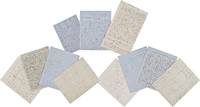
1850rif. 68036Northumberland NY and Tuolumne County CA. 1850–1857. New Yorker in the "Land of Gold" A scattered but intriguing collection of manuscripts related to New York native Isaac Vanderwerker or Vanderwarker who made for the California gold mines in 1850 and remained out west until at least 1857. This group consists primarily of letters written to Isaac by his brother at home in Northumberland inquiring after Isaac's activities in the gold fields and commenting on matters at home though it also contains a detailed letter from Isaac himself a letter from his ill-fated sister Joann and two letters written by business partners in California. The earliest letter here written by Isaac's brother who signs only with initials is dated October 7 1850 shortly after Isaac arrived in California. Isaac was apparently one of many gold-seekers who elected to take a slow sailing ship from Panama rather than wait on the heavily delayed steamships though he weathered the journey better than most. Isaac's brother also notes several acquaintances who "have returned without making their fortune" and still more who are leaving regularly for the mines including a "Justus" who "made a vendue and sold his personal property" in order to fund the journey. Everyone in town it seems either wants to head to California or has an excuse not to. "I hope you will be one of the lucky ones and get well paid for all your toil sufferings and anxieties" he writes to his brother. "We have most of the California news every month. I saw in the last paper an account of the riot and burning of Sacramento City it spoke of some large lumps of gold being taken out weighing from one to forty pounds at Carsons new diggings on the Stanislaw another instance where a man took out four thousand dollars in two days at Murphy diggings but these cases are something extra John L. Cramer is at the Northern Mines on the Yuba…." The Vanderwerkers were early settlers of upstate New York and appear to have done well for themselves – Isaac and his brother are involved in several substantial properties and much of their correspondence relates to the management of their farms. The next letter in the group comes from the following summer written by Isaac's sister Joann. Joann discusses more details of the family's properties and notes that her health is poor enough that she is not sure to see the end of the week. Regardless news of California remains at front of mind: "There is a story in circulation that Aron Bliss Jaines Brother in law has stoll 15 thousand dollars at San Francisco and the owner has followed him here and there a going to take him back and hang him. John Cramer is on the yube never his Father said he guest by his writing he was not doing very well." From here we skip two years to October 16 1853 when Isaac's brother writes to tell him that large numbers are still heading for California. Joann has been holding on the last two years and "Old Frank" who used to work with them before moving to Canada would like to know if Isaac has work for him in California. He also goes on to discuss a bit of contentious New York politics: "We shall have five state tickets this fall viz whig Barnburner or soft hunker Adamantine or hard Temperance & abolition. The whigs no dout will carry the Election. The Barnburners had quite a majority in the State Convention….the Canal board are Barnburners & they are making a clean sweep of the hunkers." The letters continue over the next few years regarding more transcontinental legal matters real estate dealings Joann's eventual death in 1855 and the usual litany of deaths and marriages at home. The most content rich letter in the group is the only one written by Isaac himself sent to New York from Tuolumne County on May 18 1857. As Isaac describes his life in the west he also reveals himself to be a talented writer: "Dear Brother I will again endeavour to correspond with you by a few rude caught characters on paper which may put you in mind that you have a Brother Still in the land of gold…." He sends some gold home not present describes a chance meeting with the aforementioned John Cramer remarks on the high cost of goods in the mines and recent fires in San Francisco and Stockton. Business isn't cheap in the "land of gold" and he claims he "can do as much business in the States for 10 Dollars as I can Here for one Hundred." With that in mind he adds a postscript stating that he has sold out his plot and mining apparatus for $1500 and will try to go into business burning lime or supplying bricks and lumber in Benicia. He describes the new town and the rapid pace of development in California: "Benicia is situated about thirty miles up the Bay from San Francisco and about Six miles from the present Capital of the state named Vallejo. About three months ago the first building was erected which is a Hotel about two weeks ago they commenced building there is now about twenty small houses up and one three story Hotel. The government officers reside at Vallejo after the 10 of this month. I had an introduction to the governor at Vallejo last week he is a clever sort of man but not Dignified hardly fit for the Station…." Isaac's brother responds to this letter a few months later curious about his sibling's new business ventures. He also comments that "by what I can learn of the character of the Mexicans and Indians I should hate to travel alone without being well armed. I see by our papers that Lynch Law is that that governs all the mines I saw an account of a man being hung at San Francisco by Mr. Lynch at short notice." Unsurprisingly more and more are returning home by 1857 including a man named Wells " come in the same steamer your letter did he was sick but made out to keep up till he got home and died less than a week after he was not very successful in California." A heartfelt letter from a friend about the health of Isaac's mother also present seems to have convinced him and Isaac returned home for a visit to New York in the latter part of 1857. A September 3rd letter from his business partner John W. Kelly sent from Sawmill Flatt is addressed to Isaac in Saratoga and discusses business dealings in California. It would appear Isaac never pulled completely out of mining as the letter regards efforts to secure mortgage payments for Isaac's "ditch." The final letter in this collection is dated December 17 1857 and is addressed to Isaac from the offices of A.C. Goodrich in Columbia California. Goodrich describes a large flume his company has built 180 miles long and twelve feet wide by three feet deep "exclusive of the artificial embankment or five hundred ton stream capacity this day and night as we have reservoirs in abundance to hold the night & Sunday water. Would give 1000 ton streams which sold at the precent price viz $4.00 per day would pay ten per cent on a Capital of $1000.000. This would give a large basis for waste and reduction in price and still leave room for handsome profits on our Capital stock of $450000. The present cost of the work we can only approximate to but it is not far from 100000$." They hope that Isaac can become their agent and help them find investors. An interesting group of letters sent between brothers in California and New York during the Gold Rush stretching across seven long years of separation. Old folds occasional light tanning and staining. Very good. unknown
rif. 36023801Japan 1860 n.p. Large sheet 96 x 1m 44 cm. gouachevery clean work no worming or other condition issues painted on 16 joined sheets of Washi paper to make one large sheetfine water-color painting. THIS IS AN ORIGINAL PAINTED ART WORK . . . AM ORIGINAL COLOR PAINTING IN GRAND SIZE . . . FROM JAPAN'S OLDEST MYTHOLOGY: . . . THE KOJIKI & NIHON SHOKI PANTHEON . . . THE ORIGINS OF THE EMPEROR . . . OTOHIME GYO RETSU ZU: . . . THE PROCESSION OF OTOHIME DAUGHTER OF THE SEA GOD . . A stunning color painting by Kyosai. Probably done for a temple donation or as an expression of his faith to Japan's historic heroine. . OTOHIME is a goddess in Japanese mythology and is featured in the Kojiki as well as Nihon Shoki. Also known as "Luminous Jewel". A Japanese goddess the beautiful daughter of the sea-king Ryujin. She married Hoori and gave birth to a son after which she turned into a dragon. . Per the Japanese text brushed on the verso upper left corner: "239 ban dated Ansei 7th Kanoe-Saru-doshi 2 gatsu jojun end of February OTOHIME GYO RETSU ZU" . English: "#239 dated Ansei 7th monkey zodiac year end of Feb.: 1860 . PAINTING TITLE PER VERSO: "THE FIGURE OF PRINCESS OTOHIME'S PROCESSION THE DAUGHTER OF THE SEA GOD" . "Toyotama-hime" Japanese for "Lady Bountiful Soul" better known as Otohime is a goddess in Japanese mythology and is featured in the Kojiki as well as Nihon Shoki. She is the beautiful daughter of Ryujin the "God of the Sea." . A STUNNING ORIGINAL POLYCHROME GOUACHE PAINTING: . This original color watercolor painting shows the lively procession of OTOHIME and her hand maid. She is followed by a flag and umbrella bearer. Also following is a man with a pair of deer antlers good omen a man with a small red offering table with peaches the Wind God and his thunder-drum. Another flag bearer his helper followed by two others one holds a staff the other an offering of golden egg. . The items carries are symbolic good fortune and wealth in terms of deer antlers peaches and the golden egg represent ancient Chinese also used by the Japanese of omens of good fortune and good luck. . THE PAINTING: . Per the Japanese brushed text on the verso there is a number found meaning this panel of several was part of a larger work per the chronology found in Clark see below. . This panel of several paintings was part of a restoration of Zojo-ji temple in Shiba. In 1859 KANO Toei & Kyosai "participates in a repair project at the Zojo-ji temple." See Clark. . Although Kyosai had officially left the Kano school in 1854 by participating in the restoration of Tokugawa's family temple in Shiba he was showing loyalty to the Tokugawa family a good reason to volunteer his skills to the temple. It is also noteworthy that his mentor Kano Toei also participated in the restoration and in all likelihood Kyosai joined his master in a sign of respect and loyalty to him. . Based on this chronology it is clear Kyosai was one of the painters who worked at Zojo-ji temple along with his mentor and master teacher Kano Toei. It was not uncommon at this time for schools to volunteer teachers and students to do temple restoration and art work painting replacing or enhancing paintings and large murals. . This item's date matches the restoration dates for the Zojo-ji temple which began in 1859 and continued into 1860. . This panel was unused in the restoration it may have been a precursor to the final painting which was actually used in the restoration project. It matches the scenes found in Zojo-ji temple restoration. The work is the exact style of others painted by Kyosai and his genre. The caricatures of the people in this painting reflect Kyosai's style exactly the theme of his eccentric humor expressing his love for creativity and the joy of painting. . It is entirely within Kyosai's bizarre character to undertake and devote himself to such a project as illustrating the famous myth of OTOHIME in more than 200 deluxe extra-large-size format paintings. . This restoration project could also have been a 'paying job' for Kyosai as at that time he did not seem to be employed but in 1858 he began to design "Kyoga crazy pictures. It was in 1857 he married Okyo the daughter of a Rimpa painter Suzuki Kiitsu but Okyo died in 1859 and he remarried Tose who died in 1860. . It is more than likely Kyosai being a Buddhist he felt it was his religious obligation to do pennants by contributing to and drawing Buddhist or such traditional images as a way to placate the loss of his wife. . THE STORY OF OTOHIME DAUGHTER OF THE SEA GOD: . Because this work was part of the Zojo-ji temple restoration it cannot be considered a commercial painting one that was casually drawn and put on the market for sale. This was part of a commissioned restoration financed by some benefactor to the temple and most likely supported by the Tokugawa family. . ONE OF JAPAN'S EARLIEST AND MOST FAMOUS MYTHS: . The story of OTOHIME DAUGHTER OF THE SEA GOD is one of Japan's oldest and most famous myths known to all Japanese. Treasured as one of the most important in the ancient pantheon it is found in the earliest writing about the origin of Japan and the Emperor in the KOJIKI and the NIHON SHOKI. . This kind of larger paper illustrated story would take months to complete by It would also take devotion to the subject and focus with responsibility to produce a good number of paints daily. This was something Kyosai could and would do ! . THE ARTIST/PAINTER: This work is unsigned which is expected as part of a larger series of paintings. If this was the work of Kyosai it falls entirely within the dates during his period of work produced when he was 29 years old. . The caricature in the faces and fluid bodies in motion the "flowing" style are his. Although there is no signature and it is a true reflection of Kawanabe's work we are attributing it to him. . Another convincing point is that this kind of painting and meticulous style is also found in his famous instructional showing various 'schools' of painting in his KYOSAI GADEN. See below. . WHO WAS KAWANABE GYOSAI/KYOSAI: 1831-1889: Kawanabe Kyosai was a superb artist in the words of a critic "an individualist and an independent perhaps the last virtuoso in traditional Japanese painting". . Living through the Edo period to the Meiji period Kyosai witnessed Japan transform itself from a feudal country into a modern state. Born at Koga he was the son of a Samurai. His first aesthetic shock was at the age of nine when he picked up a human head apart from a corpse in the Kanda river. . After working for a short time as a boy with Utagawa Kuniyoshi he received his artistic training in the Kano school but soon abandoned the formal traditions for the greater freedom of the popular school. During the political ferment which produced and followed the revolution of 1867 Kyosai attained a reputation as a caricaturist. His very long painting on Makimono" scroll The battle of the farts" may be seen as a caricature of this ferment. . He was arrested three times and imprisoned by the authorities of the Shogunate. Soon after the assumption of effective power by the Emperor a great congress of painters and men of letters was held at which Kyosai was present. . He again expressed his opinion of the new movement in a caricature which had a great popular success but also brought him into the hands of the police this time of the opposite party. After this time he changed his name from Kyo crazy or wild to any one of 19 other "Go" studio names he used. However after the police jailed him he avoided use of "Kyo" but returned back to it with three other "GO" that used the same character "Kyo" crazy & wild such as #7 "Baiga Kyosha" #10 "Kyosai #12 Kyosha Gaishi #16 "Shosho Kyosai" Quoted from Roberts below see that reference for more details. . Kyosai is considered by many to be the greatest successor of Hokusai as well as the first political caricaturist of Japan. His work mirrored his life in its wild and undisciplined nature and occasionally reflected his love of drink. . Color photos are posted to our website. . REFERENCE: . More on OTO HIME: heon-org/articles/o/otohime-html KAWANABE Gyosai later known as Kyosai: Is well collected by world museums I GADAN: 1887 4 vol. set: In this work he outlines and exhibits a wide variety of "styles" of painting. In this work there are several examples of this kind or school of painting. Wikipedia stated about this book: "The most important work about Kyosai's art and life was written by himself: Kyosai Gadan or "Kyosai's Treatise on Painting" half autobiography and half painting manual. WESTERN APPRECIATORS: Many westerners came to visit Kyosai and their memoirs about the artist are valuable. The two important ones both rare were: Emile Etienne Guimet Promenades Japonaises Paris 1880. Josiah Conder: "Paintings and Studies by Kawanabe Kyosai" Tokyo 1911. Conder was a serious student of Japanese art; after some initial rejections he was accepted as Kyosai's pupil and accompanied him for ten years until the master's death. Timothy Clark Demon of painting: the art of Kawanabe Kyosai p.186 chronology and the drawing #21 p.58 is very similar to the pose found in our painting of OTOHIME Toyotama-hime both in pose facial quality hair style and the general perspective. ROBERTS Laurance P.: A DICTIONARY OF JAPANESE ARTISTS: PAINTING SCULPTURE CERAMICS PRINTS LACQUER p.100 stated of him: Kyosai ".was marked by a wild eccentric humor.caricatures of full of fantasy and invention." KAWANABE KYOSAI MEMORIAL MUSEUM. KAWANABE KYOSAI DOKU HON. OTOHIME: Nihon Jinmei Daijiten Toyotama-hime. Tokyo: Shogakukan. 2012. . . unknown
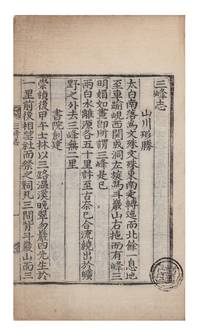
rif. 942031 folding leaves. Large 8vo 305 x 190 mm. orig. patterned semi-stiff wrappers wrappers slightly soiled new stitching. Yeongju: 1774. First edition and very rare of this gazetteer for the Confucian Three Peaks Academy WorldCat 46318280. The word “gazetteer” is used in reference to a genre of East Asian historical and geographical texts generally known in Korea as ŭpchi 邑志 which translates roughly to “local treatises.” The now rare word “gazetteer” is used in analogy with a similar genre that existed in British India. It was not unusual for Korean gazetteers to be published by a local Confucian academy as seems to be the case here. Confucian academies were important centers of intellectual life in ChosÅn Korea. Several of the leading thinkers of the era spent parts of their career teaching at academies thus creating a following. The Three Peaks Academy Sambong sÅwÅn 三峰書院 was founded in the village Valley of Three Peaks sambonggol 三峰谷 in 1654. The colophon explains the genesis of the gazetteer: “The late Mr. Ch’Ål-nam éµå— i.e. Kim Si-hwa é‡‘å§‹éµ 1662-1772 wrote and edited the gazetteer taking note of the geographical features and dates of buildings the positions and names of halls houses ponds and lookouts and recording them for posterity.” Kim Si-hwa furthermore recorded key events in the lives of scholars who had taught at the academy. Kim Wi 金㙔 1709-89 who authored the colophon dated 1774 wrote about the updates that had been made to Kim Si-hwa’s text for our edition. We find no record of an earlier printing; probably Kim Si-hwa’s text was first published in this edition. Nice copy. WorldCat locates only the Berkeley copy. References Digital culture encyclopedia for Yeongju 디지털ì˜ì£¼ë¬¸í™”ëŒ€ì „. http://www.grandculture.net/yeongju Korean Old and Rare Collection Information System í•œêµê³ 문헌종합목ë¡. https://www.nl.go.kr/korcis/index.do PÅk’ŭlli taehak Tongasia tosÅgwan sujip Han’guk kojÅnjÅk mongnok 버í´ë¦¬ëŒ€í•™ ë™ì•„시아ë„서관 수집 韓國å¤å…¸ç±ç›®éŒ„. Seoul: KoryÅ taehakkyo minjok munhwa yÅn'guwÅn 2009. “Sambong ha sambong sÅwÅn maŭl ‘Sambonggol’” 삼봉三峯 下 삼봉서ì›ä¸‰å³¯æ›¸é™¢ ë§ˆì„ ‘삼봉골三峯谷’. YÅngju simin sinmun ì˜ì£¼ì‹œë¯¼ì‹ 문 November 26 2018. https://www.yjinews.com/news/articleView.htmlidxno=49174. unknown
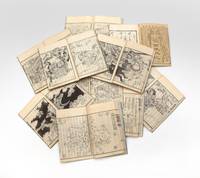
rif. 8576Many fine black & white double-page & single-page woodcuts throughout. Ten vols. 8vo orig. blue semi-stiff wrappers orig. block-printed title labels on upper covers three labels are somewhat defective new stitching. Osaka: Tenmaya Yasubei; Kyoto: Yoshida Jihei 1835. with: — & MATSUKAWA Hanzan; —. Ehon Toyotomi Ryukyu gunki Illustrated Tale of the Ryukyu War. Many fine black & white double-page & single-page woodcuts throughout six in Vol. I are color-printed. Ten vols. 8vo orig. pale blue patterned wrappers orig. block-printed title labels on upper covers new stitching. Osaka: Kawachiya Tobei & Kawachiya Mohei colophon dated 1864; title-page dated 1862. First edition of these finely illustrated stories of the conquest of the Ryukyu kingdom in 1609 by the Shimazu clan of southern Kyushu. The main artist Okada Gyokuzan Issei or Ishida is a rather shadowy figure; he probably studied under the famous Okada Gyokuzan of Osaka but we know very little about him. The second work Ehon Toyotomi Ryukyu gunki has an additional artist Matsukawa Hanzan 1818-82 who studied painting under Suga Shoho and worked in Osaka as a book illustrator. This is a splendid example of an ehon yomihon a type of long novel combining text with frequent illustrations. Our works are finely illustrated throughout with scenes of battles the notable figures in the conquest both winners and losers historical figures scenes of important ceremonies scenes of the extravagant lifestyles of the Ryukyu royal family seen in their gardens famous castles etc. The most useful captions in each woodcut name participants and explain the scene. The woodcuts are clear and impactful; many of the scenes have a pronounced Chinese atmosphere. Several types of battles are shown: conflicts involving cavalry fighting in the water assaults on castles hand to hand combat etc. In the first series Vol. I has a single-page woodcut world map and Vol. III has a fine double-page woodcut map of Ryukyu and its 36 islands. In the first volume of the second series are six full-page woodcut portraits of the heroic leaders of the Shimazu clan’s military forces in full attire with wonderfully delicate color printing. The text furnishes important details on the history of the relationship between Ryukyu and China and Japan; the quantities and types of weapons and number of soldiers drummers and doctors including veterinarians who traveled by ship to Ryukyu; and the major military actions of the conquest. These statistics are broken down by the contributions of men and materiel made by each region of Satsuma. The names of the leaders of each military section are given; we believe this is unique information. Family crests and banner symbols are depicted. Fine and fresh copies. Rare when complete and in excellent condition like our sets; WorldCat lists only the University of Hawaii copies part of the famous Frank Hawley Ryukyu collection. In Vol. 9 of the first series there is misnumbering but the text is absolutely complete and is identical to the set in the National Diet Library. unknown
1837rif. 626988Philadelphia: The Liberal Union 1837. xvii 2 20-118 pp. missing page 119 1. Black leather spine with gilt titling and marbled endpapers; "Printed at the Office of the National Laborer". Heavy wear and chipping to spine; boards no longer extant. Front free endpaper and first blank page detached but still extant with some chipping to corners. Some staining to bottom corner at gutter of first few pages. Some mild foxing throughout. Final page 119 no longer extant with bottom quarter of following blank missing as well. Some discoloration smoke to tail of final pages. Gatherings still held together quite securely although with some cocking to the top half of the spine. Appears to be a good candidate for recasing or rebinding with a facsimile copy of the final page. Originally published in eight parts under the title "Equality-- A Political Romance" in the Philadelphia deist magazine "The Temple of Reason" this utopian fantasy is commonly accredited to be the first utopian novel written and published in the United States. According to the historian Richard J. Twomey "Equality." marks a turning point in social critique in how it marks private property itself as the root of "social evil" rather than inherited privilege or property. Faherty and White. This scarce edition of 1837 is preceded only by the 1802 serialization. . Hard Cover. Fair. The Liberal Union Hardcover
1904rif. 0009174ABERDEEN WASHINGTON WA. Good. 1904. On offer are three 3 original field books most probably written in 1904 and detailing the rebuilding of the city of Aberdeen Washington after a raging fire destroyed the town. On October 16 1903 a raging fire destroyed 140 buildings in the center of Aberdeen Washington. A city constructed primarily of wood including sidewalks Aberdeen had little chance of stopping the fire once it began to spread. Obviously the city needed to rebuild its streets after the fire. Two people one by the name of Weatherwax and the other by the name of Benn seem to have been hired to do the task. Weatherwax is most probably J.M. Weatherwax or George Weatherwax two men who owned a large lumber company in Aberdeen and Benn is most probably Samuel Benn. The three books are labelled P-138 book 44 P-214 book 105 and P-215 book 106. Each book contains an index at the beginning which lays out what streets in the city are written about. For example book P-215 deals with information on old planks new elevations storm sewers street levels and more on the 20 different street including Michigan Ave Jefferson St. Washington St. and more. The books are excellent artifacts of city construction from the early 20th century containing dozens of pages of detailed schematics drawings charts and figures for the city of Aberdeen in the wake of its destruction. There are approximately 450 handwritten pages over the three books. The books each measure 7 ¼ by 4 ¼ inches. All three show sustained use and strong wear. For the most part the structural integrity is still there however the last book P-215 shows the most wear with parts of the book disconnected from the binding. Two of the books shows evidence of taping to the spine and boards. These books are a fascinating look at the intricacies and details of rebuilding a city after its destruction and an intimate part at the history of Aberdeen Washington a place that Kurt Cobain would eventually call home. Background: On October 16 1903 a fire destroys 140 buildings in the center of Aberdeen. Fed by wood-frame structures wooden sidewalks and sawdust fill the fire rages unchecked until some 20 acres have burned. The fire will spur the city leaders to enact a more stringent fire code. On the morning of October 16 1903 a resident of the Arctic Hotel began making breakfast in his room. An accidental fire started and the room was quickly engulfed in flames killing the lone occupant. Within minutes the three-story frame structure was ablaze and the fire spread to adjoining buildings including the fire station and jail.; Manuscript; 8vo - over 7¾" - 9¾" tall; KEYWORDS: HISTORY OF ABERDEEN WASHINGTON FIELD BOOKS TURN OF THE 20TH CENTURY 1903 ABERDEEN FIRE MILL TOWNS J.M. WEATHERWAX GEORGE WEATHERWAX SAMUEL BENN FIELD BOOKS TOWN REBUILDING FIELD BOOKS SURVEY NOTEBOOKS HAND DRAWN AMERICANA HANDWRITTEN MANUSCRIPT DOCUMENT LETTER AUTOGRAPH WRITER HAND WRITTEN DOCUMENTS SIGNED LETTERS MANUSCRIPTS HISTORICAL HOLOGRAPH KEEPSAKE WRITERS AUTOGRAPHS PERSONAL MEMOIR MEMORIAL ARCHIVE DIARY DIARIES JOURNAL LOG ANTIQUITÉ CONTRAT VÉLIN DOCUMENT MANUSCRIT PAPIER ANTIKE BRIEF PERGAMENT DOKUMENT MANUSKRIPT PAPIER OGGETTO DANTIQUARIATO ATTO VELINA DOCUMENTO MANUSCRITTO CARTA ANTIGÜEDAD HECHO VITELA DOCUMENTO MANUSCRITO PAPEL . hardcover
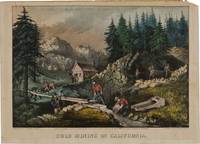
1871rif. 67574New York: Currier & Ives 1871. Attractive Gold Rush Print by Currier & Ives A fine handcolored lithograph by Currier & Ives depicting placer miners in California during the Gold Rush. In the foreground two men are shown shoveling sediment into a Long Tom capped with a sluice box while another man scoops up the remainder and deposits it into a rocker box. Behind them another trio work hard rock with pickaxes and a high-pressure hose. A small mining camp can be seen in the distance with a group of redwood stumps as evidence of their construction activities. Number eleven in the New Best 50 Currier & Ives prints. Not in Peters. Light tanning and soiling small chip to upper right corner. Very good. Matted. CONNINGHAM 2412. CURRIER & IVES CATALOGUE RAISONNÉ 2622. unknown
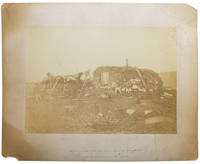
1872rif. 303445London 1872. Albumen print measuring 11-5/8 x 16-1/4 in 295 x 412 mm. Laid down on thick cream card with manuscript caption measuring 17 x 21 in. Image slightly faded card chipped with some minor soiling one tear not affecting image. Albumen print measuring 11-5/8 x 16-1/4 in 295 x 412 mm. A rare survival. This image appears in William Bradford's fabled book of photographs Arctic Regions. It was taken by either Dunmore or Critcherson the two professional photographers from Boston who accompanied Bradford on his 1869 expedition to the Arctic on the steamship Panther. It was probably taken at Upernavik a settlement on an island off Greenland's west coast or Godhavn. Arctic Regions included 141 albumen prints in addition to Bradford's account of the voyage. The title of the photograph here varies from the printed caption in the book where it reads: "Plate Number: 116 Esquimaux igloe or winter hut made of turf and stones. The entrance is to the left through a door which is about three and a half feet high. The length of the passage is about twelve or fifteen feet and at the farther end is another door through which one almost has to crawl on his hands and knees. After passing through there is then room to stand erect but one is forced to leave very soon owing to the bad air." This photograph is slightly larger than the one in the book which is 277 x 365mm. Furthermore the image in the book is cropped closer on the right and left margins. The New York Public Library has a folio of 26 images of near identicle size mounted on card. The portfolio was donated to the library in 1892 as part of the Robert Stuart Collection. According to Horch originally all of these images were captioned in manuscript though were later remounted with typed captions as "the original ink-written captions for the photographs had badly faded by 1940." It's interesting that the caption on their duplicate of this image is the same as ours and the image itself has not been cropped. Horch writes that Bradford probably not only selected these images himself but "closely directed the actual taking of the photographs." It's entirely likely that Bradford would have had extra prints made to distribute to friends repay favors and most of all to solicit subscribers to what was a very expensive book to publish. Given how it conforms to the examples in the Robert Stuart portfolio this particular image is probably one of them. Horch Frank. "Photographs and Paintings by William Bradford". American Art Journal 5.2 1973: pp 61-70; cf Parr and Badger I p31Prm/photo unknown
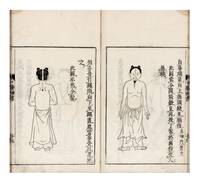
rif. 7008Twelve full-page woodcuts & numerous woodcuts in the text. 36 folding leaves. Two parts in one vol. 8vo orig. blue wrappers wrappers rubbed & somewhat wormed orig. block-printed title label on upper cover no longer present modern stitching. “Ichijo-dori” a street in Kyoto: Tomikura Tahei 1690. First edition of this early and rare book providing prescriptions for treatments in the different stages of tuberculosis. The author describes ten drugs made from vegetables that give miraculous results in treating the disease. The second part entitled “Mujo Gengen santen shinden gyokudo shoshi chiden shirochu soho” describes the parasitic worms said to grow in the stomach and intestinal system of patients suffering from tuberculosis. The text illustrations depict many of these parasites. The text is Chinese with Japanese reading marks presumably compiled in the 14th century by Ge 1305-53 a Yuan dynasty physician and writer. He came from a family of hereditary physicians and wrote a number of books. The Japanese reading marks have been provided by Shuhaku Asai 1643-1705 who was a fellow student with Ippo Okamoto of the prominent doctor Sanpaku Ajioka. There are substantial sections on acupuncture and moxibustion several of the full-page woodcuts depict pressure points. Very good copy. Minor marginal worming towards end. unknown
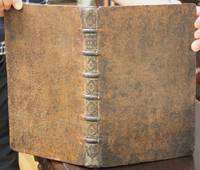
1585rif. B6597Paris: Apud Dionysium Duvallium sub Bucephalo in vico Bellouasco; c. April 1585 colophon . A very nice copy of this rarely found work; old minor marginal repair tape of title slight marginal stains and very small in-text and marginal oxidation spots none affecting legibility; light damp staining of the lower margin. Endpapers watermarked. Binding: 17th century mottled calf spine with six 6 raised bands with gilt lettered title on two and remainder of compartments ornamented in floral gilt; all edges speckled red. Notes: This medical work on gynaecology attributed to or by Hippocrates and his school is accompanied by the commentary in French of French Renaissance physician Maurice de La Corde; it is rare with three known exemplars incl. Yale & Oxford. Size: Folio 311x201mm Illustration: Text in Latin and Greek. Text in two columns of Latin and Greek respectively with accompanying Latin commentary in one; except index printed in three columns. Illustrated title depicting determined/ inspired Hippocrates riding on horseback through crises or critical times toward the sun – this with marginal text in Latin and Greek; each major section opens with an elaborate headpiece and initial. References: Pasquale Sfameni in Enciclopedia Italiana 1933; Adams H-615; Choulant 31; Durling 2412. Graesse III 283; Hirsch II 76; Renouard Marques 287; STC French 227. Not in Osler. Pages: Ll: bl. 10 pp. 1-361 6 bl.2. Collation: bl. a1-4 e1-6 A1-Z6 Aa1-Gg6 Hh1-7 bl.2. Category: Book Medical; Book Early Printed 1500; Apud Dionysium Duvallium, sub Bucephalo, in vico Bellouasco; hardcover
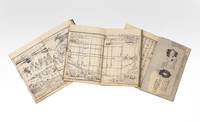
rif. 8048Woodcut illus. five are double-page. .5 13 .5 ads; .5 ads 17 .5; .5 ads 14 .5 folding leaves. Three vols. 8vo orig. green patterned semi-stiff wrappers orig. block-printed title labels on upper covers new stitching. Kyoto: Honya Juemon 1789. First edition and very rare; this work was written as a result of the devastating Great Kyoto Fire which broke out on 7 March 1788 and lasted several days. It caused serious damage including the destruction of the Imperial Palace and the Nijo-jo Castle. The fire so shocked the bakufu that senior councillor Sadanobu Matsudaira was sent to Kyoto to investigate and consult with the Imperial Court. The first woodcut depicts how one can prepare for a quick escape in case of fire. This single-page illustration shows how to leave one’s street clothes at nighttime so that they can be put on quickly for a fast evacuation. The first double-page illustration is a map of Kyoto where the great fire occurred. The following two double-page woodcuts show scenes of the raging fire with citizens fleeing carrying their valuables. The next two-page woodcut shows refugees of all classes on the outskirts of Kyoto moving away from the city. The final double-page woodcut shows survivors beginning to rebuild their houses. The text gives detailed instructions on how to prevent fires and in the case of a fire breaking out what to do to contain and extinguish it. The block-printed title labels read “Banmin hinoyojin chinki” “Cautionary Instructions on Containing Fires for the Entire Nation”. Fine copy. Minor mostly marginal worming carefully mended in the first volume. unknown
rif. 634118 leaves. Small 4to attractive modern marbled boards red morocco lettering piece on spine. Wittenberg: C. Heyden 1619. First edition of this rare book which is considered by A.D.B. to be the author's most important scientific work; it is a careful record of the third of the three bright comets of 1618-19. Schmidt 1570-1637 was "one of the last of the scholars of Germany who taught the language and literature of Greece in the spirit of Melanchthon. Schmidt was professor first of Greek and next of Mathematics at Wittenberg. His principal work was an edition of Pindar with a Latin translation and a careful commentary 1616."-Sandys II p. 272. Fine copy. ⧠A.D.B. Vol. 32 pp. 27-28. Zinner 4785. unknown
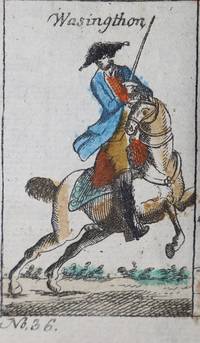
rif. 006887Nürnberg: Trautner. Hardcover. Paper pastedown on slightly limp boards. Very Good. Early depiction of General Washington in Germany -- possibly the first such. N.d. circa late 1780s. We can date these generally to the late 1780s because Frederick the Great's death in 1786 is noted but Joseph II is still presented as alive but he died in early 1790. Folio 32 by 20 cm. 33 pages with mounted content including 15 double paged plates measuring 32 by 38.5 cm or thereabouts. The sixteenth plate is double paged half the page height -- this plate was somewhat crudely cut probably in half. In these plates there are about 345 separate images or cells -- the cell count is not hard and fast as there are instances in which two cells can be regarded as a single illustration or cell. The vast majority of the cells or illustrations relate to military men and many of these are equestrian images with the commander or officer mounted on horse. We also find rows of soldiers that can be viewed as if on parade or alternatively like cells in a movie. Military costume and regalia isn't the only subject however. Two of the plates are devoted mostly to the hunt and shooting. In these hunters are shown holding up firearms to various prey. And one plate depicts biblical scenes or subjects. In these plates brief captions can identify the subject. Thus we know that one of the pictures is of Washington who certainly would have been an international celebrity in the late 1780s. The hand-coloring of the prints is a fairly crude stencil and the palette of colors is not extensive. Dominating are blues oranges greens and golds. Not to be slighted is the first page in this album which is an entirely different sort of artwork and seemingly bears no relation to the rest of the contents. This page presents a depiction of Saint Catherine with the saint and her executioner depicted in a printed oval set as a centerpiece surrounded by foliate tracery intricately cut out like lacework. Surrounding all of this is a paper frame all from the same sheet as far as we can discern. The paper and the center oval are mounted onto the album leaf and thus the lacework given the whole thing some dimensionality. The coloring of this specimen of folk art is also richer and more refined than applies to the stenciling of the prints to follow. Scarce -- we could no other examples of Trautner's military prints not to speak of collection of this size on OCLC First Search or elsewhere. Condition: the cover has considerable wear with some crinkling of the paper pastedown some surface loss to the paper and soiling. Spine has a fair amount of paper pastedown loss. The first page with the Saint Catherine artwork has some loss to the tracery but we would also assert that it is remarkable that so much of it has survived intact. The paper framing is considerable soiled with some running of the coloring onto that paper and elsewhere in the artwork. The Trautner prints have light soiling comprised of margin smudging and a light dampstain affecting a few of the prints but overall these read as mostly clean. We noted that the last print is partial. Trautner hardcover
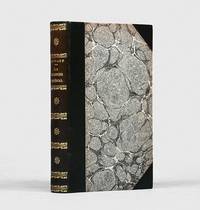
1758rif. 141839Paris: J. Barbou 1758. full brown leather border stamped in blind on the front and rear boards gilt ornaments on spine title in second compartment five raised bands all edges stained red marbled endsheets. small 8vo. full brown leather border stamped in blind on the front and rear boards gilt ornaments on spine title in second compartment five raised bands all edges stained red marbled endsheets. 1ff.-92 3 -263 pages. Pour éclaircir quelques traits de l"histoire de l'Imprimerie & prouver que Guttemberg n'en est pas l'Inventeur. Two works bound in one. Very rare first edition Bigmore and Wyman p.228. Private bookplate of Jackson Burke on the verso of the front free endpaper. Contemporary boards with some rubbing to the spine and extremities corners a bit worn gilt on the spine is lightly flaking evidence of bookplate removal to front and rear pastedowns. Else a fine copy of this very scarce work. Two works bound together. Complete titles are: Dissertation sur l'origine et les progrès de l'art de graver en bois 1758 and De l'origine et des productions de l'imprimerie primitive en taille de bois 1759. Fournier 1712--1768 was born in Paris and trained as a wood engraver. He later turned to steel engraving. In the first essay Fournier sets out to prove that Gutenberg was not the inventor of the printing press by examining the history of printing. He believes that the technology Gutenberg made popular existed long before the German printer's work. The second volume follows this up with further discussion of the origins of woodcut prints. Fournier wrongly disputes the dating of Mr. De Bure le Jeune concerning the Gutenberg Bible but he is the first with the help of an observation by Gerard Meerman to note the progressive increase in the number of lines per page in the early stages of Bible production. J. Barbou unknown
1872rif. ST17640-G121872-1921. 60 different editions in 61 volumes. Most items in their original publisher's bindings mostly cloth or wrappers and a few in limp suede; one in half morocco. Condition ranging from very good to very fine; many of the cloth items with light shelfwear rubbing to edges mild soiling fraying to head and tail of spine and minor condition issues internally light scattered foxing and browning a handful of items with more noticeable condition issues spine partially lost rubbed joints moderate browning etc. but on the whole an excellent group. Amassed over the course of many years by a passionate collector of the Rubaiyat this is a very substantial and wide-ranging group of 60 works that attest to the work's enduring popularity more than 150 years after Edward FitzGerald introduced it to the West. Son of a wealthy Irish landowner FitzGerald had enough money to pursue a rather desultory literary career as a "genteel gipsy" in Terhune's words before beginning to study languages in middle age. He started his translation of the quatrains "rubáiyát" in Persian attributed to "Umar Khayyam" in 1856; according to DNB about half of FitzGerald's final work paraphrases rather than directly translates portions of the 11th century poem while the rest is original verse inspired by Omar. "The result is generally seen as being in some ways an original English poem one that is much better known than Omar's poem is in Persian." DNB In Jewett's opinion it certainly earned FitzGerald "a prominent place among the immortals of English literature." In 1858 FitzGerald submitted 25 of the "less wicked" verses to "Fraser's Magazine" only to be rejected. He had 250 copies published anonymously at his own expense but had no luck selling them. Admitting defeat he gave 200 copies to Quaritch; these sold so poorly that they were relegated to the penny bin where Potter says they were discovered--and soon celebrated--by Dante Gabriel Rossetti and Algernon Swinburne. Those copies that remained unsold when Quaritch moved to Piccadilly in 1860 were either lost or destroyed but by 1861 Rossetti and his Pre-Raphaelite brethren along with Celtic scholar Whitley Stokes were evangelizing for the work embracing the lush lyrical verse that would move English poetry away from Victorian orthodoxy and convention. According to Day by the end of the 19th century "a copy of the 'Rubaiyat' upon an Oxford table was a symbol of sophistication. Today . . . it remains the most popular single poem of the Victorian era." The present collection is especially strong in illustrated editions with more than 25 artists represented including Edmund Dulac Elihu Vedder Willy Pogany Adelaide Hanscom Gilbert James Edmund J. Sullivan Arthur Szyk René Bull and Abanindro Nath Tagore. Notable text editions in this group include a Third Edition of FitzGerald's translation; a First Published American Edition; and a signed and inscribed copy of Eben Francis Thompson's translation. There is also a small group of fine press printings including examples by the Gregynog Press Thomas Mosher and Elbert Hubbard. There are no duplicated editions in this collection and there are no trade paperbacks. A full list of the collection's contents is available upon request. unknown
1806rif. 145411Paris: Barba 1806. A beautiful copy Scarce first edition of this essential culinary encyclopaedia the most popular work published by a professional cook in the 19th century. Viard a worthy competitor to Carême in terms of celebrity dedicated his book to the famed gourmand and restaurant reviewer Grimod de La Reynière praising Grimod and his fellow food enthusiasts for having elevated culinary discourse. "To judge from his practical knowledge Viard must have been a professional cook at one time thought to have been chef de cuisine to Louis Philippe comte de Ségur and Francis Egerton 8th Earl of Bridgewater but he described himself simply as an homme de bouche food expert probably someone in charge of catering for a large household. Despite his book's impressive title Viard declared he was writing for 'all levels of fortune' in this egalitarian society of citoyens and indeed the polished text includes such basics as pea soup quick-cooked rabbit and salt cod provençale. At a higher level he was the first cook to describe the classic puffy soufflé flavoured with chestnuts frangipane white coffee vanilla or potato still a novelty that became such a symbol of France. The book did well even when the restoration of the French monarchy required a hasty title change to Le cuisinier royale and the 'year of revolutions' in 1848 precipitated another change this time to Le cuisinier national. only to revert to impérial once more under Emperor Napoleon III. The text too underwent hundreds of additions first by Viard and later by colleagues allowing it to remain in print until 1875" Willan running to at least thirty-two editions. Food scholar Darra Goldstein notes that Le cuisinier impérial also contains the first published recipe for apple charlotte. Hector Dubois d'Enghien was a trade bookbinder son of the prominent Brussels binder Joseph-François Dubois d'Enghien 1841-1923. He took over his father's workshop c.1918 and partnered with Edmond Dooms a gilder from De Samblanx in 1923. An accomplished scholar Hector Dubois d'Enghien wrote a history of bookbinding in Belgium published in 1954. The first edition of Le cuisinier impérial is rare both institutionally and commercially. WorldCat Library Hub and KVK locate just six copies institutionally: three copies in Germany Badische LB LB Rheinland-Pfalz Sächsische LB two in the US Harvard Schlesinger Indiana and one in France BnF. We can trace four copies at auction since the 1920s only one of which is dated from within the last 45 years. Octavo 192 x 122 mm. Beautifully bound by Dubois d'Enghien-Dooms in early 20th-century dark green straight-grain half morocco smooth spine lettered in gilt separated into compartments with gilt scrollwork rolls and double fillets floral motifs to first third fourth and fifth compartments marbled boards edges sprinkled blue. Bound like Cagle without the first leaf half-title verso a publisher's advertisement. Fine externally; binder's stamp to front pastedown contents evenly browned and generally clean central gatherings foxed and single stain to sig. 7.7 small spot to p. 387 partly obscuring one word a few ink marks to Index. An excellent copy. Cagle 433; Vicaire 860; Willan pp. 258-9. Not in Bitting see note on p. 478 for later editions. Darra Goldstein The Oxford Companion to Sugar and Sweets 2015. hardcover
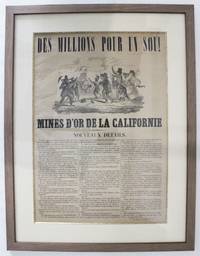
1849rif. 5043Paris: Typ. Schneider Rue d'Erfurth 1 1849. Very good. Broadside approximately 18 x 13 inches. Matted and framed. A pair of short closed tears repaired at lower edge. Even toning and light creasing. Contemporary manuscript annotation under caption title. A wonderful illustrated faux news broadside published in Paris as gold fever coursed through Europe in 1849. The headline promises "nouveaux détails" of the gold mines in California but the text is in fact a humorous description and light-hearted admonishment of the multitudes thoughtlessly giving up their livelihoods for the hardscrabble life of a gold digger in the California wilderness. The first section runs through a litany of types who are abandoning their lives for adventure and advises them not to consider the difficulties of the journey: "En route pour les mines d'or de la Californie! Partez! Il n'est pas néccessaire que vous preniez de lourds baggages : une cassette et une bonne pioche vous suffriont. Ne vous laissez pas décourager par la peur d'une navigation de cinq mois. elle sera peut-être périlleuse. mais le résultat est si consolant : de l'or!. toujours de l'or!. Qu'importent la colique et les fièvres doublées d'un mal de mer brutal. de l'or!. toujours de l'or!. Qu'importe d'être noir ou jaune en mourant du moment qu'on se repose dans un linceul d'or pour l'éternité! Partez!" The remainder of the text somewhat sardonically describes life in California and warns prospective travelers not long for the comforts of home but rather to concentrate on their sought-after riches: "Par example ne vous attendez pas à jouir de toutes les douceurs de la vie. Vous n'y trouverez ni biftecks au beurre d'anchois ni dinde truffées; car les aliments y sont rares. Mais les racines y sont en grande abondance. Vous vivrez un peu à la manière des anachorètes pour un temps. seulement vous déterrerez de l'or. ce qu'ils ne faisaient pas que l'on sache." The illustration which occupies approximately the top third of the broadside depicts men and women from all walks of life carrying pickaxes on their shoulders and racing for a ship about to depart. The image carries the printed signature of "B. Netter;" a contemporary manuscript note under the caption identifies the publication date as February 17 1849. The Bibliothèque Nationale de France estimates that as many as 40000 French men and women made their way to California between 1848 and 1856. The present broadside is an excellent document of California gold fever in France and the pervasive interest in gold rush news in Europe during the mid-19th century. Rare we locate just four copies at Berkeley UCSD California Historical Society and the BNF. Typ. Schneider, Rue d'Erfurth, 1 unknown