17.560 risultati
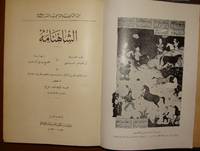
1932rif. 000474Cairo: DÄr al-Kutub al-Miṣriyya 1932. First edition. Quarto 4to contemporary hardcover binding. Arabic text. Very good condition. This important scholarly Arabic edition of al-ShÄhnÄma comprises two parts bound in one volume. It opens with an extensive 108-page critical introduction by ʿAbd al-WahhÄb ʿAzzÄm Professor at the Egyptian University followed by the main text in two sections of 389 and 343 pages respectively. The volume is illustrated with several finely reproduced plates of Persian miniature paintings. The Arabic text is based on the medieval translation by al-Fatḥ b. ʿAlī al-BindÄrī d. 643 AH / 1245 AD one of the earliest and most significant Arabic renderings of Ferdowsī's Persian epic. This edition was carefully collated with the original Persian text with the translation partially completed corrected annotated and critically edited by ʿAbd al-WahhÄb ʿAzzÄm making it a landmark in modern Arabic–Persian literary scholarship. Printed in a limited edition of 1200 copies only. The Persian source text used for comparison is identified in the editorial apparatus as Inventory no. 000441 a Qajar-period Persian copy printed under the name of Abū al-Fatḥ ShÄh QÄjÄr. A significant modern Arabic edition of one of the greatest monuments of Persian literature combining textual criticism historical scholarship and visual documentation and representing the Egyptian scholarly engagement with classical Persian epic in the early 20th century. Dar ul Kutub al- Misriyya hardcover
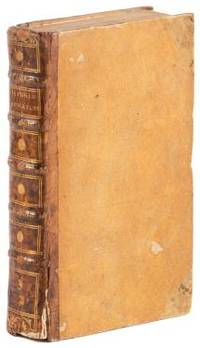
rif. 106082Gedruckt zu Franckfurt am Mayn, durch Johan Feyerabendt, 1598, 1 volume in-4 de 285x195x25 mm environ, 1f. blanc, 4ff. (titre en rouge et noir avec belle vignette, 134 feuillets (un numéro pour 2 pages), 3 ff. (BeschluB, Register, colophon), demi basane brune, dos à nerfs portant titres en noir sur pièce de titre papier ancien, orné de caissons à froid. Notre exemplaire date de 1598, troisième édition. Illustrations dans le texte de 41 figures gravées sur bois dans le texte+ une vignette de titre gravée sur bois et une gravure sur bois d'armoiries sur la feuille de dédicace, texte agrémenté de délicates lettrines et fins culs-de-lampe. Rousseurs et pages brunies, ex-libris manuscrit ancien sur la page de titre, cartonnage frotté, une galerie de ver sur une coiffe et petite déchirure sur l'autre coiffe, petite déchirure marginale p. 129, intérieur bien conservé, exemplaire complet.
1634In -4°, pp. (22), 289 (i.e. 379), (9); frontespizio inciso (al fr. la data è 1633) e un ritratto calcografico dell’autore che precede il testo. Carta Yy con prova di penna, con testo ancora leggibile. Saavedra, nato e vissuto a Cordoba fra il XVI e il XVII secolo fu un poeta spagnolo, lontano parente di Cervantes. Fumagalli 428. Il volume è rilegato con la raccolta poetica del figlio di Saavedra, “Ocios de Aganipe divididos en differentes poesias” - pp. (6), 260, frontespizio inciso -, pubblicato anch’esso a Trani nello stesso anno. Due rarissime opere spagnole appartenenti al Siglo de oro. In -4 °, pp. (22), 289 (i.e. 379), (9); engraved title page (the title page date is 1633) and a chalchographic portrait of the author preceding the text. Yy leaf with spoiled with ink, yet the text is still readable. Saavedra, was born and lived in Cordoba between the 16th and 17th centuries, was a Spanish poet, distant relative of Cervantes. Fumagalli 428. The volume is bound with the poetic collection of Saavedra’s son, “Ocios de Aganipe divididos en differentes poesias” - pp. (6), 260, engraved title page -, also published in Trani in the same year. Two very rare Spanish works belonging to the Siglo de oro.
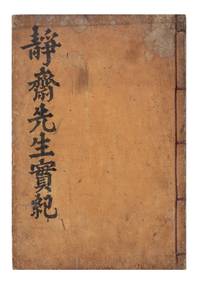
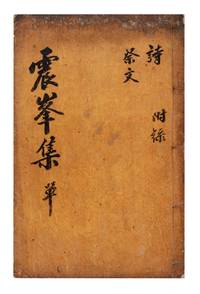
rif. 9511Woodblock-printed. 56 folding leaves. Two juan in one vol. Large 8vo 310 x 210 mm. orig. yellow patterned semi-stiff wrappers orig. stitching. YÅngch’Ån: 1854. First edition of this collection including the life and writings of Cho Sang-ch’i or Jo Sang-chi 曺尙治 fl. 1419-55 a prominent official in the early ChosÅn period. From an early age Cho studied “writings on human nature and principle” sÅngni chi sŠ性ç†ä¹‹æ›¸ — that is Neo-Confucianism. As one text on his life put it he “took this Confucian culture of ours as his personal duty.” Cho’s life was tied up with the factional conflicts that saw Sejo’s usurpation of the ChosÅn throne in 1455. Cho was among the “large number” of officials who “viewed the new ruler with distaste on moral grounds” Edward W. Wagner The Literati Purges: Political Conflict in Early Yi Korea p. 9. After Sejo demoted the previous king giving him the title Prince Nosan and subsequently had him killed Cho “got hold of a stone and neither cutting nor polishing it wrote in his own hand and had it inscribed ‘Here rests Cho Sang-ch’i the exiled Deputy Education Intendant of the court of Nosan’.” As recounted in one of the texts gathered in this collection he thus signaled his opposition to the new king. Cho was posthumously honored in the late 18th century. The book contains a Prefaces by Pak YÅng-wÅn 朴永元 1791-1854 and Yi Han-ŭng æŽæ¼¢è†º 1778-1864 the latter dated 1854 and the colophon by Yi Hwi-ryÅng æŽå½™å¯§ 1788-1861. Interesting features of our book include the use of the reign of the Korean kings for dating — “kabŭn the sixth year of the reign of the present king Ch’Åljong” 上之六年甲寅 is the date of Yi’s Preface — and the margins that cut through columns where the first character has been raised in deference to the dynasty. A note toward the end of juan 1 9a says that the two pieces that follow had been missed when the book was “first printed” ch’ogan åˆåˆŠ implying an earlier edition. We are not aware that one is extant however. Cho SÅg-u is listed as the author in the Korean Old and Rare Collection Information System as well as in the Jangseogak catalogue whence our attribution of authorship. Fine copy. References Encyclopedia of Korean Culture 한국민족문화대백과사전. https://encykorea.aks.ac.kr/ Digital Jangseogak. https://jsg.aks.ac.kr/ Korean Old and Rare Collection Information System í•œêµê³ 문헌종합목ë¡. unknown
rif. 9511Woodblock-printed. 56 folding leaves. Two juan in one vol. Large 8vo 310 x 210 mm. orig. yellow patterned semi-stiff wrappers orig. stitching. YÅngch’Ån: 1854. First edition of this collection including the life and writings of Cho Sang-ch’i or Jo Sang-chi 曺尙治 fl. 1419-55 a prominent official in the early ChosÅn period. From an early age Cho studied “writings on human nature and principle” sÅngni chi sŠ性ç†ä¹‹æ›¸ — that is Neo-Confucianism. As one text on his life put it he “took this Confucian culture of ours as his personal duty.” Cho’s life was tied up with the factional conflicts that saw Sejo’s usurpation of the ChosÅn throne in 1455. Cho was among the “large number” of officials who “viewed the new ruler with distaste on moral grounds” Edward W. Wagner The Literati Purges: Political Conflict in Early Yi Korea p. 9. After Sejo demoted the previous king giving him the title Prince Nosan and subsequently had him killed Cho “got hold of a stone and neither cutting nor polishing it wrote in his own hand and had it inscribed ‘Here rests Cho Sang-ch’i the exiled Deputy Education Intendant of the court of Nosan’.” As recounted in one of the texts gathered in this collection he thus signaled his opposition to the new king. Cho was posthumously honored in the late 18th century. The book contains a Prefaces by Pak YÅng-wÅn 朴永元 1791-1854 and Yi Han-ŭng æŽæ¼¢è†º 1778-1864 the latter dated 1854 and the colophon by Yi Hwi-ryÅng æŽå½™å¯§ 1788-1861. Interesting features of our book include the use of the reign of the Korean kings for dating — “kabŭn the sixth year of the reign of the present king Ch’Åljong” 上之六年甲寅 is the date of Yi’s Preface — and the margins that cut through columns where the first character has been raised in deference to the dynasty. A note toward the end of juan 1 9a says that the two pieces that follow had been missed when the book was “first printed” ch’ogan åˆåˆŠ implying an earlier edition. We are not aware that one is extant however. Cho SÅg-u is listed as the author in the Korean Old and Rare Collection Information System as well as in the Jangseogak catalogue whence our attribution of authorship. Fine copy. References Encyclopedia of Korean Culture 한국민족문화대백과사전. https://encykorea.aks.ac.kr/ Digital Jangseogak. https://jsg.aks.ac.kr/ Korean Old and Rare Collection Information System í•œêµê³ 문헌종합목ë¡. unknown books
1593rif. CA0273Groundbreaking treatise on exotic botany and tropical medicine 4586blank leaf pages with numerous woodcut illustrations. Duodecmo 6 1/4 x 3 3/4" octavo bound in quarter leather with five raised spine bands with spine tooled in gilt over brown boards. Translated from the Portuguese into Latin by Carolus Clusius Charles de L'Ecluse. Fourth Edition. Garcia de Orta's groundbreaking treatise on exotic botany and tropical medicine to which are added two other important works on the subject. Orta's contribution comprises pp. 1-2177. It is followed by: Christophori a Costa medici et cheirurgi Aromatum & medicamentorum in Orientali India nascentium. Pp. 225-312. Simplicium medicamentorum ex novo orbe delatorum quorum in medicina usus est historia. descripta à d. Nicolao Monardis. Tertia editio. Pp. 313-4044 Simplicium medicamentorum ex novo orbe delatorum quorum in medicina usus est historia. descripta à d. Nicolao Monardis. Altera editio. Pp. 409-456. Rare combined edition of three major 16th century treatises in the history of botanical and medical knowledge of plants from India and the New World. These Latin editions had all previously been published by Plantin. Garcia da Orta's treatise originally published in 1563 in Goa in Portuguese is the first Indian materia medica written by a European and the first textbook of tropical medicine. The text of Acosta of which L'Ecluse gives an abridgment is a complement to the text of Orta. Finally the Latin translation also abbreviated of the treatises of Nicolas Monardes details the medicines and medicinal herbs of South America and describes their native uses. His text also contains the first representation of tobacco and also that of pepper and even the armadillo. A rare complete copy with the final unpaginated leaves including three privileges the colophon the large printer's device of Plantin and the final blank. Condition: Some rubbing and wear to covers spine foot chipped; some minor foxing and aging within early ink underlines to the early leaves of the first work else good. Ex officina Plantiniana, apud viduam, & Ioannem Moretum hardcover
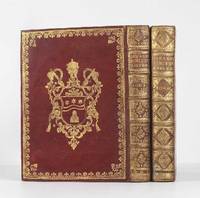
rif. 5035Woodcut printer’s device on titles. 4 p.l. xxvii 1 368 pp.; 547 pp. Large 4to cont. Italian red morocco covers of Vol. II a little rubbed sides richly gilt with the arms of Pope Clement XIV in gilt in center of each cover spines richly gilt each tooled slightly differently a.e.g. Faenza: G.A. Archi 1769. First edition and a very handsome set with the arms of Pope Clement XIV on covers of the first bio-bibliographical guide to the writers of Ravenna; about 2500 works by more than 600 authors are included. Ginanni 1698-1774 the learned Italian bibliographer and historian was a professor in Florence and then in Ravenna where he developed a great knowledge of Italian history and writers. He formed an important collection of books and medals and was a member of many academic societies. Very fine set. Stamp on titles of the Biblioteca Piervissana on titles. From the library of A.R.A. Hobson with bookplate. ⧠Besterman 5346. N.B.G. Vol. 20 cols. 570-71. unknown
rif. 5035Woodcut printer’s device on titles. 4 p.l. xxvii 1 368 pp.; 547 pp. Large 4to cont. Italian red morocco covers of Vol. II a little rubbed sides richly gilt with the arms of Pope Clement XIV in gilt in center of each cover spines richly gilt each tooled slightly differently a.e.g. Faenza: G.A. Archi 1769. First edition and a very handsome set with the arms of Pope Clement XIV on covers of the first bio-bibliographical guide to the writers of Ravenna; about 2500 works by more than 600 authors are included. Ginanni 1698-1774 the learned Italian bibliographer and historian was a professor in Florence and then in Ravenna where he developed a great knowledge of Italian history and writers. He formed an important collection of books and medals and was a member of many academic societies. Very fine set. Stamp on titles of the Biblioteca Piervissana on titles. From the library of A.R.A. Hobson with bookplate. ⧠Besterman 5346. N.B.G. Vol. 20 cols. 570-71. unknown books
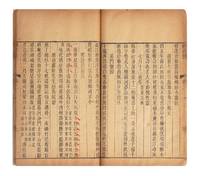
rif. 9506Preface title: “Qiu jiang ji.” 76; 99 folding leaves of which two in Vol. II are in manuscript replacing missing printed leaves. Six parts in two vols. 8vo modern wrappers text leaves lightly browned new stitching. China: Prefaces dated 1754 & 1756. First edition and very rare not in WorldCat of this collection of the poetry and prose of Ren Huang 1683-1768 one of “the foremost lyrical poets” Ko p. 92 see below of the Guangdong region and a member of the artistic circle whose center was Gu Erniang a famous woman inkstone carver whose shop was located in Zhuanszhu Lane in the imperial city of Suzhou. This collectors and scholars of this circle were both patrons and clients of Gu Erniang and in fact Ren’s main asset late in life was his collection of precious carved inkstones. Ren 1683-1768 whose literary name was Xintian or Shentian Ren was a native of Yongful county in Fujian. Born into a well-educated family of generations of government officials he learned poetry and painting as a child. He received the juren degree in 1702 and served as a county magistrate in Sihui in Guangdong province. Most of the poetry in this work is from manuscripts and appears here for the first time whereas the essays and other prose writings were previously published. The second preface dated 1754 is signed by Tingheng Xu and the third preface of 1756 is signed by Tiaoyuan Sang 1695-1771 scholar. A nice set but with two leaves of text replaced in early manuscript. Several natural paper flaws not touching text and mended. With the seal of Yosaburo Takekoshi 1865-1950 Japanese historian and politician. Preserved in a chitsu. ⧠Dorothy Ko The Social Life of Inkstones. Artisans and Scholars in Early Qing China 2017. unknown
rif. 9506Preface title: “Qiu jiang ji.” 76; 99 folding leaves of which two in Vol. II are in manuscript replacing missing printed leaves. Six parts in two vols. 8vo modern wrappers text leaves lightly browned new stitching. China: Prefaces dated 1754 & 1756. First edition and very rare not in WorldCat of this collection of the poetry and prose of Ren Huang 1683-1768 one of “the foremost lyrical poets” Ko p. 92 see below of the Guangdong region and a member of the artistic circle whose center was Gu Erniang a famous woman inkstone carver whose shop was located in Zhuanszhu Lane in the imperial city of Suzhou. This collectors and scholars of this circle were both patrons and clients of Gu Erniang and in fact Ren’s main asset late in life was his collection of precious carved inkstones. Ren 1683-1768 whose literary name was Xintian or Shentian Ren was a native of Yongful county in Fujian. Born into a well-educated family of generations of government officials he learned poetry and painting as a child. He received the juren degree in 1702 and served as a county magistrate in Sihui in Guangdong province. Most of the poetry in this work is from manuscripts and appears here for the first time whereas the essays and other prose writings were previously published. The second preface dated 1754 is signed by Tingheng Xu and the third preface of 1756 is signed by Tiaoyuan Sang 1695-1771 scholar. A nice set but with two leaves of text replaced in early manuscript. Several natural paper flaws not touching text and mended. With the seal of Yosaburo Takekoshi 1865-1950 Japanese historian and politician. Preserved in a chitsu. ⧠Dorothy Ko The Social Life of Inkstones. Artisans and Scholars in Early Qing China 2017. unknown books
rif. 942552 folding leaves. Large 8vo 298 x 190 mm. orig. patterned semi-stiff wrappers wrappers a little soiled old stitching stitching partially defective. Korea: Preface dated 1801 Afterword dated 1816. A very rare edition of this collection of documents relating to seven men and their actions during the Imjin War and the Manchu invasion of Korea in 1636. The invasions of Korea first by the Japanese in the 1590s and then by the Manchus in the 1620s and 1630s were important moments in the course of events that led to the rise of the Manchu Qing empire in continental East Asia. The large-scale fighting and movement of troops from Japan and China into the Korean peninsula in the late 16th century mark a watershed in Korean history. The cost of the wars also severely weakened the Chinese Ming dynasty which eventually collapsed in 1644 ushering in an entirely new balance of power in the region. The "seven worthies" of the title include Pak Kwang-jÅn æœ´å…‰å‰ 1526-97 style name Chuk-ch'Ån or Juk-cheon ç«¹å· and his sons Kŭn-hyo æœ´æ ¹å 1550-1607 and Kŭn-je 根悌 all of whom distinguished themselves during the Japanese invasion in the 1590s and grandsons and great-grandsons who resisted the Manchus in 1636 as commanders of irregulars. Our copy has a Preface dated 1801 by Song Hwan-gi 宋煥箕 1728-1807 a ChosÅn scholar-official. Song writes that "in the history of armed invasions of our dynasty none were more brutal than the two disorders of the imjin 1592 and pyÅngja 1636 years." Four generations of the Pak family - "fathers and sons ancestor and descendants older and younger brothers uncles and nephews" - had distinguished themselves during those trying times. Song ends the Preface by saying that "the person who now came to ask me for my text is Chae-hwan an eighth-generation descendant of Chuk-ch'Ån." The wording suggests that Pak Chae-hwan edited the work hence our attribution of authorship. We find no matches to our copy in either WorldCat or the Korean Old and Rare Collection Information System KORCIS. In addition to the Preface dated 1801 our copy has a colophon pal 跋 by Yi æŽé¶´ä¾† also known as Yi Ch'Ång æŽð¤²Ÿ 1792-1861 dated 1816. Some copies described in KORCIS have 20 characters per column while our copy has 19 on some pages and 18 on others. Some catalogues ascribe authorship of the book to Pak Chung-hong 朴é‡æ´ª 1802-72 probably because one edition of the present work was published in 1856 along with a collection of Pak Kwang-jÅn's works that Pak Chung-hong edited. This is the case with the Harvard-Yenching copy K 5568.2 4398 4 WorldCat 40280697 which has a Preface dated 1856 byÅngjin 丙辰. References Encyclopedia of Korean Culture 한국민족문화대백과사전. https://encykorea.aks.ac.kr/ Korean Old and Rare Collection Information System í•œêµê³ 문헌종합목ë¡. https://www.nl.go.kr/korcis/index.do. unknown
rif. 942552 folding leaves. Large 8vo 298 x 190 mm. orig. patterned semi-stiff wrappers wrappers a little soiled old stitching stitching partially defective. Korea: Preface dated 1801 Afterword dated 1816. A very rare edition of this collection of documents relating to seven men and their actions during the Imjin War and the Manchu invasion of Korea in 1636. The invasions of Korea first by the Japanese in the 1590s and then by the Manchus in the 1620s and 1630s were important moments in the course of events that led to the rise of the Manchu Qing empire in continental East Asia. The large-scale fighting and movement of troops from Japan and China into the Korean peninsula in the late 16th century mark a watershed in Korean history. The cost of the wars also severely weakened the Chinese Ming dynasty which eventually collapsed in 1644 ushering in an entirely new balance of power in the region. The "seven worthies" of the title include Pak Kwang-jÅn æœ´å…‰å‰ 1526-97 style name Chuk-ch'Ån or Juk-cheon ç«¹å· and his sons Kŭn-hyo æœ´æ ¹å 1550-1607 and Kŭn-je 根悌 all of whom distinguished themselves during the Japanese invasion in the 1590s and grandsons and great-grandsons who resisted the Manchus in 1636 as commanders of irregulars. Our copy has a Preface dated 1801 by Song Hwan-gi 宋煥箕 1728-1807 a ChosÅn scholar-official. Song writes that "in the history of armed invasions of our dynasty none were more brutal than the two disorders of the imjin 1592 and pyÅngja 1636 years." Four generations of the Pak family - "fathers and sons ancestor and descendants older and younger brothers uncles and nephews" - had distinguished themselves during those trying times. Song ends the Preface by saying that "the person who now came to ask me for my text is Chae-hwan an eighth-generation descendant of Chuk-ch'Ån." The wording suggests that Pak Chae-hwan edited the work hence our attribution of authorship. We find no matches to our copy in either WorldCat or the Korean Old and Rare Collection Information System KORCIS. In addition to the Preface dated 1801 our copy has a colophon pal 跋 by Yi æŽé¶´ä¾† also known as Yi Ch'Ång æŽð¤²Ÿ 1792-1861 dated 1816. Some copies described in KORCIS have 20 characters per column while our copy has 19 on some pages and 18 on others. Some catalogues ascribe authorship of the book to Pak Chung-hong 朴é‡æ´ª 1802-72 probably because one edition of the present work was published in 1856 along with a collection of Pak Kwang-jÅn's works that Pak Chung-hong edited. This is the case with the Harvard-Yenching copy K 5568.2 4398 4 WorldCat 40280697 which has a Preface dated 1856 byÅngjin 丙辰. References Encyclopedia of Korean Culture 한국민족문화대백과사전. https://encykorea.aks.ac.kr/ Korean Old and Rare Collection Information System í•œêµê³ 문헌종합목ë¡. https://www.nl.go.kr/korcis/index.do. unknown books
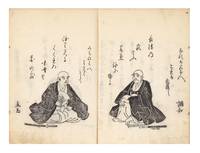
rif. 797121 full-page woodcuts. 30; 29; 26; 23; 31 folding leaves. Five vols. 8vo orig. wrappers wrappers rather rubbed & frayed new stitching. Kyoto: Izutsuya Shobei; Edo: Nishimura Uhei 1697. First edition of this collection of haikai written by several members of the circle surrounding Matsuo Basho 1644-94 Japan’s best-loved author. The poems were gathered by Taihakudo Torin d. 1719 a friend and disciple of Basho there is speculation that Torin was Basho’s nephew or younger brother. In 1696 to prepare for the third anniversary of Basho’s death Torin retraced Basho’s famous 1689 journey through the main island of Japan which resulted in Basho’s best-known work Oku no Hosomichi a poetic diary in the form known as haibun a combination of prose and haikai. Torin inspired by his own journey decided to collect the poems and have them printed in the present work. The poems arranged by the four seasons and with a section of poems written at the time of the third anniversary of Basho’s death were mainly written by a group of Edo-based poets and disciples of Basho. Torin has furnished a Preface and some of the poems. Many haiku are printed with the names or pen names of the authors. There is an Afterword by Sodo Yamaguchi 1642-1716 haiku poet flood-control expert and close friend and disciple of Basho. The second volume has a series of 20 attractive woodcuts of poets including on facing pages Basho and his disciple or nephew or younger brother Torin. Very good set. Extremely rare with no copy in WorldCat. Minor worming in the final volume mended. unknown
rif. 797121 full-page woodcuts. 30; 29; 26; 23; 31 folding leaves. Five vols. 8vo orig. wrappers wrappers rather rubbed & frayed new stitching. Kyoto: Izutsuya Shobei; Edo: Nishimura Uhei 1697. First edition of this collection of haikai written by several members of the circle surrounding Matsuo Basho 1644-94 Japan’s best-loved author. The poems were gathered by Taihakudo Torin d. 1719 a friend and disciple of Basho there is speculation that Torin was Basho’s nephew or younger brother. In 1696 to prepare for the third anniversary of Basho’s death Torin retraced Basho’s famous 1689 journey through the main island of Japan which resulted in Basho’s best-known work Oku no Hosomichi a poetic diary in the form known as haibun a combination of prose and haikai. Torin inspired by his own journey decided to collect the poems and have them printed in the present work. The poems arranged by the four seasons and with a section of poems written at the time of the third anniversary of Basho’s death were mainly written by a group of Edo-based poets and disciples of Basho. Torin has furnished a Preface and some of the poems. Many haiku are printed with the names or pen names of the authors. There is an Afterword by Sodo Yamaguchi 1642-1716 haiku poet flood-control expert and close friend and disciple of Basho. The second volume has a series of 20 attractive woodcuts of poets including on facing pages Basho and his disciple or nephew or younger brother Torin. Very good set. Extremely rare with no copy in WorldCat. Minor worming in the final volume mended. unknown books
rif. 8470Folding color-printed woodblock map. 49 folding leaves. Oblong 8vo orig. blue wrappers block-printed title label on upper cover label partly defective new stitching. Edo: Izumiya Shinpachi 1821. First edition and rare; WorldCat locates only one copy in Japan. Danrin is a temple that served as a college and institute to instruct Buddhist priests. In the early 17th century the Tokugawa shogunate recognized 18 temples of the Jodo Shinshu True Pure Land School as danrin: –Musashi Province today it incorporates Tokyo metropolis most of Saitama Prefecture & part of Kanagawa Prefecture: Zojo-ji Minato Tokyo; Denzuin Bunkyo Tokyo; Reigan-ji Koto Tokyo; Reizan-ji Sumida Tokyo; Banzuiin Koganei Tokyo; Renkei-ji Kawagoe Saitama; Shogan-ji Konosu Saitama; Daizen-ji Hachioji Tokyo; and Jokoku-ji Iwatsuki-ku Saitama. –Sagami Province: Komyo-ji Kamakura Kanagawa. –Shimosa Province: Gugyo-ji Yuki Ibaraki; Tozen-ji Matsudo Chiba; Daigan-ji Chiba Chiba; and Gugyo-ji Joso Ibaraki. –Kozuke Province: Daikoin Ota Gunma and Zendo-ji Tatashi Gunma. –Hitachi Province: Jofuku-ji Naka Ibaraki and Dainen-ji Inashiki Ibaraki. Takeo 1782-1839 was a high-ranking Buddhist priest at the main Zojo-ji temple where he was the historian of Jodo Shinshu and of the various temples and maintained the growing archives of the sect. Active as an author throughout his life he retired as a priest in 1821 and became a teacher and tutor for the bakufu and a member of the Edo literati. This book serves as a guide to the 18 danrin temples. It begins with a folding color-printed woodblock map of the region containing these temples. For each temple Takeo provides a valuable history with details of the important buildings and treasures number of students and teachers etc. The book also serves as a rather personal travel guide for pilgrims who want to visit all the temples mentioning distances between establishments sites to see along the way notes on where to cross rivers etc. At the end Takeo provides a “cheat sheet” for simplified chanting and recommends that pilgrims carry with them pickled plums salt towels extra tabi socks fans tissue paper and yatate small personal writing sets. A very good copy preserved in a chitsu. Some worming in the gutter and towards the end the outer corner occasionally touching the text. unknown
rif. 8470Folding color-printed woodblock map. 49 folding leaves. Oblong 8vo orig. blue wrappers block-printed title label on upper cover label partly defective new stitching. Edo: Izumiya Shinpachi 1821. First edition and rare; WorldCat locates only one copy in Japan. Danrin is a temple that served as a college and institute to instruct Buddhist priests. In the early 17th century the Tokugawa shogunate recognized 18 temples of the Jodo Shinshu True Pure Land School as danrin: –Musashi Province today it incorporates Tokyo metropolis most of Saitama Prefecture & part of Kanagawa Prefecture: Zojo-ji Minato Tokyo; Denzuin Bunkyo Tokyo; Reigan-ji Koto Tokyo; Reizan-ji Sumida Tokyo; Banzuiin Koganei Tokyo; Renkei-ji Kawagoe Saitama; Shogan-ji Konosu Saitama; Daizen-ji Hachioji Tokyo; and Jokoku-ji Iwatsuki-ku Saitama. –Sagami Province: Komyo-ji Kamakura Kanagawa. –Shimosa Province: Gugyo-ji Yuki Ibaraki; Tozen-ji Matsudo Chiba; Daigan-ji Chiba Chiba; and Gugyo-ji Joso Ibaraki. –Kozuke Province: Daikoin Ota Gunma and Zendo-ji Tatashi Gunma. –Hitachi Province: Jofuku-ji Naka Ibaraki and Dainen-ji Inashiki Ibaraki. Takeo 1782-1839 was a high-ranking Buddhist priest at the main Zojo-ji temple where he was the historian of Jodo Shinshu and of the various temples and maintained the growing archives of the sect. Active as an author throughout his life he retired as a priest in 1821 and became a teacher and tutor for the bakufu and a member of the Edo literati. This book serves as a guide to the 18 danrin temples. It begins with a folding color-printed woodblock map of the region containing these temples. For each temple Takeo provides a valuable history with details of the important buildings and treasures number of students and teachers etc. The book also serves as a rather personal travel guide for pilgrims who want to visit all the temples mentioning distances between establishments sites to see along the way notes on where to cross rivers etc. At the end Takeo provides a “cheat sheet” for simplified chanting and recommends that pilgrims carry with them pickled plums salt towels extra tabi socks fans tissue paper and yatate small personal writing sets. A very good copy preserved in a chitsu. Some worming in the gutter and towards the end the outer corner occasionally touching the text. unknown books
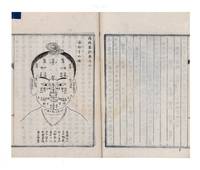
rif. 11584Two full-page drawings & 42 smaller drawings in the text. Three parts in one. 60 folding pre-printed leaves. 8vo 247 x 174 mm. orig. wrappers orig. stitching. Japan: ca. 1770s-80s. An unpublished manuscript by Yamabe court doctor of the Nakatsu fiefdom in today's Ōita Prefecture. He also published several works on Chinese medicine and gynecology. This is his main work on smallpox and measles in which he focuses on the diagnosis prognosis and treatment of these infectious diseases in children. Many recipes for medicines are provided. This work remained in manuscript and was never published. We find one other manuscript copy at Kyoto University. The first part describes smallpox and measles and contains instructions on how to control outbreaks amongst children. The second part contains many fine drawings of eruptions on various parts of the body. Following each drawing Yamabe gives a diagnosis and a recipe for the appropriate medication. The third part discusses how to treat the symptoms especially fevers. Fine condition. ⧠For Yamabe's gynecological work see Mestler A Galaxy of Old Japanese Medical Books II p. 495. unknown
rif. 11584Two full-page drawings & 42 smaller drawings in the text. Three parts in one. 60 folding pre-printed leaves. 8vo 247 x 174 mm. orig. wrappers orig. stitching. Japan: ca. 1770s-80s. An unpublished manuscript by Yamabe court doctor of the Nakatsu fiefdom in today's Ōita Prefecture. He also published several works on Chinese medicine and gynecology. This is his main work on smallpox and measles in which he focuses on the diagnosis prognosis and treatment of these infectious diseases in children. Many recipes for medicines are provided. This work remained in manuscript and was never published. We find one other manuscript copy at Kyoto University. The first part describes smallpox and measles and contains instructions on how to control outbreaks amongst children. The second part contains many fine drawings of eruptions on various parts of the body. Following each drawing Yamabe gives a diagnosis and a recipe for the appropriate medication. The third part discusses how to treat the symptoms especially fevers. Fine condition. ⧠For Yamabe's gynecological work see Mestler A Galaxy of Old Japanese Medical Books II p. 495. unknown books
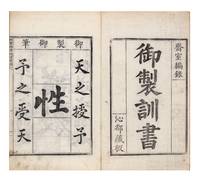
rif. 942941 folding leaves. Large 8vo 337 x 206 mm. orig. semi-stiff wrappers new stitching. Korea: Simdo æ²éƒ½ 1756. First edition and rare; WorldCat lists only one printed copy at Berkeley. This book of exhortations on good government with striking royal calligraphy was written by King YÅngjo or Yeongjo of ChosÅn 1694-1776 in 1756. At this time YÅngjo was commemorating the death of his father the previous king. According to Fang Chaoying 1908-85 YÅngjo then in his 65th year “could not foresee that he was to live twenty more years and so it appears that he was trying to justify himself in his own mind with regard to posterity as well as to the ancestors whom he expected to face any day” The Asami Library 115. YÅngjo offered three main principles for a king to follow: “to venerate Heaven to love the people and to treat the officials with respect” ibid. Large standard script characters written by the king himself are reproduced in the beginning of the book. The king’s brush records Confucian assertions such as “the following of human nature is called the Way / the cultivation of the Way is called instruction.” Accepting the Mencian dictum that human nature is inherently good the king continues: “I possess the good human nature / to realize the bright mandate of Heaven.” The main text of the book is reproduced in the handwriting of the important scholar-official SÅ MyÅng-ŭng or Seo Myeong-eung å¾å‘½è†º 1716-87. SÅ wrote in many genres and had a cosmopolitan outlook. For example he wrote a Preface to one of the major multilingual lexicographical works produced in ChosÅn in the 18th century see Söderblom Saarela “Mandarin over Manchu” 379-80. Very fine and fresh copy beautifully printed. References Fang Chaoying. The Asami Library: A Descriptive Catalog. Edited by Elizabeth Huff. Berkeley: University of California Press 1969. Söderblom Saarela Mårten. “Mandarin over Manchu: Court-Sponsored Qing Lexicography and Its Subversion in Korea and Japan.” Harvard Journal of Asiatic Studies 77.2 2017. unknown
rif. 942941 folding leaves. Large 8vo 337 x 206 mm. orig. semi-stiff wrappers new stitching. Korea: Simdo æ²éƒ½ 1756. First edition and rare; WorldCat lists only one printed copy at Berkeley. This book of exhortations on good government with striking royal calligraphy was written by King YÅngjo or Yeongjo of ChosÅn 1694-1776 in 1756. At this time YÅngjo was commemorating the death of his father the previous king. According to Fang Chaoying 1908-85 YÅngjo then in his 65th year “could not foresee that he was to live twenty more years and so it appears that he was trying to justify himself in his own mind with regard to posterity as well as to the ancestors whom he expected to face any day” The Asami Library 115. YÅngjo offered three main principles for a king to follow: “to venerate Heaven to love the people and to treat the officials with respect” ibid. Large standard script characters written by the king himself are reproduced in the beginning of the book. The king’s brush records Confucian assertions such as “the following of human nature is called the Way / the cultivation of the Way is called instruction.” Accepting the Mencian dictum that human nature is inherently good the king continues: “I possess the good human nature / to realize the bright mandate of Heaven.” The main text of the book is reproduced in the handwriting of the important scholar-official SÅ MyÅng-ŭng or Seo Myeong-eung å¾å‘½è†º 1716-87. SÅ wrote in many genres and had a cosmopolitan outlook. For example he wrote a Preface to one of the major multilingual lexicographical works produced in ChosÅn in the 18th century see Söderblom Saarela “Mandarin over Manchu” 379-80. Very fine and fresh copy beautifully printed. References Fang Chaoying. The Asami Library: A Descriptive Catalog. Edited by Elizabeth Huff. Berkeley: University of California Press 1969. Söderblom Saarela Mårten. “Mandarin over Manchu: Court-Sponsored Qing Lexicography and Its Subversion in Korea and Japan.” Harvard Journal of Asiatic Studies 77.2 2017. unknown books
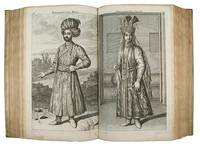
rif. 61001Amsterdam R. and G. Wetstein J. Oosterwyk and H. van de Gaete 1714. Folio 33.3 x 21.1 cm. Allegorical frontispiece by Picart dated 1711 title page in red and black; engraved portrait of de Bruyn by G. Kneller vi 472 xii pp.; 260 numbered engraved plates many double folded two large maps and 34 large text engravings not numbered including portraits views etc. Contemporary blind ruled and embossed vellum. Spine with six raised bands title written in ink in a neat contemporary hand. = First edition second issue of one of the most richly illustrated voyages through Russia Persia Iran and adjacent countries and territories made by the Dutch painter Cornelis de Bruin as spelled on title page or de Bruyn as spelled in the portrait 1652-1727. He went by sea from Amsterdam along the coast of Norway above the polar circle to Archangel and travelled southwards by river and overland through Russia and the Caspian Sea to Persia the Gulf and by ship again onward to Batavia now Jakarta Indonesia back to Persia and homewards across the Mediterranean. It is an extensive work important to naval and travel history and includes beautiful large panoramic views of for instance Archangel Moscow and "Spahan" = Isfahan Iran some impressively long when unfolded. The work contains a good deal of zoological illustrations; hence it is recorded in Claus Nissen's Zoologische Buchillustration. Most illustrations are as stated in the title from drawings made on the spot by De Bruin himself. The work was dedicated to Anton Ulrich Duke of Brunswyk and Lunenburg. This edition is identical to the 1711 edition published for the author by Willem and David Goerree. Provenance: armorial bookplate of former private owner David Dunlop "Merito" small pictorial bookplate of E. van Tongeren on front pastedown and one small previous owner's stamp - "A. Noorderbroek Amsterdam" - on the first blank. Old Japanese paper reinforcements to the outer edge of the front flyleaf a few plates may be from another copy same issue tiny weak bookseller's stamp in title page lower margin a pencil annotation below the portrait of De Bruin otherwise clean. In all an excellent copy in a contemporary binding. The plates in a strong impression. Henze I 378; Nissen ZBI 631N; Tiele 207 209. Not in Diba. hardcover
2008rif. 48605London.: Susan Allix. 2008. Full burgundy crushed morocco excised sections with curvilinear edges reveal a checkerboard pattern of gilt pink and café crème paper front board with three applied sections of white paper with monochrome drawings and four colour paintings see below mounted to squares or rectangles of burgundy crushed morocco with magnetic fastenings single painting mounted to rectangle of burgundy morocco affixed to centre of rear board smooth spine with tooled title in black cream handmade patterned paper doublures bronze free endpapers burgundy velvet-lined oatmeal drop-back box with morocco label to spine with title in black. Folio. 290 x 230 mm. Printed text in various types and illustration in various media all on various paper stock in various formats final leaf with justification and colophon. The édition de tête in the deluxe magnetic binding of one of Susan Allix's most extraordinary inventive capricious and whimsical artist books.From the edition limited to 24 numbered copies signed and numbered by Allix in pencil with this one of 8 from the édition de tête in the deluxe binding.Allix's detail regarding the book taken from the colophon is instructive: 'Authors: old or unknown. / Typefaces: various but including Grotesque Gill Granby and Gallia with Caslon ENgravers Roman & altered and un-altered wood letter. / Papers: various including Arches Somerset Zerkall. / Printing: by hand by letterpress; with new intaglio plates and lino-cuts and old printer's blocks.'Also included inserted loose is the prospectus for the book a sheet folded in three 210 x 98 mm folded with printed text recto only together with the price list which also gives detail of the price for 'Pagoda Memories'. 'On a nonsensical scale this book is not deeply nonsensical. It looks like a book; it has pages that turn conventionally and its contents are not gibberish. Most of the words have been around for many years some so long their authors have been forgotten. But they are set in a variety of arrangements using more typefaces than are usually expected in one book. There is a new piece of punctuation I invented some woodletter I altered and some old printers' blocks reprinted . The initial idea . was for the reader to be able to do more than turn the pages; to be able to move or change images. Small pictures on the binding would be turned or re-located over others by the use of magnets. As the results of this were not intended to be serious they would be accompanied by some nonsensical words . The different sizes shapes and tones of the various papers used sustain a vitality in the flow of pages while the limited colour scheme of terracotta red and cream unifies the collection of odd puzzling or humorous verses and extracts.' From Susan Allix's text from the prospectus for the book. (Susan Allix). unknown
1898rif. 33202-888St. Petersburg n.pr. 1898. Gold-enhanced chomolithographic Art Nouveau title in red with ms. presentation 2 chromolithogr. plates 3 wood-engraved plates and 1 engraved plate by W. W. Matthé. 272 pp. 1 leaf VI ff. plates. Large 4to 310 x 220 mm. Orig. white cloth richtly decorated and lettered richly in gold and black colored printed endpapers all edges decorated in gold and red with dark red book jacket. In orig. dark red box. St. Petersburg n.pr. 1898. First German edition limited to 100 copies. This is copy no. 51 with a handwritten presentation to "Herrn Medicinalrath Dr. Grödel". Isidor Maximilian Mayer Grödel 1850-1921 was a student of the Munich radiologist G. Rieder and pioneer in balneaolgy and cardiology. This is Vladimir Vasil'evich Stasov's 1824-1906 rare report on the most elaborate book production of Russia in the 19th century N. P. Kondakov's monumental publication on Byzantine Enamels Collection A.V. Zvenigorodskoi. His book appeared in 1892 and is an important document of technological capacity of Russian printing industries. Kondakov's book than cost 120'000 gold roubles by the exchange rate for 1892.- Splendid copy. GREECE; ART; GENERAL & APPLIED ; St. Petersburg, n.pr. hardcover
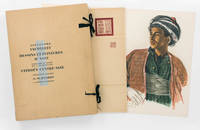
1934rif. 122326Paris: Édité sous la direction de Lucien Vogel chez Jules Meynial 1934. First Edition. Paperback. Very Good. Paris Édité sous la direction de Lucien Vogel chez Jules Meynial 1934. A printed box-form thick card portfolio with ribbon ties external dimensions 392 × 290 mm containing a thin volume of text 'Croquis de Route et Notes de Voyage' 36 pages in stab-sewn printed wrappers extensively illustrated and a suite of 50 loose colour plates each printed on a numbered and captioned bifolium. Portfolio tanned bowed and slightly marked with a short split to the foot of the upper joint; ribbon ties frayed; wrappers of the text volume a little creased; plates are generally a little offset onto the conjugate leaf and about a quarter of them have a very short split at the foot of the fold; the first plate is discoloured from contact with the binding of the text volume; these are relatively trifling blemishes that do not detract from what essentially an excellent example of a beautiful publication. Number 117 of 500 copies of the trade edition a further 200 'hors-de-commerce' copies were also printed as well as a deluxe edition of 20 copies. This suite of plates is the lavish pictorial record by the official artist of the Expedition Citroën Centre-Asie colloquially known as the Croisière jaune the Yellow Cruise. Financed by André Citroën and using all-terrain tracked caterpillar-tread vehicles from his factories this trans-Asian motorised expedition covered vast distances in 1931 and 1932. The plates from Iacovleff's striking pastels and watercolours encompass portraits and scenes from Kurdistan to Tonkin by way of Persia Afghanistan Kashmir Mongolia and western China. Provenance: Mary Isobel Barr Smith with a contemporary gift inscription in ink to her 'from Mary Isobel Legoe Christmas 1937'. Mary Isobel Molly Barr Smith 1863-1941 was the wife of Tom Elder Barr Smith 1863-1941 pastoralist and financier; he was the eldest son of Robert Barr Smith 1824-1915. Both were great philanthropists; the library at the University of Adelaide is named the Barr Smith Library in their honour. Molly Legoe was a grand-daughter of Robert Barr Smith; accordingly this portfolio was a Christmas present to her aunt. Édité sous la direction de Lucien Vogel chez Jules Meynial paperback
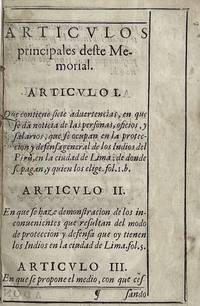
1626rif. 2256En Madrid: En la Imrenta Real 1626. In later binding using old vellum. Title lettered in ink on the front panel. he engraved title page is not presented. Occasional inkblots and signs in ink and pencil at the margin. Traces of old restoration. 1 I2 restored with minor loss of text 2 G1 h1 “burnt” by ink with minor loss of text A2 “burnt” by ink. Wormholes from C4–F4 at gutter with some loss to the text from H1–I2 at outer margin no effect to the text. In good condition. In later binding using old vellum. Title lettered in ink on the front panel. ff. 2 34. Coll.: 2 A–H4 I2. Scarce first edition of this significant work on the Spanish administration of Peru. Larrinaga’s Memorial is related to the office and the role of the Defensor General of the Indians. In four articles he introduces the institution itself and its history describes its related problems and inconveniences and provides solutions to the problems and a working plan to achieve these proposals. Novoa 2016 The author of the memorial Juan de Larrinaga Salazar 1588–1635 was a procurator for the city of Lima in Spain between 1625 and 1627 served as a regidor of Lima 1611–21 a professor at the San Marcos University in Lima 1618 later oidor in Panama 1628–35. Juan was the eldest son of Leandro de Larrinaga the first Creole lawyer to graduate from the San Marcos and advocate of Indians from 1601 to 1624 and the grandson of the Conquistador Juan de Larrinaga Salazar Ruiz de Urribari 1505–1600. The prominent Larrinaga or la Rynaga Reinaga or Reynaga family was linked to the protectorship institution as advocates of Indians and members of the family authored some of the most important sources of the early history of Peru and the protectorship institution. Extremely scarce. IB/USTC locates only 3 copies worldwide Houghton Library; JCB; Biblioteca Palafoxiana Puebla Mx. Literature: Novoa Mauricio. The Protectors of Indians in the Royal Audience of Lima: History Careers and Legal Culture 1575-1775. Leiden: Martinus Nijhoff Publishers 2015. [En la Imrenta Real] unknown