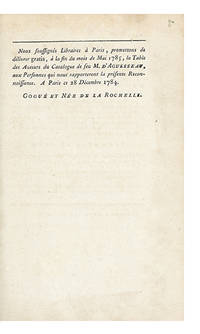
rif. 5858xxxvi 366 pp. one leaf but lacking as is often the case the 12-page schedule of sale & the 80-page author index. 8vo cont. speckled calf two corners a bit worn joints a little cracked but strong flat spine gilt red morocco lettering piece on spine. Paris: Gogué & Née de la Rochelle 1785. The rare sale catalogue of the great library of books and early manuscripts many illuminated founded by Henri François d’Aguesseau 1668-1751 Chancellor of France a man of great learning. According to the preface of the catalogue he had acquired the collection of the poet Florent Chrestien 1541-1596 and his son Claude b. 1567. His library passed to his second son Jean Baptiste Paulin d’Aguesseau Marquis de Mannoevre 1701-84 who considerably enlarged it. Between the two generations they created a most remarkable collection. The father and son employed fifteen versions of their coat-of-arms on their bindings. The sale included 5583 lots and was sold over a 57-day period. Payne and the Marquis de Méjanes were major buyers. Very good copy with some minor foxing. Short tear due to a paper flaw to title but with no loss of text. Bookplate of the great French bookseller Georges Heilbrun. As mentioned above this copy lacks — as does the Grolier Club copy — the schedule of sale and index but it does have a final leaf in which the auctioneers promise to deliver the index at no charge by the end of May 1785 to anyone who requests a copy. ⧠Gustave Brunet Dictionnaire de Bibliologie Catholique col. 405–“cette vaste réunion d’ouvrages importants.” Grolier Club Printed Catalogues of French Books Auctions…1643-1830 318–lacking both the schedule of sale and author index. Guigard II p. 173. Peignot p. 76. unknown
rif. 5858xxxvi 366 pp. one leaf but lacking as is often the case the 12-page schedule of sale & the 80-page author index. 8vo cont. speckled calf two corners a bit worn joints a little cracked but strong flat spine gilt red morocco lettering piece on spine. Paris: Gogué & Née de la Rochelle 1785. The rare sale catalogue of the great library of books and early manuscripts many illuminated founded by Henri François d’Aguesseau 1668-1751 Chancellor of France a man of great learning. According to the preface of the catalogue he had acquired the collection of the poet Florent Chrestien 1541-1596 and his son Claude b. 1567. His library passed to his second son Jean Baptiste Paulin d’Aguesseau Marquis de Mannoevre 1701-84 who considerably enlarged it. Between the two generations they created a most remarkable collection. The father and son employed fifteen versions of their coat-of-arms on their bindings. The sale included 5583 lots and was sold over a 57-day period. Payne and the Marquis de Méjanes were major buyers. Very good copy with some minor foxing. Short tear due to a paper flaw to title but with no loss of text. Bookplate of the great French bookseller Georges Heilbrun. As mentioned above this copy lacks — as does the Grolier Club copy — the schedule of sale and index but it does have a final leaf in which the auctioneers promise to deliver the index at no charge by the end of May 1785 to anyone who requests a copy. ⧠Gustave Brunet Dictionnaire de Bibliologie Catholique col. 405–“cette vaste réunion d’ouvrages importants.” Grolier Club Printed Catalogues of French Books Auctions…1643-1830 318–lacking both the schedule of sale and author index. Guigard II p. 173. Peignot p. 76. unknown books
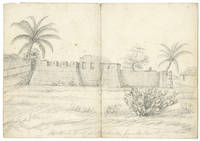
1819rif. 52991N.p. but near present-day Prampram Ghana. ca. 1819–1836. The British on the Gold Coast of Africa: Three Drawings An attractive set of skillfully executed original pencil sketches featuring British colonial structures in Prampram Gold Coast present-day Ghana likely between 1819 and 1836. The sketches are titled in pencil as follows: "Commandant's Residence Pam Pram Gold Coast" "Lower Town Pam Pram from the Upper Town" and "Abandoned Fort at Appolonia from the Beach." The Union Jack flies proudly in the foreground of the sketch of the Commandant's residence. Officially Great Britain colonized the Gold Coast region from 1867 until the independence of Ghana in 1957 though the British had maintained and controlled forts along the West African coastline since long before 1867. Fort Appolonia in the extreme southwestern corner of the country had been a British trading and military outpost from 1691 until 1819 and then again from 1836 onwards when it changed hands from the British to the Dutch then back to the British again. As such if the artist here labeled Fort Appolonia as "Abandoned" he or she most likely sketched the fort during the period it was shuttered between 1819 and 1836. A fascinating trio of original sketches offering unique views from a rarely visualized period in British colonial affairs in West Africa. Central vertical crease to each drawing the first two titled in a contemporary hand in pencil to verso the third similarly titled below the image. Very good. unknown
1819rif. 52991N.p. but near present-day Prampram Ghana. ca. 1819–1836. The British on the Gold Coast of Africa: Three Drawings An attractive set of skillfully executed original pencil sketches featuring British colonial structures in Prampram Gold Coast present-day Ghana likely between 1819 and 1836. The sketches are titled in pencil as follows: "Commandant's Residence Pam Pram Gold Coast" "Lower Town Pam Pram from the Upper Town" and "Abandoned Fort at Appolonia from the Beach." The Union Jack flies proudly in the foreground of the sketch of the Commandant's residence. Officially Great Britain colonized the Gold Coast region from 1867 until the independence of Ghana in 1957 though the British had maintained and controlled forts along the West African coastline since long before 1867. Fort Appolonia in the extreme southwestern corner of the country had been a British trading and military outpost from 1691 until 1819 and then again from 1836 onwards when it changed hands from the British to the Dutch then back to the British again. As such if the artist here labeled Fort Appolonia as "Abandoned" he or she most likely sketched the fort during the period it was shuttered between 1819 and 1836. A fascinating trio of original sketches offering unique views from a rarely visualized period in British colonial affairs in West Africa. Central vertical crease to each drawing the first two titled in a contemporary hand in pencil to verso the third similarly titled below the image. Very good. unknown books
rif. 16-6341Holland: 17th Century . Sanguine drawing on old laid paper. 12.5 x 9.7cm. Tipped on a support sheet. Provenance:Né en 1906 à Lezay Deux-Sèvres Jacques Cathy a exercé d’abord la profession de caricaturiste à l’hebdomadaire « Le Rire ». Il a rejoint vers 1927 l’équipe du Cabaret « La Vache Enragée » conduite par Roger Toziny. Jacques Cathy poursuit sa carrière de chansonnier après le décès de Toziny en 1939 et après la guerre il conduit parallèlement une carrière d’acteur dans le cinéma. Jacques Cathy était le 3ème Maire de La Commune Libre de Montmartre à partir de l’élection en 1949.Final provenance: Les Collections Aristophil - 164 bis avenue Charles-de-Gaulle 92200 Neuilly-sur-Seine. Holland: 17th Century unknown
1904rif. 8792San Francisco: Whitaker & Ray Company 1904. First Edition. Hardcover. Good. Whitaker & Ray Company San Francisco 1904. First Edition. Covers reinforced at the outer edges and spine with white tape. First free end-paper missing. Front hinge separated from the text. Moderate foxing to a few pages most pages clean and bright. -- A Juvenile book of jingles characteristic of the west. Contains jingles on such subjects as the Chinaman Cliff House Golden Gate Park etc. Beautifully illustrated by 19 full page seven color litho-prints. -- One edition published in 1904 in English and held by 2 libraries worldwide. Size: Quarto. 39 pages not numbered. -- Condition:. Whitaker & Ray Company hardcover
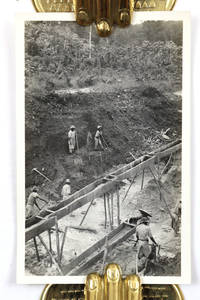
rif. PB4359 loose original gelatin silver photographs five photos identical from ca. 88x144 cm 3 ½ x 5 ¾ in to ca. 87x125 cm 3 ¼ x 5 in. Three photos with period pencil captions in English on the verso. Most photos with stamped negative numbers and/or the “Velox” manufacturer’s mark on the verso; with accompanying manuscript index indicating captions to the photographs 1-82; 101-163. 5 pp. of text. Ca. 316x20 cm 12 ¼ x 8 in. Black ink on yellowish lined paper. Three photos lack small fragments at the corners accompanying index with fold marks one page with small tears at the lower left corner but otherwise a very good collection. Historically important collection of 59 original photographs taken by an American field technician during a six-month resource survey expedition for a New York mining syndicate in the Guianas in 1925. By the 1920s gold mining along the Lawa River borderlands between French and Dutch Guiana present-day Suriname had shifted from the gold rushes of the late nineteenth century to more organized syndicate-financed exploration. As easily accessible surface deposits along tributaries such as Crique Eau Claire were exhausted foreign mining companies introduced systematic survey methods to assess deeper placer deposits. Many of these ventures however proved short-lived because of harsh rainforest conditions and high logistical costs. As follows from the accompanying index the expedition lasted from December 1924 to June 1925. The party first traveled through Grenada and Trinidad before proceeding into the interior of Dutch Guiana and crossing into neighboring French Guiana in January. Its members operated mainly along the Lawa River and its tributary creeks carrying out test drilling timber cutting and placer gold mining. The principal mining activity appears to have been concentrated on the French Guiana side of the border namely along Crique Eau Claire and Crique Rufin while smaller outposts along the Lawa River managed transport and supplies. Among the identified members of the expedition is Fred C. Runckel a driller from Dutch Flat who according to both the index and a 1925 article in the Union sailed for home in April. The compiler appears to have been among the last members of the expedition to remain in the Guianas staying there at least until June and visiting among other places the French penal settlement at Saint-Jean. The collection contains fifty-nine original gelatin silver photographs taken during the expedition between December 1924 and June 1925. Although the accompanying master log lists 163 indexed photographs from the journey only part of the series appears to have been printed or preserved. Furthermore matching individual prints to specific index entries remains difficult due to unnumbered photos. About fifteen lively vernacular photographs likely depict Maroon inhabitants of the Guiana interior most probably Youcas poling long canoes navigating river rapids hunting along the Lawa River etc. At least five candid scenes portray native laborers unloading cargo from boats on the Lawa River while expedition members stand on the shore amid wooden crates hampers and heavy field equipment. Especially interesting are more than fifteen well-executed photos of the New York Syndicate’s gold mining operations likely taken near Rufin Creek and Eau Claire Creek at Revanche Camp in French Guiana. The images show local workers digging open-cut trenches erecting timber flume lines and managing placer mining equipment under the supervision of the syndicate's field engineers. The rest of the photos mostly portray San Fernando in Trinidad Port of Spain; Queen St. with signs “W. S. Robertson & Co.” and “Colonial Bank” “Indians of the Tumuc-Humac Mountains in Brazilian Guiana” landscapes and unidentified street views buildings trams and pedestrians. The collection also contains one photograph apparently taken after the expedition. The image shows open-cut nitrate mining in Chile and an electric mine locomotive operated by the Anglo-Chilean Consolidated Nitrate Corporation for which the compiler appears to have later worked. Overall historically important collection of 59 original gelatin silver photographs taken by an American field technician during a six-month resource survey expedition for a New York mining syndicate in the Guianas in 1925. unknown
rif. 432884New York: Robert Guinn / Galaxy Publishing / Universal Publishing & Distributing 1979. Softcover. Very Good. Magazines. Digests 12mos. Perfectbound in illustrated wrappers. Overall very good with moderate wear some toning and contemporary tape reinforcement to the spine ends of the early issues. A nearly complete 30-year run of Galaxy Science Fiction totaling 246 issues lacking only eight of this important and influential science-fiction anthology. Starting with its first year Galaxy set the standard for science fiction by offering authors top rates and providing a less ridged definition of science fiction that could incorporate sociology psychology and satire. The result was a stable of top writers such as Ray Bradbury Robert A. Heinlein Jack Vance Harlan Ellison Robert Silverberg Alfred Bester Philip K. Dick George R.R. Martin Frank Herbert James Blish Theodore Sturgeon. Larry Niven Ursula K. Le Guin Roger Zelazny and many others. In the first few year alone Galaxy publisher several important stories: Damon Knight's “To Serve Man” which was adapted into the classic Twilight Zone episode; Bradbury’s “The Fireman” which was expanded into the dystopian novel Fahrenheit 451; and Heinlein's The Puppet Masters. The magazine’s stature lead to the publication of a number of Hugo and Nebula Award-wining stories and novellas such: Bester’s “The Demolished Man” Fritz Leiber’s “The Big Time” Ellison’s “ ‘Repent Harlequin!’ Said the Ticktockman” Herbert's "Dune Messiah" Silverberg’s “Nightwings” and Zelazny's “Damnation Alley.” A wonderful nearly complete run of this important and influential science-fiction anthology. Robert Guinn / Galaxy Publishing / Universal Publishing & Distributing unknown
rif. 432884New York: Robert Guinn / Galaxy Publishing / Universal Publishing & Distributing 1979. Softcover. Very Good. Magazines. Digests 12mos. Perfectbound in illustrated wrappers. Overall very good with moderate wear some toning and contemporary tape reinforcement to the spine ends of the early issues. A nearly complete 30-year run of Galaxy Science Fiction totaling 246 issues lacking only eight of this important and influential science-fiction anthology. Starting with its first year Galaxy set the standard for science fiction by offering authors top rates and providing a less ridged definition of science fiction that could incorporate sociology psychology and satire. The result was a stable of top writers such as Ray Bradbury Robert A. Heinlein Jack Vance Harlan Ellison Robert Silverberg Alfred Bester Philip K. Dick George R.R. Martin Frank Herbert James Blish Theodore Sturgeon. Larry Niven Ursula K. Le Guin Roger Zelazny and many others. In the first few year alone Galaxy publisher several important stories: Damon Knight's “To Serve Man” which was adapted into the classic Twilight Zone episode; Bradbury’s “The Fireman” which was expanded into the dystopian novel Fahrenheit 451; and Heinlein's The Puppet Masters. The magazine’s stature lead to the publication of a number of Hugo and Nebula Award-wining stories and novellas such: Bester’s “The Demolished Man” Fritz Leiber’s “The Big Time” Ellison’s “ ‘Repent Harlequin!’ Said the Ticktockman” Herbert's "Dune Messiah" Silverberg’s “Nightwings” and Zelazny's “Damnation Alley.” A wonderful nearly complete run of this important and influential science-fiction anthology. Robert Guinn / Galaxy Publishing / Universal Publishing & Distributing unknown books
1718rif. 58200Various places including Camp Sprague Camp Brightwood and Douglas Hospital Washington D.C. July 10 1861 - June 7 1862. Fine original condition; postage clipped from envelopes. 8vo. The first letter is written from Hopeville Connecticut prior to enlistment. Subsequent letters describe the trip to Washington D.C. the camp there R.I. prisoners taken at Bulls Run; the capture of a spy bad news from "Missouria" entrenchment work rumors of the death of Jeff Davis passing within 30 ft. of Lincoln "He looks just like the pictures I have seen of him" and many other interesting details. Green had become a hospital orderly by early 1862 and describes hospital conditions sightseeing in wartime Washington and news from the battlefields. unknown
1696rif. 19590Lugduni Batavorum: Hackium Boutesteyn Vivie Vander AA & Lucthmans 1696. Two volumes bound in one of this first collected edition of Giraldi's works; 20 772 26 928 30 pages Index Rerum et Verborum 1 page Catalogus Amicorum Lilii Quorum Meminit in epistola Direptionis Urbanae.; paginated in two columns except for the 'Varia' section; collated complete; text printed double-column; engraved illustrated frontispiece 7 full page and 2 double-page plates beautifully accomplished by Avele after Botard superb engravers' work with full and lively compositions realistically posed and drawn with action; title page with publishers' woodcut ornament and printed in red and black; the text with title and endpiece ornamentation and initial ornamentation as well nicely printed and with good wide margins; 11th ed. Britannica cites Giraldi Giglio Gregorio Lilius Gregorius Gyraldus 1470-1552 Italian scholar and poet born at Ferrara ".where he early distinguished himself by his talents and acquirements. he removed to Naples hwere he lived on familiar terms with Jovianus Pontanus and Sannazaro; and subsequently to Lombardy where he enjoyed the favour of the Mirandola family. At Miland in 1507 he studied Greek under Chalcondylas; and shortly afterwards at Modena he became tutor to Ercole afterwards Cardinal Rangone. About the year 1514 he removed to Rome where under Clement VII he held the office of apostolic protonotary; but having in the sack of that city 1527 which almost coincided with the death of his patron Cardinal Rangone lost all his property he returned in poverty once more to Mirandola whence again he was driven by the troubles consequent on the assassination of the reigning prince in 1533. The rest of his life was one long struggle with ill-health poverty and neglect; and he is alluded to with sorrowful regret by Montaigne in one of his Essais i. 34 as having like Sebastian Castalio ended his days in utter destitution. He died at Ferrara.a man of very extensive erudition; and numerous testimonies to his profundity and accuracy have been given both by contemporary and by later scholars. His Historia. marked a distinctly forward step in the systematic study of classical mythology; and by his treatises De Annis et Mensibus and on the Calendarium. he contributed to bring about the reform of the calendar which was ultimately effected by Pope Gregory XIII.Giraldi was also an elegant Latin poet."; approximately 15" tall by 10"; bound in full probably contemporary leather; seven raised spine bands gilt floral roll tool rectangles with fruit & leafy spray devices at corner of inner box surrounding a heavily-impressed and complex gilt central device with heroic figure surrounded by winged angel figures & cherubs figure holding a spear and a book shield below with cross device and the motto Sic Itur Ad Astra onward to the heavens; all edges tinted red; spine leather covering 1/3 gone very charred and worn; both boards still attached and the binding firm; first leaves a bit maladjusted at the inner margin from the heaviness of the binding pulling at them; text block with some spotting and darkening section at back with old bit of creasing at top corners; nevertheless mostly very fresh and clean free from markings or wear; in good condition and worthy of a rebacking or rebinding. First Edition. Leather Binding. Good. Hackium, Boutesteyn, Vivie, Vander AA, & Lucthmans
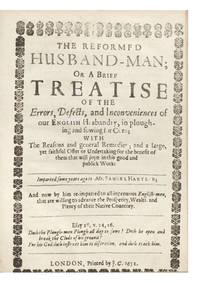
rif. 6509Title within typographical border shaved at foot. 2 p.l. 14 pp. one blank leaf. Small 4to attractive antique panelled calf some shaving to bottom line or catchwords on several pages spine gilt red morocco lettering piece on spine. London: Printed by J.C. 1651. First edition. “The Reformed Husbandman…is sometimes attributed to Speed although it was probably written by Cressy Dymock…It is a pamphlet of some 16 pages and full of moral reflections a melodious exhortation to industry.”–Fussell I p. 45. “The most visible impact of Hartlib’s circle lay in the numerous pamphlets that he published…They comprised letters and treatises solicited or received from individuals in his circle upon a particular subject which had then been circulated for additional comments the results edited and then launched upon the public often without the express consent of the original author anticipating utility and inviting comment and amendment…His treatises spread a solvent of new ideas in a variety of contexts but they were particularly successful in husbandry. He publicized the advantages of planting new leguminous crops experimenting with fertilizers and manures and using seed drills and new ploughs and advocated the possibilities of apiculture rabbit farming fruit-tree propagation and silk cultivation in Virginia. His network included a group of innovative farmers willing to experiment. But his pamphlets should also be read as ideas models or patterns as to how the processes of reformation would occur. “–ODNB. Very good copy. Small rust-hole on one leaf. unknown
rif. 6509Title within typographical border shaved at foot. 2 p.l. 14 pp. one blank leaf. Small 4to attractive antique panelled calf some shaving to bottom line or catchwords on several pages spine gilt red morocco lettering piece on spine. London: Printed by J.C. 1651. First edition. “The Reformed Husbandman…is sometimes attributed to Speed although it was probably written by Cressy Dymock…It is a pamphlet of some 16 pages and full of moral reflections a melodious exhortation to industry.”–Fussell I p. 45. “The most visible impact of Hartlib’s circle lay in the numerous pamphlets that he published…They comprised letters and treatises solicited or received from individuals in his circle upon a particular subject which had then been circulated for additional comments the results edited and then launched upon the public often without the express consent of the original author anticipating utility and inviting comment and amendment…His treatises spread a solvent of new ideas in a variety of contexts but they were particularly successful in husbandry. He publicized the advantages of planting new leguminous crops experimenting with fertilizers and manures and using seed drills and new ploughs and advocated the possibilities of apiculture rabbit farming fruit-tree propagation and silk cultivation in Virginia. His network included a group of innovative farmers willing to experiment. But his pamphlets should also be read as ideas models or patterns as to how the processes of reformation would occur. “–ODNB. Very good copy. Small rust-hole on one leaf. unknown books
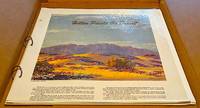
1960rif. 10179Place of publication unknown: Self Published 1960. Deluxe Limited Edition. Very good . Oblong Folio 20" by 16". Heavy plastic overlay with title "Hilton Paints the Desert" stiff rear board. -- Introduction page with limitation inscription at the bottom in the author's hand: and his signature; "Number 52 of a deluxe edition of 350 for Leo and Irene Moore with best wishes". -- Condition. Twenty Seven Prints some duplicates twenty-five signed two not signed. Some prints signed in silver and some in regular ink. --: Hills of Home 3 - Joshuas in the Moonlight 2 - Oasis Mara 3 - Papago Dawn 3 - Power and Glory 3 - Red Mountain 2 - Smoke Trees and Thunderheads 2 Superstition Spring 1 - Sands of Tim 3 - San Jancinto Sunrise 3 - Wickenburg Yuccas 2. Self Published unknown
rif. 6126Engraved frontis. viii 47 pp. 8vo later wrappers title a little browned uncut. London: Printed for W. Parker… 1777. First edition of “an important milestone in the early literature of gas analysis…Magellan 1722-90 was an Augustinian prior who emigrated to England and Protestantism in 1764. Elected F.R.S. 1774 he published this account of his researches on gases addressed to Joseph Priestley. The glass apparatus for impregnating water with fixed air carbon dioxide is described in detail. Newly improved by ‘Mr. Parker’ the apparatus was superior to that used by Priestley and described by him in 1772. Carbon dioxide was prepared by dissolving marble calcium carbonate in dilute sulphuric acid. Magellan also describes three new types of eudiometer he had designed; these and the apparatus for making carbonated waters are illustrated in the frontispiece.”–Neville II p. 125. Very nice copy inscribed by Magellan at the head of the title-page: “Comte de Castelbourgh par L’Auteur.” The attractive frontispiece depicts 24 figures of apparatus. ⧠D.S.B. IX pp. 5-6. unknown
rif. 6126Engraved frontis. viii 47 pp. 8vo later wrappers title a little browned uncut. London: Printed for W. Parker… 1777. First edition of “an important milestone in the early literature of gas analysis…Magellan 1722-90 was an Augustinian prior who emigrated to England and Protestantism in 1764. Elected F.R.S. 1774 he published this account of his researches on gases addressed to Joseph Priestley. The glass apparatus for impregnating water with fixed air carbon dioxide is described in detail. Newly improved by ‘Mr. Parker’ the apparatus was superior to that used by Priestley and described by him in 1772. Carbon dioxide was prepared by dissolving marble calcium carbonate in dilute sulphuric acid. Magellan also describes three new types of eudiometer he had designed; these and the apparatus for making carbonated waters are illustrated in the frontispiece.”–Neville II p. 125. Very nice copy inscribed by Magellan at the head of the title-page: “Comte de Castelbourgh par L’Auteur.” The attractive frontispiece depicts 24 figures of apparatus. ⧠D.S.B. IX pp. 5-6. unknown books
rif. 16-51401949. Gouache and papier collé maquette for the dust-jacket of "Les Fauves. Braque Derain Van Dongen Dufy Marquet Matisse.Georges Duthuit. Published by Editions des trois collines. Genève 1949. 46 x 65cm. Fold marks along spine and where a French fold would be. Thick white paper on a brown support sheet.Provenance: Sophie Renard Chateau-Thierry. 02400 Brasles France. 1949 unknown
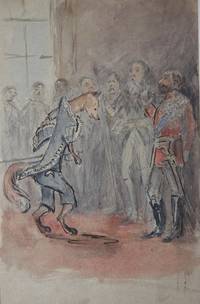
1917rif. 0064001917. Full Morocco. Very Good. Oblong 21 by 30 cm. 92 numbered leaves with content with log entries more or less statistical on all the versos and pictures and/or original drawings mostly mounted on 58 rectos with some additional loose material. 129 numbered leaves in all. Several of the log pages have mounted photos obscuring the log as it is clear that this game book was at some point re-purposed to be a more general album with some emphasis on sports including also fishing foxhunting and sailing but also there are two pages of photos from South Africa with photos of native tribesmen ostriches a hut Cecil Rhodes house etc. 13 original works of art -- watercolored pencil pen and ink -- in addition to numerous painted fish hook and fly vignettes these sometimes done directly onto the page. Most charming are the comical illustrations of anthropomorphic foxes. Sepia photos are of the country estates their stately homes and rural settings of the hunts as well as the people involved -- the hosts and guests during these country weekends. Many but by no means all of the photos have captions helpfully identifying the participants or the locations. And the log proper provides the names of those participating in the shooting and often what would now be regarded as obscenely large kills. Among the many aristocrats and wealthy in the photographs and/or logs are Lady Randolph Churchill Jennie Churchill Arthur Balfour Lady Minto Mary the famous 4th Countess Henry Lascelles the 5th Earl of Harewood the 5th Earl of Carnavon of King Tut fame as well as the owner of the castle used in Downton Abbey Baron Rothschild Lord de Grey Lord Ashburton Prince Murat the Duke of Buccleuch Prince Duleep de Singh Lord Rosebery and on and on. Country homes include Longleat Greystoke Castle the Hirsel Highcliffe Castle etc. Alexander McDonnell was a son of the 5th Earl of Antrim and a clerk in the House of Lords. Obviously he was very well connected and surely very popular among the upper echelons of English society back then. And we would note that many of the most illustriously titled have frequent entries here; what we have here is a window into a cohesive social network it is our sense. Condition: morocco binding has moderate to heavy wear along edges some scuffs on the boards and spine. The leaves can have a waviness the result of the interaction of the mounted material upon the leaves. A few photos are loose. There is a little bit of a scrappy quality to the book as befitting a log book that was partially turned into something much more and this quality is part of its charm as well. unknown
1917rif. 0064001917. Full Morocco. Very Good. Oblong 21 by 30 cm. 92 numbered leaves with content with log entries more or less statistical on all the versos and pictures and/or original drawings mostly mounted on 58 rectos with some additional loose material. 129 numbered leaves in all. Several of the log pages have mounted photos obscuring the log as it is clear that this game book was at some point re-purposed to be a more general album with some emphasis on sports including also fishing foxhunting and sailing but also there are two pages of photos from South Africa with photos of native tribesmen ostriches a hut Cecil Rhodes house etc. 13 original works of art -- watercolored pencil pen and ink -- in addition to numerous painted fish hook and fly vignettes these sometimes done directly onto the page. Most charming are the comical illustrations of anthropomorphic foxes. Sepia photos are of the country estates their stately homes and rural settings of the hunts as well as the people involved -- the hosts and guests during these country weekends. Many but by no means all of the photos have captions helpfully identifying the participants or the locations. And the log proper provides the names of those participating in the shooting and often what would now be regarded as obscenely large kills. Among the many aristocrats and wealthy in the photographs and/or logs are Lady Randolph Churchill Jennie Churchill Arthur Balfour Lady Minto Mary the famous 4th Countess Henry Lascelles the 5th Earl of Harewood the 5th Earl of Carnavon of King Tut fame as well as the owner of the castle used in Downton Abbey Baron Rothschild Lord de Grey Lord Ashburton Prince Murat the Duke of Buccleuch Prince Duleep de Singh Lord Rosebery and on and on. Country homes include Longleat Greystoke Castle the Hirsel Highcliffe Castle etc. Alexander McDonnell was a son of the 5th Earl of Antrim and a clerk in the House of Lords. Obviously he was very well connected and surely very popular among the upper echelons of English society back then. And we would note that many of the most illustriously titled have frequent entries here; what we have here is a window into a cohesive social network it is our sense. Condition: morocco binding has moderate to heavy wear along edges some scuffs on the boards and spine. The leaves can have a waviness the result of the interaction of the mounted material upon the leaves. A few photos are loose. There is a little bit of a scrappy quality to the book as befitting a log book that was partially turned into something much more and this quality is part of its charm as well. unknown books
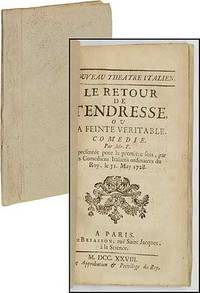
1728rif. 78892Paris: Chez Briasson 1728. Softcover. Near Fine. First edition. Text in French. 52pp. Bound in old but probably later unprinted wrappers. An ink blot on the inside of the front wrap slight foxing to the pages a near fine copy. An Italian-style comedy play. Very scarce. OCLC locates no copies of this edition and only three copies of a 1729 printing. Chez Briasson unknown
1728rif. 78892Paris: Chez Briasson 1728. Softcover. Near Fine. First edition. Text in French. 52pp. Bound in old but probably later unprinted wrappers. An ink blot on the inside of the front wrap slight foxing to the pages a near fine copy. An Italian-style comedy play. Very scarce. OCLC locates no copies of this edition and only three copies of a 1729 printing. Chez Briasson unknown books
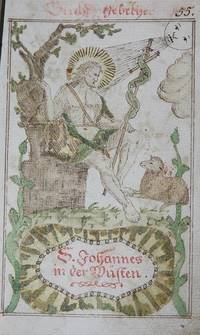
1797rif. 006602Keuth an der Crassen 1797. Full Blindstamped Calf. Good. A fine Folk Art manuscript prayer book from the late eighteenth century. 8vo. 17.5 by 10.5 cm. 3 516 13 1 pp. With eight full page paintings plus vignette decoration throughout. Besides the ubiquitous floral ornamentation all pretty accents the vignettes include a serpent a basilisk a skull etc. Most writing is a neat now archaic cursive but headings and the like rendered in an easily readable ornamental Fraktur Gothic. The paintings are the highlight most will find. Their subject matter is quintessential -- Momento Mori Saint Michael slaying the dragon Saint John in the desert Saint Sebastien the Christ child King David playing a harp etc. But while the subject matter may not be unusual the execution is done with uncommon flair even though it is resolutely naive or Folk Art. And the artist who we assume is one or both of the writers may be illustrating popular subjects there are original elements in his/her imagery or imagining of the subject. The authorship is stated but also a tad confusing. Our interpretation is that a Konrad Mueller created the book for Margaretha Pfaden-Hauerin. Condition: moderate wear to contemporary full calf binding. Unusual is a 13 page "Register" or Table of Contents in the rear. By unusual we mean for such a manuscript prayer book. Also a page of handwritten genealogical notes written on a prior blank leaf and written much later in the mid to late 19th Century. Moderate sometimes heavy soiling to margins of leaves. Corner cut out of front endpaper. Some loose gatherings. unknown
1797rif. 006602Keuth an der Crassen 1797. Full Blindstamped Calf. Good. A fine Folk Art manuscript prayer book from the late eighteenth century. 8vo. 17.5 by 10.5 cm. 3 516 13 1 pp. With eight full page paintings plus vignette decoration throughout. Besides the ubiquitous floral ornamentation all pretty accents the vignettes include a serpent a basilisk a skull etc. Most writing is a neat now archaic cursive but headings and the like rendered in an easily readable ornamental Fraktur Gothic. The paintings are the highlight most will find. Their subject matter is quintessential -- Momento Mori Saint Michael slaying the dragon Saint John in the desert Saint Sebastien the Christ child King David playing a harp etc. But while the subject matter may not be unusual the execution is done with uncommon flair even though it is resolutely naive or Folk Art. And the artist who we assume is one or both of the writers may be illustrating popular subjects there are original elements in his/her imagery or imagining of the subject. The authorship is stated but also a tad confusing. Our interpretation is that a Konrad Mueller created the book for Margaretha Pfaden-Hauerin. Condition: moderate wear to contemporary full calf binding. Unusual is a 13 page "Register" or Table of Contents in the rear. By unusual we mean for such a manuscript prayer book. Also a page of handwritten genealogical notes written on a prior blank leaf and written much later in the mid to late 19th Century. Moderate sometimes heavy soiling to margins of leaves. Corner cut out of front endpaper. Some loose gatherings. unknown books
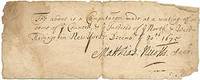
1675rif. 407229North & West Ridings Long Island New York 1675. Unbound. Good. Manuscript document. A single paragraph possibly removed from a larger document Signed at the conclusion by Matthias Nicolls. Approximately 8" x 3". Old fold some age-toning and small nicks and tears a little fragile but good. The document reads in full: "The above is a computacon made at a meeting of some of ye Councell & ye Justices of ye North & West Ridings in New York. Decembr. ye 30th 1675. Matthias Nicolls. secr." Matthias Nicholls 1626-1687 was the Provincial Secretary of New York. Born in Plymouth England he was selected to serve as secretary by Samuel Maverick who was one of the Royal Commissioners investigating conditions in New England. Accompanying the commission to New England which was headed by appointed Governor Richard Nicolls they were assigned the task of wresting the province of New York from the Dutch. Matthias held the position of provincial secretary continuously until 1680 except for the short period of 1674-75 when the Dutch briefly reoccupied New York. He was the Secretary of the Commission that accepted the Dutch surrender of New York. He served as the sixth Mayor of the city of New York in 1672-73. He is widely known as "the principal author of the legal code known as the 'Duke's Laws'." He was at least partially responsibility for religious tolerance in New York and founded the town of Plandome around his estate of the same name. unknown
1675rif. 407229North & West Ridings Long Island New York 1675. Unbound. Good. Manuscript document. A single paragraph possibly removed from a larger document Signed at the conclusion by Matthias Nicolls. Approximately 8" x 3". Old fold some age-toning and small nicks and tears a little fragile but good. The document reads in full: "The above is a computacon made at a meeting of some of ye Councell & ye Justices of ye North & West Ridings in New York. Decembr. ye 30th 1675. Matthias Nicolls. secr." Matthias Nicholls 1626-1687 was the Provincial Secretary of New York. Born in Plymouth England he was selected to serve as secretary by Samuel Maverick who was one of the Royal Commissioners investigating conditions in New England. Accompanying the commission to New England which was headed by appointed Governor Richard Nicolls they were assigned the task of wresting the province of New York from the Dutch. Matthias held the position of provincial secretary continuously until 1680 except for the short period of 1674-75 when the Dutch briefly reoccupied New York. He was the Secretary of the Commission that accepted the Dutch surrender of New York. He served as the sixth Mayor of the city of New York in 1672-73. He is widely known as "the principal author of the legal code known as the 'Duke's Laws'." He was at least partially responsibility for religious tolerance in New York and founded the town of Plandome around his estate of the same name. unknown books