17 480 résultats
1964réf. 17886INSIDE MAN being an original 15 page 4500 word typescript with 6 additional pages of text and both a typed and hand-written letter. An orphan of sorts with no release in hard-cover format and originally issued in Galaxy Magazine in 1965 and then again as an audio production. H. L. Gold manuscripts rarely show up in the marketplace. Here's your chance to nab one by the renown editior of Galaxy Magazine. Nominated for the Nebula Award. N.p. unknown books
1665réf. 053762No Place Given: Printed in the Yeere 1665 1665. First Edition . Hardcover. Very Good Plus. Small Octavo. JULY SALE 40% OFF! FIRST EDITION No place of printing given; assumed to be in Holland : 1665. Hardback. Nineteenth century full calf-leather; simple blind-tooled panels to covers. All edges red. Board-edges decorated in gilt. Later re-spine in matching calf. Gilt-letter dark-green leather-label. Dated 1665 to spine foot; simple blind-tooled. No owner name or internal markings. The author's name and place of publication written to title-page in small neat contemporary hand. Tight bright and clean. Text complete. Minor wear only. VERY GOOD INDEED. xxxii 424 vii pages. VERY SCARCE. Referenced by: Wing B5026. This book was deemed to be dangerous and was banned by proclamation of the Privy Council of Scotland in 1666 which also ordered that a copy be publicly burnt on the high Street of Edinburgh near to the Mercat-Cross by the hand of the Hang-man and was re-banned again in August 1688. JOHN BROWN OF WAMPHRAY was a Church of Scotland theologian who served as the minister of the parish of Wamphray in Annandale during the mid-17th century. He removed to Wamphray to begin serving the parish at an unknown date estimates vary from 1637 until 1655 and remained in residence until 1662 when he was imprisoned and later exiled to the Netherlands for his public opposition to the royal imposition of bishops on the Church. Sm.8vo. Will be well-packed for posting/shipping. Rosley Books for Antiquarian books CHS Cumberland Everyman GKC Inklings Keswick Literature MacDonald Rarities Theology and History. . FULL-TITLE: An Apologeticall relation of the particular sufferings of the faithfull ministers & professours of the Church of Scotland since August 1660. PRINTED IN THE YEERE 1665. Printed in the Yeere 1665 hardcover
réf. 588Newcastle Printed in This Present Year 1878: Newcastle 1111. First Edition. . Hardcover. Good. 8vo. 24pp. Chapbook 3 1/2"x 6" has been inserted into a modern red cloth case 4 1/2"x 7" gilt decoration two handwritten labels "Gotham Eng;land' and "Newcastle - The Present Year on front cover. Pages browned. Not in British Library. Judging by the woodcutts it is early. It suggests 15th or 16th century Newcastle hardcover
2007réf. 4514DBGütersloh. Coron Exclusiv. 2007. 238 Bl. mit 334 Miniaturen, 184, XVI S. (Kommentarband). Reich illustrierter Ledereinband mit vier Schließen mit 5 Bünden, Seidenband (Kommentar), in Schatulle mit Acryl-Deckel.
2023réf. 5130DBWien und Simbach, Verlag Müller und Schindler - DOMI exclusiv, 2023. Kl.-Folio. 1142 S., (16) S. mit 356 farbigen farbigen Illustrationen (Stundenbuch-Malerei). Bibliophiler Lederband mit Verzierungen aus Elfenbein-Imitat, Edelstein und vergoldeten Schliessen. Dazu eine Acryl-Schmuckkassette.
1992réf. 4087DB2 Bände Luzern, Faksimile Vlg., 1992 4°. Kommentarband 255 S.; 52 Seiten. 25 ganzseitige, reich mit Gold und Rankenschmuk verzierte Miniaturseiten. Goldgepr. Orig.-Maroquineinband., Halblederband mit Rückenschild.
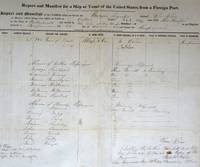
1850réf. List2418Callao: Alsop and Company 1850. Folded ship manifest measuring 15 ¼ x 12 ½ inches. Fine condition with slight normal wear. A very scarce Gold Rush period shipping manifest for the Barque Equator captained by William Weir listing the passengers and cargo for a voyage to San Francisco in December of 1850 with notations showing the vessel’s arrival in San Francisco in May of 1851. Alsop & Co. was the work of Joseph Alsop the grandson of Continental Congress delegate John Alsop and his friend Henry Chauncey. Originally from Middletown Connecticut the pair established Alsop & Co. in New York City in 1824 and would eventually play a large role in the gold trade in California and trade extensively in South and Central America. Chauncey Alsop and others were among the partners in the trans-Panamanian railway that helped transform trans-continental trade in 1850. One of Alsop & Co.’s treasure boxes was aboard the S.S. Central America when it sank in 1857 carrying gold to the Eastern United States from Panama. The shipping manifest offered here lists the primary cargo as 195 tons of coal and also lists the names of fourteen passengers on the voyage. Imported coal - from Callao in this case - was essential to heat houses and run furnaces at factories including assay offices before the development of a local coal industry in California. We find only two instances of Gold Rush-era ship manifests - which were usually thrown away - surfacing in the trade or auction records this one and one other which sold for $3600 at PBA Galleries in 2014. Alsop and Company unknown
1850réf. List2418Callao: Alsop and Company 1850. Folded ship manifest measuring 15 ¼ x 12 ½ inches. Fine condition with slight normal wear. A very scarce Gold Rush period shipping manifest for the Barque Equator captained by William Weir listing the passengers and cargo for a voyage to San Francisco in December of 1850 with notations showing the vessel’s arrival in San Francisco in May of 1851. Alsop & Co. was the work of Joseph Alsop the grandson of Continental Congress delegate John Alsop and his friend Henry Chauncey. Originally from Middletown Connecticut the pair established Alsop & Co. in New York City in 1824 and would eventually play a large role in the gold trade in California and trade extensively in South and Central America. Chauncey Alsop and others were among the partners in the trans-Panamanian railway that helped transform trans-continental trade in 1850. One of Alsop & Co.’s treasure boxes was aboard the S.S. Central America when it sank in 1857 carrying gold to the Eastern United States from Panama. The shipping manifest offered here lists the primary cargo as 195 tons of coal and also lists the names of fourteen passengers on the voyage. Imported coal - from Callao in this case - was essential to heat houses and run furnaces at factories including assay offices before the development of a local coal industry in California. We find only two instances of Gold Rush-era ship manifests - which were usually thrown away - surfacing in the trade or auction records this one and one other which sold for $3600 at PBA Galleries in 2014. Alsop and Company unknown books
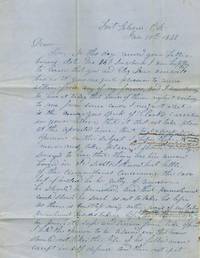
1849réf. BK0028Fort Gibson Cherokee Nation 1849. Autograph letter signed "Benj. Wingate" three pages with integral address leaf to Arba L. Hardy Lexington Scott County Indiana bearing manuscript "Fort Gibson C.N." postmark dated January 8 and manuscript "Paid 10." 7 ¾ x 10 inches. Light toning and edge wear otherwise very good. A substantial letter by Benjamin Wingate Mexican-American War veteran and future namesake of Fort Wingate New Mexico written during his frontier service at Fort Gibson in the Cherokee Nation. Responding to news that the execution of a man named Clark had been delayed Wingate launches into a lengthy and forceful rejection of capital punishment: "You speak of Clark's execution in your letter that it did not take place at the appointed time but to express an opinion on the subject I hope that it never did take place; do not understand me to say that I want him to go unpunished. I should be very sorry to hear that there has been a man hanged in old Scott. I know but little of the circumstances concerning the case but if indeed he be guilty of murder he should be punished and that punishment should be such as to not take his life as there is doubtless many other ways of inflicting punishment besides taking life . I hold the opinion to be a sound one that man should not take the life of his fellow man except in self defense and then not if it could be avoided. I look upon the law of punishing capital offences as being barbarous and savage in the extreme. It is a subject that the attention of the law making or legislating power should be called to act on." Living amid the Indigenous nations of Indian Territory Wingate makes a comparison with the customs around him: "The present law is more barbarous if possible than the laws and customs of the Indians in this part of the country. If a rich Indian kills a poor Indian he can make atonement for the crime by paying a certain sum of money but if one Indian kills another Indian and is not able to pay for him they kill him in return." Fort Gibson established within Cherokee country was one of the principal U.S. military posts in Indian Territory and Wingate's comments come from a young Army officer living within that environment. The comparison is striking precisely because he uses what he understands as Native retaliatory justice as the measure by which to criticize American law. The letter then turns to family gossip and politics. Wingate jokes that the election of Zachary Taylor meant "that the Whigs are as badly whipped as they was when they elected J. Tyler" anticipating that Taylor would "doubtless have to take a trip up salt river if he is not burnt in effigy by the Whigs before that time." More appealing personally was the news then pouring out of California. In January 1849 with the Gold Rush only beginning to transform American migration westward Wingate was already considering abandoning the Army: "I have been thinking very strong for some time of resigning and going to California but I am not off yet nor I don't know that I will get off soon if at all. But whether I should or should not go it is certainly a very great opening for a young man to make a fortune in a short time if there is any confidence to be placed in reports." He remained instead in military service. Wingate had fought in Mexico at Cerro Gordo and subsequently served on the frontier in Oklahoma Texas Utah and New Mexico. He was mortally wounded at the Battle of Valverde during the Civil War; Fort Wingate established in New Mexico later in 1862 was named in his honor. The Filson Historical Society preserves correspondence of Wingate and the allied Hardy family including Arba L. Hardy the recipient here.1 An appealing early Wingate letter combining an extended argument against capital punishment with observations from Indian Territory and the immediate lure of California at the opening of the Gold Rush. 1 "Wingate Hiram 1778-1875 Papers 1833-1914" Filson Historical Society Mss. A W769. . unknown
1849réf. BK0028Fort Gibson Cherokee Nation 1849. Autograph letter signed "Benj. Wingate" three pages with integral address leaf to Arba L. Hardy Lexington Scott County Indiana bearing manuscript "Fort Gibson C.N." postmark dated January 8 and manuscript "Paid 10." 7 ¾ x 10 inches. Light toning and edge wear otherwise very good. A substantial letter by Benjamin Wingate Mexican-American War veteran and future namesake of Fort Wingate New Mexico written during his frontier service at Fort Gibson in the Cherokee Nation. Responding to news that the execution of a man named Clark had been delayed Wingate launches into a lengthy and forceful rejection of capital punishment: "You speak of Clark's execution in your letter that it did not take place at the appointed time but to express an opinion on the subject I hope that it never did take place; do not understand me to say that I want him to go unpunished. I should be very sorry to hear that there has been a man hanged in old Scott. I know but little of the circumstances concerning the case but if indeed he be guilty of murder he should be punished and that punishment should be such as to not take his life as there is doubtless many other ways of inflicting punishment besides taking life . I hold the opinion to be a sound one that man should not take the life of his fellow man except in self defense and then not if it could be avoided. I look upon the law of punishing capital offences as being barbarous and savage in the extreme. It is a subject that the attention of the law making or legislating power should be called to act on." Living amid the Indigenous nations of Indian Territory Wingate makes a comparison with the customs around him: "The present law is more barbarous if possible than the laws and customs of the Indians in this part of the country. If a rich Indian kills a poor Indian he can make atonement for the crime by paying a certain sum of money but if one Indian kills another Indian and is not able to pay for him they kill him in return." Fort Gibson established within Cherokee country was one of the principal U.S. military posts in Indian Territory and Wingate's comments come from a young Army officer living within that environment. The comparison is striking precisely because he uses what he understands as Native retaliatory justice as the measure by which to criticize American law. The letter then turns to family gossip and politics. Wingate jokes that the election of Zachary Taylor meant "that the Whigs are as badly whipped as they was when they elected J. Tyler" anticipating that Taylor would "doubtless have to take a trip up salt river if he is not burnt in effigy by the Whigs before that time." More appealing personally was the news then pouring out of California. In January 1849 with the Gold Rush only beginning to transform American migration westward Wingate was already considering abandoning the Army: "I have been thinking very strong for some time of resigning and going to California but I am not off yet nor I don't know that I will get off soon if at all. But whether I should or should not go it is certainly a very great opening for a young man to make a fortune in a short time if there is any confidence to be placed in reports." He remained instead in military service. Wingate had fought in Mexico at Cerro Gordo and subsequently served on the frontier in Oklahoma Texas Utah and New Mexico. He was mortally wounded at the Battle of Valverde during the Civil War; Fort Wingate established in New Mexico later in 1862 was named in his honor. The Filson Historical Society preserves correspondence of Wingate and the allied Hardy family including Arba L. Hardy the recipient here.1 An appealing early Wingate letter combining an extended argument against capital punishment with observations from Indian Territory and the immediate lure of California at the opening of the Gold Rush. 1 "Wingate Hiram 1778-1875 Papers 1833-1914" Filson Historical Society Mss. A W769. . unknown books
1952réf. 192842Beijing 1952. Hardbound. Good- portfolios highly scuffed scratched; edge-worn w/ loose threads; masking tape repair & pencil notations to labels; interior linings peeling & chipped. print mats will have instances of chips tears smudgingrubbing & foxing. prints will have instances of tanning foxing smudging & occasional dampstaining; chips & tears to corners & edges. some tissue-guards present & will be of similar conditions. plates remain loose beneath the mats. two oversized navy blue textured portfolios w/ white title labels. vol1: 23 color & black woodblack prints. vol2: 39 color & black woodblack prints. 62 prints total. Interior portfolio flaps have original print listings intact. Both Parts one and two are incomplete. Part two has an incomplete set of supplements. There are also 6 random color prints with no identifaction; a few unmatted. A few prints appear to have been placed in unnumbered mats with handwritten pencil numbers so it's difficult to authentic if that is the acutal assigned print. Contents as follows with indentififers of hand-written numbering color or black printing whether a second copy of slight variation is present and other notable conditions; Part I: Print Number 5 Hand-Written Number HW Color; 11 C 12 C 15 Black with chipping 22 C 25 C with dense foxing 32 HW C 40 HW C 41 C and severely torn 45 C 49 HW C 57 two copies present with slight variations in design/printing HW C 60 C 71 HW C 73 HW C 78 HW C 88 Black and torn at lower corner/edge 89 B 92 B two copies present with slight variations in design/printing 93B two copies present with slight variations in design/printing. Part Two Contents: 114 B 123 two copies present with slight variations in design/printing C and B 124 C 129 two copies present with slight variations in design/printing C and B 135 C two copies of variations 141 C 142 C two copies of variations 144 C 146 C two copies of variations 148 C 155 C two copies of variations 159 C. Part Two Supplemental all prints Black printing: S1 S2 S10 two copies of variations S11 S12 S12 S14 S15 two copies of variations S16 with heavy tanning/foxing or dampstaining S19 S20 with creased chipped edges and dampstaining/foxing S21 HW S22 S23 and S24. Approximately 22lbs of shipping. hardcover
1952réf. 192842Beijing 1952. Hardbound. Good- portfolios highly scuffed scratched; edge-worn w/ loose threads; masking tape repair & pencil notations to labels; interior linings peeling & chipped. print mats will have instances of chips tears smudgingrubbing & foxing. prints will have instances of tanning foxing smudging & occasional dampstaining; chips & tears to corners & edges. some tissue-guards present & will be of similar conditions. plates remain loose beneath the mats. two oversized navy blue textured portfolios w/ white title labels. vol1: 23 color & black woodblack prints. vol2: 39 color & black woodblack prints. 62 prints total. Interior portfolio flaps have original print listings intact. Both Parts one and two are incomplete. Part two has an incomplete set of supplements. There are also 6 random color prints with no identifaction; a few unmatted. A few prints appear to have been placed in unnumbered mats with handwritten pencil numbers so it's difficult to authentic if that is the acutal assigned print. Contents as follows with indentififers of hand-written numbering color or black printing whether a second copy of slight variation is present and other notable conditions; Part I: Print Number 5 Hand-Written Number HW Color; 11 C 12 C 15 Black with chipping 22 C 25 C with dense foxing 32 HW C 40 HW C 41 C and severely torn 45 C 49 HW C 57 two copies present with slight variations in design/printing HW C 60 C 71 HW C 73 HW C 78 HW C 88 Black and torn at lower corner/edge 89 B 92 B two copies present with slight variations in design/printing 93B two copies present with slight variations in design/printing. Part Two Contents: 114 B 123 two copies present with slight variations in design/printing C and B 124 C 129 two copies present with slight variations in design/printing C and B 135 C two copies of variations 141 C 142 C two copies of variations 144 C 146 C two copies of variations 148 C 155 C two copies of variations 159 C. Part Two Supplemental all prints Black printing: S1 S2 S10 two copies of variations S11 S12 S12 S14 S15 two copies of variations S16 with heavy tanning/foxing or dampstaining S19 S20 with creased chipped edges and dampstaining/foxing S21 HW S22 S23 and S24. Approximately 22lbs of shipping. hardcover books
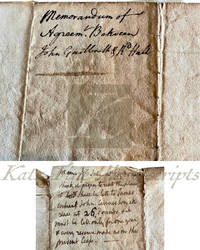
1763réf. 0001650On offer is a pre-Revolutionary plantation rental agreement between a Philadelphia shopkeeper and a Springfield millwright featuring notes that connect multiple family and business ties in late 18th-century Philadelphia and Chester counties. The rental memorandum is the work of Philadelphia-based lawyer Paul Isaac Voto whose office was located at "the corner of Black Horse Alley in Second Street." The agreement was drafted between Mr. John Gailbreath often spelled Galbreath or Gilbreath in other historical documentation c. 1717–1766 a shopkeeper whose store was located "in Second Street between Market and Chestnut streets" and the prospective renter millwright Richard Hall of Springfield Chester County. Historical documents show that Hall also owned property in the region. Dated May 1763 the rental memorandum indicates that John Gailbreath ".letts his house and plantation in Springfield… for one year from the date hereof to… Richard Hall paying the rent of twenty seven pounds…" The agreement lays out several rules of tenancy including the following examples: "The Tenant is to have Liberty to reap his Corn and Thrash it in the Barn after the time is over leaving the Thaw and Chatt…" ".the Tenant agrees not to take any Hay Straw or Dung off the Premises…" ".the Tenant agrees to… keep the House… and Premises in repair as good as now… shall not keep more fires in the House but only one in the kitchen and one in another room and… not to cut any timber or wood But in the Back Field joining to Crosiers Croziers Plantation…" A caveat on the verso of the lease agreement states that ".If John McCoy do not think it proper to rent the place it shall be lett to James Cochran John Cairnes son in law at 26 pounds…" According to historical news documents Galbreath was traveling in 1763 and appears to have entrusted a Chester County contact with the final decision on the rental in his absence. The document is signed by Hall but not Galbreath. Its delivery was witnessed by Paul Isaac Voto and Elyha Taylor and the original seal is present. This document provides not only insight into property rights legal agreements and plantation rentals in pre-Revolutionary Pennsylvania but it also offers genealogical data to support research on the still-incomplete history of early Pennsylvania families. These include the Cairnes Voto Hall Cochran and Crozier or Crosier families among others. While some 18th-century newspaper data exists digitally to assist with ongoing research these being the sources used to find the location of the subjects' businesses this document remains an invaluable primary source for those interested in 18th-century life movement and genealogical links. Condition: Significant age toning folding and micro-tears with significant tearing in one corner. The document is written in ink with a clear legible hand and remains in good condition for its age. Overall: Fair to Good.
1763réf. 116905briasson david le breton durand 1763 in-folio A Paris, chez Briasson, David, Le Breton, Durand, 1763, 1 volume grand in-folio de 260x410 mm environ, complet des 233 planches et du texte explicatif. Pleine reliure d'époque, dos à six nerfs portant titres et tomaisons dorés, caissons ornés, encadrement des plats à froid, coupes filetées, tranches rouges, gardes de papier marbré à la coquille. Reliure en mauvais état mais exemplaire solide et intérieur frais : coiffes absentes, mors fendus, importantes épidermures.
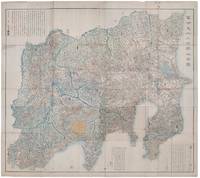
1418réf. 159850Shūseidō 衆星堂. Reprint. Tenpō 14 1843. Large folding handcoloured map of the thirteen provinces from which Mt. Fuji can be viewed. 159 x 178cm. Folds into paper covered card covers measuring 40 x 24cm. Title label upper cover. A little browning along folds occasional spotting and soiling. A little worming causing approximately 1cm of loss in places. Two chops in lower section. A very striking and attractive map. This very large handsome map is a detailed map of the thirteen provinces from which one can see Mt. Fuji. Provinces shown are the eight provinces of the Kantō region Sagami 相模 Musashi 武蔵 Kazusa 上総 Shimofusa 下総 Awa 安房 Kōzuke 上野 Shimotsuke 下野 and Hitachi 常陸 and five other provinces Izu 伊豆 Suruga 駿河 Tōtōmi 遠江 Kai 甲斐 and Shinano 信濃. The map offers a large amount of detailed information such as province and county borders rivers high ways post towns checkpoints villages and scenic spots. The cartographer Akiyama Einen or Nagatoshi 秋山永年 came from Edo and the editor Funakoshi Seizō 船越清蔵 studio name: Shugu 守愚 1805-62 a Confucian scholar from Nagato Province now the western half of present-day Yamaguchi Prefecture. A dedication by Funahashi Akira 舟橋徴 is dated 1843. . Shūseidō 衆星堂 unknown
1836réf. 45698Paris: Imprimerie Royale. Very Good. First Edition. Hardcover. Collection de Documents Inedits sur L'Histoire de France.; 4to; 2 ff. CCIII p. 1 f. 677 p. 1 f pages; Quarto. The first leaf is a half title for the series in which this is a particularly distinguished individual publication: "Collection de Documents Inedits sur L'Histoire de France." Contemporary brown half morocco over marbled paper-covered boards five shallow raised bands on the spine which has three labels lettered in gilt -- two series titles and the specific title of Abelards previously unpublished work. Marbled endpapers and edges of the text block cut polished and marbled -- all matching the boards. The binding shows only trifling wear. There are very light marks of damp to the blank upper and lower margins of some of the leaves scattered throughout. The binding shows no evidence of this; this may have affected the paper before binding. Following his long introduction in French 203 pp. = CCIII enumerated in Roman Numerals Victor Cousin has divided the contents of this important introduction to some of the works of Abelard into print into sections: logically the first is Abelard's major philosophical work: 'Sic et non.' This is followed by Dialectica; Fragmentum Germanense da generibus et speciebus; Glossae in Porphyrium; Glossae in Categorias; Glossiae in librum de Interpretatione; and Glossae in Topica Boethii." In the popular mind Abelard is best known for his passionate and ultimately tragic love affair with Heloise d'Argenteuil who had been his brilliant student and who eventually became his wife. Those who would find this book appealing hardly need be told that Peter Abelard was a leading medieval French scholastic philosopher. In fairness considering his wide range of thought and teachingAbelard must also be assessed as a logician theologian teacher musician composer and poet. Some view him as the "Descartes of the twelfth century." Abelard coined the very term "theology" -- it seems impossible to study that field deeply without assessing his thought and achievement. In our own times Pope Benedict XVI who found himself in opposition to Abelard's conception of the trinity untimately found that St. Bernard's "theology of the heart" and Abelard's "theology of reason" represent the importance of healthy theological discussion and humble obedience to the authority of the Church. The editor of this significant contribution to the history of Philosophy Victor Cousin was himself a highly distinguished philosopher lecturer and administrator of public instruction. He earned a high reputation as a classical scholar in addition to his achievements as a philosopher Sandys in his 'History of Classical Scholarship' makes a point of mentioning Cousin's important work on the lesser works of Abelard -- "professor at the Sorbonne in 1815-22 and 1828-30 and Minister of Education in 1840. He is connected with Greek scholarship by his editio princeps of Proclus 1820-7 and by his French rendering of the whole of Plato 1821-40. He threw new light on the lesser-known works of Abelard and contributed to the elucidation of the history of the scholastic philosophy." vol. III p. 251. Cousin is especially noted for his mastery of German; during his lengthy travels and residences in parts of German Cousin came to know Hegel and Friedrich Wilhelm Joseph Schelling. Cousin can be considered the the founder of "eclecticism" which combined elements of German idealism and Scottish "Common Sense" Realism. For political reasons Cousin was forbidden to teach and lecture publically in France for nearly a decade. When he was allowed to resume his lectures at the Sorbonne the crowds gathering to hear him are said to have rivelled those who lined up in Paris to see Peter Abelard at the high point of his influce seven hundred years before. There is a much-quoted assessment of Cousin's own merits and achievements as a philosopher from a significant English philosopher Sir William Hamilton -- whose own thinking it must be noted was resolutely opposed to Cousin's. Hamilton wrote: "Cousin was a profound and original thinker a lucid and eloquent writer a scholar equally at home in ancient and in modern learning a philosopher superior to all prejudices of age or country party or profession and whose lofty eclecticism seeking truth under every form of opinion traces its unity even through the most hostile systems." . 1836. Imprimerie Royale hardcover
1480réf. 101214Cologne: Conrad Winders de Hombrach ca. 1480. 8vo. Initials some historiated in brown ink. 83 of 96 ll. 27 lines-to-a-page. Collation: b8b4.5 c8c1.8 2.7 d8d1.8 2.7 e-f8 g6 h8 i8 k8 l8 m6m1.6 n6 a6a.1 blank. Later half calf and marbled boards; spine perished joints cracked some dampstaining repaired closed tears to first leaf. Incunable printing of this philosophical work on eating table manners and the good life one of several undated Cologne editions printed in the 1480s. Variously attributed to Michael Scotus or Theobald Anguilbert who Simon describes as "an Irishman and a doctor of medicine who realized the paramount importance of the right choice and proper preparation of food and drink to maintain and recover good health." This copy though incomplete is from the celebrated incunable and post-incunable collection of the Frankfurt physician and bibliophile Georg Kloss and sold at his sale Sotheby's 7 May 1835.PROVENANCE: Georg Kloss M.D. bookplate his catalogue Sotheby's London 7 May 1835 no. 2535; Lewis Henry Machen purchased at Hyatt's Washington D.C.; thence by descent.REFERENCE: ISTC im00491000 17 copies; Goff M491; Klebs 676.2; BMC I 250; GW M22812 18 copies. Conrad Winders, de Hombrach hardcover
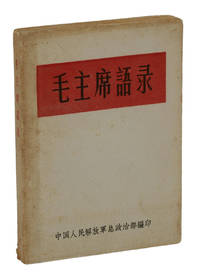
1964réf. 140939355China: General Political Department of the Chinese People's Liberation Army 1964. First Edition. Very Good. First edition. 250 pp. Printed wraps; text in Chinese with 30 chapters. The endorsement leaf by Lin Baio has been excised as is common in many copies. In promoting the Little Red Book Biao rose to prominence in Mao's inner circle with Biao becoming seen as Mao's successor. However when unsubstantiated rumors surfaced that Biao was plotting to assassinate Mao Biao was killed and subsequently the endorsement leaf was excised from remaining copies. Very Good or better with wear at foot of spine toning and light foxing occasional corner crease to pages. Following the Bible this is the most-printed text in the world. [General Political Department of the Chinese People's Liberation Army] unknown
1964réf. 140939355China: General Political Department of the Chinese People's Liberation Army 1964. First Edition. Very Good. First edition. 250 pp. Printed wraps; text in Chinese with 30 chapters. The endorsement leaf by Lin Baio has been excised as is common in many copies. In promoting the Little Red Book Biao rose to prominence in Mao's inner circle with Biao becoming seen as Mao's successor. However when unsubstantiated rumors surfaced that Biao was plotting to assassinate Mao Biao was killed and subsequently the endorsement leaf was excised from remaining copies. Very Good or better with wear at foot of spine toning and light foxing occasional corner crease to pages. Following the Bible this is the most-printed text in the world. [General Political Department of the Chinese People's Liberation Army] unknown books
1848réf. 262661Istanbul: Dar üt-tibaat ül-Âmire 1848. 5 136 pp. 1 vols. 8vo. Contemporary olive green leather tooled in blind. Spine repaired in dark leather new endsheets. A few marginal annotations internally clean. 5 136 pp. 1 vols. 8vo. Guide to the Muslim pilgrimage and related topics. OCLC: 312349404 Tübingen Dar üt-tibaat ül-Âmire unknown
1848réf. 262661Istanbul: Dar üt-tibaat ül-Âmire 1848. 5 136 pp. 1 vols. 8vo. Contemporary olive green leather tooled in blind. Spine repaired in dark leather new endsheets. A few marginal annotations internally clean. 5 136 pp. 1 vols. 8vo. Guide to the Muslim pilgrimage and related topics. OCLC: 312349404 Tübingen Dar üt-tibaat ül-Âmire unknown books
1921réf. 656430Slovo Publishers Ullstein & Co 1921. First Edition. Hardcover. Very Good. A nice copy of this scarce Russian children’s book. First Edition later reprinted by the Soviets in 1928 with different illustrations. 10 1/4 x 12 3/8 in. 158 1 pp. Text in Russian. Poems by Sasha Chernyi. Mounted color cover Lithograph and b/w lithograph title page and 19 additional full-page lithographs by Boris Dmitrievich Grigoriev. Original quarter red cloth over paper covered boards. // A collection of poems for children by the exiled Russian-Jewish poet satirist and children's author Alexander Mikhailovich Glikberg Alieksandr Mikhailovich Glikbiergh; 1880-1932 known by the pen name Sasha Chorny. The book which describes an imaginary world full of adventures games and colorful characters. // Children’s Island was released at the end of 1920. The poet’s widow wrote in her memoirs: “I met by chance one of my students at the Higher Women’s Courses in St. Petersburg who was married to the lawyer B. I. Elkin who now held a prominent position in the large Ulstein publishing house in Berlin ‘Ulstein and Co’ - a newspaper and book publisher in Berlin which published ‘Slovo’ and several other emigrant publications. He immediately arranged for the publication of a collection of Sasha’s children’s poems ‘Children’s Island’ which was illustrated by our close acquaintance from St. Petersburg the artist Boris Grigoriev. Despite its rather high price this book sold out rather quickly in two editions. Glikberg M. I. From memoirs // Russian literary magazine. М. 1993. Vol. 2. С. 242 // Condition: cover has been nicely colored by a previous owner accenting the titles in yellow with additional coloring to the lithograph in yellow and green; wear to the spine and some fraying to the spine ends corners rubbed and bumped else Very Good. Slovo Publishers [Ullstein & Co] hardcover
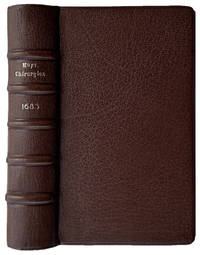
1683réf. M14555Lugduni Batavorum: Apud Petrum vander Aa 1683 -1685. 1683. 12mo. 24 84; 4 44; 24 44 8 39 1; 94 2 pp. 1 figure showing the eyes p. 52 pt. I. Complete with all five parts seldom found together. With added engraved title pages showing a contemporary surgical scene repeated. Modern full brown morocco raised bands gilt-stamped spine edges ruled in blind. Bookseller's ticket: Masson & cie.; rubber stamp: Doctor Mario E. Spada. BOUND WITH: MUYS. Podalirius Redivivus sive Dialogus inter Podalirium & Philiatrum. In quo juxta normam philosophiae Solidioris multa Medico-Chirurgica illustrantur & examinantur. Lugduni Batavorum Apud Petrum vander AA 1686. 12mo. 16 137 1 pp. The complete text with all five parts bound together published from 1683-1685. This is a collection of case reports. Among those are an ophthalmological fungus of gangrene a leg problem erypelate ulcers eye wound tumors swelling tibia fracture dislocation of the humerus puncture of the neck pain in the head tendonitis bleeding ulcer contusion of the arm ganglion of the hand canker sore of the mouth punctured nerve head pain arm wound arm contusion urinary infection scurvy gingivitis bad gums hernia gonorrhea from impure intercourse a child with a raging cold 'but how did it happen that this evil has already returned several times this winter' V: p. 81 tonsillitis the hare-lip etc. The final section contains a dialogue between 'Philiater' one interested in medical science and 'Podalir' meaning in obstetrics in birth where the fetus is turned so that the feet emerge first in delivery. / Joannes Muys was a Dutch medical doctor. Mettler the medical historian called Muys one of the chief early writers on spina bifida and hydroachitis. Muys later became mayor of Leiden. REFERENCES: Krivatsy NLM 8223 Decas prima & secunda only. Apud Petrum vander Aa, 1683 [-1685]. hardcover
1683réf. M14555Lugduni Batavorum: Apud Petrum vander Aa 1683 -1685. 1683. 12mo. 24 84; 4 44; 24 44 8 39 1; 94 2 pp. 1 figure showing the eyes p. 52 pt. I. Complete with all five parts seldom found together. With added engraved title pages showing a contemporary surgical scene repeated. Modern full brown morocco raised bands gilt-stamped spine edges ruled in blind. Bookseller's ticket: Masson & cie.; rubber stamp: Doctor Mario E. Spada. BOUND WITH: MUYS. Podalirius Redivivus sive Dialogus inter Podalirium & Philiatrum. In quo juxta normam philosophiae Solidioris multa Medico-Chirurgica illustrantur & examinantur. Lugduni Batavorum Apud Petrum vander AA 1686. 12mo. 16 137 1 pp. The complete text with all five parts bound together published from 1683-1685. This is a collection of case reports. Among those are an ophthalmological fungus of gangrene a leg problem erypelate ulcers eye wound tumors swelling tibia fracture dislocation of the humerus puncture of the neck pain in the head tendonitis bleeding ulcer contusion of the arm ganglion of the hand canker sore of the mouth punctured nerve head pain arm wound arm contusion urinary infection scurvy gingivitis bad gums hernia gonorrhea from impure intercourse a child with a raging cold 'but how did it happen that this evil has already returned several times this winter' V: p. 81 tonsillitis the hare-lip etc. The final section contains a dialogue between 'Philiater' one interested in medical science and 'Podalir' meaning in obstetrics in birth where the fetus is turned so that the feet emerge first in delivery. / Joannes Muys was a Dutch medical doctor. Mettler the medical historian called Muys one of the chief early writers on spina bifida and hydroachitis. Muys later became mayor of Leiden. REFERENCES: Krivatsy NLM 8223 Decas prima & secunda only. Apud Petrum vander Aa, 1683 [-1685]. hardcover books
1908réf. 2111902160201390Yushu-sha 1908. Soft Cover. Fine. Volume: 1 Yushu-sha paperback