18.723 Ergebnisse
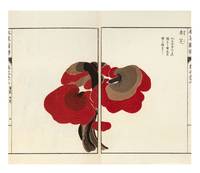
1916Best.-Nr. 99921916. Several thousand double-page & full-page color-printed woodcuts many with embossing. 95 vols. 8vo 256 x 174 mm. orig. tan patterned semi-stiff wrappers orig. title slips on upper covers orig. stitching occasional stitching a little loose. Tokyo: HonzÅ Zufu KankÅkai 本è‰åœ–èœåˆ‹è¡Œæœƒ 1916-22. The definitive and complete edition of the "the greatest illustrated botanical work of nineteenth century Japan.This monumental work the HonzÅ zufu briefly describes and splendidly illustrates in full color some 2000 plants. It is considered to be one of the two most important works on systematic botany in the Tokugawa period 1603-1867."-Richard C. Rudolph "Illustrations from Weinmann's 'Phytanthoza iconographia' in Iwasaki's 'HonzÅ zufu'" in Huntiana Vol. 2 15 October 1965 p. 1. Iwasaki 1786-1842 was an important natural historian who studied with Ono Ranzan the "Linnaeus of Japan." Iwasaki learned Western botanical theories from Yoan Udagawa one of the most celebrated rangakusha Dutch scholars of the period and from Philipp Franz von Siebold the German physician and scientist. Iwasaki also made many field trips throughout the main island of Japan collecting botanical specimens which he brought back to Edo and cultivated in a garden the government had given him. The publication history of the editions of HonzÅ zufu is long and complicated and there are several conflicting bibliographical accounts. We give Prof. Richard C. Rudolph's account cited above based on Kotaro Shirai's history of the work which appeared in Vol. 93 1921 of the modern edition of HonzÅ zufu 1916-22. We believe Prof. Rudolph's account is the best and most accurate in English. "Early in 1828 Iwasaki founded a botanical society. The first meeting which was held at his own home was attended by the most prominent scholars in this field. In the autumn of the same year after a long period of collecting illustrating practical gardening and study of most of the available botanical works Iwasaki completed the compilation of a comprehensive illustrated flora. "Iwasaki planned to issue this large work in twenty-four series of four volumes each. It seems obvious from the preface that the illustrations were to be printed in black and white and then were to be colored by hand. Shirai in his history of this project says that in this first attempt to reproduce Iwasaki's compilation only four volumes were printed in 1830. "This first attempt to print the HonzÅ zufu was a commercial failure.income was insufficient to finance the printing of so large a work.printing was abandoned but reproduction of his compilation was continued in manuscript with colors brushed in by hand. How many copies were made of each volume in this manner is not recorded but four volumes were produced yearly until his death in 1842. His family carried on with the work and completed the manuscript volumes of HonzÅ zufu in ninety-two volumes in the latter part of 1844 and they are incredibly rare. "It is obvious that a printed edition of such an important work would be produced sooner or later. Several attempts made in the late 19th century ended in failure. In the early years of the present century the HonzÅ Zufu Kanko Kai or Society for Publication of the HonzÅ zufu was organized and a successful printing of the work in color by woodblocks was completed after five years of labor in 1921. This edition is composed of ninety-three volumes.The first ninety-two volumes contain illustrations of about 2000 plants in color and a very brief text and the following volume is composed of an additional text by Iwasaki together with Shirai's biography of him and history of the work. Another two volumes containing Japanese Chinese and Latin binomial indexes compiled by Shirai were published in the same format in 1922. Moreover each of the ninety-two volumes of plates has its own Chinese Japanese-binomial index. "In projects of this kind the publisher deserves a share of credit along with the author.it would take a man of considerable courage to undertake the printing of this great flora by woodblocks. Such a person was the Tokyo publisher Iwamoto YonetarÅ a man of little capital and poor health but rich in the courage required to produce a work of this kind.The rise in the cost of materials and labor due to World War I almost caused the project to end in failure as had others before it.To obtain the necessary funds he sold his personal library and cut down on the size of the staff.Iwamoto personally went over each printed page correcting faults in blockcutting and in coloring. "Either because Iwamoto published a small edition of the HonzÅ zufu or because it suffered destruction during World War II as did early Japanese books in general it is now almost impossible to locate a complete copy of this work."-Rudolph ibid. pp. 4-6. The plates are superbly color-printed and often exhibit subtle embossing. In very fine and fresh condition. Covers a bit discolored or spotted. unknown books
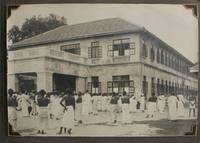
1938Best.-Nr. 9564Manipay Sri Lanka 1938. Very good. Two albums leather over board: one 4¾" x 7¼" string-tied; one 8" x 10½" metal brads. A total of 164 B&W and sepia photographs corner-mounted to 86 pages 4 photos laid in 34 pp. blank. Photos range from 1½" x 1" to 6" x 8" and 19 are captioned. One album good due to lacking front board else very good or better: light scuffing to covers; one album with moderate offsetting to pages not affecting photos; a few photos spotted; a few loose or chipped; 1 taped and 1 may be lacking. This is a great collection of photos showing the life and work of Dr. William John Jameson who spent 15 years transforming the first hospital and medical school in Sri Lanka. Rev. Dr. John Scudder the first medical missionary to Ceylon arrived in 1819 and began what is believed to be the first medical mission dispensary in the world. In 1848 Dr. Samuel Fisk Green founded Sri Lanka's first hospital and medical school which came to be known as Green Memorial Hospital GMH. Jameson was a missionary doctor from Auburndale Massachusetts who came with his wife to Manipay in 1923. Son William Jr. and daughter Gladys were born there in quick succession and per limited histories we found online and evidence in present photos the family was esteemed in their community. According to the Jaffna Medical Journal Vol. 16 No. 1 March 1981 Jameson: "transformed this hospital scene for the next 15 years and enjoyed tremendous popularity . . . He was an able surgeon: he performed over 500 operations annually; an efficient administrator and fluent in Tamil . . . He secured grants from the Government and donations from the people and erected several buildings and built up endowments . . . raised the professional standard of his assistants by sending the doctors for postgraduate training abroad . . . equipped the hospital with X-ray plant ECG recorder BMR apparatus and Choul apparatus for the treatment of cancer." The family stayed in Manipay until 1938. The namesake Jameson Block at GMH has 18 rooms for neuro-rehabilitation is the first and as of 2024 still the only such service in Sri Lanka's Northern Province. These albums mainly hold family photos and nearly all the captions point out young "Billy" including a shot with his "birthday presents - Temple given by natives." A 1927 greeting card has a photo of Gladys and a poem: "This is my year / To send Christmas cheer / And a glimpse of me / In my first saree / Billy Mother and Dad / Share Greetings with 'Little Glad' / Mission Bungalow Manipay Ceylon." There are also large fantastic shots of native nurses all in white including "Miss McNeil and 1st Graduating Class of" GMH as well as what seem to be hospital staff and community elders some in saris some in suits. Two images reveal the "Governor's visit" and we see Jameson with a cake iced to celebrate the hospital's 75th anniversary. There are about a dozen views of hospital buildings beds and inner workings like the "1st portion of non-paying ward" and a great series of ten shows natives gathered - cooking dancing playing instruments - as the doctor and his family stand in what appears to be a central position of honor. Lovely photographs of an important missionary doctor his family and hospital work in Sri Lanka. unknown books
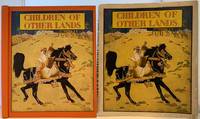
1933Best.-Nr. 166New York: The Platt & Munk Co. Inc 1933. Cloth. Fine/very good. Lucilee W. and H.C. Holling C. HOLLING. 4to; 3 86; orange cloth over board with color illustrated onlay with title; 5 full page color illustrations including frontispiece; black and white drawings within text; green endpapers; unclipped color illustrated dust jacket lacking price back flap advertises 8 other publisher's books; light fading to endpapers; closed tears to top and bottom edges old tape to front flap fold light soiling to dj; fine in very good dj. First publishing date is 1929 much like Piper and the Holling's other book Little Folks of Other Lands which is somewhat a companion book of juvenile non-fiction introducing international customs to English speaking children. Charming bright full-page illustrations and black and white drawings on every page of text. The Platt & Munk Co., Inc unknown books
1987Best.-Nr. 018589New York: Doubleday & Company Inc. 1987. First Edition. hardcover. Fine in a Fine dustwrapper. Illustrated with photographs. INSCRIBED and SIGNED by the former President on the front free endpaper in December 1987: "To ---------/with Friendship/Respect and Lasting/Appreciation for helping/me 'Look Forward'/George Bush." Advance Review Copy with a letter from the publisher laid in. Doubleday & Company, Inc. hardcover books
1987Best.-Nr. 010064New York: Doubleday & Company Inc. 1987. First Edition. hardcover. Fine in a Fine dustwrapper. Illustrated with photographs. SIGNED by the former President on the front free endpaper. Doubleday & Company, Inc. hardcover books
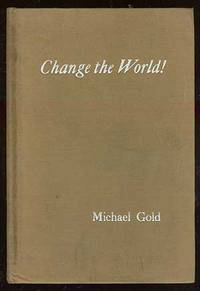
1936Best.-Nr. 44854New York: International Publishers 1936. Hardcover. Very Good. First edition. Foreword by Robert Forsythe. Very good plus with a little soiling to the boards lacking the dust jacket. International Publishers hardcover books
Best.-Nr. 11587By Tanekiyo Ryūsuitei 柳水亭種清. Two title-pages four pages of Preface one port. of Lady Murasaki and eleven double-page & 17 single-page woodcut color illus. 23.5; 16.5; 15 folding leaves. Three vols. 8vo orig. patterned semi-stiff wrappers decorated with Genji mon emblems wrappers a bit soiled orig. block-printed vignette labels pasted on upper covers new stitching. Japan: n.d. but WorldCat suggests 1861-64. This is apparently the only known complete set of the first series of two of this superbly illustrated shunga parody of The Tale of Genji. We can trace only two sets of the complete three-volume second series at the Royal Ontario Museum and the International Resource Center for Japanese Studies. Our set contains Chapters 1-27 while the second series consists of Chapters 28-54. This is a very late shunga and one of the last before the end of the Edo period. Almost all of the techniques that make Japanese illustrated books so remarkable are utilized here. Each illustration has in the upper right- or left-hand corner a picture scroll that shows the original scene from a chapter in The Tale of Genji with a label stating which chapter it is from. Our set is finely illustrated richly colored and employs bokashi the delicate variation of shading of pigment within the image; blind-embossing even tiny noses are in relief; and the very ample use of gold and silver. The depicted garments are a mixture of extremely complex textures colors and patterns all accentuated by blind-embossing and multiple woodblock impressions. There are two kinds of black flat black and shiny burnished black and the gold has been painted over with black pigment giving a most unusual appearance. Each of the woodcut illustrations has a border with the Genji mon symbols. Koikawa 1821-1907 was a prolific artist. He illustrated as well as wrote numerous books in using various pen names. The Preface in Vol. I is written by "Insuitei" a pen name for Koikawa. Very fine set. The title-page in Vol. I has a 90 mm. tear in the lower outer corner. This is occasionally catalogued under Utagawa Kunimori II. Colin Franklin attributes the illustrations to Kunisada. ⧠See Colin Franklin Exploring Japanese Books and Scrolls p. 74-"one of Kunisada's wittily erotic interpretations of Genji's courtly love all stops pulled out for an organ-blast of color printing" & see plates 49 & 50. unknown books
1969Best.-Nr. 162132Hollywood: Fine Productions 1969. Two vintage studio still photographs from the 1969 film. Provenance stamp on the verso of each. Little known sexploitation film from 1969 now likely lost. 8 x 10 inches. Near Fine. Fine Productions unknown books
1960Best.-Nr. 150233N.p.: N.p. 1960. Vintage candid reference photograph from the 1960 film featuring members of "The Crazy Gang" director Val Guest Shirley Eaton circus impresario Billy Smart and wife and guests. "The Crazy Gang" were a much-loved British comedy troupe who performed for over three decades. Formed in the early 1930s they performed largely at the London Palladium as well as numerous Royal Command performances and made five feature films "Life is a Circus" being their last. Core members were Bud Flanagan Chesney Allen Jimmy Nervo Teddy Knox Charlie Naughton and Jimmy Gold. Billy Smart was a popular British showman and founder of Billy Smart's New World Circus. The circus was featured in two 1960 films "Life is a Circus" and Anglo-Amalgamated's "Circus of Horrors" directed by Sidney Hayers. "The Crazy Gang" save the struggling Joe Winter's Monster Circus with an Aladdin's magic lantern. 9.75 x 7.75 inches. Near Fine. N.p. unknown books
1986Best.-Nr. 139735Santa Monica: Home Box Office HBO 1986. Vintage studio still photograph from the 1986 television movie. Television movie that follows the infamous newsman Edward R. Murrow whose frank condemnation of McCarthy helped put an end to the senator's "witch-hunts." Shot on location in New York and London. 8 x 10 inches. Very Good plus with a red manuscript notation to the recto and to the verso. Home Box Office [HBO] unknown books
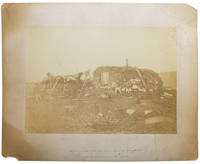
1872Best.-Nr. 303445London 1872. Albumen print measuring 11-5/8 x 16-1/4 in 295 x 412 mm. Laid down on thick cream card with manuscript caption measuring 17 x 21 in. Image slightly faded card chipped with some minor soiling one tear not affecting image. Albumen print measuring 11-5/8 x 16-1/4 in 295 x 412 mm. A rare survival. This image appears in William Bradford's fabled book of photographs Arctic Regions. It was taken by either Dunmore or Critcherson the two professional photographers from Boston who accompanied Bradford on his 1869 expedition to the Arctic on the steamship Panther. It was probably taken at Upernavik a settlement on an island off Greenland's west coast or Godhavn. Arctic Regions included 141 albumen prints in addition to Bradford's account of the voyage. The title of the photograph here varies from the printed caption in the book where it reads: "Plate Number: 116 Esquimaux igloe or winter hut made of turf and stones. The entrance is to the left through a door which is about three and a half feet high. The length of the passage is about twelve or fifteen feet and at the farther end is another door through which one almost has to crawl on his hands and knees. After passing through there is then room to stand erect but one is forced to leave very soon owing to the bad air." This photograph is slightly larger than the one in the book which is 277 x 365mm. Furthermore the image in the book is cropped closer on the right and left margins. The New York Public Library has a folio of 26 images of near identicle size mounted on card. The portfolio was donated to the library in 1892 as part of the Robert Stuart Collection. According to Horch originally all of these images were captioned in manuscript though were later remounted with typed captions as "the original ink-written captions for the photographs had badly faded by 1940." It's interesting that the caption on their duplicate of this image is the same as ours and the image itself has not been cropped. Horch writes that Bradford probably not only selected these images himself but "closely directed the actual taking of the photographs." It's entirely likely that Bradford would have had extra prints made to distribute to friends repay favors and most of all to solicit subscribers to what was a very expensive book to publish. Given how it conforms to the examples in the Robert Stuart portfolio this particular image is probably one of them. Horch Frank. "Photographs and Paintings by William Bradford". American Art Journal 5.2 1973: pp 61-70; cf Parr and Badger I p31Prm/photo unknown books
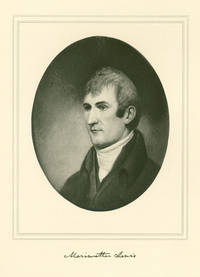
1905Best.-Nr. 247478New York: Dodd Mead and Co 1905. First edition one of 200 large paper sets on Van Gelder paper. Seven volumes bound in fourteen parts plus atlas volume atlas with 56 maps & plates on 62 sheets. 15 vols. Large 8vo. Original gilt green cloth. Bookplate on front pastedowns. Spines lightly worn several lightly faded. Internally fine much of the text unopened. A very good set. First edition one of 200 large paper sets on Van Gelder paper. Seven volumes bound in fourteen parts plus atlas volume atlas with 56 maps & plates on 62 sheets. 15 vols. Large 8vo. "The most elaborate work on this expedition" - Howes. A cornerstone of modern historical research printing for the first time many major primary documents which did not appear in the Biddle edition including the Floyd and Whitehouse journals and material from the Clark-Voorihis papers along with facsimile manuscripts maps portraits and other illustrative matter. Also valuable is Victor Paltsits' bibliography of the Lewis and Clark expedition in the first volume. "This edition is notable for its thorough Introduction covering the history of the expedition and earlier exploration and a detailed account of the original journals and their various editions.In its maps and numerous illustrations the Thwaites edition is an outstanding source of visual materials relating to the expedition" - LITERATURE OF THE LEWIS AND CLARK EXPEDITION. Graff 2485; Howes L320 "b"; Wagner-Camp 13:7 note to 1842 Harpers ed.; Tweney Washington 76; Literature of the Lewis and Clark Expedition 5d.1 Dodd, Mead and Co unknown books
1762Best.-Nr. 249483Paris: de l'Imprimeries de H.L. Guerin & L.F. Delatour 1762. 42 pp. 7 full page engraved plates. 1 vols. Folio 18 x 12 inches. Contemporary drab wrappers uncut . Fine. 42 pp. 7 full page engraved plates. 1 vols. Folio 18 x 12 inches. From Description des arts et métiers. de l'Imprimeries de H.L. Guerin & L.F. Delatour] unknown books
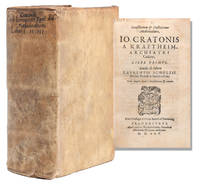
1609Best.-Nr. 27318Frankfurt Hanover & Hanover: Apud Andrea Wecheli heredes Claudium Marnium & Joann Aubrium; Parts 2 & 3 Typis Wechelianis apud Claudium Marnium & Heredes Joan. Aubrii 1609. First published 1591-94. 1 vols. Sm. 8vo. Three parts in one volume. Vellum. Some soiling and browning of vellum and text ties lacking else a very good copy with bookplate of Alfred Jerome Brown. First published 1591-94. 1 vols. Sm. 8vo. This work was ultimately completed in seven parts. 'The Polish-German physician was the personal physician to both Emperor Ferdinand and Maximilian II in Austria. He wrote several medical works and was a follower of the Galenic school of medicine. He was one of the first to study the contagiousness of certain diseases. "Sixteenth Century Books in the National Library of Medicine" 1077 for the 1591-94 edition; Osler 2387 & 2388 earlier editions Apud Andrea Wecheli heredes, Claudium Marnium & Joann Aubrium; [Parts 2 & 3] Typis Wechelianis, apud Claudium Marnium & Heredes unknown books
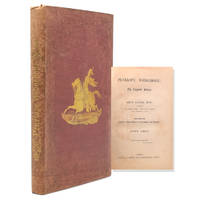
1850Best.-Nr. 16916London: J. & D. A. Darling 1850. First edition. 8 handcolored plates by Alfred Ashley. 196 pp. 1 vols. 8vo. Original rose cloth covers framed in blind with gilt lozenge of officer on horseback on upper cover spine lettered and decorated in gilt. Some spotting and discoloration of cloth without the two inserted leaves of publisher's advertisements mentioned by Wolff else a very good copy with the bookplate of James George Robarts. First edition. 8 handcolored plates by Alfred Ashley. 196 pp. 1 vols. 8vo. Sadleir 1223; Wolff 3294 J. & D. A. Darling unknown books
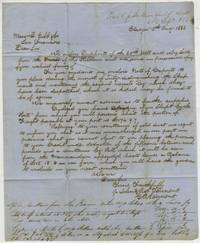
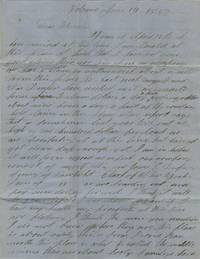
1853Best.-Nr. BK0069Glasgow Scotland 1853. Autograph letter signed for John & Robert Tennent by G. R. Tennent to D. Gibb & Co. San Francisco. Received by the steamer Winfield Scott September 20 1853. 1 p. 8 ½ x 10 ½ inches. Light wear; very good. A Gold Rush commercial letter documenting the movement and valuation of California gold within the transatlantic financial system. Writing from Glasgow to the San Francisco firm of D. Gibb & Co. John & Robert Tennent acknowledge a remittance of gold dust valued at $5092 and explain why the transaction produced a poorer return than a conventional bill of exchange. The specie had been sold in London for £1001 12s. 6d. The firm then added sixty days' interest and deducted marine insurance in order to compare the net proceeds with the value of a draft. Their calculation left a balance of £15 18s. 6d. in their favor which they instructed the California merchants to include in their next remittance: "Referring to your remittance of gold dust we regret to inform you that as it was unauthorized on our part we presume that you cannot object to our placing the proceeds to your Credit under deduction of the difference between such proceeds and a remittance by Bill." The letter also records £174 9s. 7d. in freight payable at San Francisco on goods shipped aboard the Kate and refers to an enclosed summary of exports sent to California during the month of July. A concise but useful account of the practical economics of Gold Rush remittances showing the comparison between specie and bills of exchange together with the costs of interest insurance freight and transatlantic shipment. . unknown books
1853Best.-Nr. BK0072Volcano California 1853. Autograph letter signed "S. W. Leonard" to his uncle Joseph Winslow in Mansfield Massachusetts. 2 pp. 7 ½ x 9 ¾ inches. Folded letter with clear circular "VOLCANO / CAL." postmark and matching "10" rate handstamp. Light aging; very good. A Gold Rush letter from a miner who after traveling hundreds of miles through California believed he had finally found a promising claim and a community in which he could remain. Writing from Volcano in the middle mines of Calaveras County S. W. Leonard reports modest but steady earnings on Sutter Creek describes the speculative hopes of his six-man company and contrasts the settlement's families and Sunday meetings with the more transient camps he had left behind. Leonard and William Draper had spent the previous week working a claim about a mile from Volcano making "from five to eleven dollars a day a piece working about nine hours a day." The returns were respectable rather than spectacular but Leonard's hopes centered on another claim held by members of the company. Local reports told of a French miner who had taken as much as one hundred dollars from a single load there the previous year. The men had not yet reached the promising layer but were "in hopes it will provide as good as reported." The company consisted of Leonard William and James Draper Comey and Davis of Pawtucket and Clark of New York. They were paying seven dollars per week for board. Leonard expected to remain in California for years and believed that if his health held his prospects were "flattering." His optimism rested not only on the claims but on Volcano itself. After months of continual movement through the diggings he considered it "the best place that I have seen yet" since "I left Peoria" and hoped that he would never "be obliged to take another tramp of this kind." Volcano had already begun to take on the character of a permanent settlement; Leonard counted approximately forty families mostly from the western states and noted that religious meetings were held every Sunday: "There is no place of resort here for evil purposes and what people are here are steady working men." He closes without dramatic news but with the guarded confidence typical of the Gold Rush: a workable claim an untested prospect tolerable living costs and the hope that he had at last reached the end of his wandering. A representative letter from the California diggings recording the modest daily economics of mining and one emigrant's search for both a profitable claim and a stable community. . unknown books
1992Best.-Nr. 1419045Huntington: Blue Acorn Press 1992. Reprint. Hardcover. Octavo 332 pages. In Very Good condition with a Very Good dust jacket. Spine is green with cream print. Dust jacket in mylar. Boards in green cloth. Illustrated: b&w frontispiece and plates maps photographs. Reprint of edition published by Leader Printing Company Cleveland 1886. Dust jacket title: 4th Ohio Volunteers Gibralter Brigade Army of the Potomac. Spine title: Fourth Ohio in the War fo the Union 1861-64. NOTE: Shelved in Netdesk Column F ND-F . 1419045. FP New Rockville Stock. Blue Acorn Press hardcover books
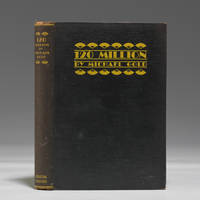
1929Best.-Nr. 1161981929. First Edition. Signed. GOLD Mike. 120 Million. New York: International 1929. Octavo original black cloth. $1650.First edition of the first book by controversial radical Mike Gold published at the cusp of the Great Depression an outstanding presentation/association copy inscribed by him to influential New York publisher and editor Albert ""Pete"" Gross inscribed by Gold along an entire page ""To Pete GrossÑLion Tamer Father Author's Friend New Yorker Book Maker Philosopher Gin Drinker and Puritan from a fellow bum Mike Gold"" featuring 20 early passionate writings by Gold on Black Americans the I.W.W. immigrants miners strikers and more.Born Itzok Isaac Granich Jewish American Mike Gold was a ""radical's radical. born to poverty reared in poverty and educated by poverty"" Folsom Education of Mike Gold 224. A founding co-editor of New Masses in 1926 before becoming its sole editor Gold made a major impact that was early and unusually noted by Time magazine which declared: ""40 times he has been chased by cops for taking part in street demonstrations; 20 strikes have had his help."" Confrontational and controversial Gold was at the forefront of an emerging literary tradition that launched works by Richard Wright Tillie Olsen Henry Roth John Fante H.T. Tsiang Claude McKay and many more. His own writings were pivotal in arguing for art as a ""class weapon"" Rideout Radical Novel 165Ñworks that helped launch a movement ""nurtured by the cultural politics of the left"" the impact of racism poverty and the rise of fascism and fiction that was also often propelled by the ""heroes plots and language of pulp fiction."" To Lionel Trilling ""the importance of the radical movementÉ cannot be overestimated. It may be said to have created the American intellectual class as we now know it"" Denning Cultural Front 240 3. The 20 works in 120 Million his first book includes Gold's writings on Black Americans immigrants the I.W.W. and strikers and miners along with short fiction dramatic prose and select poems. First edition first printing: with ""Copyright 1929 by International Publishers Co. Inc/""; no statement of edition or printings. Without very elusive dust jacket. Hanna 1443. The recipient Albert ""Pete"" Gross was a highly influential publisher and editor who co-founded International Publishers in 1924 before becoming am editor at Boni & Liverright in 1924. Text very fresh faint edge-wear to spine ends of original cloth. An impressive about-fine inscribed copy. hardcover books
1984Best.-Nr. 87769London & Ulverton: Wisdom Publications 1984. First edition. 111 pp. Fine in glossy illustrated wrappers. Introduction by Thubten Jigme Norbu. Photographs by Gold illustrations by Tibetan Artists. Dated 14 Jan 1988 and INSCRIBED by Gold to Nathaniel Tarn. London & Ulverton: Wisdom Publications unknown books
1975Best.-Nr. 82997np: The Figures 1975. First edition. 24 pp. Rust and some offsetting to the brads in the front cover else near fine in printed wrappers. One of 150 of 200 copies with hand-made covers by Allen Schiller. (np): The Figures unknown books
1975Best.-Nr. 81486San Francisco: And/Or Press 1975. First revised printing. viii 116 pp w/appendixes. Covers lightly rubbed else near fine in printed wrappers. Foreword by John C. Lilly. The Tibetan Book of the Dead for Americans. San Francisco: And/Or Press, unknown books
1997Best.-Nr. 49468Washington DC: Washington Writers’ Publishing House 1997. First edition. 67 pp. Fine in glossy illustrated wrappers. Poems. Washington DC: Washington Writers’ Publishing House unknown books
1969Best.-Nr. 39519Preston: Akros 1969. First edition. 12 pp. Fine in sewn wrappers. Parklands Poets No 1. Preston: Akros unknown books
1975Best.-Nr. 11626Vancouver: Talonbooks 1975. First edition. 69 pp. Very good plus in glossy illustrated wrappers; a trade paperback original. Vancouver: Talonbooks paperback books