1960Best.-Nr. 100-19315Chappell & Co 1960-01-01. Sheet music. New. Chappell & Co unknown
Best.-Nr. 0976986264.Gpaperback. Good. Access codes and supplements are not guaranteed with used items. May be an ex-library book. paperback
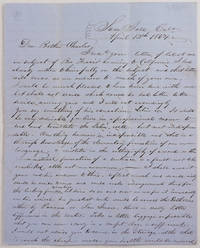
Best.-Nr. MA71Quarto bifolium ca. 255x20 cm 10 x 8 in. 2 pp. Brown ink on blueish watermarked laid paper watermark "Moinier's London ". Fold marks paper slightly age-toned but overall a very good letter. A historically interesting California Gold Rush letter giving details on the quickest way to get to California from the United States’ East Coast - via the Isthmus of Central America crossing either at San Juan Nicaragua or Panama. The letter was written by San Jose resident M. W. Packard ca. 1822- to his brother Charles R. Packard - at the time one of three professors of music in Hamilton Ontario Canada West 1853 Hamilton And Dundas Directory. M. Packard discusses Charles’ and presumably their younger brother’s Francis trip to San Jose suggesting the best possible route to California the most comfortable accommodation in steamboats and the finest hotel in San Francisco. Providing a vivid insight into the peculiarities of North American migrants’ journeys to California the letter dates to the end of the California Gold Rush 1849-1855 when the tide of migration from Canada to the United States relatively slowed after its peak approximately 40000 migrants in 1849-1850. In the letter the author who apparently moved to the US three years earlier plans his brothers’ travel itinerary and recommends taking the quickest and most popular route to California across the Isthmus either by Panama or San Juan. M. W. also elaborates upon peculiarities of accommodation in steamboats giving preference to the second cabin for roominess and indicating an approximate price for the journey 200-300$. The author warns his brothers to “.take as little baggage as possible” apparently not to overburden themselves while crossing the Panamanian jungle by foot or horseback The Isthmus route was traveled from the east coast of the US to Panama by steamships through the Panamian jungle by foot or on horseback and up the coast of San Francisco by ship. The journey took from 6 to 8 weeks. During the trip the travelers often faced the risks of catching Malaria Cholera etc. Upon arrival in California M. W. recommends to “.put up at Wilson’s Exchange” San Francisco’s principal and most luxurious hotel built in 1850 by a theatrical manager and miner Baily Sargent. The second brick building erected upon Sansome Street Wilson’s Exchange 1850-1896; later American Exchange had 153 rooms with prices ranging from 6 to 10$ a day. With average receipts from 17000$ to 18000$ a month the hotel was constructed and furnished on a scale of grandeur and magnificence previously unknown to San Francisco San Francisco Chronicle/ 29 Jan 1896 p. 9. From the mid-1850s Wilson’s Exchange had several lessees among them being W. W. Eastabrook whom the author M. W. Packard mentions in his letter: “.and enquire of one of the proprietors - Maj Easterbrook - for me he will assist you to ‘telegraph’ me at San Jose….” The California State Telegraph Co. line between San Francisco and San Jose opened six months before this letter was written and at the time was still considered a novelty which explains why the author uses quotation marks with the word telegraph. An interesting passage about Francis’ education subtly reveals the state of literacy and job market in California of the 1850s. In 1847 when the state was annexed from Mexico and became incorporated into the US California had one of the largest populations of Spanish speakers in the US with only a few hundred literate residents out of 26000 people 2% literacy rate. Although in 1849 California established Spanish and English as the state’s official languages all business matters and high-ranking positions required a profound knowledge of English. Against this background the author of the letter writes: “One thing however is indispensable and that is a thorough knowledge of the elementary formation of our own language a mistake in the orthography of a word or the grammatical formation of a sentence is a fault not to be overlooked although not uncommon.” Overall a historically important California Gold Rush letter providing details on the quickest route to California from North America unveiling one of the fanciest places in San Francisco and subtly revealing the state of education in California in the 1850s. It is highly likely that Charles R. Packard traveled to California in the mid-1850s and returned to Canada by 1858 since Shepard’s Hamilton City Directory of 1856 omits his name from the list of Hamilton residents but indicates him in the next city directory published in 1858. The text of the letter spelling and syntax are original: “Dear Brother Charles I read your letter of latest date on subject of Bro Francis coming to California. I had already written to him fully on the subject and that letter will serve as an answer to much of your own. I would be much pleased to have him here with me but shall not decide which course he had better take decide among you and I will act accordingly. You say something of his education. Latin etc. It would be very desirable for him in a professional career to read and translate the Latin well but not indispensable. One thing however is indispensable and that is a thorough knowledge of the elementary formation of our own language a mistake in the orthography of a word or the grammatical formation of a sentence is a fault not to be overlooked although not uncommon. I shall await your and his answer to this reflect much and decide wisely. Should he decide to come and could make arrangement there for the lacking funds to save time let him do so and draw on me for it immediately on his arrival. His quickest route would be across the Isthmus either by Panama or San Juan. There is really little difference in the routes. Take as little baggage as possible what you can wear & carry in a carpet bag is sufficient. I would not advise you to come in the steerage although that is much the cheaper mode your health would be exposed. There is little difference in the accommodations of the first and second cabin for a single man. The second generally having the preference for roominess etc. It will probably cost you from 2 to 300 dollars to come. Should you come without further notice when you arrive in San Francisco put up at Willson’s Exchange and enquire of one of the proprietors - Maj Easterbrook - for me he will assist you to “telegraph” me at San Jose and I will come to meet you. You will need some thin clothing to wear across the Isthmus unless it should be the rainy season there. I have written this partly to you and partly to him but you can understand it. I have been particular to avoid all mistakes or misunderstandings act accordingly. I am well but doing very little. Times are very dull but prospects a little brighter ahead. I can hear nothing from John where is he. I have sent him a ring and a miniature but have heard nothing from them. Remember me to Brothers and Sisters and particularly to Mrs. CRP and anybody else that may enquire. Yours in haste M.W. Packard.” hardcover
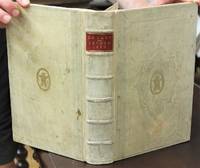
1630Best.-Nr. B6616Leiden/Leyden: bij de Elzeviers. Anno 1630. 1630. An important work in near fine condition; some maps watermarked. Brazil map with reinforcement; otherwise text and plates clean and crisp. Binding: Contemporary vellum; heavily tooled with a central medallion of a golden castle at the heart. Spine rebacked saving the original spine. Notes: Joannes or Johannes De Laet Latinized as Ioannes Latius 1581-1649 was a Dutch geographer and director of the Dutch West India Company in 1620 an office he retained for the rest of his life. The city of Leiden sent him as an elder-delegate to the great Synod of Dort 1618–1619. De Laet was the first to use expression derivatives developed later; i.e. ‘Manhattes’ ‘Manhatans’ and ‘Nieuvv-Amsterdam’ in-text; ‘Manbat tes’ and ‘N. Amsterdam’ on his NOVA ANGLIA map to describe the recently founded New York; and ‘Noordt Rivier’ and ‘Zuyd’ ‘Rivier’ for the Hudson and Delaware rivers. The first edition published in Dutch in 1625 as “Nieuwe Wereldt ofte Beschrijvinghe van West-Indien uit veelerhande Schriften ende Aen-teekeningen van verscheyden Natien” was followed by the second the present work in 1630 which was greatly improved due to its four additional maps and illustrations depicting animals and plants indigenous to America. In terms of pagination and the maps in our work they are congruent with John Carter Brown Library’s copy. Concerning this work and the following maps in particular Burden states: "Considerable effort went into the text and maps of this work which was the most accurate description of the Americas available at the time. It is arguably the finest published in the seventeenth century. The exhaustive research involved de Laet reading all of the published and manuscript material that he could find. For the cartographic work he had much to call on being a director of the recently formed Dutch West India Company in charge of all Dutch interests in America and Africa. He therefore had access to the latest geographic knowledge. He drew upon the fine talents of Hessel Gerritsz the official cartographer to the Company since 1617. Gerritsz attained this post before Willem Blaeu under whom he was apprenticed and who was his senior by ten years. "The maps were some of the first to depart from the heavier style of the Mercator and Ortelius period. This more open style of engraving was one that both Blaeu and Janssonius would use in their atlases. The first edition of the book contained ten maps which with the exception of this one the NOVA HISPANIA. // NOVA GALICIA. // GVATIMALA. - Leiden 1625 concentrated on South America. There were none of North America until the second edition in 1630. Although many maps had been produced of New Spain few extended north into the area of present-day Texas. The Rio Grande is here still named the R. Palmas. The B. del Spiritu Santo possibly represents the Mississippi River. Some authorities have questioned this usual assumption. On the west coast of Florida we find the landing place of Juan Ponce de Leon. The delineation of the coastlines particularly of the Gulf of Mexico and the north-west coast of Mexico as the most accurate to date. The map appeared in the subsequent editions in Dutch 1630 Latin 1633 and French 1640. In all these there is no text on the reverse." Burden: 215 p.267 Re: De Laet's AMERICAE// sive// INDIAE OCCIDENTALIS// Tabula Generalis: "The first of these maps was a general one of the continent. Its most interesting feature is that although we know de Laet had seen maps of California as an island he relies on the more trustworthy accounts such as Herrera in depicting a peninsular form. The map has the best west coast delineation to date. He also does not get drawn into the debate about the North West Passage preferring to cut his map short of these latitudes. It appeared in the subsequent editions in Latin 1633 and French 1640. In all these there is no text on the reverse." Burden: 229 p.284/5. Reference: General: Alden & Landis 30/88; Borba de Moraes: 384; Sabin 38555; Shirley: 1554 G.LAET-1b. Also for individual maps in this work: Burden The Mapping of North America 1996: 267 284-288; Cumming 1962: 35; Delanglez 1945; Keuning 1949: 61-2; O'Dea 1971: fig.18; Phillips 1909: 1147-1150; Stokes 1915 II: 86-88 141; Stokes 1915 VI: 261/2; Wagner1937: 309 p.94. Size: Folio 281x183mm Illustration: Illustrated with engraved frontispiece title signed by Cornelius Claessen Dusent sculpsit with portraits by Pieter Heyn and Hendrick Lonck; fourteen 14 maps with accompanying text and in-text woodblocks depicting plants and animals; ornamental initials head- and tailpieces. Tweede druck second edition with 14 maps and illustrations after the first of 1625 with 10 maps Text in Dutch. Captions added in Latin. Provenance: plate mark of a Czar with two accompany angles Fading manuscript ink note in contemporary hand on verso of final free endpaper. Pages: Bl.4 644 14 maps bl.4; signatures: bl. printed title illustrated title 3-4 1-6 1-4 2 maps. A1-C6 D1-4 map E1-G6 H1-4 map I1-O6 P1-4 2 maps Q1-S6 T1-8 U1-Z6 Aa1-Bb6 Cc1-4 map Dd1-Ee6 Ff1-4 Gg1-Hh6 map Ii1-Nn6 Oo1-4 map Pp1-Qq6 map Rr1-6 Ss1-8 map Tt1-Uu6 map Xx1-6 Yy1-4 2 Zz31-34 2 Aaa1-8 map Bbb1-Ddd6 Eee1-4 map Fff1-Hhh6 Iii1-4 bl. Category: Book Voyages General; Book Americas West Indies; Book Europe Benelux; bij de Elzeviers. A[nn]o 1630. hardcover
Best.-Nr. 40-18340Gold Counrty Inns of Tuolumne County. Paperback. New. In shrink wrap. Gold Counrty Inns of Tuolumne County paperback
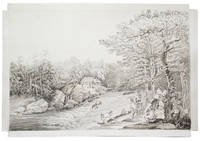
1800Best.-Nr. 52601Canada 1800. Graphite pen-and-ink and grey wash on wove paper watermarked "W. Elgar 1796". 13 5/8 x 20 inches. Corners clipped outside the image verso toned. Graphite pen-and-ink and grey wash on wove paper watermarked "W. Elgar 1796". 13 5/8 x 20 inches. Along the falls of a tree-lined river two First Nations men are pulling a canoe into the water directed by another in an elaborate feather headdress; a wigwam with mother and child is on the same shore to their left; across the river a longhouse and structure for smoking fish with another group of native people can be seen; at the far left a First Nations man is standing in his canoe fishing with a pole in the water just below the rapids. Although the 1796 watermark on the paper is consistent with drawings by Heriot the unfinished quality of this work make attribution difficult. However it is somewhat reminiscent of a smaller grisaille watercolor signed by Heriot titled FALLS OF THE POQUISQUE ON THE RIVER ST JOHN on verso sold at Waddington's March 15 2018 lot 137. Furthermore this scene is reminiscent of one described by Heriot in his Travels in the Canadas 1807 in which he describes Native American fishing on the cacasdes of St. Mary nine miles below the entrance to Lake Superior: "It is at the bottom of the rapids and even among their billows which foam with ceaseless impetuosity that innumerable quantities of excellent fish may be taken from the spring until the winter; the species which is found in the greatest abundance is denominated by the savages atticameg or white fish; the Michilimakinac trout and pickerell are likewise caught here. These aflford a principal means of subsistence to a number of native tribes. No small degree of address as well as strength is employed by the savages in catching these fish; they stand in an erect attitude in a birch canoe and even amid the billows they push with force to the bottom of the waters a long pole at the end of which is fixed a hoop with a net in the form of a bag into which the fish is constrained to enter. They watch it with the eye when it glides among the rocks quickly ensnare it and drag it into the canoe. In conducting this mode of fishing much practice is required as an inexperienced person may by the efforts which he is obliged to make overset the canoe and inevitably perish." Trained by Paul Sandby at the Royal Military Academy Woolwich London Heriot worked as a clerk for Board of Ordnance. "In 1792 Heriot was posted to Quebec and promoted clerk of the cheque in the Ordnance department. Heriot was to remain in Lower Canada until 1816 except apparently for two periods of absence in 1796-97 and in 1806. His first years at Quebec are not well documented. Sketches record visits in and about Quebec and Montreal perhaps on Ordnance business. In November 1792 he published a sketch of Jersey in the Quebec Magazine and the following year he prepared a view of Quebec perhaps also intended for publication. When he returned to Britain in 1796 he resided in London travelled to the south coast and made at least one sketching foray into Wales . A watercolour prepared from his sketches of Wales and two Canadian views were accepted by the Royal Academy of Arts for exhibition in the spring. Heriot probably sailed for Lower Canada soon afterwards taking notes and making sketches on the voyage. The impact of his visit to Britain was considerable. While there he had been stimulated by the art he had seen and by his success as an artist. He returned with a fresh enthusiasm for the Canadas; he began to read about their past and to make elaborate notes and numerous sketches of the places he visited and the peoples he encountered. His sojourn abroad had affected his artistic vision of the Canadas; his drawings and water-colours assumed a new confidence and his landscape forms developed a new strength and grandeur. In London he had probably studied the simply handled and remarkably strong water-colours of younger British artists such as Thomas Girtin Joseph Mallord William Turner and John Varley. Either in Britain or in Lower Canada he had also become familiar with Lieutenant George Bulteel Fisher's Six views of North America . London 1796. He was influenced by this work especially by Fisher's use of the Picturesque in depicting Canadian landscape" Dictionary of Canadian Biography. unknown
Best.-Nr. 002890Portland Oregon: Binfords & Mort 1942. Hardcover. Very Good. Octavo. 356pp. First edition. Brown cloth. Presentation from Coleman to James G. McCain President of the University of Montana from 1945-1950. Rufus Coleman was a member of the English faculty at the University of Montana. Either Wroth's or Streeter's copy. This item came from a large collection of bibliographical items belonging to Lawrence Wroth along with items from A.N.L. Munby and Thomas Streeter's collections. 0 Portland, Oregon: Binfords & Mort, 1942. hardcover
Best.-Nr. 002905Sydney: Privately printed 1951. Soft cover. Very Good. Folio. 20 ivpp. Limited to 200 copies; this is No. 146 signed by the author. Decorated stiff paper wrappers. Top of spine slightly nicked. Illustrated. Ex-library copy. Wroth's or Munby's copy. Although there are no ownership inscriptions this item came from a large collection of bibliographical items belonging to Lawrence Wroth along with items from A.N.L. Munby and Thomas Streeter's collections. 0 Sydney: Privately printed, 1951. paperback
Best.-Nr. 6388279643MacMillan . Papeback. New. pp. 510 MacMillan unknown
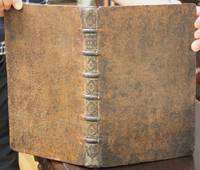
1585Best.-Nr. B6597Paris: Apud Dionysium Duvallium sub Bucephalo in vico Bellouasco; c. April 1585 colophon . A very nice copy of this rarely found work; old minor marginal repair tape of title slight marginal stains and very small in-text and marginal oxidation spots none affecting legibility; light damp staining of the lower margin. Endpapers watermarked. Binding: 17th century mottled calf spine with six 6 raised bands with gilt lettered title on two and remainder of compartments ornamented in floral gilt; all edges speckled red. Notes: This medical work on gynaecology attributed to or by Hippocrates and his school is accompanied by the commentary in French of French Renaissance physician Maurice de La Corde; it is rare with three known exemplars incl. Yale & Oxford. Size: Folio 311x201mm Illustration: Text in Latin and Greek. Text in two columns of Latin and Greek respectively with accompanying Latin commentary in one; except index printed in three columns. Illustrated title depicting determined/ inspired Hippocrates riding on horseback through crises or critical times toward the sun – this with marginal text in Latin and Greek; each major section opens with an elaborate headpiece and initial. References: Pasquale Sfameni in Enciclopedia Italiana 1933; Adams H-615; Choulant 31; Durling 2412. Graesse III 283; Hirsch II 76; Renouard Marques 287; STC French 227. Not in Osler. Pages: Ll: bl. 10 pp. 1-361 6 bl.2. Collation: bl. a1-4 e1-6 A1-Z6 Aa1-Gg6 Hh1-7 bl.2. Category: Book Medical; Book Early Printed 1500; Apud Dionysium Duvallium, sub Bucephalo, in vico Bellouasco; hardcover
2004Best.-Nr. SKU0480124Oxford University Press 2004-10-28. Product Bundle. Good. Textbook May Have Highlights Notes and/or Underlining BOOK ONLYNO ACCESS CODE NO CD Ships with Emailed Tracking Oxford University Press unknown
1962Best.-Nr. 20-27878Doubleday 1962-01-01. Hardcover. Good. Used good. Doubleday hardcover
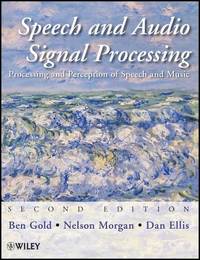
Best.-Nr. 0470195363.Ghardcover. Good. Access codes and supplements are not guaranteed with used items. May be an ex-library book. hardcover
1783Best.-Nr. B6593Ingoldstad Germany : Anton Attenkhouer c. 1783. . A very good example occasional minor browning. Edition: Second edition of Henrich Palmaz Leveling's German Binding: Full recent panelled calf triple gilt outer borders on speckled natural calf; central blind-stamped green panel; spine raised with five 5 bands; titles on two and four and compartments with central gilt ornament dated. Notes: Text in German. Gothic Script. Second edition of Henrich Palmaz Leveling's German translation or Ingolstadt edition after the first of 1781. This second Ingolstadt edition of only 1500 exemplars features beyond twohundred 200 in-text engravings printed from Vesalius’s original woodblocks; the woodblocks were destroyed during the WWII bombings of Munich. Leveling not only translated this work but introduced updated information often relying on the French Winslow as information source. Size: Folio 396x274mm. Illustration: Illustrated woodcut title depicting the dissection lecture hall; printed title with engraved vignette of the portrait of Heinrich Palmatius Leveling flanked on either side by the staff of Aesculapius and a skeleton respectively; headpieces at 2 A1 Bb1 Xx1 Nnn Yyy2r Ccc1r; and tailpieces at Q1 Bb1 Uu1v Eee2 Mmm2v Yyy1v Bbbb2v Hhhh2v 1v or final leaf; ornamental Gothic initials on title and dedication; in-text partial page illustrations at A1 A2v B1r 3 B2r B2v C1r 2 C1v 2 C2r D1r D1v D2r 2 D2v2 E1r E2v 2 F2r 2 G1r G2r 3G2v 3 H1v2 H2r 3 H2v2 I1r3 I2r 4 I2v3 K1v K2r5 L1v L2r6 L2v3 N1v2 O1v2 Nn1r Qq2r Ss1v2 Ss2v Tt1r8 Uu1r Zz1v 2 Aaa2v Bbb2v 2 Ccc1v Ccc2r Ggg2v Iii2v Lll2v Ooo1v Ppp2r Ppprv Qqq1v Qqq2v Rrr1v2 Rrr2r 2 Sss1v Xxx1v Xxx2v 2 Yyy1r Yyy2r Zzz2r Zzz2v Aaaa1r 2 Aaaa2r Aaaa2v 2; in-text half page illustrations often consisting of multiple illustrations at: A1v A2v F1v9 H1v H2r I2v K1v 5L1r2 M1v2 M2r4 M2v O2r15 Q1r Rr1r Rr1v Rr2v Ss1r Ss2r2 Tt2v Xx1r Zz2r Fff1r Nnn1r Nnn2r Ooo1r Ppp2r Qqq2r Sss2r Ttt1v Uuu1r Uuu2r Xxx2r Yyy2v Cccc1r Cccc2r Cccc2v Dddd1v Dddd2r Eeee1r Eeee2r Ffff1r Gggg2r Gggg2v Hhhh1v; in-text full page illustrations at: F1r N2r13 P1r P1v P2r Bb2r Cc2r Dd2r Ee2r Ff2r Gg2v Jj17r Jj2v Kk2v Ll2v Mm2v Nn2v Oo2r Pp2r Xx2v Zz2v Ccc2v folding Eee2v Fff1v Iii2v Kkk1r Mmm12 folding Ooo2v; Moreover two double-paged woodcuts insert of Adam and Eve at Iiii2v. Volume: Seven books in one volum Provenance: Signature: “H.Linder // 1875” on the margin of the upper free endpaper; Stamp on verso of final leaf: “Henry Linder //SCULPTOR Studio … // NEW-YORK.” Some of Linder’s work 1854-1910 renowned New York sculptor is exhibited at the Smithsonian America References: Choulant-Frank 185; Cushing VI A.15; Heirs of Hippocrates 1042; Osler 573; Waller 5752 Pages: Ll: Bl. 2 ill title printed title with portrait vignette of Leveling dedication 3 x1-xx2 preface x1-2 index; A1-Z2 Aa1 1st book Bb1-T2 U1 2nd book ; Xx1-Eee2 3rd book Fff1-Mmm2 4th book Nnn1-Yyy1 5th book Yyy2-Zzz2 Aaaa1-Bbbb2 6th book Cccc1-Hhhh2 7th book Iiii1-2 2 folding plates- of Adam and Eve Kkkk1-Oooo2 summarische Abhandlung 1-2 1 Index; bl.2. Category: Book Medical; Anton Attenkhouer, unknown
1827Best.-Nr. 66716Boston: Richardson and Lord 1827. 1827. Translated from the French. Old Ex-Library from Maryland. Fair condition. Foxing and general wear. 2nd edition translated into English. Old library bylaws included warning the reader that late fees may be as much as six and a half cents. Marie François Xavier Bichat was a French anatomist and pathologist known as the father of modern histology. Although he worked without a microscope Bichat distinguished 21 types of elementary tissues from which the organs of the human body are composed. Richardson and Lord unknown
Best.-Nr. DADAX1439181551Free Press 2014-07-08. 1. hardcover. New. 6.25x1.00x9.50. Buy with confidence. Excellent Customer Service & Return policy. Free Press hardcover
Best.-Nr. 002776Los Angeles: Privately Printed 1948. Soft cover. Fine. Duodecimo. Unpaginated 20pp. Limited to 120 copies printed at the private press of Muir Dawson. Printed wrappers with printed label. Wroth's or Streeter's copy. Although there are no ownership inscriptions this item came from a large collection of bibliographical items belonging to Lawrence Wroth along with items from A.N.L. Munby and Thomas Streeter's collections. 0 Los Angeles: Privately Printed, 1948 paperback
Best.-Nr. 002777Boston: The Railway & Locomotive Historical Society 1940. Soft cover. Fine. Octavo. 138pp. First edition. Decorated paper wrappers. With two large folding maps and other illustrations. Wroth's or Streeter's copy. Although there are no ownership inscriptions this item came from a large collection of bibliographical items belonging to Lawrence Wroth along with items from A.N.L. Munby and Thomas Streeter's collections. 0 Boston: The Railway & Locomotive Historical Society, 1940. paperback
Best.-Nr. 002775Berkeley: Privately Printed 1922. Soft cover. Fine. Quarto. viii 97pp. Limited to 150 copies. Printed paper wrappers. Wroth's or Streeter's copy. Although there are no ownership inscriptions this item came from a large collection of bibliographical items belonging to Lawrence Wroth along with items from A.N.L. Munby and Thomas Streeter's collections. 0 Berkeley: Privately Printed, 1922. paperback
1762Best.-Nr. B6600Romae: Veneunt apud Auctorem in ædibus Comitis Thomati via Felice prope templum SS. Trinitatis in Monte Pincio; c.1762. Fine thick laid 18th century Italian paper with wide margined paper watermarked engravings; spine and corners worn – A handsome and attractive example plates are clean and crisp. Binding: Contemporary half calf; double gilt fillets bordering marbled boards; spine with five 5 matching gilt fillets on raised bands embossed gilt lettered title on two and four; pasted and free endpapers marbled; all edges marbled. Notes: Text in Latin and Italian. This work was dedicated by Piranesi to one of his highly esteemed co-workers during the 1750’s Robert Adam. Concerning this Rome 1762 edition Luigi Ficacci states: “Edition Rome 1762. Engraved title on the title page: The Campus Martius of Ancient Rome the Work of G. B. Piranesi Fellow of the Royal Society of Antiquaries London. The Latin title page bears the title the date of the edition and the dedication to Robert Adam. The address is: “Veneunt apud Auctorem in aedibus Comitis Thomati via Felice prope Templum SS. Trinitatis in Monte Pincio”. The volume is composed of 2 title pages Latin and Italian whose sequence varies according to the copy 2 ornamented letters 4 vignettes 42 plates by Piranesi 5 of these plates are composed of several copperplates and 1 engraved by Vesterhout 68 pages of text in Italian and Latin preceded by 6 pages of dedication to Robert Adam and followed by 29 pages of indices. … The genesis of the work goes back to the second half of the 1750s: its publication is announced as imminent in the first volume of Antichita Romane 1756. The large Plan of Campo Marzio and 6 copperplates “Ichnographia” or plan of the Campus Martius ill. 493 executed in collaboration with Robert Adam and dedicated to him is dated 1757 on the plate. The approbatio is dated 1761. The plate by Vesterhout plate XXXI … reproduces the technical solution adopted by Carlo and Francesco Fontana for restoration of the Column of Antonius Pius in 1705.” Plate XXXI depicting the excavation of the Antonine column in 1705 was signed by both its engraver Arnold Van Westerhout or Vesterhout and by its designer and artist Franciscus Fontana. The second illustrated title or title in Italian reads: 'Il Campo Marzio Dell'Antica Roma'. Size: Folio 542 x 406mm. Illustration: Copper engravings with illustrated title in Latin illustrated title in Italian two half-page head-piece vignettes opening dedication at a1v-2r; two engraved decorative copper initials opening the text at A1v and A2r; two large end-piece vignettes at R2v and R3r; moreover Tab. I-XLVIII with fifty-two 52 copper engraved plates; these include: a double-page plate numbered XXXII two triple or oversized folding plates numbered II and XXXI; a larger oversized engraving 1500x1500mm encompassing plates V-X forming the plan of the Campus Martius; a single page numbered XLVIII depicting three copper plates entitled “Elevazione de’ Teatri…” “Elevazione del Pantheon…” and “Elevazione dell’ Anfiteatro”; single pages two half-page copper plates each - numbered XII entitled “Hypsographia…” and “Sectio…” and XLVI entitled “A Reliquiae…” and “Orthographia…” respectively; the remaining copper plates full or single page sized. Provenance: Upper marginal corner of upper pasted endpaper with sticker reading “C.E.Rappaport // Libri Rari // Roma”- References: Luigi Ficacci pp. 394-431; Focillon 1964: 428-479; Hind 1978: 85; Millard iv 2000: 91; RIBA Early Pr. iii 1999: 2551; Wilton-Ely 1994: 559-612. Pages: Ll: Bl. 2 Illustrated title in Latin illustrated title in Italian a1-b2 with dedication A1-Q2 R1-3 with approbation and explanatory texts; a1-c2 with Index ; 1-2 1-3 with catalogues; illustrations: Tab.I-XLVIII; bl. 2. Category: Book Art Architecture & Design; Book Europe Italy; Book Plate Books General; Book Antiquities; Veneunt apud Auctorem in ædibus Comitis Thomati via Felice prope templum SS. Trinitatis in Monte Pincio; hardcover
2021Best.-Nr. x-0891183779Acsess 2021. Hardcover. New. 3rd edition. 576 pages. 0.39x0.39x0.39 inches. Acsess hardcover
Best.-Nr. 002784Sydney: very privately printed saxteenth Octember thirty-four. Soft cover. Very Good. Quarto. xxxiipp. Limited to 150 copies; this is No. 34 signed by the author. Printed stiff paper wrappers. Bookplate illustrations for a variety of people. Ex-library copy. Wroth's or Munby's copy. Although there are no ownership inscriptions this item came from a large collection of bibliographical items belonging to Lawrence Wroth along with items from A.N.L. Munby and Thomas Streeter's collections. 0 Sydney: very privately printed, ?saxteenth Octember, thirty-four? paperback
1770Best.-Nr. B6607Romae/Rome: Veneunt apud Auctorem in ædibus Comitis Thomati via Felice prope templum SS. Trinitatis in Monte Pincio; watermarks indicate: c.1770’s-1790’s. Plates and text crisp and clean near fine. Thick wide margined paper. Binding: Contemporary half calf with marbled boards; spine with five 5 blind raised bands flanked by gilt tooling; gilt lettered title on Morocco label on two; contemporary pasted and free endpapers; all edges speckled red. Notes: Text in Italian; captions in Latin. This work was dedicated by Piranesi to one of his highly esteemed co-workers during the 1750’s Robert Adam. Concerning the Rome 1762 edition Luigi Ficacci states: “Edition Rome 1762. Engraved title on the title page: The Campus Martius of Ancient Rome the Work of G. B. Piranesi Fellow of the Royal Society of Antiquaries London. The Latin title page bears the title the date of the edition and the dedication to Robert Adam. The address is: “Veneunt apud Auctorem in aedibus Comitis Thomati via Felice prope Templum SS. Trinitatis in Monte Pincio”. The genesis of the work goes back to the second half of the 1750s: its publication is announced as imminent in the first volume of Antichita Romane 1756. The large Plan of Campo Marzio and 6 copperplates “Ichnographia” or plan of the Campus Martius ill. 493 executed in collaboration with Robert Adam and dedicated to him is dated 1757 on the plate. The approbatio is dated 1761. The plate by Vesterhout plate XXXI … reproduces the technical solution adopted by Carlo and Francesco Fontana for restoration of the Column of Antonius Pius in 1705.” Size: Folio 542x406mm. Illustration: Etched copper engravings with illustrated title in Latin illustrated title in Italian ornamental head-piece and engraved decorative copper initial at A1r; the initial opens the text. Tab. I-XLVIII plus three full page engravings entitled “Sepulchrum Mariae Honorij Imp. Uxoris …” “Labrum aegyptiacum porphyreticum…” and Nonnulla monumenta sepulcralia quae recensentur…”; these 51etchings include double-page plates numbered V-X forming the plan of the Campus Martius and one double page plate # XXXII; two triple or oversized folding plates numbered II and XXXI; a single page numbered XLVIII depicting three copper plates entitled “Elevazione de’ Teatri…” “Elevazione del Pantheon…” and “Elevazione dell’ Anfiteatro”; single pages two half-page copper plates each - numbered XII entitled “Hypsographia…” and “Sectio…” and XLVI entitled “A Reliquiae…” and “Orthographia…” respectively; the remaining copper plates are full page in size. Plate XXXI was engraved by Vesterhout after Fontana. Thick wide margined paper; many watermarks pointing this Roman edition to the time frame of 1770’s -1790’s. Examples of watermarks: an unlisted on both free endpapers with an inner fleur de lis design within a circle; #19 1790’s at plate 43; #68 probably 1790’s at plate 35; #59 mid 1770’s -1790’s at plates 31 and 32; #64 1790’s also on plate 31; # 12 late 1780’s -1790’s at plate 30; #14 mid 1761 or #16 1790’s at plate 29; #59 mid 1770’s -1790’s and 64 1790’s at insert plate 21 entitled Scenographia Machinae qua Clemente XI. Pont. Max. An. D. MDCCV; #74 1790’s on unnumbered plate entitled “Sepulchrum Mariae Honorij Imp. Uxoris” generally featured as headpiece vignette of the Latin text.; #12 late 1780’s -1790’s on unnumbered plate entitled “Labrum aegyptiacum porphyreticum…” here as full plate otherwise a headpiece of the Latin text. Plate XXXI depicting the excavation of the Antonine column in 1705 was signed by both its engraver Arnold Van Westerhout or Vesterhout and by its designer and artist Franciscus Fontana. The second illustrated title or title in Italian reads: 'Il Campo Marzio Dell'Antica Roma'. References: Luigi Ficacci pp. 394-431; Focillon 1964: 428-479; Hind 1978: 85; Millard iv 2000: 91; RIBA Early Pr. iii 1999: 2551; Wilton-Ely 1994: plates 559-612. Pages: Ll: Bl. Illustrated title in Latin A1-H2 a1-c2 with catalogue and indices; illustrated title in Italian; Tab.I-XLVIII plus three full-leaf unnumbered plates bl. Category: Book Art Architecture & Design; Book Europe Italy; Book Antiquities; Book Plate Books General; Veneunt apud Auctorem in ædibus Comitis Thomati via Felice prope templum SS. Trinitatis in Monte Pincio; [ watermarks indicate: hardcover
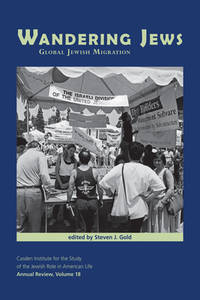
2012Best.-Nr. DADAX1557539987Purdue University Press 2020-12-15. Annual. paperback. New. 6.00x0.50x9.00. Buy with confidence. Excellent Customer Service & Return policy. Purdue University Press paperback
2012Best.-Nr. SONG1557539987Purdue University Press 2020-12-15. Annual. paperback. Used: Good. 6.00x0.50x9.00. Buy with confidence. Excellent Customer Service & Return policy. Purdue University Press paperback