Peter GoldBiblio.com
Navajo and Tibetan Sacred Wisdom: The Circle of the Spirit
1994rif. 1-089281411XInner Traditions 1994. Paperback. New. 350 pages. 10.00x8.00x1.00 inches. Inner Traditions paperback

Revaluation Books · Regno Unito36,98 £≈ 44,17 €
17.709 risultati
rif. DADAX1437422187New unknown
rif. DADAX1436547040New unknown
rif. DADAX1437329152New unknown
rif. DADAX1437439454New unknown
rif. DADAX1436825423New unknown
rif. DADAX1436526221New unknown
rif. DADAX1437329020New unknown
rif. DADAX1436955971New unknown
rif. DADAX143740667XNew unknown
rif. DADAX1437361323New unknown
rif. DADAX1418112143New unknown
rif. DADAX1437381677New unknown
rif. DADAX1437340652New unknown
rif. DADAX3834922277New unknown
rif. DADAX1449759815New unknown
rif. DADAX1436661528New unknown
rif. DADAX0243871163New unknown
2020rif. 044831Gold Prospectors Association of America 2020. Revised edition . Soft cover. Very Good. Revised 2020 edition. Almost like new. No writing or names inside. Gold Prospectors Association of America paperback
1994rif. 9649Gold Fever Publishing CT 1994. Fine in red leather with gilt print. First edition first printing hardcover limited to 50 copies this number 14 SIGNED BY KUTZ ON THE LIMITATION PAGE AND DATED NOVEMBER 1994 Gold Fever Publishing, CT hardcover
1987rif. 043680Book Club Associates and Bantam Press 1987. Hardcover. Near Fine/Very Good. Almost like new hardcover in very good dust jacket. Solid binding. No marks or names inside. Small tear to top of front dust jacket. Book Club Associates and Bantam Press hardcover
1994rif. 1-089281411XInner Traditions 1994. Paperback. New. 350 pages. 10.00x8.00x1.00 inches. Inner Traditions paperback
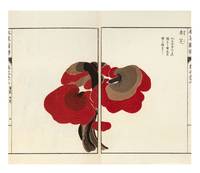
1916rif. 99921916. Several thousand double-page & full-page color-printed woodcuts many with embossing. 95 vols. 8vo 256 x 174 mm. orig. tan patterned semi-stiff wrappers orig. title slips on upper covers orig. stitching occasional stitching a little loose. Tokyo: HonzÅ Zufu KankÅkai 本è‰åœ–èœåˆ‹è¡Œæœƒ 1916-22. The definitive and complete edition of the "the greatest illustrated botanical work of nineteenth century Japan.This monumental work the HonzÅ zufu briefly describes and splendidly illustrates in full color some 2000 plants. It is considered to be one of the two most important works on systematic botany in the Tokugawa period 1603-1867."-Richard C. Rudolph "Illustrations from Weinmann's 'Phytanthoza iconographia' in Iwasaki's 'HonzÅ zufu'" in Huntiana Vol. 2 15 October 1965 p. 1. Iwasaki 1786-1842 was an important natural historian who studied with Ono Ranzan the "Linnaeus of Japan." Iwasaki learned Western botanical theories from Yoan Udagawa one of the most celebrated rangakusha Dutch scholars of the period and from Philipp Franz von Siebold the German physician and scientist. Iwasaki also made many field trips throughout the main island of Japan collecting botanical specimens which he brought back to Edo and cultivated in a garden the government had given him. The publication history of the editions of HonzÅ zufu is long and complicated and there are several conflicting bibliographical accounts. We give Prof. Richard C. Rudolph's account cited above based on Kotaro Shirai's history of the work which appeared in Vol. 93 1921 of the modern edition of HonzÅ zufu 1916-22. We believe Prof. Rudolph's account is the best and most accurate in English. "Early in 1828 Iwasaki founded a botanical society. The first meeting which was held at his own home was attended by the most prominent scholars in this field. In the autumn of the same year after a long period of collecting illustrating practical gardening and study of most of the available botanical works Iwasaki completed the compilation of a comprehensive illustrated flora. "Iwasaki planned to issue this large work in twenty-four series of four volumes each. It seems obvious from the preface that the illustrations were to be printed in black and white and then were to be colored by hand. Shirai in his history of this project says that in this first attempt to reproduce Iwasaki's compilation only four volumes were printed in 1830. "This first attempt to print the HonzÅ zufu was a commercial failure.income was insufficient to finance the printing of so large a work.printing was abandoned but reproduction of his compilation was continued in manuscript with colors brushed in by hand. How many copies were made of each volume in this manner is not recorded but four volumes were produced yearly until his death in 1842. His family carried on with the work and completed the manuscript volumes of HonzÅ zufu in ninety-two volumes in the latter part of 1844 and they are incredibly rare. "It is obvious that a printed edition of such an important work would be produced sooner or later. Several attempts made in the late 19th century ended in failure. In the early years of the present century the HonzÅ Zufu Kanko Kai or Society for Publication of the HonzÅ zufu was organized and a successful printing of the work in color by woodblocks was completed after five years of labor in 1921. This edition is composed of ninety-three volumes.The first ninety-two volumes contain illustrations of about 2000 plants in color and a very brief text and the following volume is composed of an additional text by Iwasaki together with Shirai's biography of him and history of the work. Another two volumes containing Japanese Chinese and Latin binomial indexes compiled by Shirai were published in the same format in 1922. Moreover each of the ninety-two volumes of plates has its own Chinese Japanese-binomial index. "In projects of this kind the publisher deserves a share of credit along with the author.it would take a man of considerable courage to undertake the printing of this great flora by woodblocks. Such a person was the Tokyo publisher Iwamoto YonetarÅ a man of little capital and poor health but rich in the courage required to produce a work of this kind.The rise in the cost of materials and labor due to World War I almost caused the project to end in failure as had others before it.To obtain the necessary funds he sold his personal library and cut down on the size of the staff.Iwamoto personally went over each printed page correcting faults in blockcutting and in coloring. "Either because Iwamoto published a small edition of the HonzÅ zufu or because it suffered destruction during World War II as did early Japanese books in general it is now almost impossible to locate a complete copy of this work."-Rudolph ibid. pp. 4-6. The plates are superbly color-printed and often exhibit subtle embossing. In very fine and fresh condition. Covers a bit discolored or spotted. unknown
rif. Z1-K-020-02240Lippincott Williams & Wilkins. Used - Good. Ships from UK in 48 hours or less usually same day. Your purchase helps support Sri Lankan Children's Charity 'The Rainbow Centre'. Ex-library so some stamps and wear but in good overall condition. 100% money back guarantee. We are a world class secondhand bookstore based in Hertfordshire United Kingdom and specialize in high quality textbooks across an enormous variety of subjects. We aim to provide a vast range of textbooks rare and collectible books at a great price. Our donations to The Rainbow Centre have helped provide an education and a safe haven to hundreds of children who live in appalling conditions. We provide a 100% money back guarantee and are dedicated to providing our customers with the highest standards of service in the bookselling industry. Lippincott Williams & Wilkins unknown
rif. ria9780691191508_inpPaperback. New. New Book; Fast Shipping from UK; Not signed; Not First Edition; How competing visions of world order in the 1940s gave rise to the modern concept of globalism During and after the Second World War public intellectuals in Britain and the United States grappled with concerns about the future of democ paperback
2002rif. 1-1578193133Mesorah Pubns Ltd 2002. Hardcover. New. 0002- edition. 759 pages. 11.90x9.70x1.90 inches. Mesorah Pubns Ltd hardcover