OR Jones O RBiblio.com
19.309 Ergebnisse
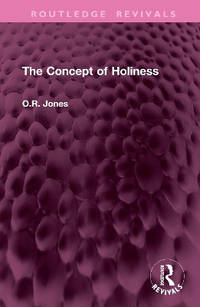
Best.-Nr. A9781032977904Hardback. New. The Concept of Holiness 1961 examines one of the most distinctively religious concepts in the sphere of Hebrew and Christian belief. The intimate connections between this concept and the associate notions of fear power separatedness wholeness and goodness are carefully unfolded. hardcover
Best.-Nr. 346024Santa Fe NM: Tewa Silk Screen Prints. 6 x 5-14 inches Image Frame 11 x 12 inches. Framed and glazed. With label from Tewa Silk Screen Prints on back. 6 x 5-14 inches Image Frame 11 x 12 inches. Begay was born on the Navajo Reservation near White Cone Trading Post in Az. and was the last living former student of Dorothy Dunn and Geronima C. Montoya at the Santa Fe Indian School when he died in 2012. He studied there from 1934 to 1940. Tewa Silk Screen Prints unknown
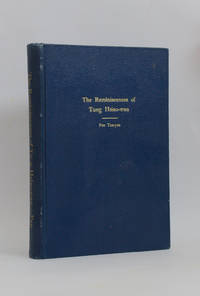
1931Best.-Nr. 00006269Shanghai: Commercial Press 1931. First Edition. Hardcover. Very good. Slim 8vo. Blue textured cloth gilt titles to spine cover. Previous owner's bookplate to front pastedown with inked name to flyleaf and what may be old bookseller notes on the text. The C17th telling of the author's relationship with the renowned concubine published after her death. See the extensive Wiki article on Dong Xiaowan. pp. 159. Overall a clean bright copy and a scarce translation of an important work illustrating the world of elite courtesans in Ming China. Commercial Press hardcover
1579Best.-Nr. B6621A Lyon: Par Barthelemy Vincent M.D. LXXIX. 1579. . A near fine example reinforcement on margin of leaf B4. Plates are clean and crisp. Binding: Full embossed cotemporary pigskin with central medallion; spine expertly rebacked saving the original with six 6 raised bands gilt lettered title on Morocco label on two; all edges sprinkled red. Notes: Text in Middle French. Second French edition after its first of 1578; first Lyon French edition with commentaries to illustrations by Beroald de Verville. "In 1578 after the death of Besson c. 1572 the Theater of Mathematical and Mechanical Instruments was published in Geneva a work in which we note an evolution in turning techniques with the appearance of the first mandrels and first fixed glasses. Other Geneva editions will follow in French Latin Italian German and finally Spanish until 1602. in rue de la Harpe opposite Saint-Cosme presented twenty-one models of machines eleven of which were executed from the plates of Jacques Besson. … The work belongs to … a genre consisting of presenting series of engravings of instruments and machines often newly invented. These printed writings are used by the inventors in order to protect their invention and to guarantee their right in an irrefutable way. These printed ‘machine’ books appeared in France at the end of the 16th century when the formation of the intermediate class of technicians crystallized grouped together today under the name of engineers. These engineers first appeared in Italy in the 15th century then in Germany and finally in France. … Besson's book which is unanimously considered to be the first true "machine theatre" marks a break with its passage to print. There are sixty figures in all each occupying a full page. Each engraving is accompanied by a legend indicating the manner of construction and its function. … Besson presents four major series of machines: machines for raising water mills cranes and winches. He often suggests ways to multiply the force in order to be able to replace two or three workers with one." “When King Charles IX of France made a royal visit to Orléans in 1569 Besson presented to the King a draft of his new treatise what was to become the Theatrum Instrumentorum. and returned with him to Paris as "master of the King's Engines". Charles gave Besson exclusive rights to his designs in that same year. While employed by the court Besson also created an ingenious screw-cutting lathe that was semi-automatic in that the operator only needed to pull and release a cord. … Besson's Theatrum Instrumentorum Theater of Machines was completed and published in 1571 or 1572. It was a unique work; previously works on engineering and technology such as Valturio's De re militari 1472 Biringuccio's Pirotechnia 1540 and Agricola's De re metallica 1556 had had only limited descriptions of new inventions or recounted inventions of the past without much detail. In contrast Besson's work was a collection of his own new inventions with detailed illustrations of each engraved by Jacques Androuet du Cerceau to his specifications. Some of his designs suggested important improvements to lathes and the waterwheel. The Latin captions to the highly detailed drawings were sparse however which would seem to indicate that the text was probably produced in a hurry. Even the title page does not give the name of the printer or the date of publication. The rush in publishing the book may have been due to the crackdown on French Protestants that culminated in the St. Bartholomew's Day Massacre of 1572. … Although Besson was favoured by King Charles IX he feared the increasing anti-Protestant sentiment in France and emigrated to England shortly after the St. Bartholomew's Day Massacre of 1572 where he died in 1573. … The Theatrum Instrumentorum had proved so popular that a second edition appeared in 1578 with more detailed descriptions of the instruments and machines by François Béroalde de Verville. The copper plates from the original edition were reused except for four which were replaced by new engravings produced by René Boyvin.” Size: Folio 342x238mm. Illustration: Illustrated allegorical wood engraved title; large ornamental and floral woodcut initials head- and tailpieces; moreover sixty 60 insert wood engraved plates depicting mathematical and mechanical instruments and inventions. Provenance: Upper pasted endpaper with a bookplate black ink manuscript ownership note dated 1588. Pages: Ll: bl. 20 60 ill bl.; collation: bl. illustrated title A2-E4 engraved plates numbered 1-60; bl. Category: Book Early Printed 1500; Book Plate Books General; Book Science & Technology; Par Barthelemy Vincent, M.D. LXXIX. hardcover
Best.-Nr. A9781927338896Paperback / softback. New. paperback
Best.-Nr. DADAX1665907959New unknown
Best.-Nr. SONG1496029984Used: Good unknown
Best.-Nr. B9781501368394Paperback / softback. New. What happens when fashionable forms of unserious speech prove to be contagious when they adulterate and weaken communicative spheres that rely on honesty trust and sincerity Demonstrating how the tension between irony and avowal constitutes a central conflict in Fontane’s works this book argues that his best-known society novels play out a struggle between the incompatible demands of these two modes of speaking. Read in this light the novels identify an irreconcilable discrepancy between word and deed as both the root of emotional discord and the proximate cause of historical and political upheaval. Given the alarm since 2016 over unreliability falsehood and indifference to truth it is now easier to perceive in Fontane’s novels a profound concern about language that is not sincere and not meant to be taken literally. For Fontane irony exemplifies a discrepancy between language and meaning a loosening of the ethical bond between words and the things to which they refer. His novels investigate the extent to which human relationships can continue to function in the face of pervasive irony and the erosion of language’s credibility. Although Fontane is widely regarded as an ironic writer Tucker’s analyses reveal a critical distance between his works and the prospect of irony as a dominant idiom. Revisiting Fontane’s novels in a post-truth age brings the conflict between irony and avowal into sharper relief and makes legible the stakes and contours of our own post-truth condition. paperback
Best.-Nr. 003297Boston: n.p. Massachusetts Historical Society 1926. Soft cover. Very Good. Octavo. 10pp. Read before the Massachusetts Historical Society January 14 1926. Printed paper wrappers. This article was also printed in Volume 59 of the Proceedings of the Massachusetts Historical Society October 1925 - June 1926 pp. 148-155. Although there are no ownership inscriptions this item came from a large collection of bibliographical items belonging to Lawrence Wroth along with items from A.N.L. Munby and Thomas Streeter's collections. 0 Boston: n.p. [Massachusetts Historical Society], 1926. paperback
Best.-Nr. 003298Stamford: The Overbrook Press 1966. Soft cover. Very Good. Octavo. ii 4 ivpp. First separate edition and first in book form published as the Altschul's holiday greeting for the year. Pictorial stiff wrappers. Very good copy. Although there are no ownership inscriptions this item came from a large collection of bibliographical items belonging to Lawrence Wroth along with items from A.N.L. Munby and Thomas Streeter's collections. 0 Stamford: The Overbrook Press, 1966, paperback
Best.-Nr. B9781801886079Paperback / softback. New. paperback
Best.-Nr. 28760567-nnew. unknown
Best.-Nr. 28760567like new. unknown
Best.-Nr. 003310New York: The New York Public Library 1928. Hardcover. Very Good. Octavo. 25 ipp. Reprinted from the Bulletin of the New York Public Library of January 1928. Publisher's original printed wrappers within library boards. With plates. Although there are no ownership inscriptions this item came from a large collection of bibliographical items belonging to Lawrence Wroth along with items from A.N.L. Munby and Thomas Streeter's collections. Presentation from Lathrop C. Harper the celebrated New York book dealer to Henrietta C. Bartlett the Shakespeare scholar and bibliographer who in turn had gifted it to Yale University. With her gift bookplate to Yale University and their 'Discard' stamp over the bookplate. A fabulous copy associated with many of the luminaries of the twentieth-century American book world. 0 New York: The New York Public Library, 1928. hardcover
Best.-Nr. 29520581like new. unknown
Best.-Nr. 29520581-nnew. unknown
1566Best.-Nr. B6630Bononiae /Bologna: Alexandri or Alexander or Alessandro Benatii or Benatius or Benacci publisher c. 1566. . Edition: First Commandino edition. Binding: 17th century mottled calf; spine raised with six 6 bands compartments gilt gilt lettered title on two; all edges speckled red. Notes: First edition by Commandino. David Clement judges this edition of the first four books bound with the two books of Sereni on cones and cylinders to be extremely rare. Also footnote 32 states: in Bibliotheca Uilenbroukiana P.I. p. 55. Catal. duarum Bibliothecaruin Dom. N. B. & D. L. Hagae - Com. ap. Beauregard 1747. in 8vo. p. 9 Vogt Libror. rarior. p. 40. describes this Commandin edition surpassing that of Jean-Baptiste Memmius which was printed in Venice in 1537. It quotes Fabricius’ statement in the Bibliotheca Graeca about Memmius or Memus not having understood the subject at hand translated from a basically wanting manuscript with manifold thereby rendering his version weak. It also mentions that this didn’t mean Commandin’s was fault-free remaring the Greek manuscript he had drawn on was filled with failts. Concerning Apollonius’s work Koudela states” Interest in ancient Greek knowledge increased gradually in the fifteenth and sixteenth centuries especially in Italy the leading country of Europe's culture and science of the time. Latin translations of Greek works on conic sections and other curves - Apollonius and Pappus in particular - appeared in several editions. Although some original works were also published in the sixteenth century no significant progress in the study of conic sections had been made until the work of Kepler. His contribution influenced the further development of projective geometry and can be regarded as the transition from ancient to modern geometry. The spread of Greek knowledge in the Renaissance The invention of conic sections is attributed to Menaechmus 4th cent. BC a member of Plato's Academy at Athens. Various species of conic sections were obtained by truncating an acute-angled right-angled and obtuse-angled cone by a plane perpendicular to the generator of the cone. Conic sections were also investigated by Aristaeus the Elder 4th cent. BC and by Euclid c. 325 - c. 265 BC. Their works on this subject are now lost. The works of Archimedes 287 - 212 BC contain some important results concerning the properties of conic sections especially parabolas. The greatest ancient writer on conic sections was Apollonius of Perga c. 262 - c. 190 BC. His famous work Conics consisted of eight books and contained 487 propositions. Apollonius introduced the terms ellipse parabola and hyperbola and showed that various sections of the cone can be obtained by varying the inclination of the intersecting plane. Among other ancient authors dealing with conic sections we should mention Pappus of Alexandria c. 290 - c. 350 AD the last of great Greek geometers. His main work known as Collection is valuable - among other things - because it provides an account and comments on the results obtained by his predecessors. Pappus introduced the notion of the focus and the directrix of a hyperbola Kline 1990 p. 128 . Apollonius’ work influenced the greatest scholars of the modern era such as Descartes and Newton. The Latin translation of the first four books of Apollonius by Gianbattista Memo appeared in Venice in 1537. The present edition of Apollonius’ Conics of the sixteenth century is based on the translation and important new edits by Federico Commandino 1506-1575 who published “classical Greek mathematical texts under the auspices of the Duke of Urbino.” Horblit: “The most influential early edition of this highly important text entirely superceding Memmo’s version of 1537”. Other sources state that in total the Conics consist of 387 not 487 propositions published in seven books with the eighth book remaining unconfirmed. References: Adams A-1310; Brunet I 347; David Clement Bibliothèque curieuse historique et critique: A-Aqvino 1750 p.415/6; Dibner 101; Honeyman 118; Horblit 4; Koudela L.: Curves in the History of Mathematics: The Late Renaissance 2005; Norman 57; Riccardi I/1 361 51; Commandino; Sotheran I 124. Work II: Conicorum lib. V VI VII with Archimedis Assumptorum liber. Pergaeus Apollonius c. 262-c. 190 B.C. author; Archimedes c. 287-c. 212 B.C author; Abu'l Fath of Isphahan or Bundari al-Fath ibn Ali c. 1190 - c. 1245 author; Borelli Giovanni Alfonso c. 1608-1679 editor; Abraham Ecchellensis 1605-1664 translator: APOLLONII PERGAEI// CONICORVM LIB. V.VI.VII. // PARAPHRASTE // ABALPHATO ASPHAHANENSI // Nunc primum editi. // ADDITVS IN CALCE. // ARCHIMEDIS ASSVMPTORVM LIBER // EX CODICIBVS ARABICIS M.SS. // SERENISIMI // MAGNI DVCIS ETRVRIAE //ABRAHAMVS ECCHELLENSIS MARONITA // In Alma Vrbe Linguar. Orient. Professor Latinos reddidit. // IO: ALFONSVS BORELLVS // In Pisana Academia Matheseos Professor curam in Geometricis versioni // contulit & notas vberiores in vniversum opus adiecit. // AD SERENISSIMVM // COSMVM III. // ETRVRIAE PRINCIPEM. // FLORENTIAE // Ex Typographia Iosephi Cocchini ad insigne Stellae MDCLXI. // SVPERIORVM PERMISSV. Two parts in one.Text in Latin. First edition. / Editio princeps Florentiae / Florence: ex Typographia Iosephi Cocchini publisher; c. 1661. Folio 294x199mm. Illustrated with a red and black ink title decorative head- tail pieces and woodcut initials of varying sizes at openings a large number of mathematical in-text woodcut illustrations mainly diagrams throughout again of varying sizes; wide margined paper. Pagination: 36 415 bl. Collation: Ll: bl. half title red and black ink title 3-6 1-4 with index A1-Z4 Aa1-Zz4 Aaa1-Fff4 with errata bl. Very beautiful and rare work edited by Alfonso Borelli is the first edition of books V VI and VII of the Conicorum of Apollonius. Concerning Apollonius Koudela states” Interest in ancient Greek knowledge increased gradually in the fifteenth and sixteenth centuries especially in Italy the leading country of Europe's culture and science of the time. Latin translations of Greek works on conic sections and other curves - Apollonius and Pappus in particular - appeared in several editions. Although some original works were also published in the sixteenth century no significant progress in the study of conic sections had been made until the work of Kepler. His contribution influenced the further development of projective geometry and can be regarded as the transition from ancient to modern geometry. The spread of Greek knowledge in the Renaissance The invention of conic sections is attributed to Menaechmus 4th cent. BC a member of Plato's Academy at Athens. Various species of conic sections were obtained by truncating an acute-angled right-angled and obtuse-angled cone by a plane perpendicular to the generator of the cone. Conic sections were also investigated by Aristaeus the Elder 4th cent. BC and by Euclid c. 325 - c. 265 BC. Their works on this subject are now lost. The works of Archimedes 287 - 212 BC contain some important results concerning the properties of conic sections especially parabolas. The greatest ancient writer on conic sections was Apollonius of Perga c. 262 - c. 190 BC. His famous work Conics consisted of eight books and contained 487 propositions. Apollonius introduced the terms ellipse parabola and hyperbola and showed that various sections of the cone can be obtained by varying the inclination of the intersecting plane. Among other ancient authors dealing with conic sections we should mention Pappus of Alexandria c. 290 - c. 350 AD the last of great Greek geometers. His main work known as Collection is valuable - among other things - because it provides an account and comments on the results obtained by his predecessors. Pappus introduced the notion of the focus and the directrix of a hyperbola Kline 1990 p. 128. While Koudela mentions 487 propositions in total for eight books comprising the Conics other sources mention 387 published in seven books only with an eighth book announced but its publication unconfirmed/ elusive. Apollonius’ work influenced the work of great scholars such as Descartes and Newton. A Latin translation of Conicorum’s first four books appeared in Venice in 1537 and it was not until 1661 for the present work - Conicorum’s books V to VII - to be published; the present work constitutes the most innovative or original part of the work of Apollonius. Translated from the Arabic manuscript of Abu'l Fath of Isphahan c. 1190 - c. 1245 purchased by the Medici’s during the first half of the 17th century the text of had survived only in the Arabic language. Norman states: “This was a valuable addition to the mathematical knowledge of the time for whereas Books I-IV of the Conics dealt with information already known to Apollonius’s predecessors Books V-VII were largely original. Book V discusses normals to conics and contains Apollonius’s proof for the construction of the evolute curve; Book VI treats congruent and similar conics and segments of conics; Book VII is concerned with propositions about inequalities between various functions of conjugate diameters”. Cajori states: “The fifth book reveals better than any other the giant intellect of its author. Difficult questions of maxima and minima of which few examples are found in earlier works are here treated most exhaustively. The subject investigated is to find the longest and shortest lines that can be drawn from a given point to a conic. Here are also found the germs of the subject of evolutes and centres of osculation.” Cajori A history of mathematics 40; Brunet I: 347; D.B.I. XII 546; De Vitry 29; DSB I 191re: Apollonius & II 308 re Borelli ; III 364. Honeyman 119; Koudela L.: Curves in the History of Mathematics: The Late Renaissance 2005; Norman 58; Riccardi I /1 158 Borelli. Size: Folio 294x199mm. Illustration: Text in Latin. Illustrated with numerous decorative historiated woodcut initials of varying sizes at openings; hundreds of in-text illustrations mainly diagrams of varying sizes. Volume: Two parts in one. Pages: Pagination: Bl. 4 114 2 36 bl. Collation: Ll:1-6 1 -4 with index A1-Z4 a1-f2; 2 a1-i4. Category: Book Europe Italy; Book Science & Technology; Alexandri or Alexander or Alessandro Benatii or Benatius or Benacci, publisher unknown
Best.-Nr. DADAX0133723127New unknown
Best.-Nr. SONG1091578281Used: Good unknown
1703Best.-Nr. B7089Paris: Chez Simon Langlois c 1703. near fine with text clean and crisp. . Edition: First Edition. Binding: Contemporary full paper boards expertly rebacked; raised spine with five 5 bands black ink title on vellum label on two; central black fleur de lis design on four. Notes: Provenance: Upper pasted endpaper with owner’s armorial bookplate: “Watkin Williams Esq of Penbedw // in the County of Denbigh”. Concerning this name Archaeologia Cambrensis states: “1789. Watkin Williams Esq. of Penbedw in the county of Denbigh but owner of property in the parishes of Mallwyd and Llan-y-mowddwy in the county of Merioneth M.P. first for Montgomeryshire and afterwards during nearly thirty years for the Flint contributary boroughs was appointed lieutenant and custos rotulorum for Merionethshire.” Final free endpaper watermarked. This edition of this Canadiana publication is unique in that we are not able to locate another copy of the same anywhere. The second last paragraph of the introduction to the priests clergy and missionaries in this edition states that this publication encloses at the end of the first part or 'Rituel' a second part entitled 'les Statuts Ordonnances & Mandemens.' instructions prepared at various times by the Church for the conduct of all including those entrusted to the clergy that these instructions may not be ignored. The recipient are advised that they are restatements of instructions previously given to be read often just as such given in the Ritual itself; they are to be followed with precisions including all the rules contained not to be lost sight of observed faithfully in all works and ones conduct. The inclusion of this paragraph is unlike the introduction of another edition published at the same time and same location but not including this paragraph or the 'Statuts.'. The present work describing festivals sacraments statutes and ordinances for the use by priests in Quebec is extremely rare and was immediately followed by a second edition published the same year: Gagnon reports that in a copy of the second edition of 1703 now at the Laval University library and previously owned by Abbé Plante a note says that the first edition “would have been almost completely destroyed by the sinking of the ship …carrying it to Canada and for this reason a second edition was immediately made.” On the “privilege” included as the final leaf in our first edition example it is stated that the work was registered on March 30 1703 and completed for print for the first time on March 31 1703; Saint-Valier was a supporter of the Counter Reformation. His initial intent in the New World was to engage in the conversion of the indigenous residents. He introduced Jesuits and Recollects in an attempt to evangelize New France. Many of these missions Illinois Louisiana and Mississippi resulted in conflicts between Bishop Saint-Vallier the Jesuits and the seminary of Quebec. His various construction projects reflect a desire to restore and renew the authority in the Catholic Church as the main institution of administrative organization. In 1697 Saint-Valier built a palace in Quebec for his clergy and as a place of hospitality. During the same year he also established a nuns monastery in Trois-Rivières Saint-Vallier’s zeal for religious activities and establishments stretched from Quebec Montreal Acadia and Louisiana. His way of life embodied that of the ideals of the Council of Trent. The Diocese of Quebec was vast and its population diverse and widespread. It included the whole of French North America or what was called New France divided in seven colonies: Newfoundland Acadia Île Royale Louisiana Illinois Upper Country and Canada inhabited by Indigenous people and the European settlers. During the tenure of Saint-Vallier immigration from France was mostly over; the European colonists were farmers fishermen sailors merchants and ‘coureurs des bois’ overseen by a small elite of aristocratic leaders but a great demographic explosion occurred between 1685 and 1730 the white population in New France jumping from c. 12000 inhabitants to c. 41500. During the same time the number of Amerindian fell from c. 163500 to c. 61500. That loss mainly in the tribes of Louisiana was attributed to warfare and diseases brought to the valley of the Mississippi. The number of Aboriginals compared to white settlers is one reason for the presence of so many religious orders in New France. The missions and conversions to Christianity were deemed very important. Priests of the Missions Étrangères of Paris the Jesuits the Recollets and the Sulpicians often worked in collaboration with the nuns from different orders like the Congrégation de Notre-Dame or the Canonesses of St. Augustine of the Mercy of Jesus at l’Hôtel-Dieu de Québec. The arrival of Saint-Vallier and his strong views on what should be the duties of the priests created a shock wave in the orders especially for the Seminary of Quebec newly founded by his predecessor Bishop Laval. … Saint-Vallier's tenure as bishop was defined by interminable quarrels with governmental and religious institutions in French North America. … his active leadership style brought him into conflict with various groups who perceived him as at times domineering and micromanaging. While subject to much criticism Saint-Vallier was also admired in his diocese for his dedication and self-sacrifice. Rather than staying in Quebec or Montreal he tirelessly traveled the back-country. The founding of the Hôpital Général and installation of Jesuits and Recollets at Montreal were also to his credit. There was a very strong suspicion in the colonies and in France that the Bishop of Quebec was in fact a follower of Jansenism. . In the beginning of the 18th century the Bishop wrote 3 books; the Ritual the Catechism and the ‘Statuts et ordonnances’ – two of which are bound in the present volume. …the Superior of the jesuite order decided to attack Saint-Vallier’s authority by writing a long critic of those three books seeing them as a "lapse into Arianism Pelagianism Jansenism Lutheranism and Calvinism". Father Bouvart based his accusations on different passages of the works of the Bishop … who eventually appealed to the Sorbonne to have his works rehabilitated. The doctors of the Faculty of Theology declared the Ritual and the Catechism perfectly orthodox and censured the critic of Bouvart. Nevertheless Saint-Vallier decided to re-edit in 1713 the Ritual so as to cast away all doubts about his pretended Jansenist ideas. This book remained in use in the parishes until the middle of the 19th century. The present work is the unedited original and first edition of his ritual and statuts. The disputes with the religious orders of New France the government and the merchants gave way to a more peaceful period that lasted until his death. Austere throughout his life he became more and more humble in his way of living and turned toward contemplation and simple duties. .He also took very seriously his duties of Bishop and developed parishes in the farthest corners of the diocese. Size: Octavo 213 x133mm. Illustration: Text in French; with some text in Latin Achevé d'imprimer pour la premiere fois ce 31 mars 1703. Relié avec le Rituel du même. Illustrated with two printer's devices representing the arms of the archdiocese of Quebec; various head and tail pieces incl. vignettes; in-text music notes on Qiiii-Si; Ggii-iiii. References: Philéas Gagnon: Essai de bibliographie canadienne: Inventaire d'une bibliothèque . Volume 1: 3138 & 3139 p.437; Archaeologia Cambrensis Volume 1 p.142. Pages: Ff. 2 bl. ill. title bl. author to priests on the use of the book 4 Fetes Observe’es 4 604 table 2 errata 3 bl.; ill. title bl. letter 3 8-146 table 2 privilege 2 bl.2; In leaf collation: bl. v A-Z8 Aa-Nn8 Oo-Rr4 iiiff. table; a1 a3-a8 e8 i8 o8 u8 aa8 ee8 ii2 oo8 uu8 aaa1 ii bl. Category: Book Canada; Book Religious Christianity; Chez Simon Langlois, hardcover
Best.-Nr. A9781032100340Hardback. New. Data Scientists are experts at analyzing modelling and visualizing data but at one point or another have all encountered difficulties in collaborating with or delivering their work to the people and systems that matter. hardcover
1931Best.-Nr. 11832New York: Horace Liveright 1931. Octavo hardcover black cloth with gilt 309 pp. Twelfth printing February 1931. A good copy with scuffing and discoloration to covers fading to spine lettering bumping to spine fraying to spine ends slight toning to pages. Horace Liveright hardcover
2011Best.-Nr. SKU0576653Simon & Schuster 2020-11-10. paperback. Good. 5x0x8. Textbook May Have Highlights Notes and/or Underlining BOOK ONLY-NO ACCESS CODE NO CD Ships with Tracking Simon & Schuster paperback
2011Best.-Nr. SKU0576652Rowman & Littlefield Publishers 2011-11-15. paperback. Good. 6x0x9. Textbook May Have Highlights Notes and/or Underlining BOOK ONLY-NO ACCESS CODE NO CD Ships with Tracking Rowman & Littlefield Publishers paperback
2003Best.-Nr. SKU0593885Cambridge Center for Behavioral Studies 2003. spiral_bound. Good. 11x8x0. Textbook May Have Highlights Notes and/or Underlining BOOK ONLY-NO ACCESS CODE NO CD Ships with Tracking Cambridge Center for Behavioral Studies unknown