18 723 résultats
2003réf. SKU0593885Cambridge Center for Behavioral Studies 2003. spiral_bound. Good. 11x8x0. Textbook May Have Highlights Notes and/or Underlining BOOK ONLY-NO ACCESS CODE NO CD Ships with Tracking Cambridge Center for Behavioral Studies unknown
1924réf. 141That Gibbie Galoot. The Tale of a Teacher by H.T.G. Harry or Henry Thomas Gibson. Publisher: Auckland : N.Z. Observer Printing Works; 1924 First Edition. Good hardback no jacket. No inscriptions. Binding firm. Boards have some marks fading rubbing chipping and bumping. Small tear to top of spine. Scattered foxing throughout. Some creasing. 166 pages with b&w illustrations. "That Gibbie Galoot" is the title of a book written by Harry Thomas Gibson published in 1924 and subtitled "The Tale of a Teacher". It's a story about a country school teacher. The book was published by the N.Z. Observer Printing Works in Auckland. Auckland : N.Z. Observer Printing Works hardcover
1924réf. 009924Auckland: N.Z. Observer 1924. Book. Fair. Hardcover. Facsimile Reprint. 8vo - over 7¾ - 9¾" tall. 164 pages lacking p. 165-66 several b/w illustrations. Original boards but the spine has perished replace with cloth tape some sections loose. A very rare New Zealand publication of humorous stories. N.Z. Observer Hardcover
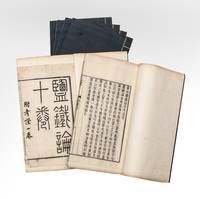
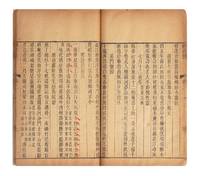
réf. 821136; 19; 20; 27; 37; 31 folding leaves neatly interleaved throughout. Ten juan in five vols. plus one vol. of commentary by Dunren Zhang. 8vo modern blue wrappers new stitching. China: 1807. A rare and important edition of this notable text; the sixth volume contains the valuable commentary and notes of Dunren Zhang 1754-1834 Qing scholar mathematician historian and book collector. After the death of Emperor Wu in 87 B.C. his successor summoned to the capital scholars from throughout the empire to discuss the most important problems of the day. Emperor Wu had “implemented a series of centralized economic measures to support his territorial expansion particularly to sustain wars with Xiongnu a confederation of nomadic tribes from Central Asia. For example the state monopolized salt iron and liquor industries; operated nationwide transportation facilities; and ran retail businesses. After the emperor died the new emperor gathered his officials and more than sixty Confucian literati to reassess these measures. The consultation turned into a lengthy debate not only on economic issues but also on topics such as agriculture border defense diplomacy legality and Confucianism… “The debate was later reconstructed under the title Yan tie fan by a Confucian bureaucrat-scholar Huan Kuan who consulted both living debaters and the historical record. The text delineates the debate in sixty episodes spanning over several days. In each episode the debaters focus on a specific issue that emerges during the debate.” You “Building Empire through Argumentation” 369. As a result of the debates the monopolies on salt and iron were briefly abolished but were soon resumed only to be abolished again after the overthrow of Emperor Wang Mang in 23 A.D. “The text of this book the Yantielun has been brought in the shape of a dialogue between the opponents. Except the state monopolies the text also touches political questions of the time like the power of the nomad federation of the Xiongnu in the north or the general style of politics as a ‘rule of the law’ versus ‘rule by virtue.’ Huan Kuan’s book is an important document about the internal discussions about political affairs during the Former Han period" ChinaKnowledge.de online. Fine set preserved in a slightly worn hantao. References ChinaKnowledge.de Wagner Donald B. Ferrous Metallurgy. Science and Civilisation in China. Vol. 5. Part 11. Cambridge: Cambridge University Press 2008. You Xiaoye. “Building Empire through Argumentation: Debating Salt and Iron in Western Han China.” College English Vol. 72 No. 4 March 2010. unknown
réf. 821136; 19; 20; 27; 37; 31 folding leaves neatly interleaved throughout. Ten juan in five vols. plus one vol. of commentary by Dunren Zhang. 8vo modern blue wrappers new stitching. China: 1807. A rare and important edition of this notable text; the sixth volume contains the valuable commentary and notes of Dunren Zhang 1754-1834 Qing scholar mathematician historian and book collector. After the death of Emperor Wu in 87 B.C. his successor summoned to the capital scholars from throughout the empire to discuss the most important problems of the day. Emperor Wu had “implemented a series of centralized economic measures to support his territorial expansion particularly to sustain wars with Xiongnu a confederation of nomadic tribes from Central Asia. For example the state monopolized salt iron and liquor industries; operated nationwide transportation facilities; and ran retail businesses. After the emperor died the new emperor gathered his officials and more than sixty Confucian literati to reassess these measures. The consultation turned into a lengthy debate not only on economic issues but also on topics such as agriculture border defense diplomacy legality and Confucianism… “The debate was later reconstructed under the title Yan tie fan by a Confucian bureaucrat-scholar Huan Kuan who consulted both living debaters and the historical record. The text delineates the debate in sixty episodes spanning over several days. In each episode the debaters focus on a specific issue that emerges during the debate.” You “Building Empire through Argumentation” 369. As a result of the debates the monopolies on salt and iron were briefly abolished but were soon resumed only to be abolished again after the overthrow of Emperor Wang Mang in 23 A.D. “The text of this book the Yantielun has been brought in the shape of a dialogue between the opponents. Except the state monopolies the text also touches political questions of the time like the power of the nomad federation of the Xiongnu in the north or the general style of politics as a ‘rule of the law’ versus ‘rule by virtue.’ Huan Kuan’s book is an important document about the internal discussions about political affairs during the Former Han period" ChinaKnowledge.de online. Fine set preserved in a slightly worn hantao. References ChinaKnowledge.de Wagner Donald B. Ferrous Metallurgy. Science and Civilisation in China. Vol. 5. Part 11. Cambridge: Cambridge University Press 2008. You Xiaoye. “Building Empire through Argumentation: Debating Salt and Iron in Western Han China.” College English Vol. 72 No. 4 March 2010. unknown books
réf. 11599Four full-page woodcuts & border decorations. 8 p.l. 70 pp. 3 leaves. 8vo orig. decorated boards deckle edges. Taipei: Nikkō Sanbō æ—¥å山房 1940. A very remarkable work written by a 12-year-old girl as part of the effort by the impresario Nishikawa Mitsuru to establish a Taiwanese regional literature gaichi bungaku or "overseas" literature to rival Japanese literary traditions. Nishikawa è¥¿å· 滿 1908-99 was a wealthy and highly influential Japanese author poet publisher and book designer in Taiwan during the colonial period. After studying French literature at Waseda University he returned to Taiwan most of his childhood had been spent there and quickly became the leading advocate - through his own poetry short stories and novels and his publishing empire of magazines literary journals and luxury press books - of establishing a dynamic Taiwanese literary culture rooted in the island's folklore local myths and religious traditions. Nishikawa believed this body of literature from colonized Taiwan should be able to compete with the literature produced in Japan. "Most attention focuses on the literary output of male Taiwanese writers. The voices of women writers living in colonial Taiwan exist but have yet to be translated much less discussed in any significant length.The voices of women writers in colonial Taiwan were marginalized at several levels both due to their race and also gender living in Taiwan's patriarchal society.The literature produced in Taiwan by Taiwanese writers during Japan's occupation of the country has fallen through the cracks of academic disciplines that consider such works either too Japanese and thus not fit for inclusion in Taiwanese literary histories or too Taiwanese and thus not fit for inclusion in Japanese literary histories."-Anne Sokolsky "Yang Qianhe and Huang Fengzi: Two Voices of Colonial Taiwan" in Japan Studies Association Journal Vol. 8 2010 pp. 239 240 & 244 & see the rest of this article upon which we have greatly depended. The prominent woman author Huang 1928- is such an example. She was a member of the generation of Taiwanese authors who grew up during the Japanese colonization of the island. In 1937 as part of Japan's efforts to assimilate the population all Taiwanese students were required to learn to speak and write Japanese. Huang came from a Taiwanese family with strong connections to Japan. Her father had studied law at Kyoto Imperial University and taught at Kansai Daigaku in Japan. Huang was an excellent student and after four years of study was able to speak and write Japanese flawlessly. An extremely precocious young woman Huang at the age of 12 in the spring of 1940 entered a colonial government competition which called for essays about Taiwanese folklore. Her essay Chitsuniumaashii was about the famous Goddess Qi Niang Ma or Zhi Nu the Weaver Girl who protected children in the folk beliefs of both Taiwan and China. Huang's essay won and was selected to be published in the journal Minzoku Taiwan æ°‘æ—å°ç£ Folklore Taiwan edited by Nishikawa. Nishikawa so appreciated the 12-year-old girl's essay that he decided to publish it along with 15 other of her writings in his luxury-press book series under the imprint Nikkō Sanbō. Today Nishikawa is considered to be Taiwan's first fine book designer. He employed superior materials including handmade paper to produce these remarkable works. For Huang's book Nishikawa furnished the striking designs for the cover and the book's layout in collaboration with Tateishi Tetsuomi 立石鉄臣 1905-80 artist illustrator and native of Taiwan. The drawings for the four full-page woodcut illustrations were done by Huang's classmate Chen Fenglan 陳鳳蘭. She became a well-known Taiwanese illustrator. Chen's drawings were carved by Shi Kunfeng æ–½å¤å¡— a prominent artist and collaborator of Nishikawa. The entire work was edited by Ikeda Toshio æ± ç”°æ•雄 1916-81 folklorist and educator who was raised in Taiwan. He co-founded Minzoku Taiwan with Nishikawa and played an important role in the modern study of Taiwanese folk history and colonial-era literature. Ikeda and Huang later married. This work was published in 75 numbered deluxe copies Xin Xiang shu 新娘本 and another 500 regular paper copies. Our copy is part of the deluxe issue on fine handmade Japanese paper unnumbered but marked 家蔵 "House Copy" reserved by Nishikawa. It is accompanied by the original illustrated wrapper. In pristine condition with the printed slip giving details of the production of this work. â§ Faye Yuan Kleeman "Colonial Ethnography and the Writing of the Exotic: Nishikawa Mitsuru in Taiwan" in Proceedings of the Association for Japanese Literary Studies 2 2001 pp. 355-77-this too is an excellent article explaining Nishikawa's place in the literary history of both Taiwan and Japan and his varying reputation. unknown
réf. 11599Four full-page woodcuts & border decorations. 8 p.l. 70 pp. 3 leaves. 8vo orig. decorated boards deckle edges. Taipei: Nikkō Sanbō æ—¥å山房 1940. A very remarkable work written by a 12-year-old girl as part of the effort by the impresario Nishikawa Mitsuru to establish a Taiwanese regional literature gaichi bungaku or "overseas" literature to rival Japanese literary traditions. Nishikawa è¥¿å· 滿 1908-99 was a wealthy and highly influential Japanese author poet publisher and book designer in Taiwan during the colonial period. After studying French literature at Waseda University he returned to Taiwan most of his childhood had been spent there and quickly became the leading advocate - through his own poetry short stories and novels and his publishing empire of magazines literary journals and luxury press books - of establishing a dynamic Taiwanese literary culture rooted in the island's folklore local myths and religious traditions. Nishikawa believed this body of literature from colonized Taiwan should be able to compete with the literature produced in Japan. "Most attention focuses on the literary output of male Taiwanese writers. The voices of women writers living in colonial Taiwan exist but have yet to be translated much less discussed in any significant length.The voices of women writers in colonial Taiwan were marginalized at several levels both due to their race and also gender living in Taiwan's patriarchal society.The literature produced in Taiwan by Taiwanese writers during Japan's occupation of the country has fallen through the cracks of academic disciplines that consider such works either too Japanese and thus not fit for inclusion in Taiwanese literary histories or too Taiwanese and thus not fit for inclusion in Japanese literary histories."-Anne Sokolsky "Yang Qianhe and Huang Fengzi: Two Voices of Colonial Taiwan" in Japan Studies Association Journal Vol. 8 2010 pp. 239 240 & 244 & see the rest of this article upon which we have greatly depended. The prominent woman author Huang 1928- is such an example. She was a member of the generation of Taiwanese authors who grew up during the Japanese colonization of the island. In 1937 as part of Japan's efforts to assimilate the population all Taiwanese students were required to learn to speak and write Japanese. Huang came from a Taiwanese family with strong connections to Japan. Her father had studied law at Kyoto Imperial University and taught at Kansai Daigaku in Japan. Huang was an excellent student and after four years of study was able to speak and write Japanese flawlessly. An extremely precocious young woman Huang at the age of 12 in the spring of 1940 entered a colonial government competition which called for essays about Taiwanese folklore. Her essay Chitsuniumaashii was about the famous Goddess Qi Niang Ma or Zhi Nu the Weaver Girl who protected children in the folk beliefs of both Taiwan and China. Huang's essay won and was selected to be published in the journal Minzoku Taiwan æ°‘æ—å°ç£ Folklore Taiwan edited by Nishikawa. Nishikawa so appreciated the 12-year-old girl's essay that he decided to publish it along with 15 other of her writings in his luxury-press book series under the imprint Nikkō Sanbō. Today Nishikawa is considered to be Taiwan's first fine book designer. He employed superior materials including handmade paper to produce these remarkable works. For Huang's book Nishikawa furnished the striking designs for the cover and the book's layout in collaboration with Tateishi Tetsuomi 立石鉄臣 1905-80 artist illustrator and native of Taiwan. The drawings for the four full-page woodcut illustrations were done by Huang's classmate Chen Fenglan 陳鳳蘭. She became a well-known Taiwanese illustrator. Chen's drawings were carved by Shi Kunfeng æ–½å¤å¡— a prominent artist and collaborator of Nishikawa. The entire work was edited by Ikeda Toshio æ± ç”°æ•雄 1916-81 folklorist and educator who was raised in Taiwan. He co-founded Minzoku Taiwan with Nishikawa and played an important role in the modern study of Taiwanese folk history and colonial-era literature. Ikeda and Huang later married. This work was published in 75 numbered deluxe copies Xin Xiang shu 新娘本 and another 500 regular paper copies. Our copy is part of the deluxe issue on fine handmade Japanese paper unnumbered but marked 家蔵 "House Copy" reserved by Nishikawa. It is accompanied by the original illustrated wrapper. In pristine condition with the printed slip giving details of the production of this work. â§ Faye Yuan Kleeman "Colonial Ethnography and the Writing of the Exotic: Nishikawa Mitsuru in Taiwan" in Proceedings of the Association for Japanese Literary Studies 2 2001 pp. 355-77-this too is an excellent article explaining Nishikawa's place in the literary history of both Taiwan and Japan and his varying reputation. unknown books
réf. 9506Preface title: “Qiu jiang ji.” 76; 99 folding leaves of which two in Vol. II are in manuscript replacing missing printed leaves. Six parts in two vols. 8vo modern wrappers text leaves lightly browned new stitching. China: Prefaces dated 1754 & 1756. First edition and very rare not in WorldCat of this collection of the poetry and prose of Ren Huang 1683-1768 one of “the foremost lyrical poets” Ko p. 92 see below of the Guangdong region and a member of the artistic circle whose center was Gu Erniang a famous woman inkstone carver whose shop was located in Zhuanszhu Lane in the imperial city of Suzhou. This collectors and scholars of this circle were both patrons and clients of Gu Erniang and in fact Ren’s main asset late in life was his collection of precious carved inkstones. Ren 1683-1768 whose literary name was Xintian or Shentian Ren was a native of Yongful county in Fujian. Born into a well-educated family of generations of government officials he learned poetry and painting as a child. He received the juren degree in 1702 and served as a county magistrate in Sihui in Guangdong province. Most of the poetry in this work is from manuscripts and appears here for the first time whereas the essays and other prose writings were previously published. The second preface dated 1754 is signed by Tingheng Xu and the third preface of 1756 is signed by Tiaoyuan Sang 1695-1771 scholar. A nice set but with two leaves of text replaced in early manuscript. Several natural paper flaws not touching text and mended. With the seal of Yosaburo Takekoshi 1865-1950 Japanese historian and politician. Preserved in a chitsu. â§ Dorothy Ko The Social Life of Inkstones. Artisans and Scholars in Early Qing China 2017. unknown
réf. 9506Preface title: “Qiu jiang ji.” 76; 99 folding leaves of which two in Vol. II are in manuscript replacing missing printed leaves. Six parts in two vols. 8vo modern wrappers text leaves lightly browned new stitching. China: Prefaces dated 1754 & 1756. First edition and very rare not in WorldCat of this collection of the poetry and prose of Ren Huang 1683-1768 one of “the foremost lyrical poets” Ko p. 92 see below of the Guangdong region and a member of the artistic circle whose center was Gu Erniang a famous woman inkstone carver whose shop was located in Zhuanszhu Lane in the imperial city of Suzhou. This collectors and scholars of this circle were both patrons and clients of Gu Erniang and in fact Ren’s main asset late in life was his collection of precious carved inkstones. Ren 1683-1768 whose literary name was Xintian or Shentian Ren was a native of Yongful county in Fujian. Born into a well-educated family of generations of government officials he learned poetry and painting as a child. He received the juren degree in 1702 and served as a county magistrate in Sihui in Guangdong province. Most of the poetry in this work is from manuscripts and appears here for the first time whereas the essays and other prose writings were previously published. The second preface dated 1754 is signed by Tingheng Xu and the third preface of 1756 is signed by Tiaoyuan Sang 1695-1771 scholar. A nice set but with two leaves of text replaced in early manuscript. Several natural paper flaws not touching text and mended. With the seal of Yosaburo Takekoshi 1865-1950 Japanese historian and politician. Preserved in a chitsu. â§ Dorothy Ko The Social Life of Inkstones. Artisans and Scholars in Early Qing China 2017. unknown books
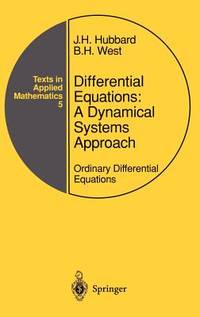
1991réf. 1416132New York: Springer 1991. Hardcover. Octavo x 350 pages. In Good plus condition. Spine is yellow with black print. Boards in yellow cloth black print; toning to spine. Illustrated: b&w diagrams. Lacks title page. NOTE: Shelved in Netdesk Column K ND-K. 1416132. FP New Rockville Stock. Springer hardcover books
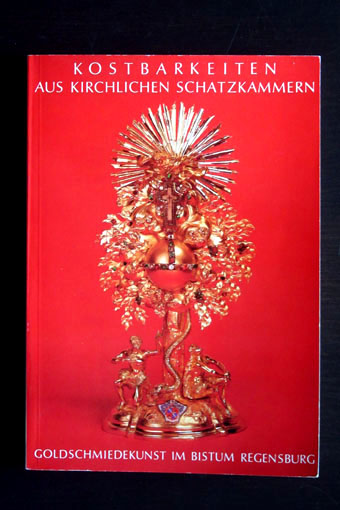
1979réf. 34651Schnell und Steiner, München, 1979. 184 Textseiten, 239 s/w Bildtafeln; etwas größeres Format (ca. 17 x 24 cm), broschiert
1978réf. 41793Frankfurt a.M., Wien, Zürich, Büchergilde Gutenberg, 1978. Lizenzausgabe 419 Seiten , 23 cm, Leinen
réf. DADAX1436878470New unknown
2018réf. 500166114Grasset 2018 280 pages 13 5x21 4x1 7cm. 2018. Broché. 280 pages.
1997214 pages. Index. Glossary. Suggested reading list. "This comprehensive guidebook mines a rich vein of information including: geology and mining history of the region; prospecting techniques; over 100 sites on Vancouver Island and adjacent islands; at-a-glance information on types of minerals at each site, map location and accessibility; addresses of clubs and associations; Many maps and map sources. Heavily worn former library copy. Still a worthy working copy. Book
1885réf. PHO-2647Paris, H. Lecène et H. Oudin ‚ s.d. [1885 ?]. In-8° de 238, [1] pp. 17 gr. dans le texte. Demi-toile brune à coins, p. de t. en maroquin fauve, couvert. cons.
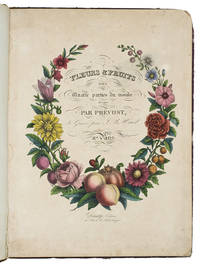
1837réf. ABC_47224Paris 1837. Folio ca. 35 x 26.5 cm. Dauty Contemporary half sheepskin maroon watered silk sides title in gold on the front board. With an engraved title-page and 11 of 23 engraved botanical prints: 4 showing 5 kinds of fruits each 3 showing 9 types of flowers each and 4 showing flower bouquets. All prints are stipple engravings and coloured by a contemporary hand some parts glazed with egg white. 12 ll. Extremely rare botanical print series showing both European and exotic fruits and flowers engraved by Jean-Baptiste Huet the younger 1772-1852 after designs of Benoît-Louis Prévost 1735-1804 or Jean-Louis Prévost 1760-1810. It also includes four plates showing bouquets from Europe America Asia and Africa. Only one complete copy is known at the Bibliothèque nationale de France we have traced no copy in sale or auction records and it is not mentioned in the usual botanical bibliographical works. The BnF copy is described in the Inventaire du fonds français après 1800 where the series consists of 23 prints issued all together under this title. The BnF and the IFF date the work ca. 1837-1839 but it is more likely that it is ca. 1837-1838 as Dauty died in 1838 and he printed at Rue de Bibliothèque no. 16 only in 1827 and 1835-1838. The BnF ascribes the designs for the prints to Benoît-Louis Prévost but Jean-Louis Prévost remains a possibility for he produced another famous print series of flowers and fruits in the same style of stipple engravings Collection des fleurs et fruits 1805.With a contemporary inscription "A M.elle Vincent" on the first free endleaf dedicating it to or belonging to the famous French 19th-century botanical painter Henriette Vincent 1786-1834 who was a student of Gerard van Spaendonck and Pierre-Joseph Redouté. Head and foot of the spine damaged and spine slightly worn boards a little rubbed edges slightly worn corners bumped. Some light browning and foxing throughout title-page a little more browned and with a light marginal water stain. Lacking 12 plates according to IFF. Otherwise in good condition. An extremely rare botanical print series vividly hand-coloured.l BnF FRBNF40503621; IFF Inventaire du fonds français après 1800 Huet p. 518; not in Nissen BBI; Pritzel; Stafleu & Cowan. hardcover
Zaragoza, 2002. 4to.; CXIII pp., 318 pp., 2 h. Cubiertas originales.
2017réf. 100136533Granta Books 2017 368 pages 16 1x23 9x2 9cm. 2017. Broché. 368 pages.
réf. 71115, by Hugo Vanhoudt / John Saunders, 2026 hardcover, 600 pages (A4, 29,7-21,0 cm) 3240 coin types, fully illustrated in color . ISBN 9781735659831.
1967English Text. Middlesex, 1967; clothbound, pp. 150, b/w ill., cm 19x25. english clothbound
1968English Text. New York, 1968; bound, pp. 256, b/w and col. ill., b/w and col. plates. english bound
réf. 006689London: Albion Press Ivy Lane Paternoster Row.: J. Robins and Co. 1st Edition . Hardcover. Very Good. 8vo - over 7¾ - 9¾" tall. SCHNEBBLIE. WARREN AM. STORER. SCOTT. GYFFORD. STORER. BROWN H. HASSELL. etc. 6 Vols 1805-1809 157 pls 152 called for - B&W includes maps & plans 8 folding 108 illustrations within text including 1 full page. In uniform late c1970's half calf over red marbled boards. Spines blind tooling. gilt titles to red calf label. Internally Vol 1 not dated but 1805 J Robins & C0 2 frontis 5 10-680 pp 1 ii-xvi 9 pls 7 folding 4 of which are plans 2 pagination errors. Vol 2 ND Joseph Robins and Sons 57 Tooley Street 3 4-560 but 540 pp 1 ii-xvi 12 pls including 1 folding map with gutter tear 36 detailed illustrations within text. Vol 3 1806 J Stratford No 112 Holborn-Hill frontis 3 4-640 p 1 ii-viii 12 pls 38 illustrations within text including 1 full page. Vol 4 1811 J Stratford frontis 3 4-488 473-479 498-595 pp odd pagination but complete 1 1 ii-viii 31 pls 34 illustrations. Vol 5 J Robins and Co Albion Press Ivy Lane 3 4-476 pp 1 ii-viii 36 pls included 1 map large folding with 1 short gutter tear & 1 longer tear along fold. Vol 6 1809 J Stratford No 112 Holborn-Hill frontis 3 4-584 pp 1 ii-viii index 4 pl list 57 pls some offsetting & foxing new endpapers evidence of removed bookplates to fpds. Pagination errors to V1 2 3 & 4 but complete. 130213 mm average. David Hughson is the pseudonym of David Pugh British Museum General Catalogue and of Edward Pugh NUC. 0 J. Robins and Co. hardcover
1966réf. biblio3164Tel Aviv : Publishing House Olamenu; 1st Edition 1966. Hardcover Red cloth Gilt lettering with beige dj in bad condition. No Wear. Free of marks inscriptions etc throughout. Strong tight binding perfect hinges. 13.1"x9.75". be8x. For International shipping contact seller Publishing House Olamenu hardcover