TOMÁS LAGUÍA, César.MareMagnum

17 607 résultats
Teruel, Editorial "Lucha", 1976. 4to.; III-330 pp. Cubiertas originales.
Teruel, Editorial "Lucha", 1977. 4to.; V-273 pp. Cubiertas originales.
1989444 pages. Bibliography. Index. Black and white illustrations. "Explores what innovative farmers and scientists are doing now - as well as during the past fifty years - so strengthen and purify the soil on which we - and the plants and animals we live on - depend; how new, healthier, and more productive ways have been found to raise food crops, thus eliminating reliance on petrochemical fertilizers and pesticides with their serious side effects." - from dust jacket. Book clean, bright and unmarked with light wear. Moderate wear and no tears to dust jacket preserved in a clear protective cover. Nice copy of the increasingly scarce hard cover version of this classic work on healthy soil enrichment. Book
1940réf. ST13395Tokyo:: Scientific Papers of the Institute of Physical and Chemical Research 1940. 1940. 8 offprints 1 extract. Original wrappers. From the collection of Abraham Pais. Very good. INVENTORY: 1. TOMONAGA Sin-itiro. Uber den Zusammenstoß des Mesotrons mit Elektronen. Offprint from: Scientific Papers of the Institute of Physical and Chemical Research no. 976 vol. 37 pp. 399-413 June 1940. Original yellow printed wrappers. Signed by Pais. "In 1940 Dr. Tomonaga directed his attention to the meson theory and developed the intermediate coupling theory in order to clarify the structure of the meson cloud around the nucleon." :: Nobel Lectures 1972. 2. TOMONAGA Sin-itiro. Zur Theorie des Mesotrons. I. Offprint from: Scientific Papers of the Institute of Physical and Chemical Research no. 1071 vol. 39 pp. 247-266 Dezember 1941. Original yellow printed wrappers. Signed by Pais. 3. TOMONAGA Sin-itiro. Bemerkung uber die Streuung der Mesotronen am Kernteilchen. Offprint from: Scientific Papers of the Institute of Physical and Chemical Research no. 1105 vol. 40 pp. 73-86 September 1942. Original yellow printed wrappers. Signed by Pais. 4. TOMONAGA Sin-itiro; Miyazima Tatuoki. Zur Theorie des Mesotrons. II. Offprint from: Scientific Papers of the Institute of Physical and Chemical Research no. 1103 vol. 40 pp. 21-67 August 1942. Original yellow printed wrappers. Signed by Pais. 5. TOMONAGA Sin-itiro; Miyazima Tatuoki. On the Mesotron Theory of the Nuclear Forces. Offprint from: Scientific Papers of the Institute of Physical and Chemical Research no. 1124 vol. 40 pp. 274-310 March 1943. Original yellow printed wrappers. Signed by Pais. 6. TOMONAGA Sin-itiro. Remarks on Bloch's Method of Sound Waves applied to Many-Fermion Problems. Offprint from: Progress of Theoretical Physics vol. 5 no. 4 pp.544-569 July-August 1950. Signed by Pais. 7. TOMONAGA Shin-ichiro. Elementary Theory of Quantum-Mechanical Collective Motion of Particles I. Offprint from: Progress of Theoretical Physics vol. 13 no. 5 pp.467-481 May 1955. 8. TOMONAGA Shin-ichiro. Elementary Theory of Quantum-Mechanical Collective Motion of Particles II. Offprint from: Progress of Theoretical Physics vol. 13 no. 5 pp. 482-496 May 1955. 9. TOMONAGA Sin-itiro. Development of Quantum Electrodynamics. Extracted from: Physics Today vol. 19 no. 9 pp. 25-32 September 1966. Signed by Pais. . / BIOGRAPHY: Tomonaga was a prominent Japanese physicist influential in the development of quantum electrodynamics work for which he was jointly awarded the 1965 Nobel Prize in Physics :: along with Richard Feynman and Julian Schwinger :: for the study of QED specifically for the discovery of the renormalization method. Nobel biography: Tomonaga completed work for Rigakushi bachelor's degree in physics at Kyoto Imperial University in 1929 with one of his intimate friends. Dr. Hideki Yukawa Nobel laureate. He was engaged in graduate work for three years at the same university and was then appointed a research associate by Dr. Yoshio Nishina at the Institute of Physical and Chemical Research Tokyo where he started to work in a newly developed frontier of theoretical physics quantum electrodynamics - under the guidance of Dr. Nishina. His paper on the photoelectric pair creation is well-known. Tomonaga stayed in Leipzig Germany from 1937 to 1939 to study nuclear physics and the quantum field theory in collaboration with the theoretical group of Dr. W. Heisenberg where he published a paper "Innere Reibung und Warmeleitfahigkeit der Kernmaterie" which was chosen as the thesis for Rigakuhakushi Doctor of Science at Tokyo Imperial University in December1939. In 1940 Dr. Tomonaga directed his attention to the meson theory and developed the intermediate coupling theory in order to clarify the structure of the meson cloud around the nucleon. He joined the faculty of Tokyo Bunrika University which was absorbed into the Tokyo University of Education in 1949 as Professor of Physics in 1941. It was in 1942 when he first proposed the covariant formulation of the quantum field theory in which the concept of the quantum state was generalized so as to be relativistically covariant. During the Second World War Dr. Tomonaga was interested in developing a theory of microwave systems. He solved the motion of electrons in the magnetron and also developed a unified theory of the systems consisting of wave guides and cavity resonators. As soon as the War was over Tomonaga came back to academic research again with a programme in which he was first to summarize and extend the intermediate coupling theory and secondly to apply the covariant field theory to actual physical systems. His aim was to investigate the nature of field reaction in the meson theory as well as in quantum electrodynamics. He was confident prior to the Lamb-Retherford experiment by means of a model calculation that divergence difficulty in quantumelectrodynamics could be overcome simply by handling the infinite mass and charge due to field reactions in some way or another. It was only a step further for him to develop the renormalization theory with covariant formalism in his right hand and experimental support in his left. Dr. Tomonaga was invited to the Institute for Advanced Study Princeton in 1949 where he was engaged in the investigation of a one-dimensional fermion system. Thus he first succeeded in clarifying the nature of collective oscillations of a quantum-mechanical many-body system and opened a new frontier of theoretical physics modern many-body problem. In 1955 he published an elementary theory of quantum mechanical collective motions. Dr. Tomonaga took the leadership in establishing the Institute for Nuclear Study University of Tokyo in 1955. From 1956 to 1962 he was appointed President of the Tokyo University of Education and since 1963 he has been President of the Science Council of Japan and Director of the Institute for Optical Research Tokyo University of Education. He occupies an important position in various governmental committees for scientific research and policymaking. Tomonaga's honours and awards include the Japan Academy Prize 1948; the Order of Culture 1952; the Lomonosov Medal U.S.S.R. 1964. Dr. Tomonaga is a member of the Japan Academy the Deutsche Akademie der Naturforscher "Leopoldina" and a foreign member of the Royal Swedish Academy of Science. He is a corresponding member of the Bayerische Akademie der Wissenschaften and a foreign associate of the National Academy of Science of U.S.A. Tomonaga has published widely in scientific journals on such subjects as quantum electrodynamics the meson theory nuclear physics cosmic rays and the many-body problem. His book "Quantum Mechanics" was published in 1949 and translated into English in 1963. Scientific Papers of the Institute of Physical and Chemical Research, 1940. unknown books
1940réf. ST13395Tokyo:: Scientific Papers of the Institute of Physical and Chemical Research 1940. 1940. 8 offprints 1 extract. Original wrappers. From the collection of Abraham Pais. Very good. INVENTORY: 1. TOMONAGA Sin-itiro. Uber den Zusammenstoß des Mesotrons mit Elektronen. Offprint from: Scientific Papers of the Institute of Physical and Chemical Research no. 976 vol. 37 pp. 399-413 June 1940. Original yellow printed wrappers. Signed by Pais. "In 1940 Dr. Tomonaga directed his attention to the meson theory and developed the intermediate coupling theory in order to clarify the structure of the meson cloud around the nucleon." :: Nobel Lectures 1972. 2. TOMONAGA Sin-itiro. Zur Theorie des Mesotrons. I. Offprint from: Scientific Papers of the Institute of Physical and Chemical Research no. 1071 vol. 39 pp. 247-266 Dezember 1941. Original yellow printed wrappers. Signed by Pais. 3. TOMONAGA Sin-itiro. Bemerkung uber die Streuung der Mesotronen am Kernteilchen. Offprint from: Scientific Papers of the Institute of Physical and Chemical Research no. 1105 vol. 40 pp. 73-86 September 1942. Original yellow printed wrappers. Signed by Pais. 4. TOMONAGA Sin-itiro; Miyazima Tatuoki. Zur Theorie des Mesotrons. II. Offprint from: Scientific Papers of the Institute of Physical and Chemical Research no. 1103 vol. 40 pp. 21-67 August 1942. Original yellow printed wrappers. Signed by Pais. 5. TOMONAGA Sin-itiro; Miyazima Tatuoki. On the Mesotron Theory of the Nuclear Forces. Offprint from: Scientific Papers of the Institute of Physical and Chemical Research no. 1124 vol. 40 pp. 274-310 March 1943. Original yellow printed wrappers. Signed by Pais. 6. TOMONAGA Sin-itiro. Remarks on Bloch's Method of Sound Waves applied to Many-Fermion Problems. Offprint from: Progress of Theoretical Physics vol. 5 no. 4 pp.544-569 July-August 1950. Signed by Pais. 7. TOMONAGA Shin-ichiro. Elementary Theory of Quantum-Mechanical Collective Motion of Particles I. Offprint from: Progress of Theoretical Physics vol. 13 no. 5 pp.467-481 May 1955. 8. TOMONAGA Shin-ichiro. Elementary Theory of Quantum-Mechanical Collective Motion of Particles II. Offprint from: Progress of Theoretical Physics vol. 13 no. 5 pp. 482-496 May 1955. 9. TOMONAGA Sin-itiro. Development of Quantum Electrodynamics. Extracted from: Physics Today vol. 19 no. 9 pp. 25-32 September 1966. Signed by Pais. . / BIOGRAPHY: Tomonaga was a prominent Japanese physicist influential in the development of quantum electrodynamics work for which he was jointly awarded the 1965 Nobel Prize in Physics :: along with Richard Feynman and Julian Schwinger :: for the study of QED specifically for the discovery of the renormalization method. Nobel biography: Tomonaga completed work for Rigakushi bachelor's degree in physics at Kyoto Imperial University in 1929 with one of his intimate friends. Dr. Hideki Yukawa Nobel laureate. He was engaged in graduate work for three years at the same university and was then appointed a research associate by Dr. Yoshio Nishina at the Institute of Physical and Chemical Research Tokyo where he started to work in a newly developed frontier of theoretical physics quantum electrodynamics - under the guidance of Dr. Nishina. His paper on the photoelectric pair creation is well-known. Tomonaga stayed in Leipzig Germany from 1937 to 1939 to study nuclear physics and the quantum field theory in collaboration with the theoretical group of Dr. W. Heisenberg where he published a paper "Innere Reibung und Warmeleitfahigkeit der Kernmaterie" which was chosen as the thesis for Rigakuhakushi Doctor of Science at Tokyo Imperial University in December1939. In 1940 Dr. Tomonaga directed his attention to the meson theory and developed the intermediate coupling theory in order to clarify the structure of the meson cloud around the nucleon. He joined the faculty of Tokyo Bunrika University which was absorbed into the Tokyo University of Education in 1949 as Professor of Physics in 1941. It was in 1942 when he first proposed the covariant formulation of the quantum field theory in which the concept of the quantum state was generalized so as to be relativistically covariant. During the Second World War Dr. Tomonaga was interested in developing a theory of microwave systems. He solved the motion of electrons in the magnetron and also developed a unified theory of the systems consisting of wave guides and cavity resonators. As soon as the War was over Tomonaga came back to academic research again with a programme in which he was first to summarize and extend the intermediate coupling theory and secondly to apply the covariant field theory to actual physical systems. His aim was to investigate the nature of field reaction in the meson theory as well as in quantum electrodynamics. He was confident prior to the Lamb-Retherford experiment by means of a model calculation that divergence difficulty in quantumelectrodynamics could be overcome simply by handling the infinite mass and charge due to field reactions in some way or another. It was only a step further for him to develop the renormalization theory with covariant formalism in his right hand and experimental support in his left. Dr. Tomonaga was invited to the Institute for Advanced Study Princeton in 1949 where he was engaged in the investigation of a one-dimensional fermion system. Thus he first succeeded in clarifying the nature of collective oscillations of a quantum-mechanical many-body system and opened a new frontier of theoretical physics modern many-body problem. In 1955 he published an elementary theory of quantum mechanical collective motions. Dr. Tomonaga took the leadership in establishing the Institute for Nuclear Study University of Tokyo in 1955. From 1956 to 1962 he was appointed President of the Tokyo University of Education and since 1963 he has been President of the Science Council of Japan and Director of the Institute for Optical Research Tokyo University of Education. He occupies an important position in various governmental committees for scientific research and policymaking. Tomonaga's honours and awards include the Japan Academy Prize 1948; the Order of Culture 1952; the Lomonosov Medal U.S.S.R. 1964. Dr. Tomonaga is a member of the Japan Academy the Deutsche Akademie der Naturforscher "Leopoldina" and a foreign member of the Royal Swedish Academy of Science. He is a corresponding member of the Bayerische Akademie der Wissenschaften and a foreign associate of the National Academy of Science of U.S.A. Tomonaga has published widely in scientific journals on such subjects as quantum electrodynamics the meson theory nuclear physics cosmic rays and the many-body problem. His book "Quantum Mechanics" was published in 1949 and translated into English in 1963. Scientific Papers of the Institute of Physical and Chemical Research, 1940. unknown
1850448 pages. Undated. Possibly circa 1850s. A fascinating detailed and superbly illustrated survey of contemporary technology. Title page is followed by page one, thus book may be missing one or more leaves. Boards and spine well worn. Much foxing and staining. Text block tight. Book
réf. 1245460536.Gpaperback. Good. Access codes and supplements are not guaranteed with used items. May be an ex-library book. paperback
réf. DADAX0548953341New unknown
réf. DADAX1437353797New unknown
réf. DADAX0300069170New unknown
réf. 3098BBZürich, Büchergilde Gutenberg, o.J. Gr.-8°. 47 S. Mit zahlreichen Textillustrationen von Hans Fischer. Goldgeprägter Orig.-Pappband (Rücken gebräunt, leicht fingerfleckig). + Wichtig: Für unsere Kunden in der EU erfolgt der Versand alle 14 Tage verzollt ab Deutschland / Postbank-Konto in Deutschland vorhanden +
1958réf. 5883BBZürich, Käser Presse, 1958. 4°. 36 S., 2 Bl. Mit 4 Holzschnitten von Fred Bauer. Orig.-Broschur. + Wichtig: Für unsere Kunden in der EU erfolgt der Versand alle 14 Tage verzollt ab Deutschland / Postbank-Konto in Deutschland vorhanden +, A
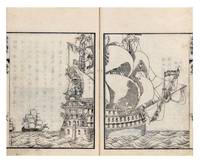
réf. 10340Many fine woodcuts throughout. Four parts & appendices in five vols. 8vo orig. semi-stiff wrappers a little frayed old stitching orig. title slips on covers. Tokyo: Yamasakiya Seishichi 山崎屋清七 et al. 1852. First printed edition of this artillery manual from the bakumatsu period. In the early 19th century Japan came under increased pressure from Western nations that wanted access to Japanese ports. “The Shogunate government issued the Order to Drive Away Foreign Ships in 1825 and commanded that foreign ships appearing along the coast of Japan be fired upon so the domains along the coast began building gun batteries and installing cannons. This is when the gun batteries and emplacements were built at Odaiba in Edo Bay and at Uraga Nakaminato Tahara Maiko Dannoura Uwajima Kagoshima and elsewhere. Dutch coastal artillery books were referred to when building these gun batteries” NDL Japan-Netherlands Exchange in the Edo Period online. Our book was published in this historical context. The book had already been translated by Motoki Masahide 1767-1822 who had left it unpublished at his death manuscript copies exist. Nunokawa Tsūboku 布å·é€šç’ž who edited Motoki’s translation and brought it to print in his Preface referenced the order that the domains build coastal defenses as one justification for publication. Motoki had studied not only Dutch but also French Russian and English. He published an English-language primer in 1811 and an English-Japanese dictionary in 1814. The Dutch original from which the book was translated was titled Het Nieuwe Licht Der Bosschieterye 1699 and was written by Gerrit van der Tollen fl. 1721-23 who worked for the Dutch East India Company. Our book is richly illustrated with a series of fine single- and double-page woodcuts of many kinds of cannons and mortars cannonballs and Western warships along with diagrams of problems in ballistics. Sections include illustrations and explanations of the structure and dimensions of cannons the measurement of gunpowder and lists of Dutch terms translated into Japanese. Some sections are written in a question-and-answer format “Which countries produce cannons Is there a difference in the making of light and heavy cannonballs”. The book begins with a history of artillery a topic that is treated further in the appendices which were not written by Motoki. The appendices treat the history of artillery both in Europe and in China. Note that Google Books presents the copy at the Bavarian State Library as being published in 1825 but the digitized title page says Kaei mizunoene which corresponds to 1852 and is the same date as seen in our book. Very fine set. ⧠Motoki: Christopher Joby The Dutch Language in Japan 1600-1900 Leiden & Boston: 2021 pp. 74 121 186 191 196-97 276 285 & 320. unknown books
réf. 10340Many fine woodcuts throughout. Four parts & appendices in five vols. 8vo orig. semi-stiff wrappers a little frayed old stitching orig. title slips on covers. Tokyo: Yamasakiya Seishichi 山崎屋清七 et al. 1852. First printed edition of this artillery manual from the bakumatsu period. In the early 19th century Japan came under increased pressure from Western nations that wanted access to Japanese ports. “The Shogunate government issued the Order to Drive Away Foreign Ships in 1825 and commanded that foreign ships appearing along the coast of Japan be fired upon so the domains along the coast began building gun batteries and installing cannons. This is when the gun batteries and emplacements were built at Odaiba in Edo Bay and at Uraga Nakaminato Tahara Maiko Dannoura Uwajima Kagoshima and elsewhere. Dutch coastal artillery books were referred to when building these gun batteries” NDL Japan-Netherlands Exchange in the Edo Period online. Our book was published in this historical context. The book had already been translated by Motoki Masahide 1767-1822 who had left it unpublished at his death manuscript copies exist. Nunokawa Tsūboku 布å·é€šç’ž who edited Motoki’s translation and brought it to print in his Preface referenced the order that the domains build coastal defenses as one justification for publication. Motoki had studied not only Dutch but also French Russian and English. He published an English-language primer in 1811 and an English-Japanese dictionary in 1814. The Dutch original from which the book was translated was titled Het Nieuwe Licht Der Bosschieterye 1699 and was written by Gerrit van der Tollen fl. 1721-23 who worked for the Dutch East India Company. Our book is richly illustrated with a series of fine single- and double-page woodcuts of many kinds of cannons and mortars cannonballs and Western warships along with diagrams of problems in ballistics. Sections include illustrations and explanations of the structure and dimensions of cannons the measurement of gunpowder and lists of Dutch terms translated into Japanese. Some sections are written in a question-and-answer format “Which countries produce cannons Is there a difference in the making of light and heavy cannonballs”. The book begins with a history of artillery a topic that is treated further in the appendices which were not written by Motoki. The appendices treat the history of artillery both in Europe and in China. Note that Google Books presents the copy at the Bavarian State Library as being published in 1825 but the digitized title page says Kaei mizunoene which corresponds to 1852 and is the same date as seen in our book. Very fine set. ⧠Motoki: Christopher Joby The Dutch Language in Japan 1600-1900 Leiden & Boston: 2021 pp. 74 121 186 191 196-97 276 285 & 320. unknown
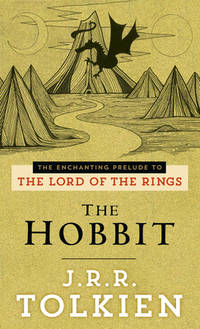
1982réf. 008205Del Rey 1982. 4 book set edges nicked #1: 116 printing #2: 122 printing 0-345-33970-3 #3: 116 printing 0-345-33971-1 #4: 115 printing 0-345-33973-8 and has sticker residue on back lower cover. Last three books are the movie-tie-in version with pictures from the movies on both covers. Extra postage for multiple books is included in the price. Reprints. Mass Market Paperback. Very Good. Illus. by Herming Michael. Del Rey Paperback
Madrid, Instituto Miguel de Cervantes, 1950. 4to. mayor; XXXIX pp. para la introducción de Dámaso Alonso, 536 pp., 1 h., y 9 láminas fuera de texto con reproducción de folios del manuscrito original. Cubiertas originales.
réf. 3098BBZürich, Büchergilde Gutenberg, o.J. Gr.-8°. 47 S. Mit zahlreichen Textillustrationen von Hans Fischer. Goldgeprägter Orig.-Pappband (Rücken gebräunt, leicht fingerfleckig).
1958réf. 5883BBZürich, Käser Presse, 1958. 4°. 36 S., 2 Bl. Mit 4 Holzschnitten von Fred Bauer. Orig.-Broschur.
1980réf. 029690P. Houart broché Bristol illustré Bruxelles 1980 102 pages en format 19.5 - 19.5 cm - nombreuses illustrations
réf. 028239852X.Gpaperback. Good. Access codes and supplements are not guaranteed with used items. May be an ex-library book. paperback
réf. 0243176880.Gpaperback. Good. Access codes and supplements are not guaranteed with used items. May be an ex-library book. paperback
réf. 0243385757.Gpaperback. Good. Access codes and supplements are not guaranteed with used items. May be an ex-library book. paperback
réf. 0259282529.Gpaperback. Good. Access codes and supplements are not guaranteed with used items. May be an ex-library book. paperback
réf. 1333887558.Gpaperback. Good. Access codes and supplements are not guaranteed with used items. May be an ex-library book. paperback
2009réf. 10598The Northwest Photography Archive in Collaboration with Oregon State University Press 2009. Second Printing of 5000 copies. Hardcover. Fine/near fine. Short Folio black cloth lettered in blue. Black & white and color photographs. Epilogue list of plates notes acknowledgments index. -- The First Printing was five thousand books of which one hundred were signed and numbered and slipcased with a facsimile print of Carleton Watkins' Cape Horn plate 2. The Second Printing of 2009 is again printed in 5000 copies. -- Back cover has a small scratch to the jacket and a small nick to the jacket the bottom. -- Signed by John Laursen on the title page. --. "In 2002 Terry Toedtemeier and John Laursen founded the Northwest Photography Archive as a way to document the stunning photographic heritage of this region. Wild Beauty is the first in a series of books that they conceived of at the outset of their work together. In December 2008 just three months after the publication of Wild Beauty Toedtemeier died following a slide lecture that the two gave about the book to an audience in Hood River".-northwestphotography.org. The Northwest Photography Archive in Collaboration with Oregon State University Press hardcover