13 125 résultats
1802réf. 0009162BETHEL TOWNSHIP LEBANON COUNTY PENNSYLVANIA. Good. 1802. On offer is an interesting document of early 19th century education an original handwritten note book covering a myriad of subjects related to mathematics. The owner and creator of this book was a man named Henry Snevely also written as Snavely and the book dates from 1802 - 1803. It seems Snevely was born in the United States and lived his whole life in Southeastern Pennsylvania. At the time of the creation of the book Snevely was almost 50 years old an established land owner in Bethel Township Lebanon County. Why he had a book of mathematics is unknown however I have found records of a Henry Snavely who taught at a school in Bethel Township from 1797 onwards. It may be likely that this book is actual not for Henry himself but for the instruction of his students. Either way the book presents a fantastic overview of early 18th century knowledge. The book covers a very large range of topics however Math pertaining to financial matters is dominant throughout. As well there are conversions of Irish and British currency. The primary immigrants to the area at the time of the book were indeed Scotch-Irish so teaching Irish and British currency conversions wouldnt be too far off. Currency exchange in particular is a primary focus owing to the large amount of immigrants to the area. Individual page headings in the book include Exchange many pages Exchange of Arbitrations Barter Profit and Loss Fellowship Fellowship with Time Allegation Media Alternate Partial and Total Square Root Cube Root Arithmetical and Geometric Progression Compound Interest Single and Double Position Reduction Addition Subtraction Multiplication and Division of Fractions and Vulgar Fractions Rule of Three in Fractions and Questions for Exercise. There is a later manuscript memorandum on rear endpaper dated 1829 bearing the names of additional members of the Pennsylvania Snavely clan Molly George and John. The name Martin Rupp also appears in memorandum and our research confirms various Martin Rupps residing in southeastern Pennsylvania during this time. The book is in fair to good condition. The volume is bound in the original stiff paper wraps. The cover is very worn and the spine is torn and partially detached. There is mild age-toning and occasional staining but the internal pages are generally clean. The black ink is still bold and easily legible throughout. The book contains about 85 pages of manuscript entries and the book itself is approximately 90 pages. It measures 12.5 x 8 inches. Biography: Henry Snavely was born on August 2 1755 in Bethel Township Lebanon County Pennsylvania. .Henry Snavely was a Lutheran. At that time he was considered a good scholar and is said to have been a hard student obtaining his knowledge principally by his own exertion. He taught the school from 1797 to 1807.; A report from 1773 shows his farm had 150 acres 5 horses 4 cattle and no servants. OVERALL: G; Manuscript; Folio - over 12" - 15" tall; KEYWORDS: HISTORY OF HENRY SNEVELY HENRY SNAVELY EARLY 19TH CENTURY KNOWLEDGE SCIENTIFIC REVOLUTION MATHEMATICS GEOMETRY TRIGONOMETRY FINANCIAL CALCULATIONS BARTERING INTEREST TEACHER'S BOOK BETHEL TOWNSHIP LEBANON COUNTY SOUTHEASTERN PENNSYLVANIA COMPLEX MATHEMATICS ALGEBRA MARTIN RUPP PRACTICAL MATH FOR FARMERS 19TH CENTURY AMERICA EARLY 1800S IN THE MID-ATLANTIC STATES CYPHER BOOK AMERICANA HANDWRITTEN MANUSCRIPT DOCUMENT LETTER AUTOGRAPH WRITER HAND WRITTEN DOCUMENTS SIGNED LETTERS MANUSCRIPTS HISTORICAL HOLOGRAPH KEEPSAKE WRITERS AUTOGRAPHS PERSONAL MEMOIR MEMORIAL ARCHIVE DIARY DIARIES JOURNAL LOG ANTIQUITÉ CONTRAT VÉLIN DOCUMENT MANUSCRIT PAPIER ANTIKE BRIEF PERGAMENT DOKUMENT MANUSKRIPT PAPIER OGGETTO D'ANTIQUARIATO ATTO VELINA DOCUMENTO MANUSCRITTO CARTA ANTIGÜEDAD HECHO VITELA DOCUMENTO MANUSCRITO PAPEL . paperback
1849réf. 74700Boston 1849. Original stampless ms. letter from agent E. P. Pratt to Company Secretary Guy. R. Phelps. The letter on typical blue paper is dated March 13 1849 and concerns policies on two very well known California '49ers; Augustus Elliott and John Webber Jr. Red circular date stamp on verso of March 14. Some age blurring but still extremely legible.Much of the letter concerns a plea for multiple copies of the company's Annual Report but at the top we read - Augustus Elliot ins'd by Policy No. 2660 goes to Calif in Barque Sangrange. At the end of the letter just prior to the salutations we read - John Webber Jr. ins'd by Pol. No. 1401 is going to California overland and wants a Permit; he is in a hurry for it as he starts shortly."A year after Elliott reached California he organized his Atlantic and Pacific Express Company to carry mail and packages between the east and west coasts of America personally accompanying each shipment by steamer across the Isthmus from San Francisco to New York and back again a “superior advantage” especially for those who wished to send gold dust to eastern banks. Offering such illustrious references as the US Senators from Massachusetts and the first federal official in San Francisco he soon added the service of assisting emigrant families to make the trip “on most favorable terms”. This was more than a year before Henry Wells organized the Wells Fargo Company to extend his eastern Express service to California.Unlike Elliott who soon sailed for the Isthmus of Panama Captain John Webber Jr. a heroic veteran of the Mexican-American War was selected to lead the 50 men of the “California Mutual Protection Association” overland to the Gold Fields. Well-equipped with a dozen other military veterans in uniform four musicians “two black servants and six dogs” they left Boston on March 19 a week after this letter was written their six month journey on the Oregon Trail recorded in a diary now held by the Bancroft Library. By the time Webber – portrayed as a U.S.Grant-type soldier in the Discovery Channel dramatization “Gold Fever” – reached Utah on July 31 only four of his group remained. They did not reach Sacramento until September"B. McMakin. unknown
1849réf. BK0028Fort Gibson Cherokee Nation 1849. Autograph letter signed "Benj. Wingate" three pages with integral address leaf to Arba L. Hardy Lexington Scott County Indiana bearing manuscript "Fort Gibson C.N." postmark dated January 8 and manuscript "Paid 10." 7 ¾ x 10 inches. Light toning and edge wear otherwise very good. A substantial letter by Benjamin Wingate Mexican-American War veteran and future namesake of Fort Wingate New Mexico written during his frontier service at Fort Gibson in the Cherokee Nation. Responding to news that the execution of a man named Clark had been delayed Wingate launches into a lengthy and forceful rejection of capital punishment: "You speak of Clark's execution in your letter that it did not take place at the appointed time but to express an opinion on the subject I hope that it never did take place; do not understand me to say that I want him to go unpunished. I should be very sorry to hear that there has been a man hanged in old Scott. I know but little of the circumstances concerning the case but if indeed he be guilty of murder he should be punished and that punishment should be such as to not take his life as there is doubtless many other ways of inflicting punishment besides taking life . I hold the opinion to be a sound one that man should not take the life of his fellow man except in self defense and then not if it could be avoided. I look upon the law of punishing capital offences as being barbarous and savage in the extreme. It is a subject that the attention of the law making or legislating power should be called to act on." Living amid the Indigenous nations of Indian Territory Wingate makes a comparison with the customs around him: "The present law is more barbarous if possible than the laws and customs of the Indians in this part of the country. If a rich Indian kills a poor Indian he can make atonement for the crime by paying a certain sum of money but if one Indian kills another Indian and is not able to pay for him they kill him in return." Fort Gibson established within Cherokee country was one of the principal U.S. military posts in Indian Territory and Wingate's comments come from a young Army officer living within that environment. The comparison is striking precisely because he uses what he understands as Native retaliatory justice as the measure by which to criticize American law. The letter then turns to family gossip and politics. Wingate jokes that the election of Zachary Taylor meant "that the Whigs are as badly whipped as they was when they elected J. Tyler" anticipating that Taylor would "doubtless have to take a trip up salt river if he is not burnt in effigy by the Whigs before that time." More appealing personally was the news then pouring out of California. In January 1849 with the Gold Rush only beginning to transform American migration westward Wingate was already considering abandoning the Army: "I have been thinking very strong for some time of resigning and going to California but I am not off yet nor I don't know that I will get off soon if at all. But whether I should or should not go it is certainly a very great opening for a young man to make a fortune in a short time if there is any confidence to be placed in reports." He remained instead in military service. Wingate had fought in Mexico at Cerro Gordo and subsequently served on the frontier in Oklahoma Texas Utah and New Mexico. He was mortally wounded at the Battle of Valverde during the Civil War; Fort Wingate established in New Mexico later in 1862 was named in his honor. The Filson Historical Society preserves correspondence of Wingate and the allied Hardy family including Arba L. Hardy the recipient here.1 An appealing early Wingate letter combining an extended argument against capital punishment with observations from Indian Territory and the immediate lure of California at the opening of the Gold Rush. 1 "Wingate Hiram 1778-1875 Papers 1833-1914" Filson Historical Society Mss. A W769. . unknown
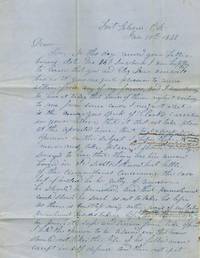
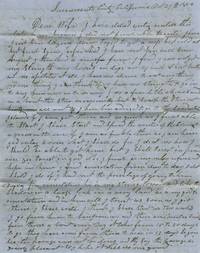
1850réf. BK0017Sacramento City California 1850. Autograph letter signed "Sam'l Locke" to his wife in Belfast Maine. 6 pp. Stampless folded letter with clear circular "SACRAMENTO CITY / CAL." postmark and "40" rate handstamp; manuscript notation recording receipt in Maine on December 19 1850. Light soiling; very good. A bleak California Gold Rush letter written during the 1850 Sacramento cholera epidemic by Samuel Locke a Maine emigrant suffering from prolonged fever and unable to regain his strength. Surrounded by sickness failed mining ventures violent crime and men too poor or ill to return home Locke plans to seek recovery in the Sandwich Islands while relying upon his religious faith for consolation. Locke had been ill since August and was now so weak that ordinary work exhausted him: "My limbs or legs are very weak short breath and no appetite at all. I have no desire to eat anything not one thing I can think of. I have no strength to go into any business or to do any. I do a few little chores round or about the store occasionally but to sweep the store it beats me all out . O how I long to get out of this place. Can't get any strength don't know as I can anywhere but I long to try." Friends advised him to spend the winter in the Sandwich Islands. He expected to travel first to San Francisco and then make the fifteen- to twenty-day passage to Hawaii though he feared that continued illness might leave him unable either to support himself there or return to Maine. He states that he will "trust in providence yes trust in God who I feel is my only refuge". Locke gives a grim account of California's climate and the spread of cholera through Sacramento claiming that the climate in California prevented the sick from recovering their strength as the "air is very light & bad middle of the day very hot and nights very cool." The previous week's report had stated forty dead but "nothing near all the cases were reported" with Locke himself knowing of several unreported cases personally. A local blacksmith died overnight after his companions borrowed Locke's syringe and "We can hardly see a healthy looking individual in the streets." The letter also records the uncertain fortunes of men from Locke's home region scattered through the mines. William Beckett and his partners had spent the summer constructing a mining dam had struck gold on the first day and then immediately "the dam was washed away so they lost all their summer's labor." Other acquaintances had moved to Kelsey's Bar the southern mines or Oregon or were preparing to return east by way of Panama. Some remained convinced that California would reward perseverance while others had "seen enough" after accomplishing nothing. Locke regarded success as largely accidental: "Thousands are here and in the mines who want to get home and cannot-not able to do seamen's duty and no money to pay but they have got to stay in the mines and do the best they can. Some it is true have been lucky. It is all luck. If they happen to hit a good place they do well." News that cholera had entered the mining districts increased his alarm. Locke feared especially for men living in tents as the rainy season approached with poor food and little protection from exposure. Sacramento itself was marked by nightly violence: "There are murders or robberies about every night. One man killed in front of our house a few nights ago. We heard him holler and heard the blows. Next morning he died. His head was dreadfully mangled." Locke closes with an emotional message to his wife and children. His health finances and prospects all appeared uncertain and he repeatedly asked his family and church to pray for him: "Tell the dear Children to be good and if they never see me again when I am gone they will have the satisfaction . of knowing they acted as thy Father requested . Pray for me ask the Church to pray for me indeed I know I have your prayers and you have mine often." A particularly bleak account of the human cost of the California Gold Rush documenting epidemic disease physical collapse failed mining schemes violent crime religious faith and the predicament of emigrants unable to escape California after their health and resources were exhausted. . unknown
1851réf. List3716Panama City Panama 1851. Single three-page letter measuring appx. 8 x 10 inches. Stampless cover marked "STEAMSHIP" and circled rate marking "40. Folded with some small tears and fading at folds some stains with tear at seal overall bright and legible; excellent. A letter from Henry Francis Douglass 1826-1897 while on his way to the California gold mines sent to his wife Lydia Lillibridge 1828-1904 in Voluntown Connecticut. The letter is highlighted by Douglass' description of Panama City including a brutal execution that he witnessed there: "of all the wickedest places that I ever saw this is the worst there is robery evry day most and murders I keep myself clost nights last night there was a lady on the other side of the street robed of her watch worth $100 and seventy dollars I saw while seting on the piaser piazza to the house. about fifteen minets ago two black men were brout out of the prison by the soldiers dresed in white acompaned by a cathalic prest led up to the stakes the preist sat down on a stool the murders kneeled down to prests throde the cloaks over ther heads and whispered to parden there sins then they was each one tied to the stake while forteen native soldier shot them one strugld but they shot him over again such site I never saw before but it was two good for them they was two of the five that murderd the ten on shagres Chagres river men women and chrilden". The murder for which the men were executed had occurred around the end of February 1851. Eleven people Americans and Europeans transiting the Isthmus were killed: six men three women and two children. Contemporaneous newspaper reporting described the murderers as "Carthagenians negroes and half-breed Indians who hate the whites."1 The gold rush in California had caused a massive influx of people and money to Panama and with it an increase in crime and racial tension. Douglass had arrived in Chagres and traveled to Gorgona which Douglass renders "gorgoney" via the Chagres River then overland to Panama City the typical route before the construction of railroads or the canal. Chagres is "the most sunken place that I ever saw all kinds of bisness carred on that anyon could think of" and the route is "very Dangers at this time" "very wet" and plagued by lice disease and seasickness. However he reports encountering "a lot just returning from the mines with good nuse" and felt "in couraged to go on". Douglass mined in California for two years before returning to his family.2 Of interest to historians of Panama in the California Gold Rush and of social conditions there especially crime and punishment before the construction of the railroads and canal. 1 "Murders on the Isthmus" The Brandon Post April 3 1851 2. 2 Charles Henry James Douglas A collection of family records with biographical sketches and other memoranda of various families and individuals bearing the name Douglas or allied to families of that name E.L. Freeman & Co. 1879.
1855réf. 007164Sacramento California 1855. Manuscript. Very Good. No Binding. HOLOGRAPH LETTER SIGNED. Two manuscript letters in ink both on ruled paper with folding creases the 1855 letter 8" x 12 1/2" with single spaced writing both sides approx. 500 words. The 1856 letter 15" x 10" folded in half to make 4 pp. approx. 300 words with small blindstamp top left corner depicting an eagle. The earlier letter is headed "September 18th 1855 Naperville Dupage County Illinois" and ends "Michael direct your letters Nevada County Nevada post office California". George writes to his brother Michael in Naperville that he has "seen a good dele sins i rote you they last letter" including a hundred "inshins" and some "Buffellow". He adds that "we had good luck all they way of may we left Council Bluff" and that he is not home sick yet. He then talks of the gold mines river mining what they are paying and the cost of things such as board "from five to ten dollars a week" "Beaf" "wors 15 to 20 cents" and "potato" "4 cent per pound". He adds that he intends to have some gold before he comes home and that "girls are not so plenty here as they are in state". He closes by asking his brother to write him and to remain at home in Illinois to care for their parents. The 1856 letter headed Sacramento august 3th 1856 informs his brother that he is well and "down to Sacramento now" working on a farm feeding a "schrasing" thrashing machine and that "they times is verry hard in California now". He adds that he had some money "stole" while he was in the mountains but since coming down into the valley he was making money and will send some home soon. The letter ends with George wishing to see them all soon and that he is not home sick. The third page of the letter bears a drawing of a wing or leaf eleven smaller versions of the same image interspersed on page 2. A fascinating testimonial on California during the gold rush written in a strong hand and in a wonderful vernacular style by a good observer. unknown
1855réf. 007164Sacramento California 1855. Two manuscript letters in ink both on ruled paper with folding creases the 1855 letter 8" x 12 1/2" with single spaced writing both sides approx. 500 words. The 1856 letter 15" x 10" folded in half to make 4 pp. approx. 300 words with small blindstamp top left corner depicting an eagle. The earlier letter is headed "September 18th 1855 Naperville Dupage County Illinois" and ends "Michael direct your letters Nevada County Nevada post office California". George writes to his brother Michael in Naperville that he has "seen a good dele sins i rote you they last letter" including a hundred "inshins" and some "Buffellow". He adds that "we had good luck all they way of may we left Council Bluff" and that he is not home sick yet. He then talks of the gold mines river mining what they are paying and the cost of things such as board "from five to ten dollars a week" "Beaf" "wors 15 to 20 cents" and "potato" "4 cent per pound". He adds that he intends to have some gold before he comes home and that "girls are not so plenty here as they are in state". He closes by asking his brother to write him and to remain at home in Illinois to care for their parents. The 1856 letter headed Sacramento august 3th 1856 informs his brother that he is well and "down to Sacramento now" working on a farm feeding a "schrasing" thrashing machine and that "they times is verry hard in California now". He adds that he had some money "stole" while he was in the mountains but since coming down into the valley he was making money and will send some home soon. The letter ends with George wishing to see them all soon and that he is not home sick. The third page of the letter bears a drawing of a wing or leaf eleven smaller versions of the same image interspersed on page 2. A fascinating testimonial on California during the gold rush written in a strong hand and in a wonderful vernacular style by a good observer. . HOLOGRAPH LETTER SIGNED. Manuscript. Very Good. books
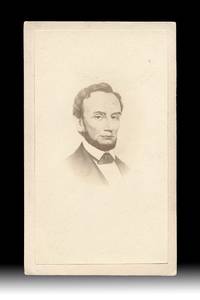
1860réf. 5634Toronto ON: O. Thompson 1860. CDV Photograph. Fine. A fine albumen vinette CDV photograph of the 16th US president taken from his right side to give us a steady and uncommon direct stare from his soulful eyes. CDV w. just a touch of soil else clean and bright. Verso with the uncommon back stamp of Toronto photographer O. Thompson so likely either a bootleg image or a copy photo from an image originally made by Gardner Brady or from a very similar engraving by Currier & Ives most likely and repurposed here by a talented photo worker for an admiring Canadian market. O. Thompson unknown
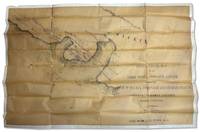
1865réf. 72790North and South Carolina: np 1865. Archive of 1880s business correspondence between William Treloar gold-mining engineer and manager of the Gold Hill Mines Rowan County North Carolina and the Gold Hill Mine Company in London. Primarily letters from the London headquarters to Treloar in Salisbury with several retained copies of his outgoing correspondence. Also includes an 1865 Civil War-era letter concerning the Stewart Gold Mine an 1894 brochure on the Appalachian Gold Belt and an 1895 gold-mining catalog from Mecklenburg County North Carolina. Fair condition overall with creasing folds staining tears and chipping; most correspondence remains legible. Detailed listing of contents as follows: 1866 letter in French written to the future manager Capt. Treloar of Gold Hill Mines; 12 page pamphlet titled "Gold Hill Mining Property Rowan County N. C. Abstract and Opinion" dated December 2 1878. This pamphlet chronicles the legal history of the land deeds and their successors from 1802 to the 1870's; Legal sized "Copy" Memorandum of Agreement" dated May 27th 1881. Memorandum is 3 pages long and is "Between The Gold Hill Mines Limited of No. 36. Palmerston Building's Old Broad Street in the City of London hereinafter called the said Company of the one part and William Treloar of Plymouth in the County of Devon Mining Engineer but now residing at Gold Hill Town in the County of Rowan North Carolina in the United States of America." Memorandum signed by the directors of the Company on page 3. Circa 1870's topographical map measuring approximately 32.75" x 22.25" of Union Mining Company's Estate comprising the Macklin Townsand and Standard Tracts in Cabarrus and Rowan Counties North Carolina and also showing Gold Hill. Map surveyed by Ernest Hauessor Geologist and Mining Engineer. The map is drawn on thin paper and shows details of the mining tract. A few small tears and holes to the map mainly located on the folds; 4 page "Rough Estimate of the Working Cost of Gold Hill Mine." This estimate is written on paper measuring approximately 12" x 8". The estimate is written in lined columns that numerates quantity occupation cost per day per man per month and per annum. The estimate total at bottom is 96770 dollars. 1 page letter dated July 6 1881 written to the manager of Gold Hill Mining Company. Letter refers to "blackmailing" and involving an agent employing a New York lawyer to take up a claim. Letter written on "The Mines Investment Association Limited London" letterhead; 15 pages of 1882 business correspondence written to "Capt. William Treloar" Manager of Gold Hill Mines Company. Letters written on "Haile's Gold Mine Lancaster County S.C." New York office letterhead. These letters have suffered water damage in the past and are faded torn chipped creased etc. Some loss of contents to this letter group. Letters arranged chronologically for the most part with possibility of a couple incomplete letters. Some of the letters are undated but circa 1882. Contents of this letter group contain much technical information surrounding the operation of the mines; 3 loose 1882 Western Union Telegraph Cable Messages addressed to Manager Treloar of Gold Hill Mining; Undated envelope empty from the "Gold Hill Mines Limited London" formerly containing letters from the board; Approximately 62 pages of letters plus 11 Western Union cable messages glued to the backs of the letters. One finely written two page letter labeled "Private" is included. Letters are dated from 1881-1883 with most hand addressed from "The Gold Hill Mining Company" office in London. Some of the pages are on company letterhead. Letters addressed to "Capt. William Treloar Manager of the Gold Hill Mines Salisbury North Carolina". Several of these letters are stuck together on the left edges. Remnants of yellow paper also stuck to the left margins. Some of these letters are now separated. Most letters are in chronological order with a few out of place and the possibility of an incomplete letter. This group may have been stored in the undated company envelope listed above. Contents of these letters covers the operations costs expenses technical information and much more. These letters provide much of the information pertinent to the mines around Gold Hill including the Randolph Mine Barnhardt mine etc.; undated "Amalgamation Department Summary" work sheet circa early 1880's; 4 large "Pay Roll of Men by the Gold Hill Mines Rowan County North Carolina." sheets dated August 31st 1882. Sheets have vertically lined columns containing categories listing 112 names a few duplicated station daily works number of days total amount and some pencil numbers written on the right sides. Sheets are creased edge stained chipped torn etc. Minor loss of contents; 10 pages of 1881-1883 correspondence between Gold Hill Mining Company and "Capt. Treloar Salisbury North Carolina"; 4 page "copy" letter dated September 1882 addressed to Manager Capt. Treloar discussing costs losses at the Barnhardt & Reservoir Mines referencing the Randolph Mine and requesting more detailed information on expenses. Letter signed by "Wm. Baxter Chairman." 3 page letter written on London company letterhead dated March 1883 detailing business; 2 page letter on company letterhead to Manager Treloar signed by the Secretary of the Gold Hill Mine Company and dated May 1883. This letter was probably removed from a larger gathering. A section of yellow paper is stuck on the blank rear page; Undated "The Gold Hill Mines Company" work sheet circa early 1880's; Approximately 16" x 13" lined sheet titled "Gold Hill Mines Limited in Acct with Wm. Treloar" dated 1883. Work sheet has stains; 5 pages of correspondence January 1884 from William Treloar to G. H. Harvey "Whitchurch Villa Mannamead Plymouth" referencing payroll the Randolph Mine and stock shares. Includes an undated 1880's note on Curteis & Pearse Solicitors Plymouth letterhead. Brochure dated January 1894 "A Few More Solid Facts Relating to the Treatment of Ores of the Appalachian Gold Belt." Published by the Inter-State Land Bureau 918 F Street N. W. Washington D.C. January 1894. Circular No. 5. 10 pages. Staples missing with light stains where they were located. Paper folded. contents clean. This circular mentions the Haile Mine in South Carolina; 1895 Catalogue P. The Mecklenburg Iron Works John Wilkes Manager Charlotte N.C. U.S.A. Machinery for Mining and Milling Gold Ores. 24 pages. Illustrated. Catalogue is folded with page edge tears and light stains and holes towards the back; Last item is a Civil War era letter written in April 1865 letter from an Union soldier who had 'escaped' a Charlotte North Carolina Confederate Prison. He stayed briefly with H. Downing at the "Stuart" Stewart "Goald" Gold Mine in North Carolina. Letter addressed to the H. Downing's son and transcribed here: Winchester West Va. Virginia April 11th 1865 Mr. Downing Dear Sir - Having made my escape from the C.S. Military Prison at Charlotte N.C. on the 17 -Feby last and in making my way north through the state fortune directed me to the Stewart goald gold mines when I mett Mr H Downing your father with whom myself and my companions took supper on the 19th of Feby I would say it was the best supper I had for many months before. On my departure from them he your father requested me to write to you giving me your address should I be fortunate enough to make my within our lines "Thank" God I am again within those lines. He your father requested me to remember him to all his family and say that it is his intention to remain at the Stewart goald mines until the close of the war. I am glad to say that the old Gentleman was well and in good spirits at the time I saw him. I would be glad to hear from you at any time. I am Respy Lewis Maish. York Penn'a. Gold was first discovered at Little Meadow Creek in Cabarrus County North Carolina in 1799 by Conrad Reed marking the first documented discovery of gold in the United States. Gold was discovered in the Gold Hill district of southeastern Rowan County in 1824 approximately 20 miles north of the Reed Mine. By the 1840s Gold Hill had become a major mining center with 23 mines and a populationf of approximately 3000. The Barnhardt and Randolph mines were among the most productive with the Randolph shaft reaching 850 feet making it the deepest gold mine in the United States at the time. Mining declined after the California Gold Rush and the Civil War but resumed on a larger scale in the 1880s following the purchase of the mines and establishment of the New Gold Hill Mining Company based in London. Gold was shipped to England and substantial production continued until about 1915. The accompanying correspondence provides a contemporary record of the operation of the Gold Hill mines during the 1880s. Letters between mine manager William Treloar in Salisbury North Carolina and the London-based company discuss mining operations expenses production and financial matters. Despite significant gold production Treloar's correspondence indicates that operating costs remained high and profits were limited during the early 1880s. np unknown
1866réf. 286043New York 1866. unbound. very good. located in the Nevada District of the Colorado Territory with beautifully engraved vignettes of a miner working by torchlight and a group of miners sending ore from the mine shaft to the surface by way of an bucket-brigade. Signed by the Secretary and President of the Corporation whose main office was located in New York City. This certificate bears two uncancelled 25 cent Internal Revenue Certificate stamps applied to the certificate in their designated spaces. The stock certificate appears not to have been redeemed. Scarce. Very good Folds are very light and the steel engravings are clearly printed. There is a small chip to the top margin above the printed border. unknown books
1867réf. 0001244SS ALEPPO EUROPE MT. VESUVIUS ITALY. Good. 1867. Full-Leather. On offer is an original manuscript travel diary of a young woman who travels from America to Ireland on the S.S. Aleppo and then spends time in London and Paris before going to Italy. Stating "Bought at Dublin 12 Nov. 1867" then a later hand in pencil on the fep suggests the names of Julia L. Hale or Julia de Rubignir. Entries range from 1867 to 1868 and our diarist does a great job describing the journey from America to Ireland on the ship as well as all the places she visits. The passages of her witnessing the eruption of Mount Vesuvius and their attempt to be 'tourists' of the lava flow while in Italy are great. She adds further dimension by drawing a lovely folk art picture of the volcano in action. She also sees the Prince and Princess of Italy shortly after their marriage. Here are some snippets: We first caught sight of Vesuvius an hour and a half or two hours before we reached Naples it was then quite light and we could just see a silvery white cloud hanging over it but it became brighter and showed the fire as the day grew darker and we drew nearer. The first night at Naples we went to the Hotel Washington. I shall never forget the scene as we drove up to the door there was Vesuvius black as night except where the volcanic fires rose and fell while above the mountain a cloud hung even darker but a little on the right the full moon was just rising at first we could not see it but only its effects in the silver edges of the clouds and a lovely silver light which seemed to float up from a cloud then gradually it rose into sight flooding the whole city with light gleaming on the water in strange contrast to the reflection of the Red lights on the volcano. We could scarcely tear ourselves away from the windows that night and were very sorry to leave the Hotel the next morning but there was an odor which could not be explained away so we walked away We went ashore and went to the ruin of the temple of Jupiter we went to the amphitheatre which is believe the most perfect one in the world we killed quite a large snake which was nearly at the very top then all the others except John and I went to Solfatara which is a mountain called the back door of Vesuvius. First we went to Vesuvius and drove up as far as we could then walked about two mils till we came to the lave which was thrown up or down or both as Mary wrote. It looks something like as if very thick black or brownish mush had been boiling furiously and suddenly congealed or like a storm raging at sea. We only went about half way up but it was not considered safe to go farther but we could see the mountain perfectly of course and had a good idea of the lava. Here another accident happened while we were in the tunnels there was so much smoke and steam that the engineer was poisoned by it and first fainted and then had convulsions very badly but they fanned them with branches and after an hour or two he was well enough to go on. We then went to San Lazzaro an island about a mile and a half from Venus there is a learned and celebrated Armenian convent there the monks are all so handsome and look so intelligent we had such a lovely monk to go around with us he was very small but quite handsome he had large bright black eyes and such a merry pleasant expression he had curly black hair and wore spectacles and was very restless indeed we could scarcely glance at a thing before he would say No we will go. The most interesting things we saw were the autographs of Byron his portrait which was very handsome and the room which he occupied for three months while studying the Armenian language. Thursday morning the Prince and Princess and attendants came into town about half past ten there was a rope drawn across the grand canal just above the depot and none but private gondolas were allowed to go inside of it and our gondola was just outside and when the rope was taken away the jam was so great that no one could move scarcely the men shouted agua agua and there was the greatest hubbub and confusion and I really never saw anything so exciting in my life. Many of the hired gondolas go way ahead of the private ones ours was next but one to the prince's just before they landed so we could see them splendidly. The gondola or rather barge was finely ornamented there were a great many rowers the boys took off their hats and bowed the prince did the same to them he looked very tired and dusty he had a melancholy look as usual but we all liked him. The princess looked very pretty as usual she was dressed in a very handsome suit of dove colored silk. There were also several ladies of honor and two celebrated generals one has the highest position in the army or rather the command of the army I believe." Included is a CDV of Will Morgan who is talked about throughout the diary and was traveling with her although their connection is not fully explained in a casual reading. The spine is gone for the most part but otherwise overall G.; English; 12mo - over 6¾" - 7¾" tall; VOLCANO ERUPTIONS VESUVIUS ITALY TRAVEL EUROPE GENDER STUDIES WOMEN'S STUDIES antiquité contrat vélin document manuscrit papier Antike Brief Pergament Dokument Manuskript Papier oggetto d'antiquariato atto velina documento manoscritto carta antigüedad hecho vitela documento Manuscrito HANDWRITTEN MANUSCRIPT DOCUMENT LETTER AUTOGRAPH DIARY JOURNAL LOG KEEPSAKE WRITER HAND WRITTEN DOCUMENTS SIGNED LETTERS MANUSCRIPTS HISTORICAL HOLOGRAPH WRITERS DIARIES JOURNALS LOGS AUTOGRAPHS PERSONAL MEMOIR MEMORIAL PERSONAL HISTORY Monte Vesuvio Mons Vesuvius Pompeii Herculaneum. . hardcover
1881réf. 0012165Paris France Valee DE La Vesubie France. Good with no dust jacket. 1881. Ephemera. On offer is a remarkable four-page literary letter written from the Vallée de la Vésubie on August 4 almost certainly in 1881 and signed simply Antoinette. The writer can be identified with considerable confidence as the otherwise obscure woman who published under the name Renée or René de Vic and whose second novel Caritas Un secret de famille was issued in Paris by E. Dentu in 1881. Writing intimately to her very dear aunt Antoinette expresses disappointment that the author and journalist Aimé Giron apparently cannot review or mention Caritas. She understands the hazards awaiting inexperienced authors in the Parisian press particularly at Le Figaro. Her frustration is tempered by the knowledge that her first novel published in 1874 Histoire de mon élève received unusually favourable attention: Cependant pour mon premier livre je nai pas le droit de me plaindre et je voudrais bien avoir pour le second les mêmes tartines de confiture However I have no right to complain about my first book and I would very much like the same generous helpings of praise for the second. The letter provides a rare private view of a nineteenth-century female author attempting to navigate the networks upon which literary success depended. Antoinette laments that Caritas is appearing during the holiday season and amid political distractions when friends and potential supporters are scattered. She can no longer depend upon the ageing Catholic journalist Louis Veuillot while the celebrated novelist Octave Feuillet refuses on principle promote for his friends. She nevertheless hopes Giron might discreetly introduce the title into an article for Le Figaro or the illustrated review LArt. Perhaps the most compelling passage concerns Feuillets direct involvement in the novels development: Quant à Feuillet je ne puis que lui adresser le roman quil a eu la bonté de lire en manuscrit et que jai corrigé selon ses conseils As for Feuillet I can only send him the novel which he had the kindness to read in manuscript and which I corrected according to his advice. This establishes an undocumented literary connection between Renée René de Vic and one of the most prominent French novelists and dramatists of the period. The letter concludes with an evocative glimpse of Antoinettes private familial circumstances. Her playful postscript Antoinette laquelle ne veut avoir aucune relation avec Mme de Vic distances the private Antoinette from the person associated with her pen name providing evidence that Renée de Vic was her literary persona. Her surname has not yet been established making this manuscript an important potential starting point for further research into a nearly forgotten nineteenth-century woman writer. For collectors and researchers the letter brings together womens authorship pseudonymous publication literary patronage publishing history and the informal machinery of the nineteenth-century French press. The letter is primary evidence concerning the composition revision and promotion of the 1881 novel Caritas. Its references to Feuillet Veuillot Philippe Gille Giron Le Figaro and LArt place this little-known novelist within a surprisingly distinguished literary network while leaving the central mystery of her civil identity unresolved. French Language. Condition: The letter consists of a single folded document of black-bordered stationery written across four pages. The paper shows light age toning original horizontal and vertical folds minor handling wear and occasional small surface marks consistent with age. The dark ink remains strong and readily legible throughout with no significant tears or loss of text observed. Please review photographs carefully for exact condition as they form part of the description. Bio Notes: Renée de Vic or René de Vic was the pseudonymous author of at least two novels. Her first Histoire de mon élève appeared by 1874 and was singled out in the Académie françaises 1875 report as a graceful and elevated début whose delicacy revealed the hand of a woman. Her second known novel Caritas Un secret de famille was published by E. Dentu in Paris in 1881. Bibliographic searches for the author are challenging as entries under René de Vic are present but the Académies feminine attribution and the evidence of this letter support Renée as the intended form. Her full civil identity remains unrecorded in the standard catalogues consulted. Octave Feuillet 18211890 was a major French novelist and dramatist a member of the Académie française and a favourite author at the court of Napoleon III. Louis Veuillot 18131883 was an influential and controversial Catholic journalist associated with LUnivers; his health and mental faculties deteriorated following paralysis in 1879 explaining Antoinettes description of him as being in his second childhood. Philippe Gille 18311901 was a dramatist librettist and prominent literary critic for Le Figaro. Aimé Giron 18361907 was a French lawyer poet novelist and journalist who contributed to Le Figaro Le Gaulois and other periodicals and later served for many years as editor of La France illustrée. ; Manuscripts; 8vo 8" - 9" tall; 4 pages; Signed by Author . unknown
1899réf. 0001206WASHINGTON DC LEIPZIG LEIPSIC. Very Good. 1899. On offer is the original 1899 manuscript diary handwritten by Rebecca P. Warner known by one and all as Bess or Bessie who was 26 at the time. Bess the oldest of 9 children offers the reader a unique view of how a prominent wealthy Washington DC family the lived at the end of the 19th century but even more important is the very intimate interesting view of Germany during one of the country's most fascinating eras of historical development pror to World War I. Bess' father was Brainard Warner Sr. who was a lawyer but made his fortune in banking real estate and land development. His company was responsible for the oversight or building of over 1000 buildings and homes in the Washington DC area. Bess's mother was Mary Jacobs Parker Warner who was descended from Edward Doty a Pilgrim and indentured servant who sailed over on the Mayflower signed the Mayflower Compact and helped to settle Plymouth Colony. This diary describes Bess' trip with her sister Anna and brother Brainard Jr. to Leipzig Germany where Brainard Jr. was the US Consul. Bess does a super job of detailing setting up house in Leipzig and also about their daily lives there. They also did a lot of traveling within Germany and she describes that as well. Research notes that the Warner family endured a lot of sadness. They lost three children at birth or very early in life. They lost their mother Mary Jacobs after the birth of Lucy who then died. They lost their son and brother Southard who committed suicide at age 33 by shooting himself while stationed as a consul in China. Then Brainard Warner Sr died two years after the death of Southard. Here are some snippets and observations from a casual reading: They went to the motette at St Thomas Kirche which was very beautiful. The church was crowded. Students belonging to a club were there. They stayed after the service and thought they might see a German wedding. They have them nearly every Saturday after motette. They got caught in the middle of a religious service. They were sitting right in front of the minister and Bess was afraid they'd get called up to do something In the evening Mrs Young telephoned to ask them over. Brainard had an engagement but Bess and Anne went. They left Leipzig for Chemnitz and went directly to the consulate where they had supper. They went with Mr Monaghan to Schellenburg where his family was summering. "This was a queer little town located on the top of a mountain" There is a beautiful castle and some old walls. Aside from that Bess thought it was an uninteresting place to spend a summer. They left on Monday. They went to a parade in honor of the King of Saxony. About 5000 men were received. They expected to see the King on horseback but he was on foot with other officers. They met Professor Gregory who showed them around some parts of the University. In the afternoon Brainard Anne and Bess called on Mrs Monroe. Brainard went out in the evening with friends. "Today is the Emperor's birthday and all the flags are out. We stood for a long time to watch the Lieut General review the officers. It was a fine sight. what little we could see though the crowd But we were nearly frozen it was so cold" Bess practiced and then went for a lesson with Herr Krause only he wasn't in. She went again at 4 pm. "He was very discouraging and said I had no independence of fingers" Bess thought it would take her several lessons to get the right finger position and that there was no royal road to piano playing. "Hard work is the only road to success in anything". She went home. They had letters from Mamma and Pa. Then they went over to hear the St Thomas Kircke choir practice such beautiful voices. They had a number of people who stopped by for visits." We actually had a count call on us Graf Laisher who was very bright and interesting. He is studying medicine at the University" He said he couldn't speak English but he was very fluent. He proceeded to show them some of his feats of exercise and they were petrified because of their rented furniture. But everything was whole when he left. In the evening Bess and Anne went to the home of Mrs Morris. They danced but it was more of a lesson for the young grandson. He fancied Bess as a teacher and so they whirled around in a circle for 2 hours. Bess wrote that dancing on the ship over was "nothing compared to my feelings after dancing in the mad German fashion" Bess Anne and Lucy went to the Catholic Church which the royal family attended. "I must say I was thoroughly disappointed in royalty as exhibited here. The king queen and two other members of the family sat in boxes on a level with the gallery of the church and just to the left of the altar. Princess Matilda is one of the coarsest people I have ever seen. She spent most of her time yawning. She must weigh at least 200 lbs. We only stayed while the King and Queen were there." The diary has approximately 141 pages of entries from January 1 1899 to August 2 1899 with some gaps in this 4" x 6 ½" diary. Overall G.; English; 12mo - over 6¾" - 7¾" tall; MAYFLOWER GENDER STUDIES TRAVEL PRE WORLD WAR I BRAINARD WARNER DOTY WOMEN'S STUDIES GERMAN ROYALTY DEUTSCHLAND ANTI SEMITISM GERMANY AUTOGRAPH HANDWRITTEN MANUSCRIPT Gründerzeit Emperor William II antiquité contrat vélin document manuscrit papier Antike Brief Pergament Dokument Manuskript Papier oggetto d'antiquariato atto velina documento manoscritto carta antigüedad hecho vitela documento Manuscrito HANDWRITTEN MANUSCRIPT DOCUMENT LETTER AUTOGRAPH DIARY JOURNAL LOG KEEPSAKE WRITER HAND WRITTEN DOCUMENTS SIGNED LETTERS MANUSCRIPTS HISTORICAL HOLOGRAPH WRITERS DIARIES JOURNALS LOGS AUTOGRAPHS PERSONAL MEMOIR MEMORIAL PERSONAL HISTORY . unknown
réf. B9798887192055Hardback. New. This anthology the first of this kind in twenty-five years collects eighteen astounding works of Jewish fiction. This is the first anthology of translated multilingual Jewish fiction in 25 years: a collection of 18 splendid stories each translated into English from a different language: Albanian Croatian Czech Danish French German Greek Hebrew Hungarian Italian Ladino Polish Portuguese Romanian Russian Spanish Turkish and Yiddish. These compelling humorous and moving stories written by eminent authors that include Shmuel Yosef Agnon Isaac Babel and Lili Berger reflect both the diversities and the commonalities within Jewish culture and will make you laugh cry and think. This beautiful book is easily accessible and enjoyable not only for Jewish readers but for story-lovers of all backgrounds. Authors in the order they appear in the book include: Elie Wiesel Varda Fiszbein S. Y. Agnon Gábor T. Szántó Jasminka Domaš Augusto Segre Lili Berger Peter Sichrovsky Maciej Płaza Entela Kasi Norman Manea Luize Valente Eliya Karmona Birte Kont Michel Fais Irena Dousková Mario Levi and Isaac Babel. hardcover
Firenze, Palazzo Strozzi, 25 settembre - 11 ottobre 1993. Firenze, 1993; ril., pp. 550, ill. col., tavv. col., cm 22x28,5. italiano ril.
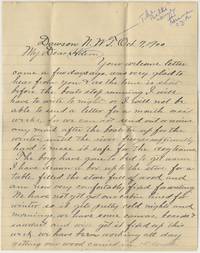
1900réf. List3888Dawson North West Territory sic Yukon Territory 1900. A long 1900 letter from Frank S. Bell in Dawson written shortly before navigation closed for the winter. Bell explains that if he does not write at once he may not be able to send another letter for quite a while: "as the time is short before the boats stop running I will have to write tonight or I will not be able to send a letter for a month or six weeks for we can not send out or receive any mail after the boats tie up for the winter until the river freezes sufficiently hard to make it safe for the dog teams." Bell writes from an unfinished cabin; he and his companions had spent the day carrying in fifteen cords of wood and still needed to prepare the cabin for winter: "The boys have gone to bed to get warm. I have drawn a box up to the stove for a table filled the stove full of wood and am now very comfortably fixed for writing. We have not yet got our cabin lined for winter so it gets pretty cold nights and mornings." He gives a good account of Dawson under Canadian police regulation. Sunday labor required a permit public houses were closed gambling was allowed only if conducted fairly and "sure thing games" were not permitted: "It is against the law here to work on Sunday without getting a permit & if the police catch you at it they take you in the police regulations are very strict almost too much so sometimes but then it makes Dawson a pretty orderly place to all outside appearances. All gambling must be done on the square no sure thing games are permitted." Bell notes that Dawson where "Saloons & all public houses are closed on Sunday" is a "much more orderly town than it would be if it were on the American side." The letter also anticipates further gold rushes in Alaska likely the Fairbanks rush as Bell mentions activity in "Tanana country": "I think there will be a stampede into the Tanana country this winter & next spring; prospectors have been in there this summer and staked some claims but there was no way to get provision in there until the snow comes when they can sled it in with dogs . We may go down in the spring if we make money enough this winter for a grub stake." Bell is also unusually reflective about the psychology of the Klondike. He calls this his "last chase" but immediately admits the pull of the country: "There is a fascination about this Klondike country. People that leave here & go outside only remain away a short time before they want to get back. There is always that ripple of excitement & any day may bring tidings of another rich discovery somewhere. Everyone is here for the one purpose to get rich quick." He closes with practical comments on Dawson travel hospitals trained nurses and his hope to make enough money to enter business in Seattle. A good Dawson letter from the late Klondike period with content on winter travel and mail cabin life Canadian police regulation gambling Sunday laws theaters hospitals Seattle and Skagway travel and coming gold rushes. . unknown
réf. Søren Mølstrøm, edIn Pristine Condition. unknown
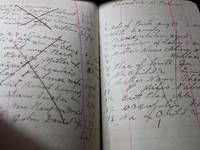
1909réf. 0002367CULLMAN CEDAR BLUFF ALABAMA. Fair. 1909. On offer is a fascinating naïve group of eight 8 original ledgers once owned and handwritten by we believe a doctor named J.P. Wilson of Cedar Bluff Alabama as per an inscription in the 1909 book. That said we cannot be certain as to ownership as there are two possible ownership inscriptions the other in the 1916 book of J. D. King of Cullman County Alabama. Local researchers should undoubtedly be able to confirm the author. Through the years 1909 1910 1912 1916 1918 1920 1924 to 1927 readers will find a trove of date regarding this doctor's practice in Northern Alabama. The information includes a daily tally of patients seen prognosis medicines given and amount what he charged for his services how much the patient paid and the balance owed to him. These also show some of the trades he made for his services. Many of the births and deaths are recorded. All told the books make for what would through forensic analysis of the records a super picture of the available medical care types of treatments ailments and remedies in this rural area of Alabama. Genealogists will no doubt have a fair bit of information. Overall the books are legible though the covers and bindings for the most part are in rough shape. Overall Fair .; Manuscript; 12mo - over 6¾" - 7¾" tall; KEYWORDS: HISTORY OF CULLMAN CULLMAN COUNTY CEDAR BLUFF NORTHERN ALABAMA SOCIAL HISTORY THE DEEP SOUTH ALABAMIAN SOUTHERN AMERICANA MEDICAL HISTORY HISTORY OF MEDICAL SERVICES HUNTSVILLE BIRMINGHAM J.D. KING J.P. WILSON DOCTORING EARLY 20TH CENTURY MEDICINE RURAL ALABAMA AMERICANA HANDWRITTEN MANUSCRIPT AUTOGRAPHED AUTHORS DOCUMENT LETTER AUTOGRAPH KEEPSAKE WRITER HAND WRITTEN DOCUMENTS SIGNED LETTERS MANUSCRIPTS HISTORICAL HOLOGRAPH WRITERS AUTOGRAPHS PERSONAL MEMOIR MEMORIAL PERSONAL HISTORY ARCHIVE DIARY DIARIES JOURNAL LOG PRIMARY SOURCE FIRST HAND ACCOUNT SOCIAL HISTORY PERSONAL STORIES LIVING HISTORY ANTIQUITÉ CONTRAT VÉLIN DOCUMENT MANUSCRIT PAPIER ANTIKE BRIEF PERGAMENT DOKUMENT MANUSKRIPT PAPIER OGGETTO D'ANTIQUARIATO ATTO VELINA DOCUMENTO MANOSCRITTO CARTA ANTIGÜEDAD HECHO VITELA DOCUMENTO MANUSCRITO PAPELBIOGRAPHY BIOGRAPHICAL AUTOBIOGRAPHICAL AUTOBIOGRAPHY PERSONAL NARRATIVES . unknown
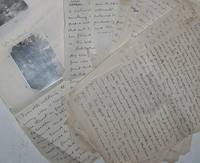
1922réf. 0002248KAMPONG INDONESIA SINGAPORE 1922. On offer is a super original 1922 manuscript diary of a woman who we believe is named Margaret or Mary Discon. While she has not identified herself she does seem to refer to herself at some point in the third person. The diary describes her time spent in Kampong Singapore near Saribue Dolok. Using 8½ x 14 inch sheets of paper folded but loose she describes her time over 17 pages with some photos as titled: "A Day at _____gale." While the first part of the place name is difficult to read we are sure that local researchers and historians will no doubt uncover the location especially given the detailed clues leading up to the spot. Here are some snippets: "It was with gay hearts that we sat in the lamplight making the best breakfast we could with nerves thrilling in anticipation of the days jaunt while the boy and his wife saw to the storing of baskets of provisions; lemons soda waters etc. etc. We stepped into the car as the sun was lighting the east and a cool breeze making coats very necessary. Our days outing had been looked forward to for weeks and the visit of a fellow passenger brought the journey to completion. The jungle sounds were ceasing and domestic animals of all specimens were beginning to stir. First we went through rubber then a long street of palm shaded road through a struggling and picturesque Kampong ." Their car gets stuck in the mud and they have to have the village people dig them out: " .we reached Saribue Dolok which seemed to consist solely of a large store and a missionary's house but they usually have been native Kampong's hidden in the hollows here and there for we saw numerous parties of Balaks silently following each other to the market in Indian file ." They are now on their way to a volcano. Also describes the natives clothing. Back to Kampong. "The Kampong of Harring all lies just above the shore guarded by banyan trees. The rest house is a pleasant little bungalow provided by the Dutch government for visiting officials and lent for a small fee to any traveler. Here we found contrary to repost that a well supplied table was provided .We crossed a small stream the stream was small but gully was broad by a bridge consisting of two thin tree trunks on one side of which was a low rattan rope which gave us help and hardly any confidence ." They finally board a boat and she mentions how the crowds of people started gathering to watch them and has a photo showing just this scene. They finally return to the rest house. The diary pages were folded actually misfolded and the edges of the pages are a bit brittle and chipped with some little loss but overall Fair. . Fair. Folio - over 12" - 15" tall. Manuscript. hardcover
1929réf. 0001973CHICAGO ILLINOIS IL. Good. 1929. On offer is a fascinating original manuscript Depression Era 5 year diary handwritten by a girl named June b. November 6 1909 whose surname is likely either Hluegner or Kandles as she has mention two Grandmothers with those names. June is a sad girl lonely for friendship even while a member of a sorority and it seems her happiness depends on her self image and body weight: 'Went to sorority. They all talk about their fellows. Oh lord! A perfect body!' Her sadness is also reflected in her nostalgia for a few moments of happiness in her past: 'in 1927 two years before this time I was seeing David Filerman. Wonder what he's doing now.' Home life is difficult too: 'Chas and Yi came over after Church. Dad certainly is unscientific. He's right. The world's crazy. Such a tirade of abuse I never heard. Too glad to go to Helen's.' She has one older sister Ruth who is 25 in 1929 and doesn't get along with her. Ruth seems to get all the guys eventually to get married in 1933. June is interested in gardening studies botany and music. Her basic premise is to find love marriage and to lose weight. In these 5 years she achieves nothing in that regard although she learns to drive a car on July 5 1929. June wonders Feb. 20 1930 "why I shouldn't act like other girls Why keep myself clean No fun like others." June is in turmoil about being able to go to college primarily The Principia A School and College for Christian Scientists to which she was accepted July 8 1929 but her attendance seems delayed due to financial difficulties. She does begin to attend in 1932 and also joins the school Glee Club. Besides attending school June works in an office. June does not have an aptitude for studies i.e. October 20 1931 E-French D-European History C-Geology and English and B-Botany. Every so often June laments the fact that she has no boyfriend no money nothing! She does not get along with her father but loves him dearly. Sometimes there's a reprieve and they have a lovely time together. June loves her mother though her mother has expectations of June i.e. her mother would have a fit if she learned she gained 10 lbs. She hates Chicago and often mentions taking grandparents and going shopping in Chicago. She might be living on the outskirts because one entry observes July 20 1931 that the grain is all cut and stacked. This Depression era diary notes on May 11 1930 "most of the furniture gone from the house couldn't give mother anything for Mother's Day". On March 9 1931 "not much food in the house but will manage - so hungry and cold". Then later that year March 26 the family receives a check for $8870.44 and they in turn are very happy. Some miscellaneous observations include: March 4 1933 President Roosevelt elected and March 8 1933 "House meeting on Death" and May 30 1933 "went to Art Institute and saw period rooms and painting exhibit" and June 22 1933 "Went to World's Fair - Marvellous". The approximately 395 page book is well filled and for researchers and historians of Chicago area Depression Era or women's studies will be hard pressed to find a more interesting peek into the world of this young woman. Overall G.; Manuscript; 24mo - over 5" - 5¾" tall; KEYWORDS: HISTORY OF GRANDMA KANDLES GRANDMA HLUEGNER GRANDMA HANSEN PRINCIPIA JUNE KANDLES JUNE HLUEGNER CHRISTIAN SCIENTISTS THE PRINCIPIA DEPRESSION ERA WOMEN'S STUDIES GENDER STUDIES WEIGHT PROBLEMS SELF IMAGE PROBLEMS CHICAGO AMERICANA HANDWRITTEN MANUSCRIPT AUTOGRAPHED AUTHORS MANUSCRIPT DOCUMENT LETTER AUTOGRAPH KEEPSAKE WRITER HAND WRITTEN DOCUMENTS SIGNED LETTERS MANUSCRIPTS HISTORICAL HOLOGRAPH WRITERS AUTOGRAPHS PERSONAL MEMOIR MEMORIAL PERSONAL HISTORY ARCHIVE DIARY DIARIES antiquité contrat vélin document manuscrit papier Antike Brief Pergament Dokument Manuskript Papier oggetto d'antiquariato atto velina documento manoscritto carta antigüedad hecho vitela documento manuscrito Papel . unknown
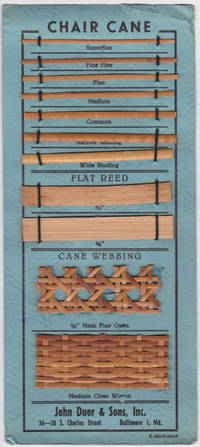
réf. 014243Baltimore MD: John Duer & Sons no date. ca. 1930s. The 9"x4" sample card contains 9 cane or reed samples and two samples of cane webbing. Blue printed stiff card; cane & reed samples are held by elastic cord and cane webbing samples are glued to the card. VG corners lightly bumped light wear. . Soft Cover. Very Good. John Duer & Sons Paperback
réf. h45722Fair. 10 x 7.5 inches stiff embossed black paper covers fair condition with some wear to binding and pages cracking in two or coming loose from binding. Captioned in white ink. This was kept by a Mildred Kaas or Kasper a teenaged girl on a sightseeing trip to Europe with a stay at Camp Stantor on Lake Geneva in Switzerland a favorite for international youth including many Americans. With hundreds of snapshot photos many of them commercially obtained plus a folding Rhine viewbook Folies Bergeres program over a dozen menus from the SS Rotterdam both east and westbound laid in passenger list booklet large photo autographed on the rear by her many friends at the camp. With photos and souvenirs documenting time spent in Volendam Marken Cologne Bonn the Rhine Wiesbaden Heidelberg Luzerne Interlaken many snapshots and scenes from Camp Stantor Montreux and other Swiss sites much on Paris and Versaille and then the return shipboard trip. unknown
1947réf. 0001605ASHLAND DAYTON ORRVILLE OHIO OH. Good. 1947. On offer is an original very intriguing 1947 manuscript diary and journal of a terrible post World War II child custody case and divorce. Unique for the times this was handwritten by an unidentified rural Ohioan who may have been either a Myers or Garver as he identifies 2 uncles. The author tells of his daily life which usually revolved around his large extended family the churches he attended and automobiles which he repaired and worked on all the time though he did do other work including farming. But right from the start the reader sees a pattern begin: the first entry is January 5th where he writes he has loaded up his car went to Ashland by 6:30 pm and then slept on his mother's davenport. He is also sick with a cold that never seems to end. Other entries mention more family travels large amounts of cash buying a car selling a house long and late hours weather reports and concerns and social observations. Yet all the while in the background are his health and the ups and downs of his divorce. He appears to be ill a lot perhaps the stress he sees the doctor many tests different shots and so on. In July he is in trouble with the law who seem only too glad to give him a hard time even though he has legal counsel. A part of the diary tells of his struggles with his own child custody case in which he is trying to get custody of his child. He notes trial dates of which he was never informed. The custody case and visitation get very dramatic as his ex-wife or girlfriend tries hiding the child from him in Alabama. He travels to Jacksonville to talk to the Mayor who took him to the High School where he had traced his daughter Sylvia. He also travels to Alabama and Florida searching for his high school age daughter Sylvia. Later he went to Birmingham to enlist the help of the Sherriff. This whole case would have been very unusual for the time. He does a super job recording each and every visitor companion and family member: Uncles Charles Myers Uncle Newton Garver Woodford Howard Leroy Reynolds Glen McFern Paul Sharpe heard Dr. Davis missionary 35 years in India at a lecture sleeps at the church one night Joe Bagelys Chippewa Lakes Park Lattasburg downtown Dayton Mansfield Perrysville Jeromeville plus dozens of places on his travels. The 7 1/2" x 5" book is has a broken rear hinge but is overall G.; 16mo - over 5¾" - 6¾" tall; KEYWORDS: HISTORY OF RAILROAD RAILWAYS FIREMAN ENGINEER WYOMING STEWARTSVILLE STOKER AMERICANA HANDWRITTEN MANUSCRIPT DOCUMENT LETTER AUTOGRAPH DIARY JOURNAL LOG KEEPSAKE WRITER HAND WRITTEN DOCUMENTS SIGNED LETTERS MANUSCRIPTS HISTORICAL HOLOGRAPH WRITERS DIARIES JOURNALS LOGS AUTOGRAPHS PERSONAL MEMOIR MEMORIAL PERSONAL HISTORYantiquité contrat vélin document manuscrit papier Antike Brief Pergament Dokument Manuskript Papier oggetto d'antiquariato atto velina documento manoscritto carta antigüedad hecho vitela documento manuscrito papel. . unknown
1948réf. 0012258Worcester Massachusetts. Good with no dust jacket. 1948. Hardcover. On offer is an interesting journal kept by a very well-read woman in mid-century Massachusetts. The journal belonged to Elizabeth Hazen Beard nee Sherborne or Sherburne 1909-1993. She was born in Worcester Massachusetts to parents Mary Alicia Hazen and WIlliam Frances Sherborne Sherburne where she lived her entire life. She attended Milford High School and then Massachusetts College of Art and Design. She married Sidney Beard a tool maker and together they had two sons David and William. This journal has multiple components though its main focus is on Beards literary interests. Though census data indicates that Beard did not have a career outside of the home it seems she was part of a literary society or other academic club. In this journal she writes what seems to be a lengthy lecture about contemporary childrens literature where she discusses the benefits of reading for children as well as several childrens books and authors. Some of the childrens books she discusses are Make Way for Ducklings by Robert McClaskey a book of animal stories by George Duplaix The Little History of the United States by Mable Pyne Airplane Ready by Sanford Tuasey Little Boat Boy by Jean Bothwell. Later in the journal she writes another lengthy lecture where she focuses on the Massachusetts literary scene including its authors Henry David Thoreau and Ralph Waldo Emerson places famous local authors wrote their masterpieces local landmarks that are important in literature and more. Her final lecture that she recorded in this journal is titled Reading I have Enjoyed. Here she writes extensively on the book Early American Decoration by Esther Brazer. Beard is well-written bright thoughtful and deeply passionate about literature. Her written lectures read like elaborate book reports with added elements of history and philosophy. Another interesting feature of the journal are two essays dealing with geopolitics - completely unrelated to Beards work on literature. These two essays are written in a hand that is not Beards and the author is unknown. The first essay is titled Changing Ideas of Empire England and the second is untitled but is about the Wests relationship with Russia and the Cold War. One of the essays is written within the pages of the journal and the second is tipped in. Both are written by an intelligent and knowledgeable author and are written as speeches just as Beards entries are. These were written much later than Beards work as they reference a deep conflict between West and Russia focused on Russia fomenting Muslim discontent in Iran. There is no hint as to who is the author of these two sections. Some brief excerpts follow: Reading is one of lifes recreations. Thoughtful parents teachers and friends should help to instill the love of books with as sure a place and as great patience as are employed in cultivating good manners honesty unselfishness and other fundamental habits of life . Mass is rich with places of literary interest and abounds with scenes reminiscent of our best loved authors. If certain of your pet authors receive little or no mention in this paper I hope you will forgive these sins of omission as time permits me to mention only a few of the many. Reading I Have Enjoyed The book I have chosen for my subject is one that I am constantly reading and referring to as an enthusiast of handwork and decoration . For anyone with an interest in 20th century literature and literary endeavours this is a must-own manuscript. It would also be of interest to a gender studies program as Beard is recorded in the history books as a Housewife yet this journal presents her as a bright and brilliant mind with much going on outside of her domestic life. The journal measures about 9x7 inches and contains 84 pages. It is about 90% complete. The book is hardcover and the covers are in good condition. There is some wear on the corners. The binding is in good condition and the pages are glued and sewn though loosening. The lined pages are in good condition. The handwriting is quite legible. Overall Good. ; Manuscripts; 8vo 8" - 9" tall; 84 pages; Signed by Author . hardcover
1991réf. o-bs51SAGE Publications Inc 1991-12-11. paperback. Good. 5x1x8. Signed by author. Pages are crisp and clean no marking. Cover is good. Binding is tight/good. SAGE Publications, Inc paperback