Oro, BegonaBiblio.com
17 610 résultats
réf. 8448854403.Ghardcover. Good. Access codes and supplements are not guaranteed with used items. May be an ex-library book. hardcover
réf. 0259187186.Gpaperback. Good. Access codes and supplements are not guaranteed with used items. May be an ex-library book. paperback
1905Full leather Fair in very good dust jacket. medium to heavy wear on maroon col ored cloth cover with gold embossed due to age. Pages yellowing b ut clean. 491 p. Work, Its Rewards and Discontents. Audience: Gen eral/trade.
réf. 2a4353The Punch Office London 1970. 949 S. mit zahlr. Illustr. original roter Verlagseinband aus Leinen mit Goldprägung/red publisher`s cloth binding. - Text englisch/sehr gutes Exemplar/very good condition - hardcover
réf. 44028501Edo n.d. ca 1830-40's. A group of 12 color woodblock print sheets: ca. 12.3 x 9 cm.;prints: ca.11.9 x 8.4 cm.all clean showing age excellent impression & registry no marks very nice examples in old album. AN OBSCURE SHUNGA ALBUM . . . EROTIC PRINTS FROM TWO SERIES MOST LIKELY THE ART WORK . . . OF EITHER KUNISADA I OR TOYOKUNI II . . . UNSIGNED AS USUAL . The book consists of pages from two series of Shunga erotic books:. As usual no Shunga erotica or Harubon erotic books were ever signed by the author as these were banned by the Shogunate. Nevertheless there was a proliferation of these 'contraband' books & prints printed through the Edo period 1604-1868 that were commonly distributed throughout Japan. . Three prints from JUNI KA GETSU NO UCHI TWELVE MONTHS OF THE YEAR and YON SHIKI NO UCHI THE FOUR SEASONS. The second to last print has no title. All of the above are clearly Edo period color prints. The second to the last print has no title but is clearly an Edo period item. The very last color print is a Meiji period work ca. 1870's. . We believe the two series originally consisted of 12 prints in all showing the erotic scenes of each of the twelve months. The same for the Four Seasons showing three prints for each of the four seasons. . Each print is clean more than likely from an accordion folded album or a usual printed book. All but 2 have the series title cartouche and a title cartouche indicating the season or month. The last two have no titles. . Each print is gently mounted to the book using typical Ace corners in white from the 1940-1950's period. . THE ARTISTS: Being unsigned by stylistic analysis and research we believe this book to be the artistic work of the two artistes cited below. . The book consist of the works of two famous woodblock print artists: of the period KUNISADA I & TOYOKUNI II. Because Kunisada I 1786-1864 was the star pupil of Toyokuni II since age 15 his works naturally are very similar to his master's style. In 1844 he took the name Toyokuni III therefore Kunisada I is the same person. He specialized in story books & portraits. He is well collected by world libraries & museums. See Roberts below. . Toyokuni II 1777-1835 may be the artist of one of the series. He also was a star pupil of Toyokuni I. He was a Ukiyo-e painter illustrator Bijin Ga pictures of B-beauties He is well collected by world libraries & museums. See Roberts below. . The last print clearly a Meiji 1968-1912 period work was again unsigned and unattributed. . EX-LIBRIS THOMAS K. TINDALE. Tindale was a famous author of the comprehensive book THE HANDMADE PAPERS OF JAPAN concerning Japanese Washi papers. The first fly leaf of this book has his embossed "Mon" or Japanese crest blind-stamped. See our book #360633 on our website. . This was among his collection which we acquired in the 1970's now being offered for the first time. . CONDITION: The book is in excellent condition it is an accordion folding album with brown silk cloth covers containing stiff Washi paper. . The front covers have a bit of old either worming or silverfish evidence of nibbled cloth in two places. It is minor and has been colored the same as the cloth so it is not a major issue with no damage to the interior pages. There is a small amount of loss to the cloth and the cover title slip is also a bit nibbled on the right edge again of no impact to the book or the prints. . The prints are clean polychrome woodblock printed in several colors with excellent impression & registry. Lovely miniature treasures. Each print is gently inserted in American "NewAce" white paper mounting corners. The prints can be easily removed from these corners. . There is one single print mounted to the right hand side of the book. The versos of the prints are clean the rectos fronts are also clean no damage marks or issues. The colors are vivid the red made from iron has nicely oxidized into a mellow brown-rust color indicating at least 100 years old. It takes 100 or more years for this color transition to happen this is a good sign of genuine Edo period examples. . Each print has excellent impression & registry indicating an early printing off the woodblocks printed in a high quality from expert printers/publishers again lacking any identifying seal as usual. . The last print Meiji period has been re-backed folded twice and old tear mended. . Please review the color photos posted to our website for more details. . THE ARTIST & BANNED BOOKS: . During the Edo period the Shogun banned books that were not inspected and or sanctioned. Erotic books were again contraband and never showed the true name of the artist nor publisher printers seals or logos. Therefore these Shunga Harubon are difficult to attribute any artist. The only way is an "educated guestimate" based on the artist's painting style. At best it is a close of an attribution as possible. Few are listed in Shibui or other bibliographies containing Harubon. . It our best estimate that these two books were the work of either Kunisada I and or Toyokuni II based on our over 55 years of tenure and experience. . Color photos are posted to our website. . REFERENCE: . ROBERTTS Laurence P.: A DICTIONARY OF JAPANESE ARTISTS: PAINTING SCULPTURE CERAMICS PRINTS LACQUER. For Kunisada see pp. 96-97. For Toyokuni II see pp. 186-187. SHIBUI Kiyoshi: ESTAMPS EROTIQUES PRIMITIVES DU JAPON: GENROKU KOHANAGA SHU-E. . --. UKIYO-E NAISI. BIBLIOGRAPHY OF JAPANESE EROTIC ILLUSTRATED WOODBLOCK PRINTED BOOKS. HAYASHI Yoshikazu: ENBON KENKYU: RESEARCH ON EROTIC JAPANESE WOODCUT BOOKS. ILLING Richard: JAPANESE EROTIC ART: And The Life Of The Courtesan. UHLENBECK Chris. ed. et al.: JAPANESE EROTIC FANTASIES: Sexual Imagery Of The Edo Period. WINZINGER Franz: MEISTERWERKE DER EROTISCHEN KUNST JAPANS. LANE Richard: EROTIC THEME IN JAPANESE PAINTING: THE EARLY SHUNGA SCROLL. UKIYOE SHUNGA MEI HIN SHU SEI.THE COMPLETE UKIYO-E SHUNGA: The Foreign Image. An Anthology Of Writings. GROSBOIS Charles: SHUNGA IMAGES OF SPRING: Essay On Erotic Elements In Japanese Art. MANDEL Gabriele: SHUNGA: Erotic Figures In Japanese Art. EVANS Tom. et al.: SHUNGA: The Art of Love in Japan. UTAMARO Utagawa. Kitagawa: THE MERRY DRINKERS A Translation Of The EHON WARAI JOGO: A PICTURE BOOK SERIES OF SHUNGA EROTICA. . NOTE: Many of the above reference books are in our inventory please see visit our website for details search by author or title. . . unknown
1960réf. 20547Philadelphia: J. B. Lippincott 1960. 1st Edition. Hard Cover. BOOK FINE/JACKET NEAR FINE. 8vo - over 7¾"" - 9¾"" tall. 192 pages. AN EXTREMELY CLEAN ATTRACTIVE COPY WITH A BRIGHT ATTRACTIVE DUSTJACKET. NOT AN EX-LIBRARY COPY. This title is very difficult to find in anything other than an ex-library book. NO PREVIOUS OWNER MARKINGS. NOT price clipped. A stated first edition. An unusual non-fiction title co-written with the author's younger daughter Judy du Jardin. J. B. Lippincott hardcover
1938réf. 2110502150414129today's problem 1938. Soft Cover. Fine. Volume: 1 today's problem paperback
réf. 1682228223-8-1-29BookBaby. Very Good. With dust jacket. It's a well-cared-for item that has seen limited use. The item may show minor signs of wear. All the text is legible with all pages included. It may have slight markings and/or highlighting. BookBaby unknown
réf. 0899068022.Ghardcover. Good. Access codes and supplements are not guaranteed with used items. May be an ex-library book. hardcover
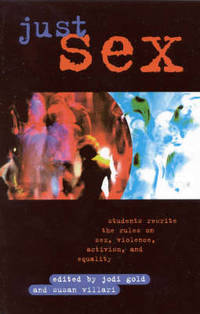
réf. 0847693325New. paperback. New. Satisfaction Guaranteed or your money back. paperback
1999réf. Q-0847693325Rowman & Littlefield Publishers 1999-12-22. Paperback. New. In shrink wrap. Looks like an interesting title! Rowman & Littlefield Publishers paperback
réf. B9780847693320Paperback / softback. New. Since the early 1980s a student movement has emerged from the belief that sexual violence is neither inherent nor inevitable. This text chronicles the move to bring an end to all forms of sexual violence and to mould a new sexual paradigm where consensual sex is the norm. paperback
Valencia, Editorial Castalia, 1955 ("Floresta. Joyas Poéticas Españolas"). 8vo.; XXIX - 349 pp., 4 hs. Cubiertas originales salvadas en encuadernación en tela.
2026réf. LRB51015642Paris: Editions Recreasoft 2026 Langue : Latin. Environ 554 pages. Français : Réimpression à la demande. Édition originale : 1708. Ouvrage en latin. Cette reproduit fidèlement l'ouvrage original de Giusto Fontanini consacré à l'histoire de la colonie étrusque d'Horta. L'étude inclut des documents anciens dont un décret authentique de Gélase Ier tiré d'un manuscrit vatican. L'ouvrage enrichi d'une table des matières offre un éclairage précieux sur l'antiquité locale. Images du livre non contractuelles English: Print-on-demand reprint. Original edition : 1708. Text in Latin. This faithfully reproduces the original work by Giusto Fontanini dedicated to the history of the Etruscan colony of Horta. The study includes ancient documents such as an authentic decree of Gelasius I drawn from a Vatican manuscript. Enhanced with an index the book provides valuable insights into local antiquity. Book images are non-contractual. Editions Recreasoft. Softcover. New. Editions Recreasoft paperback
Madrid, 2001. 4to. mayor; 410 pp. Cubiertas originales.
2000réf. 500127591Belin 2000 96 pages 22x29 7x0 9cm. 2000. Relié. 96 pages.
1949réf. 82454Stockholm, Lars Hökerbergs Bokförlag, (1949). 266 S., 1 Bl. Mit 32 s/w. Taf. 22 cm. OKart.
1986Gebrocheerd, originele uitgeversomslag geillustreerd in kleur, 21x29,5cm, 152pp, geillustreerd in kleur en z/w. Tentoonstelling had plaats in het Museum voor Sierkunst te Gent, van 28 juni tot en met 15 oktober 1986. Goede staat.
réf. 4317Brussel, Gemeentekrediet, 1986 Gebrocheerd, originele uitgeversomslag geillustreerd in kleur, 21x29,5cm, 152pp, geillustreerd in kleur en z/w.
1974réf. 12175Ariel, Frankfurt u. Parkland, Stuttgart (1974) (Ariel Kunstreihe Erlesene Liebhabereien). 128 Seiten mit 138 teils farbigen Abbildungen. Pappband mit Schutzumschlag. Umschlag hinten etwas eingerissen.
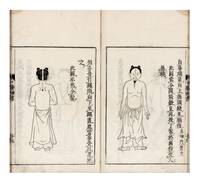
réf. 7008Twelve full-page woodcuts & numerous woodcuts in the text. 36 folding leaves. Two parts in one vol. 8vo orig. blue wrappers wrappers rubbed & somewhat wormed orig. block-printed title label on upper cover no longer present modern stitching. “Ichijo-dori” a street in Kyoto: Tomikura Tahei 1690. First edition of this early and rare book providing prescriptions for treatments in the different stages of tuberculosis. The author describes ten drugs made from vegetables that give miraculous results in treating the disease. The second part entitled “Mujo Gengen santen shinden gyokudo shoshi chiden shirochu soho” describes the parasitic worms said to grow in the stomach and intestinal system of patients suffering from tuberculosis. The text illustrations depict many of these parasites. The text is Chinese with Japanese reading marks presumably compiled in the 14th century by Ge 1305-53 a Yuan dynasty physician and writer. He came from a family of hereditary physicians and wrote a number of books. The Japanese reading marks have been provided by Shuhaku Asai 1643-1705 who was a fellow student with Ippo Okamoto of the prominent doctor Sanpaku Ajioka. There are substantial sections on acupuncture and moxibustion several of the full-page woodcuts depict pressure points. Very good copy. Minor marginal worming towards end. unknown
réf. 7008Twelve full-page woodcuts & numerous woodcuts in the text. 36 folding leaves. Two parts in one vol. 8vo orig. blue wrappers wrappers rubbed & somewhat wormed orig. block-printed title label on upper cover no longer present modern stitching. “Ichijo-dori” a street in Kyoto: Tomikura Tahei 1690. First edition of this early and rare book providing prescriptions for treatments in the different stages of tuberculosis. The author describes ten drugs made from vegetables that give miraculous results in treating the disease. The second part entitled “Mujo Gengen santen shinden gyokudo shoshi chiden shirochu soho” describes the parasitic worms said to grow in the stomach and intestinal system of patients suffering from tuberculosis. The text illustrations depict many of these parasites. The text is Chinese with Japanese reading marks presumably compiled in the 14th century by Ge 1305-53 a Yuan dynasty physician and writer. He came from a family of hereditary physicians and wrote a number of books. The Japanese reading marks have been provided by Shuhaku Asai 1643-1705 who was a fellow student with Ippo Okamoto of the prominent doctor Sanpaku Ajioka. There are substantial sections on acupuncture and moxibustion several of the full-page woodcuts depict pressure points. Very good copy. Minor marginal worming towards end. unknown books
1999réf. 100142718Actes sud 1999 256 pages 14 6x2x24cm. 1999. Broché. 256 pages.
2003réf. 500103297Michel Lafon 2003 2003. Broché.
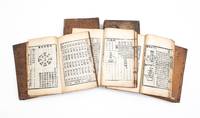
1634réf. 107041634. Several woodcut illus. in the text. 25 vols. Folio 346 x 230 mm. orig. wrappers rubbed & several with some wear three vols. with some staining occasional minor foxing orig. stitching. HansÅng: colophon in Vol. 2 dated 1634. Second edition 1st ed.: 1613 of a very great rarity “the greatest of all Korean medical treatises which devotes its last chapters to acupuncture and moxibustion.”–Lu & Needham Celestial Lancets p. 263n. It is considered to have one of the finest classification systems in traditional East Asian medicine. HÅ Chun 1539/46-1615 was a court physician of the Yangcheon HÅ clan during the reign of King Seonjo 1568-1608 of the Joseon dynasty in Korea. During the Japanese invasion of Korea 1592-98 HÅ faithfully accompanied the king through numerous difficult campaigns. Following the conflict the king commissioned HÅ to write a medical book for his citizens who suffered from post-war famines and epidemics. In 1610 HÅ completed his masterwork which was first published in 1613 an even rarer book. The Tongŭi pogam is divided into five broad sections: internal medicine four vols. external medicine four vols. miscellaneous diseases 11 vols. herbal remedies three vols. and acupuncture one vol. all preceded by a most useful two-volume Table of Contents. In the first section on internal medicine HÅ describes the interdependence of the liver lung kidney heart and spleen. The section on external medicine explains how the skin muscles blood vessels tendons and bones allow for movement and maintenance of posture. The part on miscellaneous diseases describes the symptoms diagnoses and treatment methods of various diseases. HÅ’s remedies rely on readily found medicinal herbs and plants and he provides impressively detailed instructions on how to extract maintain and consume the herbs. The last section explains acupuncture strategies. The work spread to other East Asian countries like China Japan and Vietnam and is still regarded as one of the classics of Asian medicine. “The Treasured mirror of eastern medicine was in fact one of the very few non-Buddhist works written outside China that achieved a wide circulation within China. It was written by HÅ Chun 1539-1615 as a summation of Korean medical knowledge and was printed in Korea in 1613. Copies were sent directly to China in 1721 and 1728 and a copy reached Japan in 1681. A revised edition was printed in Japan with glosses in 1724 and again in 1799; copies of the 1799 edition were sent to China via Nagasaki in 1811 and 1837. The Treasured mirror of eastern medicine was reprinted in China in the eighteenth and nineteenth centuries either from the Korean edition or from one of the Japanese editions with the glosses removed. This was a rare sign of high esteem for a book written outside China.”–Peter Kornicki Languages Scripts and Chinese Texts in East Asia Oxford: 2018 p. 144. HÅ Chun remains famous in Korea today: there are several recently created television series and films about him and his achievements; a best-selling novel about him was published in 1990; and a museum in Seoul is devoted to his life and works. A very good “married” set with the first volume of miscellaneous diseases coming from another set. One volume has a hole to about ten leaves touching a few characters. ⧠For an extended and excellent discussion of the contents and importance of this work see Yeonseok Kang “History and Characteristics of Korean Medicine” in Routledge Handbook of Chinese Medicine 2022 pp. 507-08. unknown