VENEZUEALAN GUIANA – GOLD MININGBiblio.com
17.247 risultati
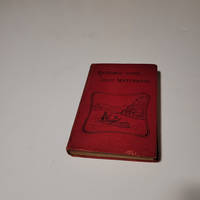
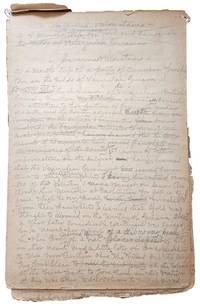
rif. FRE55Oblong small folio ca. 177x277 cm 7 x 11 in. Ca. 180 pp. including ca. 99 pages of text. Pencil on yellowish paper. Period original illustrated wrappers fastened with a string. Amateur restoration with brown paper tape over the original spine and ca. two pages reinforced on the verso with paper. Occasional pencil corrections by the author. Wrappers fragile and rubbed with small losses to the front wrapper about ten pages with tears several leaves loose but otherwise a good copy. Historically significant manuscript diary of a forty-one-year-old railroad employee from Canton Ohio offering a first-hand account of an American gold-prospecting expedition into Venezuelan Guiana present-day Guayana in the fall of 1897. Gold discoveries in southeastern Venezuela during the mid-nineteenth century followed by the rapid development of the El Callao mining district in the 1860s attracted foreign prospectors to the remote interior of Venezuelan Guiana. The discoveries also intensified Venezuela’s long-running boundary dispute with Britain whose claims on behalf of British Guiana extended into gold-bearing territory and at their broadest approached the mouth of the Orinoco River. By the time our party arrived in 1897 the dispute was under international arbitration while Venezuela remained politically unstable with recurrent revolutions and fears of renewed armed conflict. Against this background the travellers pursued reports of a rich placer deposit supposedly discovered by an Ohio prospector named Bundy although no contemporary American newspaper account of this particular discovery has yet been located. According to the diary the author had “much experience handling earthwork and some knowledge of general prospecting.” The core party consisted of the author and fellow Canton residents J. H. Alexander and H. C. Knoblock. They left Canton on September 1 1897 travelling to New York by Fort Wayne and Erie Railroads then sailed aboard the S.S. Caracas transferring at Curaçao to the S.S. Philadelphia before reaching La Guaira Venezuela. After visiting Caracas they continued along the Venezuelan coast aboard the Dutch steamer Prins Maurits to Trinidad then re-entered Venezuela through the Orinoco Delta aboard the City of Bolívar and reached Ciudad Bolívar. From there they made a fifteen-day roughly 250-mile trek south to Paragua and later established a prospecting camp near Caño Wanaca and Mount El Rotundo. The diary ends in November and appears incomplete covering three of the four months indicated by its title. The diary features ninety-nine pages of manuscript text with the first thirteen pages describing the expedition's journey from their departure in Canton through their voyage to New York and Curaçao. About fourteen pages of the Venezuelan section trace the more urban stage of the journey through La Guaira Caracas and the coastal ports of Guanta Cumaná and Carúpano prior to the main prospecting expedition from Ciudad Bolívar. The author records stays at early hotels in La Guaira Hotel Sfatoro Grand Hotel and Hotel Italia as well as visits to cafés parks and public events La Guaira — Café Italia; Caracas — El Calvario and a military-band concert in Plaza Bolívar. Interestingly he describes La Guaira as a “filthy town” and criticizes Caracas’s open-gutter sewage poor gas and electric lighting. In the capital the compiler also records meeting General Jacinto Fabricio Lara the Venezuelan Minister of Development who oversaw mining interests and supplied the party with regional mining maps. He further notes Carúpano’s reconstruction after a destructive tidal wave active rum smuggling and the excessive customs formalities at Venezuelan ports. The central sixty pages cover the interior expedition south of Ciudad Bolívar with six burros and a hired “West Indian Negro” later dismissed for drunkenness. In these passages the author records numerous encounters with local residents including a woman preparing chicken soup with yuca & cassava cassava-bread production at La Tigre his treatment of a bleeding young man and the manufacture of papelón at a sugar plantation. He also recounts crossing the rock-strewn Río Grande Claro severe mosquito bites getting lost on the trail to Paragua and trading medicine for food. Interestingly at Paragua the author harshly criticizes the minimal use of dairy sparse furnishings repetitive music played on cuatros and widespread child cigar smoking and describes a local funeral that descended into a drunken brawl. In the same part of the diary the author details the party’s principal prospecting activities. He writes about their first field tests along the road to Paragua where he and a local guide examined a mountain stream using a pick shovel and gold pan; although they found no gold he records promising formations and notes a nearby mountain composed largely of iron ore. Near Paragua the author describes accompanying Señor Morales on a twenty-five-mile journey across the savanna to inspect a quartz vein at the foot of a large mountain though he notes that careful examination revealed no trace of gold. Finally he talks about their most systematic work at a base camp near Caño Wanaca and Mount El Rotundo where he recounts how they cleared brush blazed trails dug test pits in alluvial ravines washed stream gravels for “colors” of gold and examined the mountain’s iron-rich rock and unusual cave formations. Especially interesting are the author’s observations on Venezuela’s unstable political situation including the seizure at Carúpano of a vessel carrying arms for an impending revolution and the hurried transfer of cattle across the Paragua River following a disputed election. He also records a Venezuelan passenger’s fervent gratitude to the United States for resisting British territorial claims while another episode describes customs officials in Ciudad Bolívar mistaking the party’s food supplies for gunpowder and threatening them with imprisonment. Among the prominent officials who assisted the party at different stages of the journey were U.S. Minister Francis B. Loomis ca. 1861-1948 Legation Secretary William W. Russell ca. 1858-1944 and Consular Agent Robert Henderson in Ciudad Bolívar. The diary also contains a detailed account of the travellers’ stopover in Port of Spain Trinidad an important transit point on their journey. The author praises the colony’s infrastructure electric streetcars well-maintained botanical gardens and bustling commercial district stocked largely with imported English goods. Overall historically significant manuscript diary of a forty-one-year-old railroad employee from Canton Ohio offering a first-hand account of an American gold-prospecting expedition into Venezuelan Guiana in the fall of 1897. unknown
1982rif. 2092902141200621Qilu Book Company 1982. Soft Cover. Fine. The book is in fine condition. Qilu Book Company paperback
rif. B9781015805651Hardback. New. hardcover
1890rif. 1539A very early edition of the book originally published in 1888. In very good condition for its age. The only condition faults we found were on the covers - wear along the edges of the spine and bottom front cover minor wear and bumping at the corners an inscription on the inside front cover that has bled onto the adjacent flyleaf page and minor soiling on the insde covers and adjacent shadowing on the inside covers and adjacent flyleaf pages; and two pages with issues issues - the title page has a snall section missing along the bottom of the page edge and page 95/96 has a small chip along the edge as well as a stain along the margin edges from page 92 through page 95. From Wikipedia abridged: ". Thwaites is credited with raising the scholarship surrounding the Lewis and Clark Expedition to a new level. Previous to the editions that were published under his leadership general knowledge as well as serious scholarship were for the most part hampered by legend. Thwaites discovered and uncovered various additional original sources including the journal of Charles Floyd the only member of the Corps of Discovery to die on the expedition. By including these disparate sources and tying them together in a cohesive set of volumes the nature and importance of the expedition became more generally recognized.7 In 1892 Thwaites was elected a member of the American Antiquarian Society8 in 1899 he was president of the American Library Association and in 1910 he was named president of the Mississippi Valley Historical Association. Thwaites was well known for not being a mere academic but rather as a historian who attempted to understand history by experiencing those aspects that he could and bringing those experiences to life.>9 In 1888 he took canoe trips on the Wisconsin Fox and Rock rivers.10 In 1892 he undertook a bicycle tour of England and in 1903 rowed down the Ohio River." A. C. McClurg & Co., hardcover
rif. 1023310570.Ghardcover. Good. Access codes and supplements are not guaranteed with used items. May be an ex-library book. hardcover
rif. 1015805655.Ghardcover. Good. Access codes and supplements are not guaranteed with used items. May be an ex-library book. hardcover
1888rif. BOOKS301882Chicago IL: A. C. McClurg and Company. G/NO DUSTJACKET. 1888. . Cloth. 12mo. 298 pp. cover rubbed bumped soiled frayed inside binding cracked page toning . A. C. McClurg and Company hardcover
rif. 43397WISCONSIN. THWAITES Reuben Gold. Historic Waterways. Six Hundred Miles of Canoeing Down the Rock Fox and Wisconsin Rivers. Chicago: A.C. McClurg and Company 1888. 1st ed. 298pp. Orig. pictorial red cloth. Boards lightly soiled spine ends frayed corners bumped. Interior clean. Overall a very good copy. The author's first book. Scarce. unknown
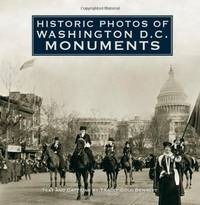
2009rif. x-1684420733Turner Pub Co 2009. Hardcover. New. 219 pages. 8.75x8.75x8.50 inches. Turner Pub Co hardcover
1980rif. 42840Alameda CA: City of Alameda. Very Good. 1980. Uncorrected Proof. Text is clean. Paper cover shows wear. Cover letter from City of Alameda presenting this draft of the final report along with announcement of the public meetings to discuss it included. This is a draft copy #69. . City of Alameda unknown
rif. 1596525053.Ghardcover. Good. Access codes and supplements are not guaranteed with used items. May be an ex-library book. hardcover
1960rif. 1506010n.p.: No Publisher Stated 1960. First Edition. Soft cover. Very Good. 1st printing. 4to pictorial wraps. 272pp. Illus. Tables. Maps. A huge amount of information. Lower margin of first few pps & cover slightly creased. Uncommon. No Publisher Stated unknown
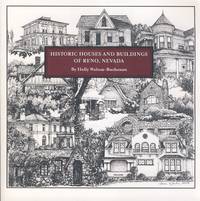
2007rif. 012903Reno NV: Black Rock Press 2007. First Edition . Soft cover. Very Good. Trade paperback. 143 pages. Photos. Bibliography. Index. Covers starting to curl. A clean attractive copy. Uncommon. Black Rock Press paperback
1972rif. 89071972 London, Blandford Press, 1971. Un volume in-4 pleine toile bleue sous jaquette illustrée, 192 pages, illustrations en couleurs, texte en anglais. Réparations à la jaquette.
Madrid, Espasa Calpe, 1955. 4to.; 268 pp. Cubiertas originales.
Madrid, Instituto Antonio de Nebrija, 1942. 4to.; 634 pp. Cubiertas originales.
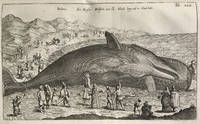
1767rif. S13771Heilbronn:: Franciscus Josephus Eckebrecht 1767. 1767. Tall 4to. 335 x 211 mm 228 4 pp. 47 plates; text with some foxing. Original paper over boards. Housed in a custom clamshell box. Rare. FINE. An extensive work on the morphology of boned fish cartilaginous fish sharks rays skates and cetaceans. This work is illustrated with forty-seven full-page engraved plates that are executed in superb form. Plate XLII shows a beached baleen whale and its enormous size compared to the men in the engraving. A bit fanciful plate XL shows a pair of Mermen; a fish on plate XXVII has the features of a human face whilst a 'shark' on plate VII has semi-human fore-limbs. Except for these anomalies the zoological drawings are quite dramatic and relatively accurate. Jonston's works were frequently re-edited and translated into German Latin Dutch and English. Born in Poland but of Scottish origin Jonston was educated and traveled extensively. He attended St. Andrews 1623-5 studying botany and medicine at Cambridge Leiden and Frankfurt Universities. He earned degrees from Cambridge and in Leiden his M. D. in 1632 where he later practiced medicine and gained a great reputation. In 1642 he briefly taught at Frankfurt as professor of medicine. He retired to his private estate in Silesia in 1655. His "four dictionary-style works on fish birds quadrupeds and insects -- published between 1650 and 1653 with excellent illustrations -- were widely read and translated." DSB. BM Readex Vol. 13 p. 765; DNB Vol. X pp. 968-9; DSB Vol. VII p. 164-5; Nissen 2133. See Garrison and Morton 287. Franciscus Josephus Eckebrecht, 1767. hardcover books
1767rif. S13771Heilbronn:: Franciscus Josephus Eckebrecht 1767. 1767. Tall 4to. 335 x 211 mm 228 4 pp. 47 plates; text with some foxing. Original paper over boards. Housed in a custom clamshell box. Rare. FINE. An extensive work on the morphology of boned fish cartilaginous fish sharks rays skates and cetaceans. This work is illustrated with forty-seven full-page engraved plates that are executed in superb form. Plate XLII shows a beached baleen whale and its enormous size compared to the men in the engraving. A bit fanciful plate XL shows a pair of Mermen; a fish on plate XXVII has the features of a human face whilst a 'shark' on plate VII has semi-human fore-limbs. Except for these anomalies the zoological drawings are quite dramatic and relatively accurate. Jonston's works were frequently re-edited and translated into German Latin Dutch and English. Born in Poland but of Scottish origin Jonston was educated and traveled extensively. He attended St. Andrews 1623-5 studying botany and medicine at Cambridge Leiden and Frankfurt Universities. He earned degrees from Cambridge and in Leiden his M. D. in 1632 where he later practiced medicine and gained a great reputation. In 1642 he briefly taught at Frankfurt as professor of medicine. He retired to his private estate in Silesia in 1655. His "four dictionary-style works on fish birds quadrupeds and insects -- published between 1650 and 1653 with excellent illustrations -- were widely read and translated." DSB. BM Readex Vol. 13 p. 765; DNB Vol. X pp. 968-9; DSB Vol. VII p. 164-5; Nissen 2133. See Garrison and Morton 287. Franciscus Josephus Eckebrecht, 1767. hardcover
Madrid, 1946-1948 [BAE]. Dos volúmenes en 4to. mayor; XXXVI pp., 543 pp. y VIII pp., 570 pp. Encuadernación en media piel.
Madrid, Editorial Castalia, 1973 (Colección de Romanceros de los Siglos de Oro, VI). 4to.; 237 pp., 1 h. Ilustraciones. Encuadernación original en tela estampada.
1905rif. H9782Athens: Ek ton Typografikón Katastimáton Ath. Papaspýrou - Io. Deoudé 1905. Very Good. 8vo black morocco gilt backed cloth boards very good light rubbing to binding original wraps bound in 104 pp some tanning. RARE two copies in OCLC. In Greek. Ek ton Typografikón Katastimáton Ath. Papaspýrou - Io. Deoudé unknown
Murcia, Antonio Pérez y Gómez, 1964. Un pliego en 4to. de 4 hojas. Impresión en papel de hilo. Edición limitada y numerada de 400 ejemplares. Cubiertas originales.
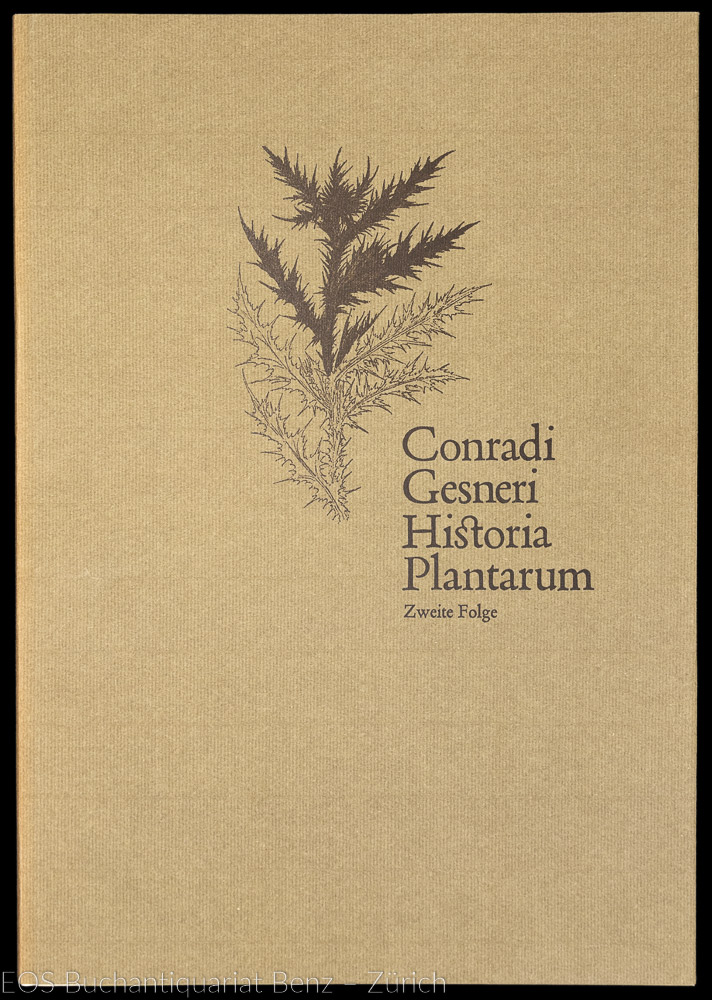
1973rif. 4448DBDietikon, Urs Graf Vlg, 1973. Folio. Mit zahlr. farb. Tafeln u. Textillustr. Orig.-Halbpergamentband mit Schutzumschlag. + Wichtig: Für unsere Kunden in der EU erfolgt der Versand alle 14 Tage verzollt ab Deutschland / Postbank-Konto in Deutschland vorhanden +, A|B [2 Warenabbildungen]
1973rif. 4448DBDietikon, Urs Graf Vlg, 1973. Folio. Mit zahlr. farb. Tafeln u. Textillustr. Orig.-Halbpergamentband mit Schutzumschlag.
1976rif. 4849DBDietikon, Urs Graf Vlg, 1976. Folio. Mit zahlr. farb. Tafeln u. Textillustr. Orig.-Halbpergamentband mit Schutzumschlag. + Wichtig: Für unsere Kunden in der EU erfolgt der Versand alle 14 Tage verzollt ab Deutschland / Postbank-Konto in Deutschland vorhanden +