17.560 resultados
ref. DADAX141977140XNew unknown
1959ref. 2090202120403424Kisetsufu shoten 1959. Soft Cover. Fine. Number of books: 1 Kisetsufu shoten paperback
1980ref. KOS01207212Bunshu shunshu NEW 1980. Soft Cover. Fine. KOS01207212 Bunshu shunshu NEW paperback
ref. 7036Printed in Chinese with Japanese reading marks. 11 columns per page 21 characters per column. 79; 59; 51; 49; 67 folding leaves. Ten parts in five vols. 8vo 240 x 149 mm. orig. brown wrappers new stitching. Japan: mid-Muromachi ca. 1440-50. An extremely rare and important “mid-Muromachi” Gozan-ban edition of The Blue Cliff Record in Chinese: Pi yen lu a collection of Chan Buddhist koan. These were verbal tests used to practice or test a student’s progress in Zen compiled in the Song Dynasty and expanded by the great Northern Song Chan master Yuanwu Keqin 1063-1135 abbot of Tianning Wanshou Chan Monastery in Beijing. The text was first printed in China in 1125 or 1128 and has long been celebrated for both its startling beauty and profound complexity. Around 1140 one of Yuan Wu’s successors Ta Hui destroyed the printing blocks and copies of the Pi yen lu because the work’s rapid and widespread popularity made him fear that its beauty of expression would distract its readers from seeking enlightenment directly within themselves. The text was brought back from China by Dogen 1200-53 the Japanese Buddhist priest who was a founder of the Soto school of Zen in Japan. He had studied in China for four or five years and returned to stay at the Kenninji temple where he introduced many texts. This text was first printed in Japan about 1336-50 early-Nanbokucho by Gyokuho Shorin at the Kenninji; there is a copy at the National Diet Library. Our edition is a reprint of that first Japanese edition using the same woodblocks with minor changes. A later edition appeared in the Donald and Mary Hyde sale lot 65. “For some time Chan monks had been in the habit of extracting snippets from the ‘records’ yulu of past masters isolated them as ‘ancient precedents’ and commenting on them sometimes in verse sometimes in prose. By the mid-eleventh century the core situation was known as a ‘case to be investigated’ or a gong’an. The process was incremental and difficult to stop. Yuanwu’s Emerald Cliff Record for example took a previous eleventh-century collection entitled Master Xuetou’s verses on a hundred old cases and added an introduction and extensive commentary to each ‘case’ sometimes also dropping in comments on the appositeness or more usually inappositeness of the relevant verse so becoming in his turn ‘magistrate.’ A gong’an collection therefore reveals many layers all of them dedicated to undercutting the stability of language while at the same time playing a complex game of competing authorities. Herein lies their fascination.”–Richard Bowring The Religious Traditions of Japan Cambridge U.P. p. 301. “Gozan-ban is a general term embracing all those books published by monks of the Zen sect chiefly at the five Zen monasteries at Kamakura and the five at Kyoto over a period of more than 200 years between mid-Kamakura and late Muromachi. The appearance of the printed page in most Gozan editions follows a distinctly Chinese style. The effect is somewhat dense and crowded caused by packing the Chinese characters tightly together with more regard for economy of space than for aesthetic effect. In this the Gozan editions differ markedly from all other early Japanese printed books which are more generously spaced. The reasons for this are twofold: the books tend to be chiefly reprints of Chinese song and Yuan editions and during the fourteenth century many Chinese blockcutters came over from the continent and practised their craft of a semi-commercial basis and on a fairly large scale.”–K.B. Gardner “Centres of Printing in Medieval Japan: late Heian to early Edo period” in British Library Occasional Papers 11. Japanese Studies ed. by Yu-Ying Brown London: 1990 p. 164. PROVENANCE: This copy has the seals of Hirokata Yashiro 1758-1841 “Shinobazu Bunko”; Awa no Kuni Bunko; and Goroza Uchino b. 1873 “Kyotei Bunko”. It later belonged to the great collector and bibliographer of early Japanese books Kazuma Kawase 1906-99 and has his seal. The chitsu has Kawase’s manuscript title label stating in trans.: “Gozan-ban. Hekiganroku. Mid-Muromachi edition. Shinobazu Bunko provenance. Kazuma put the title on this label” also with his seal. There are four Prefaces: the first is undated the second dated 1300 the third dated 1305 and the fourth is dated 1304. Two leaves of manuscript probably written by Yashiro have been inserted at the beginning of Vol. I. They provide a commentary and a sort of title-page the work was issued without a title. Following Part I there are another two leaves of manuscript relating to this text. Following the tenth part are five Afterwards dated 1125 undated 1302 1317 and 1317. In fine condition all contained in a modern wooden box. The top of the box has been covered in a most attractive silk brocade. A few natural paper flaws and minor staining. Berkeley has an edition of this text but because of the very vague WorldCat cataloguing it is impossible to tell which exact edition it is. â§ Kornicki Language Scripts and Chinese Texts in East Asia p. 245. unknown books
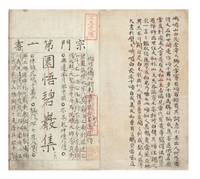
ref. 7036Printed in Chinese with Japanese reading marks. 11 columns per page 21 characters per column. 79; 59; 51; 49; 67 folding leaves. Ten parts in five vols. 8vo 240 x 149 mm. orig. brown wrappers new stitching. Japan: mid-Muromachi ca. 1440-50. An extremely rare and important “mid-Muromachi” Gozan-ban edition of The Blue Cliff Record in Chinese: Pi yen lu a collection of Chan Buddhist koan. These were verbal tests used to practice or test a student’s progress in Zen compiled in the Song Dynasty and expanded by the great Northern Song Chan master Yuanwu Keqin 1063-1135 abbot of Tianning Wanshou Chan Monastery in Beijing. The text was first printed in China in 1125 or 1128 and has long been celebrated for both its startling beauty and profound complexity. Around 1140 one of Yuan Wu’s successors Ta Hui destroyed the printing blocks and copies of the Pi yen lu because the work’s rapid and widespread popularity made him fear that its beauty of expression would distract its readers from seeking enlightenment directly within themselves. The text was brought back from China by Dogen 1200-53 the Japanese Buddhist priest who was a founder of the Soto school of Zen in Japan. He had studied in China for four or five years and returned to stay at the Kenninji temple where he introduced many texts. This text was first printed in Japan about 1336-50 early-Nanbokucho by Gyokuho Shorin at the Kenninji; there is a copy at the National Diet Library. Our edition is a reprint of that first Japanese edition using the same woodblocks with minor changes. A later edition appeared in the Donald and Mary Hyde sale lot 65. “For some time Chan monks had been in the habit of extracting snippets from the ‘records’ yulu of past masters isolated them as ‘ancient precedents’ and commenting on them sometimes in verse sometimes in prose. By the mid-eleventh century the core situation was known as a ‘case to be investigated’ or a gong’an. The process was incremental and difficult to stop. Yuanwu’s Emerald Cliff Record for example took a previous eleventh-century collection entitled Master Xuetou’s verses on a hundred old cases and added an introduction and extensive commentary to each ‘case’ sometimes also dropping in comments on the appositeness or more usually inappositeness of the relevant verse so becoming in his turn ‘magistrate.’ A gong’an collection therefore reveals many layers all of them dedicated to undercutting the stability of language while at the same time playing a complex game of competing authorities. Herein lies their fascination.”–Richard Bowring The Religious Traditions of Japan Cambridge U.P. p. 301. “Gozan-ban is a general term embracing all those books published by monks of the Zen sect chiefly at the five Zen monasteries at Kamakura and the five at Kyoto over a period of more than 200 years between mid-Kamakura and late Muromachi. The appearance of the printed page in most Gozan editions follows a distinctly Chinese style. The effect is somewhat dense and crowded caused by packing the Chinese characters tightly together with more regard for economy of space than for aesthetic effect. In this the Gozan editions differ markedly from all other early Japanese printed books which are more generously spaced. The reasons for this are twofold: the books tend to be chiefly reprints of Chinese song and Yuan editions and during the fourteenth century many Chinese blockcutters came over from the continent and practised their craft of a semi-commercial basis and on a fairly large scale.”–K.B. Gardner “Centres of Printing in Medieval Japan: late Heian to early Edo period” in British Library Occasional Papers 11. Japanese Studies ed. by Yu-Ying Brown London: 1990 p. 164. PROVENANCE: This copy has the seals of Hirokata Yashiro 1758-1841 “Shinobazu Bunko”; Awa no Kuni Bunko; and Goroza Uchino b. 1873 “Kyotei Bunko”. It later belonged to the great collector and bibliographer of early Japanese books Kazuma Kawase 1906-99 and has his seal. The chitsu has Kawase’s manuscript title label stating in trans.: “Gozan-ban. Hekiganroku. Mid-Muromachi edition. Shinobazu Bunko provenance. Kazuma put the title on this label” also with his seal. There are four Prefaces: the first is undated the second dated 1300 the third dated 1305 and the fourth is dated 1304. Two leaves of manuscript probably written by Yashiro have been inserted at the beginning of Vol. I. They provide a commentary and a sort of title-page the work was issued without a title. Following Part I there are another two leaves of manuscript relating to this text. Following the tenth part are five Afterwards dated 1125 undated 1302 1317 and 1317. In fine condition all contained in a modern wooden box. The top of the box has been covered in a most attractive silk brocade. A few natural paper flaws and minor staining. Berkeley has an edition of this text but because of the very vague WorldCat cataloguing it is impossible to tell which exact edition it is. â§ Kornicki Language Scripts and Chinese Texts in East Asia p. 245. unknown
ref. DADAX1444724177New unknown
ref. DADAX0195160428New unknown
ref. DADAX0942299140New unknown
ref. DADAX0345492188New unknown
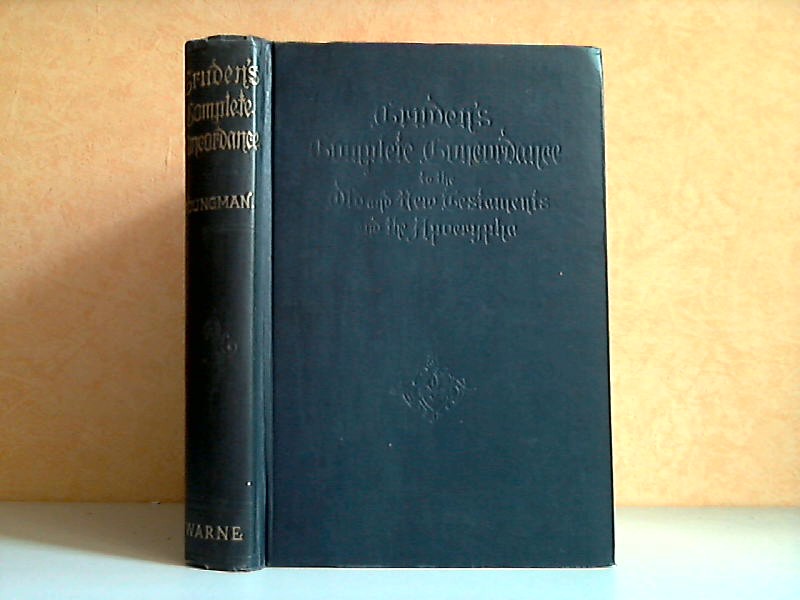
ref. 39549London, New York, Frederick Warne and Co. ltd., ohne Angaben. 719 Seiten , 26 cm, Hardcover/Pappeinband
ref. 024453Does not appear to have a title page so the title "Acupuncture" is something I have added. Possibly the title page has been removed but I have no way of knowing. Several sections are credited to H. Grady Young. Several sections are: Historical Highlights of Acupuncture; Understanding Veterinary Acupuncture; The Principle of "Mutation of Energy"; The Great Law of Stimulation and Sedation of Energy; The Principle of Yin and Yang; etc. etc. etc. 10 tabs on page foredges have been added by a previous owner for ten parts of the body. 4to spiral bound 11" tall. 108 pages hand numbered in pen at upper right. Some sections have printed page numbers at bottom or at top as so: 6 4 25 31 6 3 2 2 pages plus many plates with pages unnumbered and also some pages unnumbered. No date however possibly from the mid 70s. A good deal of neat red highlgihting. Tightly bound. Good condition. . unknown
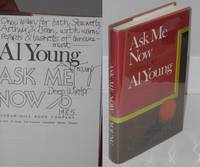
1980ref. 93301New York: McGraw-Hill Book Company 1980. Hardcover. 294p. warm personal inscription to Herb Gold signed and dated Summer 1980 San Francisco and signed again on the title page by by the African American novelist very good first edition first printing in half-cloth boards and bright unclipped dj. McGraw-Hill Book Company hardcover books
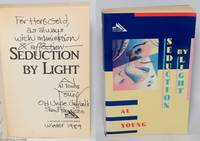
1988ref. 327469New York: Delta/Seymour Lawrence 1988. Trade Paperback. 338p. inscribed by the African American author first printing slight bend to front wrap. Comic novel. Paperback original. From the library of Beat writer Herbert Gold. Inscription reads: "For Herb Gold as always with admiration & affection-- Al Young Old Uncle Gaylord's San Francisco Winter 1989 Delta/Seymour Lawrence paperback books
ref. DADAX0230001319New unknown
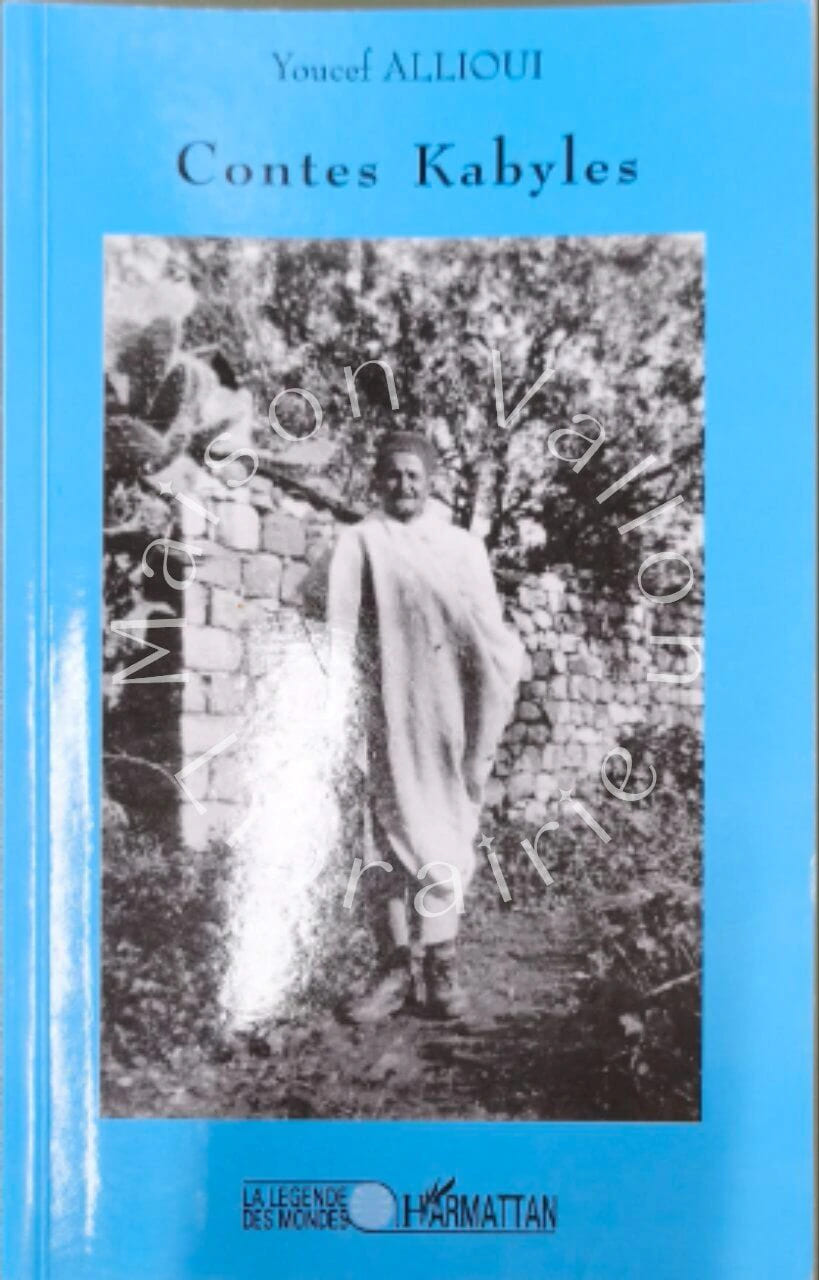
2001ref. 20274Éditions L'Harmattan 2001 92 pages collection LA LEGENDE DES MONDES. 13 4x0 8x21 4cm. 2001. broché. 92 pages.
ref. DADAX1589820088New unknown
ref. DADAX0548222800New unknown
ref. DADAX143668479XNew unknown
Zaragoza, Institución Fernando el Católico, 1986. 4to. alargado; 175 pp., Con cuatro ilustraciones para la reproducción fotográfica de los textos. Cubiertas originales.
1988ref. 5614Peking: No Publisher 1988. First edition / Original art work from 戊辰年五月 or the fifth month of the Wùchén year. ie. May / June 1988. Very much in the style of Guan Liang 关良 1900–1986 and his followers. The painting depicts two performers in Beijing Opera 京剧 costume. The female figure is a wudan 武旦 A martial female role. In blue silk costume with an elaborate head dress white and red stage makeup and holding a weapon. The male figure is a laosheng è€ç”Ÿ or official/scholar type. An attractive original work signed and dated. There is slight damage to the woman's sword arm with the blue paint blurred. There are also three spots of ink / paint near to the seal. The painting is on what appears to be Chinese xuan paper 宣纸 mounted onto a grey card backing. Painting is 25cm x 25cm. The backing card is 34/5cm x 34.5cm. Blank to verso. . Première édition / Œuvre originale datant du mois de mai de l'année Wùchén 戊辰年五月 soit mai/juin 1988. Très inspirée du style de Guan Liang 关良 1900–1986 et de ses disciples. La peinture représente deux artistes vêtus de costumes d'opéra de Pékin 京剧. Le personnage féminin est une wudan 武旦 un rôle féminin martial. Elle porte un costume de soie bleue avec une coiffe élaborée un maquillage de scène blanc et rouge et tient une arme. Le personnage masculin est un laosheng è€ç”Ÿ c'est-à-dire un personnage de type fonctionnaire/érudit. Une œuvre originale attrayante signée et datée. Le bras de la femme qui tient l'épée présente un léger dommage la peinture bleue étant estompée. Il y a également trois taches d'encre ou de peinture près du sceau. La peinture est réalisée sur ce qui semble être du papier xuan chinois 宣纸 monté sur un support en carton gris. La peinture mesure 25 cm x 25 cm. Le support en carton mesure 345 cm x 345 cm. Verso vierge. No Publisher unknown
1988ref. 5614Peking No Publisher 1988 Première édition / uvre originale datant du mois de mai de l'année Wùchén (?????), soit mai/juin 1988. Très inspirée du style de Guan Liang (??, 19001986) et de ses disciples. La peinture représente deux artistes vêtus de costumes d'opéra de Pékin (??). Le personnage féminin est une wudan (??) (un rôle féminin martial). Elle porte un costume de soie bleue avec une coiffe élaborée, un maquillage de scène blanc et rouge, et tient une arme. Le personnage masculin est un laosheng (??), c'est-à-dire un personnage de type fonctionnaire/érudit. Une uvre originale attrayante, signée et datée. Le bras de la femme qui tient l'épée présente un léger dommage, la peinture bleue étant estompée. Il y a également trois taches d'encre ou de peinture près du sceau. La peinture est réalisée sur ce qui semble être du papier xuan chinois (??), monté sur un support en carton gris. La peinture mesure 25 cm x 25 cm. Le support en carton mesure 34,5 cm x 34,5 cm. Verso vierge.
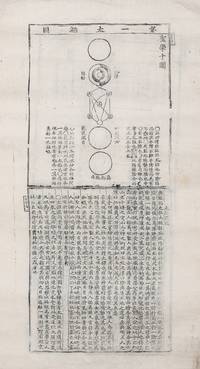
ref. 10716All sheets with woodblock diagrams. Ten woodblock-printed sheets each ca. 1045 x 580 mm. Korea: 18th or 19th century A very rare woodblock-printed broadside edition of the influential SÅnghak sipto by Yi Hwang 1501-71 “Korea’s greatest philosopher.”–Pratt & Rutt Korea. A Historical and Cultural Dictionary Curzon: 1999 p. 517. Yi a child prodigy was a scholar and government official. He served four kings in a number of high positions but his integrity and stand against corruption caused him to be relieved of his posts and sent into exile a number of times. “Yi Hwang better known by his penname T’oegye is generally reputed as Korea’s foremost Neo-Confucian thinker. From the very beginning of the Yi dynasty 1392-1910 the Neo-Confucian doctrine of the Ch’eng-Chu school was the officially sanctioned ideology but with T’oegye it arrived at its full maturity on the peninsula for he was the first to present it with a fully sophisticated and integral grasp of its scope unity and implications. Consequently his teaching became a constant reference point for subsequent generations of Korean Neo-Confucians and his understanding of Chu Hsi’s Zhu Xi’s vision exercised a profound and lasting influence… “One of his last and most important works was the Ten Diagrams on Sage Learning SÅnghak sipdo which he composed for the instruction of young King SÅnjo reigned 1567-1608 in 1568 two years before his death. Considered the summation of T’oegye’s lifetime of learning the Ten Diagrams became one of the classics of the Korean Neo-Confucian tradition: during the course of the Yi dynasty it was reprinted at least twenty-four times and it now circulates in three modern Korean translations… “‘Sage learning’ is a phrase that appears frequently in Neo-Confucian works meant for the instruction of rulers reflecting the view that the essential duty of a ruler is to learn from and emulate ancient sage kings. In terms of its origin the Ten Diagrams is certainly such a work. But T’oegye’s title is ambiguous for ‘sage learning’ also means ‘learning how to become a sage’ that is a fully perfected human being. This is a kind of learning that has to do with not only kings but every human being. Thus the provenance of this work is universal and through the centuries it has served as a basic handbook for generations of serious Neo-Confucians in their endeavor to understand and cultivate the full perfection of their humanity… “This kind of ‘sage learning’ in its full scope is a distinctively Neo-Confucian development. With the Neo-tradition revival of the tradition in the Sung dynasty Confucians finally developed a metaphysical psychological and ascetical framework that could fully describe the status of sagehood and delineate it. Sagehood became a practical goal rather than a theoretical ideal. T’oegye’s object in the Ten Diagrams is to present that framework and path… “Doing this of course amounts to presenting a structured summation of the essence of Ch’eng-Chu theoretical and practical learning. One could devote a large book to this topic; T’oegye compressed it into ten chapters each brief enough to be mounted on a single panel of a ten-paneled screen. Each chapter begins with a diagram and is followed by a text. T’oegye’s own remarks are only a short portion of each chapter. As far as possible he tried to make this a compilation of diagrams and words from other authoritative sources so that the work would clearly represent the cumulative wisdom of the Confucian tradition not just his own private opinion… “The compressed format is not a concession to hasty readers or beginners needing a simple introduction. Quite the opposite; whether as a short book or a screen placed in one’s quarters T’oegye intended this as a work to be lived with and absorbed slowly through repeated reading and leisurely reflection. In that way its compressed contents would unfold gradually and become a part of oneself through the lengthy and personal effort of apprehending its full meaning. The diagrammatic format he chose is ideal for such use for the categories correspondences and relationships suggested by spatial arrangement offer food for reflective thought far beyond the content of the words themselves. T’oegye could expect that the Ten Diagrams would be approached in this way because the Neo-Confucian approach to texts emphasized this kind of repeated reading prolonged reflection and personal assimilation. The theory was that reading should be a process of self-transformation not mere information gathering. T’oegye designed his Ten Diagrams precisely as a tool to be used in such a process.”–Michael C. Kalton “T’oegye’s ‘Ten Diagrams on Sage Learning’: A Korean View of the Essence of Chu Hsi’s Teaching” in The Journal of Korean Studies Vol. 7 1990 pp. 97-99–& see the rest of this wonderful article for the importance of this text which was influential in both Korea and Japan. The titles of the ten chapters are: The Diagram of the Supreme Ultimate The Western Inscription The Elementary Learning The Great Learning The Rules of the White Deer Grotto Academy The Mind Combines and Governs the Nature and Feelings Diagram of the Explanation of Humanity Diagram of the Learning of the Mind-and-Heart Diagram of the Admonition of Mindfulness Studio and Admonition on Rising Early and Retiring Late. As mentioned in Prof. Kalton’s essay these broadsides were intended to be made into a ten-panel standing screen. Fine condition and a remarkable survival. A few minor stains and a little dusty at extremities. We find no broadside edition in WorldCat. unknown books
ref. 10716All sheets with woodblock diagrams. Ten woodblock-printed sheets each ca. 1045 x 580 mm. Korea: 18th or 19th century A very rare woodblock-printed broadside edition of the influential SÅnghak sipto by Yi Hwang 1501-71 “Korea’s greatest philosopher.”–Pratt & Rutt Korea. A Historical and Cultural Dictionary Curzon: 1999 p. 517. Yi a child prodigy was a scholar and government official. He served four kings in a number of high positions but his integrity and stand against corruption caused him to be relieved of his posts and sent into exile a number of times. “Yi Hwang better known by his penname T’oegye is generally reputed as Korea’s foremost Neo-Confucian thinker. From the very beginning of the Yi dynasty 1392-1910 the Neo-Confucian doctrine of the Ch’eng-Chu school was the officially sanctioned ideology but with T’oegye it arrived at its full maturity on the peninsula for he was the first to present it with a fully sophisticated and integral grasp of its scope unity and implications. Consequently his teaching became a constant reference point for subsequent generations of Korean Neo-Confucians and his understanding of Chu Hsi’s Zhu Xi’s vision exercised a profound and lasting influence… “One of his last and most important works was the Ten Diagrams on Sage Learning SÅnghak sipdo which he composed for the instruction of young King SÅnjo reigned 1567-1608 in 1568 two years before his death. Considered the summation of T’oegye’s lifetime of learning the Ten Diagrams became one of the classics of the Korean Neo-Confucian tradition: during the course of the Yi dynasty it was reprinted at least twenty-four times and it now circulates in three modern Korean translations… “‘Sage learning’ is a phrase that appears frequently in Neo-Confucian works meant for the instruction of rulers reflecting the view that the essential duty of a ruler is to learn from and emulate ancient sage kings. In terms of its origin the Ten Diagrams is certainly such a work. But T’oegye’s title is ambiguous for ‘sage learning’ also means ‘learning how to become a sage’ that is a fully perfected human being. This is a kind of learning that has to do with not only kings but every human being. Thus the provenance of this work is universal and through the centuries it has served as a basic handbook for generations of serious Neo-Confucians in their endeavor to understand and cultivate the full perfection of their humanity… “This kind of ‘sage learning’ in its full scope is a distinctively Neo-Confucian development. With the Neo-tradition revival of the tradition in the Sung dynasty Confucians finally developed a metaphysical psychological and ascetical framework that could fully describe the status of sagehood and delineate it. Sagehood became a practical goal rather than a theoretical ideal. T’oegye’s object in the Ten Diagrams is to present that framework and path… “Doing this of course amounts to presenting a structured summation of the essence of Ch’eng-Chu theoretical and practical learning. One could devote a large book to this topic; T’oegye compressed it into ten chapters each brief enough to be mounted on a single panel of a ten-paneled screen. Each chapter begins with a diagram and is followed by a text. T’oegye’s own remarks are only a short portion of each chapter. As far as possible he tried to make this a compilation of diagrams and words from other authoritative sources so that the work would clearly represent the cumulative wisdom of the Confucian tradition not just his own private opinion… “The compressed format is not a concession to hasty readers or beginners needing a simple introduction. Quite the opposite; whether as a short book or a screen placed in one’s quarters T’oegye intended this as a work to be lived with and absorbed slowly through repeated reading and leisurely reflection. In that way its compressed contents would unfold gradually and become a part of oneself through the lengthy and personal effort of apprehending its full meaning. The diagrammatic format he chose is ideal for such use for the categories correspondences and relationships suggested by spatial arrangement offer food for reflective thought far beyond the content of the words themselves. T’oegye could expect that the Ten Diagrams would be approached in this way because the Neo-Confucian approach to texts emphasized this kind of repeated reading prolonged reflection and personal assimilation. The theory was that reading should be a process of self-transformation not mere information gathering. T’oegye designed his Ten Diagrams precisely as a tool to be used in such a process.”–Michael C. Kalton “T’oegye’s ‘Ten Diagrams on Sage Learning’: A Korean View of the Essence of Chu Hsi’s Teaching” in The Journal of Korean Studies Vol. 7 1990 pp. 97-99–& see the rest of this wonderful article for the importance of this text which was influential in both Korea and Japan. The titles of the ten chapters are: The Diagram of the Supreme Ultimate The Western Inscription The Elementary Learning The Great Learning The Rules of the White Deer Grotto Academy The Mind Combines and Governs the Nature and Feelings Diagram of the Explanation of Humanity Diagram of the Learning of the Mind-and-Heart Diagram of the Admonition of Mindfulness Studio and Admonition on Rising Early and Retiring Late. As mentioned in Prof. Kalton’s essay these broadsides were intended to be made into a ten-panel standing screen. Fine condition and a remarkable survival. A few minor stains and a little dusty at extremities. We find no broadside edition in WorldCat. unknown
2012ref. 145677San Jose, Bender Publishing, 2012.
2016ref. 2081502111906460commercial stamp office 2016. Soft Cover. Fine. The book is in fine condition. commercial stamp office paperback