Thwaites, Reuben GoldBiblio.com

15.799 resultados
2001ref. DADAX1582186677Parlux 2001-04-01. hardcover. New. 6.41x1.84x9.31. Buy with confidence. Excellent Customer Service & Return policy. Parlux hardcover
2001ref. DADAX1582186669Parlux 2001-05-01. hardcover. New. 6.40x1.03x9.22. Buy with confidence. Excellent Customer Service & Return policy. Parlux hardcover
2002ref. DADAX1582186626Parlux 2002-06-01. hardcover. New. 6.38x1.33x9.46. Buy with confidence. Excellent Customer Service & Return policy. Parlux hardcover
2002ref. DADAX1582186650Digital Scanning Inc 2002-06-01. hardcover. New. 6.34x1.36x9.34. Buy with confidence. Excellent Customer Service & Return policy. Digital Scanning Inc hardcover
2001ref. DADAX1582186634Digital Scanning Inc 2001-04-01. hardcover. New. 6.34x1.36x9.24. Buy with confidence. Excellent Customer Service & Return policy. Digital Scanning Inc hardcover
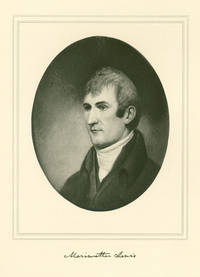
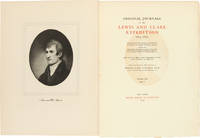
1905ref. 247478New York: Dodd Mead and Co 1905. First edition one of 200 large paper sets on Van Gelder paper. Seven volumes bound in fourteen parts plus atlas volume atlas with 56 maps & plates on 62 sheets. 15 vols. Large 8vo. Original gilt green cloth. Bookplate on front pastedowns. Spines lightly worn several lightly faded. Internally fine much of the text unopened. A very good set. First edition one of 200 large paper sets on Van Gelder paper. Seven volumes bound in fourteen parts plus atlas volume atlas with 56 maps & plates on 62 sheets. 15 vols. Large 8vo. "The most elaborate work on this expedition" - Howes. A cornerstone of modern historical research printing for the first time many major primary documents which did not appear in the Biddle edition including the Floyd and Whitehouse journals and material from the Clark-Voorihis papers along with facsimile manuscripts maps portraits and other illustrative matter. Also valuable is Victor Paltsits' bibliography of the Lewis and Clark expedition in the first volume. "This edition is notable for its thorough Introduction covering the history of the expedition and earlier exploration and a detailed account of the original journals and their various editions.In its maps and numerous illustrations the Thwaites edition is an outstanding source of visual materials relating to the expedition" - LITERATURE OF THE LEWIS AND CLARK EXPEDITION. Graff 2485; Howes L320 "b"; Wagner-Camp 13:7 note to 1842 Harpers ed.; Tweney Washington 76; Literature of the Lewis and Clark Expedition 5d.1 Dodd, Mead and Co unknown books
1904ref. 52627New York: Dodd Mead & Company 1904-1905. One of 200 Sets on Large Paper One of 200 large paper sets on Van Gelder paper with the atlas supplied from the reprint edition done by Argosy-Antiquarian Press. "The most elaborate work on this expedition" - Howes. A cornerstone of modern historical research printing for the first time many major primary documents which did not appear in the Biddle edition including the Floyd and Whitehouse journals and material from the Clark-Voorihis papers along with facsimile manuscripts maps portraits and other illustrative matter. Also valuable is Victor Paltsits' bibliography of the Lewis and Clark expedition in the first volume. "This edition is notable for its thorough Introduction covering the history of the expedition and earlier exploration and a detailed account of the original journals and their various editions.In its maps and numerous illustrations the Thwaites edition is an outstanding source of visual materials relating to the expedition" - LITERATURE OF THE LEWIS AND CLARK EXPEDITION. Quarto. Original gilt green cloth. Octavo atlas maps laid in a red cloth drop-front box. Cloth somewhat worn particularly at spine ends. Ex-library bookplates with withdrawal stamps on front pastedowns shelf labels on spines reference stamps across top edges. Some occasional offsetting from plates but generally clean internally. A good set. Text volumes untrimmed. HOWES L320 "c." LITERATURE OF THE LEWIS AND CLARK EXPEDITION 5d.1. WAGNER-CAMP 13:7 note. TWENEY WASHINGTON 76. REESE BEST OF THE WEST 233 note. hardcover books
ref. 5361Denver: Henrietta Bromwell. Original Painting. Oil on Canvas Framed. Painting Fine within a Very Good Ornate Frame. Original oil painting framed depicting a disused pioneer cabin amid a forest clearing blue sky and pink clouds overhead. Exposed painting measures 9.75 x 8 inches; frame measures 14 x 11 inches. Bromwell neglected to sign and date many of her paintings; this work is signed "H. E. Bromwell" and features the "July 25 192unintelligible". On the back of the period frame is the remnant of a store label for Chain & Hardy Book Stationery and Art Co. Denver with only the address 1609-1615 Arapahoe St. and "Art Department" remaining. The painting is in Fine condition with three small chips to the gilded Victorian frame please see photos. Born in Illinois in 1870 Henrietta Elizabeth Bromwell 1859-1946 moved to the Colorado Territory when her father Henry Pelham Holmes Bromwell joined the territorial legislature. She studied art at the University of Denver and with Anne Evans daughter of John Evans Colorado's second territorial governor founded the Denver Artists Club also known as the Artists' Club of Denver. By 1923 that organization evolved into the Denver Art Museum. The subject of the painting is typical of Bromwell's oeuvre utilizing mountain streams rustic settings and pioneer life as her subjects. In an 1899 article Bromwell credited Monet as influencing her landscape painting as the lighter color palette and loose brushstrokes attest. Critics have suggested the influence of Henry Durrie and Jasper Francis Cropsey. Interest in Bromwell fluctuates with articles appearing periodically. In 1997 an issue of Colorado Heritage featured just that with the cover boasting a Bromwell painting akin to this offering. . Henrietta Bromwell unknown
ref. 5361Denver: Henrietta Bromwell. Original Painting. Oil on Canvas Framed. Painting Fine within a Very Good Ornate Frame. Original oil painting framed depicting a disused pioneer cabin amid a forest clearing blue sky and pink clouds overhead. Exposed painting measures 9.75 x 8 inches; frame measures 14 x 11 inches. Bromwell neglected to sign and date many of her paintings; this work is signed "H. E. Bromwell" and features the "July 25 192unintelligible". On the back of the period frame is the remnant of a store label for Chain & Hardy Book Stationery and Art Co. Denver with only the address 1609-1615 Arapahoe St. and "Art Department" remaining. The painting is in Fine condition with three small chips to the gilded Victorian frame please see photos. Born in Illinois in 1870 Henrietta Elizabeth Bromwell 1859-1946 moved to the Colorado Territory when her father Henry Pelham Holmes Bromwell joined the territorial legislature. She studied art at the University of Denver and with Anne Evans daughter of John Evans Colorado's second territorial governor founded the Denver Artists Club also known as the Artists' Club of Denver. By 1923 that organization evolved into the Denver Art Museum. The subject of the painting is typical of Bromwell's oeuvre utilizing mountain streams rustic settings and pioneer life as her subjects. In an 1899 article Bromwell credited Monet as influencing her landscape painting as the lighter color palette and loose brushstrokes attest. Critics have suggested the influence of Henry Durrie and Jasper Francis Cropsey. Interest in Bromwell fluctuates with articles appearing periodically. In 1997 an issue of Colorado Heritage featured just that with the cover boasting a Bromwell painting akin to this offering. . Henrietta Bromwell unknown books
ref. a92073Original photograph appears to be a tintype of a man we assume to be Henry D. Dalton as there is a tightly folded-up piece of very old paper underneath the image which reads: "1861 Nov 27. Albany Barracks. Rec'd of G Achley $100 in cash I promise to pay as soon as i receive my pay from w. Barber signed Henry D Dalton" below this in a different hand is written "Received G H Achley." all mss is in pencil The tintype shows a seated man with lightly rouged cheeks wearing some type of uniform hat. Man appears to be about 25 years old. Image surrounded by original fancy copper oval frame. Housed in bottom half of its original old wooden clamshell box. Tintype is Fine; frame is Fine; wooden box holding tintype is lacking top half with metal clasp present. . unknown
ref. 14466No Binding. Very Good. Approximately 7" x 5" no date but early portrait shows Gish as a young actress probably in the 1920s. Dorothy Elizabeth Gish 1898-1968 American actress younger sister of Lillian Gish. Featured in numerous silent films and theatre productions often showcasing her comedic talents. Creasing to lower corner some tape residue in top corner not affecting image. Very good. unknown
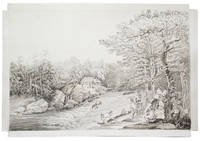
1800ref. 52601Canada 1800. Graphite pen-and-ink and grey wash on wove paper watermarked "W. Elgar 1796". 13 5/8 x 20 inches. Corners clipped outside the image verso toned. Graphite pen-and-ink and grey wash on wove paper watermarked "W. Elgar 1796". 13 5/8 x 20 inches. Along the falls of a tree-lined river two First Nations men are pulling a canoe into the water directed by another in an elaborate feather headdress; a wigwam with mother and child is on the same shore to their left; across the river a longhouse and structure for smoking fish with another group of native people can be seen; at the far left a First Nations man is standing in his canoe fishing with a pole in the water just below the rapids. Although the 1796 watermark on the paper is consistent with drawings by Heriot the unfinished quality of this work make attribution difficult. However it is somewhat reminiscent of a smaller grisaille watercolor signed by Heriot titled FALLS OF THE POQUISQUE ON THE RIVER ST JOHN on verso sold at Waddington's March 15 2018 lot 137. Furthermore this scene is reminiscent of one described by Heriot in his Travels in the Canadas 1807 in which he describes Native American fishing on the cacasdes of St. Mary nine miles below the entrance to Lake Superior: "It is at the bottom of the rapids and even among their billows which foam with ceaseless impetuosity that innumerable quantities of excellent fish may be taken from the spring until the winter; the species which is found in the greatest abundance is denominated by the savages atticameg or white fish; the Michilimakinac trout and pickerell are likewise caught here. These aflford a principal means of subsistence to a number of native tribes. No small degree of address as well as strength is employed by the savages in catching these fish; they stand in an erect attitude in a birch canoe and even amid the billows they push with force to the bottom of the waters a long pole at the end of which is fixed a hoop with a net in the form of a bag into which the fish is constrained to enter. They watch it with the eye when it glides among the rocks quickly ensnare it and drag it into the canoe. In conducting this mode of fishing much practice is required as an inexperienced person may by the efforts which he is obliged to make overset the canoe and inevitably perish." Trained by Paul Sandby at the Royal Military Academy Woolwich London Heriot worked as a clerk for Board of Ordnance. "In 1792 Heriot was posted to Quebec and promoted clerk of the cheque in the Ordnance department. Heriot was to remain in Lower Canada until 1816 except apparently for two periods of absence in 1796-97 and in 1806. His first years at Quebec are not well documented. Sketches record visits in and about Quebec and Montreal perhaps on Ordnance business. In November 1792 he published a sketch of Jersey in the Quebec Magazine and the following year he prepared a view of Quebec perhaps also intended for publication. When he returned to Britain in 1796 he resided in London travelled to the south coast and made at least one sketching foray into Wales . A watercolour prepared from his sketches of Wales and two Canadian views were accepted by the Royal Academy of Arts for exhibition in the spring. Heriot probably sailed for Lower Canada soon afterwards taking notes and making sketches on the voyage. The impact of his visit to Britain was considerable. While there he had been stimulated by the art he had seen and by his success as an artist. He returned with a fresh enthusiasm for the Canadas; he began to read about their past and to make elaborate notes and numerous sketches of the places he visited and the peoples he encountered. His sojourn abroad had affected his artistic vision of the Canadas; his drawings and water-colours assumed a new confidence and his landscape forms developed a new strength and grandeur. In London he had probably studied the simply handled and remarkably strong water-colours of younger British artists such as Thomas Girtin Joseph Mallord William Turner and John Varley. Either in Britain or in Lower Canada he had also become familiar with Lieutenant George Bulteel Fisher's Six views of North America . London 1796. He was influenced by this work especially by Fisher's use of the Picturesque in depicting Canadian landscape" Dictionary of Canadian Biography. unknown
ref. 384317Unbound. Fine. Small watercolor illustration. Image approximately 4.5" x 4" on a 5" x 7.5" leaf. About fine. A lovely little painting of a well-dressed Chinese woman confronting soldiers Signed "Marjory Lane" and dated in 1921. Lane was a Chicago painter. unknown
1800ref. 52601Canada 1800. Graphite pen-and-ink and grey wash on wove paper watermarked "W. Elgar 1796". 13 5/8 x 20 inches. Corners clipped outside the image verso toned. Graphite pen-and-ink and grey wash on wove paper watermarked "W. Elgar 1796". 13 5/8 x 20 inches. Along the falls of a tree-lined river two First Nations men are pulling a canoe into the water directed by another in an elaborate feather headdress; a wigwam with mother and child is on the same shore to their left; across the river a longhouse and structure for smoking fish with another group of native people can be seen; at the far left a First Nations man is standing in his canoe fishing with a pole in the water just below the rapids. Although the 1796 watermark on the paper is consistent with drawings by Heriot the unfinished quality of this work make attribution difficult. However it is somewhat reminiscent of a smaller grisaille watercolor signed by Heriot titled FALLS OF THE POQUISQUE ON THE RIVER ST JOHN on verso sold at Waddington's March 15 2018 lot 137. Furthermore this scene is reminiscent of one described by Heriot in his Travels in the Canadas 1807 in which he describes Native American fishing on the cacasdes of St. Mary nine miles below the entrance to Lake Superior: "It is at the bottom of the rapids and even among their billows which foam with ceaseless impetuosity that innumerable quantities of excellent fish may be taken from the spring until the winter; the species which is found in the greatest abundance is denominated by the savages atticameg or white fish; the Michilimakinac trout and pickerell are likewise caught here. These aflford a principal means of subsistence to a number of native tribes. No small degree of address as well as strength is employed by the savages in catching these fish; they stand in an erect attitude in a birch canoe and even amid the billows they push with force to the bottom of the waters a long pole at the end of which is fixed a hoop with a net in the form of a bag into which the fish is constrained to enter. They watch it with the eye when it glides among the rocks quickly ensnare it and drag it into the canoe. In conducting this mode of fishing much practice is required as an inexperienced person may by the efforts which he is obliged to make overset the canoe and inevitably perish." Trained by Paul Sandby at the Royal Military Academy Woolwich London Heriot worked as a clerk for Board of Ordnance. "In 1792 Heriot was posted to Quebec and promoted clerk of the cheque in the Ordnance department. Heriot was to remain in Lower Canada until 1816 except apparently for two periods of absence in 1796-97 and in 1806. His first years at Quebec are not well documented. Sketches record visits in and about Quebec and Montreal perhaps on Ordnance business. In November 1792 he published a sketch of Jersey in the Quebec Magazine and the following year he prepared a view of Quebec perhaps also intended for publication. When he returned to Britain in 1796 he resided in London travelled to the south coast and made at least one sketching foray into Wales . A watercolour prepared from his sketches of Wales and two Canadian views were accepted by the Royal Academy of Arts for exhibition in the spring. Heriot probably sailed for Lower Canada soon afterwards taking notes and making sketches on the voyage. The impact of his visit to Britain was considerable. While there he had been stimulated by the art he had seen and by his success as an artist. He returned with a fresh enthusiasm for the Canadas; he began to read about their past and to make elaborate notes and numerous sketches of the places he visited and the peoples he encountered. His sojourn abroad had affected his artistic vision of the Canadas; his drawings and water-colours assumed a new confidence and his landscape forms developed a new strength and grandeur. In London he had probably studied the simply handled and remarkably strong water-colours of younger British artists such as Thomas Girtin Joseph Mallord William Turner and John Varley. Either in Britain or in Lower Canada he had also become familiar with Lieutenant George Bulteel Fisher's Six views of North America . London 1796. He was influenced by this work especially by Fisher's use of the Picturesque in depicting Canadian landscape" Dictionary of Canadian Biography. unknown books
ref. 384317Unbound. Fine. Small watercolor illustration. Image approximately 4.5" x 4" on a 5" x 7.5" leaf. About fine. A lovely little painting of a well-dressed Chinese woman confronting soldiers Signed "Marjory Lane" and dated in 1921. Lane was a Chicago painter. unknown books
ref. 0282318720.Gpaperback. Good. Access codes and supplements are not guaranteed with used items. May be an ex-library book. paperback
1978French Text. Fribourg, 1978; 4 vols., bound, pp. 108, b/w and col. ill., b/w and col. plates. francaise 2-85109-04 bound
2019brossura Con questo libro potrete imparare l'arte del Cercatore d'oro moderno. Vi illustrerò le tecniche per utilizzare i vari strumenti ma soprattutto le località migliori dove svolgere le vostre ricerche. È l'inizio del vostro percorso pratico in questa fantastico hobby. Inoltre, il libro contiene innumerevoli esempi di come trovare il vostro metallo prezioso.
2018br. Da sempre simbolo di ricchezza, bellezza, divinità, potere. Ma anche di risparmio e di scambio. Chi lo possiede lo conserva al sicuro in scrigni, casseforti, forzieri e caveaux. Perché? L'oro è un mistero che resiste da seimila anni. Oggi, nell'era del denaro di carta e del denaro virtuale, l'oro dovrebbe apparirci anacronistico. Eppure non è dimenticato affatto da chi cerca un porto sicuro per i propri risparmi. A cominciare dagli Stati e dalle banche centrali, l'oro resta il bene-rifugio per eccellenza, perno delle economie e dei sistemi monetari.
2018brossura Questa opera è un compendio delle video lezioni trattate dalla Scuola Cercatori Oro di Matteo Oberto che troverete su Youtube. Riporta argomenti ricchi di interesse per i prospettori amatoriali e copre tutte le fasi dalla identificazione delle località con presenza delle pagliuzze d'oro alla loro raccolta.
2001Italia, Villa Galvani, 1 dicembre 2001 - 3 febbraio 2002. Roma, 2001; cartonato, pp. 72, ill. e tavv. col., cm 21,5x24,5. italiano cartonato
1992Arezzo, Museo Statale d'Arte medievale e Moderna, 5 settembre - 18 ottobre 1992. Arezzo, 1992; br., pp. 163, tavv. col., cm 26,5x28. italiano
1989Arezzo, Sottochiesa di S. Francesco, 9 settembre - 22 ottobre 1989. A cura di Lara Vinca Masini. Testi di Lara Vinca Masini e Giuliano Centrodi. Arezzo, 1989; br., pp. 136, ill. col., tavv. b/n e col., cm 22x24. italiano
1988Arezzo, Museo Archeologico, 3 settembre - 2 ottobre 1988. A cura di Lara Vinca Masini. Testi di Lara Vinca Masini e Giuliano Centrodi. Arezzo, 1988; br., pp. 136, ill. col., tavv. b/n e col., cm 22x24. italiano
2011In-4 (cm. 27.90), brossura illustrata, con alette, pp. 263, (1), con illustrazioni soprattutto a colori nel testo. In ottimo stato (nice copy). Poche corti possono eguagliare in sfarzo e ricchezza quella dei Visconti e degli Sforza tra XIV e XV secolo. Le spiccate esigenze di lusso e fasto della signoria milanese, infatti - analoghe a quelle delle principali casate d'Europa come Francia, Borgogna, Inghilterra, Baviera -, resero necessaria la produzione di oggetti preziosi, sia destinati alla vita di corte sia a quella del culto. Con virtuosismi tecnici ineguagliabili e grande maestria gli orefici milanesi realizzarono oggetti dalla straordinaria bellezza, che spiccano ancora in particolare per l'uso sapiente delle tecniche smaltarie. Una tradizione artigiana che ha radici antichissime, e che ha portato alla creazione di ornamenti personali, vasellame da tavola, altaroli per la devozione privata, reliquiari, calici e tabernacoli, ma anche carte da gioco, come i celeberrimi "tarocchi viscontei": oggetti che divennero veri e propri status symbol, segno tangibile di sfarzo e potere. Il volume ripercorre questa straordinaria stagione, presentando sessanta pezzi di altissima qualità prodotti dalle botteghe artigiane di Milano, dalla seconda metà del Trecento quando emerge, tra le personalità al servizio dei Visconti quella del miniatore Giovannino De Grassi - fino alla fine del Quattrocento, quando lavora Caradosso Foppa, orefice di fiducia di Ludovico il Moro, ampiamente elogiato tra gli altri da Benvenuto Cellini. Testi di: Michela Barbot, Paolo Bensi, Paolo Biscottini, Anna Melograni, Lucia Miazzo..