179 résultats
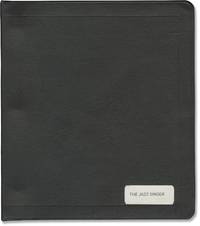
1980réf. 167224Los Angeles: Samuel Goldwyn Studio 1980. Revised Draft script for the 1980 film. Laid in with the script is a four-page revised shooting schedule dated March 24 1980. Based on Samson Raphaelson's 1925 play which also served as basis for a 1927 film starring Al Jolson and a 1952 film starring Danny Thomas. The acting debut of Neil Diamond whose soundtrack for the film was much better received than the film itself selling over five million copies and reaching number three on the pop albums chart in the US. Shot on location in Brooklyn and Manhattan and in Los Angeles. Script housed in a black three-ring binder with title on a printed label affixed to the front board. Title page present dated March 12 1980 noted as REVISED DRAFT with credit for screenwriter Herbert Baker. 86 leaves with last page of text numbered 85. Xerographic duplication rectos only. Pages Near Fine binder Near Fine. Samuel Goldwyn Studio unknown books
1996réf. 171723N.p.: Joseph Singer Entertainment 1996. Draft script for the 1996 film. Copy belonging to an unidentified crew member with their annotations in manuscript ink regarding filming locations and lighting on virtually every page. Laid in with the script are several production documents including three summaries of storylines in the film and a 1995 Typed Letter Signed from producer Sarah Kaplan as well as ten manuscript leaves describing different story lines in the film. A US Army officer is assigned to investigate an Army Captain who is being posthumously considered for the Medal of Honor-potentially becoming the first woman to receive the decoration. During his investigation the officer begins to uncover conflicting stories about the captain's death causing him to struggle with a troubling combat incident from his own past. White untitled wrappers. Title page present undated with credit for screenwriter Patrick Sheane Duncan. 139 leaves with last page of text numbered 137. Xerographic duplication rectos only with one white revision page dated 1-20-95. Pages Very Good plus wrapper Good with dampstaining to the extremities bound internally with two gold brads. Joseph Singer Entertainment unknown books
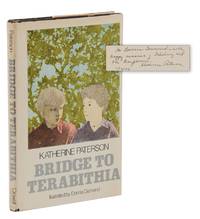
réf. 140948861New York: Thomas Y. Crowell Company 1977. First Edition. Near Fine/Near Fine. First edition first printing. Signed by Katherine Paterson and inscribed in the year of publication "For Barbara Townsend - with happy memories of Salisbury and the Mayflower." Bound in publisher's black cloth lettered in silver on spine. Near Fine with slight lean to spine and light rubbing to cloth. In a Near Fine unclipped dust jacket with light toning and edgewear and no Newbery Medal on the front panel. The surprisingly scarce first printing of Paterson's Newbery-winning coming of age story which has broken generations of children's hearts since it was published in 1977. Thomas Y. Crowell Company unknown books
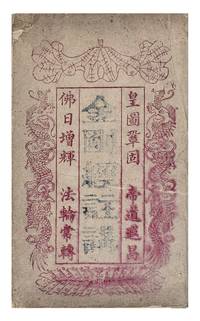
réf. 11377Woodblock-printed. Two half-page woodcut illus. of the Buddha & Skanda/Weituo. 3 80 folding leaves. 8vo old paper wrappers old stitching. Taiwan fucheng å°ç£åºœåŸŽ: Dehua tang 德化堂 1856. An unusual edition of the Diamond Sutra reprinted in 1856 from the now lost 1688 first edition. Taiwanese woodblock-printed books that predate the administrative expansion of the 1870s and the Japanese invasion in 1895 are very rare: we find only a handful of such titles in WorldCat. This title in particular has only one copy listed held at the National Central Library in Taiwan OCLC accession no. 1478321371. According to the colophon in our copy when the great Qing admiral Shi Lang æ–½ç… 1621-96 was summoned back to the northern capital after his successful conquest of Taiwan in 1688 he commissioned the printing of this sutra in hope that the merit thus generated would guarantee a safe voyage. The engraving and impression were entrusted to his friend Zou Songfeng é„’æ¾å³° and based on Shi Lang's manuscript copy of a Jiangxi Dabei temple edition of the sutra which he borrowed from the monk Shunqiu 顺求. The colophon states that the woodblocks are kept at the Dehua tang 德化堂 in the prefectural capital which is the oldest community temple of the syncretic Longhua é¾è¯ sect on the island. The 42 woodblocks from which our copy was printed are still kept there today in the city of Tainan. The only woodblocks that are lost are those used to print the bicolor title page which in our edition has the title in blue and the decorative surroundings in red. The additional colophon on f. 73v gives the date Xiangfeng bingchen 1856 which Yang Yung-chih 楊永智 in his survey of early modern Taiwanese publishing hypothesizes to be when these woodblocks were carved based on the 1688 first edition. Yang's study shows that the Dehua tang published a dozen or so Buddhist and folk religion texts between 1835 and 1898 including this title. This edition of the Diamond Sutra likely intended for ritual incantation rather than private reading on account of its opening prayers and mantras is rather eclectic. The 80 folding leaves are printed with woodblocks lacking the customary frames around the edges and the commentary is printed with smaller characters that are a third rather than the usual half of the width of the main text. Also striking are the pronunciation guides printed next to obscure characters and characters with "Buddhist readings" ensuring their correct incantation by a semi-literate reader. For example the characters nanwu å—ç„¡ which reflecting the Sanskrit namo/namas/namaḥ must be pronounced counterintuitively as namo in the Chinese Buddhist context are helpfully glossed with the characters namo ç´è¬¨. It appears also that the extensive commentary - not only of the Diamond Sutra but also of the Heart Sutra that follows - were original compositions that do not coincide with any canonical commentary within the TaishÅ Tripiṭaka. The comprehensive and somewhat colloquial style of the commentary leads us to suspect that it likewise anticipated a semi-literate audience. It is clear that much remains to be researched regarding the peculiar format content and edition history of Explaining the Diamond Sutra especially given the important place it occupies in the early history of printing in Taiwan. Very good condition with some minor staining mostly marginal and foxing. Preserved in a hantao. ⧠楊永智 明清時期臺å—å‡ºç‰ˆå² å°ç£å¸ç”Ÿæ›¸å±€ 2007 pp. 328-31. unknown books