Diamond, DavidBiblio.com

4271 risultati
rif. 1587991519.Gpaperback. Good. Access codes and supplements are not guaranteed with used items. May be an ex-library book. paperback
rif. BN355853dtv Verlagsgesellschaft. Softcover. Just for Fun Wie ein Freak die Computerwelt revolutionierte. Die Biographie des Linux-Erfinders Just for Fun Wie ein Freak die Computerwelt revolutionierte. Die Biographie des Linux-Erfinders Linus Torvalds David Diamond dtv Verlagsgesellschaft paperback
rif. 1587990806.Gpaperback. Good. Access codes and supplements are not guaranteed with used items. May be an ex-library book. paperback
2001rif. 81843London: TEXERE 2001. First Printing Stated. Hardcover. Very good/Very good. xxii 262 4 pages. Index. Inscribed to Betty by Linus Torvalds on 24.8.2001 on the half title page. Includes note as to how the autograph was obtained in Helsinki. Includes Introduction Acknowledgments Preface and Index. Topics include Birth of a Nerd; Birth of an Operating System; King of the Ball; and Index. Linus Torvalds never intentionally sought fame and fortune yet fame and fortune found him when he radically changed the world of technology for one selfish reason--He did it just for fun. Part autobiography and part business philosophy Just for Fun brims with biographical detail about the radical spirit and creativity of Linus Torvalds. It offers a unique glimpse into the mind of an accidental revolutionary and how the altruistic creation of LINUX flourished so successfully in the open source movement. Linus Benedict Torvalds born 28 December 1969 is a Finnish-American software engineer who is the creator and historically the principal developer of the Linux kernel used by Linux distributions and other operating systems such as Android and Chrome OS. He also created the distributed revision control system Git and the scuba dive logging and planning software Subsurface. He was honored along with Shinya Yamanaka with the 2012 Millennium Technology Prize by the Technology Academy Finland "in recognition of his creation of a new open source operating system for computers leading to the widely used Linux kernel." He is also the recipient of the 2014 IEEE Computer Society Computer Pioneer Award. David Diamond is an American journalist known for his work at New York Times. "I was a nerd. Geek. From fairly early on. I didn't duct-tape my glasses together but I might as well have because I had all the other traits. Good at math good at physics and with no social graces whatsoever. And this was before being a nerd was considered to be a good thing." In this witty and engrossing narrative Linus Torvalds the brilliant mastermind behind the latest Internet revolution in collaboration with writer David Diamond chronicles his transformation from a pale skinny Helsinki college kid to an international folk hero. What began as a childhood hobby soon became the astonishing phenomenon known as the LINUX operating system. LINUX was created because Linus was curious to see if he could improve upon the operating systems already out there such as UNIX. How could he create a system that could run all of his favorite software with fewer crashes and faster productivity Linus posted his early versions of LINUX on the Internet and called upon the most brilliant minds in computer science to enhance his system. What happened next took the world by storm. Linus wasn't the first to use the power of the open source movement but the excitement he generated when he offered his system to the world was unprecedented. What made LINUX revolutionary was its journey to become the marvel it is today -- and how the system grew from the meeting of thousands of minds around the world. Suddenly Linus's creation was available for everyone to use for free! Anyone could improve LINUX at whim. No monopolies no trade secrets no whispering behind closed doors. LINUX wasn't controlled by a select few -- this remarkable creation was accessible to absolutely anyone -- and still is. The LINUX system is still constantly evolving and improving every day a decade after its inception. Linus describes the history of LINUX in graspable terms and details how the system itself works without lapsing into mindboggling technical jargon. For general readers Torvalds spins a witty tale of his fascinating life. Here is the story of a young man who as a still-rising star keeps his feet on the ground through a combination of self-deprecating humor and the realization that life is simply about having a good time. Linus's narrative teems with clever anecdotes and his captivating opinions on the future of competition in the computer world. Linus even reveals his own take on the meaning of life. For techies this is a candid glimpse at the life of this honored yet unintentional hero. Linus offers a compelling look at how he sees the road ahead for LINUX and the computer industry. He also divulges how LINUX began as a small spark and spread like wildfire across the world. TEXERE hardcover
2002rif. Q-0066620732Harper Business 2002-06-04. Paperback. New. New. In shrink wrap. Looks like an interesting title! Harper Business paperback
1990rif. 6165-121721Presentation Plate FTP else content appears as new unread and unblemished with fine wraps displaying no significant surface/edge wear as shown. Synopsis: With Hanukkah about to begin Malka is worried because her family is so poor but when a poor stranger comes to the door her generous family cannot turn him away. Young Readers Judaism Insurance & handling is included free. Extra Charges/Fees apply on Shipments Outside The U.S. and Expedited Shipments. Oversize and/or heavy books may require additional fees. Will advise. Updated 1.15.26 Written 12.17.2021SK #6165-121721 Img.7573 Puffin Books, Penguin Group paperback
1990rif. Q-0140507876Puffin 1990-10-01. Paperback. New. In shrink wrap. Looks like an interesting title! Puffin paperback
1988rif. Q-0670818526Viking Kestrel 1988-10-01. Hardcover. New. New. In shrink wrap. Looks like an interesting title! Viking Kestrel hardcover
2021rif. x-1108483941Cambridge University Press 2021. Hardcover. New. 350 pages. 9.02x5.98x0.88 inches. Cambridge University Press hardcover
2026rif. x-1108705332Cambridge University Press 2026. Paperback. New. 380 pages. 6.00x0.78x9.00 inches. Cambridge University Press paperback
1987rif. R200004104MESSIDOR. 1987. In-8. Broché. Bon état, Couv. convenable, Dos satisfaisant, Intérieur frais. 263 pages.. . . . Classification Dewey : 296-Judaïsme
2003rif. JG230517025Z86Center for the Study of World Religions 2003-02-28. hardcover. Very Good. 9x1x7. Hardbac--excellent condition--no dust cover Center for the Study of World Religions hardcover
2003rif. Q-0945454368Center for the Study of World Religions 2003-02-28. Paperback. New. New. In shrink wrap. Looks like an interesting title! Center for the Study of World Religions paperback
1999rif. Q-0152004459Gulliver Books 1999-03-15. Hardcover. New. New. In shrink wrap. Looks like an interesting title! Gulliver Books hardcover
1975rif. 2090502113701885Not Available 1975. Soft Cover. Fine. The book is in fine condition. Not Available paperback
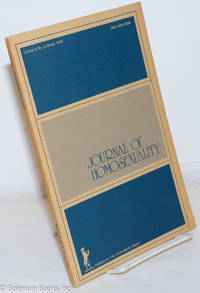
1978rif. 271949New York: Haworth Press 1978. Paperback. pp123-212 articles reviews reports services and resources ads very good trade paperback journals in tan wraps. Journal of Homosexuality. Kennedy on The Case for James Mills Pierce. Alcohol Abuse Among Lesbians. Androgyny. "The Journal of Homosexuality will be a quarterly journal devoted to research in the social and biological sciences. It is meant for the psychotherapeutic practitioner and other professionals who deal with the problems of people living alternative sexual life-styles in our society. Haworth Press paperback books
1999rif. 132913Baltimore: Johns Hopkins 1999. 187p. notes very good in original wraps. Johns Hopkins unknown books
2025rif. SKU1745557Yale University Press 2025-05-06. hardcover. New. 6x1x9. New Book Ships with Tracking Yale University Press hardcover
1973rif. 007057Stonebridge Music 1973. Book. Very Good. Soft cover. nice copy with just minor wear. Front cover has the remnants of a music store stamp. Pages of text are clean bright and free of markings. Binding is tight and secure. Shipped within 24 hours from the beautiful Baltimore inner harbor area. First class service; accurate descriptions. Most items packed in boxes not envelopes. . Stonebridge Music Paperback
1977rif. 010545Repulblique du Zaire 1977 Division des relations publiques de la gécamines Hardcover As New 1st Edition Signed by Author(s)
rif. 2090502113715725Not Available N.A. Soft Cover. Fine. The book is in fine condition. Not Available paperback
rif. 11377Woodblock-printed. Two half-page woodcut illus. of the Buddha & Skanda/Weituo. 3 80 folding leaves. 8vo old paper wrappers old stitching. Taiwan fucheng å°ç£åºœåŸŽ: Dehua tang 德化堂 1856. An unusual edition of the Diamond Sutra reprinted in 1856 from the now lost 1688 first edition. Taiwanese woodblock-printed books that predate the administrative expansion of the 1870s and the Japanese invasion in 1895 are very rare: we find only a handful of such titles in WorldCat. This title in particular has only one copy listed held at the National Central Library in Taiwan OCLC accession no. 1478321371. According to the colophon in our copy when the great Qing admiral Shi Lang æ–½ç… 1621-96 was summoned back to the northern capital after his successful conquest of Taiwan in 1688 he commissioned the printing of this sutra in hope that the merit thus generated would guarantee a safe voyage. The engraving and impression were entrusted to his friend Zou Songfeng é„’æ¾å³° and based on Shi Lang's manuscript copy of a Jiangxi Dabei temple edition of the sutra which he borrowed from the monk Shunqiu 顺求. The colophon states that the woodblocks are kept at the Dehua tang 德化堂 in the prefectural capital which is the oldest community temple of the syncretic Longhua é¾è¯ sect on the island. The 42 woodblocks from which our copy was printed are still kept there today in the city of Tainan. The only woodblocks that are lost are those used to print the bicolor title page which in our edition has the title in blue and the decorative surroundings in red. The additional colophon on f. 73v gives the date Xiangfeng bingchen 1856 which Yang Yung-chih 楊永智 in his survey of early modern Taiwanese publishing hypothesizes to be when these woodblocks were carved based on the 1688 first edition. Yang's study shows that the Dehua tang published a dozen or so Buddhist and folk religion texts between 1835 and 1898 including this title. This edition of the Diamond Sutra likely intended for ritual incantation rather than private reading on account of its opening prayers and mantras is rather eclectic. The 80 folding leaves are printed with woodblocks lacking the customary frames around the edges and the commentary is printed with smaller characters that are a third rather than the usual half of the width of the main text. Also striking are the pronunciation guides printed next to obscure characters and characters with "Buddhist readings" ensuring their correct incantation by a semi-literate reader. For example the characters nanwu å—ç„¡ which reflecting the Sanskrit namo/namas/namaḥ must be pronounced counterintuitively as namo in the Chinese Buddhist context are helpfully glossed with the characters namo ç´è¬¨. It appears also that the extensive commentary - not only of the Diamond Sutra but also of the Heart Sutra that follows - were original compositions that do not coincide with any canonical commentary within the TaishÅ Tripiṭaka. The comprehensive and somewhat colloquial style of the commentary leads us to suspect that it likewise anticipated a semi-literate audience. It is clear that much remains to be researched regarding the peculiar format content and edition history of Explaining the Diamond Sutra especially given the important place it occupies in the early history of printing in Taiwan. Very good condition with some minor staining mostly marginal and foxing. Preserved in a hantao. ⧠楊永智 明清時期臺å—å‡ºç‰ˆå² å°ç£å¸ç”Ÿæ›¸å±€ 2007 pp. 328-31. unknown books
rif. 11377Woodblock-printed. Two half-page woodcut illus. of the Buddha & Skanda/Weituo. 3 80 folding leaves. 8vo old paper wrappers old stitching. Taiwan fucheng å°ç£åºœåŸŽ: Dehua tang 德化堂 1856. An unusual edition of the Diamond Sutra reprinted in 1856 from the now lost 1688 first edition. Taiwanese woodblock-printed books that predate the administrative expansion of the 1870s and the Japanese invasion in 1895 are very rare: we find only a handful of such titles in WorldCat. This title in particular has only one copy listed held at the National Central Library in Taiwan OCLC accession no. 1478321371. According to the colophon in our copy when the great Qing admiral Shi Lang æ–½ç… 1621-96 was summoned back to the northern capital after his successful conquest of Taiwan in 1688 he commissioned the printing of this sutra in hope that the merit thus generated would guarantee a safe voyage. The engraving and impression were entrusted to his friend Zou Songfeng é„’æ¾å³° and based on Shi Lang's manuscript copy of a Jiangxi Dabei temple edition of the sutra which he borrowed from the monk Shunqiu 顺求. The colophon states that the woodblocks are kept at the Dehua tang 德化堂 in the prefectural capital which is the oldest community temple of the syncretic Longhua é¾è¯ sect on the island. The 42 woodblocks from which our copy was printed are still kept there today in the city of Tainan. The only woodblocks that are lost are those used to print the bicolor title page which in our edition has the title in blue and the decorative surroundings in red. The additional colophon on f. 73v gives the date Xiangfeng bingchen 1856 which Yang Yung-chih 楊永智 in his survey of early modern Taiwanese publishing hypothesizes to be when these woodblocks were carved based on the 1688 first edition. Yang's study shows that the Dehua tang published a dozen or so Buddhist and folk religion texts between 1835 and 1898 including this title. This edition of the Diamond Sutra likely intended for ritual incantation rather than private reading on account of its opening prayers and mantras is rather eclectic. The 80 folding leaves are printed with woodblocks lacking the customary frames around the edges and the commentary is printed with smaller characters that are a third rather than the usual half of the width of the main text. Also striking are the pronunciation guides printed next to obscure characters and characters with "Buddhist readings" ensuring their correct incantation by a semi-literate reader. For example the characters nanwu å—ç„¡ which reflecting the Sanskrit namo/namas/namaḥ must be pronounced counterintuitively as namo in the Chinese Buddhist context are helpfully glossed with the characters namo ç´è¬¨. It appears also that the extensive commentary - not only of the Diamond Sutra but also of the Heart Sutra that follows - were original compositions that do not coincide with any canonical commentary within the TaishÅ Tripiṭaka. The comprehensive and somewhat colloquial style of the commentary leads us to suspect that it likewise anticipated a semi-literate audience. It is clear that much remains to be researched regarding the peculiar format content and edition history of Explaining the Diamond Sutra especially given the important place it occupies in the early history of printing in Taiwan. Very good condition with some minor staining mostly marginal and foxing. Preserved in a hantao. ⧠楊永智 明清時期臺å—å‡ºç‰ˆå² å°ç£å¸ç”Ÿæ›¸å±€ 2007 pp. 328-31. unknown
1980rif. Q-0671227637Simon & Schuster 1980-01-21. Hardcover. New. New. In shrink wrap. Looks like an interesting title! Simon & Schuster hardcover
rif. ria9780198805694_inpHardcover. New. New Book; Fast Shipping from UK; Not signed; Not First Edition; This study investigates the practice of Jewish theology by examining themes of love death freedom names of God angels the philosophical quest and Zionism in light of the Hebrew Bible and the Jewish Rabbinic philosophical and mys hardcover