Barbier, GeorgeBiblio.com
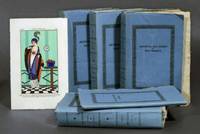
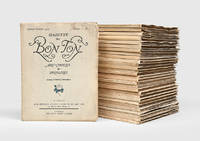
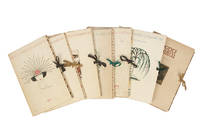
1912réf. 1091912. 1st Edition. Soft cover. Fine. FIRST EDITION OF ALL 79 ISSUES WITH 186 HAND-COLORED PLATES by some of the most famous artists of the era. Number 884 each issue from the same set of only 1250 sets on Holland paper out of a total edition of 1279. IN ORIGINAL WRAPPERS IN FINE CONDITION. "The Journal des Dames et des Modes lasted only two years the first issue appeared on 1 June 1912 and the last on 1 August 1914. This stylish periodical was issued regularly three times a month and ceased publication upon the outbreak of the First World War. With its expensive layout its society columns its poetic texts its colourful annotations and its fashion reports it represented the last brilliant refined impartial and aestheticizing impulse of a happy and optimistic society occupying the centre of the stage in the period that has aptly been called the 'belle époque'. It was essentially the testimony the history--illustrated or rather 'clothed' and narrated--of the customs ideas and ideals of a society and a period. "Every issue carefully reviewed all the current novelties of fashion and every issue carried coloured stencil prints reproducing the latest conceptions of the fashion designers." For the text "the magazine could count on the collaboration of the best known writers and littérateurs of the time" including Henri Duvernois Marcel Boulenger Paul Margueritte Jean Cocteau and many others. The artistic contributions "included the works of some outstanding artists and many promising young ones. Most frequent in his appearance and outstanding for the quality of his illustrations was Georges Barbier." Other artists included Léon Bakst Bernard Boutet de Monvel Umberto Brunelleschi H. Robert Dammy Paul Iribe Charles Martin and Fernand Siméon. Christina Nuzzi Parisian Fashion from the "Journal des Dames et des Modes". Note: all 186 plates are present numbered 1-184 with two unnumbered plates. Paris: 1912-1914. Octavo each issue loose as issued in original wrappers inserted loosely into four half-yearly plus one supplemental original large wrappers. A few plates with spots but generally exceptionally clean dampstaining to edges of five issue wrappers. A nearly immaculate set exceedingly scarce in original wrappers. unknown
1998réf. SBBIH-A6XP6D24VPJFCentre for European Reform CER 1998. paperback. Good. Our good condition books are generally good for reading but not for gifting or collecting. They could have imperfections such as creasing fanning inscriptions margin notes yellowing staining on edge or cover or pages bumps scuffs etc etc sometimes multiple of these. It's a wide category that encompasses anything that isn't almost-new down to anything that is slightly better than poor. We would NOT recommend gifting Good books - these should be considered reading copies. Our books are dispatched from a Yorkshire former cotton mill. We list via barcode/ISBN so please note that the images are stock images and may not be the exact copy you receive furthermore the details about edition and year might not be accurate as many publishers reuse the same ISBN for multiple editions and as we simply scan a barcode or enter an ISBN we do not check the validity of the edition data when listing. If you're looking for an exact edition please don't order at least not without checking with us first although we don't always have time to check. We aim to dispatch prompty the service used will depend on order value and book size. We can ship to most countries see our shipping policies. Payment is via Abe only. Centre for European Reform (CER) paperback
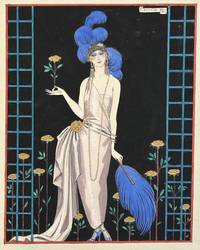
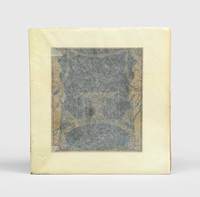
1927réf. 9184Limited to 150 copies this being number 141 but with an additional original 14 x 17 cm Barbier watercolor bound in before the half title. This original work had served as the model for Charles Frederick Worth's "Robe du Soir" as plate 21 in La Gazette du Bon Ton 1922 no. 3. Sumptous full Morocco by Georges Crette with gilt particulars to spine. All edges heavily gilt. Polished calf doublures and decorated endpapers with the original wraps bound in. Decorative slipcase with Morocco fore edges. Minor wear to corners of case see image. Pochoir frontispiece by Barbier as well as pochoir initials headpieces tail pieces. 8.25 x 10.25 in or 21 x 26 cm A. Blaizot hardcover
1914réf. 191067Paris: La Belle Édition 1914. Neoclassical Art Deco First edition one of 25 copies on vergé paper and with the extra suite of monochrome illustrations from a total edition of 240 numbered copies of which this is number 63. Barbier transforms the Song of Songs into a sumptuous reverie both neoclassical and charged with the style of early Art Deco. Indeed this is "one of the few significant illustrated books in which the Art Deco style already predominates published in 1914 or earlier" Ray p. 32. Quarto. With 17 designs including 13 pochoir plates each present in two states: black and gold and monochrome. Original wrappers. With glassine dust jacket. Housed in a custom black cloth solander box by Sangorski & Sutcliffe. Contents possibly reglued into wrappers still a near-fine copy. Gordon Ray "The Art Deco Book in France" in Studies in Bibliography vol. 55 2002. hardcover
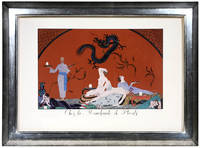
réf. 102802Paris Chez Meyniel 1924 . Group of six lithographs hand-coloured in pochoir by Henri Reidel after Barbier some with fully coloured backgrounds. Framed and glazed overall size: 52 x 38.5cm. The plates for Le Bonheur du Jour wee amongst the largest and most carefully meditated of Barbier's designs. So ambitious was this album that it took him from 1920 to 1924 to complete it to his satisfaction. A study of manners and fashion it was designed to appeal both to those who like to link the present to the past and to observers of the current scene. Barbier saw similarities between the period after the Napoleonic Wars and his own post-Great War era with dandies and their ladies free at last to enjoy frivolities and sensuality. C Paris, Chez Meyniel, 1924 unknown
1920réf. 195944Paris: Lucien Vogel; The Field Press London; Condé Nast London; Rodriguez Giles et cie Buenos Aires; Naville et cie Geneva 1920-22. Fashion illustration's pinnacle This elite publication "one of the most influential fashion magazines ever produced" elevated fashion and publishing into an art form Blackman p. 10. Couture houses including Worth and Paul Poiret uniquely and exclusively sponsored the Gazette. Its illustrations by Barbier Brissaud Brunelleschi Erté Dufy and Lepape are among the finest graphic creations of the Art Deco period. At the heart of each issue were the pochoir fashion plates promoting the couturier's creations and featuring ensembles designed by the artists themselves in "the most emphatic blurring yet of the boundary between fashion and art" Downton p. 40. These plates "shifted the nature of fashion illustration from static 'model' poses on blank or minimal fields to full-blown artistic scenes" which were often accompanied by witty captions Cornell University Library. The magazine's emphasis on illustration as art led to the artists signing their work which was also unheard of prior. They consequently gained lasting recognition and became almost as highly sought-after on the Paris social scene as the couturiers they promoted. Celebrated writers contributed to the Gazette too such as Jean Cocteau Raymond Radiguet and Tristan Bernard. The articles perhaps best encapsulated by the magazine's subtitle "arts fashion frivolities" included the "Presence and Use of Children at Weddings" and "The Complaints of a Darling Little Dog Regarding the Disconcerting Variety of his Mistress's Skirt Hems". From the pochoir illustrations which required layering up to 30 stencils to produce a single plate to using handmade paper the Gazette pushed the limit of what a magazine could physically achieve at the time. Consequently it required a steep subscription of about 100 francs per year roughly $420 today. The Gazette's pochoir illustrations required up to 30 stencils for a single plate while its production also employed handmade paper. An annual subscription cost about 100 francs. Founded by Lucien Vogel 1886-1954 who later became the first Art Director of French Vogue the magazine ran from November 1912 to December 1925. Before publication was suspended during the First World War it was sponsored by Chéruit Doeuillet Jacques Doucet Paquin Paul Poiret Redfern and the House of Worth. The group of sponsors eventually expanded to include Beer Jeanne Lanvin Patou and Martial & Armand. The Gazette was bought by Condé Nast in 1921. This publication was beloved by the likes of Christian Dior Yves Saint Laurent Karl Lagerfeld and Ossie Clark. This set all the issues from 1920-22 is from the Rolling Stones drummer Charlie Watts's collection whose posthumous bookplate is included on the solander boxes. 30 issues octavo. With 239 colour pochoir plates of which 4 duplicates 144 colour croquis and other plates profusely illustrated throughout in colour. Written in French. Loose as issued in original illustrated wrappers. Housed in three custom green morocco-backed solander boxes. 1922 issue no. 2 missing pp. 53-56. Illustrations bright light soiling and handling wear to wrappers small tissue repairs to some spines. A very good collection indeed. Cally Blackman 100 Years of Fashion Illustration 2007; Cornell University Library Vintage Vision: The Art of Gazette du Bon Ton online exhibition; David Downton Masters of Fashion Illustration 2010; Michaela Robinson Art Deco: The Golden Age of Graphic Art & Illustration 2008. unknown
réf. 121033Paris Pierre Corrard 1913-1922. . 7 issues complete 8vo; all issues a total edition of 300 issue no.1 one of 271 copies on Japon no.276 12 plates after Lepape initialled in pencil by Lepape and Corard on the justification; issue no. 2 one of 17 copies with an original 'remarque' on Japon no.27 original signed in pencil by Lepape creased in the bottom corner 12 plates after Charles Martin signed by Martin on the justification; issue no. 3 one of 271 copies on Japon no. 139 initialled by Barbier on the justifcation 12 plates after Barbier; issue no.4 one of 17 with an original 'remarque' on Japon no.20 original drawing with silver monogrammed by Charles Martin 12 plates after Lepape; issue no. 5 one of 271 copies on Japon no.113 12 plates after Andre Marty; issue no. 6 one of 271 copies on vélin d'arches no. 74; 12 plates after Robert Bonfils; issue no. 7 one of 271 copies on vélin de cuve no.76 12 plates by Fernand Siméon; all loose as issued in the original portfolios with patterned paper folding paper internally each issue with a illustration on the upper by the corresponding artist some issues with some spotting to covers no. 4 with split spine no. 6 lacking one tie housed in a modern red cloth box with brown morocco label to spine a very good set. Complete set of seven volumes of Modes et Manières in the original portfolios with 84 plates in total. A fine bright copy of an Art Deco landmark. Two of the issues numbers 2 and 4 are from the smaller edition with an original signed drawing one by Lepape and one by Martin. Paris, Pierre Corrard, 1913-1922. hardcover
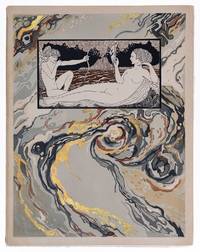
réf. 60214Paris: Chez Maynial 1922. FIRST EDITION. LIMITED EDITION 148/150. signed by Barbier. Large 4to. 37 x 29 cm. Loose as issued in original card wrappers upper cover with half-page woodcut repeated from half-title within full-page woodcut marbled border all printed in colour and gold original glassene outer wrapper. Woodcut illustrations by Barbier printed by F. I Schmied in collaboration with Pierre Bouchet and Louis Bracons. Half-title with half-page coloured woodcut title printed in green and black with a coloured woodcut Harlequin vignette 12 full-page and 2 half-page woodcut colour plates some with gold printing 22 historiated coloured woodcut four-line initials decorative woodcut ornaments in the text of which many printed in gold a final colour woodcut vignette. Light wear to extremities of spine generally an excellent copy of this important collaboration between Barbier and Schmied from the edition limited to 150 copies signed by Barbier in pencil. One of the most important works by Barbier rivalled only by his Le bonheur du jour. Albert Flament's text of 1914 is a diffuse meditation half-waking and half-dreaming which takes as its point of departure the great roles of world theatre. Barbier's vignettes have a general relevance to the theme of acting but most of his plates at least one of which dates from 1916 are simply magnificent decorative compositions. Ritchie 11; Carteret IV: 157 Paris: Chez Maynial, [1922]. unknown
réf. 2092902141700960Not Available N.A. Soft Cover. Fine. Volume: 2 vols. Not Available paperback
réf. 122110Paris 1920. . First edition landscape folio 320 x 450 mm; pictorial title page one leaf of text in French by Barbier with headpieace tailpiece and illustration 16 hand-coloured pochoir plates by Henri Reidel after Barbier table of plates plates loose as issued; original printed portfolio wrapper a little worn but plates in very good condition housed in a custom made black cloth clamshell box title to spine a near fine copy. Fine hand-coloured pochoir plates The sixteen plates of Le Bonheur du Jour are amongst the largest and most carefully meditated of Barbier's designs. So ambitious was this album that it took him from 1920 to 1924 to complete it to his satisfaction. A study of manners and fashion it was designed to appeal both to those who like to link the present to the past and to observers of the current scene. Barbier begins his introduction with a summary of fashion illustration from the 16th century onwards finding a specific predecessor for his own work in that of Horace Vernet's record of First Empire costume Incroyables et merveilleuses published around a hundred years earlier. Barbier saw similarities between the period after the Napoleonic Wars and his own post-Great War era with dandies and their ladies free at last to enjoy frivolities and sensuality. Paris, 1920. hardcover
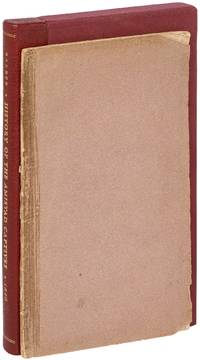
1840réf. 543798New Haven CT: Published by E.L. & J.W. Barber. Hitchcock & Stafford Printers 1840. Softcover. Very Good. First edition. Octavo. 32pp. Large folding wood-engraved frontispiece; 38 wood-engraved illustrations of silhouette profiles one map and two illustrations. In the original plain pale purple wrappers. Wrapper lightly toned a few small chips spine mostly perished with some glue residue along the spine. Scattered light foxing and slight offsetting from wrapper on one blank panel of the folded frontispiece and onto the final page. Very good with the striking folding frontispiece very bright and attractive. Neatly housed in a cloth chemise and quarter morocco and cloth slipcase gilt. Barber's highly important history documenting what one historian called "the most famous of all shipboard revolts" published in the same year that the New Haven court ruled that the slave traffickers had no claim on the Amistad rebels and preceding the publication of Adams and Baldwin's 1841 Supreme Court arguments. The work features Barber's famous large frontispiece engraving depicting the uprising on the ship and the death of the Amistad's captain; along with Barber's 38 engraved profiles of the Amistad rebels made during his visits to the New Haven jail where they were incarcerated. The work also features a map of Mende on the West African coast an engraving of a Mende village and an engraving of nine Amistad Africans chained in the ship bound to Cuba. In 1839 53 enslaved Africans aboard the Amistad rose up near Cuba killed the captain and one other crew member and captured their slavers José Ruiz and Pedro Montes. The new crew took control of the vessel and sailed it to Long Island where they were captured by the U.S. Navy and ultimately incarcerated in New Haven. In 1841 after a remarkable trial the Supreme Court declared the Amistad rebels free. Exceptionally uncommon. Sabin 3324; American Imprints 40-480; Library Company Afro-Americana 881. Published by E.L. & J.W. Barber. Hitchcock & Stafford, Printers unknown
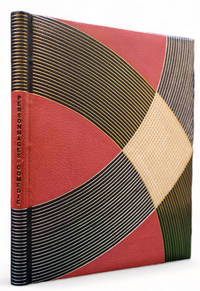
1922réf. 1SINGLE PRINT LIMITED TO 150 COPIES ON HOLLAND VELUM OF THE MOST FAMOUS WORK FROM THE COLLABORATION OF Barbier and Schlied. Copy n°97 signed by the author. 40 Figures headbands decorated letters by Georges Barbier engraved on wood in colors and worked by F.L. Schmied. Cover enhanced with gold and silver. Calligraphic text. Lined and mosaic binding signed by Jeanne Langrand 1931. Raspberry morocco crossed from one plate to the other and extending on the back with two wide strips of black morocco highlighted with twenty-five threads gilded for one of the strips palladium for the other the two strips crossing each other on a piece of cream morocco forming a decoration of iridescent lattices; smooth spine crossed with the same decoration gilded fillets at the head and palladium at the tail Title in large black letters; linings extending and repeating in symmetry the mosaic decoration of the covers; guards of pink moiré silk. Edges with matte gilding on witnesses. Covers and spines preserved. Perfect condition case a little rubbed. DAZZLING ART-DECO MOSAIC BINDING DUE TO Jeanne LANGRAND. Jeanne Langrand was one of the pioneers of the modern style in the field of bookbinding. After the First World War with her sister Andrée she found herself at the School of Decorative Arts Jeanne as assistant professor and Andrée as director. In this breathtaking binding of perfect mastery and great decorative audacity we can only admire the elegance of the mosaic tones the refined geometry of the composition with its symmetrical repetition in linings. Even the case bears witness to its particularly sober and relaxed style. One of the great successes of the art of illustration from the interwar period in a brilliant binding in perfect harmonious harmony. chez Meynial