15.109 Ergebnisse
2007IN 4. BR [BE]. 82 PP. ENV 150 ILL EN NOIR ET EN COULEURS. [BE]
2007IN 4. BR [BE]. 82 PP. ENV 150 ILL EN NOIR ET EN COULEURS. [BE] COIN SUPERIEUR DROIT COUPE COUVERTURE
2006IN 4. BR [BE]. 158 PP. ENV 250 ILL EN NOIR ET EN COULEURS. [BE]
2006IN 4. BR [BE]. 164 PP. ENV 250 ILL EN NOIR ET EN COULEURS. [BE]
2007IN 4. BR [BE]. 164 PP. ENV 250 ILL EN NOIR ET EN COULEURS. [BE]
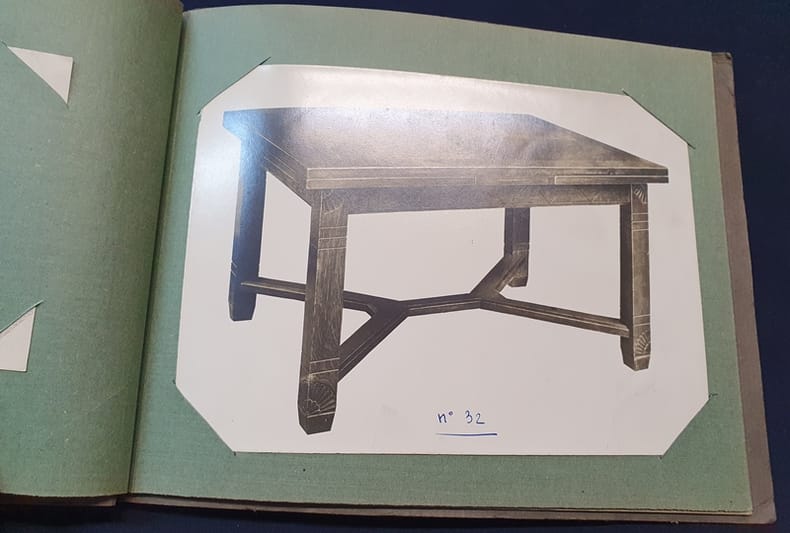
Best.-Nr. Tir3040 Album relié par un cordon - photographies divers formats - sans date ni provenance - bon état
Best.-Nr. 22912P., Picard, 1910, grand in 8° relié demi-percaline verte à la bradel, dos orné d'un fleuron doré, étiquette rouge, VIII-24pp. de texte et 96 planches hors-texte ; bibliographie et table alphabétique des communes ; rousseurs ; infimes frottis.
1946Best.-Nr. 726401946 1 volume - in-8 agraphé - 1946 - revue illustrée paraissant tous les deux mois - Illustration hors-texte - Supplément au Crocodile
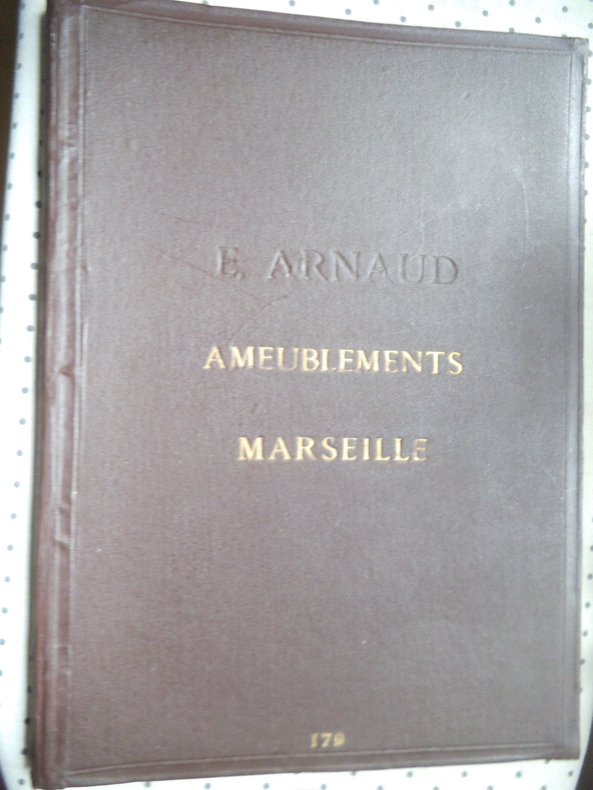
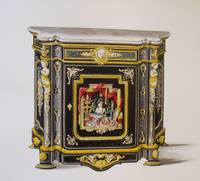
Best.-Nr. 14812Catalogue ameublement in folio pleine toile de l'éditeur, titre doré au premier plat.330X455mm,titre et suite de 54 planches lithographiées(recto uniquement)Imprimerie Camis Paris.Catalogue de la maison ARNAUD à MARSEILLE.Sans date (fin XIXème) Buffets,chaises,sellettes,bois de lits,etc. gravures sur bois ajoutées et contrecollées au verso des planches 52,53 et 54 et sur pages de gardes; 2 photos originales des sellettes contrecollées au verso de la première page de garde.Ouvrage habilement restauré. Rare.
1969Best.-Nr. ROD0011359Non Renseigné. 1969. In-4. En feuillets. Bon état, Couv. convenable, Dos satisfaisant, Intérieur frais. Album de 48 planches photgraphiques en couleurs.. . Sous Emboitage. . Classification Dewey : 749-Mobilier et accessoires
Best.-Nr. R240086755HETTIGER. NON DATE. In-4. Broché. Etat du neuf, Tâchée, Agraffes rouillées, Intérieur acceptable. Album de 17 pages - nombreuses illustrations en noir et blanc hors texte légendées - coins frottés - 2 photos disponibles.. . . . Classification Dewey : 749-Mobilier et accessoires
Best.-Nr. RO40111801A. Tiersot. Non daté. In-4. Broché. Etat d'usage, Plats abîmés, Dos abîmé, Intérieur acceptable. 48 planches de gravures en noir et blanc. Dos presque entièrement détruit. Plats détachés. Signatures sur le 1er plat et en page de garde. Page de garde se détachant. Annotations à la plume en dernière page (planches et sujets).. . . A l'italienne. Classification Dewey : 749-Mobilier et accessoires
1992Best.-Nr. 14255Paris: Michel Aveline Editor 1992. 1st. Hardcover. New/New. 13.2x9.5x1.1in. in shrinkwrap. Alberto Pinto 1945-2012 was a French interior designer of considerable acclaim. This is the first monograph on Pinto highlighting the first 20 years of his work. Exquisite photographs illustrate some of the sumptuous interiors he created including his own apartment in Paris. 301pp 4.74lb 13.2x9.5x1.1in Michel Aveline Editor hardcover
A. Tiersot. Non daté. In-4 Carré à l'italienne. Broché. Etat d'usage. Plats abîmés. Dos abîmé. Intérieur acceptable. 48 planches de gravures en noir et blanc. Dos presque entièrement détruit. Plats détachés. Signatures sur le 1er plat et en page de garde. Page de garde se détachant. Annotations à la plume en dernière page (planches et sujets). Vers 1890. Corbeilles, cadres, porte-pipe, châlet porte-montre, psyché à tiroir, bénitier, bougeoir, encrier, étagère, couronne, jardinière, chapelle gothique...
1860Best.-Nr. 60169Paris, (Moniteur de l'Ameublement ?) - Druck: Imprimerie Bequet. (um 1860). 40 Bll. Quer-Gr.8°. Mit zahlr. Abbildungen auf 40 lith. Tafeln - gezeigt werden Sitzmöbel wie Sofas (Canape, Divan, Ottomane etc.), Sessel, Stühle, Hocker, Klavierhocker etc.. Ohne Einband (nur auf dem Rücken mit Resten der Originalkartonage), private Kordelbindung.
1860Best.-Nr. 17012Paris: Not published. ca 1860. Original three-quarter leather over cloth. Very good; joints chafed. Oblong folio album sheet size 385 x 265 mm with 138 watercolor renderings heightened in gum arabic and retaining a bright fresh finish of tables consoles bed side tables chairs writing desks work tables cabinets buffets clocks etc. There are an additional pair of renderings from a smaller album that are inserted; these retain what appear to be autograph stock number and measurement notations. The drawings measure appx. 150 x 190 mm.; some are smaller and two to a page. Most are drawn directly on the album page thick glazed sheets of paper; a few are drawn on paper and mounted to the album sheets. An exquisitely rendered and engaging album of color furniture designs in the style of Louis XIV; most likely a trade catalog. Each design is fully appointed in great detail and with appropriate colors. A Archambaut who has signed one of the renderings is designated a furniture designer in the V&A catalog under the six drawings it holds in its collection. The explanation for the ornate high style design of the contents of this catalog is given in the last chapter of Madeline Jarry and Pierre Devinoy's book Le Siège Francais 1973. There they deftly develop the argument of why there was a renascence in the Imperial style at the time. This domestic demand was augmented by the managed and manipulated international market for French "antiques" see Diana Davis The Tastemakers. British Dealers and the Anglo-Gallic Interior 1785-1865 esp. chapter one. A most uncommon survival. The foundation and evolution of this kind of trade in France from design and 'jobbing' in the eighteenth and into the nineteenth century is described in Carolyn Sargentson's book Merchants and Luxury Markets .; Auslander Taste and Power - Furnishing Modern France - an important and informative study of the evolution and meaning of furniture style and taste two sides of the same coin for the author in French society. Not published. hardcover books
1909Best.-Nr. 12341Berlin W. : Globus-Verl., o.J. [ca. 1909]. [ca. 130 Bl.], nur Ill. mit Ortsbezeichn. Gr. 4° quer. Ill. OLwd mit Gold- u. Buntpräg.
Hardccover, 304 pages, ENG / ITA, 290 x 250 mm, New, dustjacket, illustrations in colour. ISBN 9788836651184. Aldo Rossi (1931-1997) added to his successful activity as architect, professor and theorist, also that - equally well known - of designer: in this field he continued with great professionalism and passion until his untimely death in 1997, collaborating with some of the most important Italian and international manufacturers, such as Alessi, Artemide, Bruno Longoni Atelier d'Arredo, Molteni, Rosenthal and Unifor. The volume investigates Aldo Rossi's activity in the design sector in its entirety, presenting the furnishings and objects designed and manufactured from 1960 to 1997. Among these, some pieces well known to the public stand out, such as the La Conica and La Cupola coffee makers by Alessi, the Cabina dell'Elba by Bruno Longoni Atelier d'Arredo or the Paris chair by Unifor, just to name a few. The analysis of this production, which also includes unpublished projects and prototypes, highlights the continuous and constant relationship with architecture, while the technical drawings and photographic and archival documentation help to restore the history of each piece. The volume includes a critical essay by Domitilla Dardi.
HB, 280 x 240 mm, 304 pages, ENG edition. ISBN 9788836651184. Aldo Rossi (1931-1997) added to his successful activity as architect, professor and theorist, also that - equally well known - of designer: in this field he continued with great professionalism and passion until his untimely death in 1997, collaborating with some of the most important Italian and international manufacturers, such as Alessi, Artemide, Bruno Longoni Atelier d'Arredo, Molteni, Rosenthal and Unifor. The volume investigates Aldo Rossi's activity in the design sector in its entirety, presenting the furnishings and objects designed and manufactured from 1960 to 1997. Among these, some pieces well known to the public stand out, such as the La Conica and La Cupola coffee makers by Alessi, the Cabina dell'Elba by Bruno Longoni Atelier d'Arredo or the Paris chair by Unifor, just to name a few. The analysis of this production, which also includes unpublished projects and prototypes, highlights the continuous and constant relationship with architecture, while the technical drawings and photographic and archival documentation help to restore the history of each piece. The volume includes a critical essay by Domitilla Dardi.
1993Best.-Nr. 14556Attenkirchen : Wolfram, 1993. 664 S. : Ill., graph. Darst. 8°. 1. Aufl. Ill. OPpbd. (Mac-Edition)
Best.-Nr. 34829Milan, 24 ORE Cultura, 2011 Illustrated cardboard cover, 225 x 315mm.,121pp., full color illustration. ISBN 978886648028.
Illustrated cardboard cover, 225 x 315mm.,121pp., full color illustration. ISBN 978886648028. Published in the same style as succesful 'Minimum Architects' series, the 'Minimum Designers' series includes books about the major figures in the field of design, creators of objects that have become a part of our daily lives. The lamp on our desk, the chair we are sitting on or the glasses we are wearing have a genius behind them to be discovered. These volumes will introduce in a practical manner the personalities and the works of the world s major designers by way of a historical-critical introduction to the work and life of each individual designer, including an accurate selection of the designer s most famous objects arranged in chronological order and a critique of his or herwork summarizing the most signifi cant reviews published in magazines and newspapers in the sector.
Softcover, 240 pages, 240 illustrations . 24 x 28 cm. 1,1 kg. fine!. ISBN 9788874398287. Alexander Calder (1898-1976) was a radical inventor: an artist who discarded convention and disrupted hierarchies, overturning the traditional basis of culture while revolutionizing the way people perceive and interact with art. Calder's 'new line' was not simply an evolution of forms and styles. From the start, it was quite clear to all who witnessed him at work that - in his way of drawing attention and gaining notoriety - he was doing something radically new. This catalogue shows how Calder's work emerged from expectations of change in American popular culture. Calder, who was initially attracted by the structure and functions of the circus, looked for alternative models to triumph over respectability, public decorum, and the ambitions of industry. The catalogue, with twelve essays from major contributors, will examine how Calder, among the first college-trained artists, found techniques and inspiration in many disciplines and their development: technology, engineering, architecture, physics, and astronomy, among others. All these contributed to the development of his wire sculptures, mobiles, and stabiles. More than 100 works and comparative illustrations will guide the reader through this innovative and unique path.
1989ESTIMATIONS