Silver City; Apache PeoplesBiblio.com
8,065 results
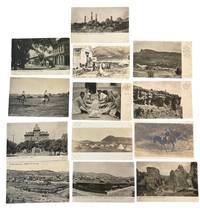
1907ref. 236281907. Silver City and southwestern New Mexico real photo postcard group circa 1907 depicting Indigenous community life beside the mining civic medical and commercial infrastructure reshaping the territory five years before statehood. Images of Indigenous women preparing tortillas families gathered near frame buildings a camp of conical shelters and two children riding a burro record Native presence in a region increasingly represented through mining towns tourist landmarks and expanding institutions. The postcards belong to a period when Silver City founded as a mining settlement in 1870 had become the principal commercial center of Grant County while New Mexico continued its protracted campaign for admission to the Union. New Mexico entered the United States as the forty seventh state on January 6 1912. Photo archive of 13 silver gelatin real photo postcards each approximately 5.5 x 3.5 inches Silver City and southwestern New Mexico circa 1907. Four cards depict Indigenous people: women kneeling around metates and shaping tortillas in a view captioned "Tortilla makers Silver City N. Mex."; a larger gathering of adults and children beside a small frame building with several figures wrapped in blankets and goats standing nearby; an encampment of conical shelters and rectangular tents with horses and wagons dispersed across open ground; and two children riding together on a burro along an unpaved road. The remaining views describe the developing territorial city and its surrounding landscape. They include the smokestacks processing buildings ore piles and elevated works of the "Silver City Reduction Works"; the Grant County courthouse; South Bullard Street with two story commercial buildings and a footbridge crossing the roadway; the St. Joseph Sanitarium and its grounds; and a card identifying the Santa Rita copper mine with the caption noting that an Indigenous settlement formerly occupied the site. Additional cards show bronco riding the Gila Cliff Dwellings and the rock formations captioned "City of Rocks Silver City N. Mex." Several bear printed numbers and location captions one is credited in the negative to "The Arts Shop Silver City N. Mex." and two carry manuscript dates of 1907. The Indigenous scenes were made during a period shaped by the dispossession confinement and surveillance of Apache peoples across the Southwest but they direct attention away from the military imagery that had dominated nineteenth century representations. Women grind corn and prepare food families congregate in domestic spaces children travel by burro and people maintain mobile settlements within the same regional economy that produced reduction works hospitals courthouses and commercial streets. Silver City itself had developed near a traditional Warm Springs Apache camping place after mineral discoveries drew settlers and former soldiers into the district making the growth recorded here inseparable from the displacement of Native communities. The cards also show how early postcard publishers made Indigenous life industrial production archaeological sites ranch spectacle and geological scenery into a public image of territorial New Mexico presenting Native people as visible markers of regional identity while civic and mining views advertised material progress. Overall good condition with staining and toning on the versos and slight silvering to several images. A concentrated visual record of Indigenous presence and industrial development in southwestern New Mexico during the final years of territorial rule. unknown
1907ref. 236281907. Silver City and southwestern New Mexico real photo postcard group circa 1907 depicting Indigenous community life beside the mining civic medical and commercial infrastructure reshaping the territory five years before statehood. Images of Indigenous women preparing tortillas families gathered near frame buildings a camp of conical shelters and two children riding a burro record Native presence in a region increasingly represented through mining towns tourist landmarks and expanding institutions. The postcards belong to a period when Silver City founded as a mining settlement in 1870 had become the principal commercial center of Grant County while New Mexico continued its protracted campaign for admission to the Union. New Mexico entered the United States as the forty seventh state on January 6 1912. Photo archive of 13 silver gelatin real photo postcards each approximately 5.5 x 3.5 inches Silver City and southwestern New Mexico circa 1907. Four cards depict Indigenous people: women kneeling around metates and shaping tortillas in a view captioned "Tortilla makers Silver City N. Mex."; a larger gathering of adults and children beside a small frame building with several figures wrapped in blankets and goats standing nearby; an encampment of conical shelters and rectangular tents with horses and wagons dispersed across open ground; and two children riding together on a burro along an unpaved road. The remaining views describe the developing territorial city and its surrounding landscape. They include the smokestacks processing buildings ore piles and elevated works of the "Silver City Reduction Works"; the Grant County courthouse; South Bullard Street with two story commercial buildings and a footbridge crossing the roadway; the St. Joseph Sanitarium and its grounds; and a card identifying the Santa Rita copper mine with the caption noting that an Indigenous settlement formerly occupied the site. Additional cards show bronco riding the Gila Cliff Dwellings and the rock formations captioned "City of Rocks Silver City N. Mex." Several bear printed numbers and location captions one is credited in the negative to "The Arts Shop Silver City N. Mex." and two carry manuscript dates of 1907. The Indigenous scenes were made during a period shaped by the dispossession confinement and surveillance of Apache peoples across the Southwest but they direct attention away from the military imagery that had dominated nineteenth century representations. Women grind corn and prepare food families congregate in domestic spaces children travel by burro and people maintain mobile settlements within the same regional economy that produced reduction works hospitals courthouses and commercial streets. Silver City itself had developed near a traditional Warm Springs Apache camping place after mineral discoveries drew settlers and former soldiers into the district making the growth recorded here inseparable from the displacement of Native communities. The cards also show how early postcard publishers made Indigenous life industrial production archaeological sites ranch spectacle and geological scenery into a public image of territorial New Mexico presenting Native people as visible markers of regional identity while civic and mining views advertised material progress. Overall good condition with staining and toning on the versos and slight silvering to several images. A concentrated visual record of Indigenous presence and industrial development in southwestern New Mexico during the final years of territorial rule. unknown books
18378vo [22 x 14 cm]; 6 volumes, 81 fine hand-colored plates including some folding, extra engraved title pages, other illustrations including garden plans, folding garden plan, folding plate of garden furniture, indexes. contemporary leather backed marbled boards, title lettering on spines, covers rubbed, light wear, few spine labels chipped or lacking, interiors clean and near fine, in very good covers. A picture of this book is available upon request by email. This is a run of six year's of articles from this respected monthly magazine, on all aspects of flowers, including lists of new and rare plants, with submissions from various authors. The attractive hand coloured engraved plates mostly depicting several varieties of flowers, all nicely colored.
1885folio [36 x 27 cm]; 90 pp, 24 fine color lithographed (chromolithograph) plates from the author's paintings of live plants. original pictorial gilt cloth, gilt spine title lettering, all edges gilted, light wear and chip to spine ends, interior clean with only light offsetting from plates on opposite leaves, a near fine copy in bright covers, plates with good impressions. A pi Bennett (American Nineteenth Century Color Plate Books) p. 78: 'This is the ranking work on the subject, and very striking'. According to Bennett the first edition, Boston 1885, was issued with text in wrappers and text and plates enclosed in a portfolio, later US issues were bound in one volume. Nissen BBI 1382. This is apparently the first color plate orchid book by an American. The plates include Dendrobium, Masedvallia, Cattleya, Laelia, Phalaenopsis, Oncidium, Calanthe, Odontoglossum, Lycaste, Cymbidiums, Vanda, etc. Woodburn-Hedrick 577: 'large format with bightly colored chromolithographs'.
1936ref. 2111902160201403Great Japan Yutenkai Kodansha 1936. Soft Cover. Fine. Volume: 1 Great Japan Yutenkai Kodansha paperback
ref. 9781611225181NOVA SCIENCE PUBLISHERS INC
ref. Bloomsbury-9781441151940Bloomsbury Academic. Hardback. New. 216 pages Bloomsbury Academic hardcover
ref. Bloomsbury-9781441151940Bloomsbury Academic. Hardback. New. 216 pages Bloomsbury Academic hardcover
1855ref. 15126Paris, Garnier-Frères, 1855 ; grand in-8 ; demi-veau glacé rouge sang, dos à faux-nerfs plats noirs à froid, caissons décorés et dorés aux petits fers dans un encadrement de filet doré, titre doré, plats de papier gauffré rouge (reliure de l'époque) ; VII, 528 pp., 18 planches hors-texte finement gravées sur acier d'après Allom, Beutley, Salmon et Leitch, très grande carte dépliante par L. Berthe, lithographiée et coloriée à la main.
1961ref. 2110502150413258Kobunsha 1961. Soft Cover. Fine. Number of books: 6 Kobunsha paperback
1960ref. 2110502150413256Kobunsha 1960. Soft Cover. Fine. Number of books: 8 Kobunsha paperback
First and only edition, small 4to, [8]pp., 5 fine hand-coloured plates, orig. drab wrappers with printed title label on upper cover, a very good copy in unsophisticated original condition. The engravings feature illustrations of four types of mushroom from the genus Agaricus - Campestris (the true edible mushroom), Georgii (St. George's mushroom, or, white caps), Pratensis (the true champignon) and Virosus (which closely resembles it) - all of which also appear in the third and final part of James Sowerby's "Coloured Figures of English Fungi or Mushrooms" published in 1815. James de Carle Sowerby assisted his father in several works and the appearance and composition of the illustrations of the respective mushroom types in each work are similar, though not identical. Nissen, BBI 1876; Freeman, 3503. Scarce, with Copac showing only 3 copies in the UK (BL, Oxford and Natural History Museum).
1966ref. mon0000071846Manchester University Press 1966-01-01. Paperback. Good. in x in x in. Ex-library book usual markings. Hardback with dust cover. Clean text sound binding. Manchester University Press paperback
2009ref. CBS-9781420070132Taylor & Francis Np ExclusiveCbs 2009. New. Taylor & Francis Np Exclusive(Cbs) unknown
2009ref. CBS-9781420070132Taylor & Francis Np ExclusiveCbs 2009. New. Taylor & Francis Np Exclusive(Cbs) unknown
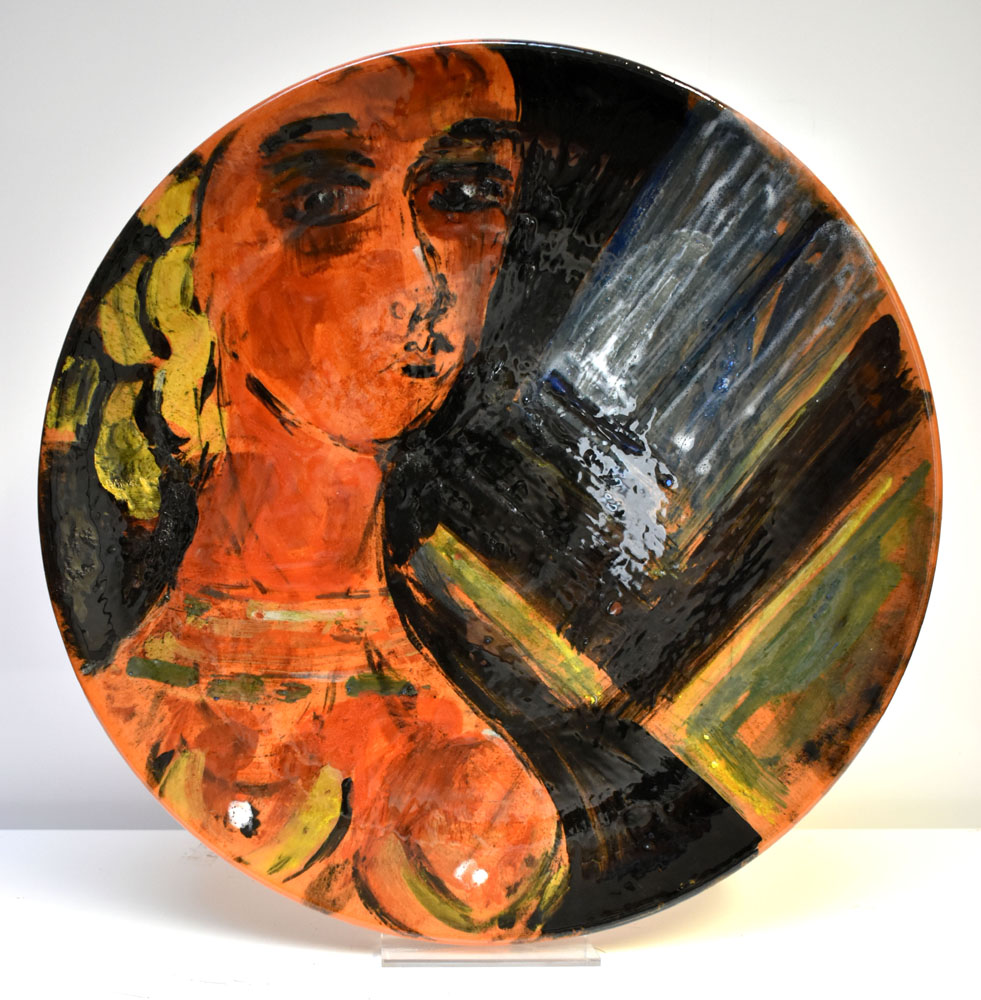
ref. 6854EBo.J. Durchmesser: 42 cm. [3 Warenabbildungen] (Elisabeth Mack-Usselmann, geboren 23.08.1927 in Karlsruhe, Studium der Malerei an der Freien Akademie Mannheim und an d
IN 8 OBLONG. PERCALINE [MOY]. ENV 400 PP. ENV 3000 ILL EN NOIR. [BE]
softcovers, 377 +410 ( 28) pages. illustré, b/w photos of nearly Texte en Francais. 21X 27CM. 2 TOMES COMPLET. . ISBN 9782110811462. 3,538 + 3992 gold & silver hallmarks indices of symbols, surnames, and street names; bibliography. Text in French
1767ref. 9225Amsterdam et Leipzig, Arkstrée et Merkus, 1767 ; huit tomes, grand in-12 ; plein veau havane à grandes marbrures, dos à nerfs décorés et dorés, pièces de titre grenat et de tomaison vert-sapin, triple filet doré d'encadrement des plats, filet doré sur les coupes, tranches marbrées (reliure de l'époque) ; (4) à chaque volume, LX, 343 ; IV, 358 ; II, 352 ; II, 418 ; IV, 396 ; XII, 392 ; XII, 351 (mal chiffrée 451) ; XV, (1), 364 pp et un portrait de Pope gravé par Kornlein, 1 frontispice par Delanonce, gravé par Kornlein, 23 figures hors-texte dont 7 signées de N.V. Frankendaal, même fleuron de titre aux six premiers tomes et second fleuron de titre aux deux derniers.
1994ref. x-904814485XSpringer Netherlands 1994. Paperback. New. 772 pages. 9.25x6.10x1.80 inches. Springer Netherlands paperback
1944folio [48 x 34 cm]; [iv], xxiv, 267 pp, 48 fine colored mounted plates from paintings, each in border, extra title page printed in red and black with vignette, half title. original red cloth, gilt spine title lettering, lightly frayed at spine ends, last 5 leaves lightly rippled in margin, first title page with repair, else clean and near fine, presentation copy signed by the author, dated Rio, 1945. A picture of this book A superbly produced work covering the flora, fauna, archaeology, and the ethnology of indigenous peoples of Amazonia. Each section has representative plates, the flora section including six plates on orchids, the fauna section including plates on birds, animals, fish, the archaeology section includes many artifacts, and the ethnology section including illustrations of weapons, handicrafts, etc. The fine plates are from paintings by Hilda Velloso, Armando Pacheri and Georges Julian Simoni. The text is in Portuguese.
1806ref. 1008951806. London: Richard Phillips 1806. Single sheet 123 x 189mm plate mark 114 x 172mm a little soiled. § Frontispiece titled "The Graphic Muse." "Sketched from the picture by Sir Joshua Reynolds on the ceiling of the Library of the Royal Academy" and engraved by Blake. This the only example of the frontispiece available as a separate plate that I have seen. Bentley 474. Essick William Blake's Commercial Book Illustrations XLVIII. unknown
1806ref. 1008951806. London: Richard Phillips 1806. Single sheet 123 x 189mm plate mark 114 x 172mm a little soiled. § Frontispiece titled "The Graphic Muse." "Sketched from the picture by Sir Joshua Reynolds on the ceiling of the Library of the Royal Academy" and engraved by Blake. This the only example of the frontispiece available as a separate plate that I have seen. Bentley 474. Essick William Blake's Commercial Book Illustrations XLVIII. unknown books
1898231 pages. History certainly does repeat itself as the following statement appears upon the title page: "Equity and justice demand that the merchant, manufacturer, farmer, and wage-earner shall receive as much consideration at the hands of the law-makers as is accorded to those who deal in money." Clearly, the author would not be a fan of Goldman Sachs and their modern-day ilk. Chapter titles include the following: Thirty Years' Fall in Prices; Disastrous Effects of Falling Prices; Opinions Regarding the Cause of the Fall in Prices; Money, its use and abuse; Our Money a Banker's Money; A Monetary System Which Will Restore Prosperity; Bimetallism as a Cure; Immigration; Trusts and Department Stores as a Cause; Overproduction; Hard Times - The Effect of "Improved Machinery"; Confidence; Supply and Demand; Review and Summary of Overproduction; Review and Summary of Bimetallism; Conclusion. Tissue-protected black and white photographic frontisplate of author. Bright gilt lettering upon maroon backstrip and decorated front board. Prior owner's signature upon front free endpaper, otherwise unmarked. Moderate wear. Binding sound. An above-average copy of this important and timely work. Book
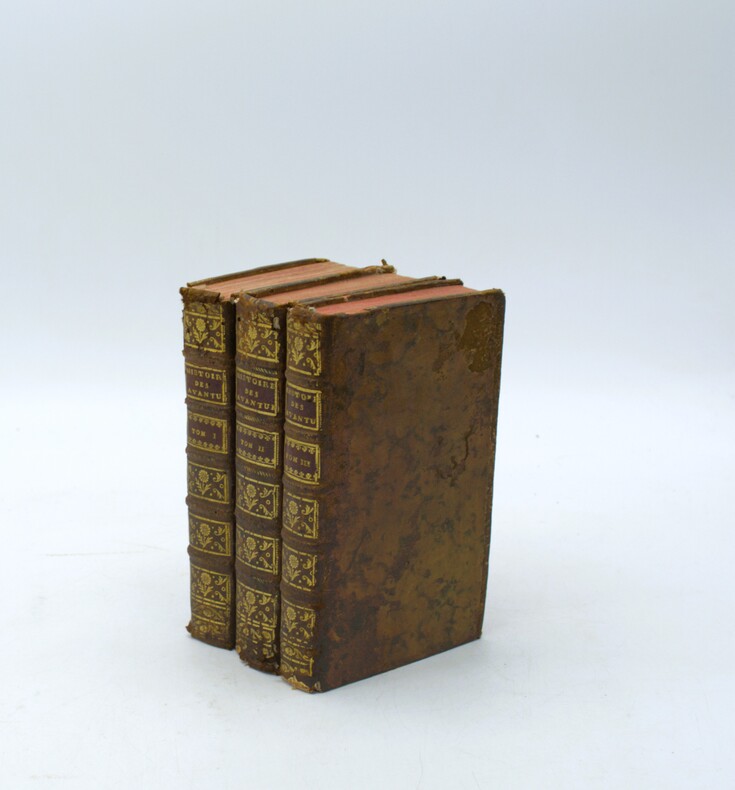
1744ref. PHO-2162Trévoux, par la Compagnie, 1744, 3 (4) volumes in-12 (17x10,5cm), (6) ff., 394 pp. ; (1) f., 428 pp. ; 346 pp., illustré de 7 cartes et plans, manque le frontispice au tome 1, veau marbré époque, dos à nerfs ornés avec pièces de titre et de tomaison grenat, tranches rouges, 4 planches détachées, frottements, épidermures plus marquées au tome 2, coiffes arasées au tome 2, petit manque au tome 1, coins usés, coupes usées au tome 2, manque de papier en marge p. 11, sans atteinte au texte.