10 943 résultats
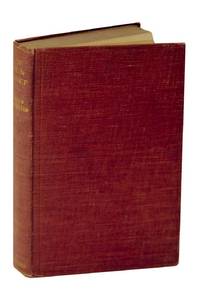
réf. 16339Mary Carpenter : Red Lodge Girls' Reformatory School Bristol-Edition First Book signed by the pioneering Leader in Girls' Education published in 1875 signed "with Miss Carpenter's Complements". Free front end paper and engraving of the school separated. This slim volume is a history of her work at the school and its mission. Mary Carpenter was one of the foremost public speakers of her time and is best remembered for the huge contribution she made to educational and penal reform. She opened "ragged schools" to give an education to the children of the poor and introduced reformatories which took a caring and constructive stance for young offenders. Mary Carpenter also campaigned for better education for women and reforms to prisons. Following a meeting with Frederick Douglass Mary Carpenter became fervenlyt opposed of the slave trade particularly the Fugitive Slave Law of 1850. She travelled extensively in America Europe and India where she also sought reforms similar to those she pursued in Britain. She was a pioneer in the field of equality for women and stood almost alone as a female orator who was widely listened to and respected. Not all criticism was favourable however and in 1864 her books and her work were condemned by Pope Pius IX. unknown books
réf. 16337Mary Carpenter English educational and social reformer. 19 cent original CDV photo Signed Photographed by T. R. Williams of London. Considered by many of his contemporaries as 'first among equals' A slip of paper bearing the inked inscription of the sitter has been pasted across the lower margin of the mount. Mary Carpenter was an English educational and social reformer. she founded a ragged school and reformatories bringing previously unavailable educational opportunities to poor children and young offenders. She was also active in the anti-slavery movement and became known as one of the foremost public speakers of her time. She also traveled to India where she visited schools and prisons and worked to improve female education establish reformatory schools and improve prison conditions. unknown books
1796réf. 37306Philadelphia: Printed by John Page 1796. 352 4 pp 1 folded table. Later cloth some wear original red gilt-lettered red morocco spine label laid down. Good. The Second Session of the Fourth Congress convened on December 5 1796 and closed on March 3 1797. Volume I reports in detail on the conclusion of George Washington's presidency. Evans records the total of three volumes as separate imprints with different printers noted as issued. The text is far more detailed than the official Journals of the period revealing starkly the division of the country into political parties one opposed to the President's policies the other supportive. The bulk of the volume treats President Washington's final speech to Congress in December with debate in House and Senate about a resolution of appreciation for the President's service and the measures he advocated. Washington's presidency had so alienated followers of Thomas Jefferson that a number of Congressmen including Andrew Jackson refused to join in a resolution of thanks. Yeas and Nays on a variety of votes are recorded; debates on the President's recommendation to establish a National University his advice on the militias; and also about the "Canadian and Nova Scotia refugees" "kidnapping of negroes and mulattoes" from vessels either to "sell them as slaves or the taking slaves to make them free;" and other matters Much discussion of the Creeks and Cherokees upon whose treatment the President remarked is printed. Evans 30165. Cohen 6858. I Harv. Law Cat. 338. Sabin 11006. Printed by John Page unknown books
1861réf. 714101861. London: Richard Griffin and Company 1861. London: Richard Griffin and Company 1861. Fascinating Insights into the Political Social Legal and Commercial Life of Medieval London Carpenter John d.1441. Whittington Richard d.1423 Riley Henry Thomas 1816-1878 Translator. Liber Albus: The White Book of the City of London. Compiled A.D. 1419 By J. Carpenter Common Clerk R. Whitington Mayor. Translated from the Original Latin and Anglo-Norman by H.T. Riley. London: Richard Griffin and Company 1861. x 2 660 pp. Quarto 8-1/2" x 6-3/4". Contemporary quarter morocco over cloth gilt title to spine top-edge gilt. Moderate rubbing to extremities a few nicks to spine corners lightly bumped contemporary armorial bookplate of John Harrison to front pastedown front hinge just starting at head. Light toning to text light foxing to a few leaves. $350. First edition as an independent work originally published in 1858 as Volume I of the three-volume Munimenta Gildhallae Londoniensis. A compilation of laws statutes ordinances and regulations the Liber Albus is a fascinating digest of information concerning social political and commercial activity in London from the twelfth to the early fifteenth century. OCLC locates 1 copy in a North American law library UC-Berkeley British Museum Catalogue Compact Edition 21:665. unknown books
1944réf. 701961944. Paris 1944. Paris 1944. Hemard's Illustrated French Tax Code Hemard Joseph 1880-1961 Illustrator. Code General des Impots Directs et Taxes Assimilees. Texte Inegral des Lois Decrets Decrets-Lois Decret de Codification Suivi d'un Formulaire Administratif. Paris: Editions Litteraires et Artistiques/Librairie "Le Triptyque" 1944. x 330 1 pp. 183 illustrations 62 of them in color. 8 pp. addendum of changes to the code titled Rectificatif laid in Quarto 9-1/4" x 6-1/2". Illustrated stiff color publisher wrappers. Negligible light soiling light rubbing to spine ends two faint creases through spine light toning to interior images vivid. A well-preserved copy. $750. Hemard presents the official text of the French Tax Code with witty often racy illustrations colored au pochoir by E. Charpentier. It is a sequel to his Code Civil: Livre Premier Des Personnes 1925 and Code Penal: Commentaires Images c. 1940. Hemard a prolific artist illustrator designer and author is best-known for his humorously illustrated editions of serious non-fiction books. The Code General was issued in several forms. The present copy is from a trade edition of 1000 copies. It was also issued in a limited edition of 800 numbered copies the first 145 with an original sheet of text illustrations and a sheet of their original sketches. There is also a signed and numbered edition of 160 printed on Arches paper papier velin an edition of 40 non-commercial copies intended for friends and associates hors commerce and 60 portfolios of the images alone. unknown books
1965réf. LV1993Los Angeles:: Dawson’s Book Shop 1965. 1965. Folio. 14 pp. Title printed in red & black; front pocket. Original quarter beige cloth with blue-gray boards and a gilt-device on upper cover printed spine label. Occidental/ Lawrence Clark Powell gift bookplate. Fine. LIMITED EDITION of 140 copies designed and printed by Saul & Lillian Marks at the Plantin Press. Valtón owned thirty-nine pre-1600 broadsheets listed here by Ed Carpenter 1915-1995. This leaf book contains an original printed leaf from the first press in the New World. It is known that all copies of this edition differ some printed leaves being more desirable. The present specimen is a promissory note opening with the printed phrase "Sepan quantos estra carta vieren come yo . . ." translates closely to "Know by all men that this letter . . ." The accompanying essay describes that similar legal documents were among the first printed documents in Mexico. This was because certain legal phraseology allowed for a document to print the standard words needed and then add the necessary text in manuscript as with this specimen. Dr. Emilio Valtón was the first bibliographer to collect this extremely early and otherwise ignored form of printing in Spain. "Carta de pago" power of attorney. Gothic type. Approx. 9 x 12 ½ inches. 44 lines. Printed on one side. With a leading capital letter S followed by the phrase cited above "Sepan. . ." followed by seven lines of manuscript text. Then in printed form begins "Generalmente para a en todos mis pleytos causas ceuiles y criminal les mouidos y poz mouer que yo be y tengo con qual esquier personas y las tales y otras quale . . ." The verso also has a nine-line manuscript with elaborate signature. By inference this piece is attributed to Pedro Ocharte. See: Valtón Emilio. Impresos Mexicanos del siglo XVI Incunables Americanos en la Biblioteca. 1935. Dawson’s Book Shop, 1965. hardcover books
1914réf. 127384London: Oxford University Press / Humphrey Milford 1914. First edition. Hardcover. 152 pages. A very good plus copy with some minor bumping to the top corners some darkening to the endpapers and some minor foxing internally. No dust jacket. Uncommon. Oxford University Press / Humphrey Milford unknown books
1897réf. 108143Manchester: The Labour Press Limited 1897. First edition. Hardcover. An anthology that includes contributions by: Tom Mann William Morris Enid Stacy Grant Allen Bernard Shaw and several others. An about near fine copy in decorated cloth binding with some bumping to the top corners and a little fraying to the spine crown but internally a clean copy. A very nice copy of this important and uncommon collection. The Labour Press Limited unknown books
1993réf. 104052New York: Charles Scribner's Sons 1993. First edition. Hardcover. A major biography of this important musician and composer. Illustrated with numerous photographs. A fine copy in a fine dust jacket. Charles Scribner's Sons unknown books
1872réf. 19998Washington: F.& J. Rives & Geo. A. Bailey Reporters and Printers of the Debates of Congress 1872. 16pp folded. Untrimmed. Printed in double columns. Light wear Good. F.& J. Rives & Geo. A. Bailey, Reporters and Printers of the Debates of Congress unknown books
1879réf. 41099London 1879. Carpenter William B. 1813-85. Autograph letter signed to Mr. John Paget 1811-98. London 56 Regents Part Rd. N.W. June 2 1879. 4pp. 178 x 114 mm. A few tiny pin-holes but fine otherwise. From English physiologist and naturalist William B. Carpenter who "helped shape the modern life sciences in Britain Oxford DNB through both his writings and his work as a teacher and administrator at what is now the University of London. Carpenter performed valuable researches in marine zoology and was directly influential in persuading the British Admiralty to sponsor the Challenger expedition the first major scientific study of the deep oceans. Carpenter is also recognized as one of the founders of the modern theory of the adaptive unconscious-he observed that the human perceptual system and the mechanism of human thought operates almost completely outside of conscious awareness. Carpenter's letter which discusses a false confession to murder made by a mentally unbalanced young man reads in part as follows: Dear Mr. Paget In turning out my papers at the University today I have come upon a document which I forward to you containing the Father's statement of his Son's relation to the "Brompton Murder" case with full particulars of the latter's confession and its inconsistency with the facts. I believe that I did not send in this to the Home Secy.; but that what I specially urged upon him was the evidence with which Knowles had supplied me of the "cracky" nature of the youth's mind and of the obviously hereditary tendency to brood as shown in the father and aunt-the latter an old servant of Knowles. And I remember also that there was evidence of the youth having had money in the Savings Bank and of his having drawn out a pound just before the Crystal Palace Police Fête. This altogether made so strong an impression on Mr. Bruce that he at once commuted the sentence; and the family were so sensible that the lad was not fit to take care of himself that they expressed no disappointment at his not having received a free pardon. . . . Carpenter's correspondent was the police magistrate and author John Paget whose Paradoxes and Puzzles published in 1874 included accounts of a number of sensational crimes. We have not been able to identify the murder case to which Carpenter refers in his letter. . unknown books
1960réf. 88668vo. San Francisco: Grabhorn Press 1960. 8vo 48pp. In cream-colored wrappers with printers' logos in red title in black. Covers lightly soiled spine sunned. Very good. § First edition. "An exhibit of representative examples from the collections of members of the Roxburghe Club of San Francisco held in the Palace of the Legion of Honor on the occasion of the joint meeting of the Zamorano Club of Los Angeles and Roxburghe Club of San Francisco September 17-18 1960. Grabhorn Press unknown books
1981réf. 48702Boston: Houghton Mifflin 1981. Hardcover. Very good. 453pp index. Remainder dot to bottom edge of textblock else a very good hardback in a price clipped and lightly rubbed jacket that has a few closed tears. Houghton Mifflin hardcover books
1838réf. 49663London: W. Marshall 24 Tavistock Street Covent Garden 1838. 1st printing presumed. Early but probably not original plain brown paper wrappers. Now housed in an archival mylar sleeve. Disbound. General wear & soiling to wrappers. Occasional soil & foxing. About Very Good. 12 36 pp. Publisher advert p. 4 advising all that "Marshall's Pocket-Book Business is Removed from 1 Holborn Bars." Contains 11 additional sketches: The Dilemma anonymous 2 pp A Day at Epping anonymous 2 pp We Must Go to Margate This Season anonymous 2 pp My Maiden Speech Carpenter 2 pp Good Shots Attree 2 pp Balloning anonymous 1 pp A Tale of Mystery anonymous 2 pp I'll Have a Gala Night by the author of 'Love for Light Hearts &c' 2 pp Our Festival Day by the author of 'Random Rhymes &c' 2 pp A Progeny of a Punster Harcourt 1 p. Frontis. T.p. vignette. 12 other illustrations 11 full page with contributions by at least 2 other unidentified artists. 12mo. 7" x 4-1/2" Date of printing determined from the dated advert p. 4. "Boz the Younger" signs in type the first two sketches: "Old Weller's Chapter of Fat and Sam's Visit to see the Goswell Street Cattle Show"; "Sam Weller's Description of the Proclamation of Victoria I." Each one page in length. Given at the time of this publication Dickens was immersed in Oliver Twist & Nicholas Nickleby we feel confident in saying this booklet was an effort to captialize on his burgeoning fame as Boz. A rather rare early 19th C. illustrated publication; at the time of cataloguing not found in any of the standard Dickens references not found on COPAC with OCLC listing just 3 institutional holdings of only 12 pages. W. Marshall, 24, Tavistock Street, Covent Garden unknown books
réf. 16333Carpenter Mary- Autograph Letter Signed August 12 1875 Red Lodge House Bristol letterhead. 2 pages folded from a single sheet. 4"x6". To "Dear Madam." Signed at the closing "Mary Carpenter." Discussing the education of each child and mentioning that she is about to start her fourth visit to India. Stating in part: "Private enterprise begins. I have State endorsers.inspects I pay a certain sum for each child. This is supplemented if necessary by private benevolence. At any time the certificate may be given up withdrawn by the State with one teacher. The state of the history of our school herewith will fully explain this. Please as soon as I send you a complete copy. As you do not appear to object to your name appearing in the list of those who.writing to . him in information & introduction to any.who may be.I will . I start on my fourth visit to Inidia on Sept 18th." Mary Carpenter visited India in 1866 1868 1869 and 1875 in support of girls' and women's education. he opened "ragged schools" to give an education to the children of the poor and introduced reformatories which took a caring and constructive stance for young offenders. Mary Carpenter also campaigned for better education for women and reforms to prisons. Following a meeting with Frederick Douglass Mary Carpenter became a fervent opposer of the slave trade particularly the Fugitive Slave Law of 1850. She travelled extensively in America unknown books
réf. 16342Early Advocate for educational and penal reforms. Original Autograph letter signed of Mary Carpenter to Alderman Mansfield of Northampton and original mailing envelope are pasted into the volume along with 2 obituaries of Mary Carpenter who died June 15 1877. Letter is 1 page Jan 10 1877 signed at closing "Mary Carpenter" regarding the election of a woman to the School Board. The letter states in part "Thanks for sending us the paper containing the very gratifying announcement of the election of Mrs. Mansfield.It is a grand triumph!" A note at bottom signed M.P. Mansfield explains the meaning of Carpenter's letter "This letter was written on the receipt of a paper containing the account of the election of my wife to the School Board." Carpenter was one of the foremost public speakers of her time and is best remembered for the huge contribution she made to educational and penal reform. She opened "ragged schools" to give an education to the children of the poor and introduced reformatories which took a caring and constructive stance for young offenders. Mary Carpenter also campaigned for better education for women and reforms to prisons. Following a meeting with Frederick Douglass Mary Carpenter became fervenlyt opposed of the slave trade particularly the Fugitive Slave Law of 1850. She travelled extensively in America Europe and India where she also sought reforms similar to those she pursued in Britain. She was a pioneer in the field of equality for women and stood almost alone as a female orator who was widely listened to and respected. unknown books
réf. 16330Mary Carpenter - Female Leader in Women's Education who opened "ragged schools" to give an education to the children of the poor. Autograph Letter Signed Red Lodge House 4 pages folded from a single sheet. 4"x6". To "Dear Esther." Signed at the closing "M.C." Feb. 13 187 Her signature and closing lines trail onto the adjoining first page. She writes in part: "Will you kindly send at once and by parcel delivery a copy of the 2nd volume of 'Our Convicts' to the editor of the Illustrated News at their office 198 Strand. Mr Acton says he has not received a copy. I fear there have been many mistakes this time as I have too many 2nd vols. Please to keep a list of what copies of those 10 are sent off. I have had very favourable and friendly reviews; the 'Inquirer' as usual on that subject cold & dry; not one has yet grasped however the meaning of the book in the smallest degree. It is a comfort however that those who understand the subject are perfectly satisfied; the Baron Von Wollenberg & Mr M. wrote very warmly and I have reason to hope that many thoughtful persons are reading it so I must wait patiently for the rest to spring up & am only thankful to have been thus enabled to bear a testimony which will remain to principles of the highest importance to the well being and morality of the country:- if one tenth of this kind of thought which are devoted to speculation and theology were given to extending the reign of God by converting sinners how different would the world be! I shall be glad when you have finished theology and are engaged in the spread of religion. Reading Miss Aitkin's letters has led me to open Channing and I am interested in perceiving how completely my reformatory work is in accordance with his views. Mary Carpenter was one of the foremost public speakers of her time and is best remembered for the huge contribution she made to educational and penal reform. She opened "ragged schools" to give an education to the children of the poor and introduced reformatories which took a caring and constructive stance for young offenders. Mary Carpenter also campaigned for better education for women and reforms to prisons. Following a meeting with Frederick Douglass Mary Carpenter became a fervent opposer of the slave trade particularly the Fugitive Slave Law of 1850. She travelled extensively in America Europe and India where she also sought reforms similar to those she pursued in Britain. She was a pioneer in the field of equality for women and stood almost alone as a female orator who was widely listened to and respected. Not all criticism was favourable however and in 1864 the year prior to this letter her books and her work were condemned by Pope Pius IX. unknown books
réf. 16338Mary Carpenter : "Red Lodge Reformatory for Girls Bristol" Pamphlet Dec. 9 1904-With a portrait of Mary Carpenter inside. The pioneering Leader in Girls' Education Announcing the Fiftieth Anniversary of Red Lodge. Inside a program of events list of trustees and officers and a photograph of girls learning to sew at Red Lodge comes with a pamphlet by Manning E.A.-Associate of Mary Carpenter. Pamphle title "Moral Teaching in Schools. A Paper read at the Social Sciences Congress Brighton October 1875." Published London Edward Stanford 55 Charing Cross S.W. Stamp of "Education Department Library." 16 pages. Mary Carpenter was one of the foremost public speakers of her time and is best remembered for the huge contribution she made to educational and penal reform. She opened "ragged schools" to give an education to the children of the poor and introduced reformatories which took a caring and constructive stance for young offenders. Mary Carpenter also campaigned for better education for women and reforms to prisons. Following a meeting with Frederick Douglass Mary Carpenter became fervenlyt opposed of the slave trade particularly the Fugitive Slave Law of 1850. She travelled extensively in America Europe and India where she also sought reforms similar to those she pursued in Britain. She was a pioneer in the field of equality for women and stood almost alone as a female orator who was widely listened to and respected. Not all criticism was favourable however and in 1864 her books and her work were condemned by Pope Pius IX. unknown books
réf. 16334Carpenter Mary- Autograph Letter Signed Sept 9 1875 National Indian Association Red Lodge House Bristol letterhead. 2 pages folded from a single sheet. 4"x7". To "Dear Mr. Bush." Signed at the closing "Mary Carpenter." Discussing the education of each child and mentioning that she is about to start her fourth visit to India.Stating in part: "As you do not appear to think that there is sufficient interest in the Journal to make it worth our while to send it we will now discontinue doing so.I am starting next week for India I am very busy. ." Mary Carpenter visited India in 1866 1868 1869 and 1875 in support of girls' and women's education. Carpenter was one of the foremost public speakers of her time and is best remembered for the huge contribution she made to educational and penal reform. She opened "ragged schools" to give an education to the children of the poor and introduced reformatories which took a caring and constructive stance for young offenders. Mary Carpenter also campaigned for better education for women and reforms to prisons. Following a meeting with Frederick Douglass Mary Carpenter became fervenlyt opposed of the slave trade particularly the Fugitive Slave Law of 1850. She travelled extensively in America Europe and India where she also sought reforms similar to those she pursued in Britain. She was a pioneer in the field of equality for women and stood almost alone as a female orator who was widely listened to and respected. Not all criticism was favourable however and in 1864 her books and her work were condemned by Pope Pius IX. unknown books
réf. 16332Pioneering Leader in Girls' Education Mary Carpenter - Female Leader in Women's Education who opened "ragged schools" to give an education to the children of the poor. - Autograph Letter Signed May 25 1868 Red Lodge House 2 pages folded from a single sheet. 4"x6". To "Dear Sir." Signed at the closing "Mary Carpenter." Stating in part: "I was surprised.to see the enclosed in our denominational paper which had been copied from an American paper with which came of my Brother's correspondence. He had sent to it some account of my journey so it is connected with friends of ours." Mary Carpenter visited India in 1866 1868 1869 and 1875 in support of girls' and women's education. She published her first book Six Months in India in 1868 the year of this letter. Mary Carpenter was one of the foremost public speakers of her time and is best remembered for the huge contribution she made to educational and penal reform. Author of Our Convicts 1864 and Six Months in India 1868. She opened "ragged schools" to give an education to the children of the poor and introduced reformatories which took a caring and constructive stance for young offenders. Mary Carpenter also campaigned for better education for women and reforms to prisons. Following a meeting with Frederick Douglass Mary Carpenter became a fervent opposer of the slave trade particularly the Fugitive Slave Law of 1850. She travelled extensively in America Europe and India where she also sought reforms similar to those she pursued in Britain. unknown books
réf. 16331Mary Carpenter - Female Leader in Women's Education who opened "ragged schools" to give an education to the children of the poor. Autograph Letter Signed Red Lodge House Bristol letterhead. 1 page. 4"x6". To "Mrs. Park dated 1877 Signed at the closing "Mary Carpenter." Mentioning her book Our Convicts. Signs of former mounting to verso. She writes in part: : "I regret that I cannot help the poor woman in whom you are interested.I now remember your dear invalid now one of your reformatory angels. "Will you kindly send at once and by parcel delivery a copy of the 2nd volume of 'Our Convicts' to the editor of the Illustrated News at their office 198 Strand. Mr Acton says he has not received a copy. I fear there have been many mistakes this time as I have too many 2nd vols. Please to keep a list of what copies of those 10 are sent off. I have had very favourable and friendly reviews; the 'Inquirer' as usual on that subject cold & dry; not one has yet grasped however the meaning of the book in the smallest degree. It is a comfort however that those who understand the subject are perfectly satisfied; the Baron Von Wollenberg & Mr M. wrote very warmly and I have reason to hope that many thoughtful persons are reading it so I must wait patiently for the rest to spring up & am only thankful to have been thus enabled to bear a testimony which will remain to principles of the highest importance to the well being and morality of the country:- if one tenth of this kind of thought which are devoted to speculation and theology were given to extending the reign of God by converting sinners how different would the world be! I shall be glad when you have finished theology and are engaged in the spread of religion. Reading Miss Aitkin's letters has led me to open Channing and I am interested in perceiving how completely my reformatory work is in accordance with his views. Mary Carpenter was one of the foremost public speakers of her time and is best remembered for the huge contribution she made to educational and penal reform. Author of Our Convicts 1864 and Six Months in India 1868. She opened "ragged schools" to give an education to the children of the poor and introduced reformatories which took a caring and constructive stance for young offenders. Mary Carpenter also campaigned for better education for women and reforms to prisons. Following a meeting with Frederick Douglass Mary Carpenter became a fervent opposer of the slave trade particularly the Fugitive Slave Law of 1850. She travelled extensively in America Europe and India where she also sought reforms similar to those she pursued in Britain. She was a pioneer in the field of equality for women and stood almost alone as a female orator who was widely listened to and respected. unknown books
2002réf. 9026967Minneapolis: The Minneapolis Institute of Arts 2002. 1st. Hardcover. Fine/fine. Presentation signed by Jim Dine to the curator of prints at the Minneapolis Iinsitute of Arts on the half title page. Bound in publisher's original blue cloth with the front cover stamped in blind and the spine stamped in gilt. Dust jacket. The Minneapolis Institute of Arts hardcover books
1988réf. 9025405New York: Houghton Mifflin 1988. 1st. Hardcover. Fine/near fine. Bound in the publisher's original quarter white cloth and tan boards with the spine stamped in gilt. Houghton Mifflin hardcover books
1922réf. 9022354New York: D. Appleton 1922. 1st. Hardcover. Very good. Bound in the publisher's original brown cloth over boards spine stamped in gilt which has faded but is legilble. Rubbed at the edges and extemities spine and front board chipped at the heel. From the library of R.S. Crane with his signature in pen on the ffep. D. Appleton hardcover books
1992réf. 9019854New York: Charles Scribner's Sons 1992. 1st. Hardcover. Very good/very good. Bound in the publisher's cloth over boards spine stamped in gilt. Dust jacket is worn at the head and heel. Charles Scribner's Sons hardcover books