4.033 Ergebnisse
1960Best.-Nr. 64227Osaka & Tokyo Japan: Suntory Limited 1960. 12mo. 5 x 6.75 in. Triptych 6 pp unpaginated. w/ 20 pp unpaginated. colour-illustrated catalogue stapled in center self-printed illustrated softcovers in whisky-coloured and photo illustrated softcovers slight soiling back cover NF copy. First edition thus of this exceedingly scarce original Suntory Limited catalogue detailing the whiskies wines and liquers available from the storied Japanese distillery with the line-up introducing their Rare Old Whisky Suntory Royal 60 introduced in 1960 company founded in 1899 special label “Extra Special” Old Suntory Japanese Whisky only marketed for a couple years in the early 1960’s along with their standards. Other products included their Akadama wines Suntory Sparkling wines Green Tea Liquer Cherry Blossoms Liquer Creme de Cacao along with their brandy vermouth sloe gin vodka absinthe and sake brands. Alcohol content Net content weights and measures per carton and more are supplied within the tables. No copies in Worldcat. Suntory Limited, paperback
1987Best.-Nr. 13475Woodinville Washington: Chateau de Ste. Michelle 1987. First Edition. Hardcovers in dust jackets with slipcase. Fine/Very Good. 8vo. Pp. 256; 251. Lavishly illustrated with color photo reproductions. Bibliography. Index. Bound in red cloth vol I and blue cloth vol II; spine lettered in silver; cover lettered in silver vol I and in blind vol II. Clean and fresh throughout. In the laminated dust jackets; minor loss to lower left corner of front panel vol I. In the brick-colored cloth slipcase; spine lettered in silver. (Chateau de Ste. Michelle ) hardcover
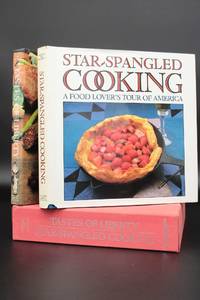
1878Best.-Nr. 62378Boston: Graves Locke & Co. 1878. 12mo. 234 2 pp. plus 24 pp. of blank ruled paper intended for the cookbook user’s own notes & recipes. Dark plum-coloured publisher’s cloth embossed & lettered in black & gilt front cover & spine minor shelfwear slight rubbing edgewear very slight tear to ffep. still VG bright copy from the library of Eleanore Weinstock. Second edition of Parloa’s famed cookbook filled with recipes intended for both young housekeepers and hotel restaurant commercial kitchens. She details many New England favorites and includes recipes for fish soups meats vegetables breads cakes puddings pies poultry venison dishes for the sick & invalid preserves pickles and more. Many of these recipes were favorites of the Appledore House Isle of Shoals restaurant as well as the Rockingham House in Portsmouth NH the Pavilion Hotel in Wolfborough NH and McMillan House North Conway NH. She does include health tips such as suggesting the use of butter rather than lard in pie crusts as it “is more healthful than lard. . . if you can afford it use it.” Parloa 1843-1909 was by 29 years old a longtime cook at the Appledore House in Kittery Maine and published the first edition of this cook book in 1872. By 1873 it appears she had moved to Mandarin Florida to teach for Harriet Beecher Stowe’s school and had finished rewriting this edition according to her prace in April 1877. By 1880 she was teaching cookery in Boston and living on Wayne St. and by 1900 had moved to New York. See: Patrick Tierney Wild The Mysterious Early Life of Maria Parloa The Bethel Grapevine 2024. Graves, Locke & Co., hardcover
1923Best.-Nr. 62386Oceanside CA: Dirk Vandegeer 1923. Tall 8vo. 318 2 pp. Frontisp. numerous plates drawings text illustrations. Gray publisher’s cloth decorative blue & black lettering front cover & spine minor shelfwear slight dustsoiling still VG copy from the library of Eleanore Weinstock. First edition of this well-written and nicely illustrated cook book for bakers pastry and confectionery chefs in Southern California during the Roaring 20’s. Included are sections on puff pastries German Coffee Cakes dumplings tarts and elaborate fancy deserts with over 100 pages of cake and pastry designs for the pastry and candy shop. Included as well are recipes for everything from Mexican Sausage to Suckling Pig and applesauce as well as Green Turtle Soup and Horseradish Butter. Vandegeer 1867-1928 worked in hotels as baker and pastry chef in leading hotels of France Belgium and the Netherlands before finishing his career in Southern California near San Diego and eventual retirement by 1924. Dirk Vandegeer, hardcover
1857Best.-Nr. 56060New York: C.M. Saxton & Co. Agricultural Book Publishers No. 140 Fulton St. 1857. 8vo. 106 pp. plus 11 1 pp. publisher’s catalogue. Woodcut-engraved frontisp. 1 text engraving. Original printed softcovers minor chipping head & foot of spine slight chipping couple lower corners dustsoiling still a VG bright copy. First edition of one of the earliest American studies on Chinese Sugarcane Sorghum and the possibilities that this was the sorghum plant that American farmers hoped would grow in the Northern United States and definitive work on growing harvesting and distilling sorghum. A variety of “Chinese Sugarcane” was imported by Father Du Halde from Sichuan China in 1851 where it was quickly adopted also under the name of “Northern Chinese or Shanghai Sugarcane” as a crop to provide sugars for alcoholic products filling the void left by the grape crop failure in the 1850s. Chinese Sugarcane seeds were first brought into United States by Jay Browne Esq. in 1854 and a few intrepid American nurseries began planting and determining if it could be planted and harvested profitably in the North. Hyde writes that in his test crop he was able to secure a dark sugar from the cane molasses and notes that it will be of tremendous value in producing alcohol and confectionaries and that the Sorghum remnants could be fed to livestock. Hyde 1825-1898 worked with his father James Hyde in developing the very successful nursery emphasizing fruit trees ornamental trees and cash crops. He was a pioneering environmentalist who founded the first improvement society in the United States the Newton Centre Tree Club whose purpose was to emphasize beautifying the roads and commons in Massachusetts. He was Newton MA first mayor after the city was incorporated in 1873 and was also successful in persuading the Boston & Albany RR to acquire the existing single-track line of the Charles River Railroad to aid his nursery business. Original editions of this work have become quite scarce in the trade. See: Deborah Jean Warner Sweet Stuff: An American History of Sweeteners from Sugar to Sucralose pp. 252-253; Watts Dictionary of Chemistry and the Allied Branches 1869 Vol. V p. 354; Newton’s First Mayor: A Hard Act to Follow Historic Newton 2019; Walnut Grove Nursery The New England FarmerVol. IV 1852 p. 538 C.M. Saxton & Co., Agricultural Book Publishers, No. 140 Fulton St., paperback
1911Best.-Nr. 64676Chicago IL: Jaques Manufacturing Co. 1911. 12mo. 63 1 pp. Decorated borders vignettes colour and black & white text illustrations throughout. Self-printed colour-lithographed sofcovers cover art of KC Baking Powder can front cover factory in Chicago on back cover minor edgewear 1 very small closed tear still a VG copy. First edition of this group of recipes designed by the Boston Cooking School Magazine to take full advantage of the potency of KC Baking Powder. Blanks at rear include recipes such as “Creamed Salmon in heart cases” “Lemon Fluff Pie” and an unidentified nut loaf. Hill 1852-1933 attended the Boston Cooking School founded and served as editor of the Boston Cooking School magazine and was an advocate of reforming cooking methods and recipes as well as progressive concepts of scientific cooking and cleanliness. Worldcat locates 2 copies of this edition KSU Rutherford B. Hayes Center. Jaques Manufacturing Co., unknown
1888Best.-Nr. 52768Bellows Falls VT: Vermont Farm Machine Co. 1888. 8vo. 16 pp. Numerous woodcut-engraved text illustrations. Yellow colour-tinted printed softcovers woodcut engraving cover art of industrial swing churn on front cover Eureka Butter Worker on back cover 1 leaf w/ small tear at upper margin affecting only a couple letters still an excellent bright copy. First edition of this scarce and fascinating dairy machinery catalogue which included butter presses different sizes and varieties of swing churns which enabled dairies to produce quality butter in larger quantities as well as insulated butter boxes for storing and carrying the produced butter. Of particular interest is the treadmill attachment which could be used with dog sheep or goat although one suspects small children often running it in order to more efficiently churn butter. The company was founded in 1868 as the Hartford Sorghum Machine Co. but by 1873 was incorporated as the Vermont Machine Company and within a few years became one of the largest dairy equipment manufacturers in New England. Vermont Farm Machine Co., paperback
1908Best.-Nr. 64629Boston MA Denver CO Spokane WA & London UK: Anthony Augent Tremp 1908-1910. Six parts in one vol. 12; 4; 4; 20; 18 pp various paginated & unpaginated. illustrated throughout with booth diagrams floorplans fair display ideas photo illustrations 2 mounted silver gelatin photos sized 8 x 10 in. on front & back wrappers additional paper clippings and magazine clippings tipped-in. Original purple softcovers silver lettering fro the Boston Food Fair program w/ the rest mounted & sewn-in by Tremp w/ red ties at gutter margin some edgewear thumbing minor tears scuffing some lifting still a surprisingly intact Sammelband in G condition despite heavy use. This intriguing Pure Food Fair promotion guide compiled by the noted Swiss-American western food fair display designer and promoter captures the energy and impact in Colorado Washington Massachusetts and the United Kingdom following the passage of the Pure Food & Drug Act of 1906. Across the United States and in the UK there was a tremendous growth of the public’s interest in sanitary food manufacturing packaging new products and more importantly booths designed to demonstrate that there products were unadulterated safe & modern. The Denver Retail Grocers Association and the Spokane Grocers’ Association contracted with the intrepid salesman and show promoter to present “up-to-date carefully managed City and State-wide advertised indoor exposition of pure foods household electrical gas auto labor-saving appliances and industrial exhibits of every nature” in the two Western Cities. The 1908 Boston Food Fair was a lavish Progressive Era production which featured the band and performances of John Philip Sousa to entertain participants and fair-goers. Tremp b. 1873 first emigrated into Oakland CA before setting himself up in Denver CO until just before World War I with a focus on “Pure Food” fairs but after World War I would move back to California and remained there as a show promoter until the 1950’s. No similar copies of the Denver Spokane or Boston Food Fair promotional catalogues and prospectuses are located in Worldcat or food & drink or advertising specialty institutional holdings. [Anthony Augent Tremp, paperback
1930Best.-Nr. 64180Boston MA: Little Brown and Co. 1930. 8vo. xii 173 1 pp. Frontisp. numerous plates. Illustrated mustard-coloured publisher’s cloth wine glass illustration front cover w/ d.j. Art Deco cover art by Herold of drunken revelers minor shelfwear darkening to spine still NF/NF copy from the library of Eleanore Weinstock. First edition of this nicely illustrated and fascinating satirical examination of Prohibition Speakeasies Alcohol and the possible futures at the end of the Roaring 20’s as Americans invented a myriad of ways to keep drinking and socialize. Seldes has managed to inventively interweave a myriad of cocktail recipes into his observations along with a legion of cautionary and humorous tales. Little, Brown, and Co., hardcover
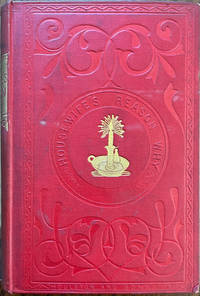
1869Best.-Nr. 63221London: Houlston & Sons Paternoster Square 1869. 12mo. xvi 368 pp. Embossed & decorated red publisher’s cloth gilt illust. front cover gilt lettering on spine advertising on endpapers minor dustsoiling darkening to spine slight shelfwear still a VG bright copy. Revised & expanded edition of this Victorian handbook which served as precursor to the modern-day search engine and offered concise quick researched facts about food cookery food science chemistry heating & ventilation cleanliness women’s medicine pediatrics and more. Philp 1819-1882 was an organizer and contributor to the Chartist Movement in the UK pushing for universal male suffrage secret ballots annual parliamentary elections and other reforms but is perhaps best remembered as the very successful publisher of his handbooks on practical everyday topics which originally launched in 1856 with “Enquire Within” and later in 1867 with the early version of this title. Houlston & Sons, Paternoster Square, hardcover
1942Best.-Nr. 63580New York: Macmillan Co. 1942. 8vo. xx 2 147 1 pp. Blue publisher’s cloth red & white printed title label mounted front cover w/ d.j. minor scuffing front cover affecting a couple letters couple minor closed tears still a NF/G copy from the library of Margaret E. Love w/ ownership markings on ffep. First edition 1st printing stated of this concise and straightforward cookbook targeting housewives on the home front during World War II Wartime rationing. Winn-Smith 1892-1991 has adopted and translated rationing and “thrifty” recipe techniques from those used during the Revolutionary War Civil War and World War I. She advises cooks to use just one crust rather than double pie crusts for pies reuse rendered fat in a variety of different recipes or instead of mixing chocolate chips into the batter simply decorate on top with them substitute ingredients and more. She worked as a fashion designer of millinery and wedding trousseaus in Olympia & Seattle was interior decorator for Gump’s in Honolulu and later head of the Art & Picture Dept. at Meier & Frank Department store in Portland OR and later became a noted landscape painter while her husband Xenephon Smith was librarian at Arizona State the Library of Congress and the US Postal Service Chief Librarian. Macmillan Co., hardcover
1928Best.-Nr. 64506Los Angeles & Guasti CA: Italian Vineyard Co. Printed by Young & McCallister Inc. Nov. 1928. 16mo. 5 x 7 in. 31 1 pp. With numerous colour text illustrations panorama centerfold birds-eye view of Italian Vineyard Co. vineyards and winery. Colour-illustrated softcovers cover art of Italian chef leaning over the housewife to encourage use of Guasti wines small closed tear at foot of spine very minor edgewear minor soiling back cover still a VG- copy. First edition of this very scarce cookbook issued by the then famous Guasti California Italian Vineyard Co. under the direction of founder Secondo Guasti whose company by 1920’s owned 8 square miles of desert land in San Bernardino County east of Los Angles with over 20000 acres of vineyards. Guasti Cooking Sherry which was salted was excellent for sauces meats fowl stews and gravies while the old claret was perfect for red meats poultry and game dishes. The Sweet Sherry flavoring Sweet Port Flavoring and the Sauterne combined Guasti wines with cane sugar. Now largely a ghost town between the 10 & 60 freeways in Rancho Cucamonga the church replicating a 17th-Century Italian Church in Guasti’s native village of Asti still remains. Worldcat locates 1 copy of the 1st edition UC Davis 2nd edition released later is more common. Italian Vineyard Co., [Printed by Young & McCallister, Inc.], paperback
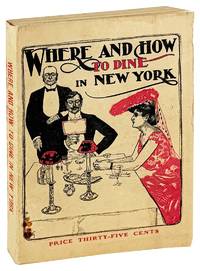
1903Best.-Nr. 45614New York: Lewis Scribner & Co 1903. Very Good. New York: Lewis Scribner & Co. 1903. First Edition. Octavo 19cm; publisher's cream pictorial wrappers; 2621416pp.; frontispiece and seventeen 17 halftone plates throughout extensive illustrated advertisements at beginning and end of the volume. Very light shelf wear textblock slightly starting to pull from binding else a fresh Very Good to Near Fine example. Brilliant example of this uncommon dime novel-format guide to dining out in turn-of-the-century New York City. The entries deal primarily with the hotels and major restaurants of Manhattan with just a couple forays into New Jersey or Brooklyn. Each entry is given two or three pages of description and frequently a photographic illustration of the dining room or the facade. Diners are reminded to visit the Waldorf Astoria during Horse Week while at the Pabst Grand Circle one can enjoy both "liquid and solid refreshments" while looking out over Central Park. At the Women's Lunch Club on West 23rd there is a strictly restricted membership limited to "fashionable shoppers" to keep the establishment from overcrowding. The many nationalities promised in the title appear to be limited to English American French and German. Lewis, Scribner & Co unknown
1930Best.-Nr. 63169Austin & Minneapolis MN: Minnesota Utilities Company; Northern States Power Company - Home Service Department Cooking School; Federal Public Service Corporation of Minnesota ca. 1930-1936. Eight parts. 4to. 46 pp assorted separate numbering. w/ most leaves printed on recto only but 2 printed on recto & verso in mimeograph typescript stapled at upper left corners separately 1 part w/ “Seasons Greetings” printed in red minor age toning edgewear still a VG group. A culturally significant group of mimeographed recipes instructions and promotional flyers for the Home Economics & Cooking School demonstrations put on by Naoma Rice for three different Minnesota utility and public utility companies through the depths of the Great Depression. Spearheaded by Rice 1899-1937 the demonstrations emphasized the use and advantages of electric ranges and refrigerators as their popularity and use slowly became more widespread in the 1930’s with an emphasis on local produce and fruits. The first group of recipes includes instructions for such confections as Cranberry Sponge Cake Cider Sherbet Macaroon Pie Spagetti sic Sauce and Bran Refrigerator Rolls. Mixed through the other recipes there are instructions for Crunchy Potato Chip Cookies Apple Cheese Cake Parmesan Veal Frozen Pumpkin Pie and Corn Flake Crust. Several of the recipes emphasize the use of popular Minnesota fruits including Apple Quince Grapes and others.The importance of refrigeration was also emphasized in the “Cooking School” and Model Kitchens with instructions on temperatures needed for home rangers and refrigerators for cooked foods meats butter opened jelly or preserves cheeses and more. Rice suffered through an unspecified childhood illness by by the early 1920’s had become a public school Home Economics Teacher and then by 1928 was listed in Austin MN street directories as a “Demonstrator” for home economics and cooking classes. The Minnesota Utilities Company had been created in 1917 from several smaller utilities and my the Great Depression had grown large enough that it became subject to both the TVA and the Rural Electrification Project as Roosevelt’s New Deal programs attempted to encourage increased use of electricity and electric appliances to boost the economy. The Northern States Power Co. was based out of Minneapolis MN and extended across Minnesota Michigan into the Dakotas and operated an extensive Home Service Dept. The Federal Public Service Corporation of Minnesota appears to have been one of the short-lived outgrowths of WPA and PWA-sponsored programs under the New Deal. This cataloguer could not locate any similar surviving documents for Naoma Rice cooking classes or the Minnesota-based utility companies. Minnesota Utilities Company; Northern States Power Company - Home Service Department, Cooking School; Federal Public Service Cor unknown
1936Best.-Nr. WB19100New York: Longmans Green & Co 1936. First Edition thus. Hardcover. Near Fine. 4to 235 x 145 mm bound in recent red half morocco over red cloth. Printed in England at the Curwen Press this is a deluxe bound copy of one of Andre Simon's classic titles. It is considered one of the best wine dictionaries in English and written by one of the great authorities on the subject. The work is comprehensive and sweeping in scope ranging from Aargau a minor wine-producing Swiss Canton to Zucco a Sicillian dessert wine. With a short introduction on how to buy wine how to preserve wine and how to serve wine. Uneven fading to spine internally fine. Longmans, Green, & Co hardcover
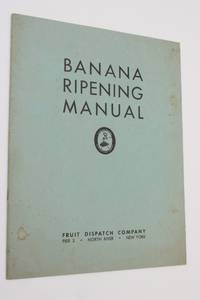
1949Best.-Nr. 13248New York: Fruit Dispatch Company 1949. Printed wrappers saddle stapled. Very Good. 4to. pp. 21 including rear pastedown. Illustrated with black & white and vibrant color photography. Index. Bound in printed wraps saddle-stapled. Sunning to edges of covers; one small dampstain to lower left front cover. A fascinating complex guide to a seemingly simple task. Fruit Dispatch Company unknown
1924Best.-Nr. 11449Seattle: Seattle Fruit and Flower Mission 1924. First Edition. Hardcover. Good. 8vo. Pp. 393 plus several pages of advertisements. Illustrated with black & white advertisements. Two handwritten recipes transcribed within. Bound in silver cloth with black lettering stamped on cover and spine and three-color illustration stamped on front board. Edges rubbed; light foxing and light stains throughout. Title on front board: "Fruit and Flower Mission." The first edition of this fine collection of recipes representing the cuisine of post-WWI Seattle; subsequently reprinted 1930. The superb ads suggest a return to a thriving Seattle economy. Seattle Fruit and Flower Mission hardcover
1940Best.-Nr. 7427Birmingham: Linley Heflin Unit 1940. First Edition. Wire Coil Bound. Very Good. Roderick D. Mackenzie cover art. 8vo. Pp. 268 followed by 18 of advertising. Illustrated with black & white drawings recipes hand-lettered. Stiff paper photo illustrated boards wire coil bound. Edges minimally rubbed. Leaves crisp bright and unmarked. The recipes are signed by their contributors and accompanied by charming illustrations. Even the display advertisements are attractively hand-lettered. The misguided covers were intended to be an Art-Deco triumph of metallic sheen: Instead they flopped displaying an austere industrial aesthetic. Linley Heflin continues to provide scholarships for Alabama women to attend Alabama colleges. Despite all their good intentions it's been suggested that recipes contributed by member's of Southern women's clubs are actually the toothsome creations of their African-American domestic help. Of this first edition OCLC records holdings at ten libraries. A notably well-preserved copy of a scarce pre-WWII cookbook. Linley Heflin Unit unknown
1950Best.-Nr. 6373Boston: Red Coach Grill 1950. First Thus. Loose sheet printed both sides bifolium. Very Good. Restaurant menu printed two-color on glossy stock measuring 10.25 x 15 inches; opened 20.5 x 15 inches. Illustration on front cover features the chain's logo. With recent menu additions stapled to the fore-edge of the rear panel. Three items have been struck from the menu frog's legs; broiled pork chops; Red Coach Dinner Salad and another "Jack Larkin's Famous Club Sirloin Steak" has the word "club" struck in pencil. Light wear to front cover with an old dog-ear now mellowed. Withal a presentable copy. Eleven Red Coach Grill paper placemats printed in red are laid-in. Plus a Souvenir menu for The Red Coach Steak House of Elm Grove Wisconsin with marginal stains at lower corners. We've posited 1950 as the publication date as mere speculation based on prices within the menu. American cuisine offered at the various Red Coach Grill: Boston Hingham Middleboro and Wayland Mass. along with the Miami and NYC locations. In 1936 the chain was established with the stand-alone restaurant in Wayland MA; a year later that was bought by Howard Deering Johnson of HoJo renown as his second restaurant chain. Menu is now housed in a removable clear archival sleeve with an acid-free backing. . Red Coach Grill unknown
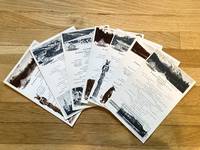
1931Best.-Nr. 12157Alaska Steamship Company 1931. First Edition. Cardstock. Very Good. Seven menus from a 1931 voyage of the SS Yukon printed on cardstock and illustrated with black & white photographs and the "Alaska LIne" logo on the verso; one large black & white photograph on the recto mostly of Alaskan scenery but including one photograph of the SS Yukon. Slight yellowing and rubbing to edges. The ocean liner SS Yukon built in 1899 joined the Alaska Steamship Co. fleet in 1924 and remained in service until 1946 when she was wrecked off the Alaskan coast with the loss of eleven lives. Dust jacket is now preserved within a clear removable archival protector with acid-free backing. Alaska Steamship Company unknown
Best.-Nr. 12164P., J. Peyronnet & Cie, éditeurs, 1925, 1 vol. petit in-8° (194 x 145) broché sous couverture marron clair imprimée en bleu, vignette contrecollée au plat supérieur représentant le Clocher de Sain-Joseph, Paris, de 61 pp. - (1) f. (table et achevé d'imprimer).Très bel exemplaire.
1916Best.-Nr. 61117Mount Pleasant Westmoreland County PA: Bryce Brothers Company 1916. Oblong folio. 19 x 12.25 in. 6 389 1 pp. Illustrated in sepia & black throughout. Brown-cloth-backed decorated tan softcovers decorative borders brown lettering minor creasing & thumbing at corners very minor edgewear rubbing still a VG bright copy. First edition of this famed glassware catalogue which represented the height of the noted Pittsburgh area glass manufacturing firm just a couple years prior to Prohibition which after repeal of Prohibition it would later be augmented twice in the 1936 & 1938 in smaller format with supplements. This catalogue filled with 100’s of full-size illustrations offers essential reference for cocktail glassware and stemware including Whiskey Tumblers Cut glass Whiskey Tumblers Wine glasses for Burgundy Rhine Port & Champagnes Toddy tumblers over 20 pp. devoted entirely to cocktail classes and a substantial array of beer glasses. Included as well are fancy cut glassware monogrammed glassware specialized items such as Oyster Cocktails Oyster Glasses Decanters Ice Cream Dishes Fruit Salad Dishes Hat Pin Holders Horse Radish glasses and so much more. The company was originally founded by James S. Bryce together with his brothers Frederick & James McKee Bryce in 1850 succeded by his son James S. Bryce Jr. becoming one of the most significant glass manufacturers in the United States. The company’s clients included Curtiss-Wright Corporation the Hotel San Diego Wesley Memorial Hospital the Top of the Needle Restaurant and hotels country clubs social clubs and restaurants across the country. In 1965 Lenox Inc. acquired the Bryce Brothers Co. to manufacture and market glassware with their china market creating the Lenox Crystal booklet and high-end glassware. Worldcat locates 6 physical copies Rakow Lib. Winterthur McKinley Mem. Lib. Carnegie Lib. Heinz Hist. Center US Patent Office. Bryce Brothers Company, paperback
1978Best.-Nr. 832841978 Paris, Etudes et Recherches Historiques, 1978, in 8° broché, 445 pages ; illustrations hors-texte ; couverture illustrée.
Best.-Nr. 201112271Paris, Éditions Jules Tallandier, 1929 ; in-8, 245 pp., cartonnage de l'éditeur. Très bon état - demi-cuir a coins dos a caissons - couverture conservée -16 planches de reprod. et ill. photogr. en noir, dont le frontispice. (La France et la vie d'autrefois). Très bonne condition.
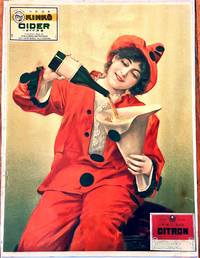
1910Best.-Nr. 10474Yokohama: Unknown 1910. Print. 'Kinko Cider' 510x375mm chromolithograph advertising poster. First Showa Era. Faint edge wear; Near Fine JAPANESE SOFT DRINK POSTER 'Kinko Cider' and 'Kin Suzu Citron' 510x375mm single leaf French style commercial chromolithographic advertising poster depicting a woman in a red French Comedy Pierrot style costume pouring a sparkling drink into her hat verso blank with two Japanese soft drink labels to the corners. Printer and illustrator unknown. First Showa Era circa 1910. Faint edge wear corners slightly rounded small edge repair to verso else Near Fine. Carbonated drinks were first introduced to Japan by Commodore Perry in 1853 when he served lemonade to Japanese officials. Western habits fashions and products were quickly adopted in many areas of life as Japan opened to the West. Soft drinks became popular after the various cholera outbreaks of the late nineteenth century as they were often marketed as safer than local water supplies. Many water companies and utilities began to manufacture soft drinks during the late nineteenth century. Yokohama was a particular centre for their production. The drinks were often sealed in 'crown-top' bottles as can be seen in the illustration. 'Cider' was the generic name given to an American soda style drink; carbonated usually fruit-flavoured; nothing to do with the European concept of apple based brewed cider. 'Citron' was the name given to a Japanese soda flavoured with lemon Citron became popular after 1909 and by 1919 Japanese soda style drinks were widely available. In 1865 torpedo style and marble stopper bottles began to be used for some drinks - which became known as 'Ramune' but are similar to 'Cider' and 'Citron'. By 1921 as mechanical production was widespread and there were over 2000 Japanese soft drink companies producing 'Cider' 'Ramune' and 'Citron'. Rare. A fascinating example of the influence of nineteenth century Western food and drink culture on Japanese consumers in the Meji and Showa Eras. § Apparently unrecorded. No reference to the commercial image could be found. Unknown unknown