Raynal (Guillaume-Thomas, 1713-1796) :Livre Rare Book
906 resultados
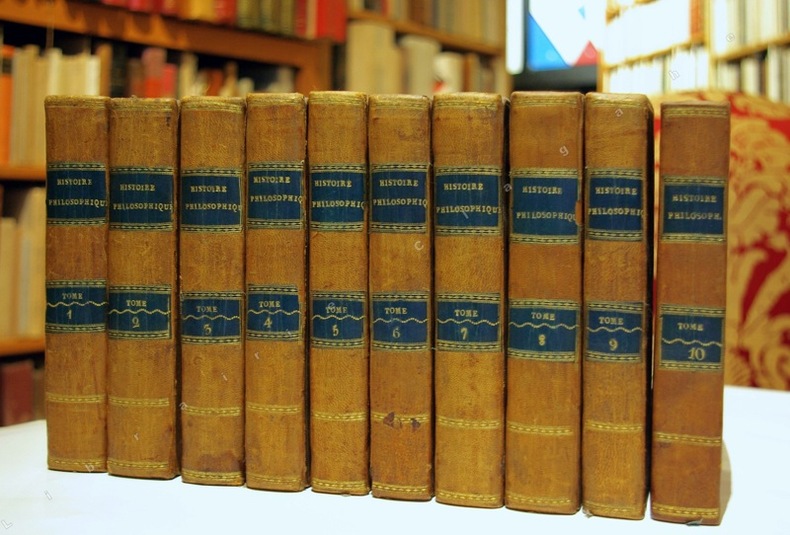
ref. 11470Genève, sans nom (probablement Pellet), 1781 ; 10 tomes in-12 et Atlas in-4 (1780) ; demi-basane fauve, dos à faux-nerfs dorés, pièces de titre et de tomaison bleu-canard, tranches jaunes ; ON AJOUTE : Atlas : demi-veau glacé vert-Empire, dos décoré de fleurons dorés, titre doré (reliure début du XIXe siècle) ; XII, 452 ; VIII, 516 ; VIII, 471 ; VIII, 391 ; VIII, 352 ; VIII, 404 ; XII, 471 ; 426 ; VIII, 362 ; IV, 447 ; portrait de Raynal par F.G. Lardy en frontispice du tome Ier et 9 frontispices gravés, un à chaque tome, eux aussi par Lardy ; Atlas : (4), 22 pp., (1) f. blanc, 50 cartes dépliantes (49 + 17 bis).
ref. 3729229America. 1951. Illustrated Poster. 41 x 27 inches. Printed in blue and red. Fold lines numerous inexpert tape mends to verso otherwise very good. A Georgia native Walker Smith Jr. 1921 –1989 a.k.a. Sugar Ray Robinson is regarded by some authorities as the greatest boxer of all time. Outside of the ring Robinson was one of the first African Americans to gain stardom as a celebrity becoming a fixture of New York’s 1940s and 1950s social scene “his presence extended beyond his boxing skills to showmanship class and grace.” AAL This movie poster advertises a film of the boxing-rematch between Robinson and England’s Randy Turpin a.k.a. “The Leamington Licker” on September 12 1951 at the Polo Grounds in New York City. Turpin had beaten Robinson two months before. In this grudge match movie audiences watched Robinson beat Turpin as Jimmy Powers the New York Daily News sports editor narrated the film. The Associated Press has named Sugar Ray Robinson the fighter of the century just ahead of Muhammad Ali. Upon his retirement in 1965 in front of thousands at Madison Square Garden and to a standing ovation Robinson was lifted into the air by four of his key former competitors Turpin being one of these men. A large and striking poster of one of the ultimate fighters of the 20th century. unknown
1944ref. 201018Berlin, 1851-1944. Versch. geb. St. a. Tit. Bd. 2 ohne Einbd. Bd. 26-28, 31-32 ohne Rücken. Bd. 1, 17-18, 21, 31-32 u. 1 Beilagenheft etwas eingerissen bzw. gelockert. Sonst nur die frühen Jgg. bestoßen. Fehlen: Allgem. Tl. zu Bd. 63 u. 73 ; Techn. Tl. zu Bd. 72; Bd. 45 Taf. 9.
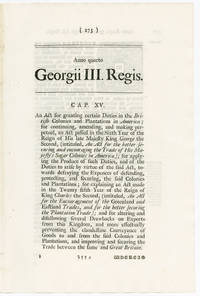
1764ref. WRCAM54454ALondon: Printed by Mark Baskett.and by the Assigns of Robert Baskett 1764. 2275-299pp. Folio. Loose gatherings stab holes at gutter margins. Near fine. An outstanding copy of the rare official Parliamentary printing for the "Grenville Budget" of 1764 accompanied by three later acts amending regulations set forth. This budget act contains the so-called "Sugar Act" which was the first deliberate and direct attempt to tax the American colonies in order to pay for the British military presence in North America. The Sugar Act levied a tax of three pence per gallon on the importation of foreign molasses molasses from the British West Indies would be exempt from the tax. But the proposed legislation did far more than tax sugar products. It also detailed more foreign goods to be taxed including certain wines coffee pimiento cambric and printed calico and further regulated the export of lumber and iron. The enforced tax on molasses caused the almost immediate decline in the rum industry in the colonies. The final part of the title of the Act was Grenville's response to the British Customs Board's estimate that the annual revenue from American customs was a paltry £1800. Grenville whose guiding principles were strict adherence to legality and financial solvency found this state of affairs to be intolerable. Existing trade regulations designed to raise greater revenue would be more rigidly enforced with incentives offered to naval officers and customs officials. This Budget Act of 1764 set the tone for many of the British policies and measures that followed. A chain of events was set in motion which would lead step by step to the American Revolution. Reaction in the colonies was not long in coming. In Massachusetts James Otis and Samuel Adams fired pamphlets at it; the merchants of Boston banded together to protest; other colonial writers from Newport to Williamsburg added their voices; in England Thomas Pownall and others defended the step. All understood that a new era had dawned with the so-called Sugar Act. The present copy is accompanied by three further scarce acts of Parliament related to the statutes set forth by the Sugar Act. The first from 1765 alters the duties imposed on sugar imports. The other two from 1777 and 1779 made amendments to address penalties for smuggling sugar from America into Great Britain during the Revolution. They are as follows: 1 AN ACT FOR MORE EFFECTUALLY SECURING AND ENCOURAGING THE TRADE OF HIS MAJESTY'S AMERICAN DOMINIONS.FOR ALTERING THE BOUNTIES AND DRAWBACKS UPON SUGAR EXPORTED. caption title. London 1765. 2799-818pp. ESTC N56877. 2 AN ACT TO EXPLAIN AND AMEND SO MUCH OF AN ACT MADE IN THE FOURTH YEAR OF THE REIGN OF HIS PRESENT MAJESTY AS RELATES TO THE PREVENTING OF CLANDESTINE CONVEYANCE OF SUGAR AND PANELS FROM THE BRITISH COLONIES AND PLANTATIONS IN AMERICA TO GREAT BRITAIN. London 1778. 21027-1030pp. ESTC N57924. 3 AN ACT TO AMEND AN ACT MADE IN THE EIGHTEENTH YEAR OF HIS PRESENT MAJESTY INTITULED AN ACT TO EXPLAIN AND AMEND SO MUCH OF AN ACT MADE IN THE FOURTH YEAR OF THE REIGN OF HIS PRESENT MAJESTY AS RELATES TO THE PREVENTING OF CLANDESTINE CONVEYANCE OF SUGAR AND PANELS FROM THE BRITISH COLONIES AND PLANTATIONS IN AMERICA TO GREAT BRITAIN. London 1780. 2175-178pp. ESTC N57924. An excellent set of Parliamentary acts comprising the first attempt to tax the American colonies the Sugar Act and several additional acts revising its statutes up through the Revolution. ESTC N56801. REESE REVOLUTIONARY HUNDRED 4 ref. Printed by Mark Baskett,...and by the Assigns of Robert Baskett unknown books
1944ref. 200780Berlin, 1851-1944. Versch. geb. St. u. Sign. a. Tit. 2 Bde. ohne Einbd., 5 Bde. ohne Rücken. 7 Bde. eingerissen bzw. gelockert. Einige Ecken bestoßen. Fehlen: Jg. 66, allgem. Tl. zu 63 u. 73, techn. Tl. zu 72, Bd. 45 Taf. 9.
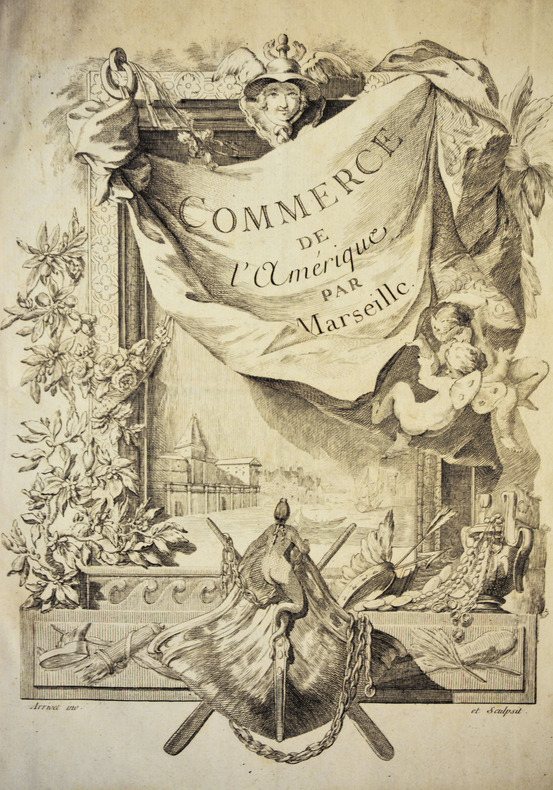
1764ref. 0041111764 Avignon, sans nom d’éditeur, 1764. Deux volumes in-quarto (211 X 260 mm) basane fauve marbrée, dos cinq nerfs ornés, caissons ornés aux petits fers, pièces de titre et tomaison maroquin rouge et vert, tranches rouges (reliure de l'époque). Tome I: titre illustré, (4) ff. de titre, avertissement et table des chapitres, 615 pages, (1) page d'errata, 7 cartes et 7 planches hors-texte; Tome II: titre illustré, (4) ff. de titre, avertissement et table des chapitres, 618 pages, (1) page d'errata, 3 cartes et 5 planches hors-texte. Quelques pointes de rousseurs et piqures.